
You are using an out of date browser. It may not display this or other websites correctly.
You should upgrade or use an alternative browser.
You should upgrade or use an alternative browser.
Shenyang / Chengdu "6th Gen" Aircraft - News and Analysis

Scott Kenny
ACCESS: USAP
- Joined
- 15 May 2023
- Messages
- 19,515
- Reaction score
- 27,960
Tell that to the J-16s still in production.Flankers are already obsolete,
Those won't be replaced for at least a decade, if not more.
According to a 2025 report, there are still 289x J-7s and 50x J-8s in the PLAAF.there are already no active unit of J-7s in the PLAAF all of them has been transfered to flight school or serve other training purposes, the only J-8s on active duty are the single brigade of JZ-8Fs which are the recon variants.
Interesting, but I'm still going off a 2025 report that says they're still on the books.Even all the Su-30s has been retired to aviation colleges and apparently all the J-11As, supposedly some batch 06 J-11Bs as well but can't be sure.
It would be good to make some land-based J-50s to increase the production run, yes.PS: J-50s are also definitely going to be land based as well so production would likely be far higher just due to PLAAF procurement as well
====================================
Thing is, the Chinese have J-20s, J-35s, J-36s, and J-50s "in production" as their 5th and 6th generation planes, while having ~300x 3rd gen and ~1500x 4th gen aircraft in their inventory. So I'm expecting the 3rd generation to get scrapped and replaced by 4th generation aircraft.
The question then becomes "with both 5th and 6th generation aircraft in production, how do we replace the 4th generation planes in our inventory?"
China has:
~600x J-10s to replace. I'm assuming that the J-35 will replace all those. Multirole for multirole.
~100x Su-30MKKs or MK2s to replace, and I'm guessing that the J-35 will replace those as well.
~200x JH-7 to replace, I'm assuming J-35 will replace those.
~300x J-16s to replace, but those are all really new and IIRC still in production even.
This one is debatable, I'm going to guess that the end of the J-36 production run is to replace the J-16s. But it could just as easily be J-50s.
~300x J-11/Su-27/Su-35 to replace, I'm guessing that the J-36 will replace those. (Possibly J-20s)
Then we get into any expansion plans.
Because the J-36 mission is so new, the PLAAF might stand up new squadrons instead of having the J-36 replace a bunch of Flankers. In this case, I'd expect that those Flankers instead get replaced by J-20s. In this case, I'm guessing ~300x J-36s.
There's also the PLANAF expansion, they need carrier air wings. The supercarriers like Fujian are big enough to have 2 squadrons of J-50s and 2 squadrons of J-35s, plus any/all supporting aircraft. I'm assuming that China will eventually have the same number of carriers as the USN, so that's ~26x squadrons of both J-50s and J-35s (12 carriers, 2 squadrons each, fleet replacement training squadron, flight test squadron). That's ~350x J-50s and ~350x J-35s.
So, ~900x J-35s and ~300-600x J-36s without getting into the expansions. PLANAF expansion adds ~350-650x J-50s and ~350x J-35s. PLAAF expansion adds another ~300x J-20s.

EmoBirb
ACCESS: Top Secret
- Joined
- 18 January 2025
- Messages
- 2,693
- Reaction score
- 6,919
If the Su-34 with that configuration is the Platypus/Hellduck
Than this is the F U T U R E D U C K
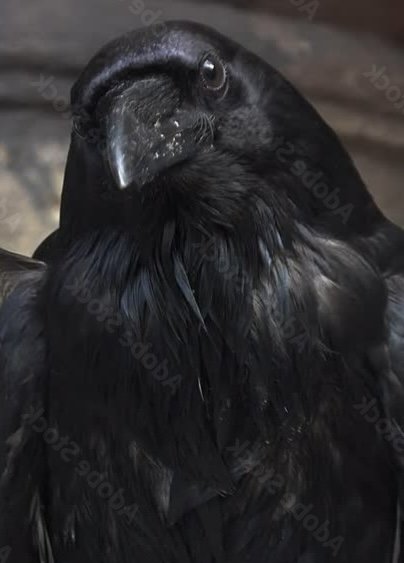
Although I agree with Acatomic, it is reminiscent of a corvid

mokahete
ACCESS: Confidential
- Joined
- 18 April 2025
- Messages
- 196
- Reaction score
- 298
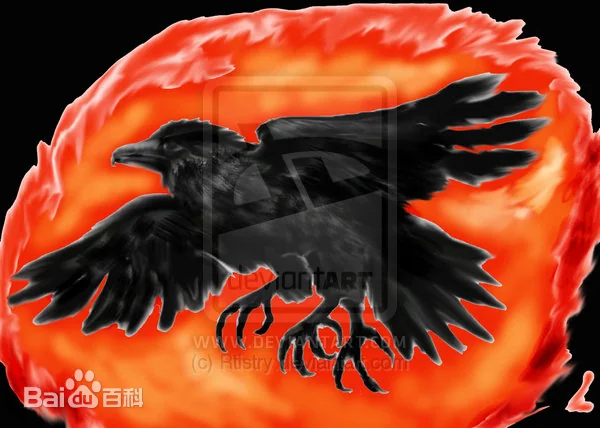
In chinese mythology There is a large mythical solar crow which is a symbol of heavenly power.If the Su-34 with that configuration is the Platypus/Hellduck
Than this is the F U T U R E D U C K
Although I agree with Acatomic, it is reminiscent of a corvid
It's called 三足鸦 (Sān Zú Yā) – "Three-Legged Crow"( in this case three engines.)
Could be a fitting name.
And just like any other civilizations, crows are also associated with bad omens and misfortune in chinese myths, there is even a saying “乌鸦嘴 (wū yā zuǐ)” — literally “crow’s mouth” western equivalent to this would be "jinxing( speaking negatively and then causing bad things to happen).
But in chinese myths crows are also associated with filial piety.
In classical Chinese literature, there's a famous story of crows feeding their elderly parents, used to symbolize 孝 (filial piety).
And the parent of j36 is China.
A filial child does not bring Bad omens to its parents, but it does bring those to its enemies.

Tomboy
ACCESS: Top Secret
- Joined
- 4 January 2025
- Messages
- 543
- Reaction score
- 1,967
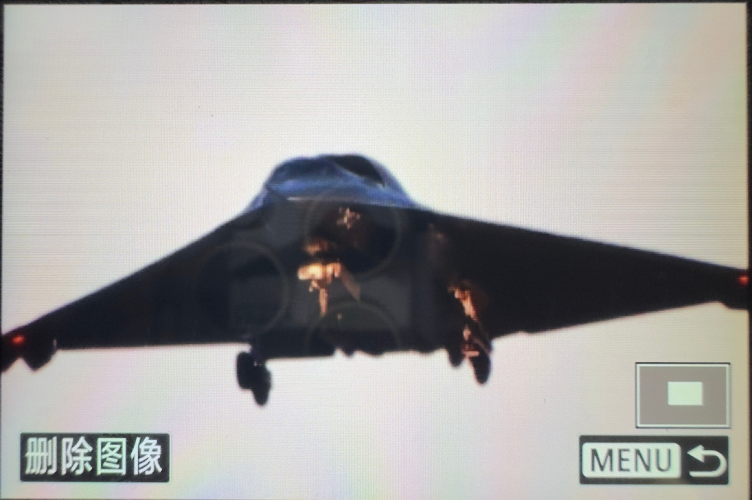
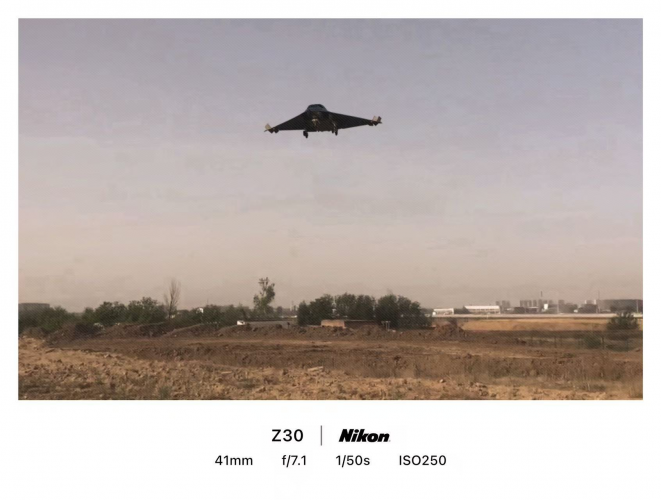
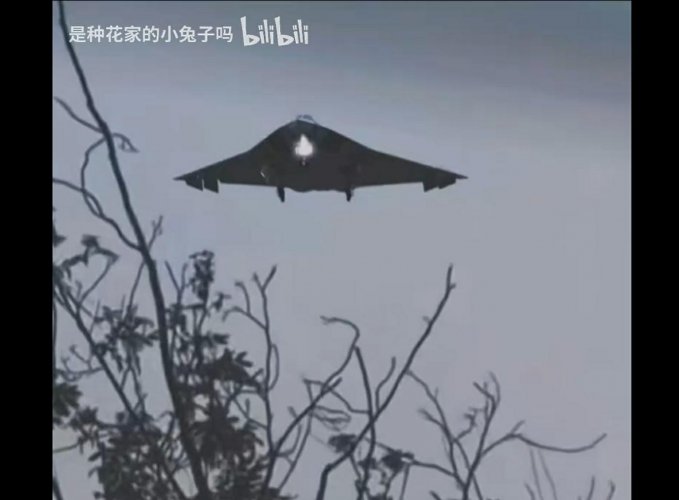
These pictures might be fake
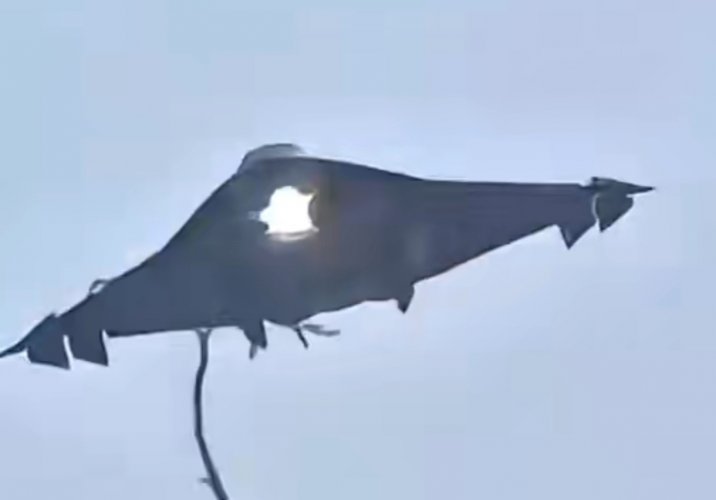
This is a confirmed real picture clipped from a video, the drag rudder looks wider and the fuselage is wider relative to the wings with a more pronounced double delta.

Brett Davidson
ACCESS: Top Secret
- Joined
- 26 September 2006
- Messages
- 4,437
- Reaction score
- 12,820
That thing is BIG.
I think cockpit while still wide look wider than it should be, because in this image top air intake kinda blend in with the cockpit.

FighterJock
ACCESS: Above Top Secret
- Joined
- 29 October 2007
- Messages
- 7,227
- Reaction score
- 8,538
The best close up image of the J-36 that I have yet seen Tomboy, it certainly does give the J-36 scale when you are looking from the front.
Waterb-Doge
ACCESS: Restricted
- Joined
- 16 December 2024
- Messages
- 9
- Reaction score
- 37
These pictures might be fakeView attachment 771878
This is a confirmed real picture clipped from a video, the drag rudder looks wider and the fuselage is wider relative to the wings with a more pronounced double delta.
This photo appeared several days ago was not from the same video but from the same location (same tree), I think it is also more reliable
SlothmanAllen
ACCESS: Confidential
- Joined
- 3 January 2025
- Messages
- 80
- Reaction score
- 192
I'd be really interested to know what China's fighter production output is going to look like in a couple of years with J-15, J-16, J-20, J-35 and J-36 all presumably in production simultaneously. They are already acquiring far more aircraft per year than the USAF and USN.
FighterJock
ACCESS: Above Top Secret
- Joined
- 29 October 2007
- Messages
- 7,227
- Reaction score
- 8,538
Don't forget the J-50 or whatever it ends up being called too SlothmanAllen, with that aircraft China will be moving well ahead of the US in terms of producing fighters.
Tomboy
ACCESS: Top Secret
- Joined
- 4 January 2025
- Messages
- 543
- Reaction score
- 1,967
IMO, J-16 production will probably wind down as J-35 production ramps up, eventually any remaining floor space would go to J-XDS LRIP lines. PLAAF has over 400 of them made and their main purpose was at first to replace the 200 or so JH-7s and act as bomb/missile trucks.I'd be really interested to know what China's fighter production output is going to look like in a couple of years with J-15, J-16, J-20, J-35 and J-36 all presumably in production simultaneously. They are already acquiring far more aircraft per year than the USAF and USN.
Last edited by a moderator:

- Joined
- 8 March 2009
- Messages
- 1,169
- Reaction score
- 1,733
Lift must be equal to mass in normal, level flighttailless designs and flying wings they reduce drag at the expense of lift and overwhelm the wing with yaw, pitch and roll control basically overwhelming the wing, and making it less stable and controllable.


F-14ATomcat
ACCESS: Top Secret
- Joined
- 26 May 2024
- Messages
- 785
- Reaction score
- 1,694
how do you control a tailless aircraft or a flying wing? what happens to that lift?Lift must be equal to mass in normal, level flight

Dreamflyer
'Senior Something'
- Joined
- 13 July 2008
- Messages
- 555
- Reaction score
- 918
In chinese mythology There is a large mythical solar crow which is a symbol of heavenly power.
It's called 三足鸦 (Sān Zú Yā) – "Three-Legged Crow"( in this case three engines.)
Could be a fitting name.
The J-36 pilots could then be called 'crowboys'.

Forest Green
ACCESS: USAP
- Joined
- 11 June 2019
- Messages
- 14,499
- Reaction score
- 31,531
China’s J-36 Very Heavy Stealth Tactical Jet Photographed Head-On For First Time
https://www.twz.com/air/chinas-j-36...tical-jet-photographed-head-on-for-first-time
https://www.twz.com/air/chinas-j-36...tical-jet-photographed-head-on-for-first-time

topspeed3
ACCESS: Secret
- Joined
- 31 January 2011
- Messages
- 496
- Reaction score
- 276
Look 7th gen B-2 Spirit.how do you control a tailless aircraft or a flying wing? what happens to that lift?
- Joined
- 8 March 2009
- Messages
- 1,169
- Reaction score
- 1,733
The same thing that happens to the (excess) lift of a normal aircraft with the CG ahead of the neutral point.how do you control a tailless aircraft or a flying wing? what happens to that lift?
F-14ATomcat
ACCESS: Top Secret
- Joined
- 26 May 2024
- Messages
- 785
- Reaction score
- 1,694
aircraft with a tail generate lift with the tail, it is not the same a tailess controls pitch, roll and even yaw with the wing.The same thing that happens to the (excess) lift of a normal aircraft with the CG ahead of the neutral point.
The advantage of a flying wing is low drag, but flying wings have control issues,
Theodore von Kármán, Northrop’s team was able to overcome fundamental challenges of controlling tailless, flying wing aircraft in their experimentation with the N-1M (1940). They controlled the pitch and roll of the aircraft by using elevons on the trailing edge of the wing, which served the function of both elevator and aileron. A split flap mechanism on the tips of the wings took the place of a conventional rudder and were originally angled downward, presumably for improving maneuvering stability, but was ultimately straightened. All of these adjustments made it possible to eliminate control structures like tail booms altogether. They also made additional changes to the N-1M’s structure to address a Dutch roll when the aircraft moved on its vertical axis.[4]
In addition to the complications that emerged from reconfiguring the airframe, flight control issues with pitch and yaw plagued the YB-49’s capability as a bomber.
https://www.hill.af.mil/News/Articl...surgence-of-the-flying-wing-in-the-21st-cent/Obviously most aircraft for a reason have a tail
Last edited:
In addition to the complications that emerged from reconfiguring the airframe, flight control issues with pitch and yaw plagued the YB-49’s capability as a bomber.
If the YB-49 had appeared ten years later, even just five years later, those pitch and yaw controllability issues could've been dealt with using a first-generation analogue fly-by-wire system.
Scott Kenny
ACCESS: USAP
- Joined
- 15 May 2023
- Messages
- 19,515
- Reaction score
- 27,960
NO THEY DO NOT.aircraft with a tail generate lift with the tail, it is not the same a tailess control pitch, roll and even yaw with the wing.
Aircraft with a tail generate negative net lift with it to pull the nose up.
Aircraft with canards generate positive net lift to pull the nose up.
A stable aircraft's center of gravity is forward of the center of lift, which causes the aircraft to want to pitch down in flight.
F-14ATomcat
ACCESS: Top Secret
- Joined
- 26 May 2024
- Messages
- 785
- Reaction score
- 1,694
did you include the Gripen fore tail and F-16 which is unstableNO THEY DO NOT.
Aircraft with a tail generate negative net lift with it to pull the nose up.
Aircraft with canards generate positive net lift to pull the nose up.
A stable aircraft's center of gravity is forward of the center of lift, which causes the aircraft to want to pitch down in flight.
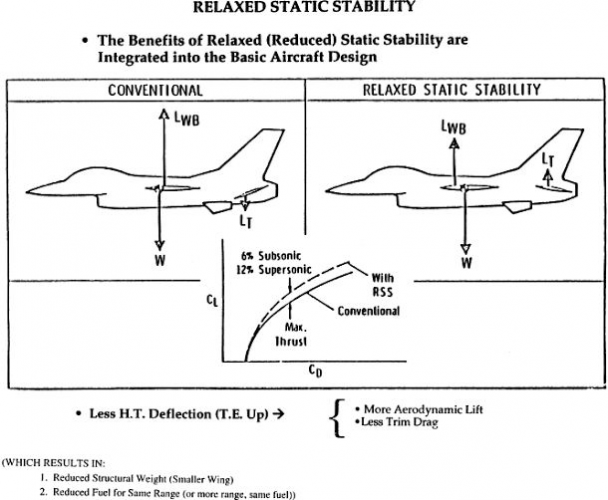

https://www.globalsecurity.org/military/systems/aircraft/x-29.htm#google_vignette
Last edited:

In_A_Dream
ACCESS: Top Secret
- Joined
- 3 June 2019
- Messages
- 786
- Reaction score
- 926
So what kind of air doctrine is China trying to develop with these aircraft?
tacitblue1973
ACCESS: Confidential
- Joined
- 8 November 2010
- Messages
- 62
- Reaction score
- 119
Something that has enough reach to deny shorter legged tactical platforms from their aerial refueling top ups before their target ingress mission phase. No tanker, no strikes. Region denial.So what kind of air doctrine is China trying to develop with these aircraft?
In_A_Dream
ACCESS: Top Secret
- Joined
- 3 June 2019
- Messages
- 786
- Reaction score
- 926
Something that has enough reach to deny shorter legged tactical platforms from their aerial refueling top ups before their target ingress mission phase. No tanker, no strikes. Region denial.
The Dragon Dome will be pretty impenetrable for conventional forces.
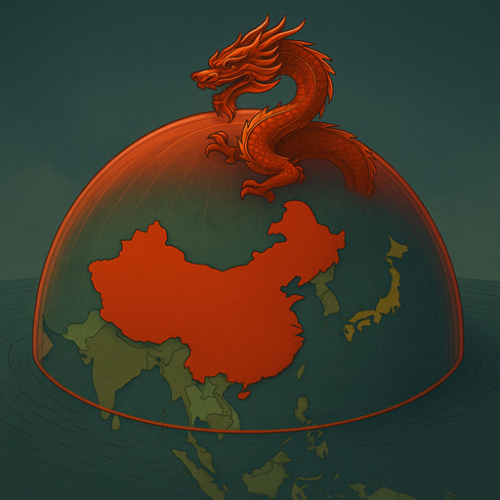
Last edited:
EmoBirb
ACCESS: Top Secret
- Joined
- 18 January 2025
- Messages
- 2,693
- Reaction score
- 6,919
Why is Mongolia included?

- Joined
- 29 November 2010
- Messages
- 2,275
- Reaction score
- 5,186
it also includes a part of Russia (Sakhalin)Why is Mongolia included?
its an AI generated image, most likely ChatGPT Plus, due to the art style. AI images will always have some imperfections

- Joined
- 11 February 2007
- Messages
- 4,132
- Reaction score
- 8,871
All that does is create an outer air battle situation (borrowing the carrier warfare term), and that's susceptible to being rolled back if the other guy can achieve air superiority at the extremes of your range.Something that has enough reach to deny shorter legged tactical platforms from their aerial refueling top ups before their target ingress mission phase. No tanker, no strikes. Region denial.
It doesn't matter if you can blow away the enemy tankers 1000 miles out if the enemy holds them at 1200 miles out until he's attrited your long range air superiority assets.
What it may do is give you time to act closer in by creating a bubble that has to be incrementally deflated.
In_A_Dream
ACCESS: Top Secret
- Joined
- 3 June 2019
- Messages
- 786
- Reaction score
- 926
All that does is create an outer air battle situation (borrowing the carrier warfare term), and that's susceptible to being rolled back if the other guy can achieve air superiority at the extremes of your range.
It doesn't matter if you can blow away the enemy tankers 1000 miles out if the enemy holds them at 1200 miles out until he's attrited your long range air superiority assets.
What it may do is give you time to act closer in by creating a bubble that has to be incrementally deflated.
True, though these aircraft will also be augmented by the regional A2/AD network that the PLA has been establishing, which includes a deep magazine of long range strike missiles.
I do agree with @tacitblue1973, PLA's doctrine appears to be "regional dominance" centric at the moment.
Why is Mongolia included?
Fixed

SUPER=BUG
ACCESS: Top Secret
- Joined
- 25 September 2024
- Messages
- 884
- Reaction score
- 2,424
Many people think that this aircraft will be slightly inferior in some aspects (such as close combat), but in fact I think this is precisely the combat situation that this fighter is secondary to consider, and the layout of the cockpit also proves to a certain extent that this aircraft was not born for close combat. Then let's go a step further, assuming that the J36 was born for long-range air combat, then we have to think about the problem of missile hits, in addition to the powerful radar of the aircraft itself, it will definitely be assisted in other aspects, and it may even be the guidance of satellites, and secondly, considering that the future low-earth orbit will be full of all kinds of flying objects, it is more suitable to give the task of anti-satellite to this kind of high-altitude and high-speed fighter.
On this basis, if the J36 can really achieve a lock-on strike at a distance of 1,000 kilometers, at this engagement distance, the poor stealth ability of the Garette air intake, the mediocre maneuverability caused by the back air intake and the tailless flying wing layout will be acceptable.
To be honest, the current J36 is destined to have an exploratory/pioneer nature because it is the first batch of sixth-generation aircraft, it is bound to be not perfect, it will have some flaws, such as three engines and a little less stealthy Garette air intake, to be honest, if a new engine is put in, I believe we may see a new air intake. In addition, with such a large bomb bay, I think that in addition to the PL17, there should be newer missiles in use.
On this basis, if the J36 can really achieve a lock-on strike at a distance of 1,000 kilometers, at this engagement distance, the poor stealth ability of the Garette air intake, the mediocre maneuverability caused by the back air intake and the tailless flying wing layout will be acceptable.
To be honest, the current J36 is destined to have an exploratory/pioneer nature because it is the first batch of sixth-generation aircraft, it is bound to be not perfect, it will have some flaws, such as three engines and a little less stealthy Garette air intake, to be honest, if a new engine is put in, I believe we may see a new air intake. In addition, with such a large bomb bay, I think that in addition to the PL17, there should be newer missiles in use.
Tomboy
ACCESS: Top Secret
- Joined
- 4 January 2025
- Messages
- 543
- Reaction score
- 1,967
There's nothing inherently wrong about caret intakes if designed properly, F-22 have them and is still considered very stealthy. I doubt the engineers will go to extreme length of reducing signature via everything else eg. tailless with tradeoffs like relatively less manvuerbility but conveniently put a non stealthy intake on it to ruin it. Chinese engineers have access to multiple stealthy intake designs like DSI and whatever J-XDS is using and probably found this design the most optimal (Assuming the next prototype will not change the design).the poor stealth ability of the Garette air intake.
SUPER=BUG
ACCESS: Top Secret
- Joined
- 25 September 2024
- Messages
- 884
- Reaction score
- 2,424
I agree, I didn't express myself clearly, and I should also point out that the Galatt intake performs better than the DSI intake at high altitudes and speeds, but in any case, this should be a temporary solution.
All that does is create an outer air battle situation (borrowing the carrier warfare term), and that's susceptible to being rolled back if the other guy can achieve air superiority at the extremes of your range.
It doesn't matter if you can blow away the enemy tankers 1000 miles out if the enemy holds them at 1200 miles out until he's attrited your long range air superiority assets.
What it may do is give you time to act closer in by creating a bubble that has to be incrementally deflated.
No doctrine is invulnerable to counter strategies -- the important thing is whether the strategies of each side are able to be "countered" adequately.
From the PLA pov, it should definitely be true that the J-36 and J-XDS will be able to push the effective range in which they can comprehensively contest air superiority, even further out than it already can.
That capability, combined with advances in long range multi domain fires, ISR, EW, will be part of the PLAs aims to be able to more permanently degrade opfor air power in times of conflict.
Specific modelling around sortie rate generation, sortie duration and distances and effective fires at range, would be needed to get a better picture around the future viability of their respective strategies.

- Joined
- 3 June 2011
- Messages
- 20,895
- Reaction score
- 19,084
Like the Maginot line?
Scott Kenny
ACCESS: USAP
- Joined
- 15 May 2023
- Messages
- 19,515
- Reaction score
- 27,960
Considering that the Germans decided "screw attacking that, we'll bypass it instead" I'd say it worked as designed.Like the Maginot line?
Had France continued the Line along the Belgian border and through the Ardennes, the fight for Europe would have been a very different thing.
In_A_Dream
ACCESS: Top Secret
- Joined
- 3 June 2019
- Messages
- 786
- Reaction score
- 926
I'm interested to see any possible UCAVs China may be planning to field with these aircraft, I wonder what they have up their sleeve.

6footboy
ACCESS: Restricted
- Joined
- 2 January 2025
- Messages
- 21
- Reaction score
- 50
Take a look at this video from the Millenium 7* - lots of new unmanned aircraft besides the manned Shenyang and Chengdu designs.I'm interested to see any possible UCAVs China may be planning to field with these aircraft, I wonder what they have up their sleeve.
Similar threads
-
 Chengdu J-10 "Vigorous Dragon" fighter - News only
- Started by overscan (PaulMM)
- Replies: 939
-

-
Shenyang FC-31 demonstrators / J-35 naval fighter / J-35A land-based version
- Started by Foxglove
- Replies: 1K
-

-
 The early MiG's in China - MiG-9, MiG-15 and MiG-15UTI
- Started by Deino
- Replies: 11