Christopher Wang

ACCESS: Secret
Joined
3 June 2021
Messages
337
Reaction score
795
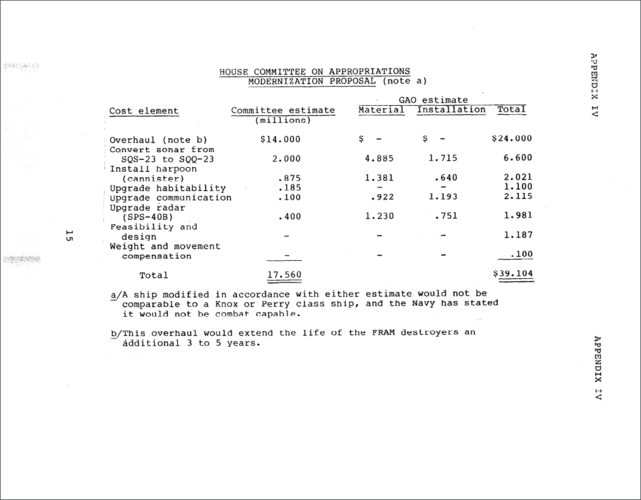
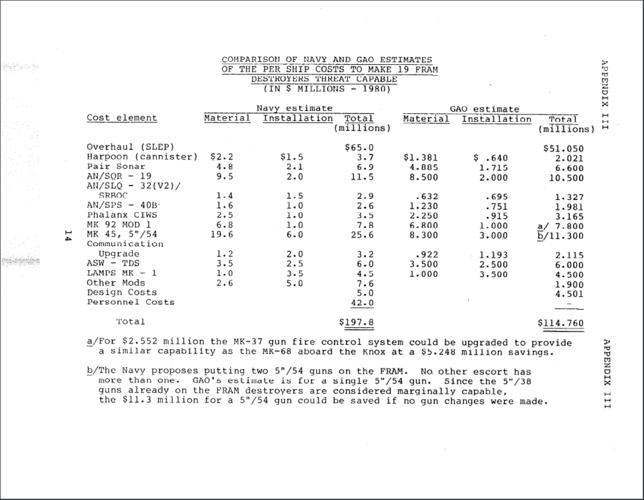
From 1979 to 1980, the United States Navy proposed updating their remaining obsolete FRAM Gearing class destroyers in the Naval Reserve Force as escorts to protect trans-Atlantic convoys against Soviet submarines. Some of the proposed modernization included replacing the WWII-era 5"/38 twin-gun turrets with one or two Mark 45 5"/54 single-gun turrets, installing the Harpoon anti-ship missiles and Phalanx CIWS, and updating the radar, warning receivers, gun fire control system, and sonar. The US Government Accountability Office conducted a study on the proposal and concluded that while it was technically feasible to upgrade the reserve FRAM destroyers, it was not financially practical to retain and modernize them. Ultimately, the modernization proposal was dropped and the last of the FRAM Gearing class destroyers, USS William C. Lawe, would be decommissioned and struck from the US Navy on October 1, 1983.

Comparison of Navy and GAO Estimates....PNG
House Committee On Appropriations Modernization Proposal.PNG

REFERENCES:

JWH1975. (2023, September 30). Proposed 1980 update of WWII destroyers. [Blog post]. Retrieved from https://wwiiafterwwii.wordpress.com/2023/09/30/proposed-1980-update-of-wwii-destroyers/

United States General Accounting Office. (1980, July 3). Report by the comptroller general of the United States: Retention of FRAM destroyers may be impractical. (LCD-80-76). Retrieved from https://apps.dtic.mil/sti/pdfs/AD1118946.pdf
 
A bit of a tangent, I have a soft spot for the Gearing FRAMs because of getting to spend a week on Dad's while I was in 5th or 6th grade.
They got the job done.
I don't know how much more could be added to their available displacement by that time in the 1970s without removing some things to compensate.
And the 1995 book I bought about them is currently out of town at Mom & Dad's house.
So, am unable to check to see if it mentions displacement use and margins.
The one Dad was XO of was already lugging around enough stuff for it to have 2 sonar domes.
 
Very nice find. Curious about the weight difference between a Mk45 and double 5”/38
 
Very nice find. Curious about the weight difference between a Mk45 and double 5”/38
The Mk 38 twin on the Gearings weighed around 96,000 lbs, the Mk 45 around 54,000 lbs (with hoist). So lots of weight savings to be had. Especially with a reduction in mount numbers.
According to Gardiner and Chumbley (1995), a similar proposed modernization program was envisioned in the late 1960s for the Italian Navy's two Impetuoso class destroyers in which the ships' existing two Mark 38 5"/38 twin-gun turrets would be replaced with a Mark 45 5"/54 single-gun turret forward and a RIM-24 Tartar SAM launcher in the aft (p. 206).

SOURCE: Gardiner, R., & Chumbley, S. (Eds.). (1995). Conway's All the World's Fighting Ships 1947–1995. Annapolis, MD: Naval Institute Press.
 
I like that blog really ! Shared it with the France Fights On forum, the guys are hysterical LMAO. Seriously: it's a tresure trove.

Last B-24 in service: 1969, India. WDF ??!!!
 
Last edited:

Just came across this thread and that blog because I'm looking into late 1970s proposals to increase the size of the US Navy. In that blog he notes that instead of adding dedicated Harpoon canisters, they probably would have converted 2 cells of the existing ASROC launchers on the ships to fire Harpoons. Relatively inexpensive and had already been done.

Does anybody know if somebody has produced artwork of what the ships would have looked like with the different guns? Not on that website. I think that somebody (Taiwan?) re-gunned at least one of their Gearings.
 
Does anybody know if somebody has produced artwork of what the ships would have looked like with the different guns? Not on that website. I think that somebody (Taiwan?) re-gunned at least one of their Gearings.
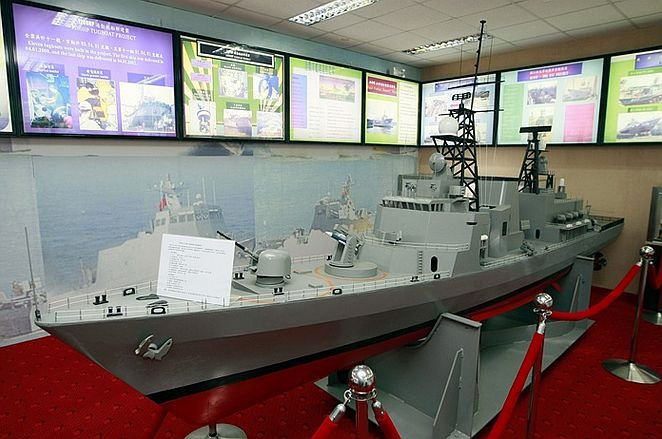
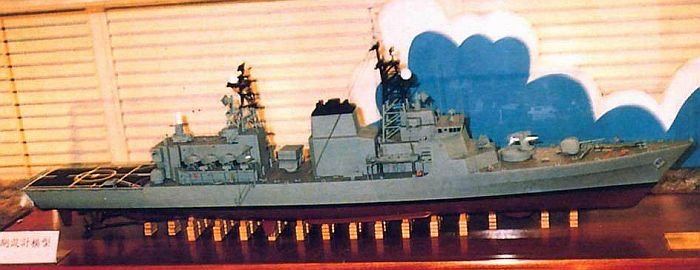
I don't know about artwork, but the Greek Kanaris-class had a 76mm Oto Melara gun superfiring over the aftmost 5"/38 twin mount. The Koreans, Iranians, and bolted various missiles to them without changing the guns. The Taiwanese also mounted 76/62 Oto Melara guns and various missiles in several arrangements (Wu Chin I/II/III).

The Pakistani Navy removed the aft 5"/38 twin mount from their gearings and replaced it with a Phalanx and Harpoons. The Turkish Navy also had a number of Gearings with Oerlikon 35mm twin mounts.
 
Just came across this thread and that blog because I'm looking into late 1970s proposals to increase the size of the US Navy. In that blog he notes that instead of adding dedicated Harpoon canisters, they probably would have converted 2 cells of the existing ASROC launchers on the ships to fire Harpoons. Relatively inexpensive and had already been done.

Does anybody know if somebody has produced artwork of what the ships would have looked like with the different guns? Not on that website. I think that somebody (Taiwan?) re-gunned at least one of their Gearings.
The same blog has an article on Taiwanese updates to their Fletchers, Gearings and Sumners.

 
The same blog has an article on Taiwanese updates to their Fletchers, Gearings and Sumners.

Yep, a very good source with a lot of data & illustrations about relatively obscure designs & refits!
 
The same blog has an article on Taiwanese updates to their Fletchers, Gearings and Sumners.


That's cool. Thank you.

The proposal to modernize the Gearings is mentioned in this new article:

 
The same blog has an article on Taiwanese updates to their Fletchers, Gearings and Sumners.


I have now read this and it's a very nice article. Really explains the upgrades, the difficulties of modernizing an old hull, and the limitations. It also does a good job of explaining why Taiwan did this. In short, they did not have ships that could provide area defense at sea. Adding SM-1 missiles, even only a few of them (10) per ship (5 ships) gave them a capability that they did not have at all, so it was a dramatic improvement in their fleet.

An interesting point, which the author makes with some photos, is that when you tear out an old weapon system to replace it with a new one, that means ripping out a lot of electrical cables and hydraulic systems and so on, and then when you add in the new ones for the new weapons, you have to make sure that the ship can support them. For example, adding a new gun and radar that requires a lot more electricity is pointless if the ship itself cannot generate that electricity.

One surprise is how quickly they made these upgrades. They got them into their fleet in a short period of time.

One of my favorite ship classes is the Kidd DDGs, an offshoot of the Spruances that was originally intended for Iran, ended up in the US Navy, and now serves Taiwan. I need to find out more about how Taiwan uses them. I read somewhere that in some ways they were too much ship for Taiwan's navy.
 
I have now read this and it's a very nice article. Really explains the upgrades, the difficulties of modernizing an old hull, and the limitations. It also does a good job of explaining why Taiwan did this. In short, they did not have ships that could provide area defense at sea. Adding SM-1 missiles, even only a few of them (10) per ship (5 ships) gave them a capability that they did not have at all, so it was a dramatic improvement in their fleet.

An interesting point, which the author makes with some photos, is that when you tear out an old weapon system to replace it with a new one, that means ripping out a lot of electrical cables and hydraulic systems and so on, and then when you add in the new ones for the new weapons, you have to make sure that the ship can support them. For example, adding a new gun and radar that requires a lot more electricity is pointless if the ship itself cannot generate that electricity.

One surprise is how quickly they made these upgrades. They got them into their fleet in a short period of time.

One of my favorite ship classes is the Kidd DDGs, an offshoot of the Spruances that was originally intended for Iran, ended up in the US Navy, and now serves Taiwan. I need to find out more about how Taiwan uses them. I read somewhere that in some ways they were too much ship for Taiwan's navy.
I always questioned why the navy sunk or scrapped the Spruances rather than offering them to allies, seeing how some of them had only been in a service for twenty-odd years. The ROCN, with WWII destroyers in service at the time, and with experience operating Kidds, should've been a logical choice, but if they were having trouble with the Kidds, then it makes sense.
 
I always questioned why the navy sunk or scrapped the Spruances rather than offering them to allies, seeing how some of them had only been in a service for twenty-odd years.
The general idea seems to be political; Navy wanted Arleigh Burke consturction to continue despite the end of Cold War, and didn't want any bright ideas like "hey, we have a lot of good Spruance-class ships, maybe it would be cheaper to refit them?"
 
The general idea seems to be political; Navy wanted Arleigh Burke consturction to continue despite the end of Cold War, and didn't want any bright ideas like "hey, we have a lot of good Spruance-class ships, maybe it would be cheaper to refit them?"

More that they wanted DD-21 production to go ahead. Since DD-21 was nominally a Spruance replacement, sinkexing the Spruances cut off the desire to extend them in service.
 
I don't think it was terribly nefarious. The Spruances by the 1990s had two main missions--ASW and land attack. The Soviet Navy no longer deployed its subs and US Navy ASW really wasn't needed much anymore. Lots of SOSUS was shut down, lots of ASW platforms were retired. As for land attack, there were a lot of Tomahawks at sea in Arleigh Burkes and subs. So the Spruances were redundant and the Navy needed to save money. It made sense for the Navy to retire them, even though I think a lot of them could have served longer. The Arleigh Burkes were more useful because they had good anti-air capability. It made sense to early retire the less capable Spruances.

As to why they were not given/sold to other navies, I think the problem was they were too much ship for many allied navies, and they too were trying to reduce costs after the end of the Cold War.

The Navy made some dumb mistakes, such as pursuing the LCS (and also the Zumwalts), but retiring the Spruance class ships was logical. I only wish that one of them had been preserved as a museum.
 
So the Spruances were redundant and the Navy needed to save money. It made sense for the Navy to retire them, even though I think a lot of them could have served longer. The Arleigh Burkes were more useful because they had good anti-air capability. It made sense to early retire the less capable Spruances.
True, but why they were so quickly disposed off? They were all gone by 2011, some scrapped, but mostly sunk at SINKEX exercises. Apparently zero attempts were made to put them in reserve.
 
Thing is you need add in their actual condition.


At five years old the Spraunce herself was liken to a 20 year old vessel.

That was true for the whole class due to them being the victim of...

Questionable Crewing ideas.

They didn't get the maintenance needed daily, were hard use and by the time they were retired?


They were FUCKED.
 
Thing is you need add in their actual condition.


At five years old the Spraunce herself was liken to a 20 year old vessel.

That was true for the whole class due to them being the victim of...

Questionable Crewing ideas.

They didn't get the maintenance needed daily, were hard use and by the time they were retired?


They were FUCKED.
As I understand it, their gearboxes were in particularly bad condition.
 
I don't think it was terribly nefarious. The Spruances by the 1990s had two main missions--ASW and land attack. The Soviet Navy no longer deployed its subs and US Navy ASW really wasn't needed much anymore. Lots of SOSUS was shut down, lots of ASW platforms were retired. As for land attack, there were a lot of Tomahawks at sea in Arleigh Burkes and subs. So the Spruances were redundant and the Navy needed to save money. It made sense for the Navy to retire them, even though I think a lot of them could have served longer. The Arleigh Burkes were more useful because they had good anti-air capability. It made sense to early retire the less capable Spruances.

Yes and no. Despite the AGS and the very unfortunate "land attack destroyer" nomenclature, the DD-21s were very much seen within the Navy as successors to the Spruances in the ASW and general escort role.* They just fixed the horrible lack of air defense baked into the Sprucans (NATO Sea Sparrow was basically useless by the mid-1990s). The Zs are very quiet (publicly stated to be as quiet a an SSN-688, which is pretty impressive for a surface ship) and have a rather good sonar suite, just optimized for shallower water than the monster SQS-26s the rest of the fleet uses.
* My office drafted the Design Reference Missions for DD-21, and they included missions other than land-attack.
 
Yes and no. Despite the AGS and the very unfortunate "land attack destroyer" nomenclature, the DD-21s were very much seen within the Navy as successors to the Spruances in the ASW and general escort role.* They just fixed the horrible lack of air defense baked into the Sprucans (NATO Sea Sparrow was basically useless by the mid-1990s). The Zs are very quiet (publicly stated to be as quiet a an SSN-688, which is pretty impressive for a surface ship) and have a rather good sonar suite, just optimized for shallower water than the monster SQS-26s the rest of the fleet uses.
* My office drafted the Design Reference Missions for DD-21, and they included missions other than land-attack.
Wowza! "pretty impressive" is a very incredible understatement, sir.
 
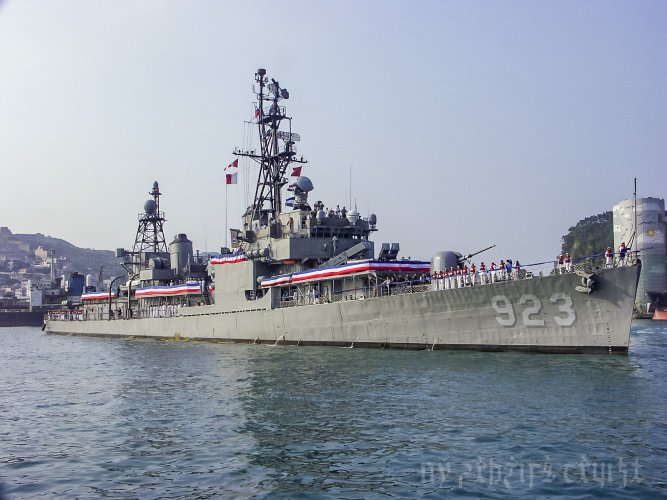
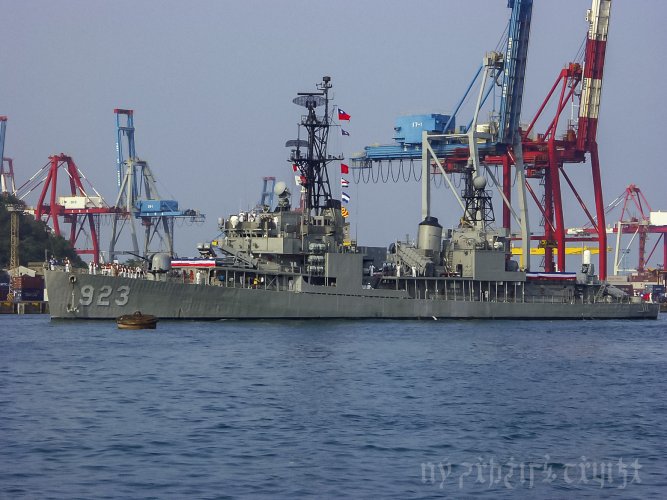
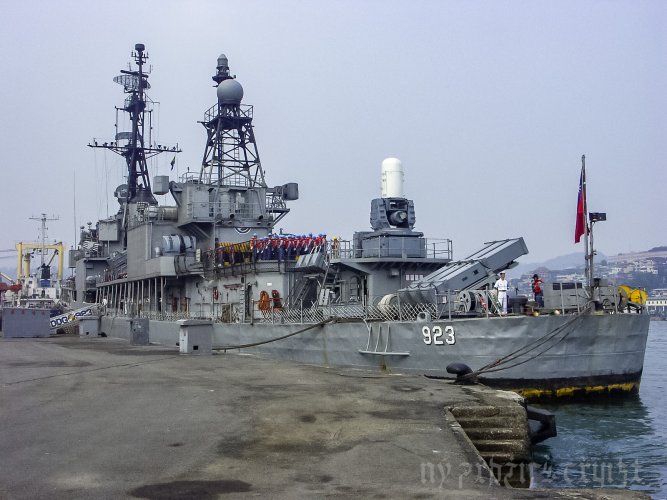
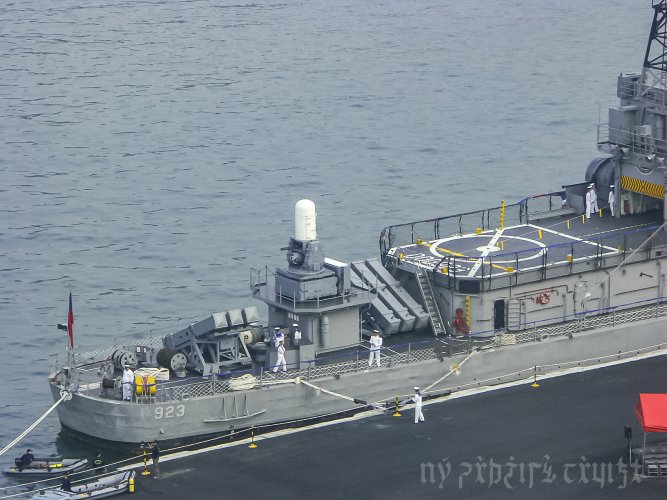
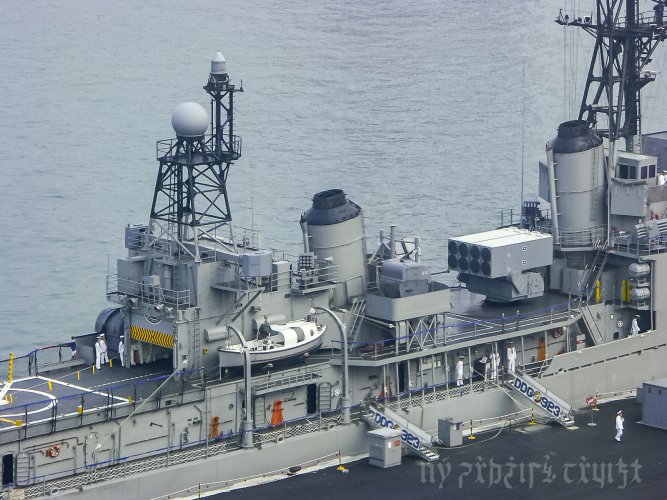
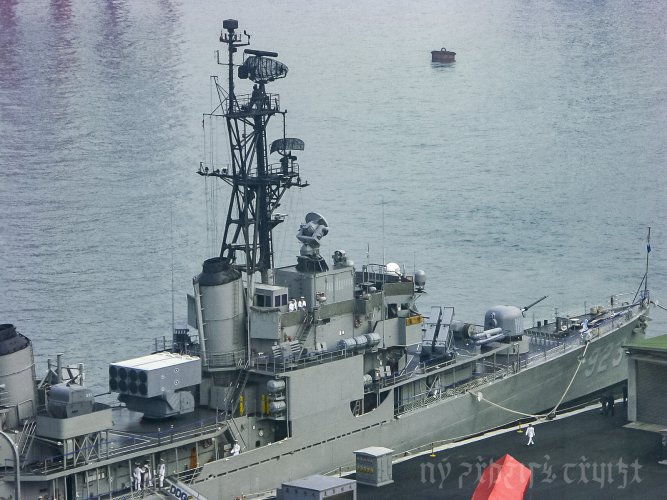
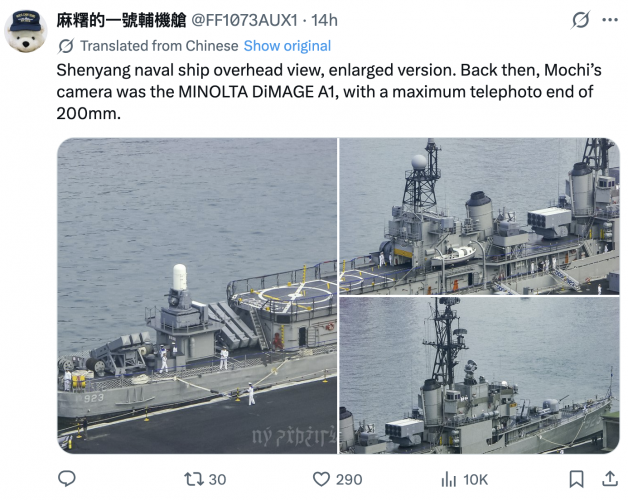
"ROCS DDG 923 Shenyang warship, the Navy's last Yang-class destroyer. A decommissioning ceremony was held on November 26, 2005."

FYI, read up-thread for some more info on these ships. I first learned about them a few months ago on this thread. Those pictures just showed up on Twitter. May be the last of the Gearing-class ships in service anywhere?
 
"ROCS DDG 923 Shenyang warship, the Navy's last Yang-class destroyer. A decommissioning ceremony was held on November 26, 2005."
Always wondered, why they didn't tried to install additional ASROC Matchbox on stern, and use it to fire Standard missiles? Taiwan have ASROC's, and turnable launcher would clearly be better than fixed-box arrangement.
 
Always wondered, why they didn't tried to install additional ASROC Matchbox on stern, and use it to fire Standard missiles? Taiwan have ASROC's, and turnable launcher would clearly be better than fixed-box arrangement.
Weight, I assume. In theory they could have replaced one of the 5" mounts with a Mk.13 too.
 
Weight, I assume. In theory they could have replaced one of the 5" mounts with a Mk.13 too.
The Mk-13 GMLS (or even Mk-22, which was lighter) were unavailable due to US-emposed limitations on weapon sales to Taiwan - due to policy of improving relations with China. But ASROC launchers were available. And they could be used to fire RIM-66 - after all, they were used to fire RGM-66 missiles.
 
The Mk-13 GMLS (or even Mk-22, which was lighter) were unavailable due to US-emposed limitations on weapon sales to Taiwan - due to policy of improving relations with China. But ASROC launchers were available. And they could be used to fire RIM-66 - after all, they were used to fire RGM-66 missiles.
How do you square that with selling the ROCN Perrys/Cheng Kung under Kwang Hua I?
 
How do you square that with selling the ROCN Perrys/Cheng Kung under Kwang Hua I?
Change of US political course during Reagan era & the subsequent end of Cold War . The Gearing's capital refit was planned earlier, exactly during the time when US technological transfer to Taiwan was seriously limited.
 
Change of US political course during Reagan era & the subsequent end of Cold War . The Gearing's capital refit was planned earlier, exactly during the time when US technological transfer to Taiwan was seriously limited.
My impression (from the sources that I can find) is that Wu Chin III existed as a gap filler to hold the line until completion of PFG-1 (which was due to a reshuffle in the ROC MND and General Staff which saw the supporters of PFG-1 moved out of positions where they could support it). That is to say that PFG-1 died for domestic reasons, not due to US issues.

Which raises the question of why Mk.13 was off the table, when the ROCN got state department approval to order 24 Mk.13 for the PFG-1 program in October 1982, and the US had only made the August 17th Communiques in August of that year.

If I had to guess the issue was due to technical inexperience integrating Mk.13 with the Honeywell combat system for Wu Chin III, or potentially schedule and engineering limitations, rather than US arms embargos.

See: http://www.mdc.idv.tw/mdc/navy/rocnavy/pfg1.htm
 

Attachments

  • pfg1-2.jpg
    pfg1-2.jpg
    61.8 KB · Views: 101
  • pfg1 (1).jpg
    pfg1 (1).jpg
    46.2 KB · Views: 102
For the USN, this would be a poor choice. You are upgrading a 40+ year old destroyer with relatively poor Atlantic seakeeping qualities for escort duty. The biggest in-service expense would be the material condition of the engines and boilers, limited electrical system, and high associated cost of operation because of a larger crew needed to handle systems with little or no automation in engineering.

Running bunker fuel or DFM adds yet another layer of complexity for unrep. Fleet oilers and replenishment ships would have to carry different fuels for the various ships they might be tending.

On the other hand, such "paper" exercises might pay off for foreign navies with more limited options where updating an old hull in-hand is the only immediate choice. Taiwan is like that where they could find few vendors willing to build them new ships. This is particularly true where the cost of the crew is lower than it would be for the USN.
 
Technically speaking, it's possible to give a Gearing a very limited SM-2ER fit.

Okay, USS Gyatt (DD-712, later DDG-1) was a one-off Terrier conversion and she only got seven missiles per rail, and the ultimate conclusion was that Terrier (even an early model) was too much missile for such a small ship, but if you really, REALLY wanted to do it, you could.

 
I just find it wild that a WWII-era Gearing-class destroyer was this heavily modified.


View attachment 800871
Taiwan had little choice. They have serious political issues getting foreign military aid, so it is often easier for them to hobble together something bought piecemeal than get a complete system outright. Back in another century when I was still in the Navy, my shop built a couple of ADU 164 trollies for Harpoon for them.
 
It pisses me off that its cheaper to wait for ships that never come than it is to spend money updating good bones on old ships.
 

Similar threads

Back
Top Bottom