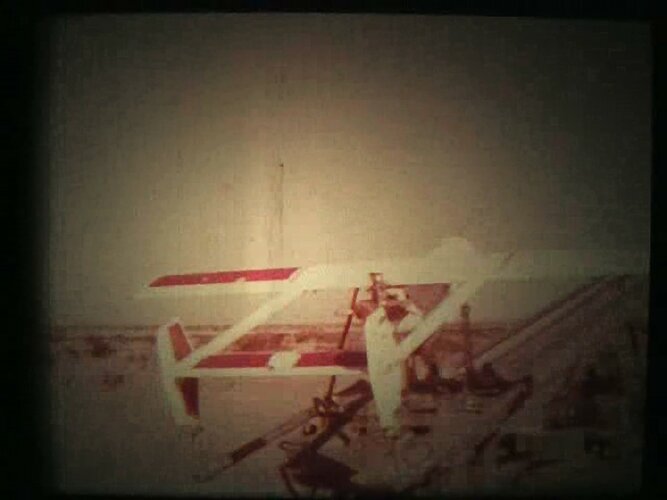
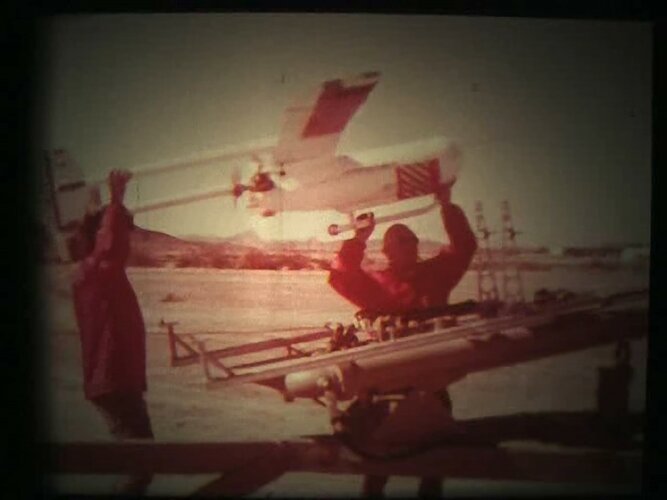
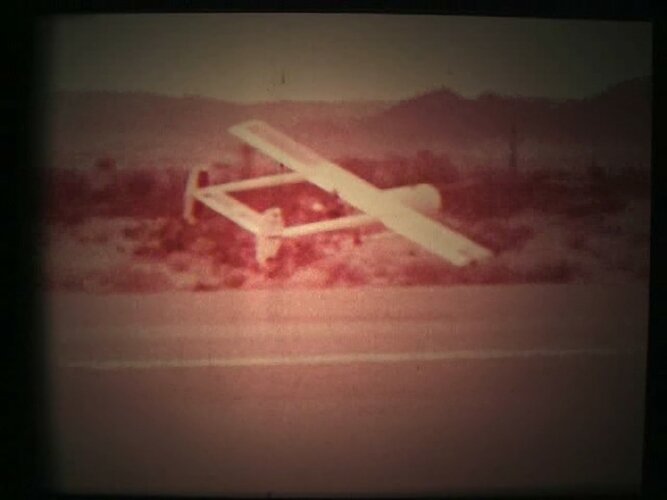
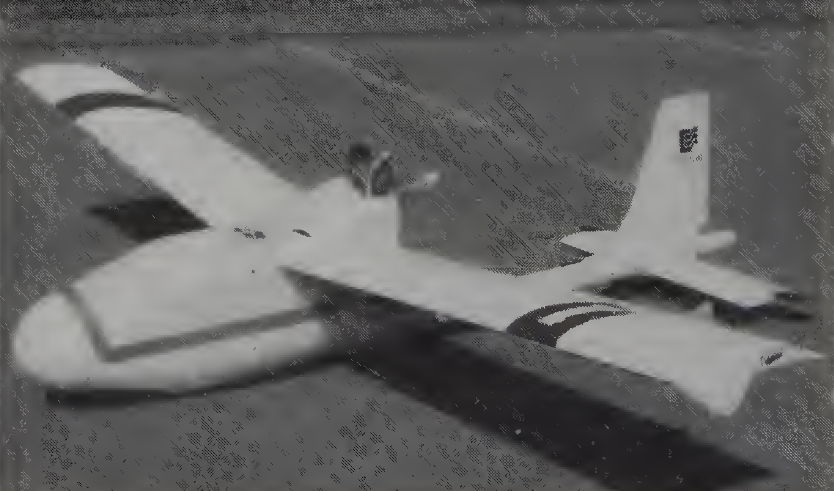
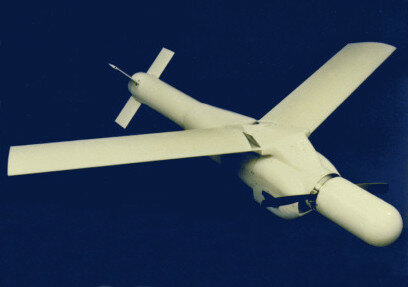
For Northrop, under a US Air Force contract, DSI designed, built and flight tested an electrically-propelled mini-RPV named Scout. Development continued by DSI as a company-funded programme, with a new engine and autopilot. Experimental flights were continuing in 1978, the Scout having recently flown with two different power plants. One was an electric motor powered by lithium batteries, using a small petrol engine for launch only; the other was a low-cost 3-7 kW (5 hp) two-stroke engine, installed for harassment RPV development.
Airframe: Sweptback shoulder-wing monoplane, with servo-actuated trailing-edge elevons and sweptback endplate fin at each wingtip. Wings, elevons and fins have Kevlar skins, with partial urethane foam support. Tapered body, of super-elliptical cross-section, built of bulkheads and Kevlar skin and having detachable nose-cap. Non-retractable tricycle landing gear.
Power Plant: See introductory copy.
Launch and Recovery: Conventional wheeled T-O and landing standard.
Guidance and Control: As for Sky Eye.
Equipment: DSl-PSA-WL-OI stability augmentation autopilot. Eight telemetry channels to monitor speed, altitude, autopilot functions and onboard sensors.
Dimensions, external:
Wing span 2-715 m (8 ft 10-92 in)
Wing area, gross 1-38 m^ (14-86 sq ft)
Length overall 0-91 m (3 ft in)
Height overall 0-20 m (8-04 in)
Weights:
Weight empty, equipped 15-4 kg (34 lb)
Max T-O weight 25 kg (55 lb)
Performance (at max T-O weight):
Max level speed 60 knots (111 km/h; 69 mph)
Stalling speed 32-5 knots (60 km/h; 37 mph)
Max rate of climb at S/L 91 m (300 ft)/min
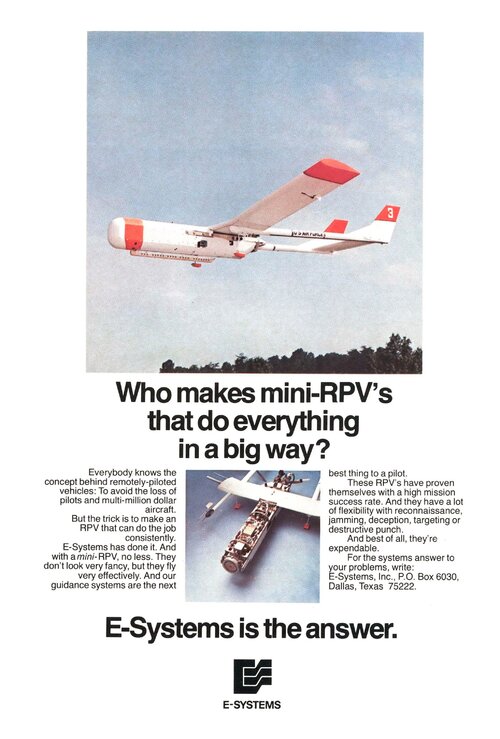
E-SYSTEMS E-75, E-90, E-130, E-150, E-175, E-200, E-260 and E-310
The first in Melpar’s developing family of single-tailboom minis was the E-75, which in 1977-78 became a candidate in the US Air Force’s LCEHV (low cost expendable harassment vehicle) programme.
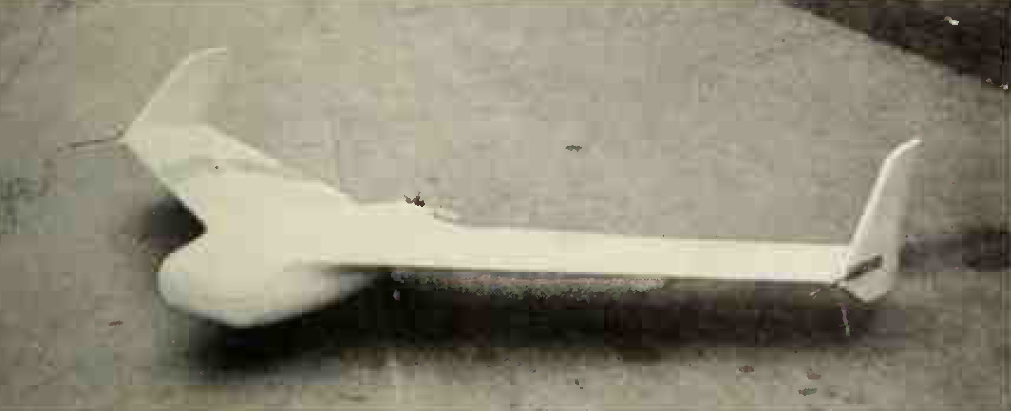
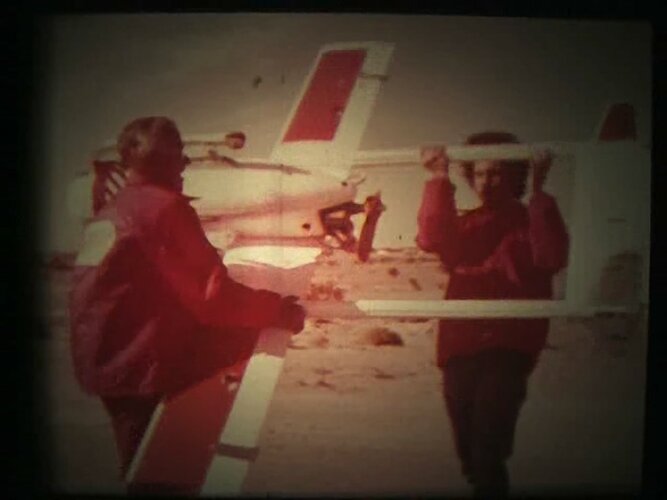
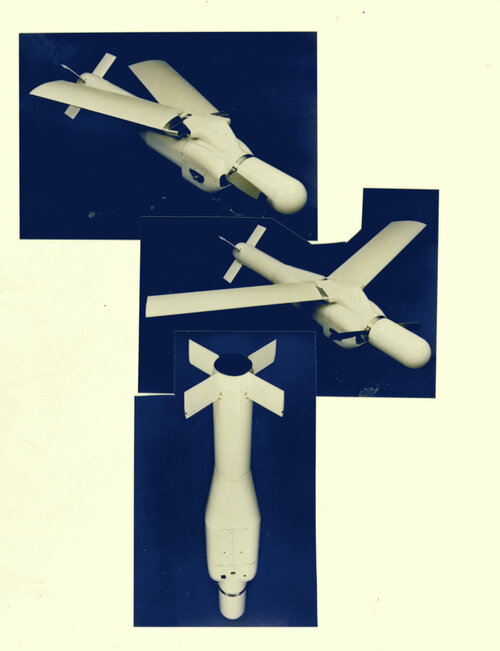
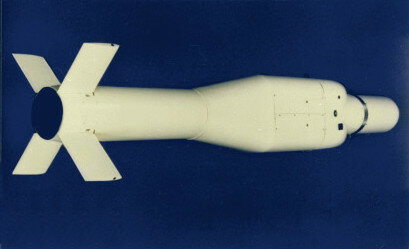
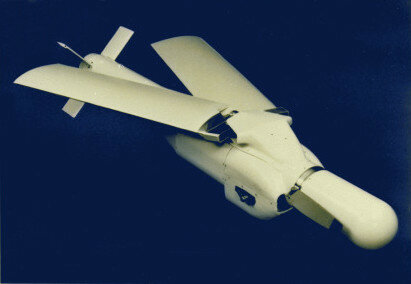
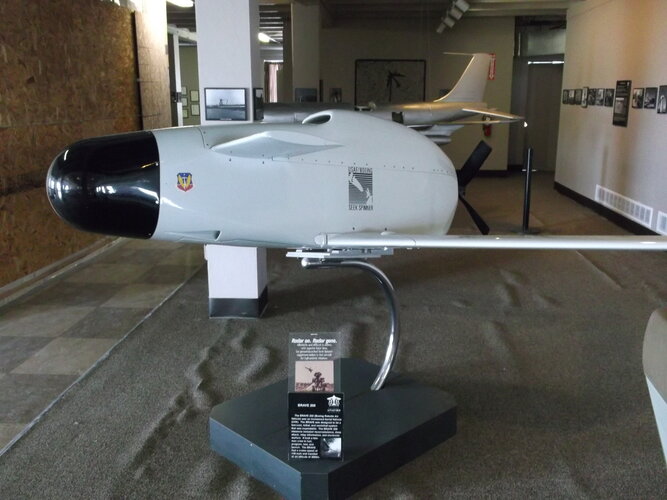
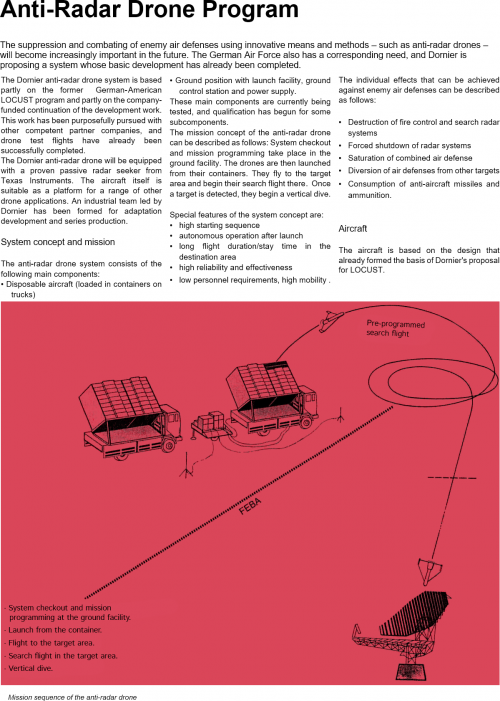
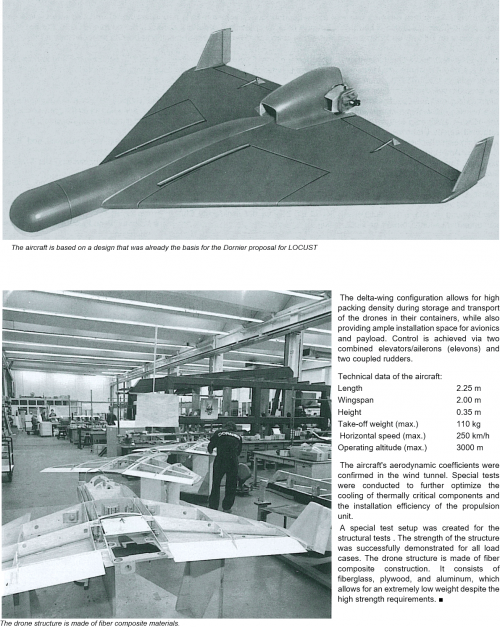
Three photos of the MBB Locust, which I had to restore as the copies were stained and cut in places (see fourth image). They were found in the Ryan Aeronautical Archives.
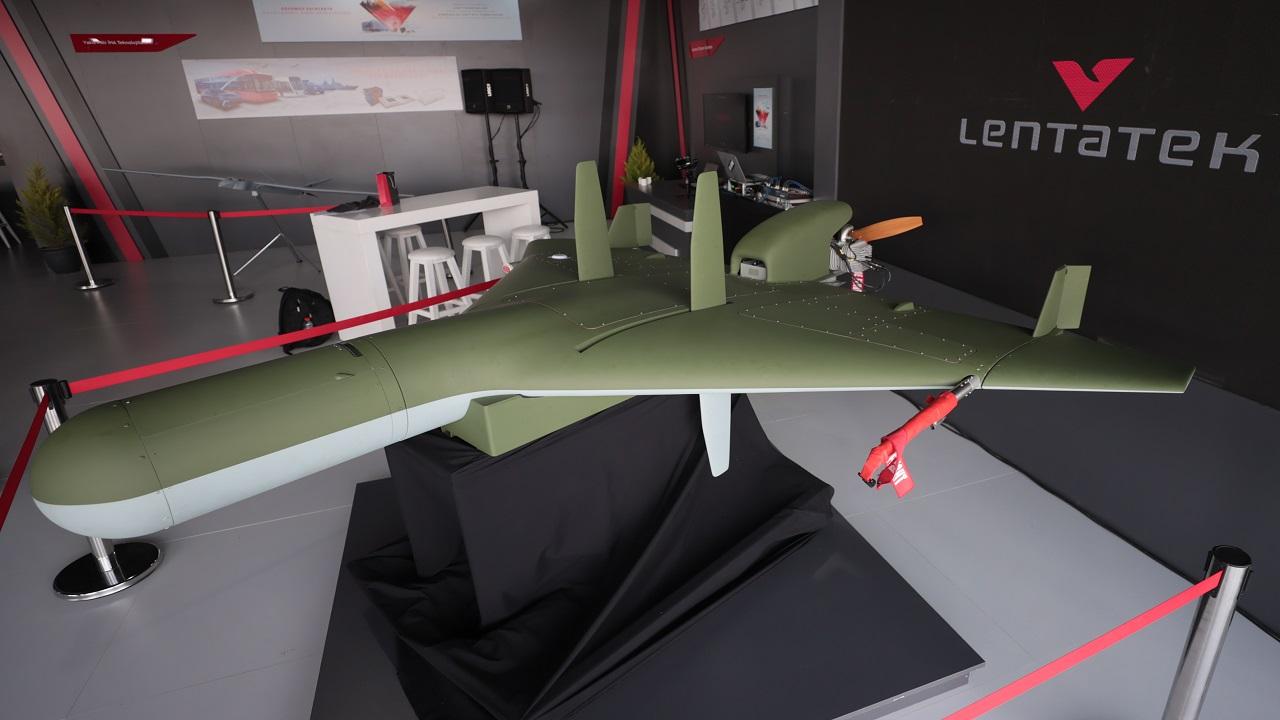
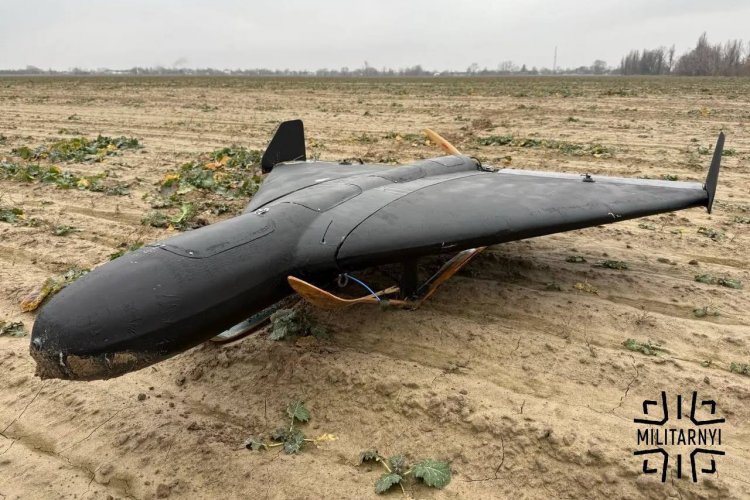
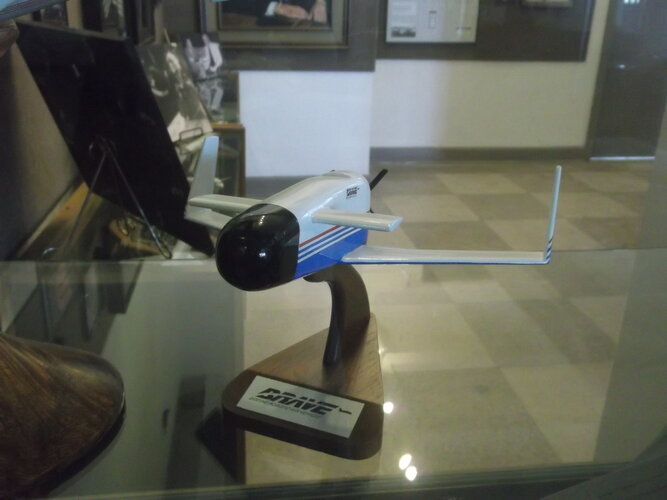
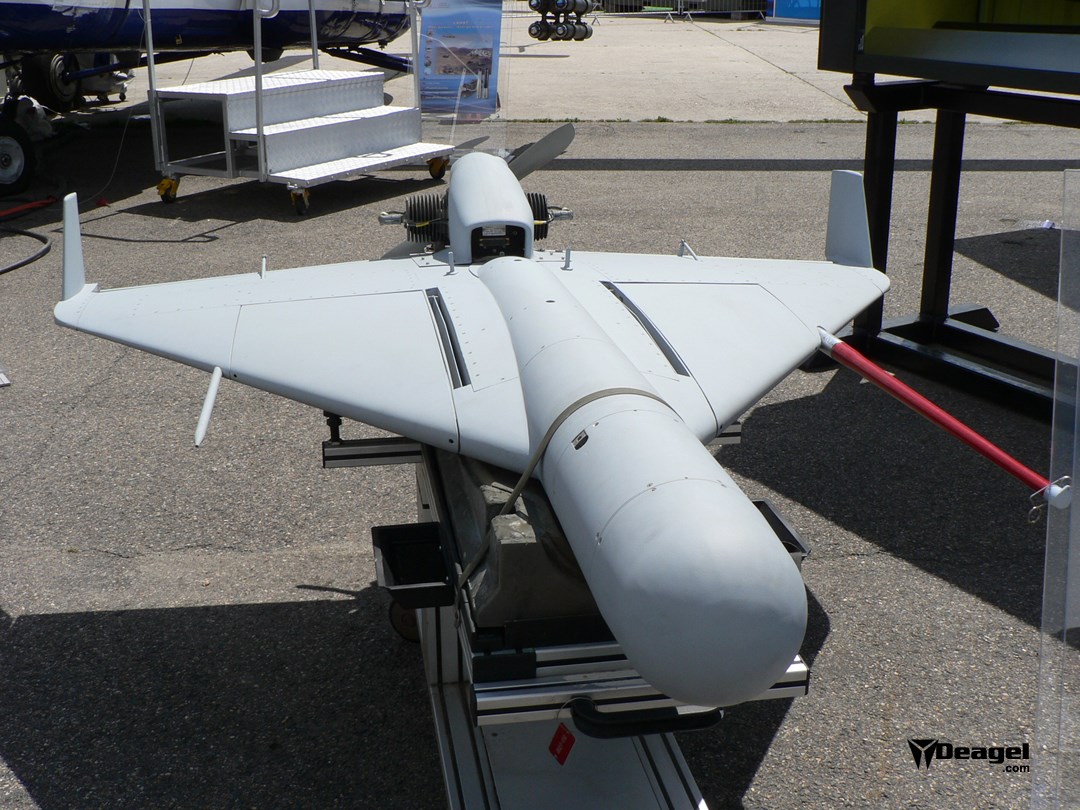
Ukrainian drone Batyar by DeepStrike Tech seems to be the direct successor of the Dornier DAR, adopted to long-range one-way attack purposes.
The “Batyar” UAV from Ukraine’s DeepStrike Tech. Development began last year. Originally conceived as a long-range one-way attack drone, but a company rep said it can also serve “as a decoy, a bomber, or a frontline kamikaze drone. It all depends on the payload and software.” Reportedly weighs 60 kg, powered by gasoline engine, can carry 18kg warhead 800 km. Launched from catapult or vehicle. Reportedly costs ~$25,000 per unit for long-range OWA version and $3,500 for decoy version.The long-range OWA version reportedly is guided by INS+GPS (with a CRPA for EW resistance) and an AI-enhanced optical terrain-matching system. The decoy version omits the CRPA and optical system. In the short-range strike version, the payload is increased to 26-30kg and the fuel capacity decreased, allowing for range of up to 100km.The company intends to begin combat testing within the next month. “The drone’s modular design remains repeatable, simple, and fast to produce. We can train a new technician to handle airframe assembly in 7–10 days. That opens the door to large-scale and decentralized manufacturing across Ukraine,” it said.The company said that in the future, it could “install a warhead weighing 60–80 kg in this fuselage. This will simply require using different structural materials, more powerful engines, and different launch systems—these will be rocket boosters.”
This site uses cookies to help personalise content, tailor your experience and to keep you logged in if you register.
By continuing to use this site, you are consenting to our use of cookies.