HF-24 Marut derivatives & projects

Archibald

Thespacecow is an idiotic SpaceX fanboy.
Senior Member
Joined
6 June 2006
Messages
14,667
Reaction score
20,610
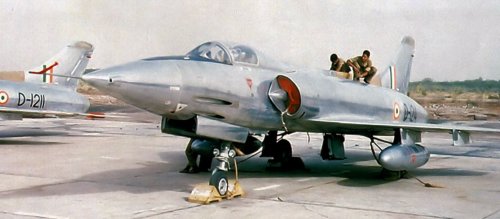
Hmmm just browsed a bit about the HF-24 Marut. Lovely aircraft, designed for mach 2 but only make mach 1.1 because of a lack of an andequate engine.
Was there derivatives of this aircraft in the drawing board ?? Something to compete with the Su-7 or the Jaguar (or better?)

???
 
Dear Archiblad,

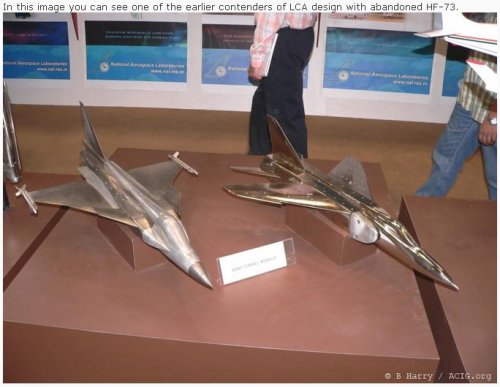
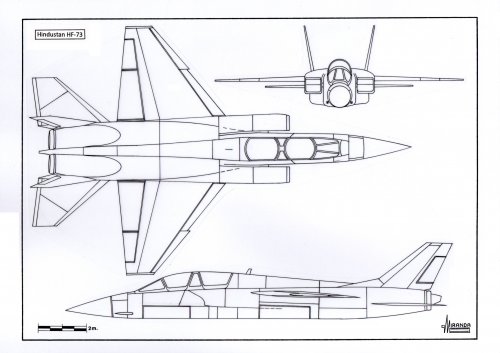
there were two derivative from it the HF-25 and HF-73.
 
Cool! God bless hesham now I need to know in which they were improved (performances ? engines? differents missions ?)
 
Is Deino here ? I found the thread you made in Key Publishing... It seems we have quite the same interests (less-known fighters projects, and links between aircrafts such as Mirage 4000 to Rafale...)
 
excuse me Archiblad,

I was busy all night,but I have a little information may be useful to you.


HF-24 MKII: Mach 2 version,no more detail.
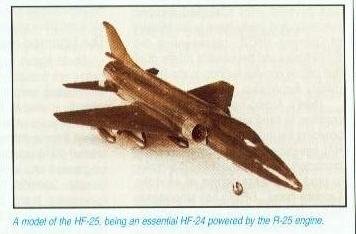
HF-25 :single engined version as strike fighter.
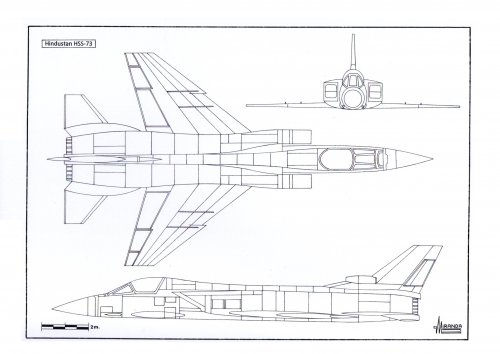
HF-73 :two seat Mach 2 (MKII ),powered by two RB.199 turbojet engines,
with two dimensional intakes and having slightly swept wings and
twin fins rudders.
 
Thank you! I fiannally found an old thread in Key Publishing with details similar to yours. i give you the link...
http://forum.keypublishing.co.uk/archive/index.php?t-24656.html
 
Hi Archiblad,

in the site you mention it there are a lot of projects to HAL,such as
HT-10,HT-11,HJT-17,HTT-35,HCP-25 and HAC-33,
anther HAL project the LAS; a single piston-engined high wing 8/10
seat transport aircraft,not built.
 
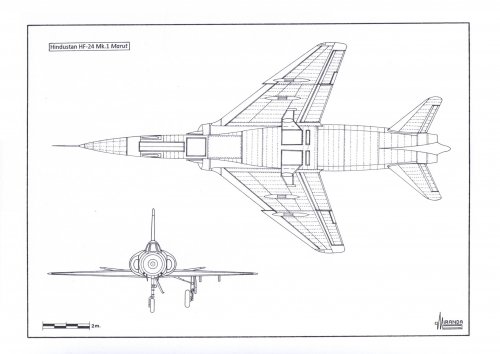
HF-24 Mk. II was depicted, just a little, in an old article I saw; perhaps this will help others looking for it. It was similar to the Mk. I but had variable inlets and a radar fitted. The inlets had the "usual" translating cone centerbodies. I keep wanting to think it was an old, old issue of the German magazine "Jet & Prop" but I can't say for sure.

The one three-view drawing I remember seing of the HF-73 (again, from a magazine) showed two RB.199s but with the wings and tail surfaces basically carried over from the basic HF-24.
 
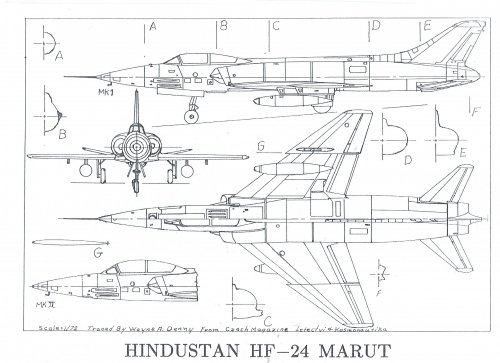
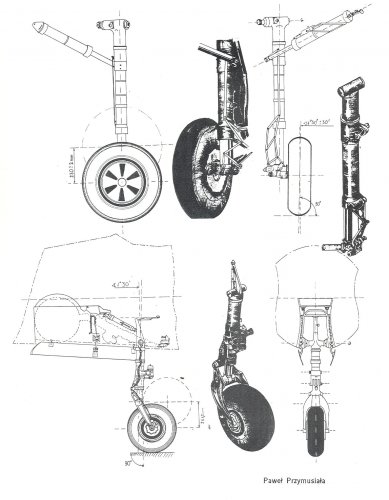
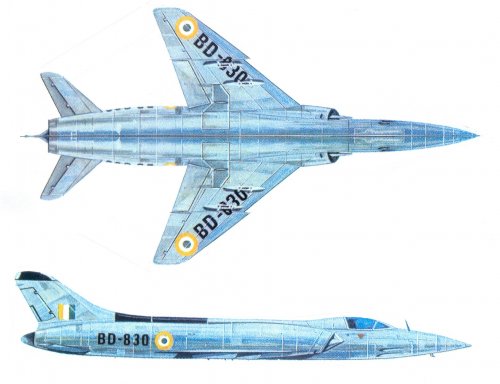
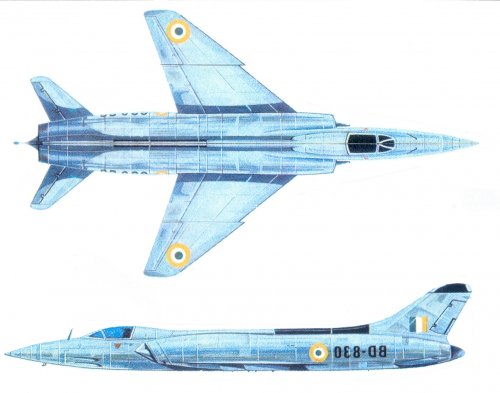
Marut

I do not have much on the Hindustan HF-24....does anyone have something better?
From
-SAFO nº53,January 1990
-Letectvi & Kosmonautika unknown issue
-Fighters in service ,Blanford Press , by Kenneth Munson
 

Attachments

  • Escanear0001.jpg
    Escanear0001.jpg
    352.8 KB · Views: 1,121
  • Escanear0002.jpg
    Escanear0002.jpg
    289 KB · Views: 880
  • Escanear0003.jpg
    Escanear0003.jpg
    246.5 KB · Views: 832
  • Escanear0004.jpg
    Escanear0004.jpg
    238.4 KB · Views: 810
Re: Marut

Does anyone know if the Marut bailed to Egypt to test the E300 engine for the HA-300, and considered for replacing the Orpheus engines in the Marut flew with Indian or Eqyptian markings?

I've got some good data, unfortunately it's not with me in Connecticut but is back in Texas. It's photocpied out of a German magazine from over a deacde ago looking at the basic Marut and at some of the proposed derivatives of it.
 
Re: Marut

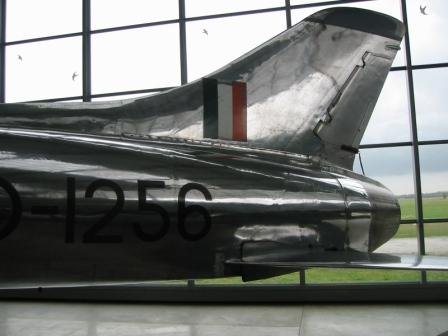
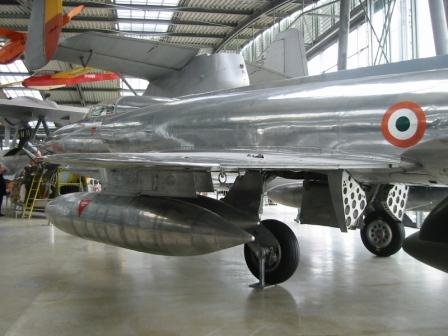
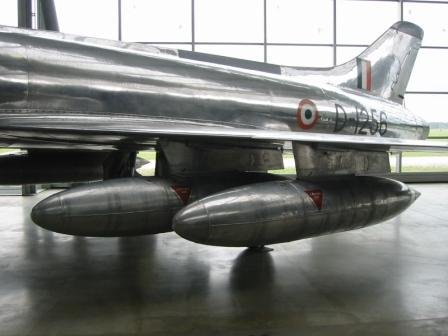
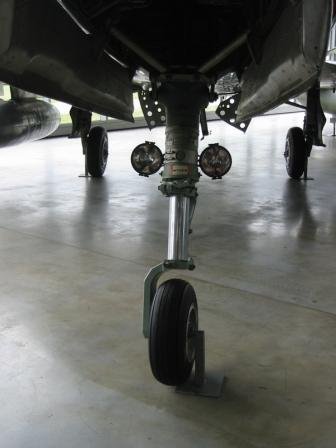
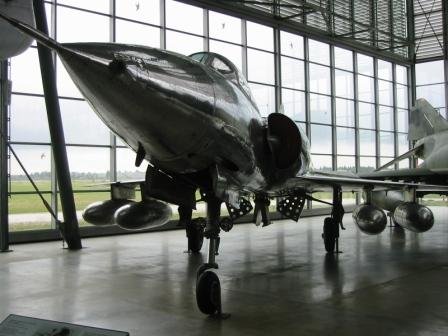
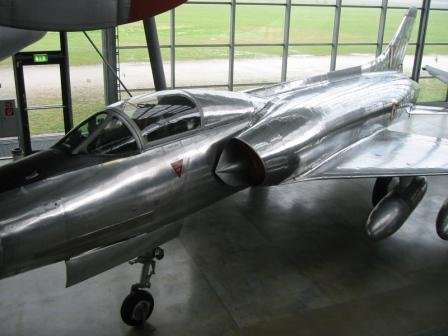
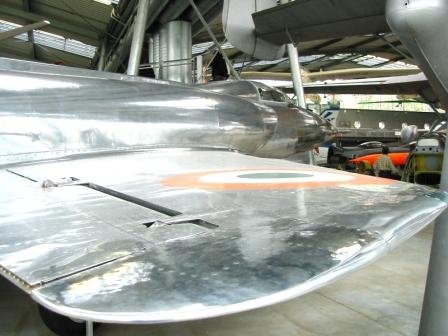
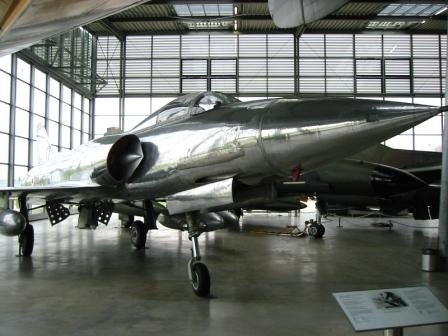
Just for info: Some photos of the HF-24 exposed by the Flugwerft Schleissheim Museum, near Munich.
 

Attachments

  • 132-3202small_IMG.JPG
    132-3202small_IMG.JPG
    23.1 KB · Views: 255
  • 132-3201small_IMG.JPG
    132-3201small_IMG.JPG
    28.1 KB · Views: 198
  • 131-3198small_IMG.JPG
    131-3198small_IMG.JPG
    22.4 KB · Views: 182
  • 131-3197small_IMG.JPG
    131-3197small_IMG.JPG
    19.2 KB · Views: 182
  • 131-3196small_IMG.JPG
    131-3196small_IMG.JPG
    29.9 KB · Views: 183
  • 131-3165small_IMG.JPG
    131-3165small_IMG.JPG
    24.6 KB · Views: 186
  • 131-3157small_IMG.JPG
    131-3157small_IMG.JPG
    32 KB · Views: 188
  • 131-3156small_IMG.JPG
    131-3156small_IMG.JPG
    33.9 KB · Views: 269
Re: Marut

Take a look here: http://www.bharat-rakshak.com/IAF/Images/Vintage/Fighters/Marut/
Sorry for my poor english
Wim
 
Re: Marut

Very interesting ... THANKs a lot for posting !

Does anyone have mare data on the much improved proposals like the single engined ones powered by the R-29 or the French powerplants ??? ... I know the feature in an older Air International but I've never seen diagrams or profiles of how it might looked like ... bevore evolving into the HF-73.

Deino
 
Re: Marut

I know various German magazines had articles on the Marut some years back (late-80s, early-90s if memory serves me) that had some good drawings of advanced versions.
 
It seems several efforts were made to exploit Mach 2 performance in the Marut. William Green in his 1964 edition of 'The World's Fighting Planes' mentions the Mk2. The USSR had offered the RD-9F but apparantly becuase the Soviets were unwilling to develop the type further beyond its M1.4 compressor stress limit talks broke down at the beginning of 1964. Various other engines were then looked at, afterburning Orpheus as used in the 1A, the Brandner E-300, the RR RB.153, the P&W J52 and the GE1/JO-1. By the end of 1964 no decision apparantely had been made.
 
Archibald said:
Is Deino here ? I found the thread you made in Key Publishing... It seems we have quite the same interests (less-known fighters projects, and links between aircrafts such as Mirage 4000 to Rafale...)


Yes ... and indeed, we seem to have the same interests ! :-*

I just found that tread ... and besides the Russian efforts to install the RD-9F also the French Atar was under consideration.

Sadyl I don't have any info or especially drawings. Even more on the changes from the orignal Marut, to this SUperSonic Marut and finally the HF-73. :(

Deino
 
From a RAF Flying Review issue from the 60's

Mach 3 Version of the HF-24
Professor Kurt Tank, stated in a recent interview that, in its definitive form, this aircraft will be able to exceed Mach 3 if he can obtain a suitable heat-resistant steel alloy.

Was Prof. Tank a bit optimistic?
 
pometablava said:
From a RAF Flying Review issue from the 60's

Mach 3 Version of the HF-24
Professor Kurt Tank, stated in a recent interview that, in its definitive form, this aircraft will be able to exceed Mach 3 if he can obtain a suitable heat-resistant steel alloy.

Was Prof. Tank a bit optimistic?

Apparently he had some optimism ;) ... but I think he might have talked about a 'definitive form' that could have been a further development of the Marut design, quite another, new aircraft using new engines, materials and technologies.

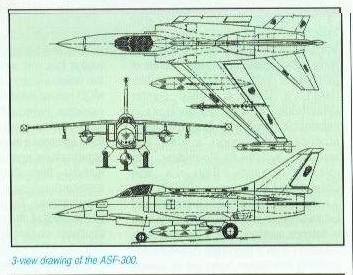
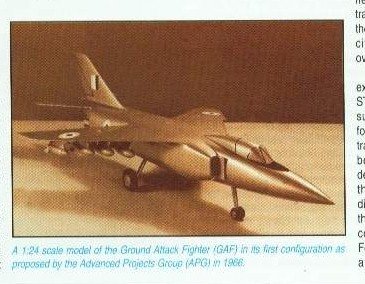
BTW it would be interesting to know how the Marut was to look like (with BrO.12 reheated engines, radar and AA missiles). If I am not mistaken in sources on the design there is no precise information, not to speak of pictures.

Regards,
Piotr
 

Attachments

  • Comparison.JPG
    Comparison.JPG
    47.6 KB · Views: 1,190
  • ASF-300.JPG
    ASF-300.JPG
    22.7 KB · Views: 1,223
  • GAF.jpg
    GAF.jpg
    35.6 KB · Views: 1,225
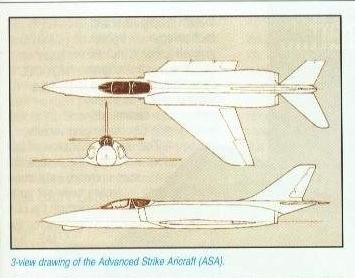
  • ASA.JPG
    ASA.JPG
    17.7 KB · Views: 1,228
  • HF-25.JPG
    HF-25.JPG
    13.9 KB · Views: 1,291
Re: Marut

Via the F-6A (F4D) Skyray and F5D Skylancer thread over in whatifmodelers.com:

http://forum.keypublishing.co.uk/showthread.php?t=112661

2. Aircraft Package.

Ambassador Bowles recommended that we offer to the Indians, under our Military Assistance Program something on the order of 70 F6A aircraft for relatively quick delivery and also offer to explore with the Indians the possibility of developing the HF–24. Ambassador Bowles stated that he was sure the Indians would proceed with the HF–24 whether or not we assisted. It was his hope that the foregoing package would be helpful in causing the Indians to reduce or discontinue their proposed MIG production.

3. Conclusions.

Mr. McNamara agreed that we could offer the F6A under our Military Assistance Program to India. He also agreed that we could explore with the Indians the practicality of development of the HF–24, possibly with the Rolls Royce engine. Mr. McNamara also stated that our military assistance for India would have to include substantially more defense production (with the result that we might well have to do the same thing for Pakistan)......


4. Future Action.

------------------

b. Comparison of Aircraft. Mr. McNamara would like to have an analysis prepared which will compare the Chinese aircraft capabilities with the capabilities of the F6A, the F5A, the F–104 A/B, the F–104G, the HF–24 in all versions including estimates on Mark II, and MIG 21. The table should also include similar information for certain aircraft in the Indian air force, namely, the Vampire NF–54, Mystere 4A, Hunter F Mark 56, Gnat F Mark I, Toofani, and Vampire FB–52. On a separate sheet information should be set forth concerning the capabilities of aircraft in the Pakistani air force so that a similar comparison can be made between the threat constituted by the Pakistani air force and the above name aircraft.

c. Development of the HF–24. Arrangements should be made promptly to send U.S. representatives to India to look into the HF–24 development. A thorough investigation should be made as to the fitness of the Rolls Royce engine for the HF–24; the changes which would have to be made in the airframe design to accommodate the Rolls Royce engine; and the changes which would have to be made in the engine manufacturing plant in order to construct the Rolls Royce engine in India. If necessary U.S. representatives should be sent to England to look into the Rolls Royce engine further. If we need to go outside the armed forces and obtain people from industry to review such matters as the aircraft production plant in India, this should be done. The courses of action on this point would appear to be: (i) a cable to the British confirming our interest in this project and our desire to proceed promptly with the above investigation; (ii) the selection of the right people to go to India and possibly the UK and if necessary, Germany to review the availability of the engine with the Germans; (iii) alerting them so that they can carry out their investigation and be back with a report in the U.S. prior to Chavan's arrival in May; and (iv) obtain from Ambassador Bowles, on his return to New Delhi, assurance that the Indians will cooperate with the U.S. representatives and make all necessary information available to them to prepare their report......
 
Re: Marut

I have come across the Marut in my own recent research.
In CAB 131/27 , Defence Committee Meetings during 1962 the Marut was brought up in connection with India buying the MiG-21. The meeting in question was 6th June 1962.
The Orpheus 12 was considered to cost £3 million to develop and India could not afford the cost and were instead considering a Soviet engine (probably the RD-7 which I've mentioned elsehwere in another Marut thread). Pending the introduction of the Marut the Soviets had offered 24 MiG-21s at £300,000 each. The US President approached Harold Macmillan to make a counter-offer to counter the rising Soviet influence. The Lightining F.Mk.II was considered but the RAF required the next 12 months worth of production to re-equip its own forces in the Middle & Far East to counter newer Soviet fighters in these regions.
Three points were made; first with intra-Commonwealth matters it was imprudent to supply such equipment to India without causing problems with Pakistan given the existing claims by Pakistan that Britain was not impartial and aiding India against it. In view of this it was considered better to allow India to buy MiGs but the interests of the "free world" meant countering Soviet influence in indian defence and industrial policy. A tricky balancing act. Second the balance of payments issue in India prevented them from paying for new aircraft with anything other than blocked Rupees.Third, in the long-term the selection of the Marut engines was seen as more important than the choice of a new fighter.
It was felt perhaps the French could offer Mirage IIIs but availability was uncertain, also considered was forcing India to accept an earlier offer from the USA to buy F-104s (India did not wish to buy American equipment and certainly not the same aircraft as used by Pakistan). The conclusion was to report back to America that the RAF could not sacrifice the Lightnings and that the best solution was for America to offer F-104s again and that if India selected the Orpheus 12 engine work could be restarted at any time and perhaps America would finance 75% of the development costs for India.

On 9th July the Defence Committe again looked at the matter. A technical mission had arrived from India to look at the Lightning Mk II. President Kennedy had made it clear any agrement where America bore 75% of the costs of Britain sending a sqaudron of Lightnings with associated equipment and ammunition to India would have to be a secret agreement. MWDP funds were not available. The Committee felt the best answer was for India to continue development of the Marut for its own needs. They felt offering Lightnings at low cost with the American contribution being secret as harming other military export sales. Also it was recognised that the Soviets would undercut any price offered and they were prepared to accept rupees as payment. It was simply hoped India would abandon buying foreign types and complete the Marut instead. Given the risks to Britain's arms exports no knock-down prices would be offered.
 
Hood said:
It seems several efforts were made to exploit Mach 2 performance in the Marut. William Green in his 1964 edition of 'The World's Fighting Planes' mentions the Mk2. The USSR had offered the RD-9F but apparantly becuase the Soviets were unwilling to develop the type further beyond its M1.4 compressor stress limit talks broke down at the beginning of 1964. Various other engines were then looked at, afterburning Orpheus as used in the 1A, the Brandner E-300, the RR RB.153, the P&W J52 and the GE1/JO-1. By the end of 1964 no decision apparantely had been made.

Would it still have been twin engined, or would it be able to achieve Mach 2 using a single higher thrust afterburning engine?
 
The text does not make that clear, but think all would have been twin-engine. All these engines were used or planned for small twin-engine fighters (except the E-300 but it seems small enough to fit) and the thrust from a single engine of these types was not likely to enable the aircraft to reach Mach 2. I guess the idea might have been to limit design and production changes.
 
Late Kurt Tank projects
(Merged with older topics about the Marut )
 

Attachments

  • img421.jpg
    img421.jpg
    513.1 KB · Views: 499
  • img420.jpg
    img420.jpg
    444.5 KB · Views: 444
  • img418.jpg
    img418.jpg
    634.8 KB · Views: 422
  • img417.jpg
    img417.jpg
    370.7 KB · Views: 428
  • img415.jpg
    img415.jpg
    376.2 KB · Views: 427
Thanks for this great views!!!
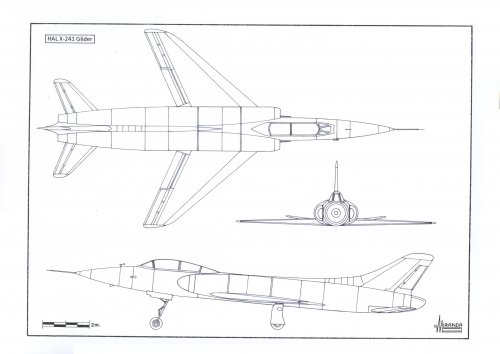
Do you have more Infos about the HAL Glider? (technical data)

Servus Maveric
 
Wingspan 9 m.
6 per cent thickness/chord ratio
50 degrees rear swept at the leading edge
rate of descent 3,800 feet per minute
25 sq. m wing area (early)
28 sq. m wing area (late) extended wing chord at the root by 10 per cent.
overall lenght 16.27 m.
height 3.24 m.
twin non ejectable seats
anti-spin parachute
variable incidence tailplane
the undercarriage retraction system, wheel-brakes, flaps and cheese-type air brakes was operated with a pneumatic bottle.
wood/plywood construction
;)
 

Attachments

  • img426.jpg
    img426.jpg
    411.6 KB · Views: 319
  • img425.jpg
    img425.jpg
    339.5 KB · Views: 246
  • img424.jpg
    img424.jpg
    225.8 KB · Views: 259
  • img423.jpg
    img423.jpg
    351.5 KB · Views: 282
  • img422.jpg
    img422.jpg
    57.2 KB · Views: 349
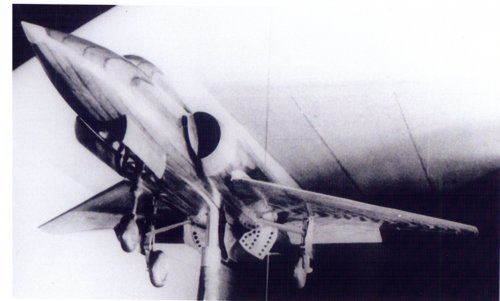
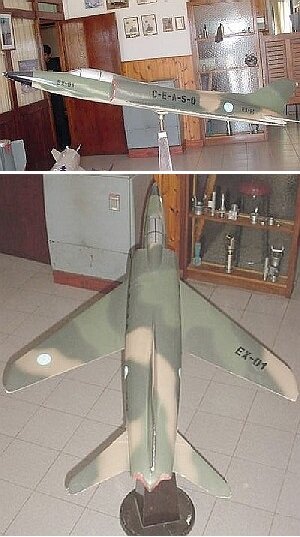
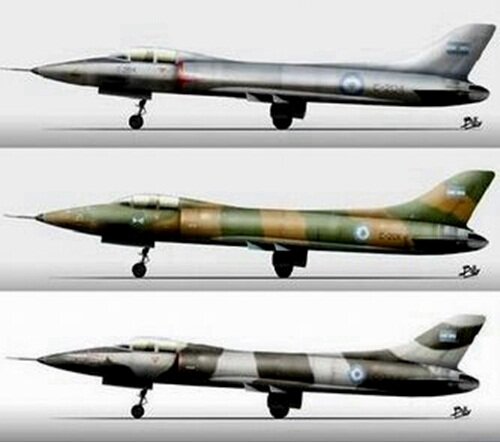
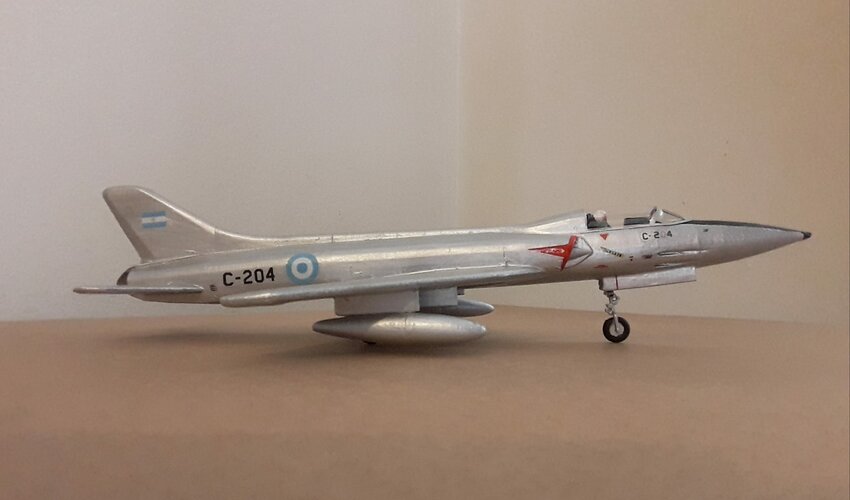
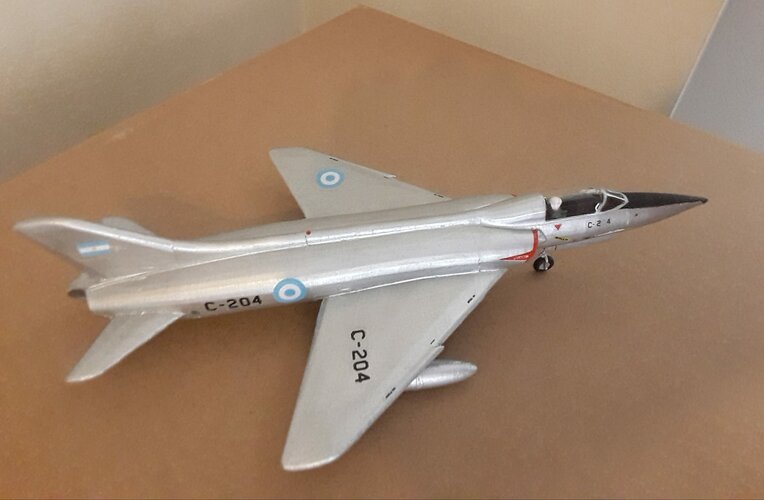
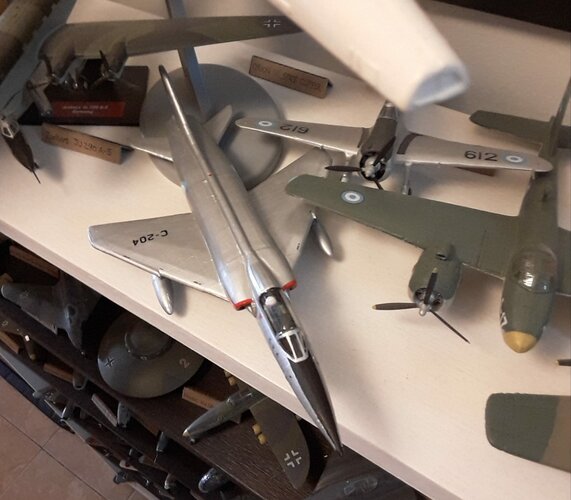
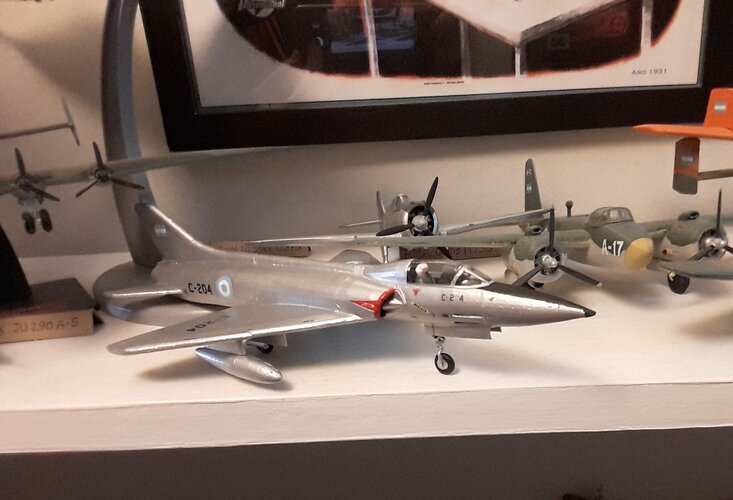
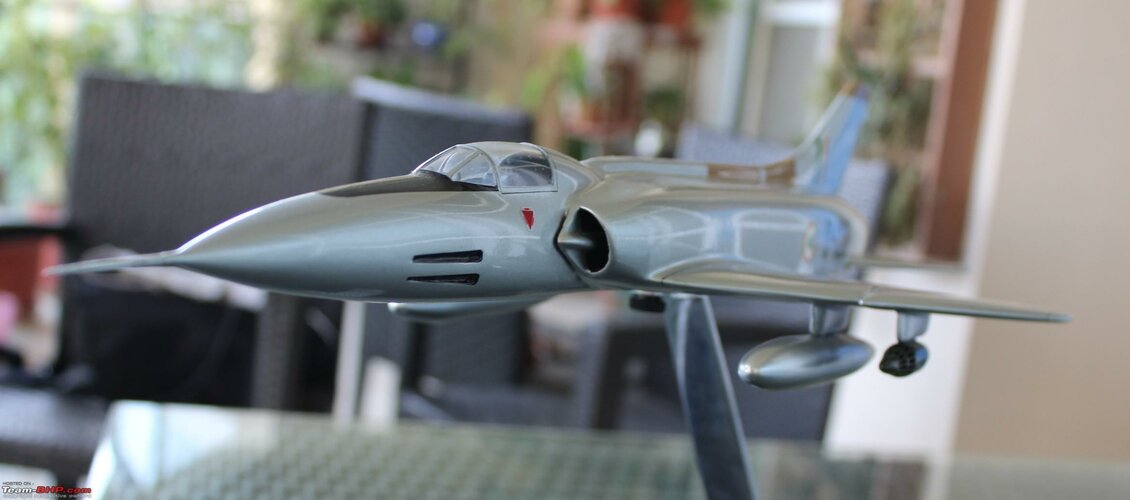
I don't know if it counts as a variant. But the preliminary project of the Marut was started by Kurt Tank when he was in Argentina, where he was known as I.Ae.43 Pulqui III

Top view of the wind tunnel mockup of the I.A. 43 that is preserved in the CEASO of the Rio IV Material Area of the Argentine Air Force (photo Guillermo Landa, Río Cuarto, circa October 2004).


foto04.jpg


IA-43-3.jpg
 
Model of the FMA I.Ae.43 Pulqui III
 

Attachments

  • 404225400_6863980546970520_4659950307551621254_n.jpg
    404225400_6863980546970520_4659950307551621254_n.jpg
    124.3 KB · Views: 212
  • 402990052_6863980360303872_5533256139608731258_n.jpg
    402990052_6863980360303872_5533256139608731258_n.jpg
    162.1 KB · Views: 180
  • 404313126_6863980120303896_2202989102369991387_n.jpg
    404313126_6863980120303896_2202989102369991387_n.jpg
    226.5 KB · Views: 160
  • 402923527_6863979903637251_4662865142354043580_n.jpg
    402923527_6863979903637251_4662865142354043580_n.jpg
    221.5 KB · Views: 197
10915134_10153134568394516_2064346462143445372_o-jpg.713599
 
Hi,


Attachments

  • 23.jpg
    23.jpg
    369.5 KB · Views: 141
Here you've got a well known three view drawing of the HF-73 in quite a decent quality as well as a drawing (not known at all) of the HF-25.

The latter was a derivative of the HF-24 powered by a single Tumansky R-25-300 engine used in the MiG-21bis. The engine was rated at 4100 kp dry and 6850 kp with reheat (7070 kp in emergency).
The HF-25 had redesigned intakes and both the horizontal and vertical stabilizers, and strengthened undercarriage for the HF-25 was heavier than the HF-24 by about 5 tons.

Source: Spirits of the Wind. The HAL HF-24 Marut by Pushpindar Singh
 

Attachments

  • HF-73 3V.jpg
    HF-73 3V.jpg
    650.4 KB · Views: 86
  • HF-25.jpg
    HF-25.jpg
    475.3 KB · Views: 100
Developed by Kurt Tank in Argentina between 1947 and 1955, the IAE 33 was a transonic interceptor derived from the Focke-Wulf Ta 183. Two test gliders and five prototypes were built of this aircraft. The scheduled production of 100 operational units was cancelled for political reasons in 1957.

The first glider was built with the collaboration of Reimar Horten in early 1948, to study the aerodynamic behaviour of the design at low speeds. It fled for the first time on 20 October, towed by a Glenn Martin W-139 bomber, proving that the 55 degrees swept tailfin did not offer sufficient lateral stability. The second glider was built with 35 degrees swept tailfin, which surface had been increased by 30 per cent.

The construction of two prototypes started in 1949. The IAE 33-01 was used for structural testing and the IAE 33-02 was fitted with a Rolls Royce Nene II centrifugal turbojet with 2,270 kp static thrust. The first flight was made on 16 June 1950 showing lateral instability at speeds above 700 kph and loss of lift at low speeds. It was modified with the installation of a wider rudder and wing leading extensions, a pressurizing system and a cockpit hood reinforced with metallic strips. A deflector was added over the nozzle to protect the rudder from the heat of the exhaust gases.

On 23 October, during the second test flight, the IAE 33-02 climbed to 8,000 m in 6 minutes reaching a speed of 1,040 kph. During the third flight, it reached an absolute ceiling of 13,000 m, landing at 170 kph without loss of lift. It was destroyed due to wing structural fail on 31 May 1951.

The IAE 33-03 was the preproduction version. It had an increased fuel capacity and better lateral stability, resulting from the installation of a new flight control system. Its flight testing began at the end of 1951, getting destroyed due to an engine stoppage on 9 October 1952.

The IAE 33-04, built in 1953, was equipped with four hydraulic operated airbrakes on the rear section of the fuselage and fences on the upper side of the wings, to delay the migration of the centre of pressure at transonic speeds. It had an improved pressurized system and was armed with four Hispano-Suiza Mk.5 cannons of 20 mm installed under the air duct. During the flight tests performed in 1954, the 04 reached an absolute ceiling of 15,000 m and 1,080 kph maximum speed.

The IAE 33-05 was started in 1957, without fences but with four anti-spin fins in the rear section of the fuselage, flying for the first time on 18 September 1955 and the last in 1960. The IAE 33 airframe was built entirely of light alloy. The wings, spanning 10.6 m, with 40/45 degrees rear swept angle and 8 per cent thickness, housed two fuel tanks with 150 litres of capacity each, two with 154 litres, two with 170 litres and two with 160 litres, as well as the ailerons and the hydraulically operated flaps.

The fuselage housed the pressurised cockpit, with armoured windshield, the Mk.IIc gyro-gunsight from a Gloster Meteor F.Mk.4, and Martin-Baker Mk.1 ejector seat, the armament, the landing gear, the air intake with bifurcated air duct, three fuel tanks with 656, 485 and 156 litres of capacity, the engine pressure compensation chamber, the turbojet, the tailpipe, four airbrakes ant the 35 degrees rear swept tailfin.

The tailplane, with 45 degrees rear swept, was fitted with an electric motor to vary its incidence. Both the Dutch and Egyptian governments were interested in the acquisition of the IAE 33. An all-weather version with radar, two Sidewinder missiles and a Rolls Royce AJ65 Avon turbojet was also planned. It would have been a good competitor to the Sabre K. The coup of 16 September 1955 ended production plans. Instead, the new government acquired 28 units of the North American F-86 F-30/40 Sabre.

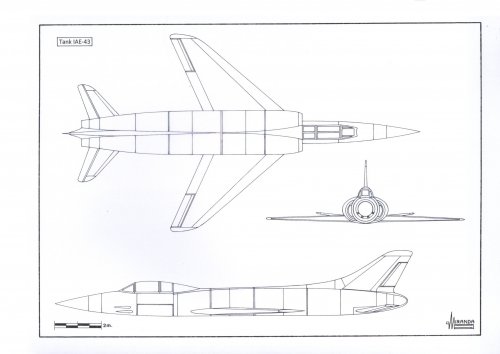
When the firm Bristol Siddeley published the features of its new turbojet Orpheus in early 1954, a team of German designers integrated by Kurt Tank, Wilhelm Basemir and Ludwig Mittelhuber began to work in the project of an all-weather supersonic fighter, called IAE 43, in Argentina.

The fuselage would be built of light alloy, housing the radar parabolic mirror, four Hispano-Suiza Mk.5 20 mm cannons, the nose undercarriage leg and the cockpit (pressurised at 0.25 Kg/sq cm). It had a Martin-Baker ejector seat and armoured glass windshield, a space designed to house a second crew member or a fuel tank, two airbrakes, two fuel tanks, the main undercarriage wheels, two semi-circular air intakes, two air ducts, two Bristol Siddeley Orpheus BOr.1 with 14.61 kN static thrust each, the tailfin and the tailplanes with 50 degrees rear swept, low set to minimize any tendency to pitch-up.

The wings, spanning 9 meters, with 50 degrees rear swept, 6 per cent thickness/chord ratio and 25 sq. m area, would be built of steel and Dural. Each wing panel housed one fuel tank and hydraulically operated flaps and landing gear retraction system. The development of the IAE 43 in Argentina was interrupted in September 1955 for political reasons, being continued in India as HAL HF-24 Marut.

In the years following Second World War many countries were forced to modernize their Air Force by acquiring the new technology of the turbojet to the winning powers. Those who chose to use the export versions of the Gloster Meteor regretted their decision when the performances of the new Soviet fighters were known. Dutch and Egyptians, interested in the work carried out by Kurt Tank's team in Argentina, began negotiations for the acquisition of the IAE 43.

In 1955 the pursuit of self-reliance in aviation by the Indian Government led the Air Staff to issue a requirement calling for a home-made multi-role aircraft suitable for both high-altitude Mach 2.0 interception with a ceiling of 60,000 ft. and low-level ground attack, with a combat radius of 800 km. Furthermore, the specification demanded that the basic design be suitable for advanced trainer, all weather interceptor and shipboard versions.

The Air Staff overestimated the complexity of the task. The local aircraft builder Hindustan Aircraft Ltd. (HAL) had been building Vampire F.B. 52 and T.55 under license but its only autochthonous design experience was the HT-2 primary trainer.

The Indian Government decided to solve the problem by hiring 31 German specialists from Argentina. In response to the Indian invitation, Kurt Tank and his assistant Dipl.-Ing. Ludwig Mittelhuber arrived in Bangalore in August 1956 with the purpose of continuing the development of the IAE 43.

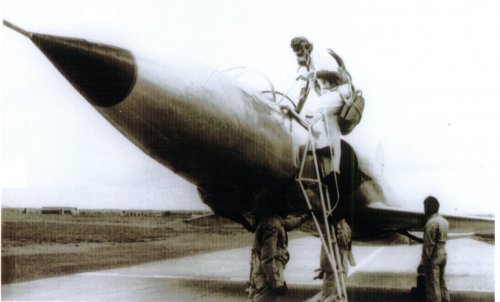
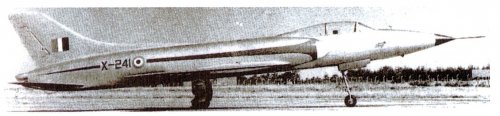
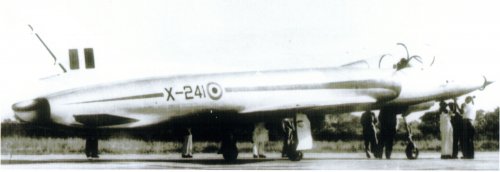
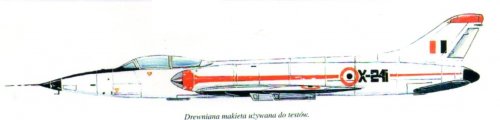
The HAL X-241 prototype was built early in 1959. It was a full scale wooden mock-up with 50 degrees rear swept wings, spanning 9 m, with a 6 per cent thickness/chord ratio and 25 sq. m area. Between April 1959 and March 1960, it was used as flyable air-launched two-seat glider, towed by a Douglas C-47, for low speed stability and oscillation trials. The X-241 lacked ejector seats and during its first flight revealed a worrying rate of descent of 3,800 ft. per minute and the stall warning was found to be too low. To visualize airflow effects, the left-wing panel had wool tufting and a fin mounted camera.

To improve the stall warning margin the wing surface was increased up to 28 sq. m, with the fitment of the saw tooth on the leading edge, extending the chord wing at the root by 10 per cent to improve handling. Other modifications consisted in the installation of an anti-spin parachute, a variable incidence tailplane, a boundary layer separator in the air-intakes and the extension of the nose leg oleo to facilitate take-off. The undercarriage retraction system, wheel-brakes, flaps and cheese-type air-brakes were operated with a pneumatic air bottle.

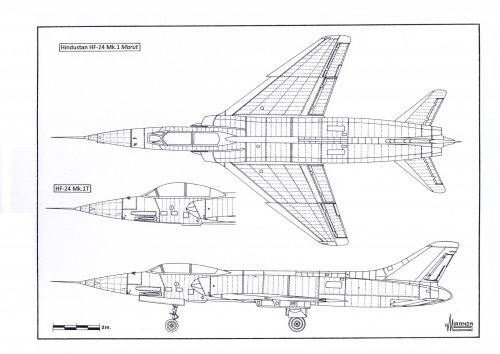
The improvements made by the extensive test program in the original design were used for the construction of the HF-24 Marut, an aerodynamically stable aircraft with excellent handling characteristics, pleasant to fly and with fine control responses for aerobatics. The aircraft was capable of supersonic flight to 1.5 Mach with manual controls in the event of hydraulic failure. The design of Marut had been based on the availability of the 3,705 kp thrust Bristol Orpheus B.Or. 12 reheat turbojet.

Unfortunately, the British Government cancelled its financial support for the development of this engine and the Marut had to be fitted with a pair of non-afterburning Orpheus 703 (the engines that HAL was currently building under license for the Folland Gnat Mk. I lightweight fighter) with 44 per cent less thrust than the B.Or 12. As a result, the Marut offered only marginal improvement on the Hawker Hunter´s performance. On 17 June 1961, the prototype HF-001/BR 462 made its first flight powered by two Bristol Orpheus 703, with 2,595 kp static thrust.

It differed externally from the glider in the new design of the air-intakes, with shock half-cones and upper lip extended to ensure smooth flow at high incidence, and in the adoption of wing slats.

The all-metal area-ruled semi-monocoque fuselage, with 15.87 m length, and the wet wing with tapering steel frame were very difficult to construct with the available means in HAL, but the great structural strength of the airframe compensated the effort. The aircraft required no artificial augmentation or auto-stabilization. It had Fairey hidraulic powered controls, with artificial feel and manual reversion in emergency, that were effective over the entire speed range. The pressurized cockpit included a Martin-Baker S.4C ejector seat. The landing gear retraction system was a Dowty-Rotol, with Dunlop wheels, Maxaret anti-braking device and steerable nosewheel. The structural test airframe was completed in November 1961, and the second prototype BR 463 flew eleven months later.

Between 1962 and 1967 both aircraft performed 1,800 test flights to iron teething troubles. During the armament trials carried out in 1964 it was verified that the vibrations caused while firing the four 30 mm Aden Mk.2 cannons produced structural damage.

The very low production rate and the extensive programme of tests delayed the entry into service of the Marut Mk.1 fighter-bomber until April 1967. The IAF blanked off two upper cannons, operating only with the lower two, with 120 rounds per gun, in squadron service. The lack of appropriate power plant meant that the HF-24 could not fulfil its role as an interceptor and never came to install the radar provided in the original design.

Out of the 145 Maruts produced, 130 entered squadron service. No aircraft was lost in air combat during the December 1971 hostilities and with the destruction of about 100 enemy tanks and one Canadair Sabre VI in dogfight, the HF-24 proved to be a stable weapons platform. Throughout the sixties, HAL directed a great search for more powerful engines, from various foreign sources, to exploit the latent potential of the Marut airframe, evaluated by U.S. experts for a Mach 2 flight. However, the turbojets under consideration either could not provide a sufficient thrust, required too great structural redesign or became unavailable due to political reasons.

In 1961 the Russians were approached with the centrifugal-flow Klimov VK-7 turbojet, a very reliable engine with 3,525 kp thrust but with an excessive diameter, that could not be fitted to the existing HF-24 without major design changes. The Tumansky RD-9F was also considered; it was a small-diameter axial-flow turbojet with 3,750 kp (afterburning) used in the MiG-19 SF Mach 1.5 interceptor. Six engines were imported and bench-tested at Bangalore, while its installation in the HF-24 was found to be called for a little airframe modification. But the negotiations initiated in Moscow in July 1962 failed at the Soviet refusal to grant the manufacturing under license in India.

At the same time, the Egyptian government started the development of the Bradner E-300, an axial turbojet to power the Messerschmitt/Helwan HA-300 supersonic fighter. The new engine was tested in 1963, installed on an Antonov An-12, producing 4,800 kp dry and 6,700 kp with reheat. On 2 November 1964, the Indian Government proposed a collaboration agreement to develop the EL-300 version, with a smaller afterburner and 4,355 kp thrust, for the Marut.

In July 1966, the pre-production aircraft HF-020 was modified as HF-24 Mk.1 BX, with a rear fuselage capable of accepting either Orpheus 703 or the EL-300. On 29 March 1967, the prototype started the test flights at Helwan, Egypt, revealing that the estimated performances of the EL-300 had been overestimated. In 106 hours of flight testing the aircraft was unable to exceed Mach 1.1. After the June 1967 Arab-Israeli conflict the EL-300 programme was cancelled.

In 1964 British firm Bristol Siddeley proposed to fit the Pegasus inner spool to the Orpheus 703 to create a hybrid engine with similar performances to those of the Orpheus B.Or.12, but the Indian Government preferred to develop its own version of 703, with afterburning. Called Orpheus 703R, the new turbojet initially had a 18 per cent greater boost than the standard model and was installed in the pre-production aircraft HF-005, later called Marut Mk.1A. The test flights began in 1965 and by the end of the decade the engine already produced a 27 per cent greater thrust, being installed in two prototypes of the Marut Mk.1B that flew until 1973. The 703R had development potential, but the limited power increment was considered insufficient to result in a production order.

Meanwhile, HAL decided to focus its efforts on the production of the Marut Mk.1 fighter-bomber (with internal fuel capacity of 2,962 litres, take-off weight of 10,900 kg and top speed limited to Mach 1.02 at 40,000 ft.) definitively discarding the Ferranti AIRPASS radar. The attack version had four underwing pylons, rated at 454 kg each, and one retractable launcher for 50 French SNEB 68 mm rockets in internal pad behind the pilot.

The experience gained during the War served to introduce several modifications: the chord wing was extended by 10 per cent, to improve handling, and fitted with a stable weapons platform. Combat flaps and JATO rockets were also installed. The rudder was provided with a booster and the Babaud gunsight and the radio compass AD-722 were replaced by a Ferranti ISIS 124 and a Bendix DFA-73. The total production of the Marut was 145 aircraft: two prototypes, 18 pre-production, 62 Mk.1 of the first production series and 45 of the second, including 18 two-seat aircraft of the Mk.1T training version.

In 1967 Kurt Tank returned to Germany, but he continued collaborating in the future developments of the Marut. In 1970 HAL considered the possibility of using two Rolls Royce RD.172/T.260 Adour or two RB.153 turbofans to propel the new Marut Mk. II version, but its installation required a major redesign of the rear section of the fuselage and the resultant drag penalties made the project impracticable. In 1971 HAL designed the HF-24 Mk. III, a Deep Penetration Strike Aircraft with twice weapons load than the HF-24, propelled by two Rolls Royce/MTU RB.199-34R turbofans with convergent nozzles. The Mk. III retained the wings and tailfins of the Mk. II but with new ram-intakes for air conditioning in the Panavia Tornado. A new dorsal structure was also placed behind the cockpit to contain additional fuel.

By mid-1972, Kurt Tank, by now with MBB-Munich, made a formal proposal to co-operate with HAL in the development of the new aircraft. The following year the project was named HSS-73, for Supersonic Strike. It externally differed from the Mk.III in the removal of the dorsal fuel tank, to improve the pilot's later visibility, in the installation of a heat-exchanger in the base of the tailfin and in the replacement of the tail planes by others with double-swept leading edge.

In 1974 the design had undergone considerable modifications, being renamed HF-73 with the installation of a second crew member, delta wing, twin tailfins, Jaguar style air-intakes, two 27 mm Mauser cannons, HUD, INAS and laser ranging device. Performance parameters included Mach 2.0 at altitude, lo-lo-lo range of 500 in strike configuration, with secondary task of air defence and tactical reconnaissance.

The HF-73 was cancelled the following year due to the low availability of the RB-199 that was dedicated primarily to the production of the Tornado. In 1975 the French were willing to provide the SNECMA Atar M.53 turbofan to propel a single engine version of the Marut, called HF-25. The rear fuselage was re-designed, and the air-intakes modified for the higher air mass flow. Also, it was proposed to install a new nose section, with a glazing for a laser ranging device, and multiple underwing weapons stations, but the project was not performed due to its excessive cost.

 

Attachments

  • img153.jpg
    img153.jpg
    236.9 KB · Views: 87
  • img154.jpg
    img154.jpg
    253.4 KB · Views: 78
  • img155.jpg
    img155.jpg
    394.3 KB · Views: 80
  • img156.jpg
    img156.jpg
    281.3 KB · Views: 79
  • img157.jpg
    img157.jpg
    286.4 KB · Views: 83
  • img158.jpg
    img158.jpg
    271.8 KB · Views: 99

Similar threads

Back
Top Bottom