
You are using an out of date browser. It may not display this or other websites correctly.
You should upgrade or use an alternative browser.
You should upgrade or use an alternative browser.
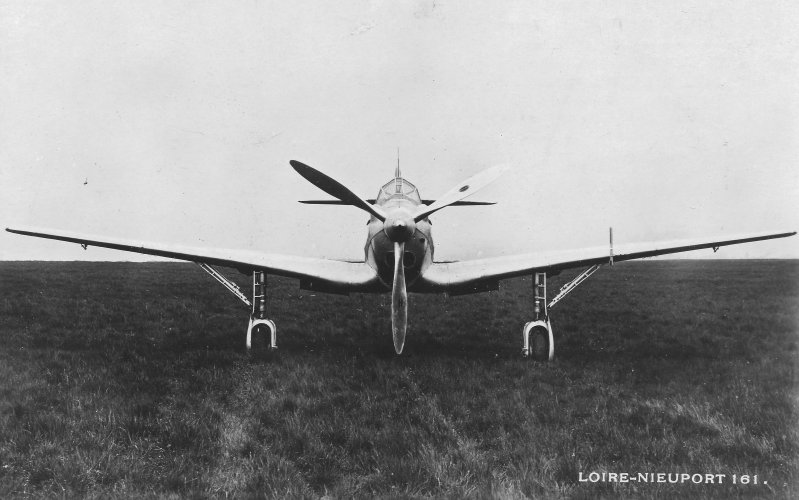
Nieuport Ni.160/161 information
- Thread starter Justo Miranda
- Start date

blackkite
Don't laugh, don't cry, don't even curse, but.....
- Joined
- 31 May 2007
- Messages
- 9,515
- Reaction score
- 9,661
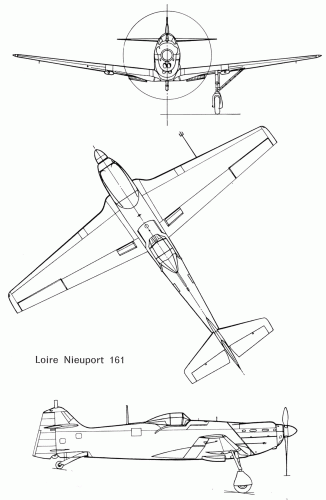
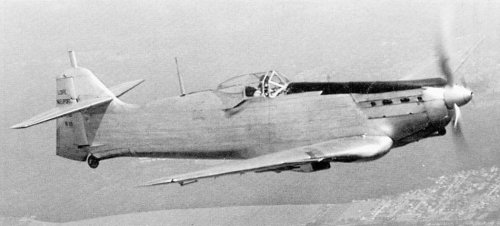
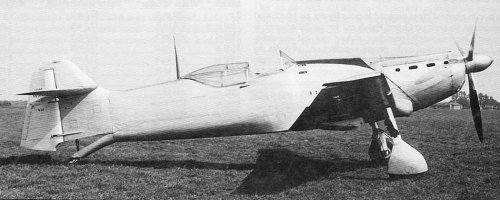
Hi! More LN-160 and LN-161.
http://www.airwar.ru/image/idop/fww2/ni161/
https://en.wikipedia.org/wiki/Loire-Nieuport_161
"When the first Nieuport 161 was completed, its intended engine, the 800 hp (597 kW) Hispano-Suiza 12Ycrs, was not ready so it flew with a 600 hp (447 kW) Hispano-Suiza 12Xcrs driving a two-blade, fixed-pitch propeller in October 1935. This form had the designation Nieuport 160; in March 1936 it flew as the 161 with its Ycrs engine and three-blade, variable-pitch propeller."
http://aviadejavu.ru/Site/Crafts/Craft26499.htm
http://www.airwar.ru/enc/fww2/ni161.html
http://www.airwar.ru/image/idop/fww2/ni161/
https://en.wikipedia.org/wiki/Loire-Nieuport_161
"When the first Nieuport 161 was completed, its intended engine, the 800 hp (597 kW) Hispano-Suiza 12Ycrs, was not ready so it flew with a 600 hp (447 kW) Hispano-Suiza 12Xcrs driving a two-blade, fixed-pitch propeller in October 1935. This form had the designation Nieuport 160; in March 1936 it flew as the 161 with its Ycrs engine and three-blade, variable-pitch propeller."
http://aviadejavu.ru/Site/Crafts/Craft26499.htm
http://www.airwar.ru/enc/fww2/ni161.html
Attachments
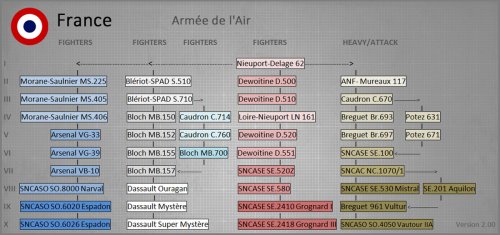
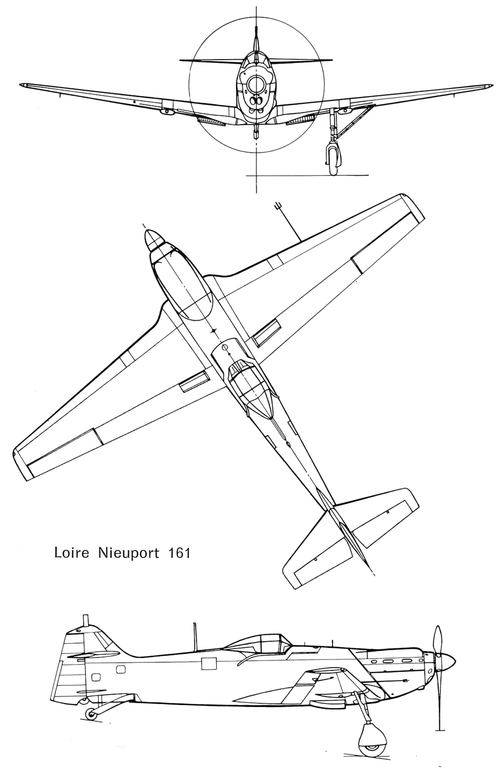

- Joined
- 26 May 2006
- Messages
- 38,289
- Reaction score
- 20,430
With all respect,we have already this topic,
https://www.secretprojects.co.uk/th...t-projects-prototypes.8654/page-2#post-207894
https://www.secretprojects.co.uk/th...t-projects-prototypes.8654/page-2#post-207894
I see. How do I delete a post?With all respect,we have already this topic,
https://www.secretprojects.co.uk/th...t-projects-prototypes.8654/page-2#post-207894
- Joined
- 26 May 2006
- Messages
- 38,289
- Reaction score
- 20,430
I see. How do I delete a post?
They can merge them.
I see.They can merge them.

- Joined
- 11 March 2006
- Messages
- 8,540
- Reaction score
- 5,027
No, no, NO !They can merge them.

The mentioned thread is one of those generic threads, we are trying to get rid of, because they are hard to browse and information about a single type is easily lost, especially, when several types of a manufacturer are mentioned in a single post.
I moved the posts about the Ni.160/161 from that thread here, so new posts about it only in this thread, please.
blackkite
Don't laugh, don't cry, don't even curse, but.....
- Joined
- 31 May 2007
- Messages
- 9,515
- Reaction score
- 9,661

- Joined
- 25 June 2009
- Messages
- 15,515
- Reaction score
- 9,447
NOT LEGIT! Take a closer look at the URL: it has "alternate-timelines" in it, and the caption "Uchrony Nieuport 161 Cazaux" ought to have raised your suspicions.
@Stargazer is right, this belongs to the alternate history section.
...
Long story, the author - DMZ, also a proud France Fights On contributor - makes a convincing case of the LN-160 being picked over the Morane Saulnier MS-406 circa 1935-36; and doing a far better job four years down the road, in 1940.
Correcting the -406 twin disastrous flaws: shitty aerodynamics / performance and low production rates. Performance-wise the LN-161 is like having a D-520 two if not three years earlier, and the Dewoitine was the one and only french fighter that could face a Bf-109 with reasonable chances of survival and success.
...
Long story, the author - DMZ, also a proud France Fights On contributor - makes a convincing case of the LN-160 being picked over the Morane Saulnier MS-406 circa 1935-36; and doing a far better job four years down the road, in 1940.
Correcting the -406 twin disastrous flaws: shitty aerodynamics / performance and low production rates. Performance-wise the LN-161 is like having a D-520 two if not three years earlier, and the Dewoitine was the one and only french fighter that could face a Bf-109 with reasonable chances of survival and success.
I also think that naval dive bombers could have stopped the panzers in at least two critical battles, but they would have needed local air superiority against the 109's impossible to reach except with heavy losses.
Not the place to discuss that, unfortunately. Just: on May 10, 1940 the Aéronavale had three squadrons worth of Vought V-156F (AB-1, 2 and 3 - from memory). But they were swiftly wiped out in a way similar to the Monty Pythons proverbial Swamp castle.
First squadron burned to ashes with its bombed hangar on day one, May 10, 1940.
Second squadron tried to attack bridges and was butchered by flak.
Third squadron tried again the next day, only to miss its Hurricane escort and get wiped out by Bf-109s.
LN-401 / 411 ended the same way, wiped out by flak and -109s trying to destroy bridges. By May 20 there was no dive bombers left.
First squadron burned to ashes with its bombed hangar on day one, May 10, 1940.
Second squadron tried to attack bridges and was butchered by flak.
Third squadron tried again the next day, only to miss its Hurricane escort and get wiped out by Bf-109s.
LN-401 / 411 ended the same way, wiped out by flak and -109s trying to destroy bridges. By May 20 there was no dive bombers left.
Last edited:
gerard.colombelli
ACCESS: Restricted
- Joined
- 29 May 2025
- Messages
- 15
- Reaction score
- 7
C’est un choix délibérer du SATé de ne pas fournir un HS12Y, à cette date ils en ont commandés 1000/1500. Ses trois concurrents que sont les Morane Saunier MS 405, Dewoitine D513 et SPAD 710 eux ont droit au HS 12Y, avec le petit moteur, il arrive à concurrencer ses adversaires. Il voler à 2/3 km/h du plus rapide. Il aurait été logique que cela mette le SATé et le CEMA en alerte sur ses qualité plutôt que de choisir le MS405.Salut! Plus de LN-160 et LN-161.
http://www.airwar.ru/image/idop/fww2/ni161/
https://en.wikipedia.org/wiki/Loire-Nieuport_161 Lorsque le premier Nieuport 161 a été achevé, son moteur, l’Hispano-Suiza 12Ycrs de 800 ch (597 kW), n’était pas prêt et il a volé avec un Hispano-Suiza 12Xcrs de 600 ch (447 kW) entraînant une hélice bipale à pas fixe en octobre 1935. Cette forme portait la désignation Nieuport 160 ; en mars 1936, il a volé sous le nom de 161 avec son moteur Ycrs et son hélice tripale à pas variable.
http://aviadejavu.ru/Site/Crafts/Craft26499.htm
http://www.airwar.ru/enc/fww2/ni161.html
SATé's deliberate decision not to supply an HS12Y was a decision; to date, they have ordered 1,000/1,500. Its three competitors, the Morane Saunier MS 405, Dewoitine D513, and SPAD 710, are entitled to the HS 12Y; with the smaller engine, it can compete with its rivals. It flies at 2/3 km/h (1.2 mph) faster than the fastest. It would have been logical for this to put SATé and the CEMA on alert regarding its qualities rather than choosing the MS405.
(Translation added by Admin)
Last edited by a moderator:

- Joined
- 6 November 2010
- Messages
- 6,361
- Reaction score
- 8,244
@gerard.colombelli I do not use auto-translate on this site, it looks like you do.
Your comment is presented to me in French, which I can read, but many other forum visitors can't.
Please post in English, use machine-translation if English is difficult for you.
Bij voorbaat dank (Dutch for 'thanks in advance' ) - Arjen de Bruine
Your comment is presented to me in French, which I can read, but many other forum visitors can't.
Please post in English, use machine-translation if English is difficult for you.
Bij voorbaat dank (Dutch for 'thanks in advance' ) - Arjen de Bruine
gerard.colombelli
ACCESS: Restricted
- Joined
- 29 May 2025
- Messages
- 15
- Reaction score
- 7
C’est un choix du SATé de ne pas fournir un HS12YCrs de 860cv, à cette date ils ont commandé 1000/1500. Ses trois concurrents que sont le Morane Saunier MS 405, le Dewoitine D513 et le SPAD 710 ils ont droit à la HS 12Y, avec le petit moteur, le 12X (même pas de Model Motor canon Crs) de 690cv, il parvient à rivaliser avec ses adversaires. Il vole à 2/3 km/h du plus rapide. Il aurait été logique que cela mette le SATé et le CEMA en alerte sur sa qualité plutôt que de choisir le MS405. Mais beaucoup des chois 34/35 étaient étranges. 4 avionneurs privilégiés Bloch, Dewoitine, Lioré Olivier et Morane Saunier, Potez qui se sauve sur certains programmes grâce aux connaissances d’un général de l’air qui est décideur, ou encore le chois du Potez 540. C’est également vrai pour les moteurs où Hispano-Suiza avait le monopole des moteurs en ligne et l’avait presque pour les moteurs en étoile, mais le 14AA n’était pas bien refroidi. Gnome Rhône et ses moteurs comme le 14N ont réussi à survivre. en 1929/31 Lorraine produisait pour la coupe Schneider le Radium de 27li mais faute d’un carburant à 100 octane ne dépasse pas les 1400cv Tout comme la Renault 12 Ncr également de 27li et qui bloque à 1200cv (à cette époque -1934- le Merlin de 27 litres ne donne que 790cv) Ils auraient été fiables sur les 900cv et Lorraine avait aussi pour un moteur de ligne en 34 le Sirius de 1000cv pour 30.1li Ces Chois décidèrent de ce qui s’était passé en 40 ... quand le ministre Pierre Cot devra signer la production de l’Amiot 340 et d’une présérie de LN161, les responsables de SAT avec l’ingénieur Bonte ont probablement su le dissuader avant son départ du ministère.
It is a choice of SATé not to supply an HS12YCrs of 860hp, at this date they ordered 1000/1500. Its three competitors which are the Morane Saunier MS 405, the Dewoitine D513 and the SPAD 710 they are entitled to the HS 12Y, with the small engine, the 12X (not even a Model Motor canon Crs) of 690hp, it manages to compete with its adversaries. It flies at 2/3 km/h of the fastest. It would have been logical that this put the SATé and the CEMA on alert on its quality rather than choosing the MS405. But many of the 34/35 choices were strange. 4 preferred aircraft manufacturers Bloch, Dewoitine, Lioré Olivier and Morane Saunier, Potez who escaped on certain programs thanks to the knowledge of an air general who was a decision-maker, or even the choice of the Potez 540. This is also true for the engines where Hispano-Suiza had the monopoly on in-line engines and almost had it for radial engines, but the 14AA was not well cooled. Gnome Rhône and its engines like the 14N managed to survive. In 1929/31, Lorraine produced the 27-liter Radium for the Schneider Cup, but due to a lack of 100-octane fuel, it didn't exceed 1,400 hp. Just like the Renault 12 Ncr, also a 27-liter, which stuck at 1,200 hp (at that time -1934- the 27-liter Merlin only produced 790 hp). They would have been reliable at 900 hp, and Lorraine also had the 1,000 hp Sirius for a 30.1 liter line engine in 1934. These choices decided what had happened in 1940... when Minister Pierre Cot had to sign off on the production of the Amiot 340 and a pre-production LN161, the SAT managers, along with engineer Bonte, probably managed to dissuade him before he left the ministry. It is a deliberate choice of SATé not to supply an HS12YCrs of 860hp, at this date they have ordered 1000/1500. Its three competitors, the Morane Saunier MS 405, Dewoitine D513 and SPAD 710, are entitled to the HS 12Y, with the small engine, the 12X (not even a Crs cannon engine model) of 690hp, it manages to compete with its opponents. It flies at 2/3 km/h from the fastest. It would have been logical that this would put SATé and CEMA on alert about its qualities rather than choosing the MS405. But many choices of 34/35 were strange. 4 aircraft manufacturers favored Bloch, Dewoitine Lioré Olivier and Morane Saunier, Potez who escaped on certain programs thanks to the knowledge of an air general who was a decision maker, hence the choice of the Potez 540. This is also valid for the engines where Hispano-Suiza had the monopoly for in-line engines and almost had it for radial engines but the 14AA was not well cooled. Gnome Rhône and its engines like the 14N managed to survive. in 1929/31 Lorraine produced for the Schneider Cup the Radium of 27li but for lack of a fuel with 100 octane does not exceed 1400hp Just like the Renault 12 Ncr also of 27li and which blocks at 1200hp (at this period -1934- the Merlin of 27 liters gives only 790hp) They would have been reliable on the 900hp and Lorraine also had for an in-line engine in 34 the Sirius of 1000hp for 30.1li These Choices decided what happened in 40 ... when the Minister Pierre Cot would have signed the production of the Amiot 340 and a pre-series of LN161, the managers of SATé with the engineer Bonte surely succeeded in dissuading him before his departure from the ministry.
Translation added - Admin
It is a choice of SATé not to supply an HS12YCrs of 860hp, at this date they ordered 1000/1500. Its three competitors which are the Morane Saunier MS 405, the Dewoitine D513 and the SPAD 710 they are entitled to the HS 12Y, with the small engine, the 12X (not even a Model Motor canon Crs) of 690hp, it manages to compete with its adversaries. It flies at 2/3 km/h of the fastest. It would have been logical that this put the SATé and the CEMA on alert on its quality rather than choosing the MS405. But many of the 34/35 choices were strange. 4 preferred aircraft manufacturers Bloch, Dewoitine, Lioré Olivier and Morane Saunier, Potez who escaped on certain programs thanks to the knowledge of an air general who was a decision-maker, or even the choice of the Potez 540. This is also true for the engines where Hispano-Suiza had the monopoly on in-line engines and almost had it for radial engines, but the 14AA was not well cooled. Gnome Rhône and its engines like the 14N managed to survive. In 1929/31, Lorraine produced the 27-liter Radium for the Schneider Cup, but due to a lack of 100-octane fuel, it didn't exceed 1,400 hp. Just like the Renault 12 Ncr, also a 27-liter, which stuck at 1,200 hp (at that time -1934- the 27-liter Merlin only produced 790 hp). They would have been reliable at 900 hp, and Lorraine also had the 1,000 hp Sirius for a 30.1 liter line engine in 1934. These choices decided what had happened in 1940... when Minister Pierre Cot had to sign off on the production of the Amiot 340 and a pre-production LN161, the SAT managers, along with engineer Bonte, probably managed to dissuade him before he left the ministry. It is a deliberate choice of SATé not to supply an HS12YCrs of 860hp, at this date they have ordered 1000/1500. Its three competitors, the Morane Saunier MS 405, Dewoitine D513 and SPAD 710, are entitled to the HS 12Y, with the small engine, the 12X (not even a Crs cannon engine model) of 690hp, it manages to compete with its opponents. It flies at 2/3 km/h from the fastest. It would have been logical that this would put SATé and CEMA on alert about its qualities rather than choosing the MS405. But many choices of 34/35 were strange. 4 aircraft manufacturers favored Bloch, Dewoitine Lioré Olivier and Morane Saunier, Potez who escaped on certain programs thanks to the knowledge of an air general who was a decision maker, hence the choice of the Potez 540. This is also valid for the engines where Hispano-Suiza had the monopoly for in-line engines and almost had it for radial engines but the 14AA was not well cooled. Gnome Rhône and its engines like the 14N managed to survive. in 1929/31 Lorraine produced for the Schneider Cup the Radium of 27li but for lack of a fuel with 100 octane does not exceed 1400hp Just like the Renault 12 Ncr also of 27li and which blocks at 1200hp (at this period -1934- the Merlin of 27 liters gives only 790hp) They would have been reliable on the 900hp and Lorraine also had for an in-line engine in 34 the Sirius of 1000hp for 30.1li These Choices decided what happened in 40 ... when the Minister Pierre Cot would have signed the production of the Amiot 340 and a pre-series of LN161, the managers of SATé with the engineer Bonte surely succeeded in dissuading him before his departure from the ministry.
Translation added - Admin
Last edited by a moderator:
- Joined
- 6 November 2010
- Messages
- 6,361
- Reaction score
- 8,244
@gerard.colombelli I do not use auto-translate on this site, it looks like you do.
Your comment is presented to me in French, which I can read, but many other forum visitors can't.
Please post in English, use machine-translation if English is difficult for you.
Bij voorbaat dank (Dutch for 'thanks in advance' ) - Arjen de Bruine
Your comment is presented to me in French, which I can read, but many other forum visitors can't.
Please post in English, use machine-translation if English is difficult for you.
Bij voorbaat dank (Dutch for 'thanks in advance' ) - Arjen de Bruine
gerard.colombelli
ACCESS: Restricted
- Joined
- 29 May 2025
- Messages
- 15
- Reaction score
- 7
@gerard.colombelli Je n’utilise pas la traduction automatique sur ce site, il semble que vous le fassiez.
Votre commentaire m’est présenté en français, que je peux lire, mais beaucoup d’autres visiteurs du forum ne le peuvent pas.
Veuillez poster en anglais, utilisez la traduction automatique si l’anglais vous est difficile.
Bij voorbaat dank (Néerlandais pour 'merci d’avance') - Arjen de Bruine
Normalement je joins une traduction faite avec reverso. J’ai compris le problème.
Normalement, je joins une traduction effectuée avec reverso. J’ai bien compris le problème.
gerard.colombelli
ACCESS: Restricted
- Joined
- 29 May 2025
- Messages
- 15
- Reaction score
- 7
Merci pour cet offre. Oui, j’ai déjà communiqué sur Facebook dans le groupe AVIATION FRANÇAISE 1935-1975 et autres nations combattantes ou non. sur cet avion, suite à des lecture et le croisement d’informations que j’avais eu vers 1978.Dites-moi si vous avez besoin d’aide - salutations d’un autre passionné d’aviation française. Je suis probablement tombé sur vos publications sur l’aviation sur Facebook.
Merci pour cette offre. Oui, j’ai déjà communiqué sur Facebook dans le groupe AVIATION FRANÇAISE 1935-1975 et d’autres nations combattant ou non. sur cet avion, suite à la lecture et au recoupement des informations que j’avais sur 1978.

- Joined
- 22 January 2006
- Messages
- 4,436
- Reaction score
- 2,801
Vous pouvez utiliser Google si vous le souhaitezNormalement je joins une traduction faite avec reverso. J’ai compris le problème.
Normalement, je joins une traduction effectuée avec reverso. J’ai bien compris le problème.
gerard.colombelli
ACCESS: Restricted
- Joined
- 29 May 2025
- Messages
- 15
- Reaction score
- 7
Comme vous l’avez peut-être vu, il est en deux langues. Reverso est un autre programme de traduction.Vous pouvez utiliser Google si vous le souhaitez
- Joined
- 6 November 2010
- Messages
- 6,361
- Reaction score
- 8,244
Try DeepL
https://www.deepl.com/fr/translatorOr Google Translate
https://translate.google.com/?sl=fr&tl=en&op=translate
https://www.deepl.com/fr/translatorOr Google Translate
https://translate.google.com/?sl=fr&tl=en&op=translate
gerard.colombelli
ACCESS: Restricted
- Joined
- 29 May 2025
- Messages
- 15
- Reaction score
- 7
Je ne vois pas la différence avec Reverso, mais bon... https://www.reverso.net/traduction-texte
- Joined
- 15 February 2024
- Messages
- 691
- Reaction score
- 1,875
You probably mean STAé (Service Technique Aéronautique)It is a choice of SATé
This list is valid for the first edition of the MT-CPT.4 program published in July 1934. You miss the Loire 250 and the Bloch 150.Its three competitors which are the Morane Saunier MS 405, the Dewoitine D513 and the SPAD 710
Par contre, votre logiciel de traduction ne fonctionne pas : au lieu d'afficher vos interventions en deux langues, elles s'affichent deux fois en français. C'est la raison pour laquelle plusieurs intervenants vous proposent leur aide ou une solution alternative.
However, your translation software is not working: instead of displaying your contributions in two languages, they are appearing twice in French. This is why several contributors are offering their help or an alternative solution.
gerard.colombelli
ACCESS: Restricted
- Joined
- 29 May 2025
- Messages
- 15
- Reaction score
- 7
Oui, je parle de la SATé, du service technique avec l’inspecteur général Bonte et quelques autres en son sein. Ils ont fait des choix étranges, comme le Bloch 150 qui lors de ses tests n’a pas pu décoller, mais on a demandé à Bloch de réviser sa copie, tandis que Dewoitine qui avait des problèmes de stabilité avec son D513, qu’il pouvait réviser, l’a abandonné et a été mis sur liste noire. Le D520 n’a existé que grâce au fait que le responsable technique de l’État a pu contourner ce service dès que Pierre Cot a quitté son ministère.Vous voulez probablement dire STAé (Service Technique Aéronautique)
Cette liste est valable pour la première édition du programme MT-CPT.4 publiée en juillet 1934. Vous manquez la Loire 250 et la Bloch 150.
Par contre, votre logiciel de traduction ne fonctionne pas : au lieu d’afficher vos interventions en deux langues, elles s’affichent deux fois en français. C’est la raison pour laquelle plusieurs intervenants vous proposent leur aide ou une solution alternative.
Cependant, votre logiciel de traduction ne fonctionne pas : au lieu d’afficher vos contributions en deux langues, elles apparaissent deux fois en français. C’est pourquoi plusieurs contributeurs proposent leur aide ou une solution alternative.
Admin Translation done with Google.
"Yes, I'm talking about the SATé, the technical department with Inspector General Bonte and a few others within it. They made some strange choices, like the Bloch 150, which failed to take off during its tests, but Bloch was asked to revise his copy, while Dewoitine, who had stability problems with his D513, which he could have revised, abandoned it and was blacklisted. The D520 only existed because the state's technical manager was able to bypass this department as soon as Pierre Cot left his ministry."
Last edited by a moderator:
- Joined
- 6 November 2010
- Messages
- 6,361
- Reaction score
- 8,244
Try again.
Dutch:Translation by Google. Yes, I'm talking about the SATé, the technical department with Inspector General Bonte and a few others in it. They made some strange choices, like the Bloch 150, which during its tests couldn't take off, but Bloch was asked to revise its copy, while Dewoitine, which had stability problems with its D513, which it could revise, abandoned it and was blacklisted. The D520 only existed because the State's technical manager was able to bypass this service as soon as Pierre Cot left his ministry.
Translated with DeepL.com (free version)
Vertaling door Google. Ja, ik heb het over de SATé, de technische afdeling met inspecteur-generaal Bonte en een paar anderen erin. Ze maakten wat vreemde keuzes, zoals de Bloch 150, die tijdens de tests niet kon opstijgen, maar Bloch werd gevraagd zijn exemplaar te reviseren, terwijl Dewoitine, dat stabiliteitsproblemen had met zijn D513, die het wel kon reviseren, ervan afzag en op de zwarte lijst kwam. De D520 bestond alleen omdat de technisch manager van de Staat deze dienst kon omzeilen zodra Pierre Cot zijn ministerie verliet.
Vertaald met DeepL.com (gratis versie)
gerard.colombelli
ACCESS: Restricted
- Joined
- 29 May 2025
- Messages
- 15
- Reaction score
- 7
Bon, je teste DeeLp... Je n’ai pas parlé du Loire 250 (qui avait des problèmes de stabilité, mais une fois le stabilisateur vertical agrandi s’est avéré bon) et du Bloch Mb150 qui n’a pas pu décoller lors des essais (il a dû être presque totalement modifié pour pouvoir décoller et est devenu le Mb151 qui ne volait qu’à une vitesse inférieure à 460 km/h alors que le Loire 250 volait à 480 km/h mais a été refusé par le et se sont retrouvés au fond d’un hangar) car ils sont équipés de moteurs étoile. Le HS 14AA pour la Loire et le GR14N pour le Bloch. Surtout, le Loire Nieuport 160 est volontairement sous-équipé, comparé au biplan SPAD710 à queue papillon, le Dewoitine D513 et le Morane Saunier MS405 du programme de 1934. Le retard de LN dans l’installation de la HS12Y (environ 12/18 mois) signifiait qu’elle n’était pas prête à aller de l’avant, même si une MS405 de pré-production avait déjà été commandée. N’oublions pas que ce dernier nécessitait environ 20 000h pour être produit, plus qu’un Potez 631 qui ne nécessitait que 12 000h à l’époque, et que l’AA avait commandé des moteurs 1000/1500 Hispano-suiza 12Ycrs 860hp. Ils avaient donc des stocks à fournir 1 par participant (n’oubliez pas que le D510 en était équipé).Vous voulez probablement dire STAé (Service Technique Aéronautique)
Cette liste est valable pour la première édition du programme MT-CPT.4 publiée en juillet 1934. Vous manquez la Loire 250 et la Bloch 150.
Par contre, votre logiciel de traduction ne fonctionne pas : au lieu d’afficher vos interventions en deux langues, elles s’affichent deux fois en français. C’est la raison pour laquelle plusieurs intervenants vous proposent leur aide ou une solution alternative.
Cependant, votre logiciel de traduction ne fonctionne pas : au lieu d’afficher vos contributions en deux langues, elles apparaissent deux fois en français. C’est pourquoi plusieurs contributeurs proposent leur aide ou une solution alternative.
Admin:
"I didn't mention the Loire 250 (which had stability problems, but once the vertical stabilizer was enlarged it proved to be good) and the Bloch Mb150 which could not take off during the tests (it had to be almost completely modified to be able to take off and became the Mb151 which only flew at a speed below 460 km/h while the Loire 250 flew at 480 km/h but was rejected by the and ended up at the bottom of a hangar) because they are equipped with star engines. The HS 14AA for the Loire and the GR14N for the Bloch. Above all, the Loire Nieuport 160 is deliberately under-equipped, compared to the SPAD710 butterfly-tail biplane, the Dewoitine D513 and the Morane Saunier MS405 of the 1934 program. LN's delay in installing the HS12Y (about 12/18 months) meant that it was not ready to go ahead, even though a pre-production MS405 had already been ordered. Let's not forget that the latter required about 20,000h to be produced, more than a Potez 631 which only required 12,000h at the time, and that the AA had ordered 1000/1500 Hispano-suiza 12Ycrs 860hp engines. They therefore had stocks to supply 1 per entrant (don't forget that the D510 was equipped with them)."
Attachments
Last edited by a moderator:
gerard.colombelli
ACCESS: Restricted
- Joined
- 29 May 2025
- Messages
- 15
- Reaction score
- 7
Justement, le LN161 volait à 487 km/h pour un avion de pré-production avec un 12Ycrs de 860 ch. Avec quelques améliorations aérodynamiques, des pots d’échappement propulsifs et, surtout, le HS 12Y 31 de 920 ch ou le 41 de 910 ch, ou encore le 51 de 1100 ch, il aurait aussi bien performé que le Me 109E, qui ne pouvait voler qu’à 560 km/h avec ses radiateurs fermés, c’est-à-dire pendant 2/3 minutes. De plus, son plafond opérationnel était plus élevé de 500 m, ce qui lui aurait donné l’avantage sur tous ses concurrents.@Stargazer a raison, cela appartient à la section historique alternatif.
...
Pour une longue histoire, l’auteur - DMZ, également fier contributeur de France Fights On - fait un cas convaincant du LN-160 choisi plutôt que du Morane Saulnier MS-406 vers 1935-36 ; et faisant un bien meilleur travail quatre ans plus tard, en 1940.
Correction des défauts désastreux du jumeau -406 : aérodynamique / performances de merde et faibles cadences de production. En termes de performances, le LN-161 est comme avoir un D-520 deux, voire trois ans plus tôt, et le Dewoitine était le seul et unique chasseur français qui pouvait affronter un Bf-109 avec des chances raisonnables de survie et de succès.
Admin:
"Indeed, the LN161 flew at 487 km/h for a pre-production aircraft with an 860 hp 12Ycrs. With some aerodynamic improvements, propulsive exhausts and, above all, the 920 hp HS 12Y 31 or the 910 hp 41, or even the 1100 hp 51, it would have performed as well as the Me 109E, which could only fly at 560 km/h with its radiators closed, that is to say for 2/3 minutes. In addition, its operational ceiling was 500 m higher, which would have given it the advantage over all its competitors."
Attachments
Last edited by a moderator:
- Joined
- 15 February 2024
- Messages
- 691
- Reaction score
- 1,875
The SATé is unknown to me. The Service Technique Aéronautique was the STAé.Oui, je parle de la SATé, du service technique avec l’inspecteur général Bonte
Bonte was not inspecteur général at that period, he was at the CEMA. He was affected to STAé many years later.
I do not know where this strange story comes from, but this is an anachrony. The D.520 was designed later for another program, the A23 lauched in June 1936 by Pierre Cot.Le D520 n’a existé que grâce au fait que le responsable technique de l’État a pu contourner ce service dès que Pierre Cot a quitté son ministère.
gerard.colombelli
ACCESS: Restricted
- Joined
- 29 May 2025
- Messages
- 15
- Reaction score
- 7
http://sam40.fr/le-dewoitine--un-grand-chasseur-qui-revenait-de-loin/
les deux organismes SATé et CEMA étaient liés dans les choix matériel. SI le programme du D520 à réussi à sortir, c’est grâce au responsable technique du Gouvernement en 38, il a eu l’occasion de l’essayer.
C’est bien cela, le projet si il est sur un programme de 36, les services technique avaient Blacklister Dewoitine, en plus il trempait dans des magouilles pour devenir responsable technique de Latécoère, suite à des différents avec le patron de cette entreprise. En Octobre 38, c’est le responsable technique du gouvernement présent depuis 36 qui a pris la main et à mis au placard les responsables des CEMA et SATé. Pour le D520 Trois prototypes furent construits : le premier, qui vola la première fois le 2 octobre 1938, équipé d’un moteur Hispano-Suiza 12Y-21 de 890 ch, ne parviendra pas à dépasser 480 km/h. À la suite d’un accident, il sera remotorisé avec un 12Y29 équipé d’une hélice à pas variable et, piloté par le pilote d’essai Léopold Galy, atteindra alors la vitesse de 825 km/h en piqué. Hors le LN161 lui en 35/36 volait déjà avec le petit 860cv à 487 km/h
automatic translation:
both SATé and CEMA were involved in the choice of equipment. IF the D520 program managed to get off the ground, it was thanks to the government's technical director in '38, who had the opportunity to try it out.
That's right, if the project was based on a program from '36, the technical services had blacklisted Dewoitine, and he was also involved in some shenanigans to become technical manager of Latécoère, following differences with the company's boss. In October '38, the government's technical manager, who had been with the company since '36, took over and dismissed the CEMA and SATé managers. Three prototypes were built for the D520: the first, which flew for the first time on October 2, 1938, was powered by a Hispano-Suiza 12Y-21 890 hp engine, but failed to exceed 480 kph. Following an accident, it was re-engined with a 12Y29 fitted with a controllable-pitch propeller and, piloted by test pilot Léopold Galy, reached a speed of 825 km/h in a nose-down attitude. By 35/36, however, the LN161 was already flying at 487 km/h with the little 860hp.
Translated with DeepL.com (free version)
les deux organismes SATé et CEMA étaient liés dans les choix matériel. SI le programme du D520 à réussi à sortir, c’est grâce au responsable technique du Gouvernement en 38, il a eu l’occasion de l’essayer.
C’est bien cela, le projet si il est sur un programme de 36, les services technique avaient Blacklister Dewoitine, en plus il trempait dans des magouilles pour devenir responsable technique de Latécoère, suite à des différents avec le patron de cette entreprise. En Octobre 38, c’est le responsable technique du gouvernement présent depuis 36 qui a pris la main et à mis au placard les responsables des CEMA et SATé. Pour le D520 Trois prototypes furent construits : le premier, qui vola la première fois le 2 octobre 1938, équipé d’un moteur Hispano-Suiza 12Y-21 de 890 ch, ne parviendra pas à dépasser 480 km/h. À la suite d’un accident, il sera remotorisé avec un 12Y29 équipé d’une hélice à pas variable et, piloté par le pilote d’essai Léopold Galy, atteindra alors la vitesse de 825 km/h en piqué. Hors le LN161 lui en 35/36 volait déjà avec le petit 860cv à 487 km/h
automatic translation:
both SATé and CEMA were involved in the choice of equipment. IF the D520 program managed to get off the ground, it was thanks to the government's technical director in '38, who had the opportunity to try it out.
That's right, if the project was based on a program from '36, the technical services had blacklisted Dewoitine, and he was also involved in some shenanigans to become technical manager of Latécoère, following differences with the company's boss. In October '38, the government's technical manager, who had been with the company since '36, took over and dismissed the CEMA and SATé managers. Three prototypes were built for the D520: the first, which flew for the first time on October 2, 1938, was powered by a Hispano-Suiza 12Y-21 890 hp engine, but failed to exceed 480 kph. Following an accident, it was re-engined with a 12Y29 fitted with a controllable-pitch propeller and, piloted by test pilot Léopold Galy, reached a speed of 825 km/h in a nose-down attitude. By 35/36, however, the LN161 was already flying at 487 km/h with the little 860hp.
Translated with DeepL.com (free version)
Last edited by a moderator:

- Joined
- 15 February 2024
- Messages
- 691
- Reaction score
- 1,875
Ok, this is definitively not the SATé, but the STAé.both SATé and CEMA were involved in the choice of equipment.
They were not really linked in the choice: the STAé was mainly an administrative service. It was the intermediate between political people (ministry) and technical organisms (Industry).
The CEMA was the was composed of the technical experts in charge of the evaluation of aircraft and equipment. It verified and provided the measured data to determine the official characteristics in order to validate the payment of contracts and authorize entry into service. The CEMA never choose anything. Its role was the reference for taking decision, but never involved in the decision itself.
gerard.colombelli
ACCESS: Restricted
- Joined
- 29 May 2025
- Messages
- 15
- Reaction score
- 7
Ils n’étaient pas dans les choix, Ha, vers 1978 dans le Moniteur de l’aéronautique, une publication de l’époque, il avait été dit que, entre autres le choix de n’avoir que Hispano-suiza comme fournisseur pour les moteurs en ligne et second Gnome Rhône pour les moteurs étoiles (avec sujassent le 14AA de HS qui aurait probablement pris la place s’il n’avait pas eu autant de problèmes. plusieurs programmes ayant ce moteur comme le prototype LeO45) et l’achat du 1000/1500 HS12Y de 860ch, qui procurait une rente à H-S, moteur déjà dépassé, qui n’a pas évolué à partir de cette date à 38 et a permis à Marc Birkigt de se concentrer sur le développement du HS404 afin de ne pas payer de royalties à Oerlikon pour le HS9. Le CEMA avait déjà été sollicité sur un précédent appel d’offres ou ils avaient mis un avion hors de combat et avaient dû le remettre et le faire commander parce qu’un général de l’air, pilote d’état était venu essayer tous les modèles à voir. ou comme pour le Breguet Vultur ou le pilote d’essai s’est offusqué parce qu’il ne comprenait pas l’avion. Il s’agissait d’un prototype et donc à améliorer, ce qui a été fait. Ils influencent la politique entre autres Pierre Cot pour les choix de commandement.Ok, ce n’est définitivement pas le SATé, mais le STAé.
Ils n’étaient pas vraiment liés dans le choix : le STAé était avant tout un service administratif. Il était l’intermédiaire entre les gens politiques (ministère) et les organismes techniques (Industrie).
Le CEMA était composé des experts techniques en charge de l’évaluation des aéronefs et des équipements. Il a vérifié et fourni les données mesurées pour déterminer les caractéristiques officielles afin de valider le paiement des contrats et d’autoriser l’entrée en service. Le CEMA ne choisit jamais rien. Son rôle était celui de référence pour la prise de décision, mais il n’a jamais été impliqué dans la décision elle-même.
Admin:
"They were not in the choices, Ha, around 1978 in the Moniteur de l’aéronautique, a publication of the time, it was said that, among other things, the choice of having only Hispano-suiza as supplier for in-line engines and second Gnome Rhône for star engines (with sujassent the 14AA of HS which would probably have taken the place if it had not had so many problems. several programs having this engine like the prototype LeO45) and the purchase of the 1000/1500 HS12Y of 860hp, which provided an income to H-S, an already outdated engine, which did not evolve from that date to 38 and allowed Marc Birkigt to concentrate on the development of the HS404 in order not to pay royalties to Oerlikon for the HS9. The CEMA had already been approached about a previous call for tenders where they had put an aircraft out of action and had to hand it over and have it ordered because an air general, a state pilot, had come to try out all the models. Or as for the Breguet Vultur where the test pilot was offended because he didn't understand the aircraft. It was a prototype and therefore needed to be improved, which was done. They influence politics, including Pierre Cot, for the command choices."
Attachments
Last edited by a moderator:
gerard.colombelli
ACCESS: Restricted
- Joined
- 29 May 2025
- Messages
- 15
- Reaction score
- 7
http://sam40.fr/nieuport-161-et-glo...x-meilleurs-chasseurs-des-programmes-de-1934/http://sam40.fr/le-nieuport-161-165-un-autre-destin-pour-un-chasseur-dexception/https://aviadrix.blogspot.com/2012/01/le-nieuport-161-le-favori-initial-1ere.htmlPrise sur le site de DRIX : La série d’Icare sur la Bataille de France m’a montré que le Morane 406 n’avait jamais été un chasseur digne de ce nom.Ok, ce n’est définitivement pas le SATé, mais le STAé.
Ils n’étaient pas vraiment liés dans le choix : le STAé était avant tout un service administratif. Il était l’intermédiaire entre les gens politiques (ministère) et les organismes techniques (Industrie).
Le CEMA était composé des experts techniques en charge de l’évaluation des aéronefs et des équipements. Il a vérifié et fourni les données mesurées pour déterminer les caractéristiques officielles afin de valider le paiement des contrats et d’autoriser l’entrée en service. Le CEMA ne choisit jamais rien. Son rôle était celui de référence pour la prise de décision, mais il n’a jamais été impliqué dans la décision elle-même.
Bien plus tard, alors qu’il était encore possible de consulter les archives de Flight Global, j’ai constaté que nos alliés n’avaient jamais été maltraités par le MS 406.
J’avais lu l’histoire des essais en vol de Louis Bonte.
J’ai compris alors que ce livre n’était qu’un plaidoyer pour justifier sa commande du MS 406 (mais aussi son ordre du Lioré 451).
Récemment, j’ai compris que les paroles des acteurs d’avant-guerre avaient été prononcées après la mort accidentelle de l’ingénieur général Louis Bonte le 1er juin 1971.
Cela signifie qu’il avait joué, par son autorité dictatoriale, un rôle dans ce choix et dans l’omerta qui a suivi sur ces faits affligeants.
En tant que citoyen, j’aurais aimé qu’il m’explique ses véritables motivations (sinon, quel pouvoir l’a influencé).
Ce qui est intéressant, cependant, c’est qu’après la fin de cette guerre, il a joué un rôle plutôt positif dans la poussée de Dassault.
Comprendre qui peut le faire.
Admin:
"Taken from the DRIX website: The Icare series on the Battle of France showed me that the Morane 406 had never been a fighter worthy of the name.
Much later, when it was still possible to consult the Flight Global archives, I realized that our allies had never been mistreated by the MS 406.
I had read the history of Louis Bonte's flight tests.
I understood then that this book was simply a plea to justify his order for the MS 406 (but also his order for the Lioré 451).
Recently, I realized that the words of the pre-war actors were spoken after the accidental death of General Engineer Louis Bonte on June 1, 1971.
This means that he had played a role, through his dictatorial authority, in this choice and in the subsequent silence surrounding these distressing events.
As a citizen, I would have liked him to explain his true motivations (if not, what power influenced him).
What's interesting, however, is that after the end of the war, he played a rather positive role in Dassault's rise.
Understanding who can do that."
Attachments
Last edited by a moderator:
- Joined
- 6 November 2010
- Messages
- 6,361
- Reaction score
- 8,244
Comprendre qui peut le faire.
Without noticeable result. I am guessing you translate from French to English by DeepL, then reply through Reverso which converts English to French. Again.Bon, je teste DeeLp...
gerard.colombelli
ACCESS: Restricted
- Joined
- 29 May 2025
- Messages
- 15
- Reaction score
- 7

- Joined
- 25 June 2009
- Messages
- 15,515
- Reaction score
- 9,447
What's the deal with all the French language all of a sudden?
I thought this was an English-language forum!
I recently complained about some members commenting in other languages, so it's only fair that I do it here as well (despite the fact French is my native language). Please respect the members of this international forum and make an effort at TRANSLATING! (Google Translate is a valuable tool when used properly).
I thought this was an English-language forum!
I recently complained about some members commenting in other languages, so it's only fair that I do it here as well (despite the fact French is my native language). Please respect the members of this international forum and make an effort at TRANSLATING! (Google Translate is a valuable tool when used properly).
Similar threads
-
Potez and Potez-CAMS flying boats and seaplanes
- Started by Justo Miranda
- Replies: 47
-
-
-
-