- Joined
- 3 June 2011
- Messages
- 20,895
- Reaction score
- 19,084


Finally officially confirmed!!
A J-20 fitted with WS-15 has already taken its maiden flight. Apparently the speaker in that video is a famous academician from the Chinese Academy of Engineering. He is allegedly specialized in turbofan engines.
Video by @星辰大海SLC on Bilibili.
View: https://twitter.com/Nickatgreat1220/status/1602687065749131271

Finally officially confirmed!!
A J-20 fitted with WS-15 has already taken its maiden flight. Apparently the speaker in that video is a famous academician from the Chinese Academy of Engineering. He is allegedly specialized in turbofan engines.
Video by @星辰大海SLC on Bilibili.
View: https://twitter.com/Nickatgreat1220/status/1602687065749131271
Finally officially confirmed!!
A J-20 fitted with WS-15 has already taken its maiden flight. Apparently the speaker in that video is a famous academician from the Chinese Academy of Engineering. He is allegedly specialized in turbofan engines.
Video by @星辰大海SLC on Bilibili.
View: https://twitter.com/Nickatgreat1220/status/1602687065749131271
So the WS-15 is the 4th gen with T/W = 10? Or?

No, the thrust-weight ratio is only one of the characteristics, not decisive.interesting. This old Chinese paper from 2003 that discusses the development of what led to the J-20. These same numbers show up as well. They describe 4th gen fighters as having engines with a T/W of 8. and Fifth gen fighters as having a T/W of 10. Seems like it's a goal/benchmark by which they differentiate generations?
(Page 4)
https://thediplomat.com/wp-content/uploads/2022/02/thediplomat_2022-02-14-191931.pdf

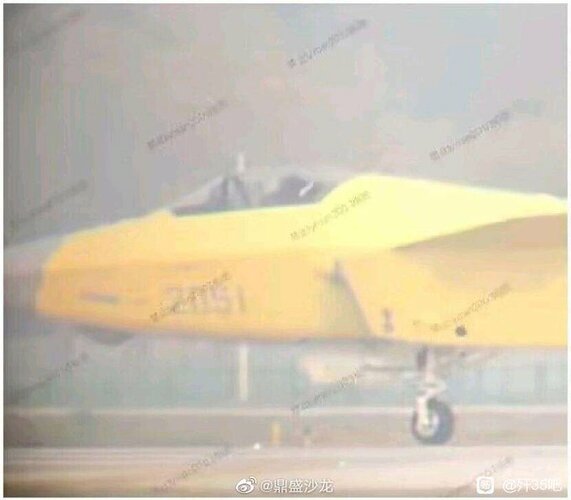


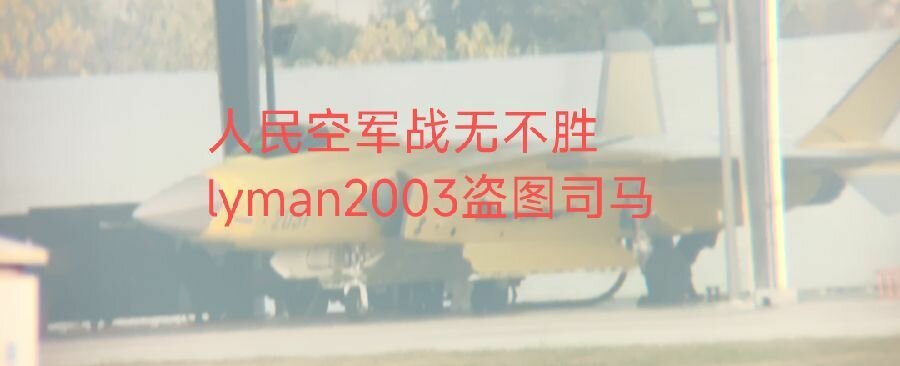
New prototype no. 2051 spotted with some major changes to the area behind the canopy or canopy itself.
Allegedly the rear section behind the cockpit received some refinements similar to the J-35's different spine to reduce drag and improve transonic performance.
Also, some say this might be the variant powered by the WS-15, even if according to eyewitnesses it still uses WS-10C engines.
View attachment 689980View attachment 689981
New prototype no. 2051 spotted with some major changes to the area behind the canopy or canopy itself.
Allegedly the rear section behind the cockpit received some refinements similar to the J-35's different spine to reduce drag and improve transonic performance.
Also, some say this might be the variant powered by the WS-15, even if according to eyewitnesses it still uses WS-10C engines.
View attachment 689980View attachment 689981
First J-20 with WS-15 engines if true? That will boost the performance by quite a lot I would imagine Deino, I would also tend to think that any further J-20s fitted out with the WS-15 will be able to supercruise as well something that they were lacking on previous models.
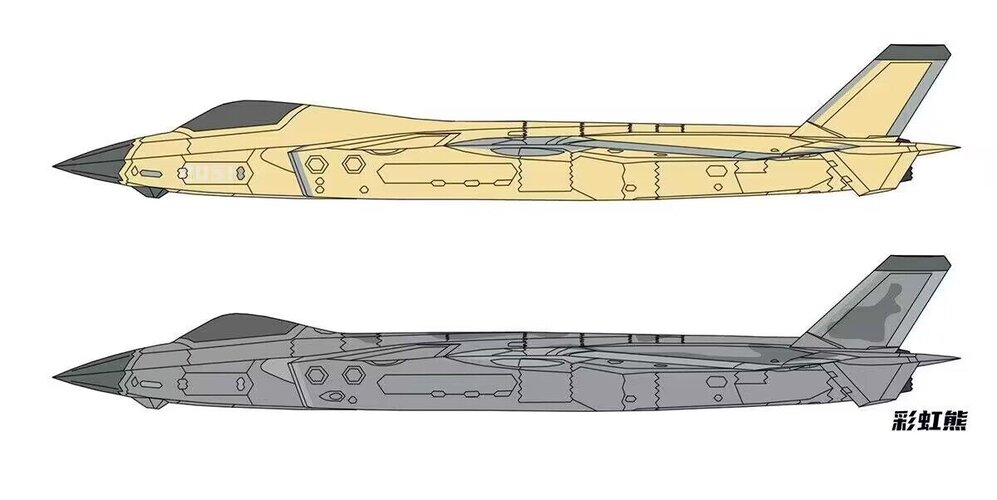
Here's already a first side profile available for comparison: On top prototype no. 2051 aka eventually J-20B and on the bottom the regular J-20A.
View attachment 689989

New prototype no. 2051 spotted with some major changes to the area behind the canopy or canopy itself.
Allegedly the rear section behind the cockpit received some refinements similar to the J-35's different spine to reduce drag and improve transonic performance.
Also, some say this might be the variant powered by the WS-15, even if according to eyewitnesses it still uses WS-10C engines.
View attachment 689980View attachment 689981
First J-20 with WS-15 engines if true? That will boost the performance by quite a lot I would imagine Deino, I would also tend to think that any further J-20s fitted out with the WS-15 will be able to supercruise as well something that they were lacking on previous models.
What engine does the bulk of the existing J20 fleet use? I've seen different versions of the WS-10 and AL-31 mentioned in stuff online but it isn't clear which replaced what when or what the bulk of the production models fly with.
Focusing on T/W of 10+ is probably the downfall of both the Russian IZD30 and the Chinese WS15. Non AB performance in the supercruise envelope is more important than raw T/W. Big cores for low bypass ratio / supercruise thrust are not lightweight. Trying to push high T/W and supercruise may be well beyond the state of the art, at least for them.interesting. This old Chinese paper from 2003 that discusses the development of what led to the J-20. These same numbers show up as well. They describe 4th gen fighters as having engines with a T/W of 8. and Fifth gen fighters as having a T/W of 10. Seems like it's a goal/benchmark by which they differentiate generations?
(Page 4)
https://thediplomat.com/wp-content/uploads/2022/02/thediplomat_2022-02-14-191931.pdf
What makes you think that the WS-15 will have poor dry thrust in the supercruise envelope.Focusing on T/W of 10+ is probably the downfall of both the Russian IZD30 and the Chinese WS15. Non AB performance in the supercruise envelope is more important than raw T/W. Big cores for low bypass ratio / supercruise thrust are not lightweight. Trying to push high T/W and supercruise may be well beyond the state of the art, at least for them.interesting. This old Chinese paper from 2003 that discusses the development of what led to the J-20. These same numbers show up as well. They describe 4th gen fighters as having engines with a T/W of 8. and Fifth gen fighters as having a T/W of 10. Seems like it's a goal/benchmark by which they differentiate generations?
(Page 4)
https://thediplomat.com/wp-content/uploads/2022/02/thediplomat_2022-02-14-191931.pdf
Focusing on T/W of 10+ is probably the downfall of both the Russian IZD30 and the Chinese WS15. Non AB performance in the supercruise envelope is more important than raw T/W. Big cores for low bypass ratio / supercruise thrust are not lightweight. Trying to push high T/W and supercruise may be well beyond the state of the art, at least for them.interesting. This old Chinese paper from 2003 that discusses the development of what led to the J-20. These same numbers show up as well. They describe 4th gen fighters as having engines with a T/W of 8. and Fifth gen fighters as having a T/W of 10. Seems like it's a goal/benchmark by which they differentiate generations?
(Page 4)
https://thediplomat.com/wp-content/uploads/2022/02/thediplomat_2022-02-14-191931.pdf
I’m not saying that it will have poor supercruise performance with a 0.25 bypass ratio, although there is more to supercruise performance than just low bypass ratio.What makes you think that the WS-15 will have poor dry thrust in the supercruise envelope.Focusing on T/W of 10+ is probably the downfall of both the Russian IZD30 and the Chinese WS15. Non AB performance in the supercruise envelope is more important than raw T/W. Big cores for low bypass ratio / supercruise thrust are not lightweight. Trying to push high T/W and supercruise may be well beyond the state of the art, at least for them.interesting. This old Chinese paper from 2003 that discusses the development of what led to the J-20. These same numbers show up as well. They describe 4th gen fighters as having engines with a T/W of 8. and Fifth gen fighters as having a T/W of 10. Seems like it's a goal/benchmark by which they differentiate generations?
(Page 4)
https://thediplomat.com/wp-content/uploads/2022/02/thediplomat_2022-02-14-191931.pdf
We’ve seen 4th gen single crystal turbine blades displayed at air shows as far back as 2018 so I’m not sure you’re quite up to date with the technologies thereI’m not saying that it will have poor supercruise performance with a 0.25 bypass ratio, although there is more to supercruise performance than just low bypass ratio.What makes you think that the WS-15 will have poor dry thrust in the supercruise envelope.Focusing on T/W of 10+ is probably the downfall of both the Russian IZD30 and the Chinese WS15. Non AB performance in the supercruise envelope is more important than raw T/W. Big cores for low bypass ratio / supercruise thrust are not lightweight. Trying to push high T/W and supercruise may be well beyond the state of the art, at least for them.interesting. This old Chinese paper from 2003 that discusses the development of what led to the J-20. These same numbers show up as well. They describe 4th gen fighters as having engines with a T/W of 8. and Fifth gen fighters as having a T/W of 10. Seems like it's a goal/benchmark by which they differentiate generations?
(Page 4)
https://thediplomat.com/wp-content/uploads/2022/02/thediplomat_2022-02-14-191931.pdf
I’m saying that the compromises needed to achieve a 10:1+ T/W with supercruise performance are likely to result in a very unreliable short lived engine, taking many more years of development and invention before it is suitable for fleet use.
Pratt & Whitney introduced single crystal turbine airfoils in the early 1980s with the F100-220 engine. Yet supercruise wasn’t a reality until the F119, and I know exactly how much it weighs (I could tell you but the. I would have to kill you )We’ve seen 4th gen single crystal turbine blades displayed at air shows as far back as 2018 so I’m not sure you’re quite up to date with the technologies thereI’m not saying that it will have poor supercruise performance with a 0.25 bypass ratio, although there is more to supercruise performance than just low bypass ratio.What makes you think that the WS-15 will have poor dry thrust in the supercruise envelope.Focusing on T/W of 10+ is probably the downfall of both the Russian IZD30 and the Chinese WS15. Non AB performance in the supercruise envelope is more important than raw T/W. Big cores for low bypass ratio / supercruise thrust are not lightweight. Trying to push high T/W and supercruise may be well beyond the state of the art, at least for them.interesting. This old Chinese paper from 2003 that discusses the development of what led to the J-20. These same numbers show up as well. They describe 4th gen fighters as having engines with a T/W of 8. and Fifth gen fighters as having a T/W of 10. Seems like it's a goal/benchmark by which they differentiate generations?
(Page 4)
https://thediplomat.com/wp-content/uploads/2022/02/thediplomat_2022-02-14-191931.pdf
I’m saying that the compromises needed to achieve a 10:1+ T/W with supercruise performance are likely to result in a very unreliable short lived engine, taking many more years of development and invention before it is suitable for fleet use.
4th gen single crystals are not 1st gen single crystals.Pratt & Whitney introduced single crystal turbine airfoils in the early 1980s with the F100-220 engine. Yet supercruise wasn’t a reality until the F119, and I know exactly how much it weighs (I could tell you but the. I would have to kill you )We’ve seen 4th gen single crystal turbine blades displayed at air shows as far back as 2018 so I’m not sure you’re quite up to date with the technologies thereI’m not saying that it will have poor supercruise performance with a 0.25 bypass ratio, although there is more to supercruise performance than just low bypass ratio.What makes you think that the WS-15 will have poor dry thrust in the supercruise envelope.Focusing on T/W of 10+ is probably the downfall of both the Russian IZD30 and the Chinese WS15. Non AB performance in the supercruise envelope is more important than raw T/W. Big cores for low bypass ratio / supercruise thrust are not lightweight. Trying to push high T/W and supercruise may be well beyond the state of the art, at least for them.interesting. This old Chinese paper from 2003 that discusses the development of what led to the J-20. These same numbers show up as well. They describe 4th gen fighters as having engines with a T/W of 8. and Fifth gen fighters as having a T/W of 10. Seems like it's a goal/benchmark by which they differentiate generations?
(Page 4)
https://thediplomat.com/wp-content/uploads/2022/02/thediplomat_2022-02-14-191931.pdf
I’m saying that the compromises needed to achieve a 10:1+ T/W with supercruise performance are likely to result in a very unreliable short lived engine, taking many more years of development and invention before it is suitable for fleet use.
It’s not simply a matter of single-crystal airfoils for turbines. An engine designed for supercruise like the F119 has a large core as a result of low bypass ratio and high specific thrust. Even given comparable states of metallurgy technology, such a design isn’t lightweight for its size, and if the Chinese goal is a thrust/weight of 10+, that may be at the cost of the engine’s lifespan.
The F135 achieving a higher thrust/weight ratio is likely because of the larger fan increasing its bypass ratio, while the core size remains about the same as the F119 that it was derived from. It’s also not optimized for supercruise like the F119 is.

I’m well aware that it’s not just about fan blade materials. The main point is that China’s materials for jet engines are much further along than people here seem to believe. What you think is the “comparable state” may actually not be the case.It’s not simply a matter of single-crystal airfoils for turbines. An engine designed for supercruise like the F119 has a large core as a result of low bypass ratio and high specific thrust. Even given comparable states of metallurgy technology, such a design isn’t lightweight for its size, and if the Chinese goal is a thrust/weight of 10+, that may be at the cost of the engine’s lifespan.
The F135 achieving a higher thrust/weight ratio is likely because of the larger fan increasing its bypass ratio, while the core size remains about the same as the F119 that it was derived from. It’s also not optimized for supercruise like the F119 is.

Both require afterburner to cruise supersonically AFAIK.MiG-25 (R15B-300) and MiG-31 (D30F6) look at you with bewildermentYet supercruise wasn’t a reality until the F119
Here's already a first side profile available for comparison: On top prototype no. 2051 aka eventually J-20B and on the bottom the regular J-20A.
View attachment 689989
Minimum afterburner is not no afterburner.Supersonic cruising speed M = 2.3 - 2.35 (2440 km/h - 2500 k/ h), at least 15 minutes of flight, 625 km. Engines in the "minimum afterburner" modeBoth require afterburner to cruise supersonically AFAIK.MiG-25 (R15B-300) and MiG-31 (D30F6) look at you with bewildermentYet supercruise wasn’t a reality until the F119
…the J-20 has a 360 distributed sensor system.Here's already a first side profile available for comparison: On top prototype no. 2051 aka eventually J-20B and on the bottom the regular J-20A.
View attachment 689989
So it was finally realised that the J-20 is not good at dog fighting, and thus the pilot need not have good backward visibility. And it may have additional advantage of reducing drag with the newer canopy design .....
Sorry, what a strange conclusion.., but if you want to find a reason for anything you always find one!Here's already a first side profile available for comparison: On top prototype no. 2051 aka eventually J-20B and on the bottom the regular J-20A.
View attachment 689989
So it was finally realised that the J-20 is not good at dog fighting, and thus the pilot need not have good backward visibility. And it may have additional advantage of reducing drag with the newer canopy design .....
As would the English Electric Lightning and Concorde (mach 2.0 with no afterburner), also the Tu-144MiG-25 (R15B-300) and MiG-31 (D30F6) look at you with bewildermentYet supercruise wasn’t a reality until the F119
None of which had a T/W of 8+. Which is my point…..As would the English Electric Lightning and Concorde (mach 2.0 with no afterburner), also the Tu-144MiG-25 (R15B-300) and MiG-31 (D30F6) look at you with bewildermentYet supercruise wasn’t a reality until the F119
Nice!…the J-20 has a 360 distributed sensor system.
We *think* it’s an optimization to simultaneously reduce transonic drag and increase usable internal volume.Nice!…the J-20 has a 360 distributed sensor system.
By the way, may I know what is the official reason for the cockpit re-design?