- Joined
- 21 January 2015
- Messages
- 14,992
- Reaction score
- 24,204
In May 1982, the Royal Air Force developed a rather ballsy plan: launch two Buccaneer strike aircraft from Ascension Island in the middle of the Atlantic Ocean, fly them 5,000 kilometers in the dark, refueling multiple times, and then approach the Argentine coast. They would launch anti-ship missiles at the aircraft carrier ARA Veinticinco de Mayo in Argentine territorial waters, sinking it or at least damaging it enough to remove it from Argentina’s ongoing effort to defend the Falkland Islands that they had seized from the United Kingdom in April. The Buccaneers would have received intelligence on the location of the Veinticinco de Mayo from a Royal Air Force Nimrod long-range patrol aircraft. The Nimrod crew would obtain an estimated search area from “collateral intelligence,” according to a declassified Royal Air Force document, which also stated that “It cannot be overstressed that location and identification by a third party is essential to the completion of the task successfully."
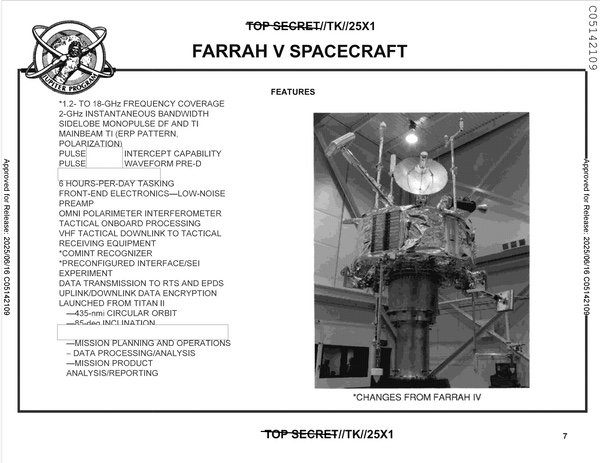
The proposed RAF mission was secret until it was uncovered by Chris Gibson, who wrote about it in a recent issue of The Aviation Historian. The “third party” source is not identified in the RAF records, but information declassified in the United States in 2022 by the National Reconnaissance Office (NRO) at the request of this author indicates that the British may have been anticipating receiving targeting information from a top-secret American intelligence satellite named FARRAH.
https://thespacereview.com/article/4479/1