
You are using an out of date browser. It may not display this or other websites correctly.
You should upgrade or use an alternative browser.
You should upgrade or use an alternative browser.
NATF: planned Navy versions of the F-22 and F-23
- Thread starter Maki
- Start date


XP67_Moonbat
ACCESS: Top Secret
- Joined
- 16 January 2008
- Messages
- 2,322
- Reaction score
- 733
RAP, I was thinking the same thing too.


- Joined
- 27 December 2005
- Messages
- 19,225
- Reaction score
- 35,634
You mean the model of the Northrop/McDonnell-Douglas YF-23 NATF ? ;D
They may have been the 'junior' partner but they did a lot of the work.
They may have been the 'junior' partner but they did a lot of the work.
- Joined
- 31 December 2006
- Messages
- 884
- Reaction score
- 570
And it's entirely possible that, had the F-23 NATF gone forward, McDonnell Douglas would have had a more prominent role, since they were much more experienced at building naval aircraft than Northrop.
- Joined
- 22 October 2006
- Messages
- 340
- Reaction score
- 85
As someone pointed on GPTNW group on facebook, it is crazy that this model has been there for more than 10 years prior to the release of the diagrams in APR.
Or maybe that is the reason why there're no canards on the model.
Well as for the F-23A, the proposal were not the last iterations studied so maybe that canardless version was a later one.
Or maybe that is the reason why there're no canards on the model.
Well as for the F-23A, the proposal were not the last iterations studied so maybe that canardless version was a later one.
- Joined
- 13 June 2007
- Messages
- 2,223
- Reaction score
- 3,631
Good Day All -
Never knew it was there and can't quite figure out why the model/monumment is located where it is. Seeing as I live in St. Louis, I will go by later this morning and take my own photos and share later.
Enjoy the Day! Mark
Never knew it was there and can't quite figure out why the model/monumment is located where it is. Seeing as I live in St. Louis, I will go by later this morning and take my own photos and share later.
Enjoy the Day! Mark
- Joined
- 13 June 2007
- Messages
- 2,223
- Reaction score
- 3,631
Good Day All -
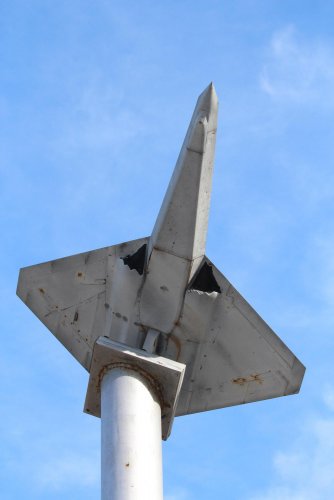
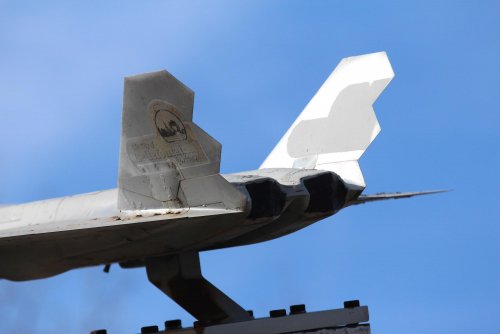
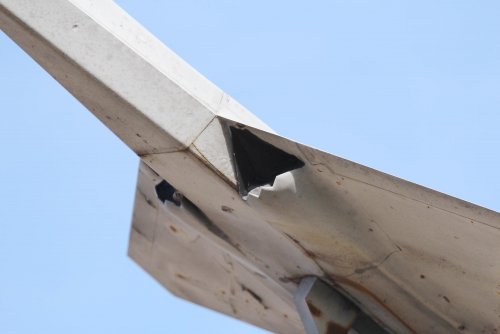
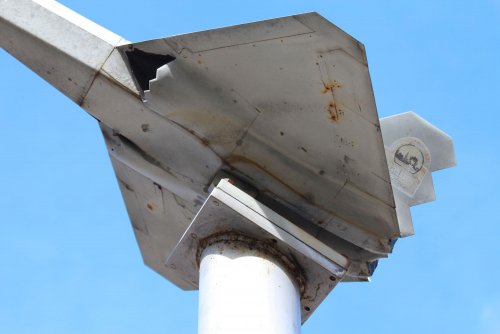
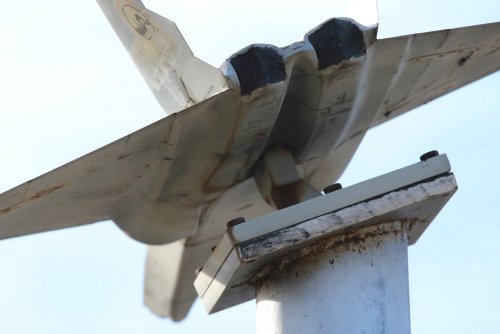
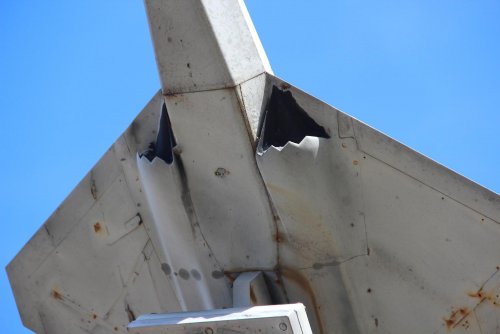
I went up to the park and photographed the model earlier today. I plan on going back and taking more pics with my quadcopter but am thinking about approaching the Mayor to ask about taking it down and cleaning it up before painting it for better weather protection. Maybe 3D scan?! I'll mull on that for a while first....
There is no obvious points for attaching or swapping out a section of the fuselage to fit canards. Not saying it wasn't tested with canards, just not obvious that they were "left off".
I cannot think of a reason why it is mounted where it is. It's no where near the airport/plant and there is no obvious offsite relationship to McDonnell Douglas. Probably related to someone from the area - a question to ask of City Hall.
So, in better detail, here she is.... Mark
I went up to the park and photographed the model earlier today. I plan on going back and taking more pics with my quadcopter but am thinking about approaching the Mayor to ask about taking it down and cleaning it up before painting it for better weather protection. Maybe 3D scan?! I'll mull on that for a while first....
There is no obvious points for attaching or swapping out a section of the fuselage to fit canards. Not saying it wasn't tested with canards, just not obvious that they were "left off".
I cannot think of a reason why it is mounted where it is. It's no where near the airport/plant and there is no obvious offsite relationship to McDonnell Douglas. Probably related to someone from the area - a question to ask of City Hall.
So, in better detail, here she is.... Mark
Attachments
-
 zMG_8836.jpg133 KB · Views: 1,157
 -
 zMG_8893.jpg112.5 KB · Views: 679
 -
 zMG_8892.jpg114.2 KB · Views: 673
 -
 zMG_8858.jpg125.6 KB · Views: 1,073
 -
 zMG_8850.jpg202.6 KB · Views: 689
 -
 zMG_8844.jpg117.1 KB · Views: 625
 -
 zMG_8842.jpg134.8 KB · Views: 911
 -
 zMG_8841.jpg113.2 KB · Views: 931
 -
 zMG_8840.jpg118.2 KB · Views: 957
 -
 zMG_8837.jpg106.4 KB · Views: 986
- Joined
- 13 June 2007
- Messages
- 2,223
- Reaction score
- 3,631

- Joined
- 27 December 2005
- Messages
- 19,225
- Reaction score
- 35,634
Great photos, Mark.
- Joined
- 27 December 2005
- Messages
- 19,225
- Reaction score
- 35,634
It looks a bit like the intake centerbodies were removed from the model?

- Joined
- 3 June 2006
- Messages
- 3,538
- Reaction score
- 6,212

- Joined
- 3 June 2006
- Messages
- 3,538
- Reaction score
- 6,212
Hi folks,
now I find a few minutes to write a few lines to this topic.
I remember reading in the 90's, that the US Navy was very sceptical of canards during carrier approach and landing. That was one reason that Boeing, L-M, MDD and N-G cut off the canards on their JSF carrier variert design concepts .
So I wonder if this model still represents the NAFT design concept DP527 as shown and written in the book "Air Force Legends: Northrop YF-23 ATF by Paul Metz". Maybe N-G tried to please the US Navy and did some wind-tunnel tests with this model without the canards.
Another design concept designation like DP527 "letter" or DP5##.
On page 74 of that book you see a same model of the design concept DP527, but the label on model base writes DP531.
The design concept DP533, also shown on that page, has a conventional tail and no canards.
Maybe Tony Chong might give us some more information.
Anyway, great find and pictures, Airplane and Mark!!! B)
B)
now I find a few minutes to write a few lines to this topic.
I remember reading in the 90's, that the US Navy was very sceptical of canards during carrier approach and landing. That was one reason that Boeing, L-M, MDD and N-G cut off the canards on their JSF carrier variert design concepts .
So I wonder if this model still represents the NAFT design concept DP527 as shown and written in the book "Air Force Legends: Northrop YF-23 ATF by Paul Metz". Maybe N-G tried to please the US Navy and did some wind-tunnel tests with this model without the canards.
Another design concept designation like DP527 "letter" or DP5##.
On page 74 of that book you see a same model of the design concept DP527, but the label on model base writes DP531.
The design concept DP533, also shown on that page, has a conventional tail and no canards.
Maybe Tony Chong might give us some more information.
Anyway, great find and pictures, Airplane and Mark!!!
B)This configuration is presented in Paul Metz's recent (and excellent) book about the whole YF-23 story.
This one is an iteration of the NATF without canards called the DP-533.
Thanks for the great pictures: the nose configuration and IRST integration is especially beautiful.
The pictures in Metz's book do not show it in such detail.
This one is an iteration of the NATF without canards called the DP-533.
Thanks for the great pictures: the nose configuration and IRST integration is especially beautiful.
The pictures in Metz's book do not show it in such detail.

- Joined
- 19 February 2007
- Messages
- 1,643
- Reaction score
- 3,475
Strictly speaking, the model as displayed does not have any canards. The DP-527 configuration did. You will note the covered hole in the side of the forward fuselage approximately where the "post" for the canard should be.
It also appears that the inlet shock cones were painted black. Between that and the deep shadows, it next to impossible to see them.
(Apologies to MarkN for mangling his excellent photo.)
It also appears that the inlet shock cones were painted black. Between that and the deep shadows, it next to impossible to see them.
(Apologies to MarkN for mangling his excellent photo.)
Attachments
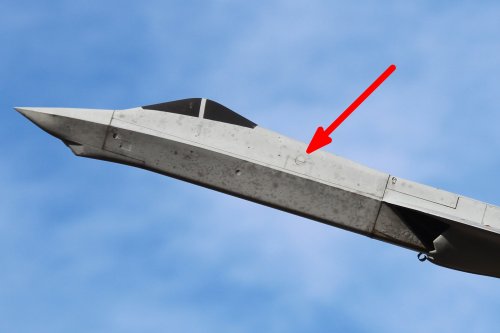
Indeed, sorry for the confusion, I was wrong: this is obviously not DP-533 since it has no horizontal tail surfaces.
So it must be a DP-527 with canards removed, as you say.
The holes you mention are indeed located exactly where the DP-527 canards should be (significant dihedral).
So it must be a DP-527 with canards removed, as you say.
The holes you mention are indeed located exactly where the DP-527 canards should be (significant dihedral).
- Joined
- 13 June 2007
- Messages
- 2,223
- Reaction score
- 3,631
Great eyes Craig - I readily stand corrected!
I am going to go up next week to City Hall and ask about our Museum restoring/painting it should I not be able convince them it deserves to be displayed inside at the Museum. I'll understand if the answer is no, just got to ask though!
Enjoy the Day! Mark
I am going to go up next week to City Hall and ask about our Museum restoring/painting it should I not be able convince them it deserves to be displayed inside at the Museum. I'll understand if the answer is no, just got to ask though!
Enjoy the Day! Mark
- Joined
- 31 December 2006
- Messages
- 884
- Reaction score
- 570
- Joined
- 13 June 2007
- Messages
- 2,223
- Reaction score
- 3,631
Thanks George - saved me from hunting for it!
Indeed, I need to learn to ask the right question of the right person at the right time!
Enjoy the Day! Mark
Indeed, I need to learn to ask the right question of the right person at the right time!
Enjoy the Day! Mark
aim9xray said:It also appears that the inlet shock cones were painted black. Between that and the deep shadows, it next to impossible to see them.
Yes, they're still there alright. Matt black paint hides the most surprising things, as witnessed with the Su-47 and its weapons bays or the shoddy build quality of the J-31.
- Joined
- 27 December 2005
- Messages
- 19,225
- Reaction score
- 35,634
Merged topics.

ScrutorAudax
ACCESS: Confidential
- Joined
- 4 June 2015
- Messages
- 68
- Reaction score
- 114
Mark, can you comment on the approximate dimensions of the model?

- Joined
- 1 April 2006
- Messages
- 12,276
- Reaction score
- 15,083
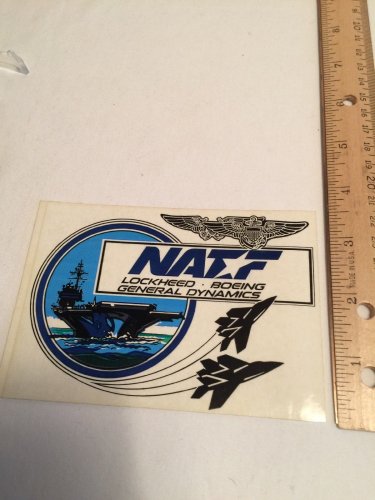
Read through most of this thread, but didn't exactly see anyone mention (but could have missed) that the Northrop NATF looks a lot like Mcdonnell Douglas's RFI proposal? For convenience: https://en.wikipedia.org/wiki/Advanced_Tactical_Fighter#/media/File:F-22_RFI.jpg

- Joined
- 26 May 2006
- Messages
- 38,251
- Reaction score
- 20,387
Phos said:Read through most of this thread, but didn't exactly see anyone mention (but could have missed) that the Northrop NATF looks a lot like Mcdonnell Douglas's RFI proposal? For convenience: https://en.wikipedia.org/wiki/Advanced_Tactical_Fighter#/media/File:F-22_RFI.jpg
Welcome aboard Phos,
which one exactly ?.
Thankshesham said:Phos said:Read through most of this thread, but didn't exactly see anyone mention (but could have missed) that the Northrop NATF looks a lot like Mcdonnell Douglas's RFI proposal? For convenience: https://en.wikipedia.org/wiki/Advanced_Tactical_Fighter#/media/File:F-22_RFI.jpg
Welcome aboard Phos,
which one exactly ?.
Mcdonnell Douglas's only "air to air" RFI plane has rear mounted trapezoidal wings and canards, relatively narrow body (from above at least) and close set engines. I do recall someone in this thread posting that Mcdonnell Douglas might have taken the lead on their NATF proposal because of their CV aircraft experience, it seems that could have actually taken place.
Would this design have run into the same problems as the General Dynamics proposal of not being able to figure out the vertical stabilizer placement? Or do canards help with that somehow? I guess Chengdu was able to figure it out, guess canards are what made the difference.

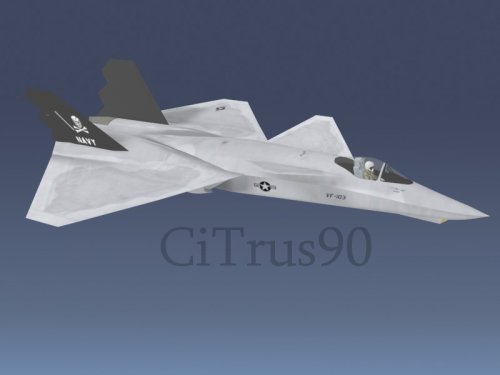
They made it a more realistic design, that concept's original wings make the Hornet's wings look stubby, and they got rid of the F-4 style intakes because it looks to me that this type of intake on a plane the scale of the NATF would have seen intake piping longer than 20 feet. Plus, they're both high wing,or at least shoulder wing, in contrast to the YF-23's mid-low wing.
That NATF model's accuracy is pretty middling, it has the YF-23's, for lack of a better term, intake lumps vs the more F-15 style siamese nacelles.
That NATF model's accuracy is pretty middling, it has the YF-23's, for lack of a better term, intake lumps vs the more F-15 style siamese nacelles.
- Joined
- 1 April 2006
- Messages
- 12,276
- Reaction score
- 15,083
You really should read Metz book on YF-23 to get the NATF-23 design evolution story from the first hands.Phos said:They made it a more realistic design, that concept's original wings make the Hornet's wings look stubby, and they got rid of the F-4 style intakes because it looks to me that this type of intake on a plane the scale of the NATF would have seen intake piping longer than 20 feet. Plus, they're both high wing,or at least shoulder wing, in contrast to the YF-23's mid-low wing.

- Joined
- 3 June 2011
- Messages
- 20,895
- Reaction score
- 19,083
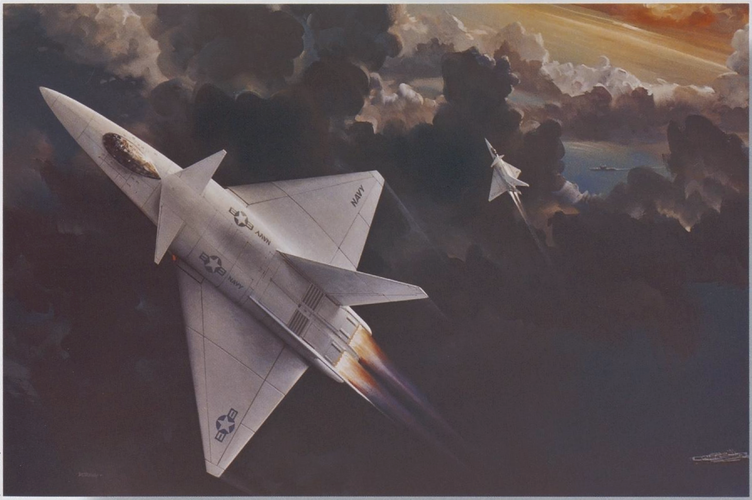
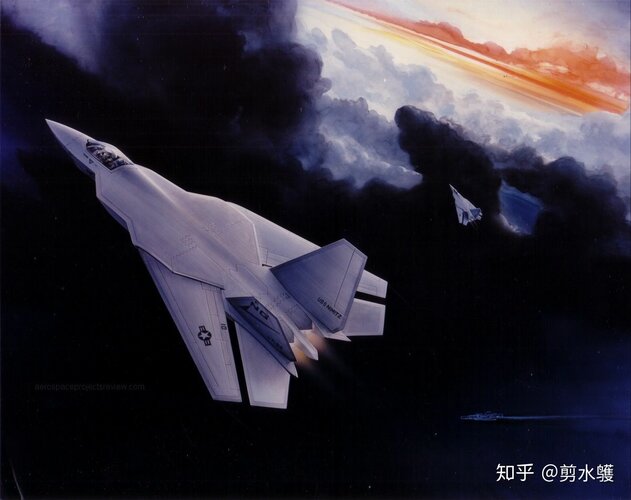
No, that's the Syd Mead NATF, created by taking the design he did for a series of paintings he did for Lockheed and slapping "NAVY" on it.
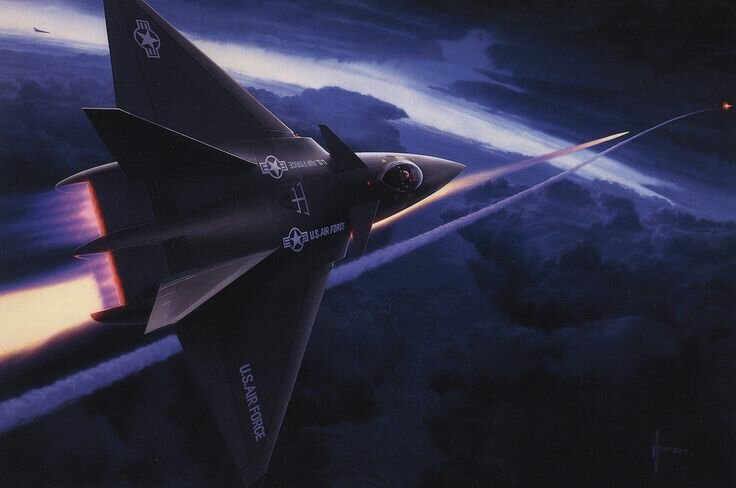
This was the F-22N:
- Joined
- 27 December 2005
- Messages
- 19,225
- Reaction score
- 35,634
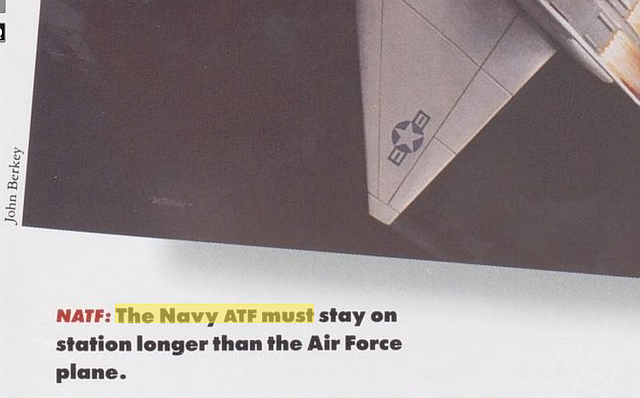
What is the source of the picture?
Naming sources is a key forum principle.
Naming sources is a key forum principle.
The one I posted, or the two sferrin did? (or the two from flateric above that... or..) ?What is the source of the picture?
Naming sources is a key forum principle.
- Joined
- 27 December 2005
- Messages
- 19,225
- Reaction score
- 35,634
You, primarily, as you are quoting from the caption of an unknown publication. But yes, everyone should be doing it.The one I posted, or the two sferrin did? (or the two from flateric above that... or..) ?What is the source of the picture?
Naming sources is a key forum principle.
Your "Navy ATF" picture predates the unveiling of the ATF designs, and is not a real design.
Last edited:
Similar threads
-

-
 FLIGHTS OF FANTASY: The Boeing/Lockheed A/FX
- Started by Sentinel Chicken
- Replies: 52
-

-

-
Advanced Tactical Support Aircraft (ATSA) US Navy
- Started by dauby09
- Replies: 33