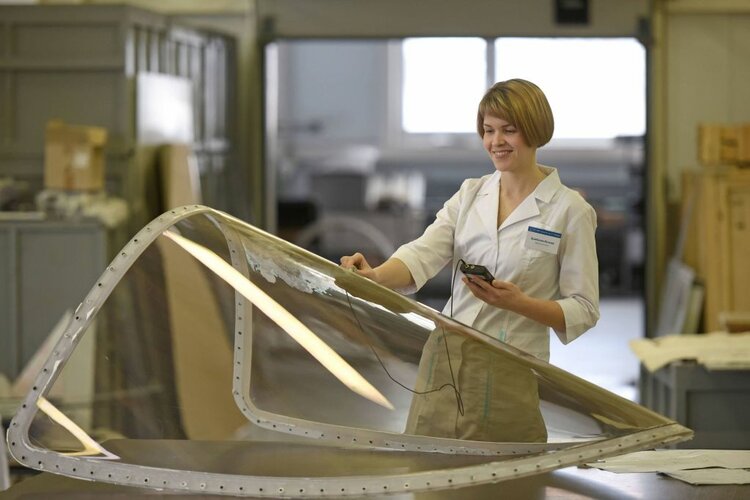
An article about Su-57 canopy glass published on Rostec website. Maybe for someone this is old news, but for me it is the first official confirmation that Su-57, in contrast to the early T-50 prototypes, equipped with a polycarbon glass instead of silicate one. Additionally, it's said that while the Western manufacturers usually use a die-casting method to form the canopy glass elements, Russian NPP 'Technology' forming these elements by bending flat polycarbon panels.
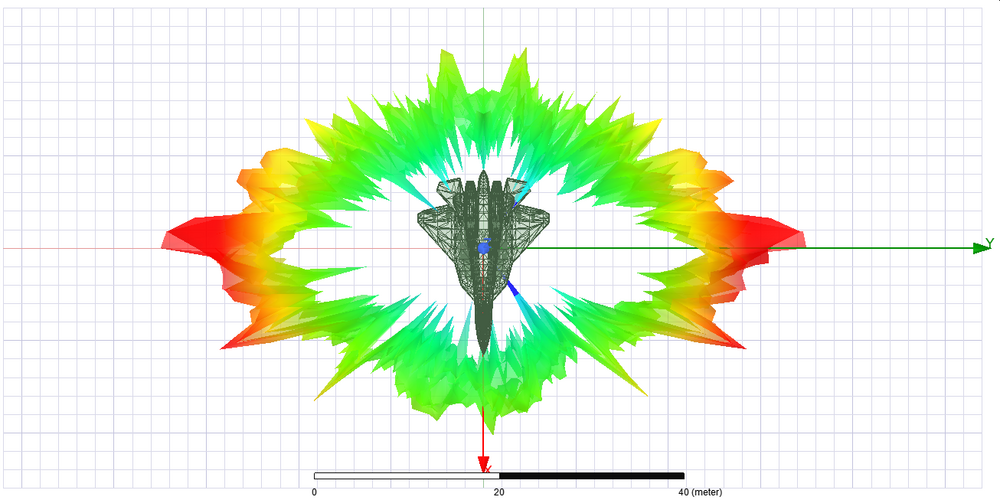
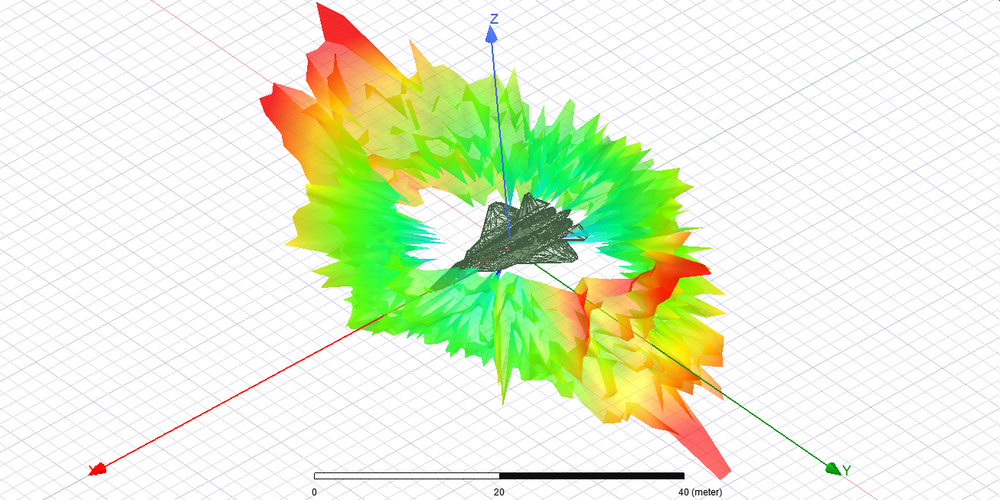
And now a 360 Degrees Su-57. X-band (8 GHz), Horizontal polarization.
It has radar blocker etc but not the rear part of the engine (turbine etc) So no attempt are made to model the inside nozzle reflection. The lobes in rear are interactions/multiple reflections between the side of the nozzle and the control surfaces. No absorbers except in those place not considered (e.g exhaust nozzle).
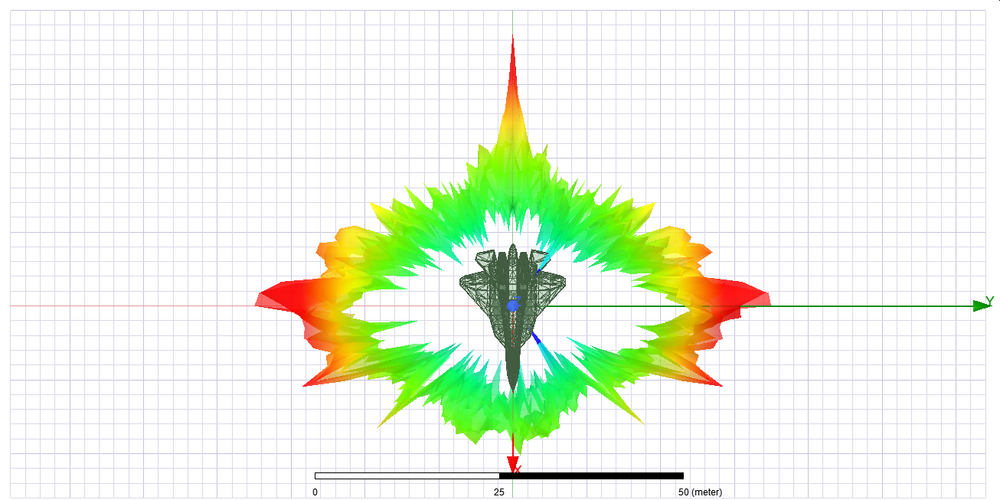
Now if anyone interested on how does it look when inside of the nozzle is considered. Simple estimate in A.E Fuhs's lecture on exhaust cavity mentioned that it can be treated as flat plate, yieldin following graphics.
Numerical value tho have to wait as i dont really know whether i should average those 360 deg (Which i did and yield value of 0.4 sqm but usability can be disputed) To produce a usable number one can confidently use.
One thing among the long list i have on future attempt would be addition of RAM coating. At the moment i am using Ideal RAM which is a fictional material with impedance of vacuum. (377 Ohm) in all frequencies. a "Real RAM" wont have or wont be able to retain such properties in real world environment.
Still, getting the value is difficult as mentions of "Relative permittivity" and "Permeability" of Radar absorbers seems hard to find in literature. Let alone whether it is imaginary or real value. But we'll see.
The other thing is whether it is possible to make an "exhaust blocker" which works in similar manner as the inlet radar blocker. I am in a belief tho that it's kind of impossible due to extreme environment inside the engine exhaust. Still maybe as long as it doesnt reach curie temperature, magnetic absorbers could still work. or dielectric absorber can actually be made to resist immense heat and erosion coming from the engine.. or being actively cooled by fuel or air.
The other thing is whether it is possible to make an "exhaust blocker" which works in similar manner as the inlet radar blocker. I am in a belief tho that it's kind of impossible due to extreme environment inside the engine exhaust. Still maybe as long as it doesnt reach curie temperature, magnetic absorbers could still work. or dielectric absorber can actually be made to resist immense heat and erosion coming from the engine.. or being actively cooled by fuel or air.
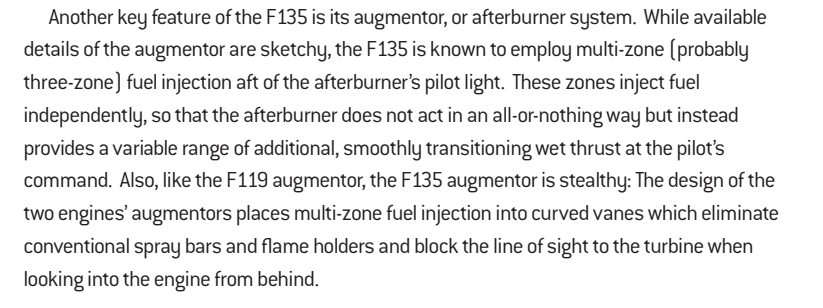
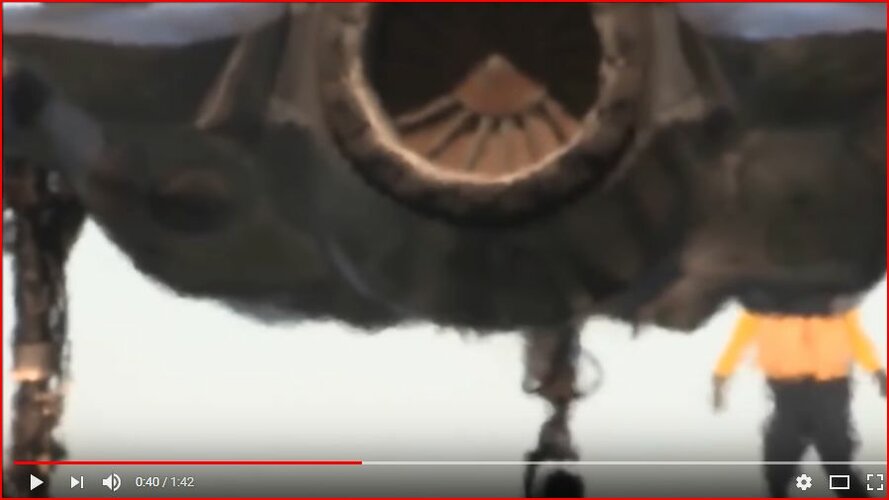
The thing in question is variable fuel injector or augmentor for the afterburner. It does however apparently designed to hide direct line of sight to turbine.
But the thing is that is it possible for a RAM to be there ? Like do we have a high temp RAM. as just hiding the line of sight seems not enough as the tailpipe and the augmentor itself can also be the source of multiple reflections.
But the thing is that is it possible for a RAM to be there ? Like do we have a high temp RAM. as just hiding the line of sight seems not enough as the tailpipe and the augmentor itself can also be the source of multiple reflections.
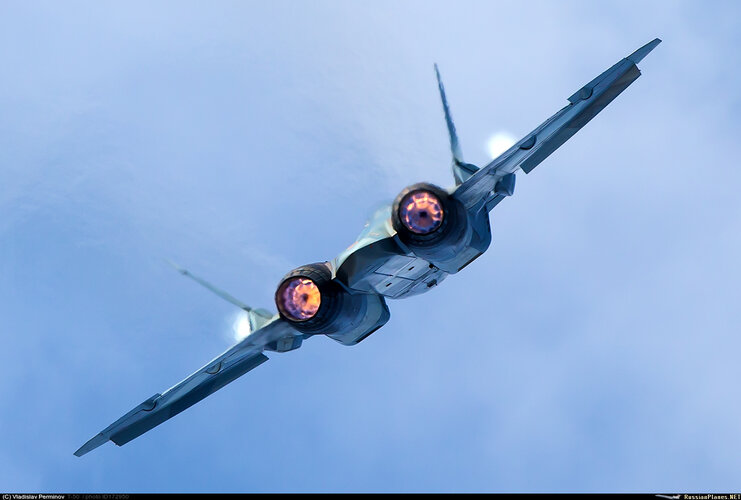
There are some pictures that suggest that the augmentor itself is designed to prevent reflections in undesired directions. As to the RAM, I don't know, maybe there are ceramic instead of organic based ones capable of withstanding high temperatures.
Maybe you can try with the geometry shown in these pictures?
I don't think so, since the izd. 30 is the one engine supposed to be designed from the ground with stealth in mind. But I have not seen clear pictures of the turbine and augmentor that I remember, only some with the AB on:
Maybe, but they do not necessarily report events in real time, last year it was not the case at least. They just reported the delivery to the VKS of the 1st Su-57 already in 2021.
Afaik Russian media reporting that the first serial Su-57 delivered around 2020 christmas. Another 4 Su-57 supposed to delivered in the end of this year, but so far no news.
If I remember correctly, they did not say anything and just some pictures were taken of the plane on its transit to Akhtubinsk, later already in 2021 it was announced that the plane had been delivered to the VKS at the end of 2020. They say less and less as of late, even about much less "secret" deliveries of planes like Su-34 and 35
That's how I found out about it. Somewhere in my basement is a GE propulsion presentation from when I was in college that had that configuration for how it controls the aircraft in pitch and roll. If I ever find it, I'll scan it in. It also had information on plug nozzles for Mach 4 and Mach 5 jet powered aircraft.
Its Delayed. Just remember that the first 6 Su-35S was pulled back into the factory for refitt AFTER it was handed over to the VKS.
Could very well be the same here, the next batch might be airworthy, but alas not in final configuration
According to Charly (which according to TASS report) UAC complete any obligation in 2021. So in theory, they already deliver 4 Su-57.
More important news is, Su-57 production line will be expanded.
According to Charly (which according to TASS report) UAC complete any obligation in 2021. So in theory, they already deliver 4 Su-57.
More important news is, Su-57 production line will be expanded.
The painting is done directly by KnAAPO or by some other legal entity?
Because it could explain the thing, planes have been built and tested but are currently awaiting the end of painting process.
Yes, a good analogy would be the X-form fins of the newer submarines. The traditional 2D nozzle would correspond to having just a horizontal fins on a submarine, where as the Rockwell canted nozzle corresponds to having 2 of the lower fins of a X-form finned submarine providing enough surfaces to replicate 3D vectoring effect.
I just had a brainwave - sorry if this point has been discussed before, but much has been made about the fact that by design, the Su-57's compressor blades are exposed to radar from the front. Some people argued, that due to the presence of the radar blocker, this is not an issue.
But there's another element - the variable geometry intake ramps inside the intake, which constrict the amount of air to create optimal mass flow.
Is it possible, that in cruise mode, the maximum capture area is not required, and thus these ramps descend to some degree, and obscure the fan blades anyway?
With all this discussion of what is or is not considered an operational aircraft I'm wondering about avionics. What will all the claims of AESA GaN based radars, jammers, passive MAWS, and electronic fusion wizardry all linked together by state-of-the-art AI accented programming. They seem to be claiming to be able to do what took the Americans decades, is still in process, and the Europeans might have with the new UK Eurofighters in 2025 and the French with Rafale F4.2. All three western producers have worked on far more advanced integrated electronic warfare/sensor suites than what the Russian have fielded, ever. As have the South Koreans and Japanese for that matter.
Just seems a significant jump from a pretty basic suite on the SU 35 to a few generations higher and that took everyone else who is producing similar claims decades of research while working on actual in-service production.
Engines, material science, design, and even production. Russia can certainly do all of that. To me, all these discussions on what is or is not a s curved intake isn't as interesting as does the first flying AESA Russian radar work? Does it overheat? What's the level or production error? Or god help them issues with programming and software? Can it also work in electronic attack?
These are the pertinent concerns from my end even if the T/W and engine questions are fun.
Well, in terms of computing power, its a lot easier to do this kind of thing now than 40 years ago (!) when ATF was conceived, with standard off-the-shelf components. The sheer pace of computer chip development means that the Russians don't necessarily need to develop the chips needed to power their avionics (though they may, to prevent supply-side issues). You need to develop the algorithms - but the USSR was historically pretty good in computing at the conceptual level, it was always production that let them down. I think they can sidestep this issue.
For the actual radar hardware, its an open question how effective it will be. I've been sceptical about the Su-57 avionics myself in the past.
What will all the claims of AESA GaN based radars, jammers, passive MAWS, and electronic fusion wizardry all linked together by state-of-the-art AI accented programming.
Yeah, would be interested on the claims of the GaN based radar. Is that specific to Su-57 or in general.
---
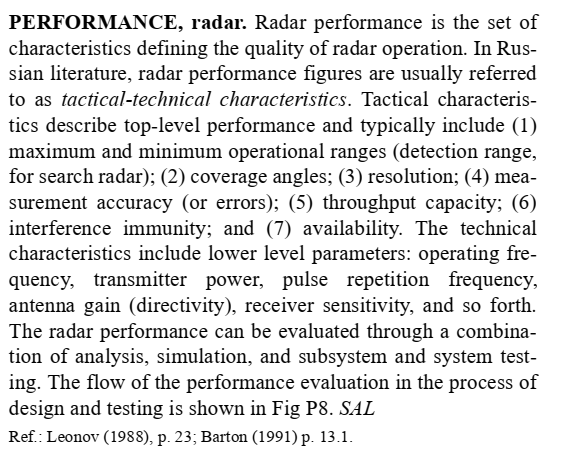
On the measure of effectiveness tho. One needs a good metrics. This metrics seems not really an explored realm in open-source discussion. Nonetheless there are this from Radar Technology Encyclopedia
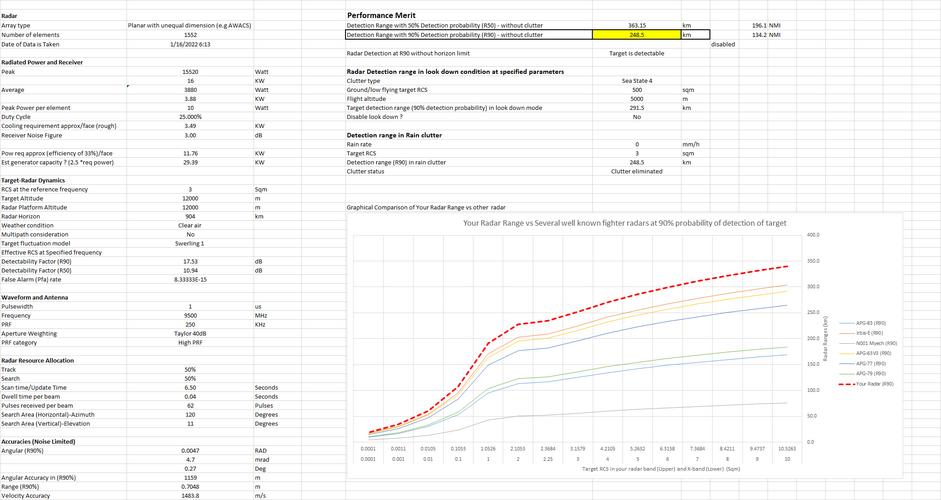
Number 1,2,3,4,6 are mode dependent and might be bit difficult (but possible) to estimate. Below is my estimates (speculative) on Su-57 Radar.
In my AESA radar calculator improvement and taking account of those Technical-tactical characteristics mentioned from the above reference.. i'm trying now to also include throughput but that one is hard to implement. Another thing is to include prediction of detection range against ground/surface target with clutter background which kind of crude but appears to work. Big weaknesses is that the Clutter cancellation gain/Improvement factor are guessed. The correct way is to actually use a signal processor model to predict the radar's response on target but i need to figure it out first how to implement one in excel.
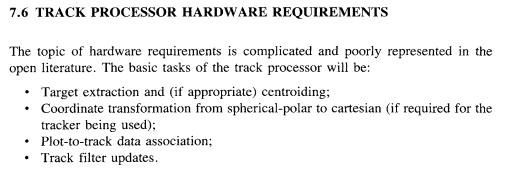
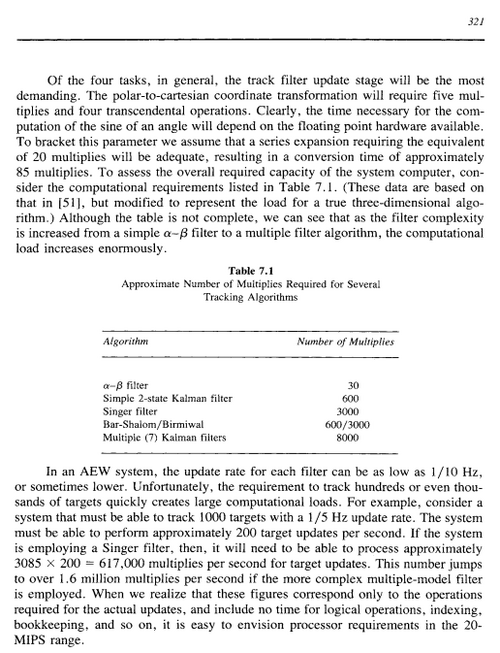
Num 5 is computation power dependent. Also hard to asess but there is rather crude method to do this. This is from "Airborne Early Warning System Concept"
Granted it is for AEW and for tracking target but i can see its applicable for fighter radar too. So let's say the radar have to track 200 targets at 1/2 Hz (correspond to about 2 seconds of tracking time), then every second it has to provide updates for 100 targets at once. We use the Kalman Filter, the computational load would be about 8000 * 100 = 800000 Multiplies per second. That for target tracking alone.
Cooling wise.. the Su-57 have enough and with room to spare with about 9-10 metric tonne of fuel. It may have potential of about 56-62 KW/sqm of total cooling capacity and may spare about 22 KW/sqm for Radar cooling. Such cooling capacity allows 21 Watt peak power TRM potential assuming 25% duty cycle or if Medium PRF operation is desired (duty cycle of about 10-15%) 36 Watt module.
This site uses cookies to help personalise content, tailor your experience and to keep you logged in if you register.
By continuing to use this site, you are consenting to our use of cookies.

 rostec.ru