Dual thrust vs dual pulse missile propulsion

ricebunny

ACCESS: Restricted
Joined
21 December 2020
Messages
12
Reaction score
13
I am trying to understand why would a dual pulse solid fuel motor provide additional range over a dual thrust motor of same weight. I’ve read many times proposals that AIM-120 should be upgraded with a dual pulse motor to extend range beyond the current AIM-120D variant.

How would that work better than the current boost + sustainer burn? If an equal weight dual pulse motor has less fuel for the first burn, won’t it be flying slower in the mid course phase making it easier for maneuvering targets to escape its kill zone?
 
Well, the advantage of dual pulse is that you could have second burn on the desired part of trajectory - not only in the beginning. It allows to optimize the shape of trajectory - for example, boost to altitude, glide a bit, then boost again to prolong trajectory. Or, to have a terminal boost to maximize velocity & have better controls/
 
Well, the advantage of dual pulse is that you could have second burn on the desired part of trajectory - not only in the beginning. It allows to optimize the shape of trajectory - for example, boost to altitude, glide a bit, then boost again to prolong trajectory. Or, to have a terminal boost to maximize velocity & have better controls/
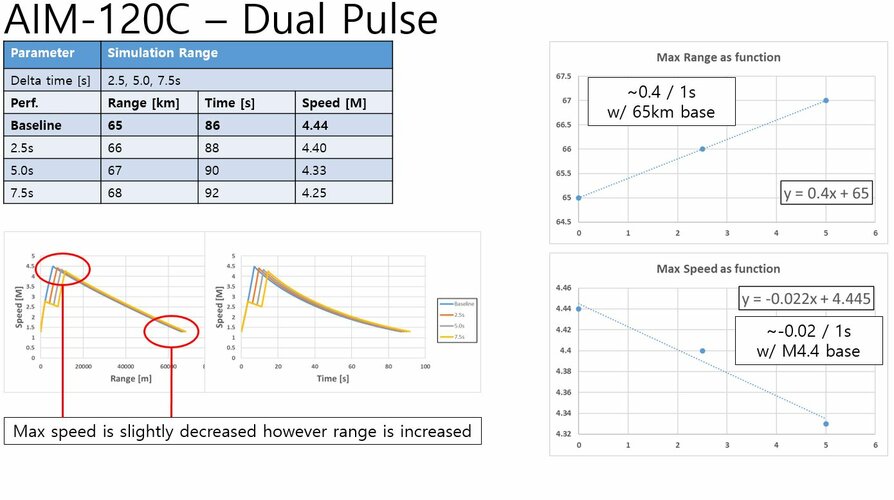
I found this blog (http://jaesan-aero.blogspot.com/2018/10/?m=1) that ran tons of simulations for various design parameters/configurations including dual-pulse.

The range improvement with dual pulse seems quite small (+4.6%) and trades off speed and time to target (extra 7% TtT)
1629834521297.jpeg
 
Last edited:
Dual pulse extends the "cruise/coast" phase of flight so you are essentially trading time for range and also improving end game kinematics if you time your second pulse to provide that terminal increase in speed. If you don't want or are being driven by time to target, then you obviously don't get much use out of it.
 
I wonder if instead of a dual-pulse rocket-motor a hybrid rocket motor is used instead? Have a dual-thrust motor where the boost-phase is a soldi-rocket and when that BP charge has burned out the void left behind is the chamber for completing the combustion of the solid fuel and liquid oxidiser. For the sustain phase use a liquid storable oxidiser which can be metered and a solid fuel with the result is that you have a variable thrust sustainer so minimal thrust is used during the cruise phase to counter drag and full thrust for the endgame.
 
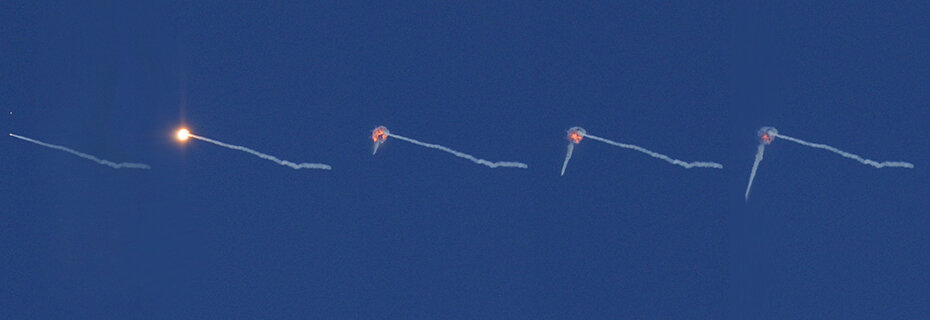
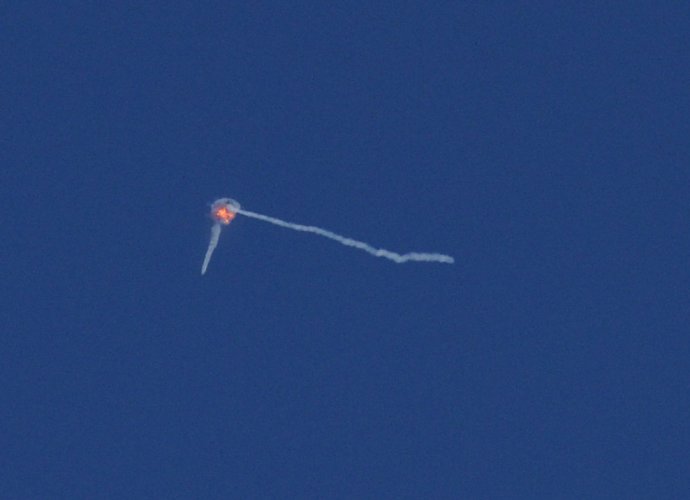
What is a "dual thrust" motor? Single grain with a boost/sustain burn profile? Let's be very clear what a "dual pulse" vs "dual thrust" motor is. A "dual pulse" has two seperate motor burns, seconds or longer, apart. Not sure what a "dual thrust" motor is. I suspect probably a mistake in translation. A good example of a dual-pulse motor is the PAC-3 MSE. Below shows the second pulse starting (horizontal trail, no it isn't the divert thrusters firing) shortly before impact.

mfc-pac-3-mse-photo-03-t.jpg
 
What is a "dual thrust" motor? Single grain with a boost/sustain burn profile? Let's be very clear what a "dual pulse" vs "dual thrust" motor is. A "dual pulse" has two seperate motor burns, seconds or longer, apart. Not sure what a "dual thrust" motor is. I suspect probably a mistake in translation. A good example of a dual-pulse motor is the PAC-3 MSE. Below shows the second pulse starting (horizontal trail, no it isn't the divert thrusters firing) shortly before impact.

View attachment 663124
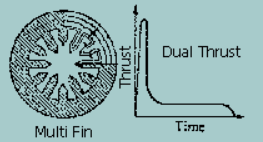
Yes, dual thrust motors have two types od propellants, typically boost and sustain.

https://en.m.wikipedia.org/wiki/Dual-thrust
 
What is a "dual thrust" motor? Single grain with a boost/sustain burn profile? Let's be very clear what a "dual pulse" vs "dual thrust" motor is. A "dual pulse" has two seperate motor burns, seconds or longer, apart. Not sure what a "dual thrust" motor is. I suspect probably a mistake in translation. A good example of a dual-pulse motor is the PAC-3 MSE. Below shows the second pulse starting (horizontal trail, no it isn't the divert thrusters firing) shortly before impact.

View attachment 663124
Yes, dual thrust motors have two types od propellants, typically boost and sustain.

https://en.m.wikipedia.org/wiki/Dual-thrust

This! An example of a dual-thrust rocket-motor is the Standard missile's Mk-104 sustainer motor.
 
"Dual thrust" seems to be synonymous with boost/sustain. Some use a tailored grain profile, some use discrete grains, burning sequentially, with no time gap in between.
 
Boost/sustain rocket motors seem pretty standard for medium/long range missiles. I think the term "dual-thrust" might be a bit obsolete due to the confusion it causes with dual-pulse rocket motors.
 
"Dual thrust" seems to be synonymous with boost/sustain. Some use a tailored grain profile, some use discrete grains, burning sequentially, with no time gap in between.
Also in dual-thrust SRMs the boost-grain often uses a faster burning propellant loading than the sustain-grain.
 
"Dual thrust" seems to be synonymous with boost/sustain. Some use a tailored grain profile, some use discrete grains, burning sequentially, with no time gap in between.
Boost/sustain rocket motors seem pretty standard for medium/long range missiles. I think the term "dual-thrust" might be a bit obsolete due to the confusion it causes with dual-pulse rocket motors.

Boost-sustain refers to the motor burn profile, staging configurations and therefore intended thrust profile the propulsion unit is supposed to give. Dual-thrust and dual-pulse refers to the layout type of propulsion unit. Boost-sustain is used for both dual-thrust and dual-pulse rocket motors so I wouldn't call dual-thrust an obsolete term. Theoratically you can build dual-thrust rocket motors that are not boost-sustain. For example you can use a boost-boost dual thrust motor configuration to optimize center of gravity of the missile or use a cheaper fuel for half of the rocket motor.

In recent trade shows I saw some innovative triple-pulse highly conceptual proposals like boost-sustain-sustain, boost-sustain-boost for terminal phases so it is best to not eliminate different classification systems. Interesting solid fuel rocket engines are coming in the near future. Multiple-pulse will dominate the future but multiple-thrust engines also have a future.
 
Boost-sustain refers to the motor burn profile, staging configurations and therefore intended thrust profile the propulsion unit is supposed to give. Dual-thrust and dual-pulse refers to the layout type of propulsion unit. Boost-sustain is used for both dual-thrust and dual-pulse rocket motors so I wouldn't call dual-thrust an obsolete term. Theoratically you can build dual-thrust rocket motors that are not boost-sustain. For example you can use a boost-boost dual thrust motor configuration to optimize center of gravity of the missile or use a cheaper fuel for half of the rocket motor.

In recent trade shows I saw some innovative triple-pulse highly conceptual proposals like boost-sustain-sustain, boost-sustain-boost for terminal phases so it is best to not eliminate different classification systems. Interesting solid fuel rocket engines are coming in the near future. Multiple-pulse will dominate the future but multiple-thrust engines also have a future.

I think as far as intent goes, "dual-pulse" refers to motors that have two discrete burns based on time. PAC-3 MSE would fall in this category, as well as AGM-69 SRAM. These have two separate grains with variable delays between the first burn and the second.

Boost-sustain, is two different thrust levels with no delay between. Whether this is accomplished with the burn profile of a single grain, or multiple grains, the meaning is the same.

"Dual thrust" is what is confusing. What is unique that makes it not one of the other two?
 
I think as far as intent goes, "dual-pulse" refers to motors that have two discrete burns based on time. PAC-3 MSE would fall in this category, as well as AGM-69 SRAM. These have two separate grains with variable delays between the first burn and the second.

Boost-sustain, is two different thrust levels with no delay between. Whether this is accomplished with the burn profile of a single grain, or multiple grains, the meaning is the same.

"Dual thrust" is what is confusing. What is unique that makes it not one of the other two?

Both dual-thrust and dual-pulse can be boost-sustain, but they are different in structure.

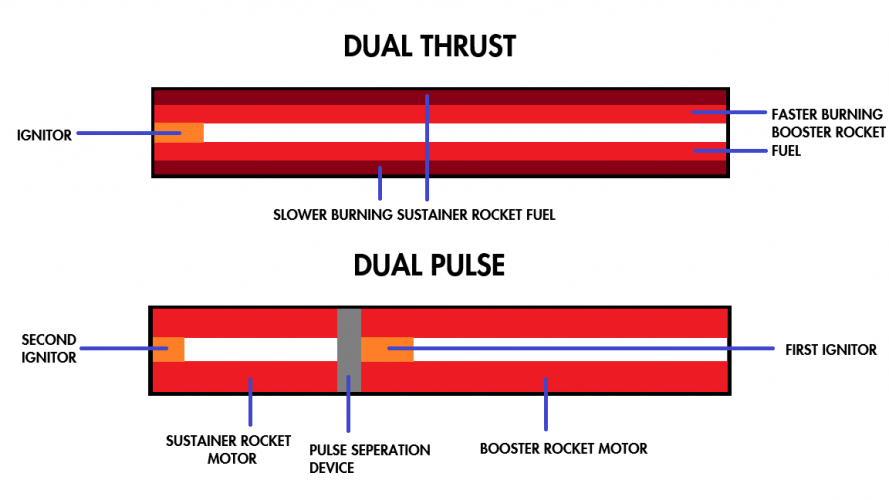
Boost-sustain dual-pulse is essentially 2 different rocket motors in a single package separated by a pulse separation device. In dual-pulse rocket motors, the first rocket motor is activated via the first ignitor. This boosts and accelerates the missile. After the booster rocket motor runs out, the pulse seperation device activates and stops seperating the two seperate pulses. After that the sustainer rocket motor is activated via the second ignitor. That fuel sustains the missile's thrust.

Boost-sustain dual-thrust, on the other hand, is a true single rocket motor with two different fuels. Instead of separating the rocket fuel into 2 separate pulses, it uses a single pulse rocket motor with 2 different fuels. In a core-burning dual-thrust rocket engine, the ignitor activates the fuel on the inside which burns faster. This boosts and accelerates the missile. As the fuel continues burning, the burn extends outwards, and it will eventually reach the slower-burning sustainer fuel. That fuel sustains the missile's thrust.

Here is a diagram I drew in MS Paint to visualize it:

dualthrustvsdualpulse.png
 
Last edited:
dualthrustvsdualpulse.png

That drawing only confuses the issue further. In the "dual thrust" motor the "faster burning rocket fuel". . .well is it "faster burning" because of the composition of the fuel or because of the geometry of the fuel?

1769347972734.png

If it's the latter then it's just a plain old boost-sustain grain rebranded.

In the "dual pulse" motor above, if there is no significant delay between the first and second pulse then it also could be considered a "boost-sustain" motor. Consider the HAWK MIM-23 missile. Two completely separate motors but it's never been considered to have a "dual pulse" motor. It's always been described as having a boost-sustain motor despite having, literally, two different motors because of function:

Hawk2.jpg

A dual-pulse motor has until recently always meant at least the option for a significant delay between the first motor burn and the second. One isn't the booster and the other the sustainer.

For example in the PAC-3 MSE the second pulse doesn't fire until 99% of the flight is over and it needs an extra bump at the end:

PAC3mse_photo5_h.jpg

The 3rd stage of SM-3 is the similar. The first pulse is the continuation of the flyout while the second pulse is saved for last minute adjustments. SRAM is a bit different than either in that the second pulse can be fired immediately after the first, effectively making it one long burn, or it can be saved for later.

It seems to me that "dual thrust" is being used interchangeably with boost-sustain and should not be confused with dual-pulse.
 
That drawing only confuses the issue further. In the "dual thrust" motor the "faster burning rocket fuel". . .well is it "faster burning" because of the composition of the fuel or because of the geometry of the fuel?
It is faster burning because they use a faster burning fuel composition on the inner section and a slower burning fuel composition on the outer section of the solid rocket motor.

If it's the latter then it's just a plain old boost-sustain grain rebranded.

In the "dual pulse" motor above, if there is no significant delay between the first and second pulse then it also could be considered a "boost-sustain" motor.
Exactly. Most of the Dual-Pulse and Dual-Thrust motors are classified as boost-sustain motors.

A dual-pulse motor has until recently always meant at least the option for a significant delay between the first motor burn and the second. One isn't the booster and the other the sustainer.
I don't know your sources for the Hawk's terminology, but in current industry terminology, one is the booster and the other is the sustainer. Multiple-Pulsed rocket motors are also classified by using the Boost-Sustain flight stage terminology in the industry. For example, the new Triple-Pulse Israeli SkySpear/SkySting is marketed as Boost-Sustain-Terminal.

For example in the PAC-3 MSE the second pulse doesn't fire until 99% of the flight is over and it needs an extra bump at the end:
Yeah, that is why I clarified not every Dual-Pulse rocket motor is Boost-Sustain. One of the pulses can be used during the Terminal phase instead of Sustain.

It seems to me that "dual thrust" is being used interchangeably with boost-sustain and should not be confused with dual-pulse.
That would be wrong because most of the Dual-Pulse rocket motors are also Boost-Sustain.
 
Last edited:
I have never seen a literal u-shaped solid propellant grain geometry but moonburner solid propellant grain geometry is pretty close to that.
I was thinking this might allow internal stores for stealth envelopes.

With SRBs the length of the whole grain burns… but autophage rockets and maybe some better chemistry might allow different combustion looks. The U shaped elbow allows a wider exhaust.

Usually you have avionics in front of a solid.
Maybe aerogel can wrap around avionics where small solids surround the electronics somehow.
 
Offset core that make the propellant grain look a crescent moon as it burns

Makes for some interesting thrust profiles, AIUI. Starts like a center burner, drops when it burns out to one edge of the casing, then increases as it burns toward the other edge.
 
Makes for some interesting thrust profiles, AIUI. Starts like a center burner, drops when it burns out to one edge of the casing, then increases as it burns toward the other edge.
That sounds like a very useful thrust profile. fast starting burn, lowering to a sustainer burn, and then speeding back up for terminal performance.

But it's limited to being a single burn, not three separately controlled pulses.
 

Similar threads

Back
Top Bottom