But how much precision would be needed to ensure the beam hits the right spot? RVs are moving fast and could have last-second maneuvering. Wouldn’t that make consistently hitting a vulnerable section tricky, even with modern tracking?
The idea is to hit the missiles before they release RVs to begin with, but RVs don't do a lot of jinking until they hit atmosphere. Just some relatively small adjustments of the entire bus to make sure they're released on the proper course to land where they're wanted.
Larger optics are better for handling the thermal load, though, and also give you a lot more range.
The two major determinants of laser effective range are laser wavelength (the smaller the better, near-UV or even UV-C is far better than mid-IR) and targeting mirror diameter (the larger the better).
True, but 1200nm results in ~100km effective range of a laser before spot size growth plus pointing errors exceeds target size (for a 1m diameter target and 1m diameter pointing mirror!)
200nm on the other hand results in a ~1800km effective range under same conditions.
200nm suffers 100% absorbtion though. All depends on the maximum size of your mirror and what power levels you can achieve at said laser frequencies. Also what size your mirror has to be for thermal load.
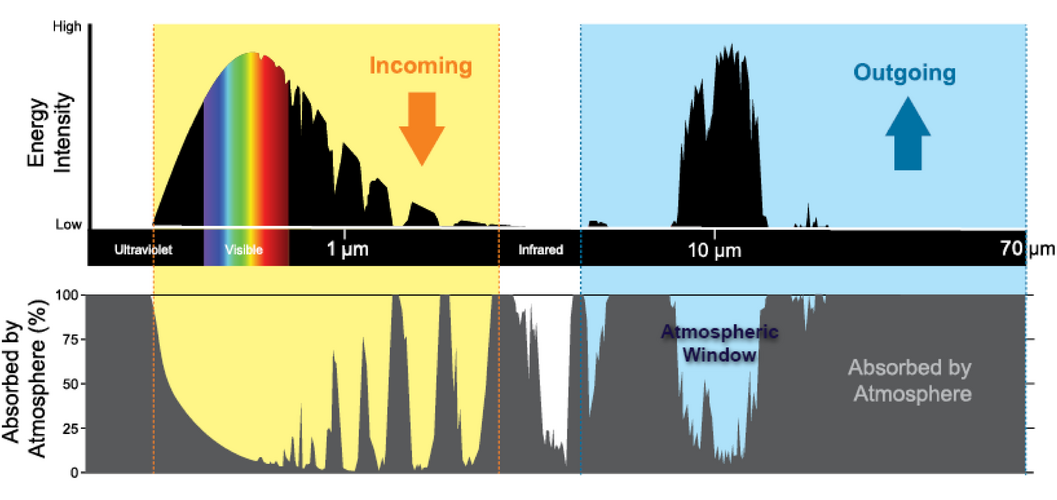
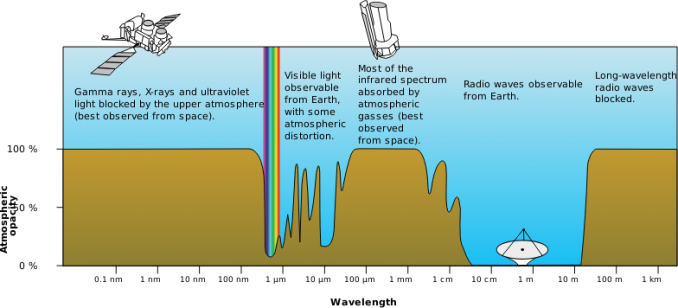
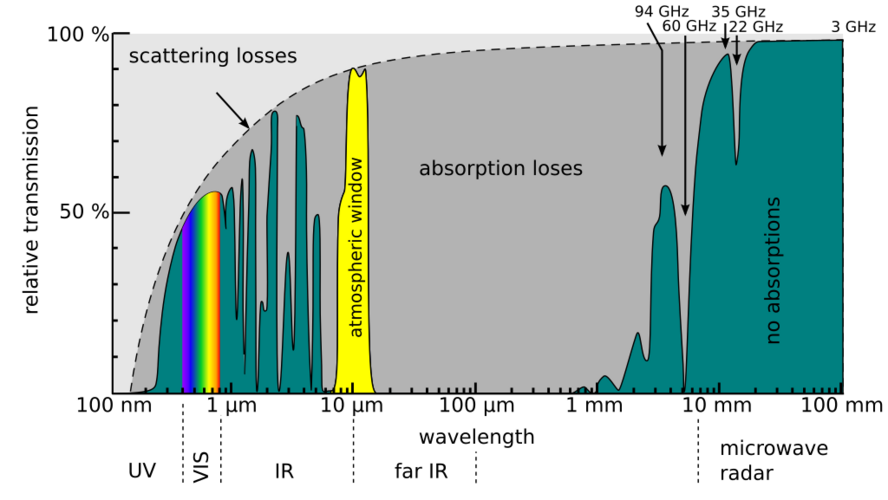
200nm suffers 100% absorbtion though. All depends on the maximum size of your mirror and what power levels you can achieve at said laser frequencies. Also what size your mirror has to be for thermal load. View attachment 760443
Not sure it does (various UV does make it to the surface, hence why I burn in the sun), and the targets are climbing into thinner/no air. For ICBM targets, I think UV is acceptable since you're only losing ~3min of shooting over a ~30min flight time. And you gain a hell of a lot of range in exchange.
Not sure it does (various UV does make it to the surface, hence why I burn in the sun), and the targets are climbing into thinner/no air. For ICBM targets, I think UV is acceptable since you're only losing ~3min of shooting over a ~30min flight time. And you gain a hell of a lot of range in exchange.
Perhaps not all but 95+% as per the graphic. 3 minutes is a significant portion of the boost phase though, which is often less than 3min for solid propellant rockets.
Perhaps not all but 95+% as per the graphic. 3 minutes is a significant portion of the boost phase though, which is often less than 3min for solid propellant rockets.
A recent article had it that light, not heat--helped evaporate water--the band where light was most effective--green--was the band water was least affected according to old textbooks.
Where are you getting your order of magintude from? Surely it's roughly equivalent to the change in wavelength? There an order of magnitude difference in speed by that point too making it harder to focus the beam in one spot. Hitting the missile as soon as it leaves the hole is very appealing. Blue around 450nm may be appealing for many reasons however, it penetrates almost as well as 1000nm and it has less reflectance at metallic surfaces and smaller optics. The only problem is finding efficient and flexible high energy laser types at that wavelength. With UV the absorbtion is too high though.
Once outside the atmosphere NPBs probably work best but targeting is difficult.
originally yes but it was later discovered that it can do both by a slight power increase.
This can pretty late in the program so didn't get much news on it but you can find imagines of people holding up holed plates with lables of NPB target XX on them.
Either last year or the year before they release a paper saying they fix the major issues with the system, able to do search discriminate and kill, just now need to do the devil details.
Where are you getting your order of magintude from? Surely it's roughly equivalent to the change in wavelength? There an order of magnitude difference in speed by that point too making it harder to focus the beam in one spot. Hitting the missile as soon as it leaves the hole is very appealing. Blue around 450nm may be appealing for many reasons however, it penetrates almost as well as 1000nm and it has less reflectance at metallic surfaces and smaller optics. The only problem is finding efficient and flexible high energy laser types at that wavelength. With UV the absorbtion is too high though.
Beam spread and pointing accuracy being the biggest, IIRC. I don't think I included beam quality in that, and I really should have.
I'll need to re-derive it, though. That spreadsheet was on an old computer that got drowned and I never bothered to dump a backup disk image onto an external HDD to recover the data.
Like I said earlier, it was beam spread and pointing accuracy to keep the total beam within a 1m diameter(? IIRC) circle. Need to find the pointing accuracy formula so I can recreate the formula I used, think it was diffraction-limited optics (since even Hubble is diffraction-limited).
Beam spread and pointing accuracy being the biggest, IIRC. I don't think I included beam quality in that, and I really should have.
I'll need to re-derive it, though. That spreadsheet was on an old computer that got drowned and I never bothered to dump a backup disk image onto an external HDD to recover the data.
Like I said earlier, it was beam spread and pointing accuracy to keep the total beam within a 1m diameter(? IIRC) circle. Need to find the pointing accuracy formula so I can recreate the formula I used, think it was diffraction-limited optics (since even Hubble is diffraction-limited).
Ah okay, it's radius that is proportional to wavelength but spot size is proportional to radius squared (for a given lens size), okay. The other two formula are really just different ways of expressing the first. So 1000nm gives you just under 9x the spot area of 350nm.
RT = 0.305 * D * L / RL
RT = beam radius at target (m)
D = distance from laser emitter to target (m)
L = wavelength of laser beam (m, see table below)
RL = radius of laser lens or reflector (m)
It could work at ~350nm. Less diffraction too. Maybe an Xe laser of some kind.
(Sorry, it's been more than 10 years since I thought about that set of formulas! And I am definitely out of practice mathematically speaking...)
And what matters is energy at the spot-on-target. So a 350nm laser will be able to put the same energy downrange at a target 9x farther away than a 1050nm laser could.
(Sorry, it's been more than 10 years since I thought about that set of formulas! And I am definitely out of practice mathematically speaking...)
And what matters is energy at the spot-on-target. So a 350nm laser will be able to put the same energy downrange at a target 9x farther away than a 1050nm laser could.
Which does actually make the 3x atmospheric attenuation worth it after all. Also, less atmospheric diffraction with shorter wavelengths, which probably helps with targeting.
(Sorry, it's been more than 10 years since I thought about that set of formulas! And I am definitely out of practice mathematically speaking...)
And what matters is energy at the spot-on-target. So a 350nm laser will be able to put the same energy downrange at a target 9x farther away than a 1050nm laser could.
True in terms of atmospheric absorption, but atmospheric scattering losses are broader bandwidth and are generally worse at shorter wavelengths because at wavelengths near the blue end of the visible spectrum and shorter, Rayleigh scattering from atmospheric nitrogen and oxygen molecules becomes an important mechanism in atmospheric scattering losses. The scattering intensity for Rayleigh scattering is inversely proportional to the fourth power of the wavelength, meaning shorter wavelengths are scattered much more strongly than longer wavelengths.
For scattering by atmospheric aerosol particles, as the particle size increases relative to the wavelength, scattering shifts from Rayleigh scattering (which dominates in the blue and UV wavelengths for small particles) towards Mie scattering, which describes scattering by particles of a similar size or larger than the wavelength. While scattering occurs for infrared wavelengths, absorption becomes a more significant factor for aerosols in the infrared.
Mid-wave infrared (MWIR) and long-wave infrared (LWIR) imagers operating in the low absorption bands of the atmosphere were developed and widely deployed by the military because of the relatively mild effect of atmospheric scattering and atmospheric turbulence on degrading the signal-to-noise ratio (SNR), image contrast and image distortion relative to those effects on shorter infrared and visible wavelength imagers. MWIR and LWIR imagers can see through much denser haze and fog, and higher levels of turbulence than shorter wavelength infrared and visible imagers. Even so, for large enough particles lofted into the atmosphere, like those of battlefield dust and obscurants or those of clouds, the atmospheric scattering losses can be severe enough to prevent even LWIR imagers from seeing very far.
That is a very interesting observation with which I am not familiar. Can you please provide me the references for that information so I can look it up?
I'm thinkiing that there may be some nonlinear optical interaction involved which would require a high irradiance to excite the water molecules to higher energy states so that they evaporate.
One-Sentence Summary: This paper shows that photons in the visible spectrum can cleave offwater clusters from water-vapor interface despite weak absorption of bulk water in this spectrum,named as the photomolecular effect, which leads to evaporation from porous hydrogels undernormal solar or visible light radiation exceeding the thermal evaporation limit.
From the abstract of that paper:
'We report the discovery of photomolecular effect: cleavage of water clusters off surfaces by photons. This effect is demonstrated through surprising absorption of partially wetted hydrogel in the visible spectrum where both water and hydrogel materials' absorption are negligible. Illumination of hydrogel under solar or visible-spectrum light-emitting-diode leads to evaporation rates exceeding the thermal evaporation limit, even in hydrogels without additional absorbers. Measurements of temperature and transmission spectrum of vapor above evaporating surfaces show clear signatures of water clusters. The photomolecular effect happens at liquid-vapor interface due to large electrical field gradients and quadrupole force on molecular clusters...'
More from the paper:
'In water, hydrogen bond dominates, with typical bonding energy 0.22 – 0.26 eV (29). It is well-known that water molecules form fluctuating clusters due to the hydrogen bond, although the exact pictures, such as the size and shape and lifetime of the clusters, are still under debate (29–33). Theoretically, a photon can cleave several water molecules together as a cluster by breaking bonds between the cluster and rest of water. Taking a photon at 500 nm with an energy 2.48 eV, it can cleave off ~10 or even more intermolecular water bonds, depending on if these are hydrogen bonds or even weaker van der Waals bond. In bulk water, however, there is no space for the cluster to escape, i.e., the final states are occupied, and hence the process is forbidden. On the other hand, this process can happen at the surface or internal voids in the liquids. The surface layer thickness of water is around 3 – 7 Å (34, 35). Such a thin region is not enough to cause appreciable absorption in bulk water with a flat interface. In freeze-dried pure-PVA samples with controlled water contents, there are increased water-vapor interface areas for photons to directly cleave off water clusters, which enter air, leading to measurable absorption (Figs.1E&F, Fig. S7). In freeze-thawed samples, we hypothesize polymer conformational change creates internal voids that allow the water clusters to be cleaved off and recondense [Fig. S6]. The former is the external photomolecular effect and the latter is the internal photomolecular effect.'
This site uses cookies to help personalise content, tailor your experience and to keep you logged in if you register.
By continuing to use this site, you are consenting to our use of cookies.