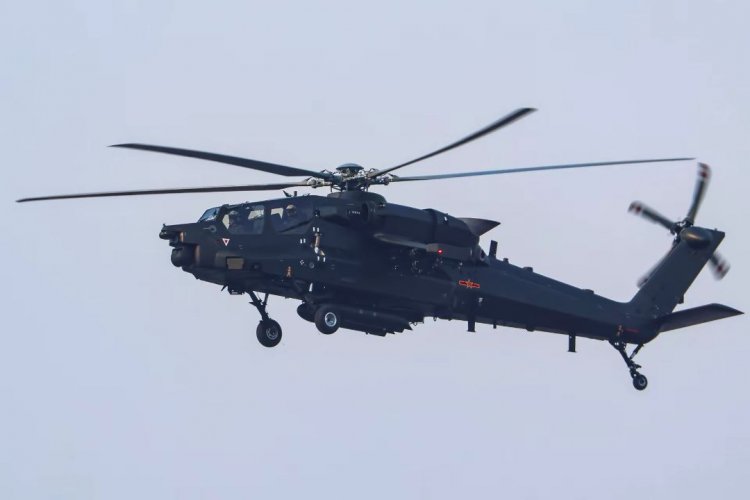
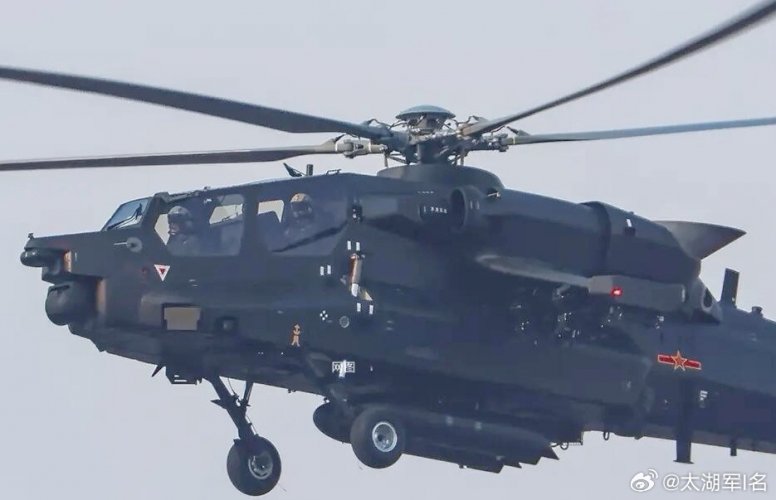
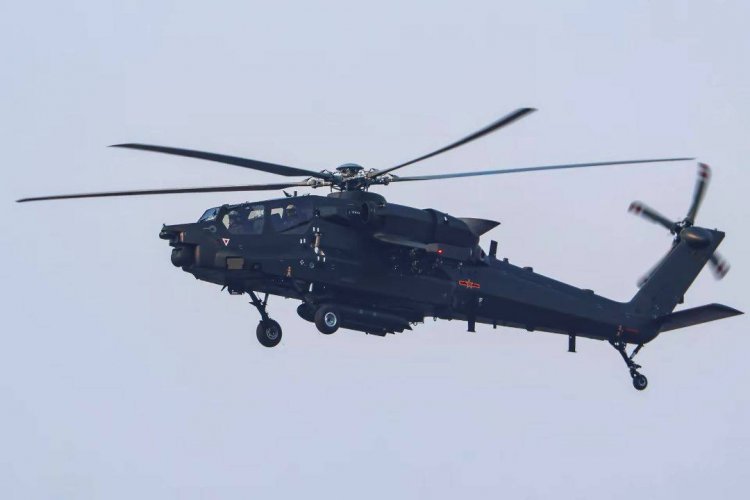
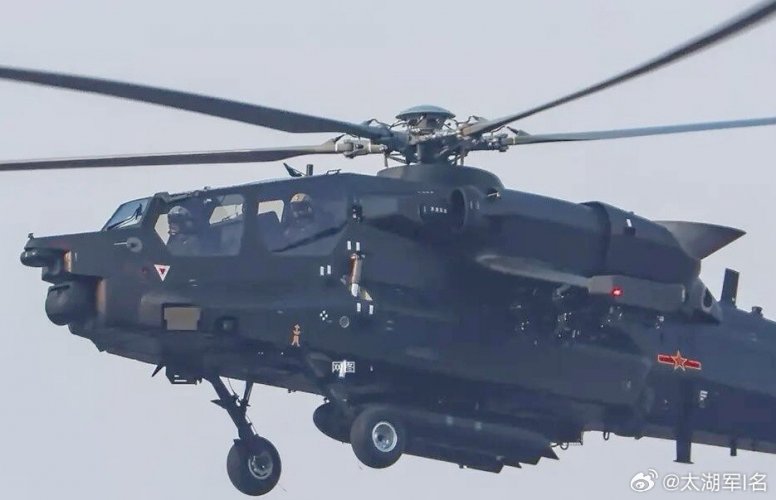
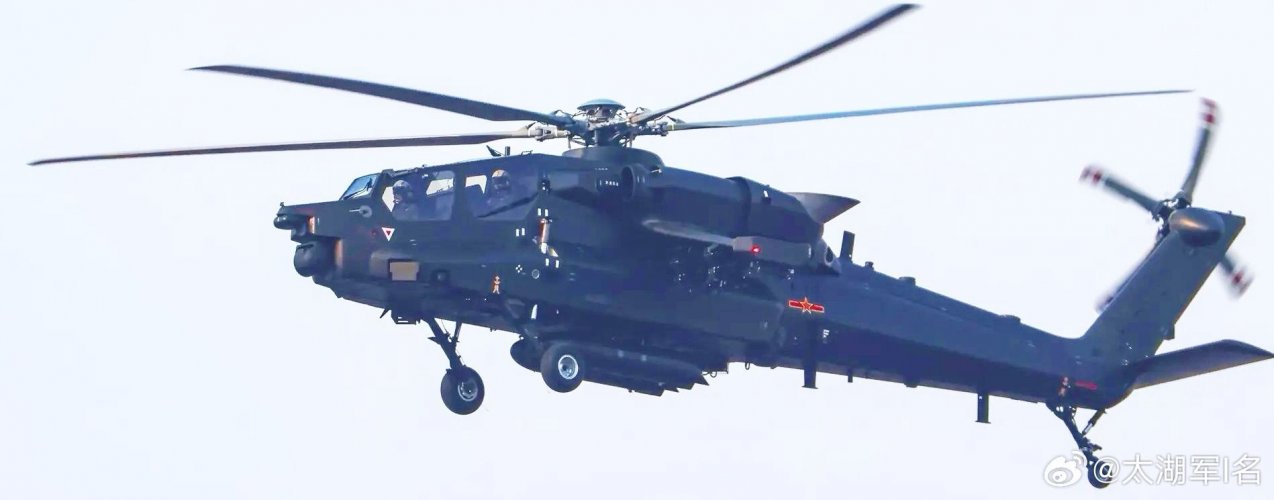
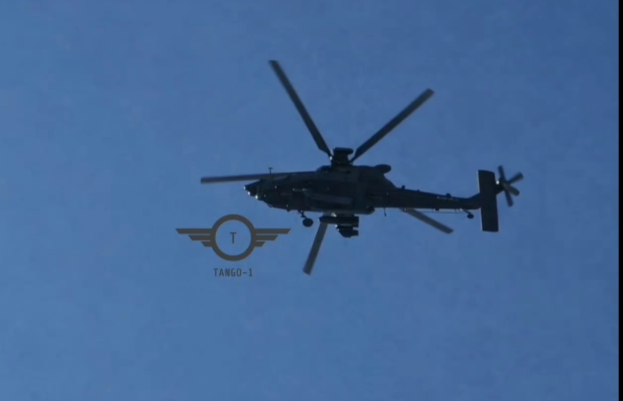
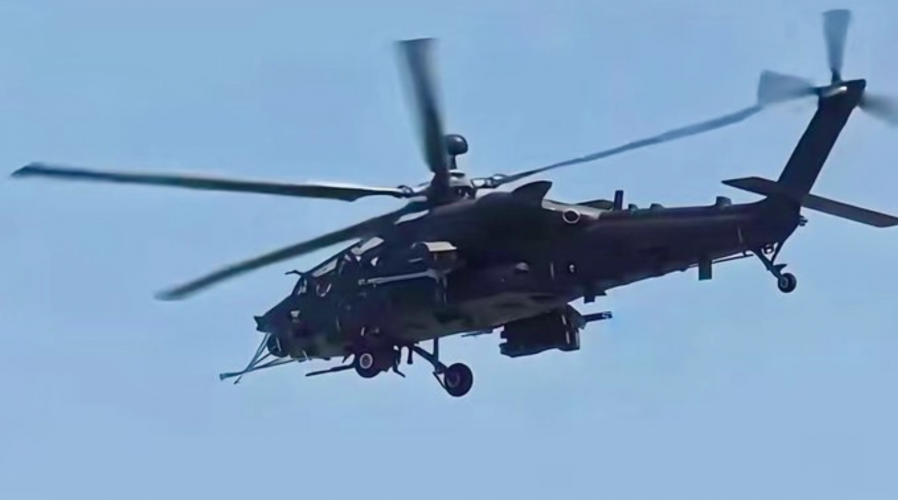
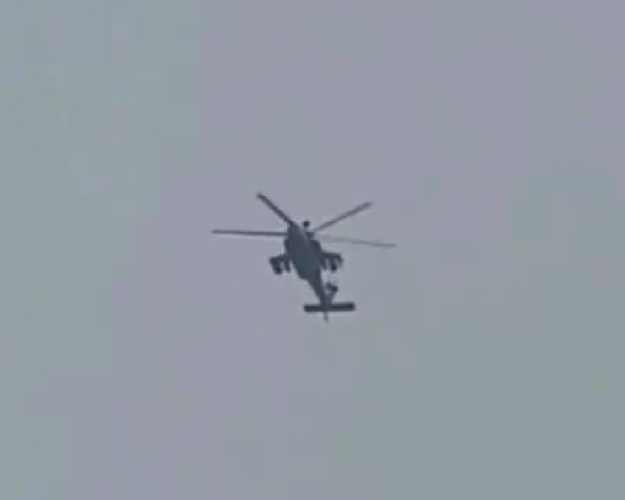
Z-21 (?) - New Chinese Heavy Attack Helicopter

AFAIK, China never had any Mi-28s so cannot have based anything on that. Z-20 was a indigenous development upon the S-70s.
Rotor system is not S-70. At all.

Z-20/Z-21 rotors look like they're from an Mi24, honestly. Engine and transmission arrangement looks like it's more Havoc than Hind.
 
Z-20 shares the overall configuration and fuselage/landing gear as S-70 family, but the drive train, rotors, engines are clean sheet.

I suspect there are no interchangeable parts between Z-20 and S-70/UH-60 in general.
 
I suspect there are no interchangeable parts between Z-20 and S-70/UH-60 in general.
They might use the same size rivets, and the wheels/tires may be the same size. Oh, and circuit breakers and light bulbs.
 
They might use the same size rivets, and the wheels/tires may be the same size. Oh, and circuit breakers and light bulbs.

I am actually thinking of those components as well when I say there may be no interchangeable parts.

The S-70, as good as it is, is a fairly old design and the Z-20 is a clean sheet design that really just adopts the S-70's footprint and geometry.
 
AFAIK, China never had any Mi-28s so cannot have based anything on that. Z-20 was a indigenous development upon the S-70s.
I certainly agree that the Z-20 is based on the S-70 in most details, however the dynamic components are vastly different (5 main rotor blades vice 4, completely different bifilar components which means the completely different control mechanism layout). It may be incorrect to say that the dynamic components are based on Russian designs, but they certainly seem similar, and I am sure they are not copies of the S-70.
Not having Mi-28 does not mean China has not been given access to the technology, or given their proclivity toward "barrowing" technology, they did not bother to ask. That said given that they do have Mi-8/17, that have robust and relatively easy to maintain components, the Chinese aerospace sector could have designed it on their own,
 
I am actually thinking of those components as well when I say there may be no interchangeable parts.

The S-70, as good as it is, is a fairly old design and the Z-20 is a clean sheet design that really just adopts the S-70's footprint and geometry.
I think that is the correct relationship between the two. The PLA was thrilled with their S-70s and wanted more but the US wasn't dealing (after the events of 1989) so they built their own helicopter which is obviously inspired by the Blackhawk.
It is neither a licensed copy (like the Y-5 trainer) nor an unlicensed copy (like the Tu-4 bomber the Soviets copied from the B-29). It is more like the AVIC AG600 which is inspired by - but not a copy of - the Japanese Shin Meiwa PS-1/US-1. And like the seaplane example, they managed to build a less attractive, if perfectly acceptable, aircraft.

BTW, the Z-20 doesn't match the S-70 in any overall dimensions.
 
Rotor system is not S-70. At all.

Z-20/Z-21 rotors look like they're from an Mi24, honestly. Engine and transmission arrangement looks like it's more Havoc than Hind.
Similar to how 'looks' matter little with regards to stealth, the surface level looks of a rotor assembly of a helicopter is nearly irrelevant. As material usage, distribution and construction processes are what matters and often very different from one helicopter family to the other. Especially nowadays where the engineering in the blades and rotorhead themselves approaches pure witchcraft. The Z-20 adopting a different rotor configurations over the S-70 comes down to the Z-20 being much more modern, as in being able to benefit from superior modeling and CAD processes, while also having to satisfy PLA parameters. So the S-70 rotor design was either deemed antiquated, inefficent or unsuitable for the PLA. Possibly all of the above.

Also, indigenous Chinese helicopters trace their roots back in the most part to European and in smaller part US imports decades ago, which served as the foundation for their own work. Soviet/Russian influence is, to the surprise of many, rather minor. Even the often quoted assistance of Kamov to the Z-10s development, which factually took place, wasn't as fundamental as many think it was, especially as to how the final Helicopter turned out. They acted mostly as consultant with regards to the technical solutions being explored. Mil helicopters have even less history in China. By comparison, the PLA still has some Ka-27 derivatives in service. But their own helicopters are more in line with western designs.
 
I think that is the correct relationship between the two. The PLA was thrilled with their S-70s and wanted more but the US wasn't dealing (after the events of 1989) so they built their own helicopter which is obviously inspired by the Blackhawk.
It is neither a licensed copy (like the Y-5 trainer) nor an unlicensed copy (like the Tu-4 bomber the Soviets copied from the B-29). It is more like the AVIC AG600 which is inspired by - but not a copy of - the Japanese Shin Meiwa PS-1/US-1. And like the seaplane example, they managed to build a less attractive, if perfectly acceptable, aircraft.

BTW, the Z-20 doesn't match the S-70 in any overall dimensions.
Though the seaplane was a pretty meh project, AFAIK it was mostly a filler project to keep the special aircraft division alive and engineers current that has the added side effect of getting something to fill the niche sector of firefighting aircraft.
 
Similar to how 'looks' matter little with regards to stealth, the surface level looks of a rotor assembly of a helicopter is nearly irrelevant. As material usage, distribution and construction processes are what matters and often very different from one helicopter family to the other. Especially nowadays where the engineering in the blades and rotorhead themselves approaches pure witchcraft. The Z-20 adopting a different rotor configurations over the S-70 comes down to the Z-20 being much more modern, as in being able to benefit from superior modeling and CAD processes, while also having to satisfy PLA parameters. So the S-70 rotor design was either deemed antiquated, inefficent or unsuitable for the PLA. Possibly all of the above.
Disagree. With stealth, you can see if someone has done the basics of edge alignment and the rest of the known state of the art.

With rotor assemblies, you can see if they went with a mechanically simple teetering rotor or a more complex one with more than 2 blades. You can see if they're doing interesting aerodynamic tricks like with BERP tips or even just swept and drooped tips like on Blackhawk/Apache. You can see which side of the airframe the transmission is designed to be on (Hind or HH3s transmission inputs are forward of the rotor, Blackhawk, Apache, and Havoc the inputs are to the side or aft of the rotor).

What you cannot see is alloys and fancy tricks inside the hub.


Also, indigenous Chinese helicopters trace their roots back in the most part to European and in smaller part US imports decades ago, which served as the foundation for their own work. Soviet/Russian influence is, to the surprise of many, rather minor. Even the often quoted assistance of Kamov to the Z-10s development, which factually took place, wasn't as fundamental as many think it was, especially as to how the final Helicopter turned out. They acted mostly as consultant with regards to the technical solutions being explored. Mil helicopters have even less history in China. By comparison, the PLA still has some Ka-27 derivatives in service. But their own helicopters are more in line with western designs.
But the Chinese do have access to Soviet/Russian engines and transmissions for inspiration. or "inspiration"
 
Indeed apparently we have the clearest image of China's new heavy attack helicopter, so far, and indeed some details appear strange (likely again due to post-processing with AI) like besides the already mentioned weapon stations under the fuselage, the again or still missing gun but also noteworthy it AFAIR for the first time it has no prototype number anymore and carries the PLA symbol.
 
Certainly could be extra range fuel tanks, but one quick question why the small size of them?
 
I could be wrong but it may be that the large tanks that appear to be on the bottom of the aircraft are attached to the wing stores on the right side of the aircraft. Note that the wings have a distinct downward cant, most likely to relive some of the down force from the main rotor system. I believe them to be extended range fuel tanks (like those seen an AH-64 or Ka-52 from time to time), although the asymmetric loading is peculiar. It is feasible that this is done for a specific test event for asymmetric testing vice a standard configuration.
If they are on the bottom of the aircraft then I would certainly agree that they are fuel tanks. Most would not want to shoot a rocket or missile into the gun. Of course gravity weapons could be dropped if the environment allow operations at altitudes that allow for those sort of weapons.
The lack of gun is interesting. It is hard to tell from the picture if there is still a mount for it or not. Perhaps China has decided that they don't need one as the aircraft is to stay at extended range and use precision missiles(?) The lack of a gun does not mean there is not one planned for. Usually in operational testing you want the aircraft to be as close to combat configuration as is possible. It could be as simple as the "planned" gun is not working to standard and is to be replaced. That has happened before with other programs.
 
I am curious whether this photo is old; some reports say that a small batch of Z21s had already been produced and delivered to the troops for use at some point in the past, and suggestions for improvements were made. In any case, this is a positive sign.
 
I am curious whether this photo is old; some reports say that a small batch of Z21s had already been produced and delivered to the troops for use at some point in the past, and suggestions for improvements were made. In any case, this is a positive sign.
It is a fairly normal process for militaries to acquire small numbers of platforms to allow for operational testing prior to beginning series production.
 
While I am not yet fully convinced that there is a belly tank, I will conceed that it is feasible and appears to be along the CG of the platform. It also is a good use of available space, if the engines have the power for that and a fully load of ordnance.
Regarding other weapons, "drop" systems require the helicopter to be at higher altitudes which, in some situations, is acceptable but is not something I would want to do in a tactical combat environment. As mentioned earlier missiles are also possible, especially if China has elected not to include a cannon forward.
 
Wonder where the cannon will be housed? It seems rather strange not to house the cannon underneath the fuselage because both the Eurocopter Tiger, Mil Mi-28 and of course the Apache has the cannon in that position. Unless they are going to put the cannon in the same position as the Ka-52? It will be interesting to see what they come up with in the final production variants of the Z-21.
 
So it looks like the Z-21 finally has weapons mounted on both sides, is this for upcoming weapons trials?
 
So it looks like the Z-21 finally has weapons mounted on both sides, is this for upcoming weapons trials?
Perhaps not. As you can see, it is possible that it has already been in service. For a long time, China has not applied the 'August 1' military emblem on experimental models (except for the J20), but just recently, we have seen a Z21 with the military emblem, so it is reasonable to imagine that the Z21 has already passed the testing phase.
 
Interesting. So do you think that the production aircraft will have a cannon below the cockpit as expected or should we consider the gun has been removed from the production aircraft? I would be very surprised to find that the aircraft is not equipped with a gun. However recent "high intensity" conflict has demonstrated that, other than defensive counter air against drones, getting into gun range with ground forces is extremely dangerous.
 
I would be very surprised to find that the aircraft is not equipped with a gun. However recent "high intensity" conflict has demonstrated that, other than defensive counter air against drones, getting into gun range with ground forces is extremely dangerous.
Our Tiger attack helos also don't have a chin mounted gun, it's not unheard of. And the Ka-52 and variants of the Mi-24 have it also in usual placements. So there is precedent in either moving or ditching the gun.
 
Interesting. So do you think that the production aircraft will have a cannon below the cockpit as expected or should we consider the gun has been removed from the production aircraft? I would be very surprised to find that the aircraft is not equipped with a gun. However recent "high intensity" conflict has demonstrated that, other than defensive counter air against drones, getting into gun range with ground forces is extremely dangerous.
1774927700776.png
1774927799224.png
1774928726272.png
No, I think we still need to wait and see. There are quite a few differences between these Z21s with military insignia and the other Z21s. But honestly, the autocannon really isn’t a big problem.
 
Our Tiger attack helos also don't have a chin mounted gun, it's not unheard of. And the Ka-52 and variants of the Mi-24 have it also in usual placements. So there is precedent in either moving or ditching the gun.
Hey that is a great point. Thank you for the reminder that there are indeed attack helicopters in the world that are without a cannon. My comments above likely appear to indicate I think cannon are redundant. To be clear I think that a cannon is a good solution for operations that are not being conducted against a fully modernized opponent. The cannon allows for much less potential for collateral damage. Also as has been clearly demonstrated in all of the ongoing conflicts, using cannons to interdict drones are quite effective, especially when the shells are equipped with proximity fuses. In the case of the Chinese heavy attack helicopter it is interesting to see them in both configurations. I would assume that if the helicopter is to be operated without the cannon and associated equipment, the spaces are equipped with alternate equipment to retain good center of gravity. These days a good electronic warfare package could be as important as a cannon.
 
Last edited:
If legit - and at least by now it seems, it is - another surprise!Huitong has updated his Blog and again if this image is real, then this is maybe the new heavy attack helicopter Z-XX; he mentions Z-21 (?).However it looks more based on the Z-20 and very much like an AH-64 than promised by some rumours.

View attachment 722970
Range of Taiwan Islands, no need any more, but the soon future be unmaned baby, Unmaned!
 
Range of Taiwan Islands, no need any more, but the soon future be unmaned baby, Unmaned!
But would helis even be useful vs taiwan? They might be able to fly a lot lower(maybe 50m above sea level or slightly lower) and avoid radar but what can they achieve that China's significantly larger AF cannot? Its also not like taiwan can really deny the chinese army/navy, they can only make it insanely costly, but a China actually attacking taiwan is willing to take significant losses to achieve its goal.
 

Similar threads

Back
Top Bottom