Why newer air to air missile all have smaller fin/wing?

Vanessa1402

ACCESS: Confidential
Joined
10 April 2021
Messages
140
Reaction score
77
As we all know, missile and aircraft alike turn using lift. The more lift they can generated, the more G they can pull and sustain. So in theory, bigger wing is better from maneuver aspect and big wing also help at high altitude.
But it seem like a common trend that newer missiles keep reduce their fin/wing size more and more.
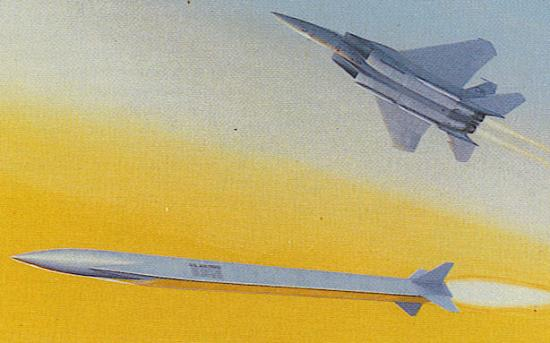
AIM-54 and AIM-7 both have massive wing. AIM-120A get tiny wing and fin compared to its predecessor, AIM-120C reduce the fin size even further. This is not only happen with BVR missiles. It happen with short range WVR missile as well. AIM-132 ASRAAM has tiny fin compared to AIM-9A/B/C/D/E/M/L eventhough it also has no TVC. So what are the reason for this trend?. How can missile like AIM-132 and AIM-120C match the agility of their predecessor (let alone surpass them?)
 
Possible that for missile designed in the 50-60s, their most dangerous targets are high and fast aircraft such as Mig-25, SR-71 so big wing is a requirement to operate in thin air. By contrast, modern fighters appear to operate mostly at medium altitude, so big wing isn't needed, reduce wing area can lead to lower drag and missile can go further at the cost of agility. I don't know why AIM-132 has such small fin though
 
Nike Hercules have the biggest “fin-span?” —Not including BOMARC

That big fin-span is associated with the Nike booster-stage's tail-fins and those were discarded as soon as the booster burned-out and separated.
 
Last edited:
Nike Hercules have the biggest “fin-span?” —Not including BOMARC

That big fin-span is associated with the Nike booster-stage's tail-fins and those were discarded as soon as the booster burned and separated.
Hercules' upper stage had huge fins too. SA-5 (S-200) Gammon had large fins as well. For thin air at high altitude as well.
 
This is outside of my comfort zone, but I wonder how much reduced fin size can be credited to improved autopilots and or the use of body lift and bank-to-turn steering for maneuvering. Old missiles were basically "bang-bang" with control surfaces either neutral or at full deflection. Now, autopilots can be much smarter about how much deflection to use, when to steer, etc.
 
but I wonder how much reduced fin size can be credited to improved autopilots
This certainly would be the case.

Old missiles were basically "bang-bang" with control surfaces either neutral or at full deflection.
Not all of them especially the larger SAMs and AAMs, for example both the Sidewinder and the Sparrow used proportional deflection from the beginning.
 
The AIM-120 is a special case, the missile having to "fit inside" AIM-7 dimensions (including control surfaces) in order to be compatible with F-14, F-15 and F/A-18 Hornet fuselage (corner for the laters) recessed stations, and light enough to be mounted on F-16 wingtips. Then from the -C variant the control surfaces had to be small enough so six could be carried by the F-22 instead of four.
The next generation AIM-xxx will have similar limitations: 12 ft length (to go inside existing weapons bays) and its section will have to fit into a (12.8 inches iirc) square (potentially including folding surfaces), unless the Air Force is willing to diminish the number of missiles carried by its fighters (unlikely).
 
Many of the older missiles used 3 point guidance. Point 1 was the launcher which was very close to the guidance radar. Point 2 was the missile. Point 3 was the target. As long as all 3 points are on a straight line, the missile should hit the target. If the target is heading towards the missile site then there is no big issue. But think about a crossing target. The missile is launched so that it is heading towards the target. Then, the target moves and the missile guidance corrects the missile course. At first, this is a gentle correction. As the missile gets farther from the launcher and closer to the target, the needed correction becomes much larger. The missile needs its greatest maneuver capability when it has the least energy it will have in the engagement. This necessitates larger wings so that the missile can turn hard when it does not have a lot of energy.
 
Many of the older missiles used 3 point guidance. Point 1 was the launcher which was very close to the guidance radar. Point 2 was the missile. Point 3 was the target. As long as all 3 points are on a straight line, the missile should hit the target. If the target is heading towards the missile site then there is no big issue. But think about a crossing target. The missile is launched so that it is heading towards the target. Then, the target moves and the missile guidance corrects the missile course. At first, this is a gentle correction. As the missile gets farther from the launcher and closer to the target, the needed correction becomes much larger. The missile needs its greatest maneuver capability when it has the least energy it will have in the engagement. This necessitates larger wings so that the missile can turn hard when it does not have a lot of energy.
so how is it different from more recent missile
 
so how is it different from more recent missile
More recent missiles do have better control systems and can maneuver with smaller control surfaces. That is part of it. The other part is that some of the newer missiles use different guidance types where the missile can be aimed where the aircraft will be when the missile arrives, therefore reducing the need to maneuver in the endgame.
 
Larger fins create more drag, reducing the missile range & max velocity. And missile usually need greatest maneuvering capability on terminal approach - when its engine is mostly burned out, and the missile became much lighter (so even small fins could make sharp turns). Plus modern controls are just better and modern autopilots could calculate better trajectories.
 
The trend began with Patriot missile and early ASRAAM designs.

The body lift is very important for agility, this was probably better understood since the 70's due to Space Shuttle research and bodylift-using airframes such as F-14.

Short range missiles can make do with thrust vectoring and very small fins as their rocket produces power for thrust vectoring for long enough.

AMRAAM got its wings clipped for better (more) fitting into weapons bays of stealth aircraft.

The big advantage of having less fin area is less drag, obviously. The recipe is improved control logic + higher speed = greater no escape zone and better chance to hit an agile target. Missiles that turn much lose A LOT of energy doing so. As an analogy, a warship doing an emergency 90° turn loses 1/2 of its speed.


Python 4 and Python 5 are counter the trend.
 
Last edited:
I think the body lift aspect is very much the outcome of more sophisticated software running on increasingly compact computers mated to compact sensors.
This allowes a missile to angle itself to the airflow such that it's body generates lift as and when it needs that. Such as during manoeuvre.

Coupled with the consequence that you need less fin area to generate lift, which helps cut drag.

A virtuous circle in ASRAAM's case. As it did away with such fins. Leaving only tail control surfaces.

This is also while there emerged development designs of next generation Skyflash with just tail controls as it did for the successor missile effort.
 

Similar threads

Back
Top Bottom