What Usually Prevented VTOL Transport Projects from Reaching Production?

Aaawen

ACCESS: Restricted
Joined
24 July 2026
Messages
1
Reaction score
0
I have been reading about postwar VTOL transport aircraft concepts, and many of them appear to have offered useful operational advantages but never progressed beyond design studies or prototypes.In your opinion, what was usually the main reason these projects were cancelled?Was it primarily engine efficiency, payload and range limitations, hot-gas ingestion, maintenance requirements, development cost, or changes in military doctrine?I would also be interested to know whether there are any cancelled VTOL transport concepts that might be more practical today with modern engines, materials, and flight-control systems.Any recommendations for project reports, books, or other primary sources would be appreciated.

 
I have been reading about postwar VTOL transport aircraft concepts, and many of them appear to have offered useful operational advantages but never progressed beyond design studies or prototypes.In your opinion, what was usually the main reason these projects were cancelled?
Generally the enormous mass of lifting engines, required to make heavy transport plane hover. And equally enormous fuel consumption of said engines, required to make possible transfer from vertical to horizontal flight and vice versa.

All this did not make VTOL transports impossible, but seriously affect their performance. To elaborate, a nominal VTOL Hercules plane, would have about 50% less payload than normal one, and about 50% less range. And likely 200% more cost, due to higher complexity, greater strain, ect.

would also be interested to know whether there are any cancelled VTOL transport concepts that might be more practical today with modern engines, materials, and flight-control systems.Any recommendations for project reports, books, or other primary sources would be appreciated.
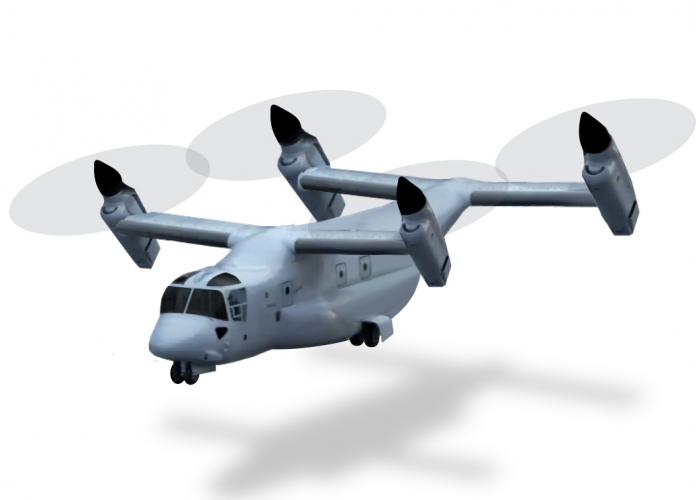
The tandem wing tiltrotor scheme - like Bell X-22 or Curtiss-Wright X-19, but larger - would likely be the optimal solution, in modern times.

P.S. In 2000s, Bell and Boeing together proposed the tiltrotor aircraft with roughly the same load as C-5 Hercules:

1784924858859.png
She would have about 50% less range, though.
 
I have been reading about postwar VTOL transport aircraft concepts, and many of them appear to have offered useful operational advantages but never progressed beyond design studies or prototypes.In your opinion, what was usually the main reason these projects were cancelled?Was it primarily engine efficiency, payload and range limitations, hot-gas ingestion, maintenance requirements, development cost, or changes in military doctrine?I would also be interested to know whether there are any cancelled VTOL transport concepts that might be more practical today with modern engines, materials, and flight-control systems.Any recommendations for project reports, books, or other primary sources would be appreciated.
All-

Howdy !


#1 - For the newer age E-VTOLs…..Money….
and the investment levels truely required for these programs to stay viable.
In addition, some developers presented faulted business models and presented over-hyped products. Uber was an early-on investor that proffered ernest money, only to come to the realization that E-VTOL urban transportation would not become the type of
“ door-to-door “ service they provided using automobiles…. and they dropped out.

Protracted development times and engineering challenges increasingly drove up
program costs. The E-VTOL developers ( intent on becoming manufacturers ) always needed massive infusions of money… to keep things going.

New technology hurdles needed to be overcome, such as….flight worthy electric motor development, high DC volt circuitry and associated components, distributed propulsion;
just to name a few.

Battery performance to-date, has perpetually lagged hoped for performance levels.
The situation improves, but… at a rate that many consider far from ideal.

Non-existent charging infrastructure needed to be developed, fairly standardized; and put in-place at strategic locations within participating cities/countries. Suitable landing and takeoff facilities and their associated terminals needed to be established.

Urban air mobility integration into the overall air traffic control environment has proven to be a significant challenge; on its own.

Costs and efforts required for establishing new E-VTOL production facilities, selecting component vendors, and setting up a reliable aircraft components supply chain; all played a huge role. Too many programs competed for some of the same items, and the
E-VTOL developer field today continues to downsize.

Ahead, lie the costs and time required for flight certification efforts for programs that are
mostly an entirely new realm of air transportation. This area of bringing E-VTOL transportation to fruition is only now beginning to be entered by the earliest bow wave of developers.


With regards,
357Mag
 
Back
Top Bottom