What if the atomic bomb had been available sooner?

Yes, agreed, but if you are on the aircrew you ideally want to get back home. Fighter pilots want to hunt, simples. With not many aircraft initially fitted for the role you do not need to lose that many before the tactic ceases. Not that you need to hit that many.
 
Would you? The British intentionally built their Yellow Sun nuclear bomb with a blunted nose to increase drag and avoid supersonic shock waves. Provided that you're willing to accept a longer freefall time it gives an aircraft longer to clear the detonation point, although I don't know if it would be enough.
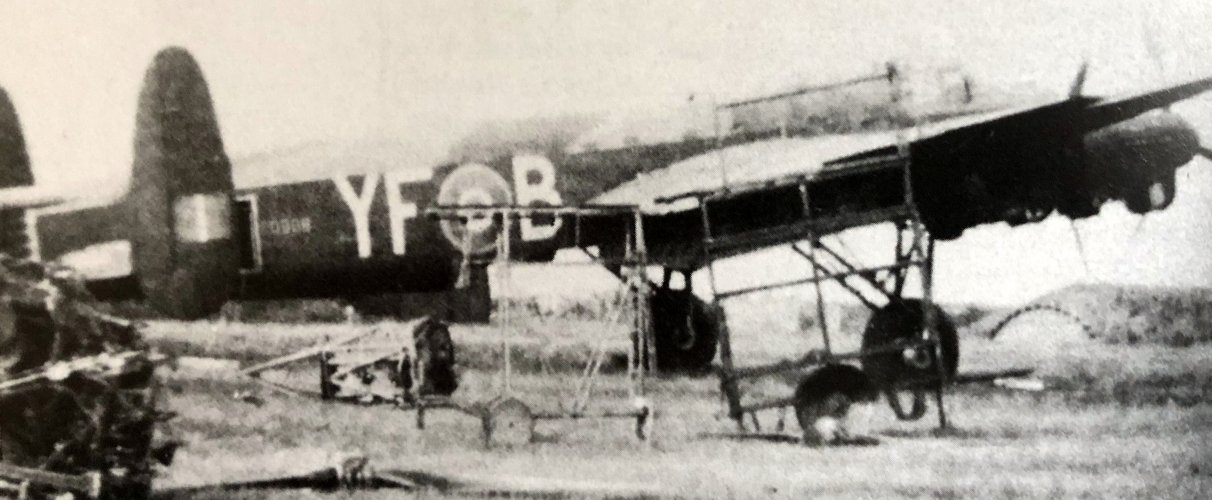
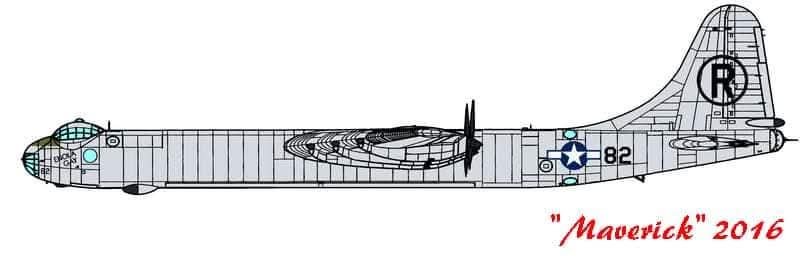
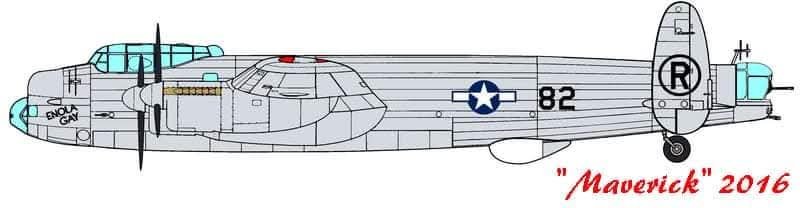
In 1944-45 only the US has a nuclear weapon. The design specs called for the casing to be "flak proof." That is, about half the bomb's weight was an armor-plated casing that protected the bomb from potential flak or light gun fire. A 'just in case' thing. Fitting the bomb required the deeper bomb bay of the B-29. The Lancaster was ruled out as a delivery plane because it's bay was long, narrow, and shallow.

Silverplate crews were trained in a specific evasion maneuver following release that included a turn away, diving, and full acceleration of the aircraft. Interception following bomb release would still be difficult. You have a bomber moving at about 350 knots, possibly close to 400. That's pretty much about what any piston engine fighter was capable of. This means either you engage in an extended stern chase to catch the plane, or you are trying a head on pass of some sort at extremely high closing speeds.
 
Would you? The British intentionally built their Yellow Sun nuclear bomb with a blunted nose to increase drag and avoid supersonic shock waves. Provided that you're willing to accept a longer freefall time it gives an aircraft longer to clear the detonation point, although I don't know if it would be enough.
Not like Fat Man (or Mk3 devices in general) had a particularly pointy nose.
 
The Lancaster was ruled out as a delivery plane because it's bay was long, narrow, and shallow.
Not sure that was the reason.

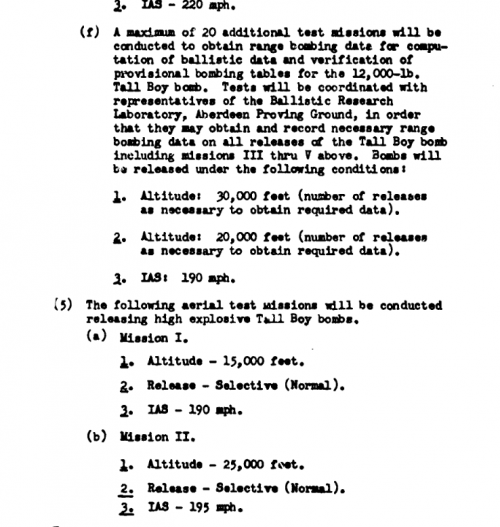
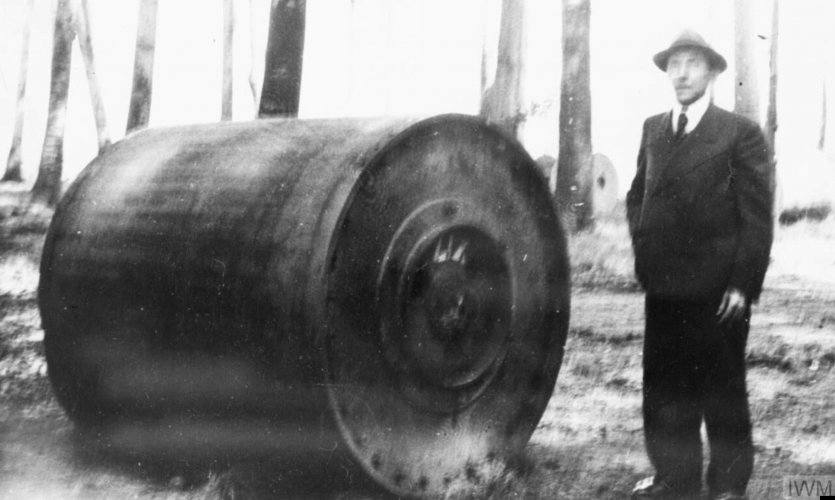
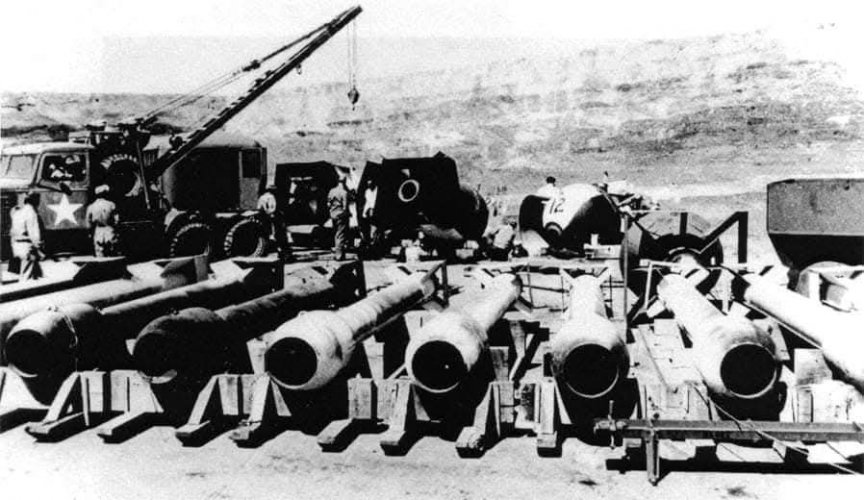
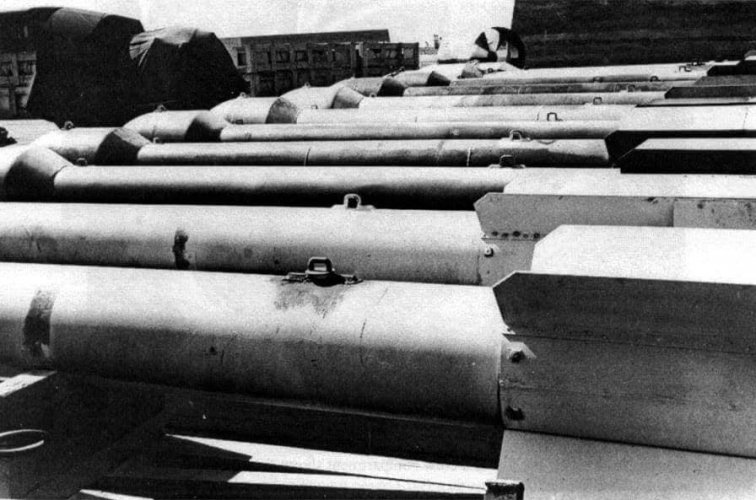
Tallboy was 10 inches larger diameter than Little Boy and twice the length, while Grand Slam was the same diameter as Fat man and almost 3 times the length. Granted, carrying Fat man with no bomb bay doors might not be ideal but if you are going to have to “silver plate” the aircraft anyway specialized bomb doors seems a small cost compared to what you have already spent on a bomb.
 
Am I right in assuming that the chemical spill into the Rhine from an attack on Ludwigshafen would've itself damaged Germany's war effort?
 
Remember what happened to the centimetric radar of a British bomber shot down over Rotterdam, this was also a lone reconnaissance plane that was nevertheless shot down without problems. If the plane carrying the bomb had been shot down, the Germans would know two things: that the bomb can be made and that the Americans had given them the fissile material to build it.
It wasn't a "lone reconnaissance plane".

The H2S equipped aircraft lost on the night of 2/3 February 1943 was Short Stirling Mk.I serial number R9264 (probably with the suffix /G as it was carrying the then secret H2S, meaning it had to be guarded while on the ground) belonging to 7 squadron RAF and carrying the squadron code MG-L. By that time 7 squadron was part of 8 (Pathfinder) Group.

On the night of 2/3 Feb 1942 MG-L was one of a couple of hundred Bomber Command aircraft tasked with bombing Cologne.

Bomber Command aircraft flying at night flew individually (as opposed to in a formation which would have been virtually impossible at night) but within a "Bomber stream" designed to concentrate the aircraft as they flew through Luftwaffe radar defences. It was shot down by a night fighter. Countless Bomber Command aircraft were shot down in similar circumstances during the course of WW2.

Details of the loss here
https://aviation-safety.net/wikibase/52190
This was the experience of another crew in 7 squadron flying that same mission.
https://www.bbc.co.uk/history/ww2peopleswar/stories/35/a2051335.shtml
Short Stirlings were well known for having the lowest operational ceiling of the three British four engined bomber types - max 16,500ft and often lower depending on the bomb and fuel load and weather.
https://en.wikipedia.org/wiki/Short_Stirling
7 squadron lost another H2S equipped Stirling on the night of 25/26 May 1943. Details can be found here.

While anything MAY be possible, a Short Stirling however was nothing like a B-29 in terms of its overall performance, especially in term of speed and service ceiling. Those characteristics alone make it a much more difficult target.

Looking at the PR Mosquito operations flying around 30,000ft the main threat came from the Me262 jet fighter (from July 1944) and the Me163 rocket fighter (entered operational service in May 1944). To counter the Me262 PR Mosquito tactics were to evade by turning tightly inside the enemy and losing altitude fast to gain speed to try to outrun them. But those Luftwaffe types were not available in large numbers and their bases were known. PR Mosquitos continued to operate in relative freedom until the end of the war.

Those would not be options for a B-29 carrying an atomic bomb, but maybe it becomes a reason for retaining all the remote turrets. Another option would be fighter sweeps over bases known to have these types, rather than close escort.

 
Not sure that was the reason.

Tallboy was 10 inches larger diameter than Little Boy and twice the length, while Grand Slam was the same diameter as Fat man and almost 3 times the length. Granted, carrying Fat man with no bomb bay doors might not be ideal but if you are going to have to “silver plate” the aircraft anyway specialized bomb doors seems a small cost compared to what you have already spent on a bomb.
There were brief suggestions (I would put it no stronger than that) to use the Lancaster as a nuclear bomber during late 1943, when historically the preferred atomic weapon was the 17ft long Thin Man Plutonium gun device AND the B-29 programme was in trouble. That weapon was found unworkable (the very first Pullman or Silverplate was modified to drop it, including amalgamating the bomb bays Serial number 42-6259) and the B-29 came good as a result of the Battle of Kansas over the winter of 1944.
https://en.wikipedia.org/wiki/Battle_of_Kansas
Frankly, there would be no way that the USA would consider giving the job to the RAF.
https://www.key.aero/article/lancaster-nuclear-bomber
Another B-29 was modified in early 1945 for trials with Tallboy & Grand Slam, with more modified post-war.
 
Not sure that was the reason.

Tallboy was 10 inches larger diameter than Little Boy and twice the length, while Grand Slam was the same diameter as Fat man and almost 3 times the length. Granted, carrying Fat man with no bomb bay doors might not be ideal but if you are going to have to “silver plate” the aircraft anyway specialized bomb doors seems a small cost compared to what you have already spent on a bomb.
I'm sure there was, but that didn't help things. I know during the immediate postwar Project Ruby the USAAF and RAF used B-29's to deliver both Tallboy and Grand Slam bombs, among other deep penetrators, because the Lancaster couldn't climb to a high enough altitude to get either bomb up to terminal velocity when dropped. Most of these tests were run out of RAF Mildenhall, one of three RAF airbases that were specifically upgraded late in the war to handle B-29's and had loading pits for those bombs along with atomic bombs.

https://apps.dtic.mil/sti/pdfs/ADA065940.pdf
https://www.mildenhall.af.mil/News/...oject-ruby-a-look-at-raf-mildenhalls-history/
In the case of atomic weapons delivery, I'd think the slower speed and lower altitude that a Lancaster operated at would have been other reasons to not use it.

Another B-29 was modified in early 1945 for trials with Tallboy & Grand Slam, with more modified post-war.

Actually, a fair number of B-29 were not only modified and tested to carry Tallboy and Grand Slam bombs and did so in operational service using those, mostly Tallboy, during the Korean war.

boeing-b-29-superfortress-44-70060-experimentally-fitted-v0-qajcnbffyztb1.jpg

A B-29 (44-70060) modified to carry two (2) Grand Slam bombs. Others carried both along with later US very heavy bombs including the 44,000 lbs. T-12 Cloudmaker, although with this bomb the B-29 was altitude and speed restricted due to its weight.

Both Tallboy and the VB-13 / ASM-A-1 Trazon were dropped by B-29's in Korea. The later was used against dams in N. Korea for example.
 
In the case of atomic weapons delivery, I'd think the slower speed and lower altitude that a Lancaster operated at would have been other reasons to not use it.
I would assume so. I have seen the discussion before on other forums on whether the Lancaster could have been made to work (as in, drop and escape the explosion) if, for some reason the B-29 did not appear. The consensus seems to be a resounding maybe. It certainly wouldn’t be ideal but it might just make it. It would depend on what performance you would get out of the modified varient meant to carry it and any technical schemes to slow the bombs fall.

My point, however, was that whatever the Lancaster shortcomings in the role, and there were plenty, bomb bay dimensions doesn’t seem like it would have been one of them.
 
I would assume so. I have seen the discussion before on other forums on whether the Lancaster could have been made to work (as in, drop and escape the explosion) if, for some reason the B-29 did not appear. The consensus seems to be a resounding maybe. It certainly wouldn’t be ideal but it might just make it. It would depend on what performance you would get out of the modified varient meant to carry it and any technical schemes to slow the bombs fall.

My point, however, was that whatever the Lancaster shortcomings in the role, and there were plenty, bomb bay dimensions doesn’t seem like it would have been one of them.
That was actually a serious one. With the bomb partially exposed, this would have increased drag on the aircraft reducing its speed up to the drop. As the speed was already marginal, at best, having the bomb hanging out wasn't helping.
 
TBH, nuke/disinfect Berlin and just be done with it. I honestly believe it would have saved Germany from a lot of griefs, like making Berlin *yet again* Germany's capitol after Bonn, which is an *entirely lovable* small University town. But, as an expat I have to watch my blood pressure...
 
That was actually a serious one. With the bomb partially exposed, this would have increased drag on the aircraft reducing its speed up to the drop. As the speed was already marginal, at best, having the bomb hanging out wasn't helping.
Also, the arming process for both bomb designs required final assembly in-flight. This would be rather challenging if the bomb (and unfortunate member of aircrew) were exposed to the air stream.

Even assuming the atomic bomb was somehow ready a year earlier, the B-29 would still be available. It was in operational service in May 1944, which would still beat the atomic bomb, and you'd better believe that dropping the atomic bomb would be given priority for them.

As for survivability – tactics could and would be developed. It would be higher risk than operating over Japan in August 1945. But losses are expected in wartime, the bomb was armoured for a reason, and in the worst case salvage fusing is a thing.
 
Depending on the point of departure from our timeline, the Avro super heavy bomber proposal of 1942 might be a viable alternative to the B-29, assuming they could have completed development and gotten it to at least limited production by 1944. As I mention in the linked post, the original requirement behind it may well have been with the then under development atom bomb secretly in mind.
 
That was actually a serious one. With the bomb partially exposed, this would have increased drag on the aircraft reducing its speed up to the drop. As the speed was already marginal, at best, having the bomb hanging out wasn't helping.
True, but if you are in the position where the Lancaster is all you have, and you are already going to be building a specialized varient (as was done for the earthquake bombs) then designing a set of bomb bay doors to cover the wider load seems like a comparatively smaller hurdle to cross.

AIUI the elimination of the Bomb doors in the Lancaster B.Mk 1 was the simplest answer available and helped reduce weight as well (which was a constant requirement for carrying the Grand Slam). Fat Man being half the weight of Grand Slam would help make up for the addition of larger bomb bay doors.

Again, not the best answer by a long shot. But not an elimination on its own.
 
Depending on the point of departure from our timeline, the Avro super heavy bomber proposal of 1942 might be a viable alternative to the B-29, assuming they could have completed development and gotten it to at least limited production by 1944. As I mention in the linked post, the original requirement behind it may well have been with the then under development atom bomb secretly in mind.
I think it's exceptionally unlikely that the US would have delivered an atomic bomb using a UK airframe. Politically, at the very least it would have to be built in the US. Which means if you're building a special variant of a bomber with inadequate size or performance, you're using a B-17 or B-24. Or – more likely – using a B-29, which was big enough, had the performance, and was in service in time even with this improbably accelerated timeline.

Adding a British paper plane into the mix is vanishingly unlikely to help. Not only politically , but there is no way a 1942 proposal is going to be in squadron service by 1944. Maybe it could be a delivery vehicle for a British Empire-only atomic bomb. But that would be later than OTL, not earlier, and is out of scope for this thread.
 
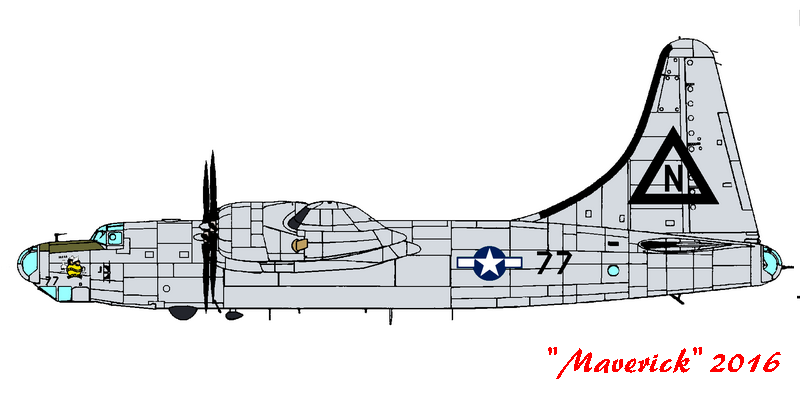
The B-32 would not have been an alternative in the timescale envisaged in this thread, given its historical development path.

Prototype XB-32 first flight 7 Sept 1942, the same month as the XB-29. But after that there were all sorts of problems. It was Nov 1943 before the third prototype flew with the single B-29 tail, not the twin tails of its original and the earlier two prototypes, configuration.

It was Dec 1943 before the USAAF requirement changed to view it as a low / medium altitude bomber. That was accompanied by dropping the pressurisation requirement and deciding to fit manual turrets in place of the remote turrets previously planned, amongst many other changes. At that point the aircraft was on the point of being cancelled. Combined, these changes made the B-32 something approaching a complete redesign with the company designation changing from Model 33 to Model 34.

It was Aug 1944 before the first production aircraft flew (still with the short B-29 fin & rudder and the time this what if is dropping the Bomb on Germany), 19th Sept before the second was delivered to the USAAF (it crashed the same day) and 22nd Nov before the third left the factory. By the end of 1944 only 5 had been delivered to various test establishments where the USAAF was finding many mechanical problems and poor workmanship.

Training on the type began in late Jan 1945 with 40 early aircraft being delivered without turrets.

By then it certainly wasn't seen as an alternative to the B-29. That was why it was sent to the Philippines to the 5th AF to meet Gen Kenney's request for something bigger & longer ranged than the B-24 (he was told the B-29 wouldnt be made available to him).

So, unless you can turn the clock back to late 1942 and somehow sort out all the B-32's myriad problems in the first half of 1943 instead of a year later and change the USAAF hierarchy's attitude towards it due to those, then there is no way it can be an alternative to the B-29 in Aug 1944.
 
So, unless you can turn the clock back to late 1942 and somehow sort out all the B-32's myriad problems in the first half of 1943 instead of a year later and change the USAAF hierarchy's attitude towards it due to those, then there is no way it can be an alternative to the B-29 in Aug 1944.
I mean, we already are turning the clock back to 1940.

Which means that the big bombers are going to be seen as a higher priority.

What I'd really love to see is the USAAF tell Northrop how large a bomb bay they needed in feet and inches, not in pounds of bombs.
 
I mean, we already are turning the clock back to 1940.

Which means that the big bombers are going to be seen as a higher priority.

What I'd really love to see is the USAAF tell Northrop how large a bomb bay they needed in feet and inches, not in pounds of bombs.
When it comes to the A-bomb would they have even known? IIUC the size required for the Bomb was continually evolving until the final product.
 
As a native German born in the Free State of Bavaria in 1961, my first, second, and third choice is Berlin - cut off the head of the vile nazi snake by killing the truly wretched Schicklgruber bastard and his cronies ASAP without any identifiable remains that potential fanatics might use as rallying objects. Also, you most definitely would not want to have any surviving rump government to "negotiate" the terms of surrender - war is a winner takes all proposition, so you *dictate*. In addition, Berliners are to Germany what New Yorkers are to the US - take my word for it...
Is that the only reason you want to nuke Berlin? Hmm?
1774393072700.png
 
I'm not an expert but, pretty sure a few aircraft could include Griffon engines in any modification work carried out for fat chap carriage. Lincolns were fitted with Griffon engines so why not?
 
Last edited:
When it comes to the A-bomb would they have even known? IIUC the size required for the Bomb was continually evolving until the final product.
Valid point, and one I'm not sure about.

I do know that the USAAF would not release the dimensions for the atomic bombs to Northrop for "security" and then refused to buy a new bomber unless it could carry an atomic bomb.

Either bomb would be ~10ft long, and I suspect that 30" diameter would be an easy guess, even early on. Fat Man was 60" in diameter.
 
Valid point, and one I'm not sure about.

I do know that the USAAF would not release the dimensions for the atomic bombs to Northrop for "security" and then refused to buy a new bomber unless it could carry an atomic bomb.

Either bomb would be ~10ft long, and I suspect that 30" diameter would be an easy guess, even early on. Fat Man was 60" in diameter.
The first bombs could not be transported externally because the detonators had to be mounted by a technician inside the bomb bay during flight.
 
One of the Lancasters modified for Operation Chastise would have served well to carry the first British atomic bomb. But it would have been too risky to use it for a solo attack.

The most effective thing would have been for the nuclear bomber to fly in the center of a conventional bomber stream protected on the flanks by Mosquito night fighters.

So far everything is reasonable, but....what would have happened to all the bombers in the stream when the bomb exploded?

The secrecy of the operation would not have allowed the crews to be informed.

Blind pilots and navigators, structural damage, in-flight collisions...

If, on the other hand, the nuclear plane had been ahead or delayed the rest of the stream, before or after the attack, it would have been easy prey for the Flak Wurzburg or for the German night fighters.

Can you imagine the Luftwaffe intelligence officer examining the wreckage of the downed plane and finding a strange sphere ticking?

https://en.wikipedia.org/wiki/Bomber_stream
 

Attachments

  • ed909.jpg
    ed909.jpg
    2.8 MB · Views: 18
  • 0137003f-dff7-49c8-9f2d-83373ce4b421_3226x1934.jpg
    0137003f-dff7-49c8-9f2d-83373ce4b421_3226x1934.jpg
    255.9 KB · Views: 19
Had B-36 existed at the start of WW II but with only conventional bombs might have been of more value.
 
I'm not an expert but, pretty sure a few aircraft could include Griffon engines in any modification work carried out for fat chap carriage. Lincolns were fitted with Griffon engines so why not?
The Lincoln was fitted with two stage supercharged Merlin engines. Service entry was from Aug 1945.

It was the Avro Shackleton that was fitted with Griffon engines with contra-props (the latter still under test at the end of WW2). But that aircraft was a postwar development with first flight in March 1949.

Even the Vickers Windsor was Merlin powered.
 
The Lincoln was fitted with two stage supercharged Merlin engines. Service entry was from Aug 1945.

It was the Avro Shackleton that was fitted with Griffon engines with contra-props (the latter still under test at the end of WW2). But that aircraft was a postwar development with first flight in March 1949.

Even the Vickers Windsor was Merlin powered.
Thanks for the clarification, thought I had seen mention of Griffons, possibly a test/prototype aircraft.

I still think it possible if anyone had wanted to.
 
Given the Shackleton had Griffons it technically it could be done I think.
Not sure you'd gain much though, the two-stage Merlins should be more than up to the job.
 
The centimeter radar captured in Rotterdam also had a self-destruct device, which failed.
That's mostly, if not entirely, because how a cavity magnetron was made. The engineers pretty much thought it was nearly indestructible.

300px-7-GEC-Magnetron.jpg


How do you destroy what, for the most part, is a big lump of magnetic steel? The actual resonant cavity tube portion of a magnetron was already well known. Japan had already developed a lower power millimeter wave radar with one. The Germans experimented with them and decided there was no way to boost the output to useful levels. So, seeing that lump of steel and the way it was set up told German engineers everything they needed about the British development.

Surprisingly, or maybe not, the Germans didn't know the Japanese had succeeded where they failed and had a working millimeter wave radar--and did it before the British did!
 
In an 'Alt-TBO' over on 'TBO', I sent successive B-29 Silverbird 'Pathfinder' and 'Device' pairs against Berchtesgaden, its dark-woods' fire-storm pre-empting any 'Werewolf' retreat, Nuremburg's vast Zeppelin Field, infamous / symbolic for those epic pre-war mega-Rallies, then Wewelsburg Castle, the SS' 'spiritual' home.
Of the latter's 'Top Brass', only Himmler survived, due arrival delayed by car break-downs...

However, he didn't get 'away' as, along with the other 'Odessa Five', their promised 'Black Sea' U-Boot was provided by an SOE agent with *serious* grudge and truly wicked sense of humour: A 'spiked' toast, then a 55 gall oil drum apiece, with ballast, schnorkel and 'drain' holes. Gurgle, gurgle, gurgle...
 
Sure, but remember we're talking about bombs so twitchy that they were armed in flight after taking off and getting clear of the home base.
I agree with that, but the important thing here is that, if the bomb did not explode, the Nazis would have appropriated the secrets of controlled detonation, altimeter-trigger radar and indestructible fissile material to make their own bomb.

The V-1 missiles also had a self-destruct system triggered by a ventral sensor that fired when the warhead was moved, but many were captured almost intact without the system ever functioning.
 
Last edited:
Back
Top Bottom