Remember what happened to the centimetric radar of a British bomber shot down over Rotterdam, this was also a lone reconnaissance plane that was nevertheless shot down without problems. If the plane carrying the bomb had been shot down, the Germans would know two things: that the bomb can be made and that the Americans had given them the fissile material to build it.
It wasn't a "lone reconnaissance plane".
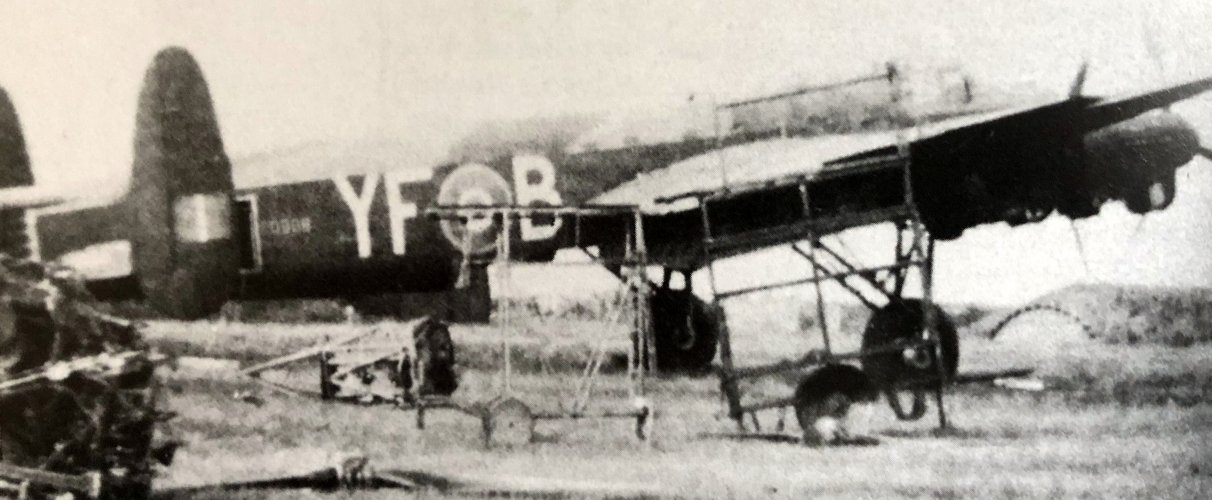
The H2S equipped aircraft lost on the night of 2/3 February 1943 was Short Stirling Mk.I serial number R9264 (probably with the suffix /G as it was carrying the then secret H2S, meaning it had to be guarded while on the ground) belonging to 7 squadron RAF and carrying the squadron code MG-L. By that time 7 squadron was part of 8 (Pathfinder) Group.
On the night of 2/3 Feb 1942 MG-L was one of a couple of hundred Bomber Command aircraft tasked with bombing Cologne.
Bomber Command aircraft flying at night flew individually (as opposed to in a formation which would have been virtually impossible at night) but within a "Bomber stream" designed to concentrate the aircraft as they flew through Luftwaffe radar defences. It was shot down by a night fighter. Countless Bomber Command aircraft were shot down in similar circumstances during the course of WW2.
Details of the loss here
https://aviation-safety.net/wikibase/52190
This was the experience of another crew in 7 squadron flying that same mission.
https://www.bbc.co.uk/history/ww2peopleswar/stories/35/a2051335.shtml
Short Stirlings were well known for having the lowest operational ceiling of the three British four engined bomber types - max 16,500ft and often lower depending on the bomb and fuel load and weather.
https://en.wikipedia.org/wiki/Short_Stirling
7 squadron lost another H2S equipped Stirling on the night of 25/26 May 1943. Details can be found here.
While anything MAY be possible, a Short Stirling however was nothing like a B-29 in terms of its overall performance, especially in term of speed and service ceiling. Those characteristics alone make it a much more difficult target.
Looking at the PR Mosquito operations flying around 30,000ft the main threat came from the Me262 jet fighter (from July 1944) and the Me163 rocket fighter (entered operational service in May 1944). To counter the Me262 PR Mosquito tactics were to evade by turning tightly inside the enemy and losing altitude fast to gain speed to try to outrun them. But those Luftwaffe types were not available in large numbers and their bases were known. PR Mosquitos continued to operate in relative freedom until the end of the war.
Those would not be options for a B-29 carrying an atomic bomb, but maybe it becomes a reason for retaining all the remote turrets. Another option would be fighter sweeps over bases known to have these types, rather than close escort.