What If, Japanese Post-War Military Exports

Hood

ACCESS: Above Top Secret
Staff member
Senior Member
Joined
6 September 2006
Messages
5,316
Reaction score
11,545
I don't usually post what-if scenarios but we've had a few what-ifs for smaller nations like Italy etc.

So I was thinking the other day, what if Japan had been able to constitutionally export weapons in the post-war period?
General Hackett in his The Third World War has Japan by the 1970s exporting cheap weapon systems such as ATGWs to nations like Kenya.
I wonder whether we might have seen a boom equalling that of the Japanese boom in shipbuilding, computing goods and cars during the 70s and 80s?
And if so, what weapons were likely to sell big and how might that affect what the Japanese produced having to design for both export as well as domestic requirements.

Smaller ATGWs and perhaps APCs and armoured cars seem obvious areas they might have made sales - especially since other nations like Brazil and Switzerland made numerous sales in the wheeled AFV market.
Licenced-built US aircraft perhaps less marketable without Washington's approval, but it might have stimulated sales of training/COIN aircraft, maybe even the C-1 as a C-130 competitor for the 1970s?
Japanese-designed warships always looked good too, well armed and multi-role, they might have picked up some Asian sales perhaps even in the Middle East.
 
As for combat aircraft... the usual path, even if for Japan it was rather complicated.
Subsonic trainer
Armed subsonic trainer
Supersonic trainer
Light combat aircraft

Had the Jaguar been a a more agile, not underpowered aircraft, the T-2 and F-1 might have been slightly better.

-------

And now, for something entirely different...

Somewhat astonishingly, in March 1971 of the 8 big Kereitsu - Ataka - contacted the US state department with an offer to takeover the SST project from Boeing.
They wanted to build Boeing 2707-300s ! This wasn't taken seriously and went nowhere.

In the days when Flight International archive was available for free (sigh) I looked for Ataka and found the following
- They had a deal with the British to sold Beagle aircraft
- They made a deal with Dassault to sell Falcon 20s on the Japanese market
- They were partners with Grumman in their Tomcat bid to the JASDF

So Ataka seemingly had strong aerospace ambitions.

https://en.wikipedia.org/wiki/Ataka_&_Co.
Except they stretched too thin, made bad investments and went under in the same decade.
 
I don't usually post what-if scenarios but we've had a few what-ifs for smaller nations like Italy etc.

So I was thinking the other day, what if Japan had been able to constitutionally export weapons in the post-war period?

Hard to see how it could be done, without changing the post-war political system and the Japanese foreign policy that goes with it - and that would need big changes in the geopolitical system in East Asia at least. An ongoing Korean War? A Warsaw Pact for Asia? Maybe those could achieve the aim. As it was, even the Kawasaki C-1 was deliberately hobbled with a short range so it could not easily be deployed outside of Japan.
 
The change that might have altered Japan's position and made it more like West Germany is indeed Korea.
If South Korea had met the same fate as Vietnam in 1975, reunified by the North, Japan would have been very much in the front line as Germany was.
With US forces not just confined to Okinawa and possibly even stationed on Formosa as Taiwan was then refered to, Japan is emboldened to change its constitution.
With suitable selfdeprecation, the enlarged and more capable forces retain the title Japan Defence Force rather than Imperial Armed Forces.
 
Dear Starviking,
Extending C-1's range is simple. Just trade cargo for fuel. It is relatively easy to strap extra fuel tanks inside the cargo compartment or hang external tanks under the wings (C-130).
 
Dear uk75,
During the Korean War, Japanese factories overhauled US Army Sherman tanks. I have seen Sherman pistons stamped with Japanese characters. From there, the Japanese could start manufacturing tank parts, etc.
Even if the Japanese constitution prevents them from sending soldiers overseas, they could still function as a "factory for democracy" by supplying arms to neighboring democratic countries: Taiwan, Malaya, Singapore, etc.
 
Something I believe might have made sense would be an alliance, South Korea, Japan and Taiwan which would have made any one of the triad stronger against military incursion. How realistic that is I am not sure.
 
You might be underestimating the historic enmity between those nations...
 
I agree politically its a minefield, the way things were set up. But there might have been scope for sales to other non-aligned nations. Certainly Japan had the capabilities and the industrial contacts. If you decouple the foreign policy and reassure the politicians the zaibatsu haven't come back then I see no major obstacles to

I agree Asian defence co-operation is more difficult given poor relations, but I was thinking more of world sales than a specific SEATO-type exercise.
 
Something I believe might have made sense would be an alliance, South Korea, Japan and Taiwan which would have made any one of the triad stronger against military incursion. How realistic that is I am not sure.

Problem is, that if there is one thing North and South Korea could wholeheartedly agree, is "we don't like Japan".
 
Dear Starviking,
Extending C-1's range is simple. Just trade cargo for fuel. It is relatively easy to strap extra fuel tanks inside the cargo compartment or hang external tanks under the wings (C-130).
External tanks need designing, testing, and are not the ideal solution for greater range.

Internal tanks will just take up cargo space, and will have to be placed in such a way that the centre of gravity is not affected. Accomodating that and cargo is going to be a nightmare. Additionally, the C-1 doesn't have that much cargo capability anyway, much less than a C130.
 
Something I believe might have made sense would be an alliance, South Korea, Japan and Taiwan which would have made any one of the triad stronger against military incursion. How realistic that is I am not sure.

Problem is, that if there is one thing North and South Korea could wholeheartedly agree, is "we don't like Japan".
That is why I chose the alt-Korean war outcome as a way of increasing Japan's importance as a Western outpost in the Pacific. I am sure Taiwan in such circumstances would take the same attitude as France, Belgium, Denmark, Netherlands and UK did eventually to West German rearmament.
 
I don't usually post what-if scenarios but we've had a few what-ifs for smaller nations like Italy etc.

So I was thinking the other day, what if Japan had been able to constitutionally export weapons in the post-war period?
General Hackett in his The Third World War has Japan by the 1970s exporting cheap weapon systems such as ATGWs to nations like Kenya.
I wonder whether we might have seen a boom equalling that of the Japanese boom in shipbuilding, computing goods and cars during the 70s and 80s?
And if so, what weapons were likely to sell big and how might that affect what the Japanese produced having to design for both export as well as domestic requirements.

Smaller ATGWs and perhaps APCs and armoured cars seem obvious areas they might have made sales - especially since other nations like Brazil and Switzerland made numerous sales in the wheeled AFV market.
Licenced-built US aircraft perhaps less marketable without Washington's approval, but it might have stimulated sales of training/COIN aircraft, maybe even the C-1 as a C-130 competitor for the 1970s?
Japanese-designed warships always looked good too, well armed and multi-role, they might have picked up some Asian sales perhaps even in the Middle East.

The Mitsubishi T-2 could be a cheap fighter for some countries who want something else besides American, French and soviet planes.
 
How about changing the Korean situation first?

That, instead of stopping at about halfway down the peninsula, the Red Army continued south until they'd liberated the whole of it. And then they refused to leave what they'd just took. Now there'd be no "buffer" between Japan and the Communists. Throw in the desperate need for the Japanese to get their economy back up and running and you've got a lot more impetus for heavy industry and military production.

The US would have to use the Japanese islands as the nearest base to anchor America's forces in the face of the Soviet Union and China's menace. The need for local repair ability would be a considerable driver. And the much faster escalation of "East / West" tensions would spur the rebuilding of Japan faster as well.
 
Why limit to just East-Asia for potential exports.
Korea is highly unlikely

but Southeast Asia, assuming some export regulations were relaxed and the US allowed for it, could have been possible as part of a reparation plan.
as well as maybe Australia? or Europe? LatAm?

the question is..what would they want?
T-4 trainers? US-1 amphibious aircraft? F-1/T-2 combat aircraft?
Type 61/74/90 tanks?
i lean towards naval technologies being more likely
 
Regarding this matter, it seems that there may be a slight misunderstanding, so I would like to provide some additional information.
Japan’s Constitution does not prohibit the export of weapons. Rather, Japanese arms exports were restricted by the “Three Principles on Arms Exports.”
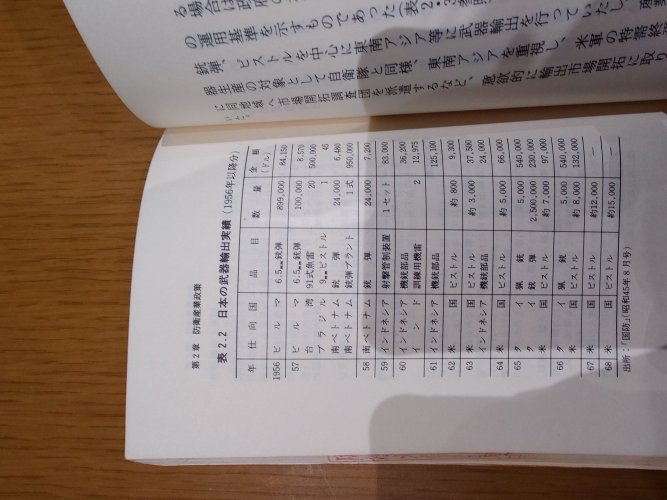
The reason for this policy was related to several incidents. A rocket developed in Japan, the κ-rocket, was exported to the Eastern Bloc communist state of Yugoslavia, where it was later developed into the R-25 SAM, which led to protests from Eastern European countries. In addition, the κ-rocket exported to Indonesia also raised concerns about possible military use, prompting protests from Malaysia.
Based on these experiences, the Japanese government concluded that exporting weapons and related technologies could potentially harm Japan’s national interests, and exports were therefore prohibited.
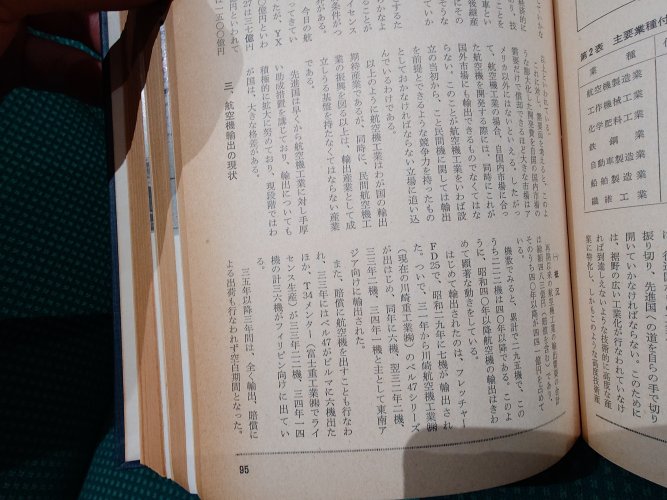
Before that policy was introduced, Japan had exported items such as rifles, torpedoes, T-34 menter aircraft, and helicopters. (To add further clarification: at the time there were also internal government guidelines discouraging the export of items such as artillery shells, but these were not laws.)
There were also attempts to export military aircraft. For example, Fuji Heavy Industries marketed a supersonic fighter-attack aircraft (Fuji T-X) to India, and Nippi (Nihon Hikoki) promoted the Nippi XT-1 to Indonesia. I also learned about these aircraft export efforts somewhere on this forum.


I have some data but sorry I have only smartphone for photo
 

Attachments

  • 20260327_155333331.JPG
    20260327_155333331.JPG
    2.3 MB · Views: 11
  • 20260327_164121520.JPG
    20260327_164121520.JPG
    2.6 MB · Views: 11
So say the incident with the K-Rocket fails to happen, the Yugoslavs buy a French design. Is this enough in the Japanese political climate of the late 1960s and 1970s to continue exports? By the 1970s and 1980s Japan has an extremely competitive shipbuilding industry, arguably the most likely exports would be warships.
 
According to Japan's Defense Industry (KYOIKUSYA, Keiichi Nagamatsu, 1979), Japan attempted to carry out indirect arms exports via South Korea in connection with South Korea’s Fourth Force Improvement Plan. The book states that, even excluding various core industries, Japan was considering involvement in areas such as aircraft, propellant factories for ammunition, and possibly tanks and submarines (the latter inference, tanks and submarines being based on the fact that the investment targets were related to the steel industry).


Since the above is only an excerpt, it may simply reflect the author’s personal view. However, it could also be interpreted as a list of products in which Japan had particular confidence regarding domestically produced weapons.


In addition, although I cannot recall which book it was, I read today that before the Tiananmen Square protests and massacre there were moves to export warships to the People's Republic of China so as not to fall behind exports by various European countries (which makes me wonder how Japan intended to deal with the Three Principles on Arms Exports).
 
Upon investigation, it appears Japan exported several warships to Taiwan, Indonesia, and South Vietnam. These exports were a combination of war reparations and offshore procurement by the United States. Among the larger vessels were the "KRI Multatuli," numerous LSTs, and torpedo boats. Post-war Japanese shipbuilding was likely less sophisticated than American shipbuilding, and some performance aspects may have been insufficient. However, if Asian countries had been satisfied with their performance and sought further exports, the situation might have been different.

The Principles on Arms Exports began in 1967. This was decided upon by the then-current government, which was in a difficult position due to the left-wing movement and the discovery of the Japanese government's export of napalm to the United States during the Vietnam War. Simply put, this was merely a guideline, not a law. A broader interpretation of this was implemented by Prime Minister Miki in 1976, resulting in the Three Principles on Arms Exports.
https://kokkai.ndl.go.jp/txt/107705261X00719760204/2


To summarize:
1967–
• For communist countries
• For countries where the export of weapons is prohibited by UN resolution
• For countries involved in or likely to be involved in international conflicts
• While not manufactured for the purpose of arms export, exports are permitted to the extent that they do not interfere with the application of the Export Trade Control Order.

1976–
• Exports of "weapons" are not permitted to areas covered by the Three Principles.
• For areas outside the Three Principles, exports of "weapons" shall be discouraged in accordance with the spirit of the Constitution and the Foreign Exchange and Foreign Trade Control Law.
• Exports of weapons manufacturing-related equipment shall be handled similarly to "weapons."

Weapons (means)

Items used by the military and directly used in combat
Originally, items such as escort ships, fighter jets, and tanks that are equipped with firearms and act with the purpose of directly killing or injuring people or destroying things as a means of armed struggle.
 

Attachments

  • column198_01.pdf
    361.6 KB · Views: 3
  • digidepo_12353222_po_column236_01.pdf
    314 KB · Views: 0
  • digidepo_12353166_po_column210_01.pdf
    549 KB · Views: 1
Back
Top Bottom