Grey Havoc
ACCESS: USAP
- Joined
- 9 October 2009
- Messages
- 24,500
- Reaction score
- 18,175
https://www.military.com/daily-news...-overseeing-unmanned-systems-small-ships.html(Subscription or registration may be required)


I knew it wouldn't be a new torpedo. We'll still be using Mk48s after Mars has been terraformed and navies arise.
Contrary to the Author this is probably mostly focused on ASW. Lightweight torps are more equivalent to depth charges in employment (dating all the way back to Fido). A heavyweight torp provides better performance and lethality against submarines without the massive requirements for an ASROC launcher.
Early concept art (I'm talking like 2005 or so) had 4 of them docking to a submarine, clinging on like remoras.It's actually quite large. How is it being transported to theatre? Aircraft, ships, submarines? And then what kind of range does it have once its operating independently?
That same early concept art had it carrying 4x torpedoes (or torpedo-shaped objects like the old LMRS mine-finder)https://www.c4isrnet.com/unmanned/2...ailthru&utm_medium=email&utm_campaign=dfn-dnrDescribed as massive big enough to carry some Mk-48s?


L3Harris is pushing forward with production of its Iver4 900 autonomous undersea vehicle (AUV) under a previously unknown Defense Innovation Unit effort that is looking to deliver a torpedo tube launch and recovery (TTL&R) autonomous drone to the U.S. Navy’s attack submarine fleet.
If the storm is still going, the last place you want to be is on the beach. The waves will batter the ship to pieces.Might these deploy cables for more than communication?
Some ships about to founder in storms that tugs cannot navigate might be caught in cables that could rise and draw them to shore.
Huntington Ingalls Industries announced the delivery of the first REMUS 130 unmanned underwater vehicle (UUV) to a U.S. ally, marking a major milestone for the next generation of the world’s most widely deployed autonomous underwater vehicle.
Wasn't that LMRS? Long-range Mine Recon System?
Think that got cancelled.Wasn't that LMRS? Long-range Mine Recon System?
HII has been awarded an option year production contract for the U.S. Navy’s next-generation program of record, the Lionfish small unmanned undersea vehicle (SUUV). Lionfish is based on HII’s commercial REMUS 300 platform, originally developed as part of a rapid prototyping initiative in collaboration with the U.S. Navy and the Defense Innovation Unit (DIU).
Designed to address a broad range of undersea warfare missions, Lionfish supports mine countermeasures, intelligence, surveillance and reconnaissance (ISR), anti-submarine warfare, and electronic warfare operations.
https://www.twz.com/sea/u-s-coast-g...to-hunt-and-kill-uncrewed-underwater-vehiclesThe risk of attacks on ships in port and harbor infrastructure from UUVs is growing and the USCG wants defensive solutions.
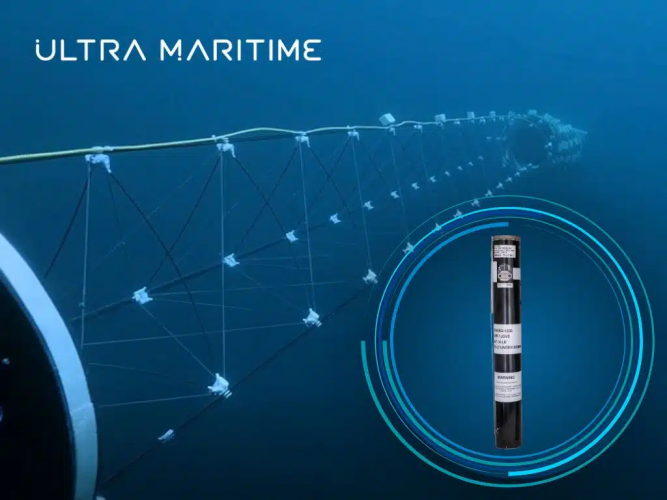
Ultra Maritime and Anduril successfully demonstrated the capability of Seabed Sentry and Sea Spear to detect and classify advanced unmanned underwater vehicles (UUVs) during the U.S. Navy’s 2026 Lanternfish exercise.
During the exercise, Sea Spear consistently detected, tracked and classified medium- and large-diameter UUVs. The demonstration validated the systems’ ability to provide persistent acoustic sensing while transmitting track data to undersea command centers worldwide. The exercise also marked a significant milestone in the strategic partnership between Ultra Maritime and Anduril to accelerate the deployment of this transformative capability for covert anti-submarine warfare (ASW) and broader maritime defense missions.
Integrated with Anduril’s Seabed Sentry, Sea Spear creates a distributed autonomous undersea network designed for scalable production and rapid deployment. The system can be clandestinely deployed from both manned and unmanned platforms, and provides persistent sensing in remote locations, maritime choke points and strategically important waterways. Depending on mission requirements, Sea Spear can be deployed as either a permanent installation or an attritable asset, offering a flexible, cost-effective approach to extending underwater awareness.
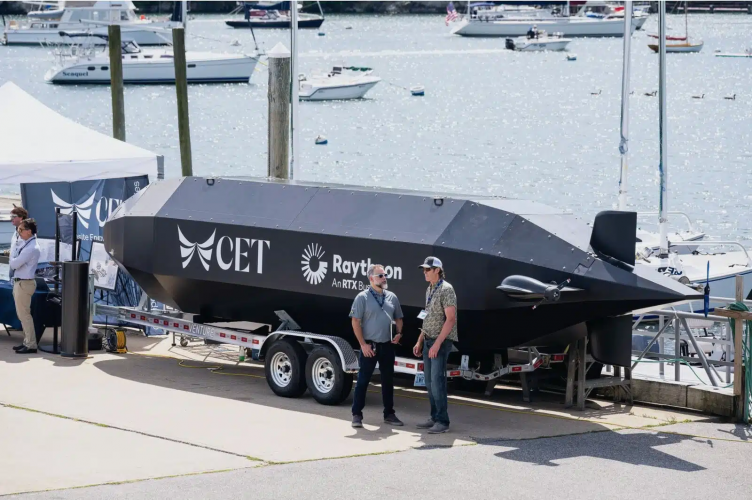
Raytheon and CET demonstrated the Hadalus low-cost, long-endurance UUV in a U.S. Navy test, proving submerged launch and autonomous mission capabilities.
Hadalus is a 34‑foot UUV with a six‑foot cross section and more than 2,000 nautical miles of endurance. Its free‑flooded, all‑carbon‑fiber exoskeleton delivers exceptional strength and payload capacity while enabling a significantly lower‑cost architecture. Designed to cost roughly one‑third to one‑fifth of comparable long‑endurance vehicles, Hadalus offers a scalable path to fielding affordable undersea capabilities.
Ultra Maritime has successfully demonstrated a new integrated active-passive sonar solution capable of providing persistent surveillance across contested maritime environments. During the U.S. Navy’s 2026 Lanternfish exercise, the company combined its Sea Spear deployable passive sonar with its newly developed SSQ-125B active sonobuoy to passively detect and actively localize unmanned underwater vehicles (UUVs), as a major step toward validating Ultra Maritime’s acoustic architecture designed for the future of autonomous counter-UUV and anti-submarine warfare (ASW).
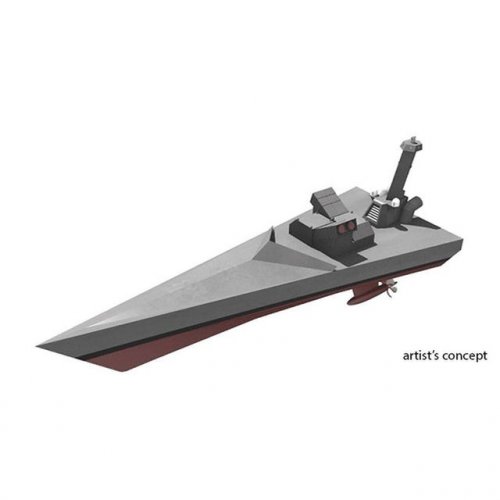
The U.S. Navy’s Pacific-based submarine force is exploring a number of new mission sets for uncrewed undersea vehicles (UUVs) as they rapidly proliferate across the fleet, including new mission sets involving carrier-basing and underway submarine replenishments for contested environments.

Honestly, I kinda think they're just throwing everything at the wall and seeing what sticks.Undersea submarine replenishment?
That either limits you to what fits into a 21" circle or a 25" circle.
Unless there's a plan to give every submarine a huge ocean access tube using Trident tube parts?
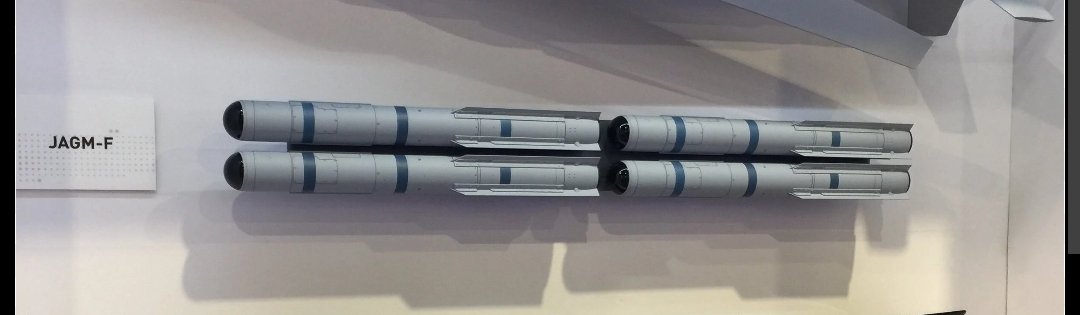
JAGM-F is exclusively for aircraft, hence, the improved launch range. This does not apply to surface launch range.Lockheed JAGM-F can be quad/octo packed cell launcher. Speed of Mach 1.5 and improved range 22 kilometers. It can kablooey small surface warfare craft, USuW drones. Also succinct for potential hidden land battery via Truck/Humvee/medium vehicle.
JAGM-F is the fast-jet version, right?JAGM-F is exclusively for aircraft, hence, the improved launch range. This does not apply to surface launch range.
Yeah, hard to hide a datalink underwater, so you need really really good autonomy programs.It's still early though, we'll see what happens in the coming decades. I think you'll see a lot of utilization eventually... but as fast as the industry is moving, it's still early.
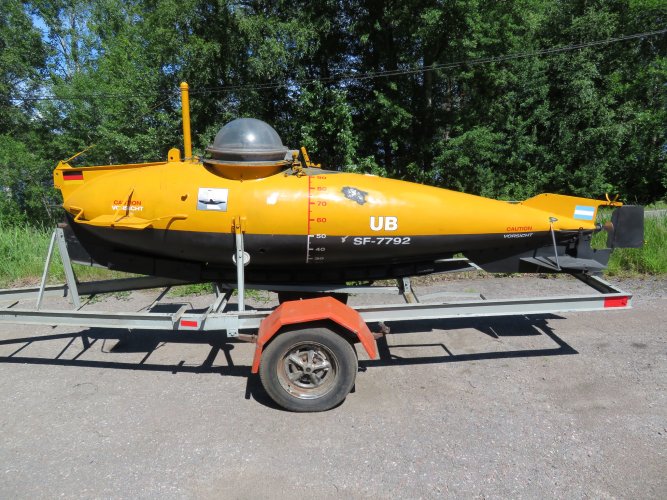
One-two man sub?JAGM-F is the fast-jet version, right?
8-10km for helo or "surface" range is reasonably acceptable for "Oh hell we've been IDed" for a sub or UUV/USV
Yeah, hard to hide a datalink underwater, so you need really really good autonomy programs.
Just going to say that I am not against every sub getting a big Ocean Interface hatch somewhere for Diver and UUV access. Ideally you'd have 2 of them set up as Dry Deck Shelters, ~25ft between the inner and outer doors.
Yes. Smaller wings to fit into SDB space & racks, hence, better for IWB, too.JAGM-F is the fast-jet version, right?
8-10km for helo or "surface" range is reasonably acceptable for "Oh hell we've been IDed" for a sub or UUV/USV
This is what a lot of people don't understand, and where UUVs fall short to this day.Yeah, hard to hide a datalink underwater, so you need really really good autonomy programs.
When they say 'rapid iteration of COTS solutions', that's what they mean. Except with more buzzwords.Honestly, I kinda think they're just throwing everything at the wall and seeing what sticks.
Honestly, it's not that much better for surface ship autonomy.So if you have to design your system to account for every last edge-case, then your automation is not ready. In sonar, nearly everything is an edge case.
Liberator has emerged from the U.S. Navy’s budget as a high-end standoff capability for uncrewed undersea vehicles (UUVs), enabling the deployment of heavyweight torpedoes on the seafloor.
In 2025, the U.S. Navy quietly unveiled its Liberator program as an effort focused on developing, testing, and fielding a containerized heavyweight torpedo for expeditionary and contested environments.
The system is intended to serve as an extension of the U.S. Navy’s Orca Extra Large Uncrewed Undersea Vehicle (XLUUV) submarine as a stealthy, covert insertion tool for further employment of the service’s Mark 48 Advanced Capability (ADCAP) heavyweight torpedo. The deployable system, with its containerized (and encapsulated) ADCAP, appears to be designed around the Orca’s 10-meter-long multi-purpose payload module based on an attached requirement for Hunter — a known Orca payload delivery system — which, according to the budget documents, depends on Liberator’s development and testing to be tested and fielded.
In operational environments, Liberator could covertly be deployed from Orcas or other platforms to the seafloor of contested or denied waters some time in advance to patiently await high-value adversary submarines and surface ships.
Orcas and other XLUUVs could drop dozens of Liberator payloads in maritime chokepoints or hostile waters — all wielding ship-killing heavyweight torpedoes that have long been used as the final death blow during SINKEX ship-sinking test events.