- Joined
- 21 April 2009
- Messages
- 14,360
- Reaction score
- 9,457

It’s a reel about a homemade 3D printed man portable drone. I just copied the linkWhy are you showing that URL?

The U.S. Army within a few days in mid-March ordered thousands of reconnaissance drones as part of the service’s push to quickly field large numbers of relatively affordable systems for its formations.
On March 20, the Army announced two contracts to AeroVironment for uncrewed aircraft systems (UAS), both expected to be fully fielded within months. First is a $117 million order for AV’s P550 Long Range Reconnaissance systems, Group 2 UAS that will provide battalion commanders with their own reconnaissance and target acquisition capabilities.
The order came through the Army’s new UAS Marketplace Basic Ordering Agreement—a new portal for the military to quickly order cleared systems. This order is expected to be completed in July.

AV’s JUMP 20-X Group 3 vertical take-off and landing (VTOL) uncrewed aircraft system (UAS) will equip the Navy with expanded ISR capabilities tailored to support diverse land and maritime missions. The platform enables multi-domain missions with fully autonomous, hands-free operation and more than 13 hours of flight time, a 115-mile (185 km) range, and 30 pounds of payload capacity.

How many 'LUCAS' drones or other similar US systems (made by other OEMs also producing Shahed clones) were used in Epic Fury? How were they launched and what targets did they actually strike? If they were laucnhed from a single LCS how many were stored in it and how was the ship replenished? How badly degraded the US and Israeli munitions stockpiles have to be if Epic Fury was impossible to do without Lucas?How America’s Shahed-136 Kamikaze Drone Clone Suddenly Became An “Indispensable” Weapon Of War
https://defensescoop.com/2026/04/07...ack-drones-iran-epic-fury-adm-cooper-centcom/How many 'LUCAS' drones or other similar US systems (made by other OEMs also producing Shahed clones) were used in Epic Fury? How were they launched and what targets did they actually strike? If they were laucnhed from a single LCS how many were stored in it and how was the ship replenished? How badly degraded the US and Israeli munitions stockpiles have to be if Epic Fury was impossible to do without Lucas?

https://www.aviationtoday.com/2025/...rigade-uas-in-fy-26-to-replace-shadow-drones/“The appetite of the senior leaders is, basically, we don’t want to follow the old acquisition process and wait another year, two years or three years to start fielding this out to units, because that’s what FTUAS was under, the kind of old acquisition process. So they just canceled the program,” Ryan said.

General characteristics
- Crew: None
- Length: 10 ft 10 in (3.3 m)
- Wingspan: 6 ft 3 in (1.9 m)
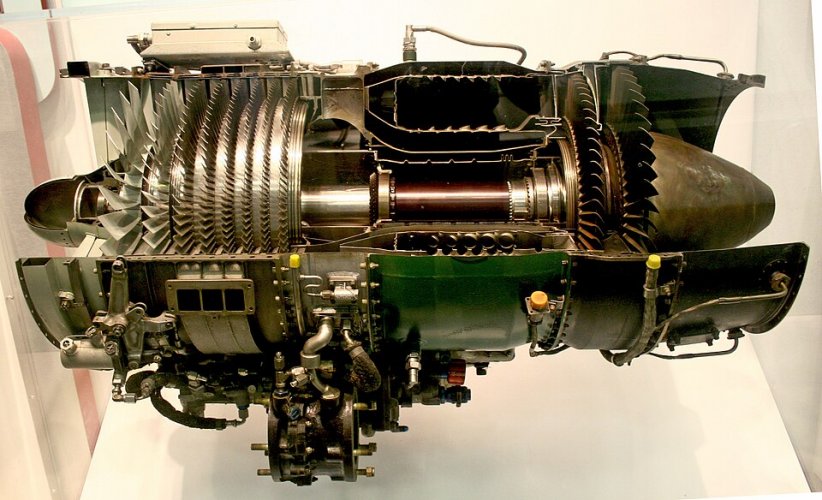
It is. You can't fit the other J85 in that drone b/w, but probably the other way around

No it isn't. Kratos's TDI-J85 jet engine is different from General Electric J85.
I think people read past the "other" before the J85.Of course! That's what I meant. Same generic name, much different design, opposite range of application.


150 CCAs is a little disappointing, though I would guess that number is more to prove out the concept and develop tactics and doctrine. Industry could probably produce more than that year over year, at least if you were willing to accept more than one model (three type classified YFQ models currently). And unmanned assets could be scaled very rapidly.
What a 2026 DARPA project we thought in 1985 would look like: antimatter-powered aircraft. What a 2026 DARPA project is: we took the thing that was outside the box and put it inside the box.Drone Swarms Packed Into Unassuming Containers Sought By DARPA
https://www.twz.com/news-features/drone-swarms-packed-into-unassuming-containers-sought-by-darpa