- Joined
- 6 August 2007
- Messages
- 4,539
- Reaction score
- 10,261
I don’t think they have revealed GL-blackbeard.
https://www.secretprojects.co.uk/th...le-capacity-effector.42965/page-2#post-942803

I don’t think they have revealed GL-blackbeard.

Which is really strange given they have the same warhead.Now that I think about it, 200 nm probably closer to real range because of the following reasons:
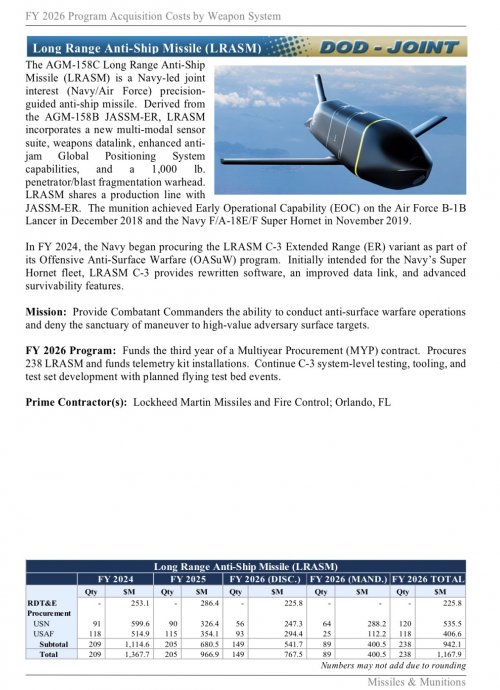
1- MACE requirement ask for something with range that can complimentary LRASM, and LRASM is known to have range around 200 nm (much shorter range than JASSM-ER)
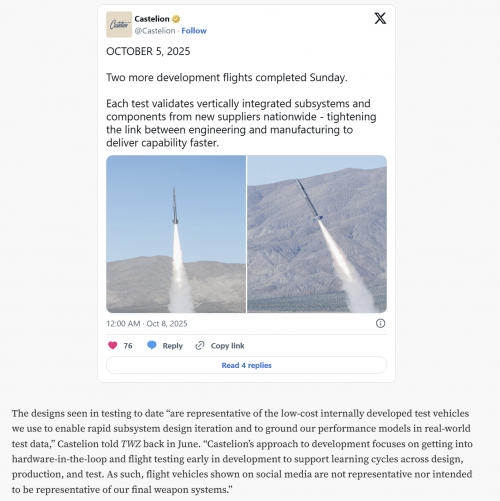
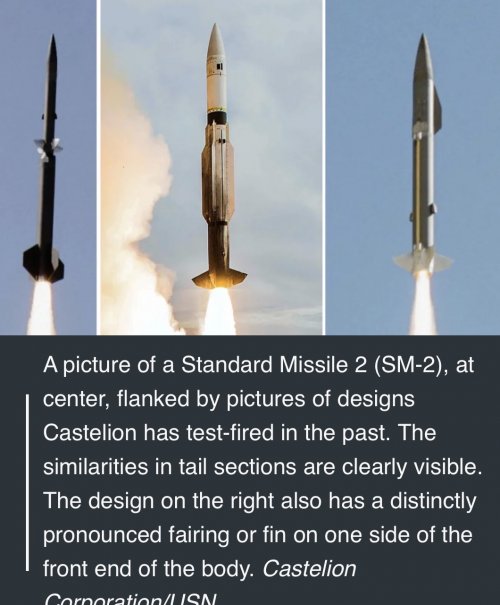
as far as I know, these were supposed to be test articles, Casterlion have tested several different version of it in the past but they also said it not representative of final product.
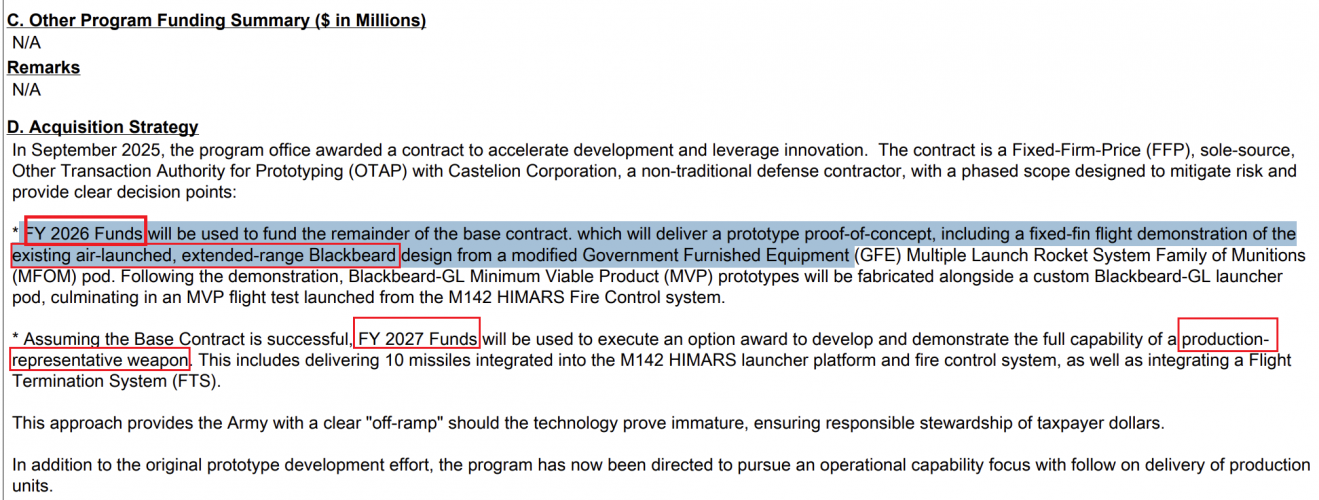
https://www.asafm.army.mil/Portals/...et/rdte/RDTE - Vol 2 - Budget Activity 4B.pdfa “fixed-fin flight demonstration of the existing air-launched, extended-range Blackbeard design” fired from a modified MFOM rocket pod.
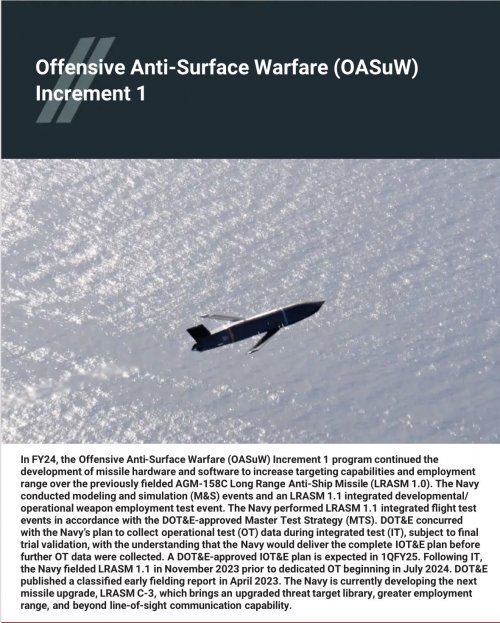
It is plausible that JASSM-ER at high altitude to get its range whereas LRASM supposed to include sea skimming.Which is really strange given they have the same warhead.
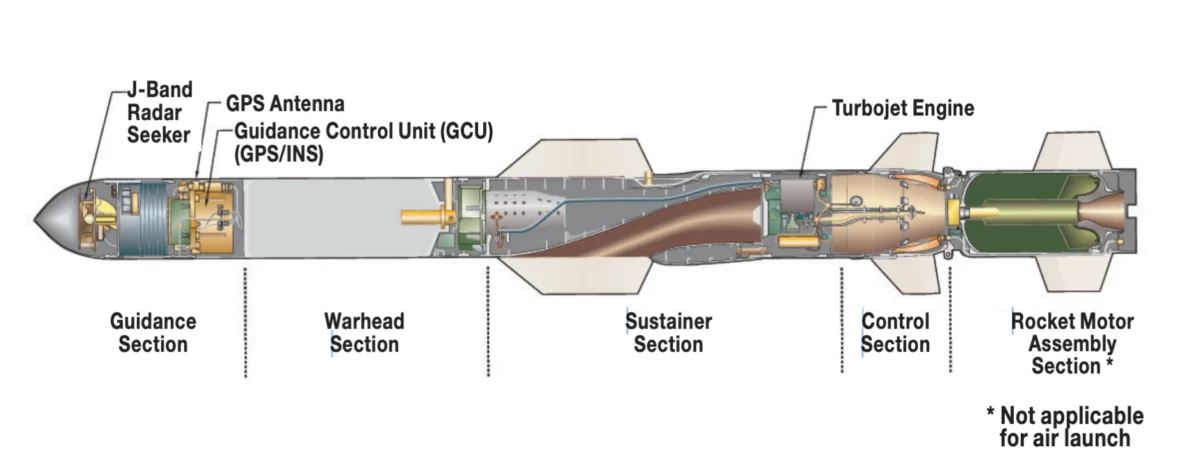
There are 3 version of LRASM that gone into production: LRASM 1, LRASM 1.1 and LRASM-ER C3I always assumed that AGM-158C-1 had to occupy a lot of volume with antenna for its RF geolocation system, and that resulted in lower fuel load. C2 notably deleted that feature, so I would think it more JASSM-ER ranged. C3/LRASM-ER was to extend LRASM range while retaining the RF sensing capability (smaller electronics? Smaller warhead?). Not sure if that went into production; have not heard anything or tried to look for info in awhile.

Thought the upper stage was 7in? I was going by this unless it's a different weapon.Those numbers don't mean anything given the hardware that has been displayed. The missile Castelion recently published pictures of is about 4 m long, which means it can fit in an MFOM pod or an F-35A/C IWB. The booster diameter is closer to 12 inches and the upper stage diameter is closer to 9 inches, so upper stage weight is about half of the booster's weight and overall mass is about 1,000 lbs, about the same as an AARGM-ER/SiAW. The 75 lbs warhead comes from the MACE RFI (https://sam.gov/opp/3a3d52dca5824a4da62e874f888764b2/view).
The sensor would need to be huge to reduce range by that much. The seeker has to go in the nose, so how much size are we talking here?I always assumed that AGM-158C-1 had to occupy a lot of volume with antenna for its RF geolocation system, and that resulted in lower fuel load. C2 notably deleted that feature, so I would think it more JASSM-ER ranged. C3/LRASM-ER was to extend LRASM range while retaining the RF sensing capability (smaller electronics? Smaller warhead?). Not sure if that went into production; have not heard anything or tried to look for info in awhile.
It plausible that they use big antenna to improve gain or let it track low frequency radar, maybe the size is roughly that of ASQ-213 pod.Thought the upper stage was 7in? I was going by this unless it's a different weapon.
Post #76
https://www.secretprojects.co.uk/th...ffordable-capacity-effector.42965/post-942803
If 9in, then the 1st stage is at least 14in, maybe 16-18in. If it's 9in for upper stage then it's definitely powered.
The sensor would need to be huge to reduce range by that much. The seeker has to go in the nose, so how much size are we talking here?
On 20 Aug 2026, Castelion posted a tweet that said "Blackbeard unveiled" with this image attached.Thought the upper stage was 7in? I was going by this unless it's a different weapon.
Post #76
https://www.secretprojects.co.uk/th...ffordable-capacity-effector.42965/post-942803
If 9in, then the 1st stage is at least 14in, maybe 16-18in. If it's 9in for upper stage then it's definitely powered.
Casterlion currently developing Ku band AESA seeker for 7 inches hypersonic missiles so the seeker for Blackbeard is likely that oneYou guys are speculating out of proportion without knowing what's at hand specifically the tech(parts).
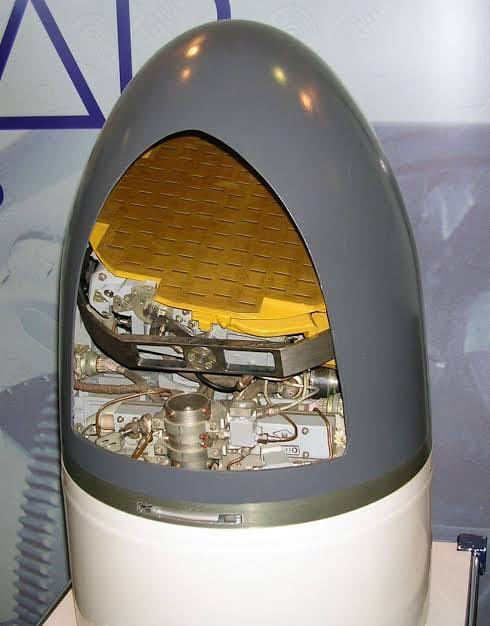
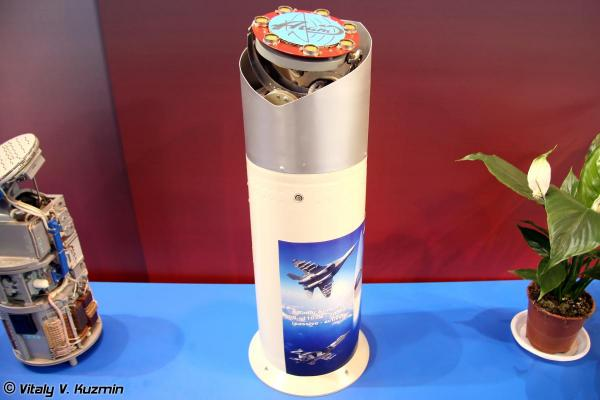
The seeker isn't a camera per se but an optical sensor array. Either the same or similar to THAAD. It's basically just a panel parallel to the window.
That ratio looks resonable having used Chrome Screen Ruler, although given standard missile diameters, 13.5in is a more commonly used diameter, so maybe 254mm and 343mm respectively for front and rear. That would then leave the front at ~1/3rd or more of overall mass.On 20 Aug 2026, Castelion posted a tweet that said "Blackbeard unveiled" with this image attached.
View attachment 822168
I initially estimated the OAL of the vehicle at 4.2 m based on the size of the Remove Before Flight tags, then at 4.0 m if the distance between lugs is 30 inches. Based on those baselines, I got a 9.3 inch upper stage height and a 12.8 inch booster diameter.
The 7 inch seeker doesn't necessarily mean a 7 inch terminal stage. Maybe the nose taper on this vehicle requires a smaller seeker, maybe a smaller seeker is just cheaper to deploy without losing much effectiveness, or maybe Castelion is still keeping options open for an AMRAAM-sized missile.
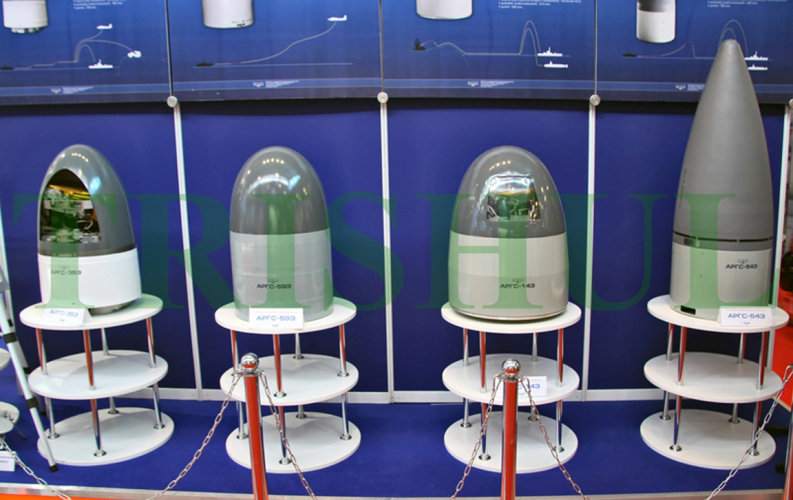
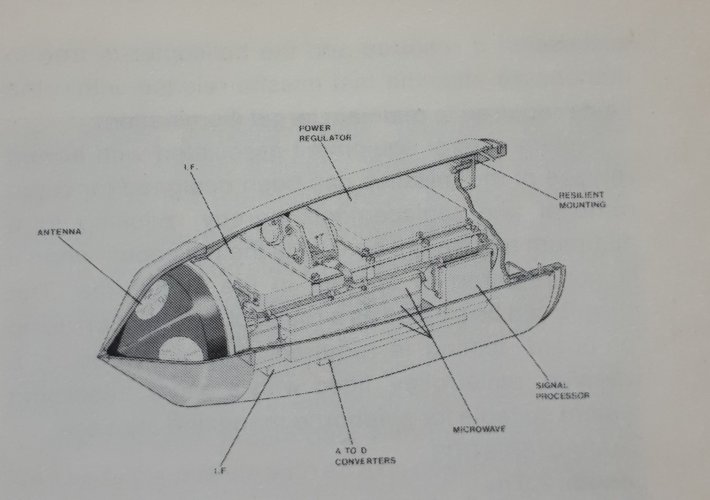
Ships are huge though, so why would you need a radar dozens of times larger than an AAM radar? These are from Kh-35, Nirbhay and Harpoon for reference. An AShM radar seeker simply doesn't consume the extensive amount of real estate it would need to for a more than 2-fold reduction in range.It plausible that they use big antenna to improve gain or let it track low frequency radar, maybe the size is roughly that of ASQ-213 pod.
I think the range reduction must be significant enough that they need to go through 2 different LRASM version (ver 1.1 and ver 3) to come back to JASSM-ER range
I don’t mean active radar seeker but passive radar seeker. Since LRASM was said to be equipped with a passive anti radiation seeker to help it attack target of opportunities. Bigger antenna improve accuracyShips are huge though, so why would you need a radar dozens of times larger than an AAM radar? These are from Kh-35, Nirbhay and Harpoon for reference. An AShM radar seeker simply doesn't consume the extensive amount of real estate it would need to for a more than 2-fold reduction in range.
Also not that big. An active and passive example.I don’t mean active radar seeker but passive radar seeker. Since LRASM was said to be equipped with a passive anti radiation seeker to help it attack target of opportunities. Bigger antenna improve accuracy
Of course you can make it small, but bigger antenna is needed for lower frequency. Now assuming US developed LRASM to deal with chinese destroyer, I would guess that the RF seeker is designed so that it can home on radar of any Chinese ship. And we know Type 52 series has a VHF radar. So unlike AARGM-ER, it maybe plausible that RF seeker on LRASM can even home on VHF frequency. That would explain its sizeAlso not that big. An active and passive example.
https://en.missilery.info/missile/rvv-cd/9b-1103m-200ps
At this point, the warhead weight, the launching platform, the shape and maybe the type of seeker it use are verifiable facts. The rest are still upto speculation, just because someone missed a few details because they haven’t kept up with the program doesn’t necessarily mean they have nothing useful to contribute to the discussion.so this thread is already full of posts ignoring established and verifiable facts, so there is nothing worthwhile to contribute here,
Well, Blackbeard was choosen as the winner of MACE program so study MACE requirement could give some insight to capability of blackbeard. And since we have no idea about the internal arrangement of blackbeard or anything about its thrust, type of rocket booster it uses, the next alternative is maybe try to figure out the range of LRASM 1.1. It not like there a lot of public information at the momentand it’s already going OT with discussions of LRASM which are only relevant (marginally) to the original MACE requirements, which are not relevant to the Blackbeard missile.
This should be moved to a more appropriate sections such as missiles.
Well, Blackbeard was choosen as the winner of MACE program so study MACE requirement could give some insight to capability of blackbeard. And since we have no idea about the internal arrangement of blackbeard or anything about its thrust, type of rocket booster it uses, the next alternative is maybe try to figure out the range of LRASM 1.1. It not like there a lot of public information at the moment
Firstly, I do appreciate you sharing the information about Blackbeard’s Ku-band AESA and the CHyMERA warhead. Many of us had assumed that MACE used an IIR seeker because of the apparent seeker window.Actually, as far as I can tell I’ve been the inking actual poster of information about the MACE requirements and how they have eVOKVRF AND Blackbeard, the chosen solution, which many fan boy posters have ignored, silo I’ll stop.
We certainly don’t know its exact length, diameter, or internal arrangement. Even basic specifications such as its maximum range are subject to conflicting information, and its exact maximum velocity remains unknown.These comments about “derp there isn’t a lot of public information” are easily proven false. I stead we have fan boy comments about dimensions and capabilities that are not supported by facts and hallucinations from humans that ci time across multiple posts-
No, I said Casterlion have not revealed GL-black beard. Sure they have done various test with different test article configurations, however, Casterlion themselves said that their test vehicle is not representative of final configurationincluding “ there are no photos of the ground launched version “ which is entirely false, as someone posts photos of obvious propulsion test vehicles from TMZ to “ prove their point.
This is not conversation I will provide any new information to. You want to debate motor dissenters and capabilities? Find it yourself,