I guess it’s because Blackbeard somehow uses what looks like an optical window, while radar radomes usually look quite different.I don't really understand all the speculation.

You are using an out of date browser. It may not display this or other websites correctly.
You should upgrade or use an alternative browser.
You should upgrade or use an alternative browser.
US Navy MACE (Multi-Mission Affordable Capacity Effector)
- Thread starter Forest Green
- Start date

Forest Green
ACCESS: USAP
- Joined
- 11 June 2019
- Messages
- 14,543
- Reaction score
- 31,625
How long is Blackbeard though, any dimensions yet? Based on the longer quoted length of 5.4m (source below) for the A2G version, the front portion could be ~2.7m long, so not SDB length.Given that the entire forebody is basically the dimension of an SDB-2…do we think this is a boost gliders rather than a truly two stage system? If GBU-53 is 6’ by 7” 200 lb system with a 100 lb warhead, I cannot imagine that a similar size hyper/super sonic glider has much of any room for a rocket motor.
BLACKBEARD, the "affordable" hypersonic missile, is now also headed to the US Navy
https://www.fw-mag.com/shownews/782...nic-missile-is-now-also-headed-to-the-us-navy
A job for SB-GMTI.Point to make.
Large Ships can be picked out at 250nm by aircraft radar over open water and have been since the 60’s.
But definitely it's a much harder task for a TEL in rough terrain.
Last edited:
Not James Stockdale
ACCESS: Secret
- Joined
- 29 August 2025
- Messages
- 247
- Reaction score
- 471
If the Blackbeard is supposed to be MFOM-compatible or able to fit in an F-35C's IWB, it's going to have a 4 m OAL limit. The pictures Castelion posted of what they called the Blackbeard (the two-stage vehicle) show a 4 m OAL. The article is talking about a feasibility study with 5.4 m as the maximum size limit, but that doesn't guarantee those dimensions.How long is Blackbeard though, any dimensions yet? Based on the longer quoted length of 5.4m (source below) for the A2G version, the front portion could be ~2.7m long, so not SDB length.
To be fair though, original MACE requirement is that 4 round must fit inside F-35, given the current Blackbeard length, I think that impossible, so it is plausble that some original requirement were relaxed.If the Blackbeard is supposed to be MFOM-compatible or able to fit in an F-35C's IWB, it's going to have a 4 m OAL limit. The pictures Castelion posted of what they called the Blackbeard (the two-stage vehicle) show a 4 m OAL. The article is talking about a feasibility study with 5.4 m as the maximum size limit, but that doesn't guarantee those dimensions.

- Joined
- 3 June 2011
- Messages
- 20,942
- Reaction score
- 19,172
Unless it's talking to an offboard sensor.Point to make.
Large Ships can be picked out at 250nm by aircraft radar over open water and have been since the 60’s.
But definitely it's a much harder task for a TEL in rough terrain.
To be fair though, original MACE requirement is that 4 round must fit inside F-35, given the current Blackbeard length, I think that impossible, so it is plausble that some original requirement were relaxed.
It was not a hard requirement to fit 4, but I think F-35 internal carriage was. But I doubt that lug arrangement allows for internal carriage - it is set too far back.
Unless it's talking to an offboard sensor.
If it is hypersonic or even just mid level supersonic for its flight, updates really are not required. Just good initial target location. That’s true most any weapon.
I heard that what we saw is not even the final configuration of black beard, so who know, might be in next iteration they move the lug slightly forward to allow for internal carrier. I wondering if they can actually fit 2 inside each bay if they are side to side, after all, J-35 allegedly carry 4 supersonic AGM internallyIt was not a hard requirement to fit 4, but I think F-35 internal carriage was. But I doubt that lug arrangement allows for internal carriage - it is set too far back.
Attachments
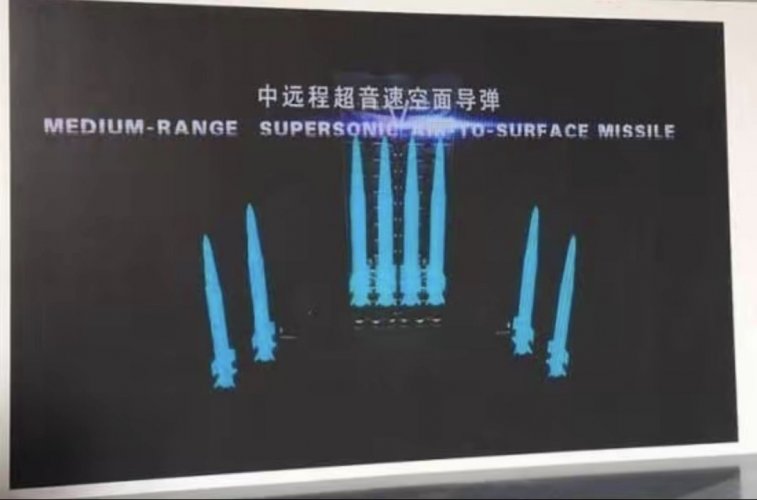
At a minimum, F-18 can carry one on the outboard station which is only rated for ~1000#. That means that dual carriage on a tandem rack is on the table. But at a minimum, F-18 carriage is 4-6 depending on drop tanks, and 6-10 if tandem ejector racks can accommodate.

bring_it_on
I really should change my personal text
- Joined
- 4 July 2013
- Messages
- 4,215
- Reaction score
- 5,758
In February, the Navy selected Blackbeard for its Multimission Affordable Capacity Effector (MACE) program, awarding the startup nearly $50 million.
The missile is intended to serve as a standoff weapon with a 200-nautical-mile range, arming aircraft including the F-35 Joint Strike Fighter and F/A-18/E/F Super Hornet.
“Blackbeard is an air-launched, hypersonic strike weapon that provides carrier-based strike fighters with a responsive, long-range, high-speed strike option against maritime and land targets, enhancing survivability against advanced air defenses while significantly increasing magazine depth,” the announcement states.
The Navy’s fiscal year 2027 budget request includes $156 million for 353 MACE missiles, marking the first year of official procurement for the new program. Program funding was requested under budget reconciliation rather than the base budget.
https://insidedefense.com/insider/c...lion-blackbeard-hypersonic-missile-production
Previously, it was said that Blackbeard can reach something like 800 km, now it reduce to 370 km?
Forest Green
ACCESS: USAP
- Joined
- 11 June 2019
- Messages
- 14,543
- Reaction score
- 31,625
500nm was actually stated.Previously, it was said that Blackbeard can reach something like 800 km, now it reduce to 370 km?
Now that I think about it, 200 nm probably closer to real range because of the following reasons:500nm was actually stated.
1- MACE requirement ask for something with range that can complimentary LRASM, and LRASM is known to have range around 200 nm (much shorter range than JASSM-ER)
2- US Army claimed that Blackbeard-GL should deliver approximately 80% of the Precision Strike Missile (PrSM) Increment 4 capability, I think many publication mistakenly think that mean range but it is plausible that they mean speed/accuracy or warhead size
3-Blackbeard is extremely small for a hypersonic missile, it either about the same size as AARGM-ER or only slightly larger, while its top speed is at least 20% higher. Logically, it seems very unlikely that it could also achieve three times the range.
ground launch version is probably air launch version with additional boosterI think it unlikely the ground launched version is remotely like the air launch.
Before all these programs started analysis concluded a minimum range of 300-350 nm is required for all future stand-off weapons to be usefull in that role. But things have changed and more range is needed now than ever.
Forest Green
ACCESS: USAP
- Joined
- 11 June 2019
- Messages
- 14,543
- Reaction score
- 31,625
I don't think so, PrSM is same length or slightly shorter, about same width at base, single stage and makes 300nm from a ground launch with a warhead >2x size.Now that I think about it, 200 nm probably closer to real range because of the following reasons:
1- MACE requirement ask for something with range that can complimentary LRASM, and LRASM is known to have range around 200 nm (much shorter range than JASSM-ER)
2- US Army claimed that Blackbeard-GL should deliver approximately 80% of the Precision Strike Missile (PrSM) Increment 4 capability, I think many publication mistakenly think that mean range but it is plausible that they mean speed/accuracy or warhead size
3-Blackbeard is extremely small for a hypersonic missile, it either about the same size as AARGM-ER or only slightly larger, while its top speed is at least 20% higher. Logically, it seems very unlikely that it could also achieve three times the range.
LRASM range is likely similar to JASSM-ER.
AARGM-ER is single stage, heavier warhead and thinner.
200nm sounds about right for a ground-launch though.
Last edited:
bring_it_on
I really should change my personal text
- Joined
- 4 July 2013
- Messages
- 4,215
- Reaction score
- 5,758
PrSM is a 17" diameter missile. Are you implying the blackbeard employs a 17" SRM as well?PrSM is same length or slightly shorter, about same width at base, single stage and makes 300nm from a ground launch with a warhead >2x size.
How would that be HIMARS compatible? Which is now being pursued for BlackBeard.ground launch version is probably air launch version with additional booster
PRSM is a fair bit fatter I thinkI don't think so, PrSM is same length or slightly shorter, about same width at base, single stage and makes 300nm from a ground launch with a warhead >2x size.
LM put LRASM range as greater than 200 nmLRASM range is likely similar to JASSM-ER.
https://www.lockheedmartin.com/cont...ea-landing/25-10652_ADSW_LRASM_Fast_Facts.pdf
Whereas, they themself said that JASSM-ER range is greater than 500nm
https://www.lockheedmartin.com/cont...ea-landing/25-10145-ADSW-JASSM-Fast_Facts.pdf
Seem like whatever additional sensor they put on LRASM took ways too much space
Last edited:
Ok that a good point, but if they took the same 200 nm missile and put on ground then I think the range probably significantly inferior to PRSM inc 4. Maybe they changed to bigger booster??How would that be HIMARS compatible? Which is now being pursued for BlackBeard.
It's probable that Navy requirements could have increased the weight of the missile (think thickness of casing to improve carrier operations and/or prevent cookoff for example). Hence a reduced range at same footprint.
That a possibility but a reduction from 800 km down to 370 km is a bit extremeIt's probable that Navy requirements could have increased the weight of the missile (think thickness of casing to improve carrier operations and/or prevent cookoff for example). Hence a reduced range at same footprint.
Forest Green
ACCESS: USAP
- Joined
- 11 June 2019
- Messages
- 14,543
- Reaction score
- 31,625
Maybe a little fatter, I guess the Blackbeard base at ~14inch vs 18in for PrSM, but again it's 2-stage, air-launched and the warhead is 95lb vs 200lb. The reduction in warhead mass should yield a range difference of ~67% for a similar missile and somewhere there's a graph for an air-launched ATACMs Blk IV, which increases range from 390km to 900km. If you air-launched a GMLRS-ER it would probably get you to 370km with a 200lb warhead without even designing a new weapon.*PRSM is a fair bit fatter I think
I think they're being coy - 'greater than'. Taking the '80s Tomahawk, starting with a 1,000lb warhead and going to a ~330lb nuclear warhead increased range from 1300km to 2800km - a 120% increase. So to get from 200nm to 500nm - a 150% increase - exactly how much weight would you need to remove? The JASSM-A was also quoted at 200nm and was more like 300nm.LM put LRASM range as greater than 200 nm
https://www.lockheedmartin.com/cont...ea-landing/25-10652_ADSW_LRASM_Fast_Facts.pdf
The sensor would need to weigh more than the warhead for that difference.Seem like whatever additional sensor they put on LRASM took ways too much space
*Can someone actually do a calculation for an air-launched GMLRS-ER with a 150km ground-launched range? That would be interesting.

Last edited:
bring_it_on
I really should change my personal text
- Joined
- 4 July 2013
- Messages
- 4,215
- Reaction score
- 5,758
Do you have confirmation that the second stage is powered? That's what a six to six and a half ft long 13 inch diameter stage two and that includes a warhead, a guidance system for targeting moving targets and a SRM?Maybe a little fatter, I guess the Blackbeard base at ~14inch vs 18in for PrSM, but again it's 2-stage, air-launched and the warhead is 95lb vs 200lb.
Forest Green
ACCESS: USAP
- Joined
- 11 June 2019
- Messages
- 14,543
- Reaction score
- 31,625
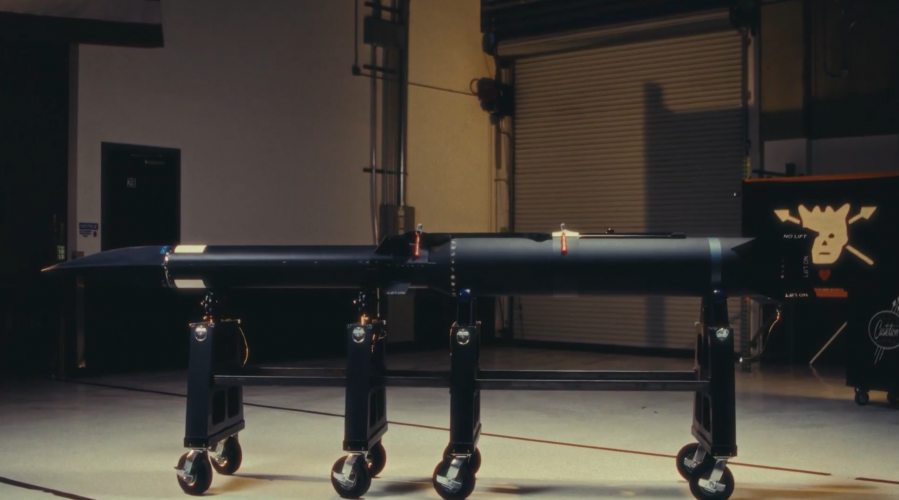
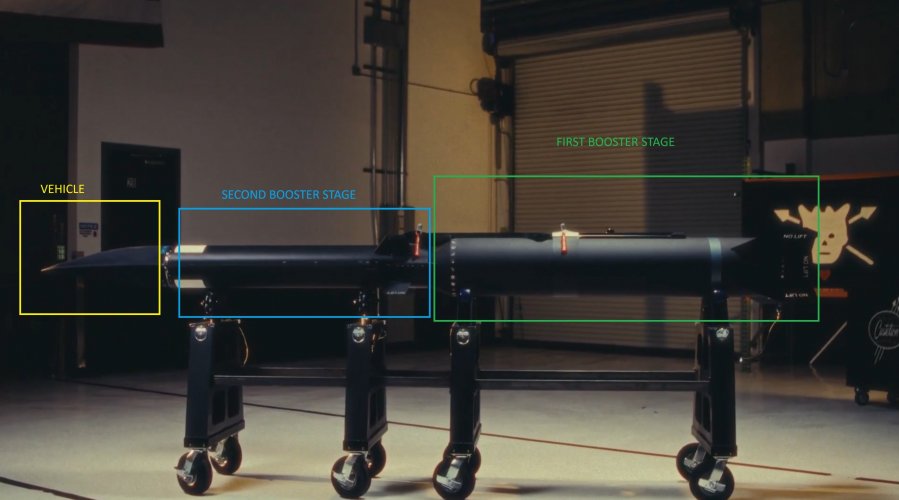
No but doing the numbers, it's ~2m long, assuming 4-4.1m length for F-35A/C IWB fit, and it's 7in, so it's basically GBU-39A + 11% or 275-280lb and warhead is only 95lb, so there's another 185lb of something in there, sensor might be a part of it but probably some fuel too.Do you have confirmation that the second stage is powered? That's what a six to six and a half ft long 13 inch diameter stage two and that includes a warhead, a guidance system for targeting moving targets and a SRM?
Some sources are citing 2 booster stages.
https://turdef.com/article/us-navy-integrates-mace-hypersonic-missile-on-super-hornet
https://meta-defense.fr/en/2026/09/15/blackbeard-commande-production-us-navy/
Attachments
bring_it_on
I really should change my personal text
- Joined
- 4 July 2013
- Messages
- 4,215
- Reaction score
- 5,758
Come on. Turdef is hardly a source.
Weight is not the primary concern here. Volume and space is. You very little room to package a warhead, an advanced guidance system capable of targeting moving ships, some sort of communication, GPS/INS etc in a 6-6.5 ft glider. If you have a second stage booster you have about half that volume which would be an insanely small space for packaging all this. Especially given how low this is expected to cost.
I would wait from some sort of credible or official confirmation before assuming this has a second stage. I have seen no indication of that including the visuals they have shared.
Weight is not the primary concern here. Volume and space is. You very little room to package a warhead, an advanced guidance system capable of targeting moving ships, some sort of communication, GPS/INS etc in a 6-6.5 ft glider. If you have a second stage booster you have about half that volume which would be an insanely small space for packaging all this. Especially given how low this is expected to cost.
I would wait from some sort of credible or official confirmation before assuming this has a second stage. I have seen no indication of that including the visuals they have shared.
Forest Green
ACCESS: USAP
- Joined
- 11 June 2019
- Messages
- 14,543
- Reaction score
- 31,625
My guess is that roughly half volume, or just under, is fuel. GPS/INS weighs next to nothing these days - 2.5kg even for a ruggedised space-grade system and ~80g for muniitions.Come on. Turdef is hardly a source.
Weight is not the primary concern here. Volume and space is. You very little room to package a warhead, an advanced guidance system capable of targeting moving ships, some sort of communication, GPS/INS etc in a 6-6.5 ft glider. If you have a second stage booster you have about half that volume which would be an insanely small space for packaging all this. Especially given how low this is expected to cost.
I would wait from some sort of credible or official confirmation before assuming this has a second stage. I have seen no indication of that including the visuals they have shared.
https://gdmissionsystems.com/produc...ne-gps-receivers/sentinel-m-code-gps-receiver
https://www.baesystems.com/dam/jcr:1059a460-789e-4ce1-a153-a66e1b809169
Ku-band seeker comes in ~8kg (17.6bs) for a 150mm seeker as of 20 years ago, so maybe lighter now.
https://www.ausairpower.net/APA-NOTAM-200408-1.html
https://www.secretprojects.co.uk/threads/current-russian-ukrainian-aam-projects.283/post-819155
Last edited:
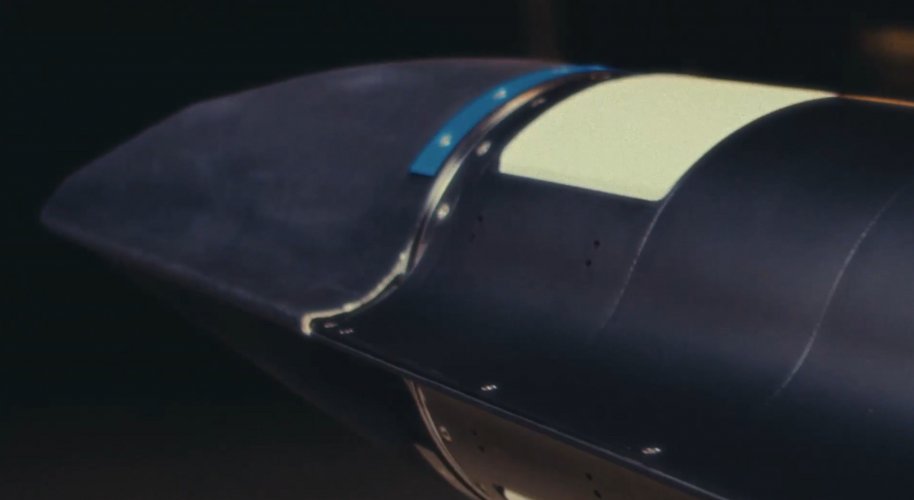
To be fair though, a close up view of the second stage seem to suggest that the vehicle can be detached from it.Do you have confirmation that the second stage is powered?
Attachments
Forest Green
ACCESS: USAP
- Joined
- 11 June 2019
- Messages
- 14,543
- Reaction score
- 31,625
I don't actually think it does as that section is not big enough for a seeker and/or 95lb warhead, not sure how it would steer either. I think that's just indicative of a modular construction approach.To be fair though, a close up view of the second stage seem to suggest that the vehicle can be detached from it.
Not James Stockdale
ACCESS: Secret
- Joined
- 29 August 2025
- Messages
- 247
- Reaction score
- 471
The nose section would have no way to steer unless it is taking up more volume with extensible fins, and a short glide body like that would have a worse ballistic coefficient and create less lift than just staying attached to the second stage vehicle. The entire second stage vehicle has pretty wide strakes, so I am guessing that it flies the post-boost glide phase with that part of the vehicle. I wonder if the different material does indicate some level of modularity in terms of terminal guidance systems, like options for MMW/IIR/AESA guidance modules. Alternatively, it could just be a radar-transparent nosecone or the vehicle might need a different type of thermal protection there.To be fair though, a close up view of the second stage seem to suggest that the vehicle can be detached from it.
My estimate was that the second stage has a length of 6.5 - 7 ft and a mass of roughly 300 lbs out of a launch mass of 1,000 lbs. Also, the MACE requirement is for a 75 lbs warhead, so that would give slightly more margin for electronics and a post-boost propulsion stage. That would make it a foot longer and 100 lbs heavier than a Stormbreaker while having a smaller warhead.
To be fair, MMW seeker could be pretty smallI don't actually think it does as that section is not big enough for a seeker
Hmm good pointand/or 95lb warhead, not sure how it would steer either. I think that's just indicative of a modular construction approach.
Last edited:
bring_it_on
I really should change my personal text
- Joined
- 4 July 2013
- Messages
- 4,215
- Reaction score
- 5,758
6.5 - 7 ft is a sound assumption. What are your assumptions around second stage motor? 100-150 lbs of solid propellent and nozzle assembly weight and 2-3 ft. length? That would leave about 3.5-4 ft. to house a seeker, warhead, other guidance and missile communication equipment.My estimate was that the second stage has a length of 6.5 - 7 ft and a mass of roughly 300 lbs out of a launch mass of 1,000 lbs. Also, the MACE requirement is for a 75 lbs warhead, so that would give slightly more margin for electronics and a post-boost propulsion stage. That would make it a foot longer and 100 lbs heavier than a Stormbreaker while having a smaller warhead.
Can you point to known anti ship missiles with a sub 8 kg seeker and guidance assembly?Ku-band seeker comes in ~8kg (17.6bs) for a 150mm seeker as of 20 years ago, so maybe lighter now.
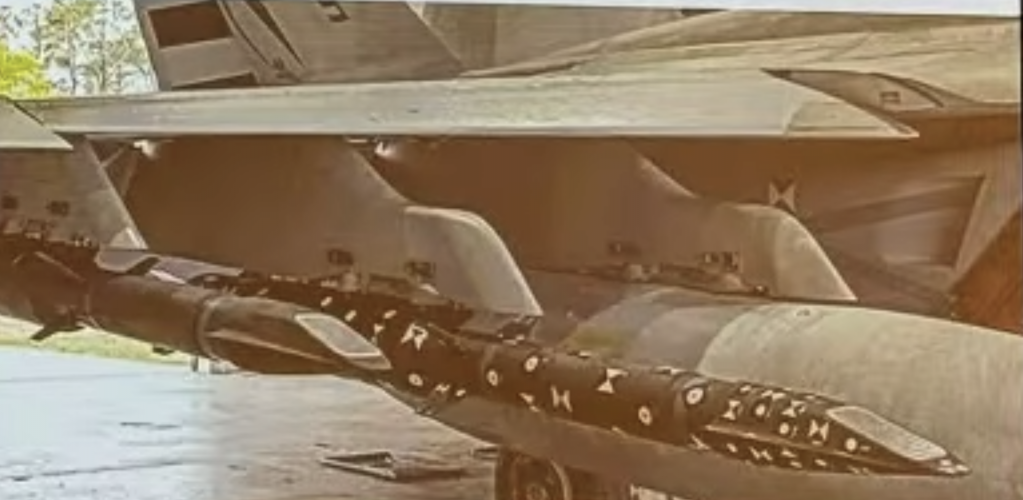
Is it me or the two images look like two different designs?
Attachments

Last edited:
Not James Stockdale
ACCESS: Secret
- Joined
- 29 August 2025
- Messages
- 247
- Reaction score
- 471
I don't know about guidance systems and electronics, but a second stage motor that heavy would give the vehicle about 1 km/s of delta-v. With a conservative estimate of 1.5 km/s from the booster, that gets a top speed of Mach 7 to Mach 8 for a maximum-range boost-glide profile. Alternatively, the second stage motor could be used at shorter ranges for a terminal sprint during the dive in from high altitude cruise.6.5 - 7 ft is a sound assumption. What are your assumptions around second stage motor? 100-150 lbs of solid propellent and nozzle assembly weight and 2-3 ft. length? That would leave about 3.5-4 ft. to house a seeker, warhead, other guidance and missile communication equipment.
bring_it_on
I really should change my personal text
- Joined
- 4 July 2013
- Messages
- 4,215
- Reaction score
- 5,758
I just threw a number out. If this thing does have a powered second stage, assuming a 2-3 ft. motor length including nozzle assembly would be a reasonable assumption for the 13" class weapon.I don't know about guidance systems and electronics, but a second stage motor that heavy would give the vehicle about 1 km/s of delta-v.
Forest Green
ACCESS: USAP
- Joined
- 11 June 2019
- Messages
- 14,543
- Reaction score
- 31,625
Where is the weight coming from?My estimate was that the second stage has a length of 6.5 - 7 ft and a mass of roughly 300 lbs out of a launch mass of 1,000 lbs. Also, the MACE requirement is for a 75 lbs warhead, so that would give slightly more margin for electronics and a post-boost propulsion stage. That would make it a foot longer and 100 lbs heavier than a Stormbreaker while having a smaller warhead.
https://www.fw-mag.com/shownews/782...nic-missile-is-now-also-headed-to-the-us-navy
Theoretically, the second stage should be ~1/5th of all-up weight, given ~half diamater (1/4 c/s area) of first stage and same length. But then it does have the warhead, so maybe a little heavier.
I'm talking about the Blackbeard when I say 8kg for a 150mm seeker. For the LRASM I don't know, but I think it's unlikely to add sufficient weight to reduce range from 500+nm to 200nm.Can you point to known anti ship missiles with a sub 8 kg seeker and guidance assembly?
Yes but the left one is merely art. If you mean the right one vs recent (black) image, then they look a bit different at the nose too.Is it me or the two images look like two different designs?
Last edited:
Not James Stockdale
ACCESS: Secret
- Joined
- 29 August 2025
- Messages
- 247
- Reaction score
- 471
Those numbers don't mean anything given the hardware that has been displayed. The missile Castelion recently published pictures of is about 4 m long, which means it can fit in an MFOM pod or an F-35A/C IWB. The booster diameter is closer to 12 inches and the upper stage diameter is closer to 9 inches, so upper stage weight is about half of the booster's weight and overall mass is about 1,000 lbs, about the same as an AARGM-ER/SiAW. The 75 lbs warhead comes from the MACE RFI (https://sam.gov/opp/3a3d52dca5824a4da62e874f888764b2/view).Where is the weight coming from?
https://www.fw-mag.com/shownews/782...nic-missile-is-now-also-headed-to-the-us-navy
Theoretically, the second stage should be ~1/5th of all-up weight, given ~half diamater (1/4 c/s area) of first stage and same length. But then it does have the warhead, so maybe a little heavier.
I'm talking about the Blackbeard when I say 8kg for a 150mm seeker. For the LRASM I don't know, but I think it's unlikely to add sufficient weight to reduce range from 500+nm to 200nm.
Yes but the left one is merely art.
A 3-foot, 9-inch motor could have about 100 lbs of propellant. It would be slightly smaller in volume than the AMRAAM's motor. Upper stage delta-v would be lower, on the order of 700 m/s, with max velocity around 2.2 km/s or Mach 6 - 7.I just threw a number out. If this thing does have a powered second stage, assuming a 2-3 ft. motor length including nozzle assembly would be a reasonable assumption for the 13" class weapon.
bring_it_on
I really should change my personal text
- Joined
- 4 July 2013
- Messages
- 4,215
- Reaction score
- 5,758
Right. Which is why I assumed around 150 lbs total to include casing, nozzle assembly and propellent. So if we say the second stage glide vehicle is 300 lbs total, then we have about 150 lbs and about 3-3.5 ft. left for everything else. 50% of that would go to the warhead. One can assume that the seeker assembly for a 9 inch dia missile would probably take up 8-12" length. So we have 75 lbs of margin left to guidance, navigation and comms system, and other structural weight of the glide body itself. If its 9" diameter glide body than volume available would be even less relative to my initial assumption of 13". Its doable but we would need confirmation that it is indeed the approach Castelion has taken especially given this thing is supposed to cost the same as a current variant AIM-9X +/-A 3-foot, 9-inch motor could have about 100 lbs of propellant.
Last edited:
To be fair, weight of anti ship missiles seeker are not exactly well known information, I don’t think we even know the weight for seeker and guidance assembly of common missiles like Exocet or Harpoon.Can you point to known anti ship missiles with a sub 8 kg seeker and guidance assembly?
If I have to guess then something like Brimstone or JAGM could fit the bill. They can be used to attack boat and FAC so logically, their seeker should be capable of detecting a ship. Their total weight is around 50-52 kg so a sub 8 kg guidance sound somewhat reasonable.

- Joined
- 6 August 2007
- Messages
- 4,536
- Reaction score
- 10,247
I think it unlikely the ground launched version is remotely like the air launch.
I mean, you can just look at the photos and compare them
I don’t think they have revealed GL-blackbeard. They also said thisI mean, you can just look at the photos and compare them
“Castelion’s approach to development focuses on getting into hardware-in-the-loop and flight testing early in development to support learning cycles across design, production, and test,”
. “As such, flight vehicles shown on social media are not representative nor intended to be representative of our final weapon systems.
Similar threads
-
 Classified US Lockheed Missile Program
- Started by Forest Green
- Replies: 9
-

-
New Secret Lockheed "Spy Plane"?
- Started by Ninja
- Replies: 42
-
-
