That seems unlikely to me. Traditionally OEMs do not partner up when both are bidding until one has been eliminated. For example NG would have been a viable partner for LM or Boeing for the NGAD while LM, now removed, is a possibility for NG and Boeing for the F/A-XX.

Partnering before then would potentially be a conflict of interest and also would provide insight into the other offering about what is being bid and the cost base they are working towards.

Remember the ATF Program? Two teams were battling (something encouraged by the System Program Office), one being Northrop and McDonnell Douglas (the other Lockheed/Boeing/General Dynamics). Northrop got selected as a finalist, MDC becoming de facto its subsidiary. Had MDC won the ATF down selection, roles would have been reversed. Both competitors AND partners at the same time.
Those teams didn't get put together until after the initial down select, and proposals were narrowed down to two. GD, Boeing, McDD, Grumman, and Rockwell all got eliminated in the first round.
 
Without reading the article behind the paywall makes you think then that Boeing is the preferred option. You would think there wouldn't be much of an impact if it was a different OEM.
Agreed. It doesn't sound like the two programs share a whole lot of technologies, maybe sensors. They're different airframes, different engines...
 
If the F/A-XX does get cancllled they can build a navalised variant of the F-47.

If the F-47 could be navalized that is. Not all aircraft are suitable for that. For example the PLAN rather picked the FC-31 which had to be developed into the J-35 first, than looking for a navalized J-20 because it wouldn't have been feasible.

If the F-47 design could offer that capability with comparatively minor modifications, sure. Otherwise it would just be a repeat of NATF where you'd have to basically develop an entirely new aircraft again.
 
Last edited:
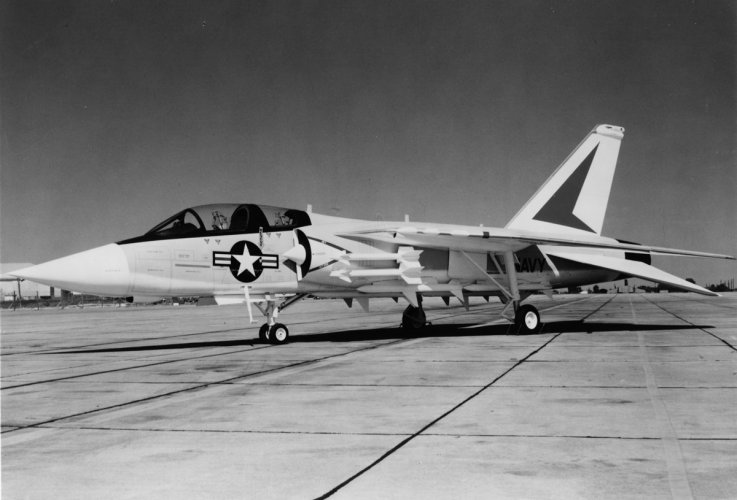
I would think that instead of NATF MK.2 it would be a folding wing design and not come with VG wings which went out of fashion years ago, when was the last time you saw a modern fighter in service with VG wings?
 
I would think that instead of NATF MK.2 it would be a folding wing design and not come with VG wings which went out of fashion years ago, when was the last time you saw a modern fighter in service with VG wings?
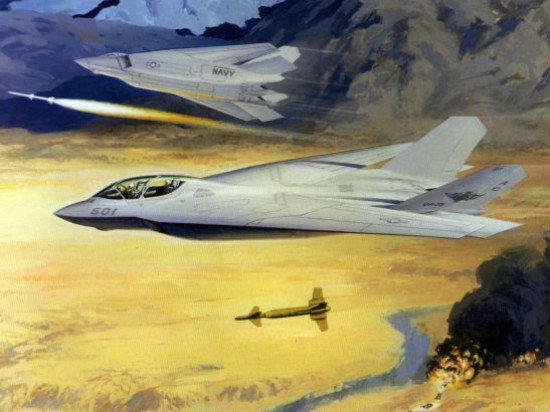
VG isn't a thing that's "fashionable". They didn't use them just because they looked cool. If you need to go low and slow AND high and fast that's the way to go. The F-22 NATF would have had swing-wings. The later A/F-X would have as well.

afx_lockheed_boeing_gd_02.jpg
 
Depressing how far we've fallen. They didn't have a problem with the F-14 / F-15. (Killing one of the programs wouldn't have fixed the engine issue.)
Its building next gen jet, which is a lot more expensive.
Can't have the same quantity while increasing quality by magnitudes.
 
I would think that instead of NATF MK.2 it would be a folding wing design and not come with VG wings which went out of fashion years ago, when was the last time you saw a modern fighter in service with VG wings?

NATF-23 had foldable wings, not variable geometry, that was NATF-22 I think.

But even that is something fundamental to change. The entire wing structure of the F-47 would have to be reworked, load and structural integrity, weight, center of gravity, center of lift, etc. etc. all of that would change.

When you have to change 70% of the aircraft all things considered, you might as well just go forward with F/A-XX just at a later date.
 
Yeah, same same. You think the Tomcat or Eagle was as cheap as an F-4?

To be fair though, when the F-14 and F-15 were first introduced the overall MIC climate and economy were different than today.

And while cost is one thing, complexity definitely increased with more and more advanced systems having to be integrated into the aircraft.
 
Still cheap enough to afford both programs, and lot cheaper than these 6th gens.
It's all relative. The F-14/15 were 4 - 5 times the price of the previous gen. The F-47 / F/A-XX are not 4 - 5 times the prices of the F-22. The problem is, as a percentage of GDP, our defense budget has shrunk massively and pretty much everything needs to be replaced. (Thank you, "Peace Dividend".)
 
To be fair though, when the F-14 and F-15 were first introduced the overall MIC climate and economy were different than today.
I think the whole "we cant afford this" needs some nuance to it.

In terms of the economy, its hard to believe that somehow we cant actually afford two programs to run simultaneously. Even if chinese MIC gets things done for a cheaper price, the US still has a much larger economy that should be able to eat the cost for it - with all the bells and whistles attached. Yearly budget wise though, I can see why we cant afford it now. Put simply, this is what happens when you've got 20 years of ME fuckery followed by a sudden need to modernize everything.

Im not sure what the MIC climate is like right now, but if what you mean by that is "we arent in a cold war era of urgency/ apetite for spending" then I'd agree. But lets also give it a few more years. In my fuzzy memory, I didnt see much modernization being pushed until maybe late Trump early Biden years which is barely 5 years ago. The public certainly hasnt cared for china until fairly recently. Give it 10 more and I'd expect the MIC to see a lot of expansion, a possibly greater appetite for defense spending and a more organized defense policy from leadership.

I will say though, compared to the kind of transparency the air force has had over defining the goals of the NGAD program, the navy seems pretty quiet about F/A-XX. With NGAD, we've heard a lot of introspection and details regarding procurement, program organization and sustainment. We've heard little from the navy beyond "this is a strike platform replacing the hornet". I dont see what reason they might have to not speak further on it unless they are preoccupied with other things (and there's plenty of that for them to be preoccupied with)
 
NATF-23 had foldable wings, not variable geometry, that was NATF-22 I think.

But even that is something fundamental to change. The entire wing structure of the F-47 would have to be reworked, load and structural integrity, weight, center of gravity, center of lift, etc. etc. all of that would change.

When you have to change 70% of the aircraft all things considered, you might as well just go forward with F/A-XX just at a later date.
But with an F-47N at least you'd have commonality of engines, sensors, stealth technology, software code, logistics, forebody etc. Those are big dev items even if you have to redo the center body and wing structure... should still be much cheaper than F/A-XX built by another company and with zero commonality.
 

Pentagon Wants to Delay Navy’s Next-Gen Fighter to Focus on F-47
because simultaneously pursing two sixth-generation fighters risks under-delivery on both.
According to this article, the Senate has upped the 500MM for “Acceleration of the FA/XX program” to 750MM in their bill draft. Seems like congress is pushing back, wondering how this will all play out.
 
Agreed H_K that would mean that a navalised variant of the F-47 would be cheaper overall than a brand new design.
 
This IS the US Navy as the customer, right?
As Kelly Johnson reportedly said:
"Starve before doing business with the damned Navy. They don't know what the hell they want and will drive you up a wall before they break either your heart or a more exposed part of your anatomy."
Source - Skunk Works - A Personal Memoir of My Years at Lockheed by Ben Rich and Leo Janos
 
Without reading the article behind the paywall makes you think then that Boeing is the preferred option. You would think there wouldn't be much of an impact if it was a different OEM.

When did I say that I think Boeing is a preferred option, I'm talking about what the Pentagon thinks. Can you read it carefully?
 
Agreed H_K that would mean that a navalised variant of the F-47 would be cheaper overall than a brand new design.
Except, for all we know, a "navalized vairant" of the F-47 would be completely unsuitable. All we know is the number "F-47" and a released artists impression that may or may not resemble the "F-47". Claiming that it would be cheaper than a brand new design is not supported by any evidence.
 
Agreed H_K that would mean that a navalised variant of the F-47 would be cheaper overall than a brand new design.
But with an F-47N at least you'd have commonality of engines, sensors, stealth technology, software code, logistics, forebody etc.
Sensors will be the same. The navy may or may not want more resilient coatings (though if you are operating the F-47 in the pacific islands, I don't know if those requirements would differ much).

Engines, not sure about that. How well would the maintenance of an air force variable cycle engine fair on an aircraft carrier?

Logistics wise, I'd expect there to be much more commonality than the F35 across variants initially, but again - that could very well change if and when the air force decides hey today we are going to re compete bids for a new version of xyz system.

Software pertaining to sensors would be the same though maybe with a few trickier integrations with navy specific weapons and sensor systems.

The much more substantial software change would be for the flight control system. Every component on the F-47 down to air frame and engines is apparently intended to be re-competed and replaceable in the future, which means the software has interfaces built to allow the integration of a different iteration of some component to be plugged in and used without having to re-make the entire flight control and avionics system. If done correctly, having iterative designs of systems would gradually introduce software changes in a manageable way and maybe have larger upgrades on a slower cadence (i.e new engines or airframe). Even so, I'm guessing the F-47's open architecture is owned by the air force and given how the NGAD program is playing out, why would the air force make the architecture open enough to accomodate navy specific systems and requirements?

Implementing a navalized version requires major air frame and systems change to accommodate a larger payload for strike, a shorter takeoff distance, and a chassis redesign for hard landings. You aren't iterating against existing systems anymore - you are making drastic alterations to existing systems and adding new systems with different specifications that require new interface extensions and new verification logic. Some existing systems might be different enough that you'd have to rewrite parts of the interface and other systems are navy specific. Managed well, those changes would be proportional to developing a variant and thus be somewhat faster than a bespoke design. In the worst case, it'll take much longer while still being hamstrung by compromises made due to being an air force fighter.

Let's not forget the navy's propensity to gold plate every goddamn thing it touches that it might as well be the hand of midas at this point. In the best case, a navalized F-47 would go about as well as an F-4 or about as bad as the constellation frigates.
 
Last edited:
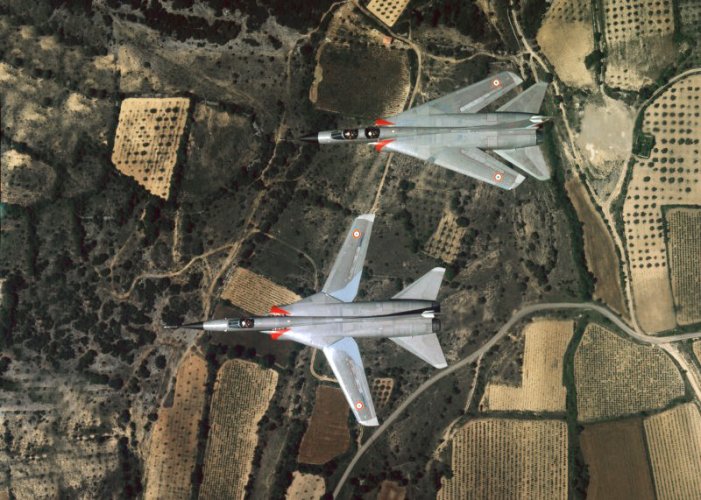
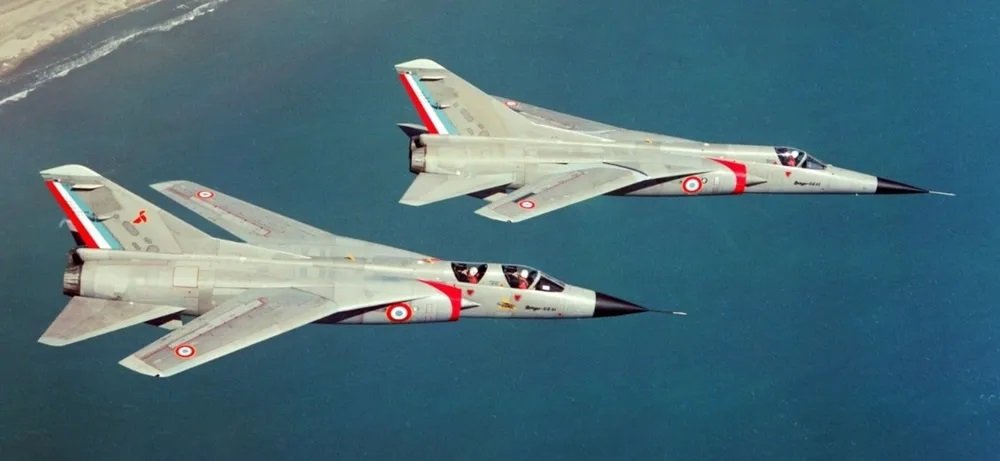
I miss the days when companies like Dassault could develop a family of different platforms in parallel with a high degree of commonality.

Here for example the Mirage G and F2 shared the same engine with different wings, and the F1 was a downscaled F2 with more incremental evolutions of in service radar and engines... all flew within 18 months of each other and could have shared a good deal of the same avionics. The F2 was aimed for Israeli and French Air Force strike requirements, the G for naval requirements, and the F1 for export.

IMHO the same degree of commonality should be the aim here, without losing the ability to build different mission-optimized platforms for specific customer requirements (as long as the customer can order in quantity... which is not a problem for the USN & USAF).

0180976.jpg
 

Pentagon Wants to Delay Navy’s Next-Gen Fighter to Focus on F-47
because simultaneously pursing two sixth-generation fighters risks under-delivery on both.
Unless they're saying Boeing gets both, I don't see how this makes sense. Maybe they've gutted so many DoD civilian positions they literally no longer have the hands to do the work. In which case fucking wow.

Lest we forget Navy postponed 2 other major priorities to do their aircraft now, so delaying it delays those even further.
 
If the F/A-XX does get cancllled they can build a navalised variant of the F-47.
Not likely. It's easy to take a navy aircraft and operate in on land, but it will need longer runways and be heavier than what the USAF wanted, since the airframe is designed to handle cat and trap loads and not fall off the carrier in high seas. But taking a land based aircraft and redesigning it to operate on a carrier requires a massive overhaul of the design, specifically the wing/flight controls and horizontal tail, to get the lower required approach speeds, and stronger structure for the cats and traps and the re-positioned main landing gear.
 
But taking a land based aircraft and redesigning it to operate on a carrier requires a massive overhaul of the design, specifically the wing/flight controls and horizontal tail, to get the lower required approach speeds, and stronger structure for the cats and traps and the re-positioned main landing gear.
Like I said, the approach shouldn't be to redesign a land based aircraft (F-47), but more akin to NATF-23...

i.e. a mostly new platform optimized for low approach speeds, stronger structure and landing gear, but reusing the same combat system, engines, software code base, cockpit & nose section, engine inlets and ducts, coatings/materials etc. The physical platform might look different, especially the center body, wings and control surfaces which would be all new, but a lot of elements would carry over from the land based fighter.
 
Unless they're saying Boeing gets both, I don't see how this makes sense. Maybe they've gutted so many DoD civilian positions they literally no longer have the hands to do the work. In which case fucking wow.

Lest we forget Navy postponed 2 other major priorities to do their aircraft now, so delaying it delays those even further.
Not just DoD. Everybody wants to be an influencer. Nobody wants to "work in a factory". Not enough anyway.
 
Even if chinese MIC gets things done for a cheaper price, the US still has a much larger economy that should be able to eat the cost for it - with all the bells and whistles attached.

I think we shouldn't forget that a large portion of the US economy is service based and other "useless" stuff (useless in the context of war fighting capability). While the Industrial sector accounts for a higher percentage of the Chinese economy.

It's also why jokes about the Russian GDP compared to an randomly picked Central European nation are not well thought out, as their economy is more centered around heavy industry.

And while the US also has a strong industrial backbone we're talking, like you also said, about a sector that has been neglected for decades. Not just aviation, but also shipbuilding, manufacturing of shells, missiles, arms, helmets, etc. etc.

Which is why I believe that a direct comparison to China doesn't favor the US from an industrial POV, even if the US GDP appears to be bigger.

But I agree, even then I'm honestly surprised that the ability to fund F/A-XX and F-47 simultaneously is called into question publicly.

But I also think that we should stop for a moment and just call back into memory that the Navy is also expanding Virginia production, funds the Columbia SSBN, the Constellation FFG, ongoing AB Flight III production, Zumwalt retrofit, Ford CVN construction and will soon have to pay for the development of DDG(X) which is badly needed. On top of that comes all the maintenance cost of the current systems, their modernization, personelle and so, so, so many more stuff they have to pay for. So maybe it is just like that, maybe there simply isn't the necessary spare change for F/A-XX right now, it's definitely not looking rosy. But the Navy, much more than the AF arguably, has to think very well about their investments right now. Because when things go south, they're the ones taking on the PLAN, PLAAF and PLARF virtually alone with the USAF playing a secondary role.

 
That seems unlikely to me. Traditionally OEMs do not partner up when both are bidding until one has been eliminated. For example NG would have been a viable partner for LM or Boeing for the NGAD while LM, now removed, is a possibility for NG and Boeing for the F/A-XX.

Partnering before then would potentially be a conflict of interest and also would provide insight into the other offering about what is being bid and the cost base they are working towards.
Not true, teams were predefined for ATA/A-12 (Northrop, Grumman, LTV and General Dynamics, McAir).
 
For a navalized F-47N, now you are in the reverse scenario related to the F-4, navy aircraft for the USAF and USAF didn't really like the F-4. You would have to plan the design right from the beginning like the F-35 program, combined design elements along with the compromises. Plus the USN and USAF fly different missions. An F/A-XX would more than likely fly the same missions as the current F-18 but just stealthier, missions have not changed. Also, more than likely the F/A-XX will not have the level of LO as the F-47 due to the carrier environment (I know this first hand) but that's OK, comes with the territory, the F/A-XX will be a much more capable platform.
 
Not true, teams were predefined for ATA/A-12 (Northrop, Grumman, LTV and General Dynamics, McAir).
Why do people struggle with this concept. No ATA/A-12 is also not an example. The issue is not teaming together, the issue is using a rival bidder as a partner/subcontractor while bidding on the same tender.
 
When did I say that I think Boeing is a preferred option, I'm talking about what the Pentagon thinks. Can you read it carefully?
Is English not your first language? I didn't suggest you said anything, I suggested that the article points to Boeing being the preferred option for both contracts and therefore the DoD being hesitant, probably rightfully, that Boeing running two advanced programs concurrently would be too much, especially in light of recent Boeing failures to deliver to schedule, capability and cost.
 
I think we shouldn't forget that a large portion of the US economy is service based and other "useless" stuff (useless in the context of war fighting capability)
Software maintenance and development is a service and would seem to be a pretty critical capability
 
The confusion I have is... why are they overseeing OT and LF when the program theoretically shouldn't be anywhere near that point? Do they prematurely oversee OT and LF? Is that a thing?
They are not overseeing it in the sense that it is happening now under their supervision. They have been assigned to oversee it if and when it gets to that stage. Same for every other program on that list.
 

Similar threads

Back
Top Bottom