Unbuilt battleship/battlecruiser projects of the Spain

AMAYA

ACCESS: Restricted
Joined
3 November 2025
Messages
47
Reaction score
73
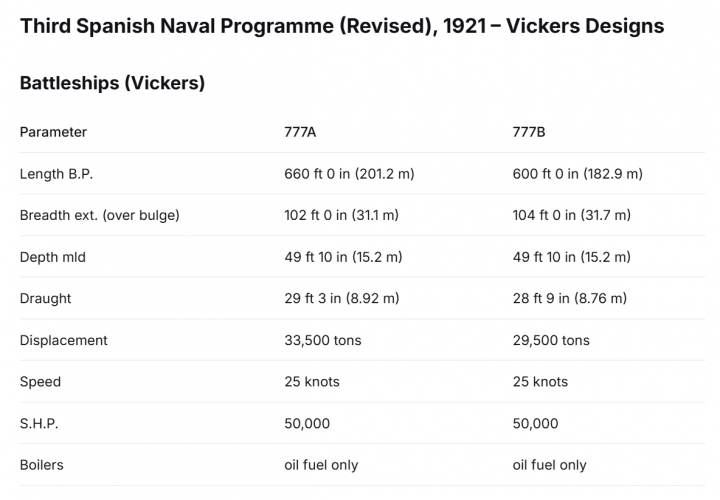
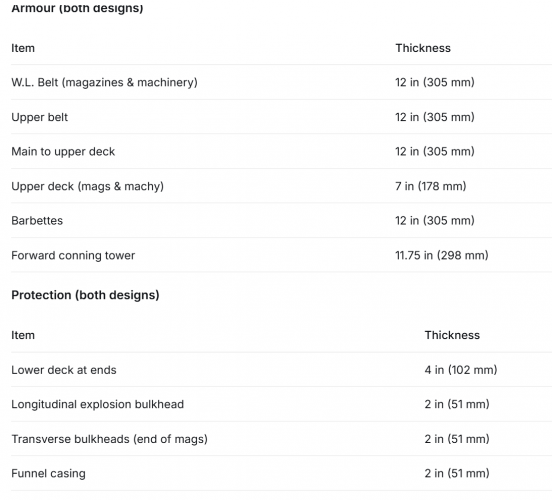
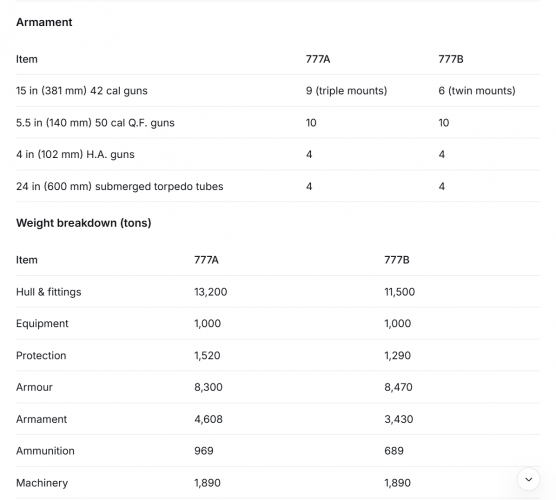
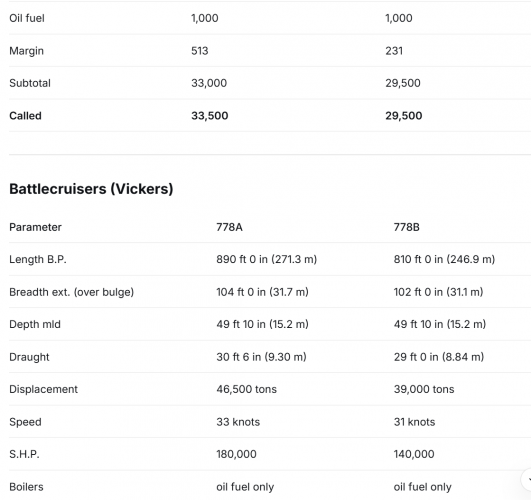
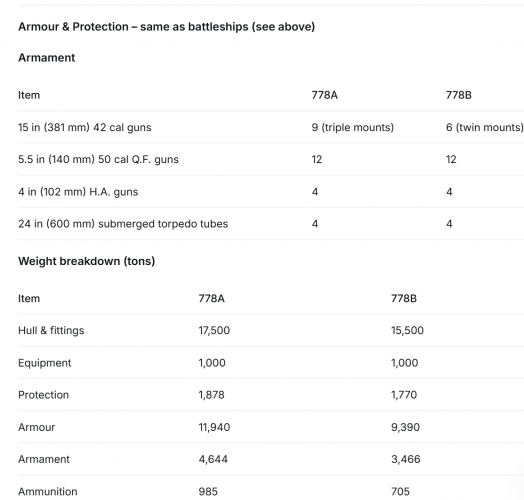
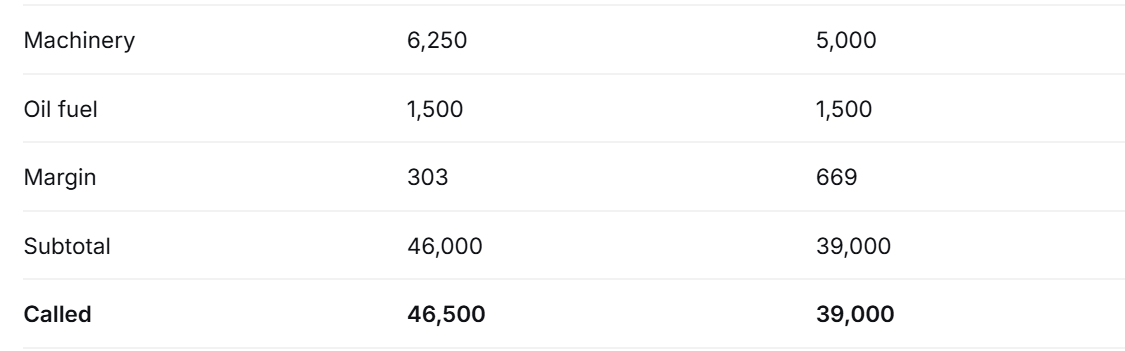
Some time ago, I discovered information about Designs 777 and 778 provided by Vickers for Spain; these are four projects proposed in 1921. (See attached figure for relevant information)
The Vickers Design 777 is a battleship design plan, while Design 778 corresponds to a battlecruiser plan. Both A plans use three triple 381mm main gun turrets, whereas the B plan only has three twin main gun turrets.
To be honest, at first I wasn't very concerned about these plans, but my friend disagreed with me on some specific details:
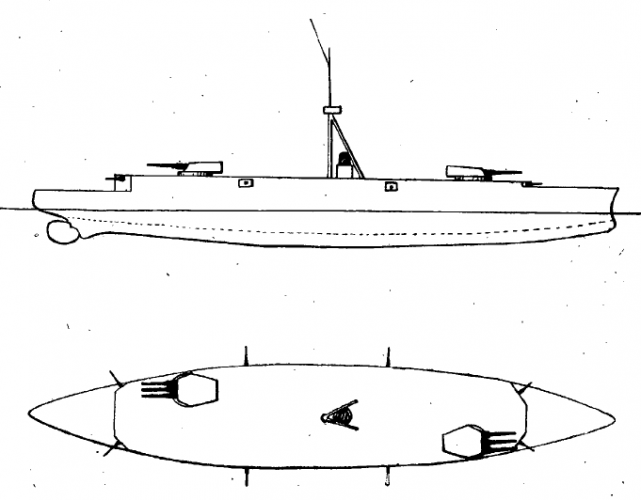
He thinks these battleships should have an appearance similar to that of the Nelson-class battleships; considering that the Nelson-class was laid down in 1922, it might indeed be possible.But I noticed that the secondary guns they use are 140mm instead of 152mm, which makes me think that these warships might be closer to the Hood.However, I searched everywhere but did not find the relevant blueprints; I only learned that the Spanish Navy did have some proposals referencing the Nelson-class battleships, and the timing does not match the four plans here.
Does anyone have more information about them? Thank you all in advance for your help!
1779158947056.png 1779158964546.png 1779158972575.png 1779158977886.png 1779158985900.png 1779158995004.png
 
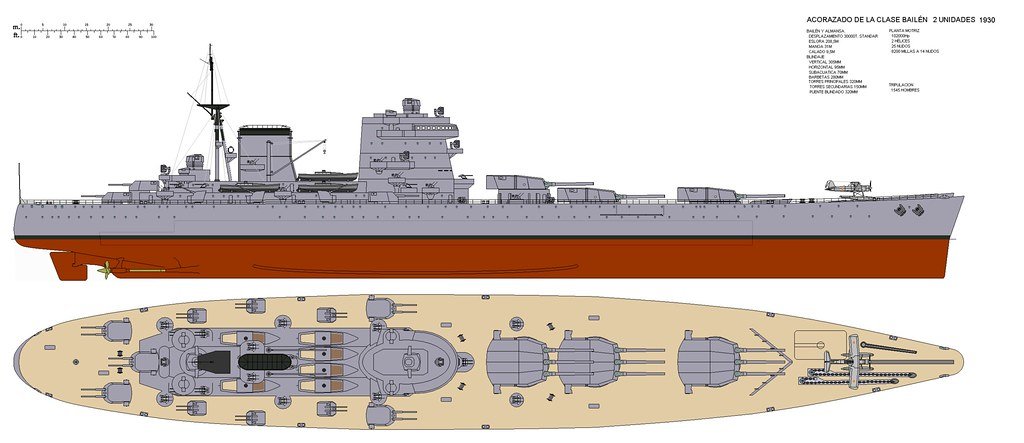
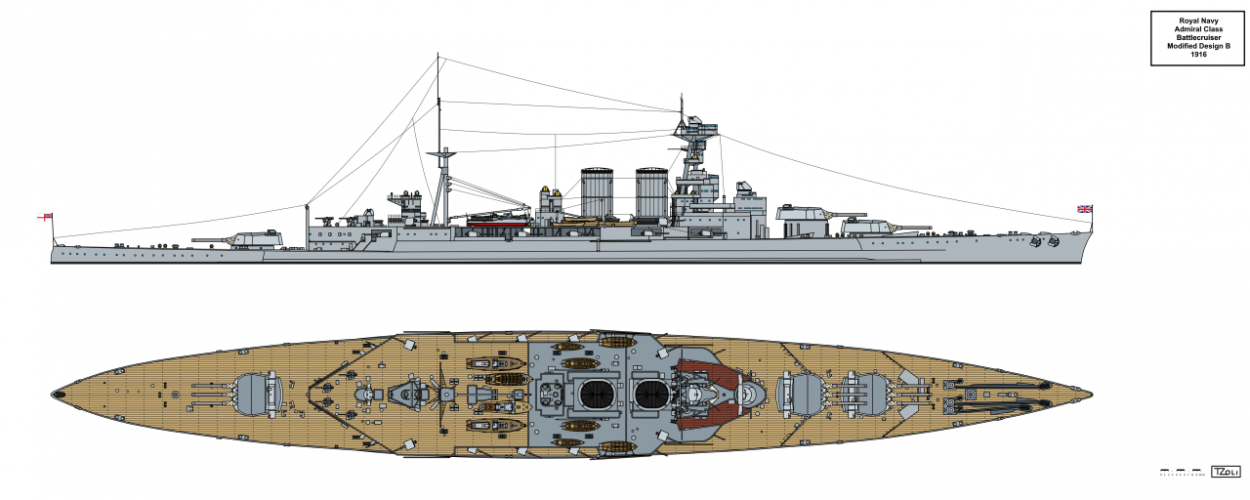
I have found two reference images that may fit the concept, drawn by Toryu and Tzoli respectively.
1779159177183.jpeg
The 1930s Spanish battleship drawn by Toryu has an appearance similar to Nelson.
1779159232957.png
The British improved Admiral-class battlecruiser drawn by Tzoli has an appearance similar to Hood.
 
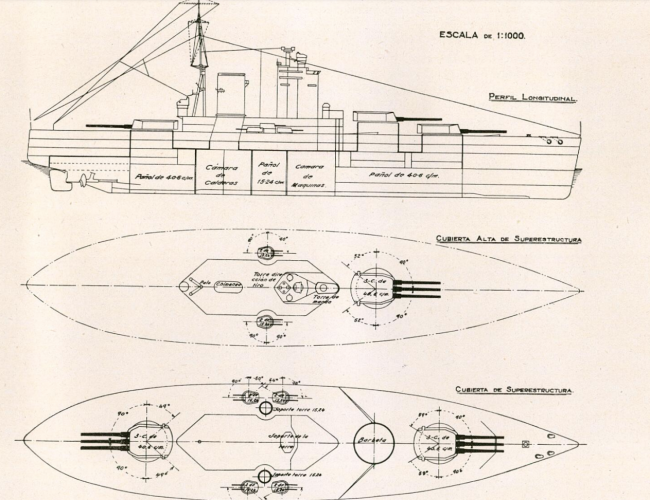
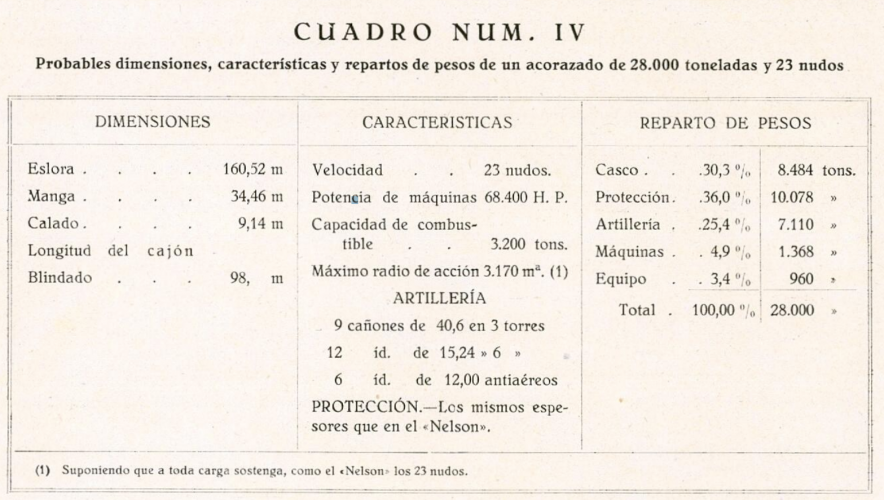
I have no information on the 1921 projects other than what has been stated, but I can say with complete certainty that it is different from the 1930 project. I don't know if the latter was a Armada Española project to acquire two battleships or simply a study on dimensions, since there is an article in Revista de Ingenieria Naval that doesn't clarify this, and it also doesn't correspond to the Cárvia Plan.
 

Attachments

  • spanish_nelson.png
    spanish_nelson.png
    2 MB · Views: 238
  • statistics-1-1.png
    statistics-1-1.png
    1.9 MB · Views: 179
  • Screenshot_20260330_114050.jpg
    Screenshot_20260330_114050.jpg
    1.1 MB · Views: 145
I have no information on the 1921 projects other than what has been stated, but I can say with complete certainty that it is different from the 1930 project. I don't know if the latter was a Armada Española project to acquire two battleships or simply a study on dimensions, since there is an article in Revista de Ingenieria Naval that doesn't clarify this, and it also doesn't correspond to the Cárvia Plan.
Oh, I know they're different, I just happened to have the drawing you made on hand when writing this!
Speaking of these two battleships, their shortness is a bit unbelievable! The Nelson-class is a full 216 meters long, and even the Revenge-class battleship Royal Sovereign is almost 190 meters.
 
Oh, I know they're different, I just happened to have the drawing you made on hand when writing this!
Speaking of these two battleships, their shortness is a bit unbelievable! The Nelson-class is a full 216 meters long, and even the Revenge-class battleship Royal Sovereign is almost 190 meters.
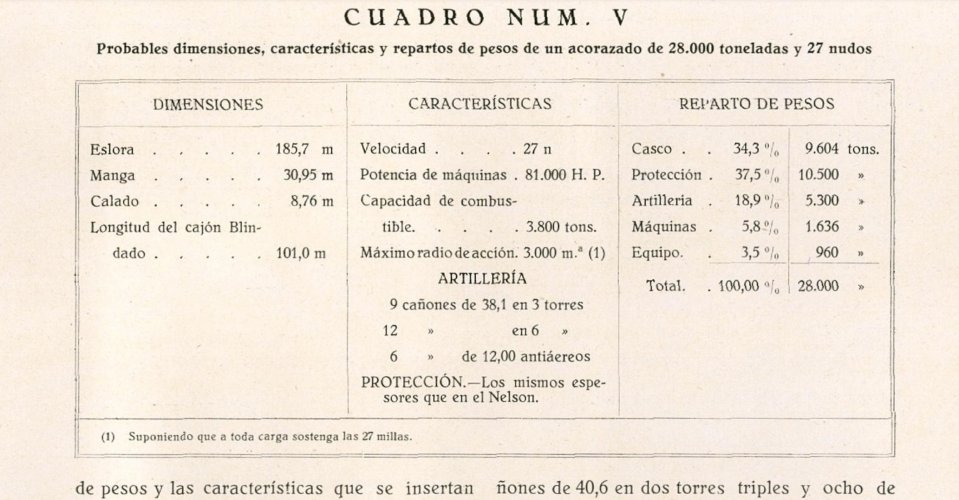
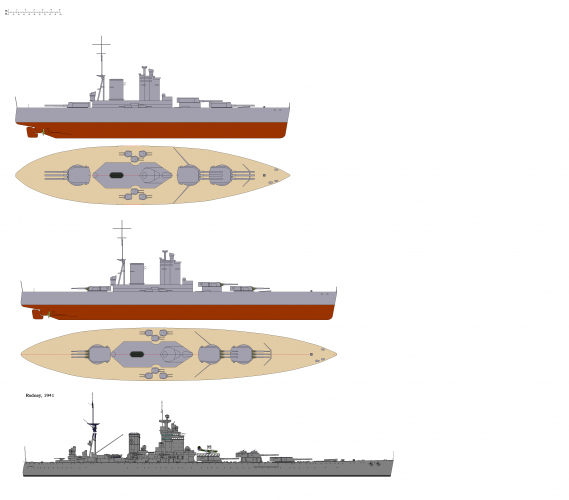
At the end of the article, they favored version number V. A 28,000-ton battleship, 185 meters long, with nine 381mm guns and a speed of 27 knots, is typical for a vessel of this type. This would be like a version of the South Dakota class. The problem is the 3,000-mile range.
 
According to the note appended to the statement "Máximo radio de acción", the 3000 mile radius of action is at 27 "millas" (I assume they meant knots) at "full load". 3000 miles radius of action at 27 knots is not so bad.
 
Last edited by a moderator:
A 28,000 ton ship that short making 27 knots on only 81,000 SHP seems very unlikely. The South Dakota class was a bit longer and required 130,000 SHP to make 27 knots.
 
Last edited:
I have no information on the 1921 projects other than what has been stated, but I can say with complete certainty that it is different from the 1930 project. I don't know if the latter was a Armada Española project to acquire two battleships or simply a study on dimensions, since there is an article in Revista de Ingenieria Naval that doesn't clarify this, and it also doesn't correspond to the Cárvia Plan.
Rather cute ones, I say) A 15-inch versions looks more optimized in terms of speed.
 
I have no information on the 1921 projects other than what has been stated, but I can say with complete certainty that it is different from the 1930 project. I don't know if the latter was a Armada Española project to acquire two battleships or simply a study on dimensions, since there is an article in Revista de Ingenieria Naval that doesn't clarify this, and it also doesn't correspond to the Cárvia Plan.
What exactly does the Cárvia Plan involve? I've heard about it several times, but I still know very little. Are there any websites or books that have information on it?
 
What exactly does the Cárvia Plan involve? I've heard about it several times, but I still know very little. Are there any websites or books that have information on it?
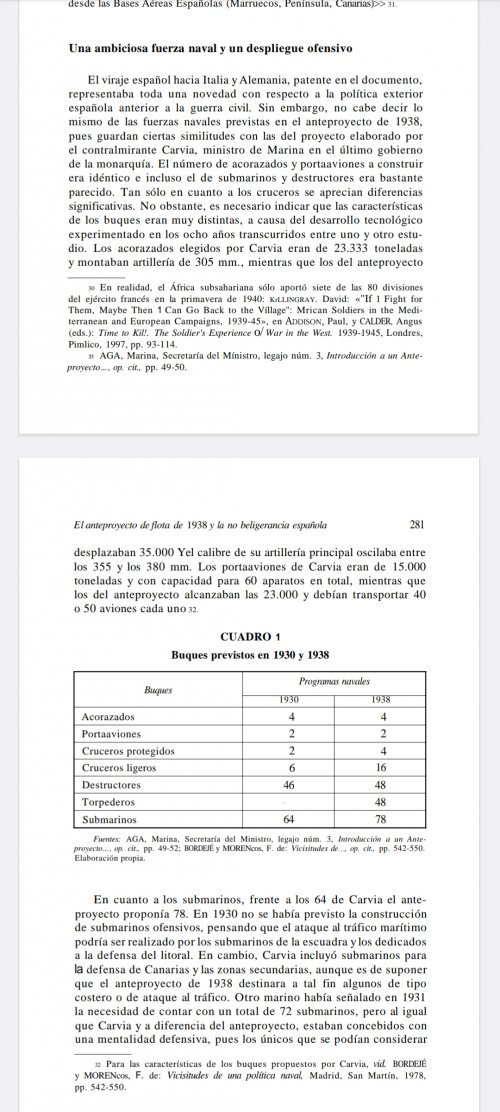
The Carvia Plan, from 1930, envisioned the construction of:
- 4 battleships of 23,333 tons, capable of 24 knots and armed with 8 or 9 305mm guns.
- 2 aircraft carriers of 15,000 tons each, carrying 30 aircraft.
- 2 cruisers of 6,000 tons
-and several destroyers and submarines. It was budgeted at 5.6 billion pesetas with an estimated construction time of 12 years. This is practically all I know; information is scarce and sometimes contradictory.
 

Attachments

  • Screenshot_20240920-121557_Drive.jpg
    Screenshot_20240920-121557_Drive.jpg
    994.5 KB · Views: 96
- 4 battleships of 23,333 tons, capable of 24 knots and armed with 8 or 9 305mm guns.
23333, what an eye-catching number! Was this kind of battleship designed to counter the Dunkerque-class battleships?As far as I know, the main goal of the Spanish navy at the time was to ally with either the French or Italian navy to suppress the other.
 
23333, what an eye-catching number! Was this kind of battleship designed to counter the Dunkerque-class battleships?As far as I know, the main goal of the Spanish navy at the time was to ally with either the French or Italian navy to suppress the other.
Unfortunately, I don't know where this battleship fits in or if the data is correct. A ship of that type, with 305mm guns, should at least have a good speed, not a meager 24 knots.
 
Unfortunately, I don't know where this battleship fits in or if the data is correct. A ship of that type, with 305mm guns, should at least have a good speed, not a meager 24 knots.
I think you're right. The first two battleships, even when equipped with larger main guns and armor of the same thickness as Nelson's, could still reach speeds above 23 knots. This 23,333-ton small battleship shouldn't be this slow. Maybe it's 34 knots?
 
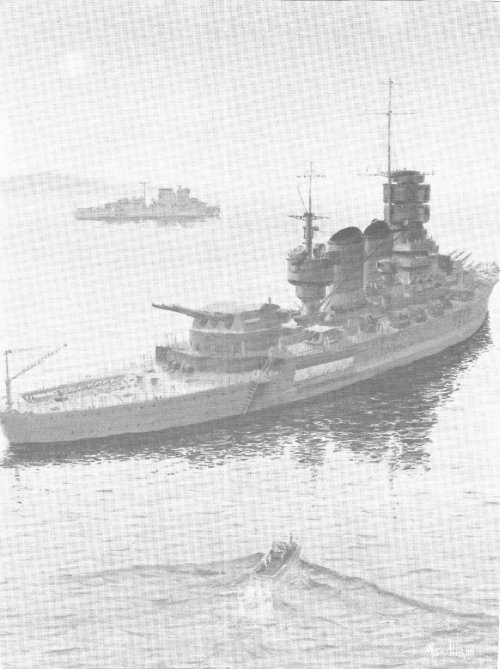
This is the Spanish version of the Vittorio Veneto-class battleship, and it's much more famous in comparison.
This concept illustration replaces the original six pairs of 90mm DP with five pairs of 120mm DP, which is one of the improvements in the Spanish version. The Spanish clearly stated that they wanted to use their own heavy AA.
Another clear requirement is to improve endurance. Besides that, the Spaniards might want to strengthen armour and air defence capabilities based on their war experience.
It needs to be noted that we are not sure what DP replacement specifically looks like, considering the construction period, the Spanish might end up using the twin-gun mount version instead of the single-gun mount shown in the picture
 
23333, what an eye-catching number! Was this kind of battleship designed to counter the Dunkerque-class battleships?As far as I know, the main goal of the Spanish navy at the time was to ally with either the French or Italian navy to suppress the other.
Would make sense if Spaniards assume their treaty limit would be 2 full-size BBs (70k ts = 2x35) and then decide to split this among 3 smaller vessels. But for 4 ships such a displacement seems and oddity..
 
Would make sense if Spaniards assume their treaty limit would be 2 full-size BBs (70k ts = 2x35) and then decide to split this among 3 smaller vessels. But for 4 ships such a displacement seems and oddity..
Considering that Spain was not a signatory of the naval treaty, they didn't really have to worry about the total tonnage of their capital ships, and more importantly, we all know that Spain realistically didn't have the capability to use up 70,000 tons. Overall, my current thinking is like this: the Spanish Navy lacked the ability to build large battleships, which meant they had to focus on building more small battleships. An example is the 28,000-ton small battleship proposed in Ingeniería Naval in May 1930 (the plan V mentioned above). This 23,333-ton small battleship might be a scaled-down version of the 28,000-ton battleship, and the choice of this tonnage and number of ships may have been influenced by the naval treaty.
 
Overall, my current thinking is like this: the Spanish Navy lacked the ability to build large battleships, which meant they had to focus on building more small battleships.
Not only build, but maintain also. The Spanish drydocks weren't very large, and big battleships would likely require a major infrastructure upgrade, too.

I'm more interested about Spanish motivation. Before World War I, Spanish decision to build dreadnoughts was mainly based on two factors:

* They needed heavy ships to support their light forces, protecting their major ports and naval bases against enemy attacks and/or blockade;

* The heavy ships were considered of high "alliance value", i.e. making alliance with Spain more attractive for major European playes (mainly France, which was viewed as "natural ally" at this moment);

What was the motivation for Spanish battleships later, I wonder?
 
What was the motivation for Spanish battleships later, I wonder?
Are you talking about the Franco era?I think it should be like this, from Díaz Benítez, Juan José: “The 1938 Fleet Draft and Spanish Non-Belligerence during the Second World War”, AYER, no. 49 (2003), p. 277.
«La constitución de la fuerza naval descansaba, según el ante-proyecto, en cuatro conceptos. Por un lado, el desequilibrio entre los dos grupos de naciones, cuya potencia industrial y poder naval, en igualdad de condiciones, estarían determinados por el número y el nivel cultural de sus súbditos. Por el otro, si el desequilibrio era desfavorable para el grupo en el que se encontrara España, habría que constituir una fuerza naval que cuestionara la seguridad de la victoria del enemigo. Esta idea suponía la búsqueda de la paridad entre grupos rivales, la cual se lograría en la paz mediante un equilibrio estratégico, mientras que en la guerra lo haría con la constitución de una flota de características tales que le permitiesen actuar por sorpresa. El tercer concepto era la paridad entre naciones, la cual sería alcanzada gracias a la constitución y empleo apropiado de la flota. Finalmente, la fuerza naval debía responder al concepto de flota elemental, a la cual se consideraba una garantía de paz.»
Overall, the Chief of Naval Staff thinks Spain should make the most of its crucial location by building a strong enough fleet to cut off Britain and France from their colonies in Africa and the Mediterranean when necessary.This plan sees battleships as the core power of the fleet, with cruisers and aircraft carriers serving as their support, while submarines are in charge of carrying out commerce raiding missions.He gave a few examples to illustrate the situation, like starting from the Canary Islands to disrupt sea routes coming from South America, the Cape of Good Hope, and French Morocco, or using bases in the Balearic Islands to stop France from sending troops to Africa.
 
Last edited:
- 4 battleships of 23,333 tons, capable of 24 knots and armed with 8 or 9 305mm guns.
It was budgeted at 5.6 billion pesetas with an estimated construction time of 12 years. This is practically all I know; information is scarce and sometimes contradictory.
Maybe information from different sources got mixed up. I’ve been trying to find relevant information in the past few days, and finally found this,From Rodríguez González, Agustín Ramón. 'Spanish Naval Plans Between 1898 and 1936: Failed, Approved, and Degree of Implementation.' Revista General de Marina (August-September 2012): 241-260.
Considering the expected growth of the French and Italian fleets, as well as the recent treaty restrictions on the new naval arms race, Cavia believed that there was a need for: four battleships, 25,000 to 29,000 tons, equipped with six 355mm guns (which at the time were larger than the usual caliber used by navies), twelve 152mm guns and six 120mm guns, a speed of 24 knots, and as good armor as possible.
This looks much more normal now!
 
That's why I say the information is a bit contradictory. Six 355mm guns and 24 knots seems a bit low to me, but somewhat logical for a 29,000-ton ship.

Un saludo.
 
That's why I say the information is a bit contradictory. Six 355mm guns and 24 knots seems a bit low to me, but somewhat logical for a 29,000-ton ship.
Well, the potential opponents were French Navy (which largest guns were 340-mm) and Italian Navy (305-mm).
 
Would make sense if Spaniards assume their treaty limit would be 2 full-size BBs (70k ts = 2x35) and then decide to split this among 3 smaller vessels. But for 4 ships such a displacement seems and oddity..
There’s a piece of information I’m not sure is relevant,: the book Battleships:
Axis and Neutral Battleships in World War II mentions that Spain once took part in the 1922 Rome Conference, where the proposed total tonnage of Spanish battleships was 81,500 tons. At that time, the Royal Spanish Navy was more interested in new 35,000-ton battleships and thought 81,500 tons was too little, so they withdrew from the proposed Rome Treaty.
81,500 tons is just enough to be split into three small battleships of around 27,000 tons each, and between 1930-1931, Spain did actually do some studies on 27,000-ton small battleships.
 
Last edited:
I have no information on the 1921 projects other than what has been stated, but I can say with complete certainty that it is different from the 1930 project. I don't know if the latter was a Armada Española project to acquire two battleships or simply a study on dimensions, since there is an article in Revista de Ingenieria Naval that doesn't clarify this, and it also doesn't correspond to the Cárvia Plan.
This simple drawing corresponds to squares No. IV and V, also compared with the HMS Rodney.
 

Attachments

  • BB Nelson español.PNG
    BB Nelson español.PNG
    139.5 KB · Views: 70

Similar threads

Back
Top Bottom