WatcherZero
ACCESS: Top Secret
- Joined
- 22 May 2023
- Messages
- 1,146
- Reaction score
- 2,974
So what your saying is some kind of Ural Bomber LOL


Not sure if you're mocking it or not, but super long range is what they've been saying all along.So what your saying is some kind of Ural Bomber LOL
Not sure if you're mocking it or not, but super long range is what they've been saying all along.

Not sure if you're mocking it or not, but super long range is what they've been saying all along.
I don't think that the Poles are looking at anything more than that. Just early access to getting those new planes.Getting reported all over...surprised the talks are specifically with Italy and Japan though...weird that they've not engaged the UK....
Whatever is going on though.....they're not going to be involved in design or requirements...that ship has long sailed. A Tier 2 partnership with local production and ability to locally customise is the best they can hope for...
Indians joining SCAF would likely replace TEDBF. And likely AMCA.It's also being reported elsewhere that the Indians and Saudi's are stepping up their interest....personally would have thought the Indian's would rather try and join SCAF with France if Germany and Spain bail...but what would that do to AMCA and TEDBF? Make them more realistic?
The AMCA is not getting replaced lmao. Idk why people keep saying this. Like the AMCA is not an aircraft but a way for India to develop its private defense aerospace industry. There is a reason HAL has been excluded from the program. Taking away the AMCA is like throwing away the development of your aerospace industry.I don't think that the Poles are looking at anything more than that. Just early access to getting those new planes.
Indians joining SCAF would likely replace TEDBF. And likely AMCA.

the issue is that while the Indian economy is doing ok its not like shining or anything either. It will take a few more years for India to truly financially contribute to the GCAP. So If India does join the GCAP or SCAF, India will prolly start its the majority of its contributions to the program in the 2030s when its built up enough of an economy that even significant contributions wouldnt matter.I wouldn't be surprised if india replaced germany in scaf, I dont see that program surviving but I could see (if india could ever unfuck its procurement system) india replacing a germany that moved to gcap (which consdering both the uk and Japan's economics needs a bigger partner then Poland to succeed)

The two leaders concurred on accelerating the joint development of the next-generation fighter aircraft, under the GCAP.
From the FT article (if the reddit post with it reposted in full is correct).From the minutes of the meeting between Starmer and the Japanese prime minister on Jan 21 in Japan:
https://www.mofa.go.jp/erp/erp_1/gb/pageite_000001_00003.html
Canada getting GCAP?From the FT article (if the reddit post with it reposted in full is correct).
"UK Prime Minister Sir Keir Starmer tried to reassure Japanese counterpart Sanae Takaichi of Britain’s commitment during his visit this year, but in the absence of any funding his reassurances did not hold much sway, said two people familiar with the visit."
"Tokyo has shifted its stance to become more open to signing deals with potential customers for the fighter jet to reduce the funding requirements on the UK, with Canada a leading potential customer, according to two of the people.
Japanese officials stressed that Tokyo is reluctant to allow the entry of any new design and development partner, however, given the complexities. Japan resisted a push last year by the UK and Italy to get Saudi Arabia involved in the development. Saudi Arabia was still in talks to join in some form, according to two people familiar with the situation."
It really is ironic seeing the UK become everything they tried to claim Italy or Japan would do. Stuff like saying Italy would flake on the bill or Japan would create delays in the program over their defense and export bureaucracy. Also seeing a few people on the UK side trying to act like the 2035 IOC date was just randomly sprung on them as this impossible herculean task when it has been the single most consistent demand from Japan when forming GCAP and has been their goal since 2016 from their solo i-3/F-3 program. If the UK does use the delays to try and shift scope like what is being speculated then something needs to happen like the UK losing their equal stake in the program and perhaps some share in production. Japan and Italy don't need to be footing the bill to create a bunch of jobs in the UK and build up their economy.Summary of FT article in X thread.
View: https://x.com/f3futarigoto/status/2035646016406630683?s=20
More detail on the article in reply to reddit post.
View: https://www.reddit.com/r/unitedkingdom/comments/1s0k7r2/japan_sounds_alarm_over_uk_delays_to_gcap_combat/
With the SCAF coming apart right now its looks all the more likely that Germany becomes part of the GCAP but if germany wants to be part of GCAP they would want significant workshare that would significantly delay negotiations and could delay the program by a significant amount of time. after all this is what the SCAF program is being delayed by, workshare negotiations and difference in designFrom the FT article (if the reddit post with it reposted in full is correct).
"UK Prime Minister Sir Keir Starmer tried to reassure Japanese counterpart Sanae Takaichi of Britain’s commitment during his visit this year, but in the absence of any funding his reassurances did not hold much sway, said two people familiar with the visit."
"Tokyo has shifted its stance to become more open to signing deals with potential customers for the fighter jet to reduce the funding requirements on the UK, with Canada a leading potential customer, according to two of the people.
Japanese officials stressed that Tokyo is reluctant to allow the entry of any new design and development partner, however, given the complexities. Japan resisted a push last year by the UK and Italy to get Saudi Arabia involved in the development. Saudi Arabia was still in talks to join in some form, according to two people familiar with the situation."
Can japan even truly do this without the UK ? I would love to know because i was always under the impressions that japan needed RR and BAE for GCAP because it didn't have at home capability.It really is ironic seeing the UK become everything they tried to claim Italy or Japan would do. Stuff like saying Italy would flake on the bill or Japan would create delays in the program over their defense and export bureaucracy. Also seeing a few people on the UK side trying to act like the 2035 IOC date was just randomly sprung on them as this impossible herculean task when it has been the single most consistent demand from Japan when forming GCAP and has been their goal since 2016 from their solo i-3/F-3 program. If the UK does use the delays to try and shift scope like what is being speculated then something needs to happen like the UK losing their equal stake in the program and perhaps some share in production. Japan and Italy don't need to be footing the bill to create a bunch of jobs in the UK and build up their economy.
It really is amazing how the UK managed to get the chance at usurping the US as the primary defense R&D partner of Japan and immediately squandered it this hard. Forget stumbling before the finish line, this is stumbling before the starting line. This will probably sour things for other nations wanting to partner with Japan in the future as well as Japan was content with just going at it alone, but this was the program to show Japan that it was safe to take on these massive defense programs with partners for the first time.
Even if the UK gets the DIP through without any significant delays, this has already strained relations, but things are looking a lot worse based on what is known. I'd maybe be a bit more lenient on the UK in other circumstances, but with how smug they were in the early stages of the program only to be the cause of almost every single one of the albeit few issues that GCAP has seen so far is a bad look.
The only way Germany can join GCAP is as a buyer of product. At least not without completely reworking the GIGO agreement.With the SCAF coming apart right now its looks all the more likely that Germany becomes part of the GCAP but if germany wants to be part of GCAP they would want significant workshare that would significantly delay negotiations and could delay the program by a significant amount of time. after all this is what the SCAF program is being delayed by, workshare negotiations and difference in design
Maybe? I mean, they could absolutely continue within the GIGO frameworks. The question is in if Japan needs the UK to help pay for it all.Can japan even truly do this without the UK ? I would love to know because i was always under the impressions that japan needed RR and BAE for GCAP because it didn't have at home capability.
They don't really need either. The biggest things that were touted by RR to be brought to the table were ACE and their 1mW generator, but now its looking like ACE is being scrapped from NGAD and most likely will be the same for GCAP with how expensive it is and IHI has their own 1mW generator. Some of the best nickel superalloys for turbines are developed in Japan and iirc RR opened a lab in Japan just for the purpose of NSA research. At the end of the day Japan has an engine with as much thrust as an F119 in an F110 formfactor and has confidence they can get 19 tons of thrust out of it in the future. Its a similar story for BAe as well.I would love to know because i was always under the impressions that japan needed RR and BAE
Try reading this again in two or three months.Japan provides the funding difference to move onto the next stage

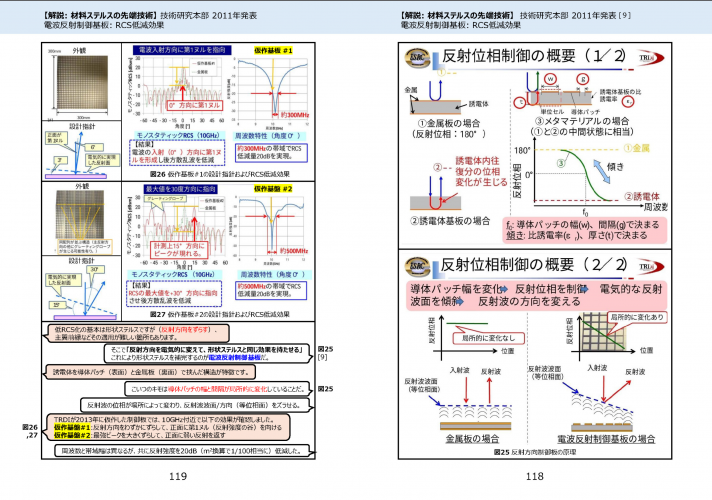
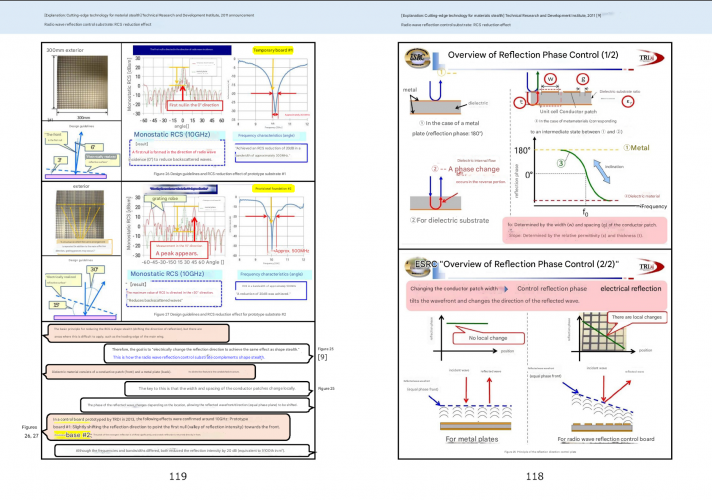
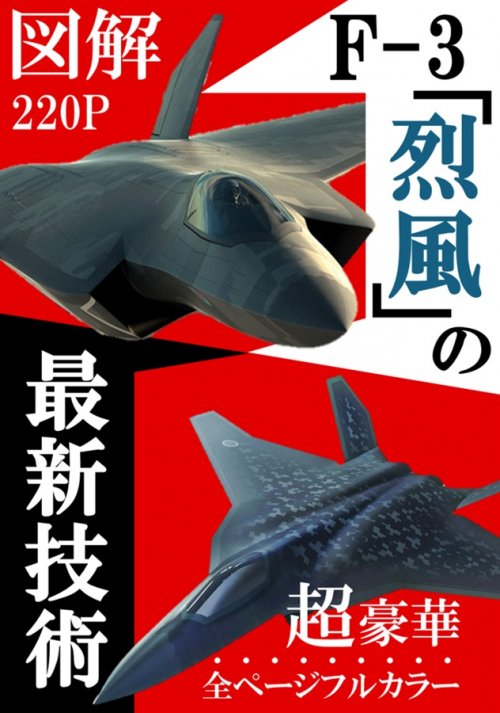
Is that probably an explanation of a structure called a metasurface reflector?I will quote a portion of a doujinshi that was distributed at the Winter Comic Market. I purchased the digital version from an online store called Melonbooks.
I honestly do not fully understand the technical details, but would this be what is called “active stealth”?
I'm not saying it would happen or it would be likely, but the way I could see it happening is if there are already significant delays in the program due to the DIP not going through in this next window and the UK still tries to through around their stake/veto power to try and change the scope of the program. If there are already major delays then at that point there wouldn't be as big of an issue to bring on a new junior partner actually contributing funds and being less demanding.The idea that the UK would be booted from GCAP seems very far fetched.
But what exactly in terms of stealth? Japan has a much more robust ceramics industry making RAM and experience with their X-2 and F-X research. I really haven't heard much of anything about UK RAM research and from what I can tell they didn't have any hand in it with the F-35.What niche IP does the UK bring in terms of stealth, radar (UK Leonardo - ECRS Mk II), unique lessons learned from F-35 etc.
And with that would come the UK losing its equal workshare and production, but the question is can the UK stomach that? They are already having trouble pushing funding for such a massive project through with equal workshare, so how is the UK government gonna feel about still putting massive amounts of money in to a program where they are a junior partner and have less jobs when its time to start making airframes. I just see that as a death spiral. The UK is already becoming an unreliable and uncooperative partner when treated as an equal, so if it comes down to it, I wouldn't be surprised if they become downright antagonistic if their status is downgraded.There is previous reporting that Japan would be willing to take on a greater share of the cost burned if it meant keeping to schedule on the timeframe goals.
I could at least see Germany contributing something to the program or having the facilities for production, but they will likely be more demanding. Saudi Arabia might be less demanding, but at the same time even basic asks would be major hurdles for them. Their entire aerospace defense industry is a Tornado MLU facility and a Hawk FACO line where all sub assemblies are finished and they are basically slapping wings on a fuselage. Where do they contribute as a dev partner or even build parts for the program? I see Canada as a more reliable source for cash in exchange for reasonable demands, but they will also have less money to contribute.the FT article mentions Canada; SA & Ger maybe willing to join as tier 1/2 customers, we'll see.
It's not just the existing delays that are the problem. It's that after this next 2-3 month delay, the UK with have a very small window to push the DIP through and if they don't get it through, then that 2-3 months turns into 6 months delay. The worrying part is that even after all the existing delays, there is no actual indication that the UK will be ready to push it through when that short window appears. There is so much talk about how important GCAP is and how funding will definitely be pushed through, but if it was as important as they claim, then we wouldn't be at this stage.3. Funding does appear from the UK Defence Investment Plan (DIP), at current trajectory that means a delay of another 2-3 months.

I think that @Kota 's viewpoint is really interesting and a refreshing change from the UK press machineEasy to mock this Japanese flag waving but some of the British contributors here and British press in general are no better. Best to shrug and just move on.
Thanks for the detailed reply, interesting points made. Yes GCAP will benefit significantly from Japan's material science & radar expertise, and many other areas.I'm not saying it would happen or it would be likely, but the way I could see it happening is if there are already significant delays in the program due to the DIP not going through in this next window and the UK still tries to through around their stake/veto power to try and change the scope of the program. If there are already major delays then at that point there wouldn't be as big of an issue to bring on a new junior partner actually contributing funds and being less demanding.
Makes sense. GCAP's general mission and performance are really ideal for what Canada actually needs (a long range interceptor).Good news about GCAP after a long time
Canada in talks to join Japan–UK–Italy next-generation fighter development program as observer
It peeves me just how economically illiterate this is. Whilst both can be measured in £ they are totally different things. Might as well compare £ and lbs. Total PR nonsense from BAES.finds that export sales of Typhoon had, by November 2020, ‘already returned more than double the UK Government’s £12 billion investment in the programme to the UK economy'.

Fair point, given the "return to the UK economy" of the export sales is very different from returned to HMRC as tax revenue. Would you like to take a guess at approx the actual return / offset against the 12b development cost? Whatever the actual numbers there is likely still a meaningful return. I haven't seen any numbers detailing estimates of return to UK economy (or HMRC) from the development & production period prior to export sales, to add onto the export revenue.It peeves me just how economically illiterate this is. Whilst both can be measured in £ they are totally different things. Might as well compare £ and lbs. Total PR nonsense from BAES.
It peeves me just how economically illiterate this is. Whilst both can be measured in £ they are totally different things. Might as well compare £ and lbs. Total PR nonsense from BAES.
I made exactly this argument to a Labour MP last month and his eyes glazed over. Seems the Labour Party is desperate to avoid confronting any budget tradeoffs that affect the welfare budget and is extremely susceptible to arguments that drones mean piloted aircraft are obsolete (arguments which the Army and Navy are probably encouraging for all it's worth).Fair point, given the "return to the UK economy" of the export sales is very different from returned to HMRC as tax revenue. Would you like to take a guess at approx the actual return / offset against the 12b development cost? Whatever the actual numbers there is likely still a meaningful return. I haven't seen any numbers detailing estimates of return to UK economy (or HMRC) from the development & production period prior to export sales, to add onto the export revenue.
With the current level of interest, GCAP is set to be a much greater export success than Typhoon.
The UK is actually on of the leading western nations for RAM and Stealth outside of the US. BAE and Dstl have been researching RAM since the 80's. The UK has consistently messaged that the Typhoon has "reduced radar signature features", and we also had BAE's Replica airframe demonstrator in the 90's that fed directly into Taranis which explicitly confirmed RAM and full body LO-Shaping and finally we also have Storm Shadow and Stratus-LO which also use UK developed RAM from MBDA UK.But what exactly in terms of stealth? Japan has a much more robust ceramics industry making RAM and experience with their X-2 and F-X research. I really haven't heard much of anything about UK RAM research and from what I can tell they didn't have any hand in it with the F-35.
I am simply pointing out that we should try to make meaningful, factual arguments rather than just come up with big numbers.The impact on the UK's balance of payments is very significant and not to be dismissed.