I doubt they'll be anything more than customers for the manned aircraft, if that. The partners have been pretty clear that the work share has been ironed out and there's little room for any new cooks in the kitchen.

If they were brought on as full partners, I guess they'd lose Japan due to timeline delays. At which point, it's less of a question of 'What if Germany joined the UK, Japan and Italy?' and more 'What if the UK and Italy traded Japan for Germany?'.

I'd be interested to know what others think Germany would actually bring to the programme, beyond money. I can't think of any major technology that couldn't already be designed and fielded by the current partners.

If Germany wants to save its aircraft industry, they either stomach a lower work share in FCAS, look for a new partners (Sweden?) or change their focus - perhaps looking at large combat drones.
 
Pro-EU and Pro-German factions trying swing things their way. Hoping if they say it happening that somehow it will.
Frankly a bit delusional, even magical thinking and more likely to damage everything.

The worrying bit is how many of the mandarins, like the mainstream media, ignorant of reality, would agree and work for that outcome.

A major irony if F&CO and DTI agree on GCAP and save the project here.
 
I doubt they'll be anything more than customers for the manned aircraft, if that. The partners have been pretty clear that the work share has been ironed out and there's little room for any new cooks in the kitchen.

Article makes it clear as production partners only, not development partners.
 
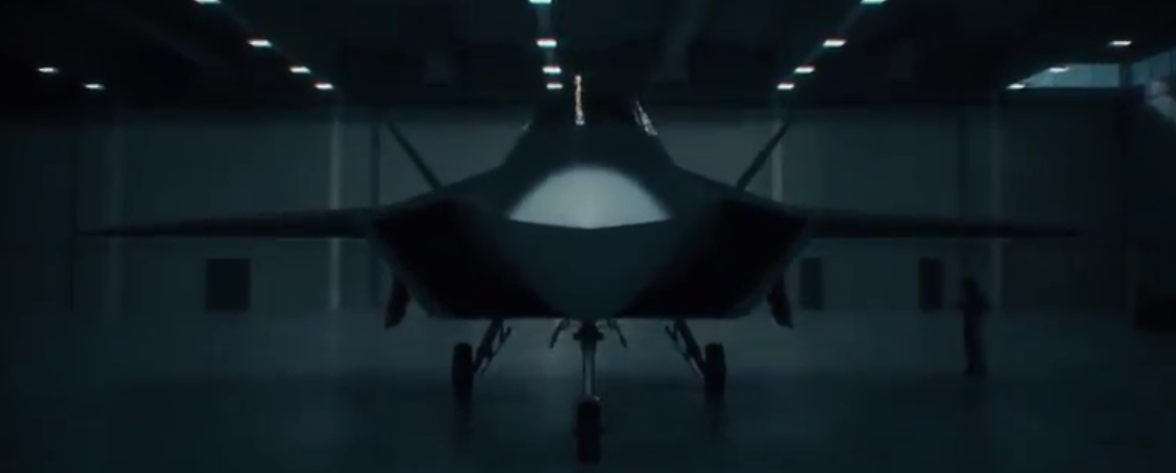
New video from Edgewing socials, at this point this design has been very similarly represented so many times it would be very weird for it not to look like this when finished, what you guys think of it not being tailless? "Edgewing Tempest", not bad but doesn't have the strength that established manufacturers bring.

 
New video from Edgewing socials, at this point this design has been very similarly represented so many times it would be very weird for it not to look like this when finished, what you guys think of it not being tailless? "Edgewing Tempest", not bad but doesn't have the strength that established manufacturers bring.

You all got used to Eurofighter Typhoon, though?
 
what you guys think of it not being tailless? "Edgewing Tempest", not bad but doesn't have the strength that established manufacturers bring.

We don't know that they're not leaving the tails on as a decoy....

And is it any different to SEPECAT Jaguar, Panavia Tornado or Eurofighter Typhoon?
 
Imgur have blocked any use in the UK after the Information Commissioners Office invited them to discuss* its plan to fine them over 1) historic data protection failures and 2) not having any age detection.

ICO's response is that blocking the UK doesn't actually stop Imgur being fined for the data protection failures.

* Which usually means "if you agree to fix things we'll either slash the fine or let you off entirely".
 
New video from Edgewing socials, at this point this design has been very similarly represented so many times it would be very weird for it not to look like this when finished, what you guys think of it not being tailless? "Edgewing Tempest", not bad but doesn't have the strength that established manufacturers bring.
For me, until they actually start assembling it, design could go either way.
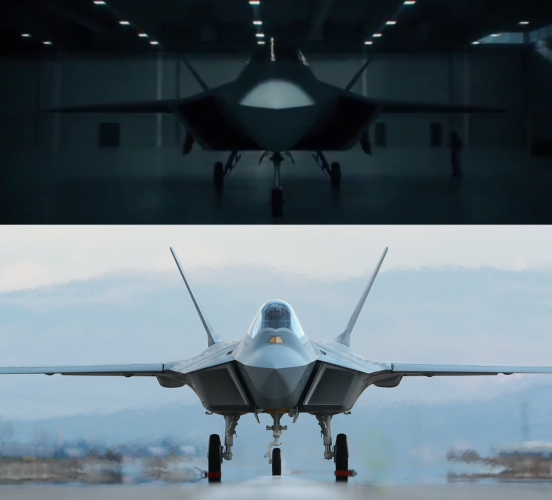
Look at the KAAN, those TFX mock ups and CG before the reveal were quite different from what was eventually revealed.
 
New video from Edgewing socials, at this point this design has been very similarly represented so many times it would be very weird for it not to look like this when finished, what you guys think of it not being tailless? "Edgewing Tempest", not bad but doesn't have the strength that established manufacturers bring.
Taking a small hit in RCS in exchange for easier stability and control? Why not? Its primarily an A2A platform and the UK and Italy are facing Su-57s at best. Japan is facing a slightly tougher situation but I doubt they are planning to fly them into dense A2AD networks.
 
Japan is facing a slightly tougher situation but I doubt they are planning to fly them into dense A2AD networks.
Might not matter when the J-36/J-50 comes to Japan instead. To me it does seem odd that Japan was either willing to compromise or was overruled by the others if that's representative of the final layout. Because these tails won't make facing the PLAAF and PLAN any easier, given the pace of their development with their sensor technologies.
 
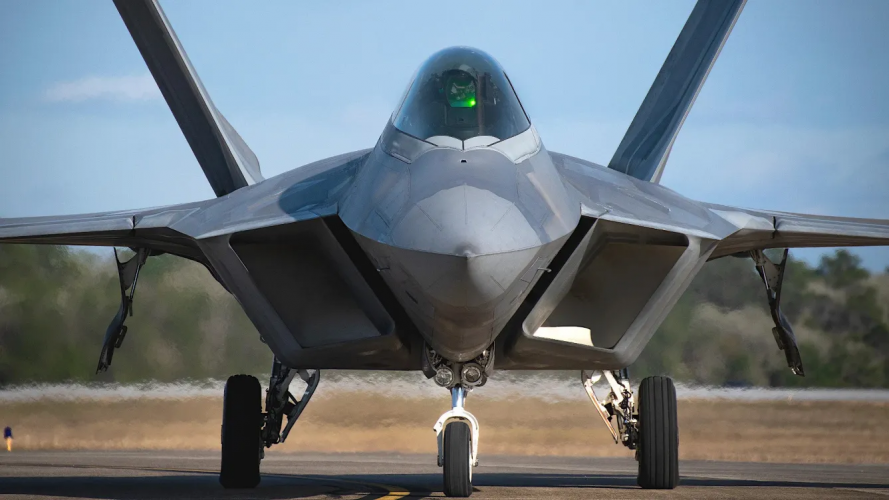
Oh c´mon. There is no way to compare both design that way. Tails or no tails isn´t an achievement by itself. See how cumbersome the J-20 configuration is to achieve, as we know for sure now, subpar results with the F-22 or F-35.

China might simply resolve itself in to deleting the verticals to get closer to what was their threshold expectation on RCS was. Some others might have reached a same level without any compromise on them.

Every design is a tradeoff.
 
Last edited:
Oh c´mon. There is no way to compare both design that way. Tails or no tails isn´t an achievement by itself. See how cumbersome the J-20 configuration is to achieve, as we know for sure now, subpar results with the F-22 or F-35.

China might simply resolve itself in to deleting the verticals to get closer to what was their threshold expectation on RCS was. Some others might have reached a same level with any compromise on them.

Every design is a tradeoff.
Can we say the same with China, that they also reached the same level of RCS reduction as both the F-22 and F-35 with it's canards and strakes. Because personally, Yes I don't think the J-20 is as VLO as the F-22 and F-35. It's still more surfaces, even when treated with all the necessary provisions.

I think what we can see here is that GCAP has less rigorous broadband ELO requirements versus what we see coming out of China and potentially the US.
 
Last edited:
Taking a small hit in RCS in exchange for easier stability and control? Why not? Its primarily an A2A platform and the UK and Italy are facing Su-57s at best. Japan is facing a slightly tougher situation but I doubt they are planning to fly them into dense A2AD networks.
Su-57s are in production, now . I.e. they significantly predate even updated eurofighter with ecrs mk.2.
And if GCAP won't take significant enough steps forward - it may easily end up in eurofighter's own situation in 2010s - when older platform reasonably counter it through a MLU upgrade. B/c, say, arguably main way to actually neuter Su-57 as exactly remove verticals, aka broaden LO window.

But comparing late 2030s program(before delays) to late 2010s fighter(with delays) is only valid if Russia won't introduce anything in over a decade.
Eurofighter's saving grace was collapse of Soviet Union: normal pace of Soviet fighter introduction collapsed. The worse possibility is tornado interceptor - nice innards, but conceptual corpse on arrival.
 
Last edited:
Oh c´mon. There is no way to compare both design that way. Tails or no tails isn´t an achievement by itself. See how cumbersome the J-20 configuration is to achieve, as we know for sure now, subpar results with the F-22 or F-35.

China might simply resolve itself in to deleting the verticals to get closer to what was their threshold expectation on RCS was. Some others might have reached a same level with any compromise on them.

Every design is a tradeoff.

yeah, I also agree, deciding how "advanced" a plane is based on whether it has tails or no tails, is a bit premature.
with the third through fifth generations, usually the US would come out with a fighter jet design, and the rest of the world would come up with something similar several years later.
For the "sixth" gen, there's still debates on what it is exactly, and the US has not released any substantial information or images.
We might likely see very diverging design paths..
However more so than the previous generations, it seems more the avionics and other electronics in the plane that will set it apart and its relationship with other systems.. things that we can't easily see with a picture of one plane. It could even be likely that existing 5th gen designs could become "6th" gen with the right internal upgrades.
 
It's not just about LO. Those huge vertical tails are going to require a lot of aft structure to support them at 7 or 8g, and powerful motors to drive them rapidly through the airflow. That's a lot of weight aft that might be better dedicated to TVC.

The YF-23 was constrained by software and engine state-of-the-art 35 years ago. That shouldn't be a factor for something entering service in the 2030s and which needs a 40 year service life.
 
GDPR ruining everything again.

Imgur access in the United Kingdom​

From September 30, 2025, access to Imgur from the United Kingdom is no longer available. UK users will not be able to log in, view content, or upload images. Imgur content embedded on third-party sites will not display for UK users.
You can exercise your data protection rights without logging in (for example, to request a copy of your data or deletion) using our Help Center request form.
We may request information to verify your identity and will respond within the time limits set by UK data protection law.
We may continue to process limited personal data where necessary and lawful, for example, to comply with legal obligations and to establish, exercise or defend legal claims. Information about how long we keep data and how we process it is available in our Privacy Policy.
If you have questions, please contact us via our Support request form.
 
Was it? It did the job it was designed for for over 2 decades...a job that nothing else could do as well...and it did it cheaper than the other alternatives...
Well, given that its flight hr cost, if i remember correctly, was higher than that of F-15C (for lack of even shadow of its capability) - allow me to doubt it. More capable aircraft were available off the shelf, not even looking over the other side of iron curtain. And outside of original nations - essentially whomever was fast enough to drop off tornado train(ADV included) - did.

But ADV Aircraft were especially miserable: they flew half of their lifes and were promptly retired without even a MLU. Standalone heavy interceptor with fighter-like interceptor capability, but without fighter air superiority capability in a mostly WVR-centric environment, much less multirole (which was totally doable by early-mid 1980s).
Eurofighter threw ADV out of fleets ASAP.

Tornado ADV is more or less an example of how things can get really wrong with a belated concept. And honestly, given how GCAP tries to be a larger, longer-ranged Phantom more A-A centric F-35 - spectre of just that isn't exactly in realm of impossibility.
 
were promptly retired without even a MLU

I'd argue that the Foxhunter improvements, JTIDS, Amraam and Asraam additions were in effect an MLU. JTIDS in particular put it well in advance of practically every other operational fighter out there...

they flew half of their lifes

Only 22 years in Squadron service...but their retirement wasn't because of the aircraft. Post Cold War, and post Global Financial crisis cutbacks...similar story for Harrier GR.5/7/9.

Tornado ADV is more or less an example of how things can get really wrong with a wrong concept.

There was nothing wrong with the concept. The UK's air defence is still based on sending fighters up north on long missions, because that is where the threat is....and it will be the same for GCAP as well. F-16, F-18 and F-15 couldn't do what the RAF needed to do up there. You could argue that F-14 could...but only at ruinous cost.
 
I think people misinterpret what I actually said, because it wasn't me arguing that GCAP is less advanced than Chinese counterparts. Nor would I measure how advanced an aircraft is by the presence or absence of stabilizers alone, lol. I was surprised that Japan, a country in stone-throwing-distance to China, settled on a design that seems to have far less stringent requirements with regards to it's stealth characteristics than the Chinese and presumably American aircraft meant to operate in the same region under the same scenario.

And I mentioned sensors, because with how the Chinese are hauling ass in that field recently, I would expect a country like Japan which is faced with a formidable adversary to attempt to maximize the signature reduction in the radar and IR spectrum. And having two large stabilizers sticking out of the fuselage will most likely result in a disadvantage in that particular area more often than not. Maybe it's for high speed stability and the GCAP will have obscene supercruise that requires such stabilizers to keep it...well stable. Which one may argue would be a worthwhile trade off. But I haven't seen anything indicating that yet.

So it's simply a design choice made in a very difficult environment which left me rather confused and I think that's quite honestly fair. For the UK and Italy I don't think the current configuration would be much of an issue, although obviously Russian radars in the air and on the ground improve as well. But an aircraft like GCAP will most likely stay in the back and leave the heavy and dangerous lifting to it's unmanned companions.

[Speculation]: All in all I think this may be an instance where Italy and the UK may have overruled Japan with regards to a design choice. I could imagine that Japan would have preferred an aircraft that prioritizes broadband stealth even further, even at the expense of higher development cost and more complex flight controls. While the UK and Italy are satisfied with the results achieved in simulation and most likely soothed their Japanese colleagues with the prospect of range and speed in conjunction with unmanned assets compensating for less rigorous stealth requirements.

Or maybe Japan didn't care either, who knows. I personally just find it odd, that's all really.
 
I think people misinterpret what I actually said, because it wasn't me arguing that GCAP is less advanced than Chinese counterparts. Nor would I measure how advanced an aircraft is by the presence or absence of stabilizers alone, lol. I was surprised that Japan, a country in stone-throwing-distance to China, settled on a design that seems to have far less stringent requirements with regards to it's stealth characteristics than the Chinese and presumably American aircraft meant to operate in the same region under the same scenario.
Japan isn't actually all that close, to be fair.
 
Japan isn't actually all that close, to be fair.
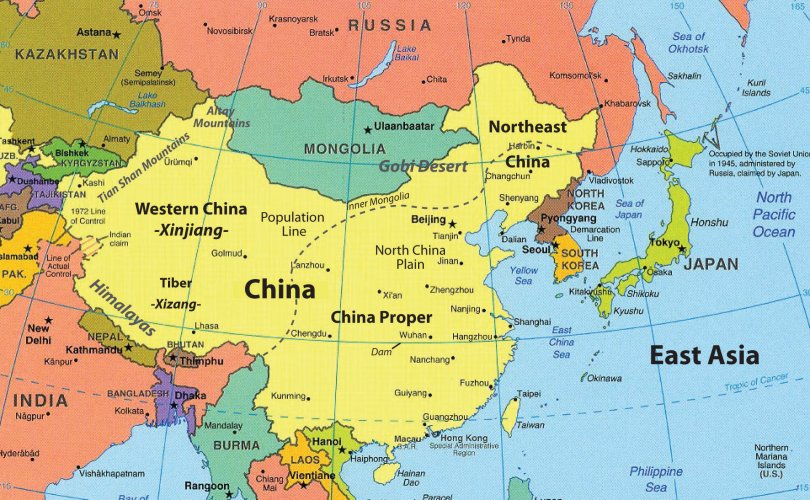
It's not right at their doorstep, but when one looks at the map and considers that Chinese aircraft and missiles could certainly fly over the DPRK and Russia with consent and refuel there as well, it is a very uncomfortable scenario for the Japanese I think.
4e10233954fd532d7ff5c030155e1b09.jpg
And in the overarching context of hypothetical 21st century WESTPAC warfare, it's definitely not far away at all. And with various ground, sea and air based radars buzzing around, I just would have expected Japan to really prioritize VLO capabilities. My understanding was that the same external factors imposed on the Chinese and US developments were also applying to Japan, but maybe I'm wrong?
 
It's not right at their doorstep, but when one looks at the map and considers that Chinese aircraft and missiles could certainly fly over the DPRK and Russia with consent and refuel there as well, it is a very uncomfortable scenario for the Japanese I think.
It's still in 700...1000 km range for exposed coast. It isn't out of reach, but it isn't terribly close either. Russia is certainly within stone throwing distance - but its actual airbases are further - especially ones with any actual jet presense.

Higher LO requirement is more of a thing for the attacker (playing of home field advantage), not defender. I.e. in east asian scenario, IMHO, GCAP makes perfect sense. It's europe where i somewhat struggle to see the logic underneath this uralbomber.
 
Last edited:
Weird like the KAAN with the mains directly underneath rather than on the sides
View attachment 787277

I don't think so, it looks closer to how F-22 landing gears are with the side retraction. KAANs one looks to be forward retracted, but it could change on KAAN, the tech demo was flown with set-height fixed gears.
1759917246662.png
1759917504573.png
 
I think people misinterpret what I actually said, because it wasn't me arguing that GCAP is less advanced than Chinese counterparts. Nor would I measure how advanced an aircraft is by the presence or absence of stabilizers alone, lol. I was surprised that Japan, a country in stone-throwing-distance to China, settled on a design that seems to have far less stringent requirements with regards to it's stealth characteristics than the Chinese and presumably American aircraft meant to operate in the same region under the same scenario.

And I mentioned sensors, because with how the Chinese are hauling ass in that field recently, I would expect a country like Japan which is faced with a formidable adversary to attempt to maximize the signature reduction in the radar and IR spectrum. And having two large stabilizers sticking out of the fuselage will most likely result in a disadvantage in that particular area more often than not. Maybe it's for high speed stability and the GCAP will have obscene supercruise that requires such stabilizers to keep it...well stable. Which one may argue would be a worthwhile trade off. But I haven't seen anything indicating that yet.

So it's simply a design choice made in a very difficult environment which left me rather confused and I think that's quite honestly fair. For the UK and Italy I don't think the current configuration would be much of an issue, although obviously Russian radars in the air and on the ground improve as well. But an aircraft like GCAP will most likely stay in the back and leave the heavy and dangerous lifting to it's unmanned companions.

[Speculation]: All in all I think this may be an instance where Italy and the UK may have overruled Japan with regards to a design choice. I could imagine that Japan would have preferred an aircraft that prioritizes broadband stealth even further, even at the expense of higher development cost and more complex flight controls. While the UK and Italy are satisfied with the results achieved in simulation and most likely soothed their Japanese colleagues with the prospect of range and speed in conjunction with unmanned assets compensating for less rigorous stealth requirements.

Or maybe Japan didn't care either, who knows. I personally just find it odd, that's all really.
The assumption is that the stealth requirements are not high, but that's just your personal imagination.
For example, metamaterials, which are considered likely to be used in radomes and wing leading edges, alone could dramatically improve stealth capabilities.
https://www.mod.go.jp/atla/research/dts2011/dts2011.files/low_pdf/R6-2.pdf
It should also not be forgotten that the silicon carbide fibers used in the F-22 and F-35, which are closely related to their stealth capabilities, are all manufactured by Japanese companies.
In other words, it is completely unclear whether the stealth requirements for the GCAP are high or low.
 
Last edited:
The assumption is that the stealth requirements are not high, but that's just your personal imagination.
For example, metamaterials, which are considered likely to be used in radomes and wing leading edges, alone could dramatically improve stealth capabilities.
https://www.mod.go.jp/atla/research/dts2011/dts2011.files/low_pdf/R6-2.pdf
It should also not be forgotten that the silicon carbide fibers used in the F-22 and F-35, which are closely related to their stealth capabilities, are all manufactured by Japanese companies.
In other words, it is completely unclear whether the stealth requirements for the GCAP are high or low.
Those are all a given though for all stealth fighters are they not? They aren't uniquely for GCAP. The point is that even with all the proper treatments applied, an aircraft with more reflecting surfaces would increase it's overall observability.

If this was not the case, stealthy flying wing aircraft like the B-21 would not be built without tails, if tails could be designed to completely mitigate their observability impact. Tails are a very simple way to manage stability and control, taking them away adds many complexities to the aircrafts design, if removing them had a negligible impact on low observability, flying wings would not be so prevalent.
 
If they were the same country/company, we could have that discussion, but China and Japan are different countries.
Isn't this just a cop out response?

If all else are equal, tails will be worse for low observability than one without. Metamaterial research and development is highly invested in for all countries developing stealth aircraft. I'm not even singling out China or Japan. Both have well developed research and production capacity for cutting edge metamaterials. I don't think special materials would be the saving grace you think it would be.

From what is in the public domain at least, GCAP looks overall less ambitious. There is no imagination here.

I think we can come to the agreement that GCAP will surpass the likes of the F-22 and F-35 in VLO performance, but be under something like the B-21 in ELO.
 
New video from Edgewing socials, at this point this design has been very similarly represented so many times it would be very weird for it not to look like this when finished, what you guys think of it not being tailless? "Edgewing Tempest", not bad but doesn't have the strength that established manufacturers bring.


I think that certain features are beginning to take their final shapes, but I wouldn't trust a render too much.

I do think that certain stabs will be included. It's a drop in penetrating performance, but if it means that plane is able to enter service on time then it's a price worth paying.
 
Obviously this focus on tails and stealth coating is going to dominate as it's the most open detail we can discuss without classified insider knowledge on its specs but active signature management of the plane is something I think bears remembering.

GCAP has been sold from the start as having lots of excess power generation to power ISANKE/ICS and as part of that RR have been open about balancing the power plants with managing its IR profile. Just a few weeks ago we saw that article about AM allowing for integrated cooling channel geometry and have long touted active thermal management for the plane.

It's a drop in penetrating performance, but if it means that plane is able to enter service on time then it's a price worth paying.
Exactly, GCAP isn't meant to be able to fly to the Chinese interior in the same way a B-21 is, it's meant to be able to sink every last PLAN ship it can find, be able to patrol for hours to defend home waters and be survivable enough to return home to rearm, we all know the JASDF had a big say on the IWB size to fit the new Type-12 ER.
 
It will be interesting to see how GCAP fairs in the Infrared spectrum part of stealth.
 

Similar threads

Back
Top Bottom