
You are using an out of date browser. It may not display this or other websites correctly.
You should upgrade or use an alternative browser.
You should upgrade or use an alternative browser.
UK-Japan-Italy Global Combat Air Programme (GCAP) News & Technical Analysis
- Thread starter Deltafan
- Start date


Sintra
ACCESS: Confidential
- Joined
- 7 April 2008
- Messages
- 197
- Reaction score
- 542
The 47th wont be there when the 47 gets anywhere near squadrons or possible external salesThe “Republican” congress standing up to the “President” is as likely as a breakthrough in faster than light travel.

Brett Davidson
ACCESS: Top Secret
- Joined
- 26 September 2006
- Messages
- 4,437
- Reaction score
- 12,820
Recent progress:Not to forget about testing the avionics and new engines too, that take up most of the time as well as testing the main aircraft I could see it slipping slightly if anything goes wrong with either of the other systems.
https://breakingdefense.com/2024/12/inside-the-test-aircraft-for-uks-next-gen-fighter/
https://uk.leonardo.com/en/news-and...bur-fta-completes-first-phase-of-modification
The Breaking Defense article goes into quite some detail about current state of affairs and is quite worth a read. In particular, I found this part important :
Also mentions 2027/2028 as prospective start for international partnership.And the expectation is that if they choose to work with us in the next phase, as the Team Tempest activity concludes, it would logically transition to GCAP.
So, as of now, the British ISANKE&ICS works are distinct from the Japanese one, albeit both are more or less proof-of-concept/technology demonstrators. Hence two separate programmes based on B757 (Excalibur) and C-2. Italians apparently are getting test access to Excalibur since they don't have their own Flying Testbed programme unlike the Japanese and the British.
Only from 2027 will they start working on a unified design, which is quite contradictory to the official Japanese programme schedule, that envisions the conclusion of detailed design by 2027. In reality, I think the CDR would be closer to 2030 than 2027.
If anything, the whole programme, from FCAS/Team Tempest/F-X to GCAP has lots of parallels to be drawn between it and ATF and EFA. Current phase of development would correspond to DEM/VAL, and just as Lockheed team and Northrop team had each their own FTB programmes, UK and Japan has their own as well.
Also just like DEM/VAL, there are two separate TD aircrafts, although Tempest CAD/FTD will fly soon whereas ATD-X/X-2 programme has already been concluded. Team Tempest CAD/FTD is taking longer than both the ACA programme, which took 3 years from contract award to BAe to maiden flight of EAP, and DEM/VAL, which was only 50 months long and took 4 years until first flight after contract award to Lockheed and Northrop. CAD/FTD will take 5 years.
In terms of programme management, EFA go ahead was given on 1985 and the two JVs for the aircraft (Eurofighter GmbH) and the engine (EuroJet Turbo GmbH) were established in 1986. GCAP is currently somewhere in between, as GIGO convention was ratified by the three partner nations' respective parliaments in 2024, but GIGO HQ and GCAP industrial JV are yet to be legally established. It is envisioned to be formed by the end of this year, so in terms of EFA, we're in 1986 phase.
A more comprehensive timelines for ATF, EFA and GCAP are as follows. I think it makes for an interesting comparison :
ATF
1981 - Programme initiation
1985 - DEM/VAL RFP
1986 - Lockheed and Northrop chosen, 50 month DEM/VAL
1990 - Maiden flight of YF-22/23
1991 - Contract award EMD
1997 - Roll out and maiden flight of tail number 91-4001
2005 - Introduction
EFA
1982 - Following ECA and ECF, ACA programme initiated between the UK, Germany and Italy
1983 - Contract for EAP to BAE as UK-only programme
1984 - EFA formed
1985 - Programme go ahead
1986 - EPA rolled out, maiden flight. Eurofighter GmbH and EuroJet Turbo GmbH established.
1992 - DA1 rolled out
1994 - DA1 maiden flight
2003 - Introduction
* should note that after German withdrawal from ACA, MBB separately pursued X-31 programme with Rockwell. X-31 programme was briefed to DoD in 1983, phase II (preliminary design) commenced in 1986 and had its maiden flight on 1990.
GCAP
before 2017 - Start of precursor programmes. ATD-X/X-2 flight test programme concluded, ground test and evaluation continued beyond flight test programme.
2017 - Initial steps of Anglo-Japanese cooperation
2019 - Plans for Team Tempest FTB, the Excalibur, revealed
2022 - Development of Tempest CAD/FTD announced. Merger of British and Japanese efforts into GCAP announced.
(from here envisioned timelines, timelines specified in the Japanese MoD document in red)
2025 - Start of system development activities, contract award to industrial JV
2027 - End of detailed design. Maiden flight of Tempest CAD/FTD.
2027/28 - Foreseeable start of GCAP international partnership according to Leonardo UK GCAP director, Andrew Howard.
2029 - Roll out of EMD aircraft
2030 - EMD aircraft maiden flight
2035/36 - Introduction
ATF took 14 years from EMD award to Lockheed until introduction, whereas EFA took 17. I should definitely note that the progress of both programmes were noticeably hampered by the end of the Cold War, as well as events closely connected to it. Obviously, EFA was much more severely affected due to troubles concerning Germany, hence a 17 year long development despite ATF being a much more ambitious programme aimed towards a more advanced design. In terms of programme goals, I think it's safe to say that GCAP is a far more ambitious programme than what EFA was in the 80s, though probably not as revolutionary as the ATF.
If that is a good enough indicator that GCAP could be developed in a shorter timeframe than the F-22, is not what I can tell. Though I could point out a few things; There has been an even greater shift to avionics, especially software than compared to before and after the ATF, and software engineering is very different compared to other disciplines of engineering. We have new ways of engineering, such as digital twin. We don't have the end of Cold War either, but rather we're witnessing a fresh start of CW 2.0. Japan is a much more reliable partner than what Germany was in the 90s.
Such points make me cautiously optimistic about the timely development of GCAP, although as I've said, I'm quite certain that 2035 deadlines would not be met. Even if the tri-national JV is formed tomorrow and contract awarded next week, they barely have 10 years until planned introduction, and in reality, they will have less than 10 years for development should the 2035 schedule be kept. I'd rather expect that the actual induction would be closer to late 2030s and hopefully before 2040 if things go alright. It might be a few years too late for the retirement of F-2, but I don't think it's going to be the end of the world. Plenty of air forces around the world operate their fighter jets well beyond their supposed end of service life.
Was a fun summary to make.
Also just like DEM/VAL, there are two separate TD aircrafts, although Tempest CAD/FTD will fly soon whereas ATD-X/X-2 programme has already been concluded. Team Tempest CAD/FTD is taking longer than both the ACA programme, which took 3 years from contract award to BAe to maiden flight of EAP, and DEM/VAL, which was only 50 months long and took 4 years until first flight after contract award to Lockheed and Northrop. CAD/FTD will take 5 years.
In terms of programme management, EFA go ahead was given on 1985 and the two JVs for the aircraft (Eurofighter GmbH) and the engine (EuroJet Turbo GmbH) were established in 1986. GCAP is currently somewhere in between, as GIGO convention was ratified by the three partner nations' respective parliaments in 2024, but GIGO HQ and GCAP industrial JV are yet to be legally established. It is envisioned to be formed by the end of this year, so in terms of EFA, we're in 1986 phase.
A more comprehensive timelines for ATF, EFA and GCAP are as follows. I think it makes for an interesting comparison :
ATF
1981 - Programme initiation
1985 - DEM/VAL RFP
1986 - Lockheed and Northrop chosen, 50 month DEM/VAL
1990 - Maiden flight of YF-22/23
1991 - Contract award EMD
1997 - Roll out and maiden flight of tail number 91-4001
2005 - Introduction
EFA
1982 - Following ECA and ECF, ACA programme initiated between the UK, Germany and Italy
1983 - Contract for EAP to BAE as UK-only programme
1984 - EFA formed
1985 - Programme go ahead
1986 - EPA rolled out, maiden flight. Eurofighter GmbH and EuroJet Turbo GmbH established.
1992 - DA1 rolled out
1994 - DA1 maiden flight
2003 - Introduction
* should note that after German withdrawal from ACA, MBB separately pursued X-31 programme with Rockwell. X-31 programme was briefed to DoD in 1983, phase II (preliminary design) commenced in 1986 and had its maiden flight on 1990.
GCAP
before 2017 - Start of precursor programmes. ATD-X/X-2 flight test programme concluded, ground test and evaluation continued beyond flight test programme.
2017 - Initial steps of Anglo-Japanese cooperation
2019 - Plans for Team Tempest FTB, the Excalibur, revealed
2022 - Development of Tempest CAD/FTD announced. Merger of British and Japanese efforts into GCAP announced.
(from here envisioned timelines, timelines specified in the Japanese MoD document in red)
2025 - Start of system development activities, contract award to industrial JV
2027 - End of detailed design. Maiden flight of Tempest CAD/FTD.
2027/28 - Foreseeable start of GCAP international partnership according to Leonardo UK GCAP director, Andrew Howard.
2029 - Roll out of EMD aircraft
2030 - EMD aircraft maiden flight
2035/36 - Introduction
ATF took 14 years from EMD award to Lockheed until introduction, whereas EFA took 17. I should definitely note that the progress of both programmes were noticeably hampered by the end of the Cold War, as well as events closely connected to it. Obviously, EFA was much more severely affected due to troubles concerning Germany, hence a 17 year long development despite ATF being a much more ambitious programme aimed towards a more advanced design. In terms of programme goals, I think it's safe to say that GCAP is a far more ambitious programme than what EFA was in the 80s, though probably not as revolutionary as the ATF.
If that is a good enough indicator that GCAP could be developed in a shorter timeframe than the F-22, is not what I can tell. Though I could point out a few things; There has been an even greater shift to avionics, especially software than compared to before and after the ATF, and software engineering is very different compared to other disciplines of engineering. We have new ways of engineering, such as digital twin. We don't have the end of Cold War either, but rather we're witnessing a fresh start of CW 2.0. Japan is a much more reliable partner than what Germany was in the 90s.
Such points make me cautiously optimistic about the timely development of GCAP, although as I've said, I'm quite certain that 2035 deadlines would not be met. Even if the tri-national JV is formed tomorrow and contract awarded next week, they barely have 10 years until planned introduction, and in reality, they will have less than 10 years for development should the 2035 schedule be kept. I'd rather expect that the actual induction would be closer to late 2030s and hopefully before 2040 if things go alright. It might be a few years too late for the retirement of F-2, but I don't think it's going to be the end of the world. Plenty of air forces around the world operate their fighter jets well beyond their supposed end of service life.
Was a fun summary to make.
I noticed that in the breakingdefense.com report above:
Regarding ISANKE work splits differently b/w UK-Italy and Japan, would that be a split in frequencies, with Radar/HPMW for the UK and Optical/Laser for Japan? That would be really interesting.
*Let's cross fingers and toes for those tricky landings, hoping weather conditions won't be too much a factor in the program schedule.
If you have massive radar and sensors, you certainly need a big airframe.*In 2025, Leonardo UK and 2Excel will integrate the nose and chin section which will feature the new Multi Function Radar System (MRFS), wing pods, and additional centerline pod at the back of the aircraft as well as a “load” of antennas around the aircraft, a 2Excel official added.
The official also confirmed Excalibur must conduct a “three-point landing” to ensure the integrity of a heavy nose and chin section and stated its next flight would take place in March 2025.
Regarding ISANKE work splits differently b/w UK-Italy and Japan, would that be a split in frequencies, with Radar/HPMW for the UK and Optical/Laser for Japan? That would be really interesting.
*Let's cross fingers and toes for those tricky landings, hoping weather conditions won't be too much a factor in the program schedule.

FighterJock
ACCESS: Above Top Secret
- Joined
- 29 October 2007
- Messages
- 7,227
- Reaction score
- 8,538
That is a step forward Maro.Kyo.
A significant one if you ask me. They need the JV in place for the contract award for developmental activities.That is a step forward Maro.Kyo.
ItalianAFDFail
ACCESS: Confidential
- Joined
- 10 January 2021
- Messages
- 86
- Reaction score
- 147
likely the opportunities for later mergers between GCAP and FCAS would increase thanks to this, maybe the interoperability with FCAS supporting systems (not the planes necessarily) would be increased and would allow more companies to collaborate and the various members to work together
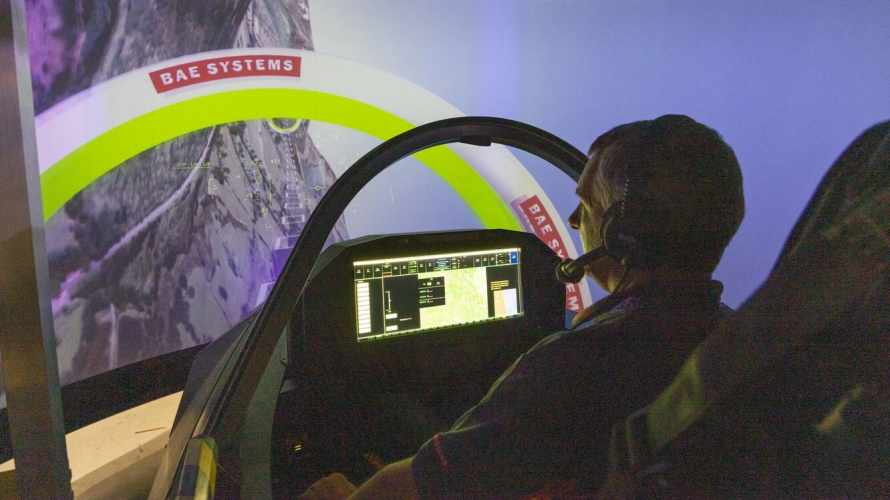
Tempest demonstrator cockpit simulator:
https://www.baesystems.com/en-uk/pr...utm_term=42a8be38-1953-4f62-963d-96003bf42412
https://www.baesystems.com/en-uk/pr...utm_term=42a8be38-1953-4f62-963d-96003bf42412
Attachments
Last edited:
FighterJock
ACCESS: Above Top Secret
- Joined
- 29 October 2007
- Messages
- 7,227
- Reaction score
- 8,538
Wonder if that wide-angle screen will end up in the production GCAP/Tempest raptor82?

TorpedoJ
ACCESS: Secret
- Joined
- 11 October 2023
- Messages
- 433
- Reaction score
- 865
Which FCAS are you talking about?likely the opportunities for later mergers between GCAP and FCAS would increase thanks to this, maybe the interoperability with FCAS supporting systems (not the planes necessarily) would be increased and would allow more companies to collaborate and the various members to work together
The RAF system of loyal wingmen or the Franco-German 6th Gen fighter, which is usually referred to as SCAF?
Don't see why not. It isn't any bigger than the F-35's or the screen on the Blk 3 SH.Wonder if that wide-angle screen will end up in the production GCAP/Tempest raptor82?

Ares
Man from Far East
- Joined
- 15 October 2018
- Messages
- 116
- Reaction score
- 577
The cockpit simulator of the Tempest demonstrator:
https://www.baesystems.com/en-uk/pr...utm_term=42a8be38-1953-4f62-963d-96003bf42412
The sequel looks amazing.
Wonder if that wide-angle screen will end up in the production GCAP/Tempest raptor82?
Most definitely, since Japan is also making it. Cockpit screen would be necessary to complement the AR helmet.
![[1920x1080] vtime=[8_00], take=[2025-06-04 13.25.33].png](https://www.secretprojects.co.uk/data/attachments/308/308030-74a1d77bd8712bb5b7e3ce342f1aa262.jpg "[1920x1080] vtime=[8_00], take=[2025-06-04 13.25.33].png")
![[1920x1080] vtime=[7_54], take=[2025-06-04 13.25.23].png](https://www.secretprojects.co.uk/data/attachments/308/308031-8225deed092cb3a58b3292bdad53c9d2.jpg "[1920x1080] vtime=[7_54], take=[2025-06-04 13.25.23].png")
ItalianAFDFail
ACCESS: Confidential
- Joined
- 10 January 2021
- Messages
- 86
- Reaction score
- 147
In this case i was referring to SCAF and the program around it to make a system of systems, so support infrastructure, drones and the like, not the plane but the parts that connect to it, sorry for being vagueWhich FCAS are you talking about?
The RAF system of loyal wingmen or the Franco-German 6th Gen fighter, which is usually referred to as SCAF?
- Joined
- 23 August 2011
- Messages
- 2,545
- Reaction score
- 8,393
Don't see why not. It isn't any bigger than the F-35's or the screen on the Blk 3 SH.
BAE already have a large area display that will be integrated into Typhoon for ECRS2 and 'Tranche 5'. However, that is available today...its likely over the next 10 years the technology will move on...
I'd be pretty unimpressed if it didn't move on. Hopefully they don't go the Typhoon voice thing again...BAE already have a large area display that will be integrated into Typhoon for ECRS2 and 'Tranche 5'. However, that is available today...its likely over the next 10 years the technology will move on...
FighterJock
ACCESS: Above Top Secret
- Joined
- 29 October 2007
- Messages
- 7,227
- Reaction score
- 8,538
Same here Ozair, I would have thought that the technology would move on since it is going to be a decade between the display that is installed on the Typhoon Tranche 5 and the GCAP/Tempest.
Same here Ozair, I would have thought that the technology would move on since it is going to be a decade between the display that is installed on the Typhoon Tranche 5 and the GCAP/Tempest.
I think the question that's being missed is what problems are pilots facing with the current setup that would require spending more time and money on innovating upgrades for the display.
If the solution can be found in software rather than hardware that doesn't exist yet then I'd imagine that being the way forward especially if they want to meet the 2035 IOC date.
- Joined
- 28 January 2008
- Messages
- 1,645
- Reaction score
- 4,210
There are a lot of players on this program and I think maybe too many and there could be potential problems with tech sharing, work split, sometimes its bad enough with just to players, we'll see.

Regio Ammiraglio
ACCESS: Confidential
- Joined
- 13 October 2022
- Messages
- 97
- Reaction score
- 365

Quite an optimistic read indeed. Mostly nothing new, but I found a few things interesting.
Firstly, there were two points which worried me quite a lot, which were these :
What remains an issue, at least for the time being, seems the financial engagement; Italy allocated 8.9 billion Euro to the GCAP, however this is on a 25 years span, which means slightly over 350 million Euro per year as average, Japan having invested 800 million in 2025, more than the double. This might affect industry, the three partners being considered equal, but in practice systems will be selected according to the “Best Champion” principle, therefore from a national industry standpoint, a strong investment in the early phase is mandatory to develop those technologies that will allow Italian industry to play a key role in the programme.
One of the founding principles of the three-nations partnership is that GCAP will provide all partners with Freedom of Action and Freedom of Modification, which was clearly not the case with the F-35, that the UK, Italy and Japan all have in line.
That to me sounded like a recipe for repeat of what happened during NBMR; losers of the "Best Champion" principle pursuing their national systems instead of bowing in for the winner of the competiton, leading to a "tri-national" GCAP that is tri-national only in its name. Though fortunately, reading further, it seems like this probably wouldn't happen.
The Leonardo representative underlined the radical differences between the GCAP model and the Eurofighter and F-35 ones. “It is not a model with a strong prime like the F35, where there is a recognized industrial leader that outsources the work to junior players and maintains a unitary technical leadership, and it is not even a consortium model like those of the Tornado or the Eurofighter.
The new industrial venture will be equally owned by the three partner leading companies, will be headquartered in Reading, UK, “and the national elements that will work operationally on the design and development of the system will be fully owned by the joint venture, therefore the joint venture will in-house technical and technological forces to design the aircraft,” Zoff pointed out. “So, the JV has full sovereignty and technological mastery over the product, which has the Intellectual Property Rights, therefore the technological ownership of what it does, which is obviously divided between the three nations, and it is the technical-physical mechanism that guarantees what is described as Freedom of Action,” he added.
So the "Best Champion" solutions will be equally owned by three countries, regardless of the origin of said solution. Quite a bold commitment from every partner nations, indeed. Such scheme wouldn't work if any of the member states perceives that there's a significant technological disparity, which fortunatley doesn't exist between these three countries. They have relative strengths in specific sectors (gas turbines for the UK, for example) but I would say there's an overall equilibrium.
Though as the first quote points out, being chosen as the "Best Champion" would garauntee key roles in the joint development, I don't think the process of choosing the "Best Champion" will be a game fair and square. They probably will be political/diplomatic considerations affecting the selection of "Best Champion", though I simply hope that they will keep that to the minimum. Wishful thinking, I know, but in urgent times like now, perhaps it's possible.
Any news on the demonstrator's current status?
https://www.flightglobal.com/defenc...eneration-fighter-demonstrator/163108.article
Just a simple programme update, nothing really interesting in particular, but still nice to read.

takacosta
ACCESS: Confidential
- Joined
- 21 January 2025
- Messages
- 88
- Reaction score
- 334
Osaka University accelerates the development of heat-resistant material components for aircraft engines using a widely adopted manufacturing method.
Isn't it possible to produce single-crystal nickel with 3D printing as well, potentially reducing the number of processing steps?
https://resou.osaka-u.ac.jp/ja/research/2022/20220622_1
Isn't it possible to produce single-crystal nickel with 3D printing as well, potentially reducing the number of processing steps?
https://resou.osaka-u.ac.jp/ja/research/2022/20220622_1
- Joined
- 15 July 2007
- Messages
- 5,727
- Reaction score
- 6,303
Errr...Isn't it possible to produce single-crystal nickel with 3D printing as well, potentially reducing the number of processing steps?
Crystal formation traditionally is via the metal cooling from a high temperature.
You might be able to print the shape, and then heat it up enough. But specifics about the metal will dictate if it holds to that shape under those conditions and through the cooling process.
Last edited:
- Joined
- 15 July 2007
- Messages
- 5,727
- Reaction score
- 6,303
Currently 40m long !???
Italy may provide a trainer and UCAV?
https://www.defensenews.com/global/...trainers-could-take-gcap-drone-role-ceo-says/
Italy may provide a trainer and UCAV?
https://www.defensenews.com/global/...trainers-could-take-gcap-drone-role-ceo-says/
LightningFan1959
ACCESS: Confidential
- Joined
- 11 May 2020
- Messages
- 71
- Reaction score
- 159
I would think that he might perhaps be talking about wingspan, a 40m long plane would be 1.35x the length of Vulcan (and possibly even longer than some of the stretched Victor proposals) and have an even greater wingspan.Currently 40m long !???
Italy may provide a trainer and UCAV?
https://www.defensenews.com/global/...trainers-could-take-gcap-drone-role-ceo-says/
- Joined
- 23 August 2011
- Messages
- 2,545
- Reaction score
- 8,393

Kiltonge
Greetings Earthling
- Joined
- 24 January 2013
- Messages
- 885
- Reaction score
- 2,052
More likely to be 14 metres and misheard; would make it a few centimetres wider than an F-22.40 meters is probably a typo or a misunderstanding by the reporter.
If it were really 40 meters, even twin 20-ton-class engines wouldn't make it feasible.
FighterJock
ACCESS: Above Top Secret
- Joined
- 29 October 2007
- Messages
- 7,227
- Reaction score
- 8,538
Give me Tempest any day Hood, Edgewing sounds as if they did not know what to call the program.
WatcherZero
ACCESS: Top Secret
- Joined
- 22 May 2023
- Messages
- 1,146
- Reaction score
- 2,974


- Joined
- 11 February 2007
- Messages
- 4,132
- Reaction score
- 8,871
It's either one that doesn't translate to anything egregious or have unfortunate political or social connotations in the UK, Italy or Japan; or something they paid a PR firm a lot of money to make up. Probably both.Edgewing? What kind of name is that???
Remember, what we end up calling the aircraft isn't necessarily the same as what the Italians or Japanese will end up calling it, so variations on Tempest were probably a non-starter.


- Joined
- 6 September 2006
- Messages
- 5,316
- Reaction score
- 11,544
Well it's not even an aircraft name, it's the joint company name. SEPECAT, Panavia, Eurofighter - not entirely snappy names but they had a certain technocratic charm and Eurofighter was to the point.Remember, what we end up calling the aircraft isn't necessarily the same as what the Italians or Japanese will end up calling it, so variations on Tempest were probably a non-starter.
Edgewing Tempest or Edgewing Shinden or Edgewing Falco doesn't really have the same ring to it.
Similar threads
-
BAE Systems CAFD (Combat Air Flying Demonstrator)
- Started by Jackonicko
- Replies: 122
-

-
-
 MBDA Future Cruise / Anti-Ship Weapon (FC / ASW)
- Started by Triton
- Replies: 396
-
Leonardo Britecloud and associated developments
- Started by timmymagic
- Replies: 9