
You are using an out of date browser. It may not display this or other websites correctly.
You should upgrade or use an alternative browser.
You should upgrade or use an alternative browser.
Theodor Hopfner/Hirtenberg Aircraft, Prototypes and Projects
- Thread starter Maveric
- Start date


- Joined
- 11 March 2006
- Messages
- 8,538
- Reaction score
- 5,022
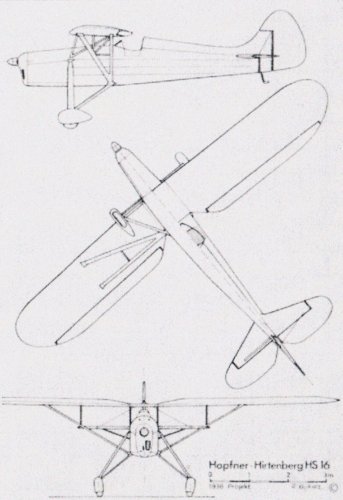
Triggered by the book "Luftwaffenstory 1935 - 1939" by Karl Ries, which I recently
got second-hand, I split those types in this thread here from the topic in the designations
section.
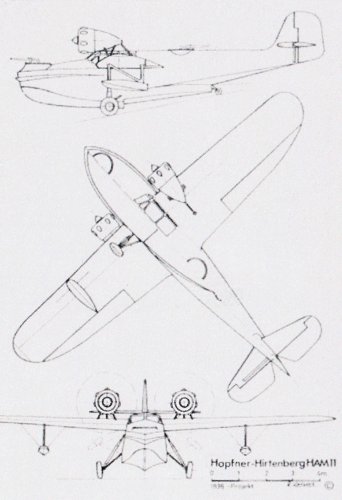
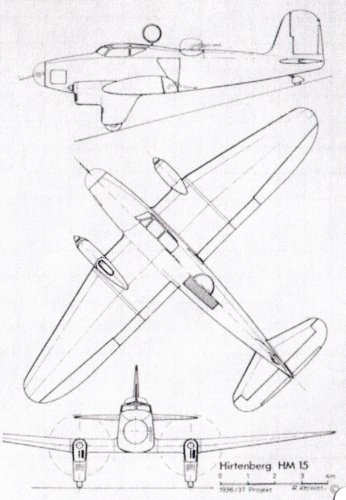
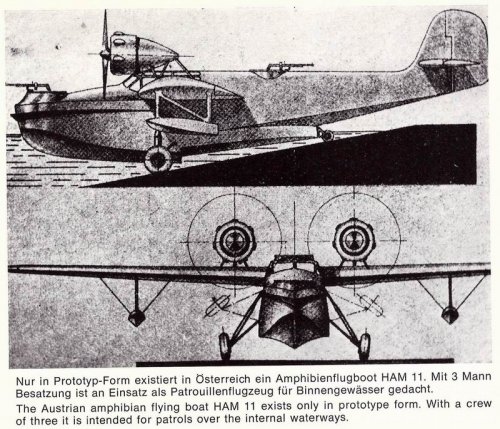
As an addition two drawings of that book, the HM 15, in a slightly different form, than shown
above, and the HAM 11:
got second-hand, I split those types in this thread here from the topic in the designations
section.
As an addition two drawings of that book, the HM 15, in a slightly different form, than shown
above, and the HAM 11:
Attachments

- Joined
- 26 May 2006
- Messages
- 38,286
- Reaction score
- 20,424
From old site on Net,
Under the terms of the 1919 Treaty of Versailles, a ban on aircraft production applied not only to Germany but also to countries such as Hungary and Austria. Initially, it applied to all aircraft, but over time, its provisions were relaxed, prohibiting only the construction of military aircraft and civilian aircraft that could be quickly converted into military aircraft. However, efforts were made to circumvent these restrictions, and in 1931, Austria, for example, unofficially began laying the foundations for its future military aviation.
In 1935, the large Austrian armaments company Hirtenberg decided to expand into aircraft production and purchased the small, near-bankrupt Hopfner Flugzeugbau aircraft manufacturer, located in Aspern, near Vienna. The company was known for building several types of relatively successful trainer and sports aircraft, the HS-8, HS-9, and HS-10, as well as the combat aircraft HS-13. The former owner of the purchased company, Theodor Hopfner, became chief designer and director of the new aircraft construction department (Abteilung Flugzeugbau) at Hirtenberg.
The first passenger aircraft under the new company's banner was the high-wing HV-12. However, greater hopes were pinned on the modern, cantilever low-wing HV-15 , designed by Theo Hopfner back in 1935. The aircraft featured a mixed metal and wood construction (wooden wings, metal fuselage) with plywood and fabric covering, a richly glazed cockpit, and a retractable landing gear with a tail wheel. Extensive flight and navigation equipment enabled night flights. The prototype—with civilian registration OE-POH—first flew in 1936. The aircraft was powered by the most powerful engines available in Austria at that time - the Siemens Sh-14a radial engines - although the production machines were to be equipped with the more powerful De Havilland "Gipsy Six" II with an output of 150 kW (204 hp) or Renault "Bengali Six" with an output of 162 kW (220 hp), driving variable-pitch propellers.
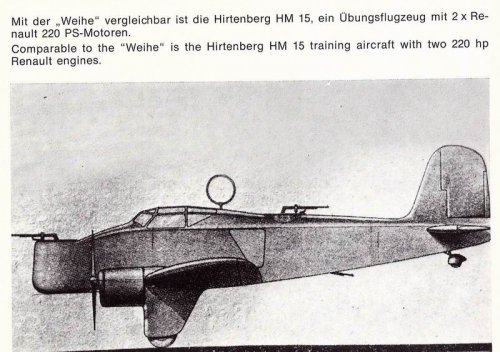
The HV-15 was never mass-produced. The single prototype flew briefly in the Austrian Air Force, where it received the new designation HM-15 . The aircraft was slightly redesigned, installing the previously planned "Bengali Six" engines, expanded navigation and radio equipment, and mounts and hooks enabling the aircraft to be armed with two or three mobile machine guns (including one in the floor at the rear of the fuselage), as well as installing under-wing bomb ejectors and a bombsight. The aircraft was intended to be used for training crews of multi-engine bombers, particularly bombardiers, navigators, and pilots (including in night and blind flights). If necessary, it could also be used as a light bomber. After all the modifications, the HM-15 proved to be 250-300 kg heavier than the civilian version, but thanks to its more powerful engines, its performance—with the exception of range—was slightly better than the HV-15.
After the annexation of Austria in March 1938, the Germans reorganized the Austrian aviation industry, establishing Wiener-Neustädter Flugzeugwerke GmbH (known by the abbreviation WNF) in the city of Wiener-Neustadt, incorporating both the Hirtenberg works and, among others, the small local company Wiener-Neustädter Flughafen-Betriebs GmbH (known for, among other things, the production of the Lampich NL 22 light training and touring biplane). At this time, the designation of the Hirtenberg HV-15/HM-15 was changed to Wn 15 (the designation WNF 15 is also sometimes encountered ). Its fate after the annexation of Austria is not fully known, other than that it was taken over by the Germans. It is known, however, that in 1942 or 1943 the Wn 15 aircraft was sold or donated by the Germans to the Croatian Air Force, where it was used for transport and liaison tasks, marked with the tactical (registration) number 2101
Under the terms of the 1919 Treaty of Versailles, a ban on aircraft production applied not only to Germany but also to countries such as Hungary and Austria. Initially, it applied to all aircraft, but over time, its provisions were relaxed, prohibiting only the construction of military aircraft and civilian aircraft that could be quickly converted into military aircraft. However, efforts were made to circumvent these restrictions, and in 1931, Austria, for example, unofficially began laying the foundations for its future military aviation.
In 1935, the large Austrian armaments company Hirtenberg decided to expand into aircraft production and purchased the small, near-bankrupt Hopfner Flugzeugbau aircraft manufacturer, located in Aspern, near Vienna. The company was known for building several types of relatively successful trainer and sports aircraft, the HS-8, HS-9, and HS-10, as well as the combat aircraft HS-13. The former owner of the purchased company, Theodor Hopfner, became chief designer and director of the new aircraft construction department (Abteilung Flugzeugbau) at Hirtenberg.
The first passenger aircraft under the new company's banner was the high-wing HV-12. However, greater hopes were pinned on the modern, cantilever low-wing HV-15 , designed by Theo Hopfner back in 1935. The aircraft featured a mixed metal and wood construction (wooden wings, metal fuselage) with plywood and fabric covering, a richly glazed cockpit, and a retractable landing gear with a tail wheel. Extensive flight and navigation equipment enabled night flights. The prototype—with civilian registration OE-POH—first flew in 1936. The aircraft was powered by the most powerful engines available in Austria at that time - the Siemens Sh-14a radial engines - although the production machines were to be equipped with the more powerful De Havilland "Gipsy Six" II with an output of 150 kW (204 hp) or Renault "Bengali Six" with an output of 162 kW (220 hp), driving variable-pitch propellers.
The HV-15 was never mass-produced. The single prototype flew briefly in the Austrian Air Force, where it received the new designation HM-15 . The aircraft was slightly redesigned, installing the previously planned "Bengali Six" engines, expanded navigation and radio equipment, and mounts and hooks enabling the aircraft to be armed with two or three mobile machine guns (including one in the floor at the rear of the fuselage), as well as installing under-wing bomb ejectors and a bombsight. The aircraft was intended to be used for training crews of multi-engine bombers, particularly bombardiers, navigators, and pilots (including in night and blind flights). If necessary, it could also be used as a light bomber. After all the modifications, the HM-15 proved to be 250-300 kg heavier than the civilian version, but thanks to its more powerful engines, its performance—with the exception of range—was slightly better than the HV-15.
After the annexation of Austria in March 1938, the Germans reorganized the Austrian aviation industry, establishing Wiener-Neustädter Flugzeugwerke GmbH (known by the abbreviation WNF) in the city of Wiener-Neustadt, incorporating both the Hirtenberg works and, among others, the small local company Wiener-Neustädter Flughafen-Betriebs GmbH (known for, among other things, the production of the Lampich NL 22 light training and touring biplane). At this time, the designation of the Hirtenberg HV-15/HM-15 was changed to Wn 15 (the designation WNF 15 is also sometimes encountered ). Its fate after the annexation of Austria is not fully known, other than that it was taken over by the Germans. It is known, however, that in 1942 or 1943 the Wn 15 aircraft was sold or donated by the Germans to the Croatian Air Force, where it was used for transport and liaison tasks, marked with the tactical (registration) number 2101
Similar threads
-
-
 Theodor Laufer's « VE-RO » or VErtical ROtor Aircraft
- Started by Jemiba
- Replies: 6
-
List of reference books by period or manufacturer: Austrian aircraft
- Started by c460
- Replies: 2
-

-
Siebel Flugzeugwerke Prototypes and Projects
- Started by hesham
- Replies: 34