

Valodyana_80U
I AM WATCHING YOU
- Joined
- 14 May 2025
- Messages
- 54
- Reaction score
- 99
This is a topic about airborne prenatal education.
But honestly, I’m tired of seeing posts on this forum comparing missile ranges in the Russia-Ukraine conflict. Since everyone seems so keen on discussing real-world missile range, let me walk you through what missile range really means, with the help of some diagrams.
Generally speaking, the so-called "missile range" we often refer to is actually the launch distance, not the missile's true flight range. That's because when a missile is launched, it gains not only speed from its own rocket motor but also initial velocity from the launch aircraft. During flight, it's affected by local air density, and both the missile and the target are in motion. So for a pilot, the launch distance is far more significant than the static ground warfare concept of range.
For air-to-air missiles, when we talk about range, we usually mean launch distance, not ground combat range.
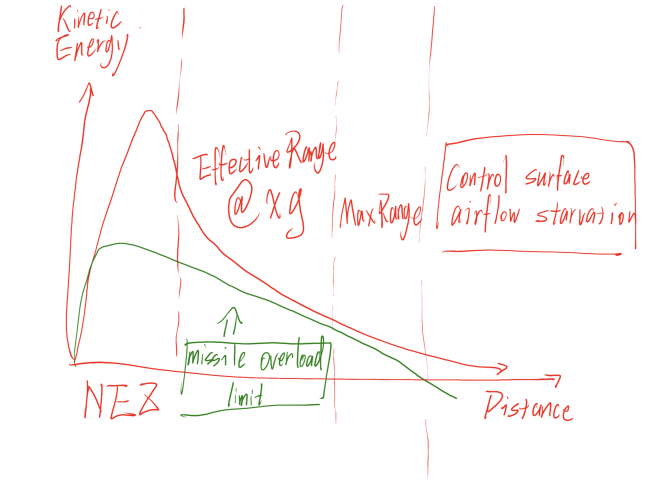
This also means that "range" can be classified into different levels depending on conditions.
Generally, we can distinguish:
· Maximum range
· Effective range against high‑g maneuvering targets / against targets under specific conditions
· No‑escape zone (NEZ)
Maximum range
This is the range at which the missile flies until its aerodynamic control surfaces become ineffective. Although it struggles against maneuvering targets, this range is still quite meaningful. For example, in the 5-7 air battle between India and Pakistan, the PL‑15 shot down enemy aircraft within this distance range.
Effective range against high‑g maneuvering targets / against targets under specific conditions
As the name suggests, this range is more relevant to actual combat. It describes the distance at which a missile can engage an aircraft under certain conditions. This standard has its own particularities and varies greatly depending on the assumed adversary. Different countries also use different criteria. For instance, the UK evaluated its imported AIM‑120 missiles by testing the range at which they could hit a target that, upon detecting the missile at a specified distance, immediately turned around with a constant high load factor.
Under more stringent conditions, this effective range can be considered equivalent to the NEZ.
No‑escape zone (NEZ)
The NEZ has the following characteristics:
· Within this distance, even if the aircraft turns around immediately, it cannot escape the missile.
· Except for a few missiles, the aircraft cannot evade the missile through maneuvering within this zone.
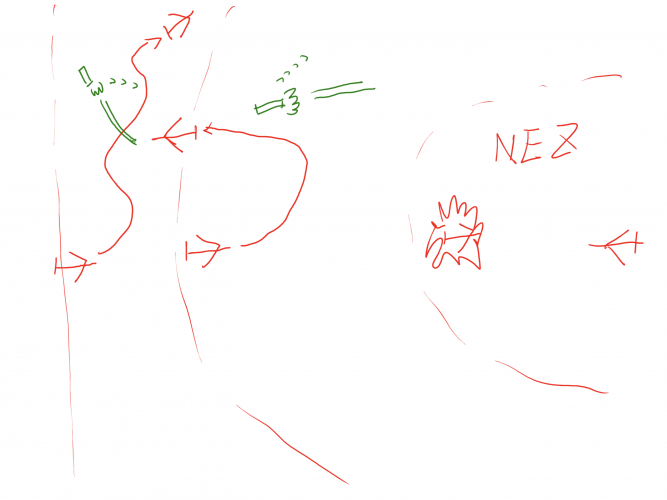
The diagram below illustrates the specific meaning of these ranges.
· At maximum range, the aircraft can shake off the missile by executing a special high‑g maneuver.
· Within the effective range, the aircraft can perform a high‑g turn‑away, causing the missile to be unable to catch up.
· Inside the NEZ, the aircraft must use countermeasures such as decoy flares, beaming (three‑nine line) maneuvers, and electronic jamming to evade the missile; otherwise, it will be shot down.
Usually, when we see missile ranges reported in the news, unless specified otherwise, they refer to either the maximum range or the effective range against low‑g targets.
[End]
But honestly, I’m tired of seeing posts on this forum comparing missile ranges in the Russia-Ukraine conflict. Since everyone seems so keen on discussing real-world missile range, let me walk you through what missile range really means, with the help of some diagrams.
Generally speaking, the so-called "missile range" we often refer to is actually the launch distance, not the missile's true flight range. That's because when a missile is launched, it gains not only speed from its own rocket motor but also initial velocity from the launch aircraft. During flight, it's affected by local air density, and both the missile and the target are in motion. So for a pilot, the launch distance is far more significant than the static ground warfare concept of range.
For air-to-air missiles, when we talk about range, we usually mean launch distance, not ground combat range.
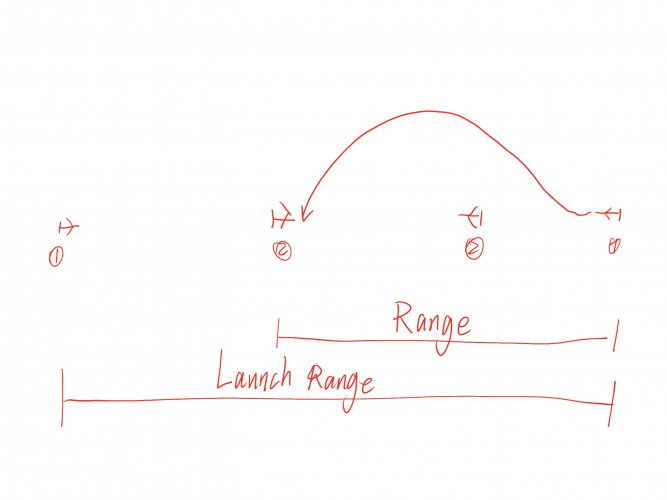
This also means that "range" can be classified into different levels depending on conditions.
Generally, we can distinguish:
· Maximum range
· Effective range against high‑g maneuvering targets / against targets under specific conditions
· No‑escape zone (NEZ)
Maximum range
This is the range at which the missile flies until its aerodynamic control surfaces become ineffective. Although it struggles against maneuvering targets, this range is still quite meaningful. For example, in the 5-7 air battle between India and Pakistan, the PL‑15 shot down enemy aircraft within this distance range.
Effective range against high‑g maneuvering targets / against targets under specific conditions
As the name suggests, this range is more relevant to actual combat. It describes the distance at which a missile can engage an aircraft under certain conditions. This standard has its own particularities and varies greatly depending on the assumed adversary. Different countries also use different criteria. For instance, the UK evaluated its imported AIM‑120 missiles by testing the range at which they could hit a target that, upon detecting the missile at a specified distance, immediately turned around with a constant high load factor.
Under more stringent conditions, this effective range can be considered equivalent to the NEZ.
No‑escape zone (NEZ)
The NEZ has the following characteristics:
· Within this distance, even if the aircraft turns around immediately, it cannot escape the missile.
· Except for a few missiles, the aircraft cannot evade the missile through maneuvering within this zone.
The diagram below illustrates the specific meaning of these ranges.
· At maximum range, the aircraft can shake off the missile by executing a special high‑g maneuver.
· Within the effective range, the aircraft can perform a high‑g turn‑away, causing the missile to be unable to catch up.
· Inside the NEZ, the aircraft must use countermeasures such as decoy flares, beaming (three‑nine line) maneuvers, and electronic jamming to evade the missile; otherwise, it will be shot down.
Usually, when we see missile ranges reported in the news, unless specified otherwise, they refer to either the maximum range or the effective range against low‑g targets.
[End]


