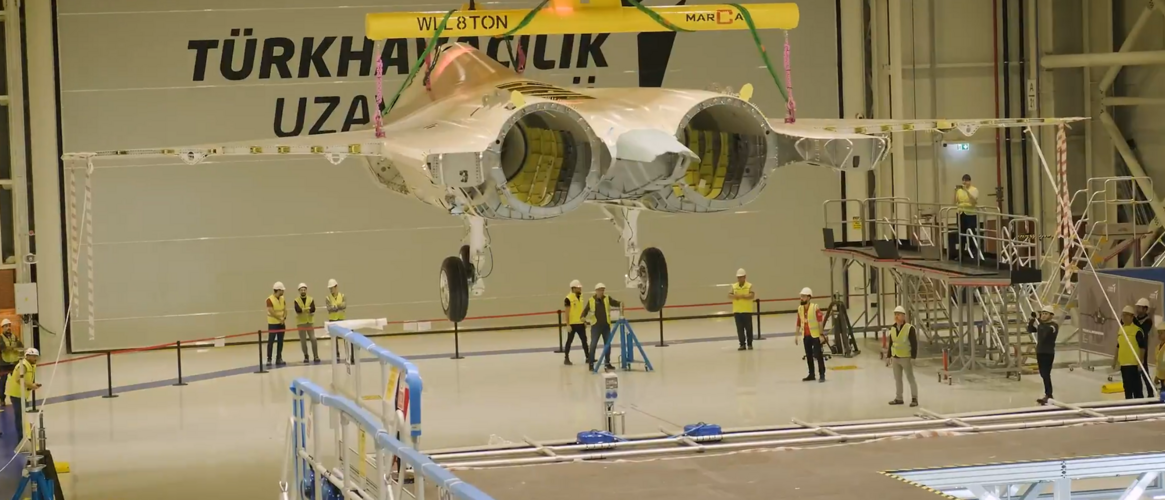
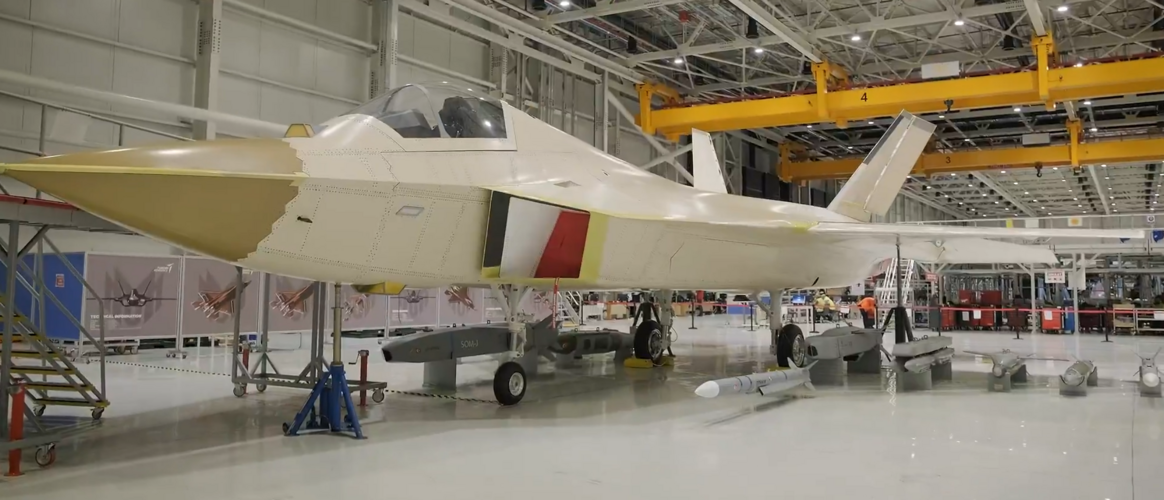
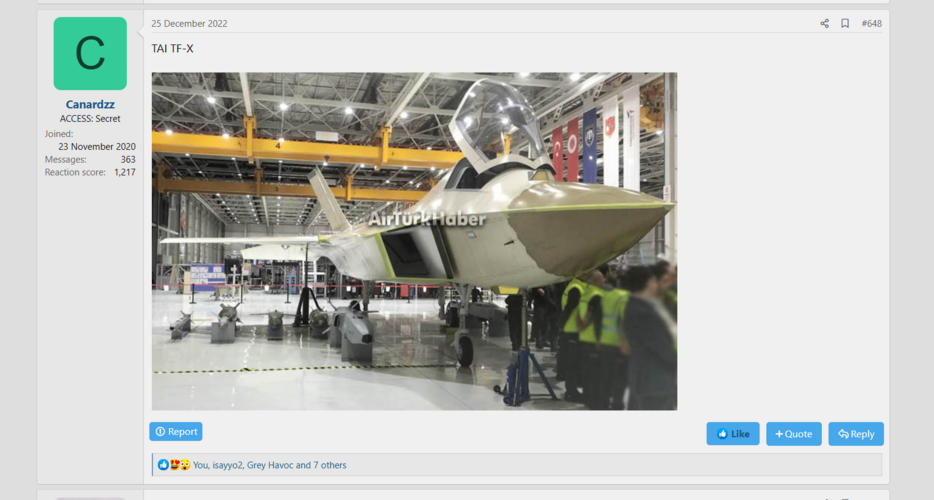
What would be the configuration of the TAI KAAM Engine?
TAI KAAN is to a certain extent bound/limited by the size of the F-110, as it will fly at least as Block 0 and 1.
I assume that the design will be based on the F-110, with modern approaches in the first revision as an Engine, it will probably be designed more moderately as an engine, but with fewer mechanically moving parts than F-110 and a little more thrust through better and modern design e.g. my example 6-8 years development time would be realistic if TUSAS, TEI and Co have been working on it since 2018 and the design does not differ significantly from the F-110.

For example:
View attachment 756911
4 turbine stages? Congratz, you designed the worlds first Turbofanshaft :D

Unless you are trying to design an engine for a VTOL like the F-35B with a liftfan, even then 3 turbine stages should be enough.
 
4 turbine stages? Congratz, you designed the worlds first Turbofanshaft :D

Unless you are trying to design an engine for a VTOL like the F-35B with a liftfan, even then 3 turbine stages should be enough.
Why? I am not an expert, so I say this with great reservation?
The 1 low and 1 high pressure turbine of the F-110 has the disadvantage that the pressure is not evenly distributed and the wear is correspondingly higher.
A 2-stage system for high and low pressure turbines with a pressure ratio of 25:1 or 30:1 would allow for a better overall load and longer engine life.
It also eliminates one main fan to 2 and one compressor to 8 instead of 9, making the engine easier and cheaper to maintain. The weight will also be less than the F-110
But you have to take into account that the energy recovery would be slightly lower compared to the F-110, but this could be further compensated by the more modern approach and design optimization.
Finally, it would be 8-10% more powerful than the F-110 129.

Again I say this with great reservation, I am neither an engine engineer nor a pilot.
 
Why? I am not an expert, so I say this with great reservation?
The 1 low and 1 high pressure turbine of the F-110 has the disadvantage that the pressure is not evenly distributed and the wear is correspondingly higher.
A 2-stage system for high and low pressure turbines with a pressure ratio of 25:1 or 30:1 would allow for a better overall load and longer engine life.
It also eliminates one main fan to 2 and one compressor to 8 instead of 9, making the engine easier and cheaper to maintain. The weight will also be less than the F-110
But you have to take into account that the energy recovery would be slightly lower compared to the F-110, but this could be further compensated by the more modern approach and design optimization.
Finally, it would be 8-10% more powerful than the F-110 129.

Again I say this with great reservation, I am neither an engine engineer nor a pilot.
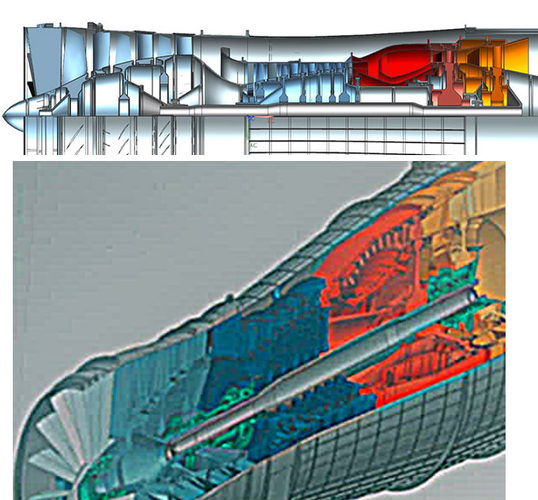
You are trying too hard. TRMotor has already shared images of the engine. It has a 3-6-2 configuration. Actually a 3-6.5-2 because there is a small stage that pushes 'cool' air into the HPT stage.

Top old image, bottom newer image with enhanced sharpness

1737475182433.png
 
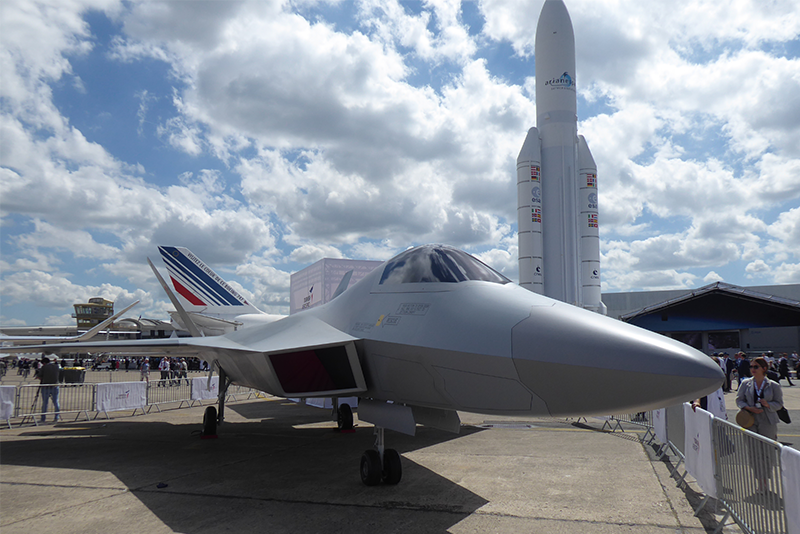
Is that the look of prototype 2? If so, indeed it looks significantly different from 1st prototype
The model at the center? If so, no; that is only a scaled model of the mock-up that was revealed at Le Bourget in 2018. Hence it is quite dated.

TFX-1.png


Meanwhile, here's the latest pic of P0/GTU-0:

GidPUE9XsAItmcm
 
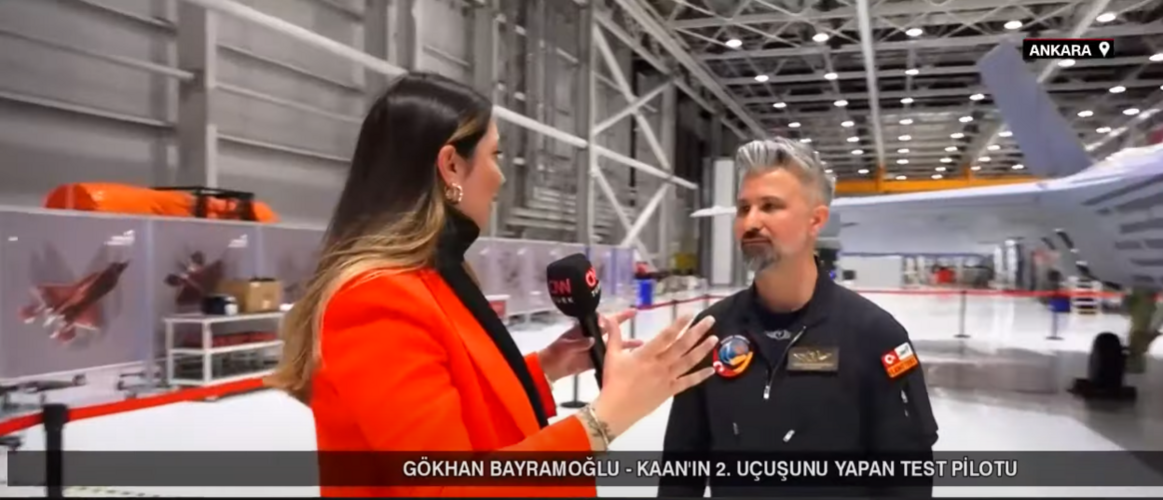
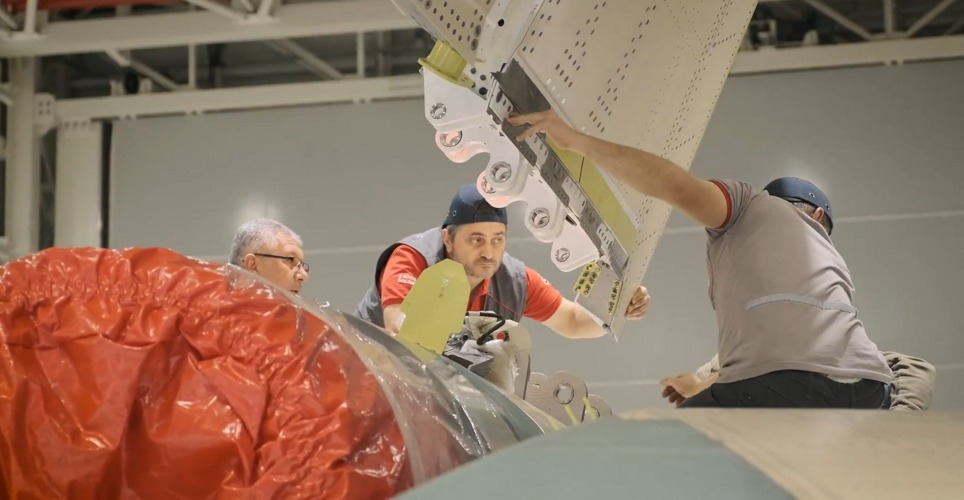
This tour given to journalist around 2 weeks ago; looks like a fresh engine on the side covered by an orange tarp - there were speculation around TF-36000 1:1 scale mock-up being test fitted to KAAN P-0 - most likely GE F110 engine

View attachment 757839
View: https://www.youtube.com/watch?v=9tLlFxitMpM
Yep, that's a 110 for sure. In fact, there were even more clear images of it in an another forum a while back revealing the fan and whatnot.

-----

So, I've found the photo and unfortunately the fan has a cover on it so you can't see it but all that detail in the aft section of the engine indicates that this is in fact an F110.

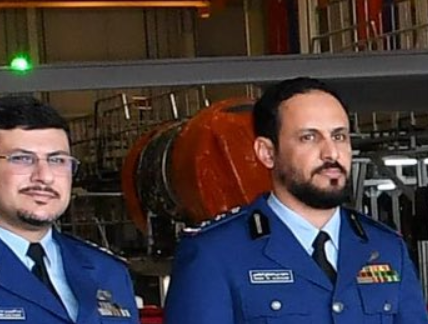
This was taken during the Saudi visit:

1000017070.png
 
A carrier based variant is going to have a heavier airframe which would compromise its performance unless it also has uprated engines. too
 
A carrier based variant is going to have a heavier airframe which would compromise its performance unless it also has uprated engines. too
Maybe if they moved those damn intakes behind the cockpit and got rid of the side bays they could spend that saved weight on beefier landing gear and carrier strengthening.
 
Well they said expect the future iterations to be much different, ala YF-22 to F-22.

No way they got it right straight away with the roll out bird.

But it makes no sense just for a projected naval variant to do it once again
 
Last edited:
https://turdef.com/article/a-recap-for-the-first-anniversary-of-kaan-s-maiden-flight
""Shortly before the second flight, TUSAŞ announced that the second prototype P1 would make its maiden flight at the end of 2025. The new prototype incorporates design changes, including size management.

The new design is notably slightly smaller, with reduced length and wingspan. TUSAŞ has published these new specifications as 20.3 m and 13.4 m, respectively, which are smaller than the values of P0. The height has also been reduced from six meters to five meters.

New test facilities will also be built for the future tests of the prototyping phase:

1-Electromagnetic compatibility in a fully anechoic environment,

2-Large-scale structural strength and fatigue test facilities,

3-Engine/APU integration and qualification test setups,

4-Hydraulic, fuel, electrical, pneumatic, and avionics integration and qualification test setups,

5-Lightning strike safety testing,

6-Climate system design and integration laboratories,

7-Near-field radar cross-section measurement,

8-Development test centres for indigenous components (e.g., avionics computers, helmets, generators, pumps, landing gear, hooks, gearboxes, oxygen/nitrogen systems, etc.).

More prototypes will be built for said tests, with the third prototype P2 under aassembly.

Aside from the prototype phase developments, TUSAŞ is drawing potential new routes for KAAN. One of these routes came to light with the Turkish Navy Design Project Office Manager Captain Hakan Uçar’s recent interview with the Sabah newspaper regarding the MUGEM aircraft carrier.

Uçar stated that the Design Project Office and TUSAŞ are discussing a possible naval variant of KAAN for use onboard the future aircraft carrier, which is planned to use an array of unmanned and manned platforms (Bayraktar TB3, Anka-III, Hürjet LCA, Kızılelma, helicopters, etc.).

To sum everything up, the first year has been fruitful for KAAN; with the first prototype close to its third flight, the second prototype P1 being fleshed out towards the end of 2024, the third prototype entering production, and discussions for a naval version to be used onboard the MUGEM aircraft carrier taking place.""

 

Full view

Screenshot 2025-02-21 134836.png


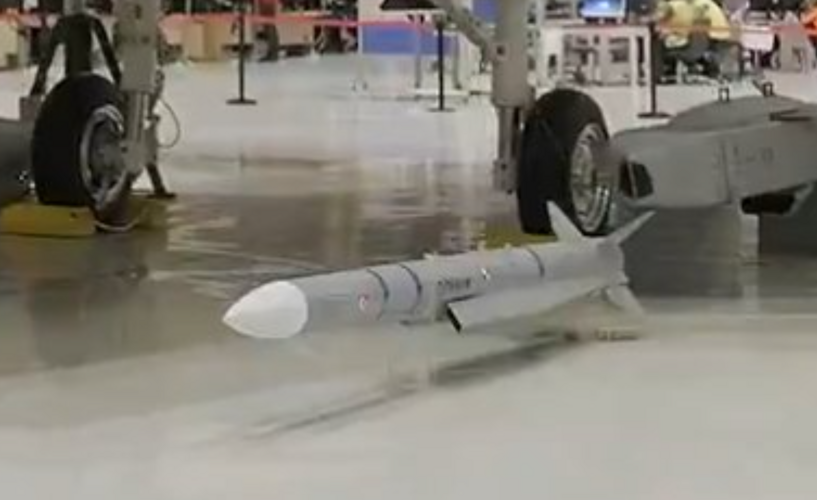
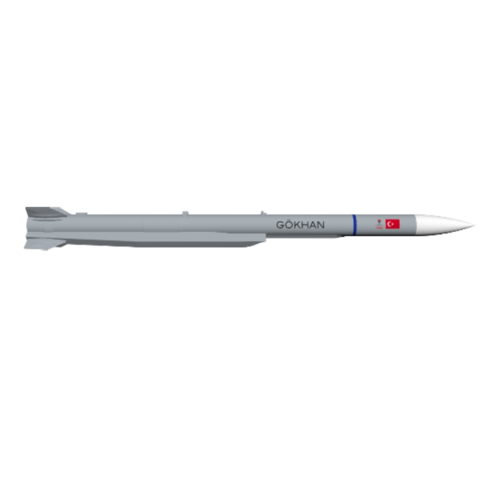
For those of you who remember, this presentation with mock-ups was made back in December 2022 to a delegation of officials from the Gulf. This means that they hid the mock-up of the new BVRAAM from us for two years... :mad:

Screenshot 2025-02-21 135907.png
 
Last edited:
Full view

View attachment 760383


For those of you who remember, this presentation with mock-ups was made back in December 2022 to a delegation of officials from the Gulf. This means that they hid the mock-up of the new BVRAAM from us for two years... :mad:

View attachment 760385

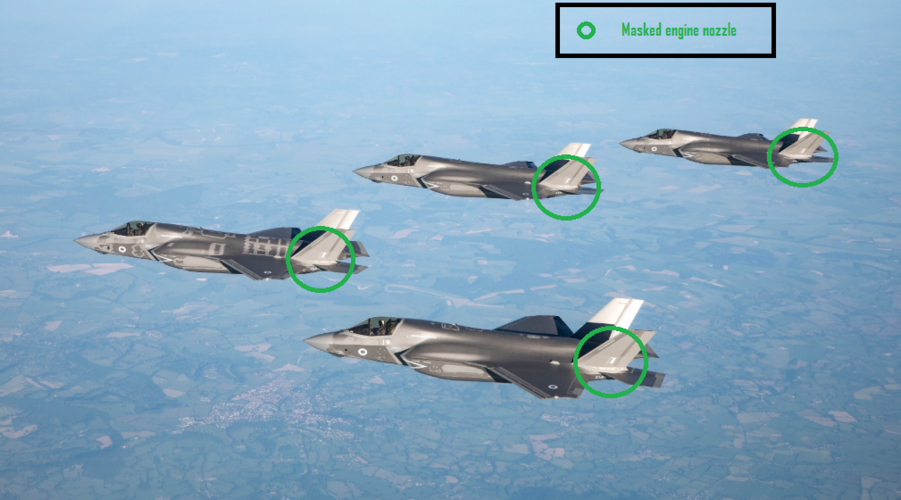
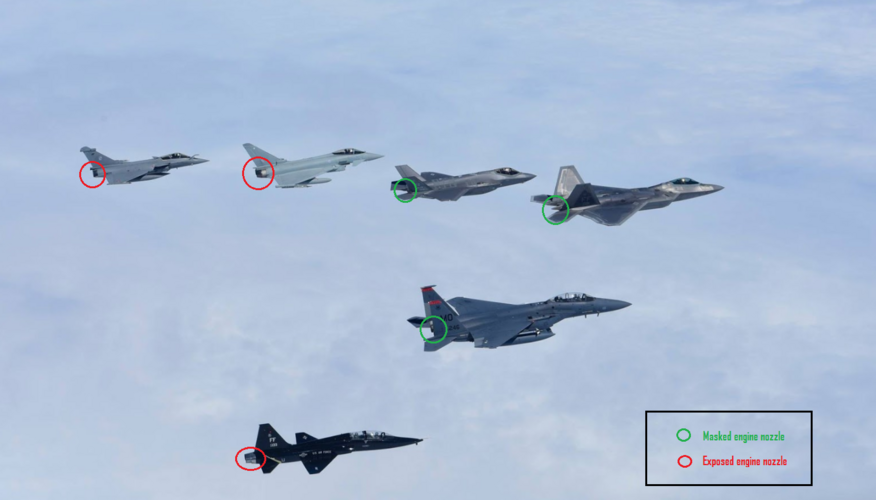
I just realized one unique characteristic of KAAN not seen on other fifth gen fighter aircraft — the vertical slabs are not mounted on booms in the tail section but on top of the engine nacelles. Pretty sure someone else might have commented on this in this thread but I’m not digging through 3500 posts…
 
I just realized one unique characteristic of KAAN not seen on other fifth gen fighter aircraft — the vertical slabs are not mounted on booms in the tail section but on top of the engine nacelles. Pretty sure someone else might have commented on this in this thread but I’m not digging through 3500 posts…
Yeah I hate this detail...

I'm sure that it wasn't purely an aesthetical design choice and that they had to make those compromises but I hope they can mask the engines in the production version for better IR/Radar Low Observability.

 
I just realized one unique characteristic of KAAN not seen on other fifth gen fighter aircraft — the vertical slabs are not mounted on booms in the tail section but on top of the engine nacelles. Pretty sure someone else might have commented on this in this thread but I’m not digging through 3500 posts…

There's a significant change in height between the P0 and P1, perhaps the reduction means the vertical slabs have shifted to the tail section
 
I know placement of twin tails can potentially have large drag implication, also could interfere with vortex flow off the forebody. Anyone can theorize what possibly be reason why the tails move from positions that enclose the engines from the side to on top of the engine?
 
Why are we assuming that those are not the dimensions of the P0 but of the P1?

Do you think the round figures(6m height, 14m wingspan etc.) they shared some years back represents P0?

Just like how the Hurjet dimensions have changed with the introduction of the P2 prototype, where we can see the visual differences. Same is expected with KAAN, officials have also said first/second prototype will be more compact then the P0 tech demonstrator - so yes, it coincides.
 
Just like how the Hurjet dimensions have changed with the introduction of the P2 prototype, where we can see the visual differences. Same is expected with KAAN, officials have also said first/second prototype will be more compact then the P0 tech demonstrator - so yes, it coincides.
These do not make those figures belong to P1. It could also well be that the P1 will have smaller dimensions than those you shared. Many people with 3d modeling skills calculated the size of P0 to be smaller than those old round numbers shared by TAI.
 
The 21x14x6m specs for the Kaan where most likely either carelessness or counterintel which I fell for, just like the Hurjets initial 35m2 wing area which was more obvious to me to be BS.

And the MTOW of 60.000lbs for Kaan is still BS for now and should be discarded. MTOW should be 75.000lbs with the indigenous engines.
 
The 21x14x6m specs for the Kaan where most likely either carelessness or counterintel which I fell for, just like the Hurjets initial 35m2 wing area which was more obvious to me to be BS.

And the MTOW of 60.000lbs for Kaan is still BS for now and should be discarded. MTOW should be 75.000lbs with the indigenous engines.

So slowly you are questioning "official" data?
That indeed too looks like BS again, raising the question how much of what was posted here already and presented as "it's from official sources" but rated critically by others (like me for what we always get a lot of hate) is in fact BS?

... and still you think 75.000lbs with the indigenous engines (= 34,0t) are more reasonable or even realistic?
 
So slowly you are questioning "official" data?
That indeed too looks like BS again, raising the question how much of what was posted here already and presented as "it's from official sources" but rated critically by others (like me for what we always get a lot of hate) is in fact BS?

I've to correct myself. It seems the official figures given by TAI doesn't correspond with the actual size of the prototype. According to various sources I've gathered the Kaan has a length of 20,2 meters, a span width of 13,32 meters and a corresponding wing area of 70 square meters.

The length between the nozzles and radar array is now 16 meters with a theoretical empty weight of 16,8-17 tons which results in a thrust-to-weight ratio of 1,55 and a wing loading of 242 kg per square meters.

Sorry for all those who I've given a hard time.
:rolleyes:

... and still you think 75.000lbs with the indigenous engines (= 34,0t) are more reasonable or even realistic?

What's your estimate then?
 
Last edited:
You can't believe official data only when it is in your favor.
Or change the data on the airshow display board according to your preferences?
The official specs of Kaan changed from 19m*12m to 21*14m to 20.3*13.4m

My latest measurements (20.2*13.33m) got close to the latest official dimensions and corroborated by @Radonislav (who knows a bit more than he is willing to say)

When it comes to official MTOW, it used be be 60k lbs, then >60klbs to 60k lbs back again. If you think a stealth fighter with IWB with the same size of other twin engine heavy fighters weighs a whopping 15klbs-20klbs less than its counterparts, I got a bridge to sell you

A MTOW of 70-80k lbs is most likely, so I took the figure in between, 75.000 lbs


I know it's difficult to keep track of it all so if you don't follow the progress daily, it's best to just lurk
 
The official specs of Kaan changed from 19m*12m to 21*14m to 20.3*13.4m

I know it's difficult to keep track of it all so if you don't follow the progress daily, it's best to just lurk
You should communicate with the staff of TAI and ask them to change the technical parameters instead of just "pondering" in the forum.
 
You should communicate with the staff of TAI and ask them to change the technical parameters instead of just "pondering" in the forum.
You both have a point. The Turkish military-industrial complex is infamous within Turkish MilTwitter for its poor marketing and public relations, and TAI is one of the worst in this regard.

He's right that Kaan's dimensions have changed twice so far (three times if you count the PDR). While the updated specs for Hürjet are for its second prototype, Kaan's dimensions are based on the P0/GTU-0, as evidenced by numerous open-source investigations.

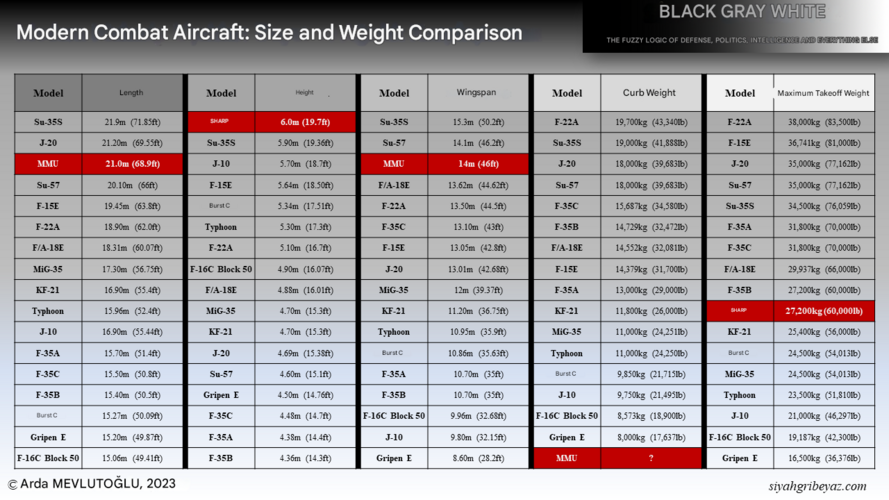
The current given MTOW hasn’t changed compared to the previous one from the PDR. While advanced tooling and manufacturing can play a significant role in decreasing weight, the majority of us believe that Kaan's empty weight and MTOW that are given to us are outdated and that they should in truth align more closely with Kaan's in-class equivalents (such as the J-20, F-22, and Su-57)...

Modern combat aircraft comparison2.png
(machine translation, cc for the original: @orko_8 /siyah gri beyaz)
 
Last edited:
You both have a point. The Turkish military-industrial complex is infamous within Turkish MilTwitter for its poor marketing and public relations, and TAI is one of the worst in this regard.

He's right that Kaan's dimensions have changed twice so far (three times if you count the PDR). While the updated specs for Hürjet are for its second prototype, Kaan's dimensions are based on the P0/GTU-0, as evidenced by numerous open-source investigations.
Before TAI manufactures P1, there is no point in insisting that his own estimated data is more appropriate than TAI's data. This is my opinion.
 
Before TAI manufactures P1, there is no point in insisting that his own estimated data is more appropriate than TAI's data. This is my opinion.
He's saying that TAI's social media and website managers hadn't updated the dimensions and specs until very recently, not that the people who designed the plane are somehow wrong.
 

Similar threads

Back
Top Bottom