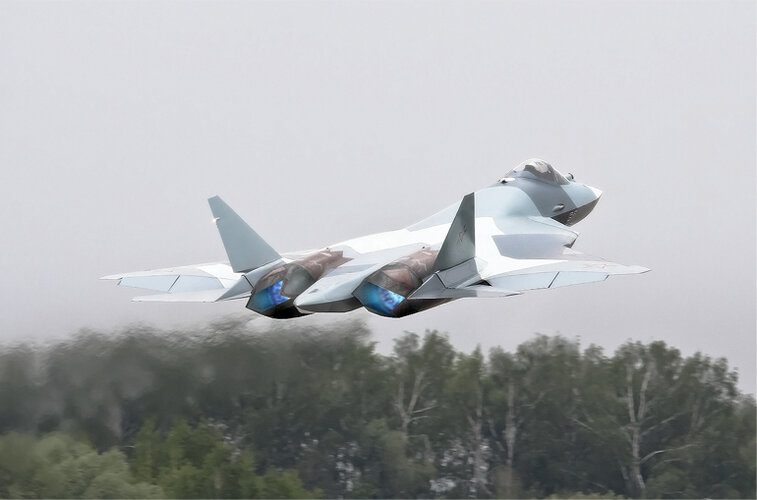
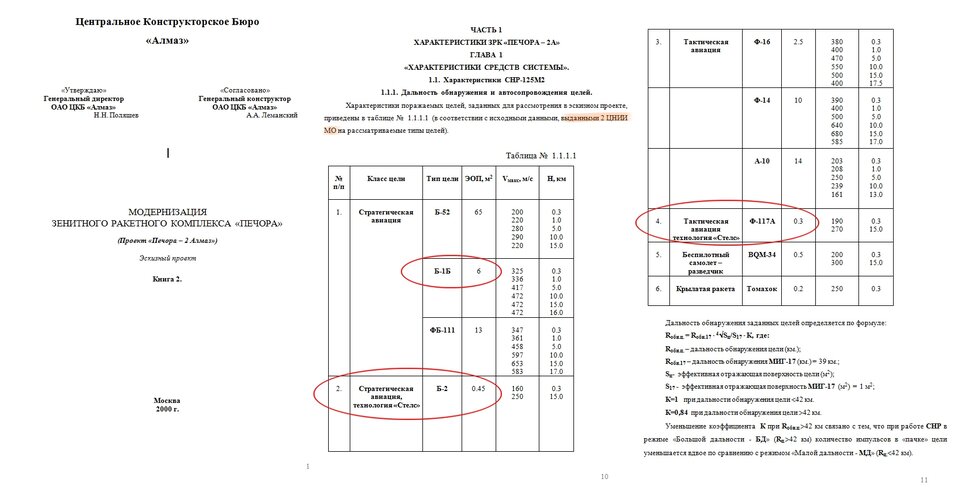
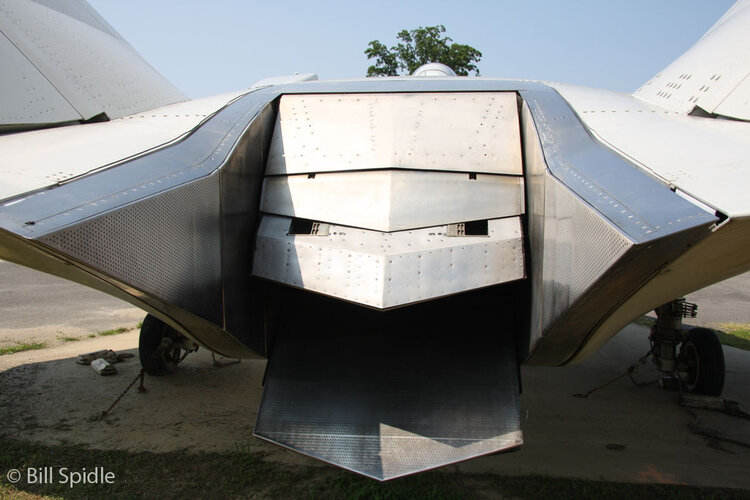
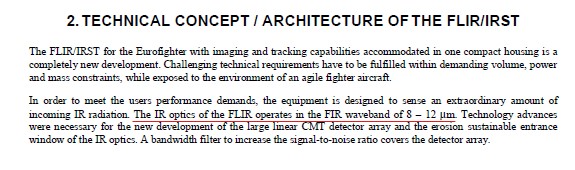
Am I the only one feeling intellectually insulted by the fairy tales above? I would be great to recover the thread from this "XLO" and "-70 dBsm" nonsense...
Reading some people, i always think that the sign "In God we trust" on USD should be replaced with "In Stealth we trust".
RCS reduction is obviously useful thing, but all these numbers of -50...70dbsm reflecting very local minimums in aspects of angular minutes, while on practice, with a real airframe and continious scan, especially with impulse accumulation, these locals don't reflect the real, achievable in practice level of low-observability of the real airplane.
And, after all, for some strange reason no one in the world doesn't scrap their AD radars and even upcoming AD-systems and fighter aircraft relying on them as a main sensor.
@Scar
I failed to respond to your argument against -50 / - 70 dBsm in terms of local minimums properly.
Stealth aircraft tend to have RWR. How well they work against LRIP, I'm not sure, but stealth aircraft are programmed to minimize their RCS against a small number of known emitters by presenting angle/azimuth that minimize RCS to the emitter or emitters. This is the practical deployment of minimal RCS vs average / practical RCS as in the Russian configuration.
===
On the other hand, you are right that in a full-scale engagement between peer or near-peer powers, the average / practical RCS becomes more important as you now have emitters in multiple regions preventing a combination of RWR + stealth-optimizing flight computer from working properly. While it's a major issue for aircraft like the F-22, it's even more significant for aircraft like the Su-57 and J-20 as they're not designed for all-aspect stealth and likely have a narrow high-stealth region, outside of which everything falls apart.
===
The other point to be made is that, well, there are two major 5th gen philosophies on-going. The Americans seem to have gone to emphasize stealth, or stealth + jamming (jamming converts RCS range reduction from x^(1/4) to linear). The Russians are at the opposite extreme, aiming to balance maneuverability and other flight characteristics with stealth, with the Su-57 featuring an extremely agile design (off-axis TVC, LEVCON innovations, large wing, superior T/W). The Chinese are in between, with disciplined planform alignment and an airframe that, with the proper engines, seems designed to out dogfight at least the F-35, and possibly the F-22, but most likely sacrificing stealth in the process.
Now, given that we have not seen 5th gens fight other 5th gens in realistic combat scenarios or actual war, we cannot be certain who is right, the Americans or the Russians. Given the design of the Checkmate, my argument (and remember the Su-57 is rumored to be 11G capable, while the Checkmate is claimed to be only 8G capable) is that the Russians want to hedge their bets. If the Russian philosophy of LO-VLO with stealth merely serving to get the aircraft up close doesn't work, by choosing the American philosophy with the Checkmate, the Russians have a back-up plan and one that's potentially superior to the current American stealth champ.
===
@icyplanetnhc (Steve)
My point about the rivets was in response to the claims that stealth aircraft have myriads of tiny emitters; that's to say, with the present USAF procurement for XLO fasteners, it doesn't seem that the fasteners would be an issue in terms of stealth.
===
Lastly,
@LMFS , you're right that, given that the subject matter is extremely political, we are not likely to have a useful discussion (I assume on SecretProjects the stealth vs reduced stealth conversation has been done to death). I'll put out my biases, for future, not present reference. The Americans are the technological leader given the massive R&D spending and military budget they have available, as well as their highly-developed R&D complex. The Chinese are trying to catch up with the Americans, and have relatively lots of funding in order to do so, but are still less funded than the Americans, as well as being less experienced in aircraft design compared to the Russians. The Russians, in contrast, do not have a lot of money to push around, but tend to create highly innovative and original solutions (i.e, high R&D efficiency per ruble spent).
Doctrinally, likewise, the United States is very reliant on airpower, given its (former?) global commitments and the extreme mobility aircraft have (i.e, can be moved around the world within 48 hours). The Russians contrast by being traditionally an air-denial power, with strong air-defense capabilities, but a ground force that does not need airpower to deliver the decisive blow. The Chinese, once again, are in between, since unlike the Russians, they face both land and naval threats, and airpower compensates should they misallocate funding for either branch of the military. However, the Chinese, unlike the Americans, have a greater tradition of air defense, since when they were broke in the 70s and 80s, they were mostly irrelevant on the seas, and they also spent considerably more effort on counterstealth since they were stealthless for the 00s and 10s.
I am more biased toward the American way of doing things, since they are the primary global military power. But I view the Russian way as worthy of respect and consideration, given that the Russians are underfunded and have to compensate with creativity to compensate for inferior resources.
===
@paralay
Just one last question. How do the Russians evaluate the RCS of the F-35? Do they view it as stealthier or less stealthy than the F-22? The Checkmate would make a lot of sense if they viewed the F-35 as a 0.2 or 0.1 m^2 RCS fighter; then the math on detection range suggests that the Checkmate, given the claimed 0.2 m^2 average RCS as well as the substantially larger radar, would get a radar detection advantage vs the F-35 on average. Of course, in practice, the availability, presence, and survivability of a counterstealth radar is still extremely crucial, since counterstealth radars can cue EO / IRST systems. And when we consider the combination of counterstealth for detection and EO / IRST for tracking, IR stealth becomes highly crucial. What known IR-signature suppression features are extant on the Checkmate?