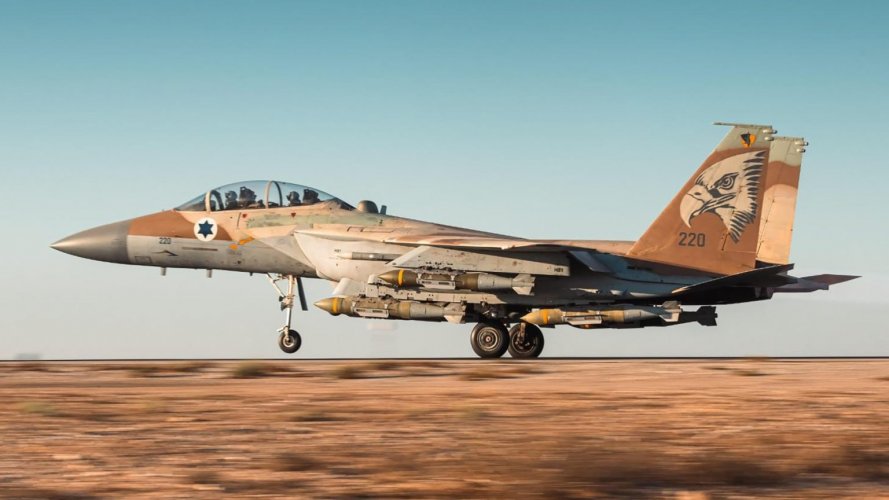
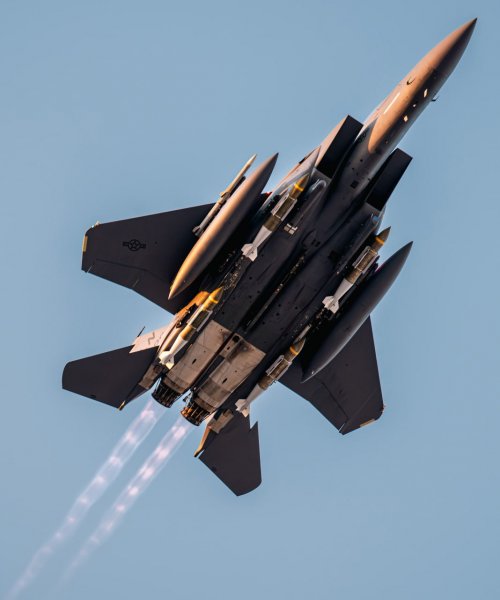
Yes, I think the presence of integral EOTS (=bomb sight, i.e., ability to effectively spot, track, idenitfy and mark targets under the plane with all benefits of the visual and IR band) instead of a targeting pod, together with likely a substantially lower signature, is decisive.
T-75 is also marketed (and we know that the eventual configuration was chosen for supersonic performance) as a supercruiser.
Finally, while the internal volume of Su-57 is certainly bigger, its ability to carry the preferred stand-in PG weapon of choice, which is KAB-250L, is equal. Both take 4 (KABs fit into fast bays).
That's indeed the case - and in my opinion, the most basic trait of aircraft is when you can afford to send it on a mission.
This is non-binary(yes/no), and is tied to available fleet, consequences of loss, and economic weight(including pilots).
This is why, for instance, I dislike single-type F-35 fleets, pursued by smaller countries; what's attritable to the US/Israel, isn't really attritable for them. Can they even politically afford to lose a F-35 over enemy ground?
If no, and they can only really be used together with the US, then isn't that effectively a downgrade, despite all the capability of the bird?
Then there's production capability: T-75, beyond costs, is 1 engine, 1 radar, 1 EOTS, and EODAS (OLS-50M ball seems to be gone from the last model from Singapore). Su-57 is 2 engines, 4 x- arrays(with ~2 times TRM count), 3 OLS, EODAS and a targeting pod (likely closely linked to Sukhoi EOTS). That's a lot of stuff to produce, and a lot of abbreviations that the rest of VKS is thoroughly deprived of.
I'd say that the main operational shortcoming of Su-34 as it is, is that it takes 80/20 rule and turns it onto it's head.
It's full of theoretical "20%" capabilities, which don't really work and can't be used. Of all of those capabilities, the only one VKS managed to put to good use is a mighty central pylon, able to take a singular ~3.6t load (bomb+kit+pylon). It indeed works as a cookie bomber.
Other than that, su-34 instead works as a parcel delivery plane (4 bombs per sortie), for a very high maintenance cost and time. The same duty can be done by a much smaller plane, for no perceived downsides.
I once made a simple pencil calculation, that doing the same bombing VKS does today, but via J-10Cs instead of Su-34 (escorted by Su-35) saves so much, that the entire necessary order of J-10s will be fully covered by just 1 (one) year of savings. To become economically efficient attrition bomber, Su-34s have to start bringing either more bombs per sortie (which is not always feasible, as targets aren't under obligation to follow your sortie planning), or bring them to more consequential targets.