16t of thrust isn't exactly little.
Want more - you're most welcome to finish AL51F.
That is exactly the issue. The hard, expensive, lengthy work went on developing the base technologies that allow the 905 mm inlet engine to produce 11/16tf. Losing 1tf due to reduced airflow is wasting the resources invested in that development and defeats its purpose, pure and simple.
Personally, I believe that the 177/177S with openly published parameters are a broader part of the "Indian campaign". Within one package for upgrading MKI and installing it in export Su-57s, almost identical engines are to be produced, which will allow - in addition to unification - a favorable offer/life cycle price.
Makes a lot of sense
If the 177/177S is the result of the Udlinitel' project, then in the version with a diameter of 932 mm it will offer significantly higher thrust (in the version for the T-50 around 166 - 167 kN) and will quite possibly be the basis of a unified engine for the "VKS Trio" .
Yes, 11.7/17tf, only due to the inlet increase.
So in the future we could expect a thrust of around 170 kN for the T-75 when using a "generational mixed" solution and of course even more for the use of the new generation (30).
It is not clear to me what is the actual technological/margin difference between izd. 30 and 177, so I abstain from making predictions in that regard.
170 kN would mean similar characteristics to the F-35 for an aircraft with an empty weight of just under 12 tons (say 11,750 kg).
Those are sensible design goals and look plausible, specially considering the reduced overload limits of the export aircraft. We do not know actual values or what changes a domestic version would receive.
 
Those are sensible design goals and look plausible, specially considering the reduced overload limits of the export aircraft. We do not know actual values or what changes a domestic version would receive.
They can't afford 1 trial run (1 flying article is 1990s level misery), and you want two separate ones...
Losing 1tf due to reduced airflow is wasting the resources invested in that development and defeats its purpose, pure and simple.
Not sure just that is enough to justify an incompatible engine.
I.e. Russia did that in the past, and managed to neatly combine downsides of multi-type logistics with the lack of flexibility of a single type fleet.
Izd.177/T-75 allows to achieve the opposite, and definitely should be tried.
 
Last edited:
Izd.177/T-75 allows to achieve the opposite, and definitely should be tried.
T10 platform will be progressively substituted by Su-57/75, not run in parallel forever. I don't see the problem in having two slightly different versions of the same engine for a while.
 
T10 platform will be progressively substituted by Su-57/75, not run in parallel forever. I don't see the problem in having two slightly different versions of the same engine for a while.
Current experience of sustaining high operations tempo over last 4 years may make this statement highly controversial.
There are 3 main hard limitations that stop VKS from bombing/flying more. Maintenance, engine availability and weapon deliveries.
Presence of multiple incompatible variants of AL-31 family (or, say, VK-2500s) hurts 2 of these points.

Unless there's a distinctive generational advantage for the airframe, justifying it at expense of the entire order of battle (power generation/cooling beyond what 177 can provide)- no thanks?
 
Nothing, because it'll never fly.
Ah, what does it mean...it will never fly, so if it flies, are you ready to buy a beer, what you can bet...it is a joke ...But why it wouldn't fly, all essentially technology is there , a lot of derisking work is done with su-57...now, the path is practically cleared.. It would be shame not to build one engine version..It even looks a better pair than f22 and f35... These two airplanes are completely different programs, with no connection at all. Su75 should cost just a fraction of F35 program. Regarding its future role in Russian aviation, it can replace complete Su27 fighter based derivatives like Su35, and other . Su57 will stay behind, Su75 will be closer to the front...Su 27 line shoud end, it was a glorious path, but it ends here.
What are you actually wary of and on what basis...is the any, or just a standard sofa general opinion?
My only technical question mark is the engine. They need a strong efficient engine, something much stronger than Al 41... But with all insufficient funding, and being held in isolation, Russia is still one of few countries which can build trully capable jet engines at large number... It's not sure that China can do that even now...in Europe, there is only France, so it shoud be ok...
My second question mark is much bigger, it's doctrinal ...If I were a military planner I would think twice about a future fighter..Actually, is it needed at all? Why not invest in drones even more..After Ukraine and Iran conflict , the standard military doctrine is very , very questionable. Remember Britain white paper on defence from 1957...It looked wrong at that time, maybe not this time...
 
Last edited:
Yes, I think the presence of integral EOTS (=bomb sight, i.e., ability to effectively spot, track, idenitfy and mark targets under the plane with all benefits of the visual and IR band) instead of a targeting pod, together with likely a substantially lower signature, is decisive.
T-75 is also marketed (and we know that the eventual configuration was chosen for supersonic performance) as a supercruiser.
Finally, while the internal volume of Su-57 is certainly bigger, its ability to carry the preferred stand-in PG weapon of choice, which is KAB-250L, is equal. Both take 4 (KABs fit into fast bays).


That's indeed the case - and in my opinion, the most basic trait of aircraft is when you can afford to send it on a mission.
This is non-binary(yes/no), and is tied to available fleet, consequences of loss, and economic weight(including pilots).

This is why, for instance, I dislike single-type F-35 fleets, pursued by smaller countries; what's attritable to the US/Israel, isn't really attritable for them. Can they even politically afford to lose a F-35 over enemy ground?
If no, and they can only really be used together with the US, then isn't that effectively a downgrade, despite all the capability of the bird?

Then there's production capability: T-75, beyond costs, is 1 engine, 1 radar, 1 EOTS, and EODAS (OLS-50M ball seems to be gone from the last model from Singapore). Su-57 is 2 engines, 4 x- arrays(with ~2 times TRM count), 3 OLS, EODAS and a targeting pod (likely closely linked to Sukhoi EOTS). That's a lot of stuff to produce, and a lot of abbreviations that the rest of VKS is thoroughly deprived of.

I'd say that the main operational shortcoming of Su-34 as it is, is that it takes 80/20 rule and turns it onto it's head.
It's full of theoretical "20%" capabilities, which don't really work and can't be used. Of all of those capabilities, the only one VKS managed to put to good use is a mighty central pylon, able to take a singular ~3.6t load (bomb+kit+pylon). It indeed works as a cookie bomber.

Other than that, su-34 instead works as a parcel delivery plane (4 bombs per sortie), for a very high maintenance cost and time. The same duty can be done by a much smaller plane, for no perceived downsides.
I once made a simple pencil calculation, that doing the same bombing VKS does today, but via J-10Cs instead of Su-34 (escorted by Su-35) saves so much, that the entire necessary order of J-10s will be fully covered by just 1 (one) year of savings. To become economically efficient attrition bomber, Su-34s have to start bringing either more bombs per sortie (which is not always feasible, as targets aren't under obligation to follow your sortie planning), or bring them to more consequential targets.

Sorry, I am not following...why are you comparing J10 with Su34...you want to sat that J10 can do this bomb carrying task cheaper than Su34...why not compare J10 to F15EX..or F16 to F15EX.
 
Sorry, I am not following...why are you comparing J10 with Su34...you want to sat that J10 can do this bomb carrying task cheaper than Su34...why not compare J10 to F15EX..or F16 to F15EX.
Such substitution won't work.
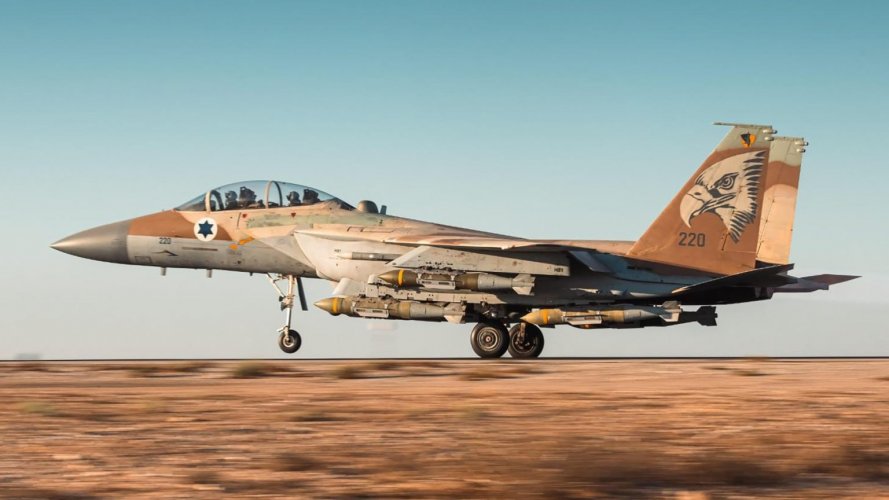
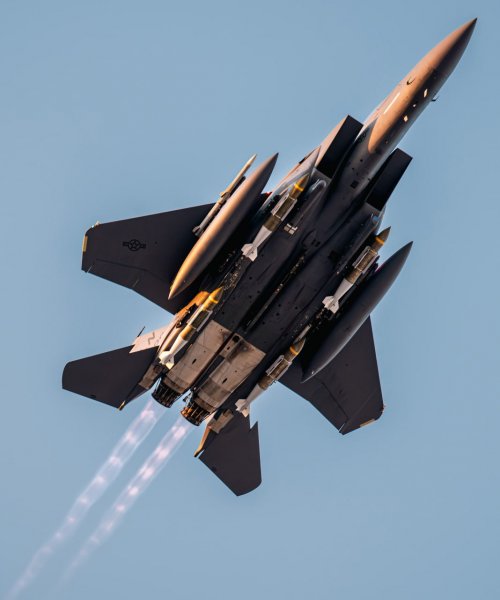
F-15 can self escort, F-15 can(and does; attached photos demonstrate high end and normal heavy loads - both photos are from combat operations) carry high practical bomb loads, unavailable to other types in service. As such, it's sorties are cost efficient, despite high per hour pricetag.

Math is broken with su-34 w. UMPK specifically. Big expensive plane, good mostly for delivering back and forth 4(now 5) usual medium bombs.
Absolutely nothing, other than institutional inertia, prevents other VKS types from doing the same. Or J-10, or just about any fighter bomber out there.

J-10 was taken as an example as it's an aircraft that Russia, in all likelihood, can in fact buy.
 

Attachments

  • 1000030204.jpg
    1000030204.jpg
    137.2 KB · Views: 30
  • 1000030205.jpg
    1000030205.jpg
    85 KB · Views: 30

Similar threads

Back
Top Bottom