Sukhoi FSW Fighters from S-22 / S-32 to S-37 / Su-47 Berkut

Attachments

  • 20241121_Sukhoi_S-22-4_1.png
    20241121_Sukhoi_S-22-4_1.png
    792.6 KB · Views: 333
Hi folks,
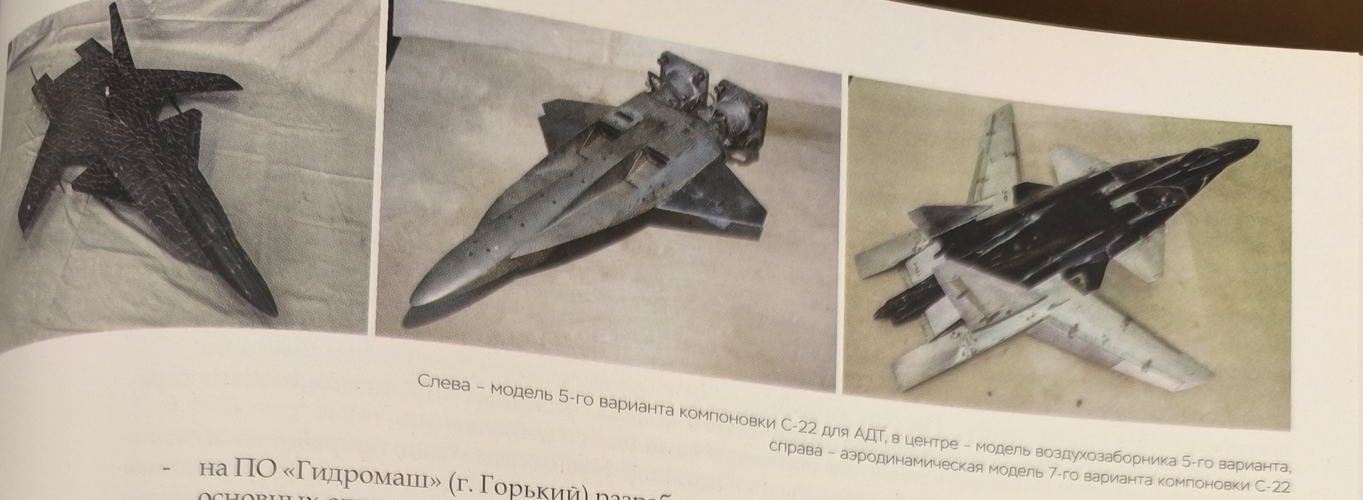
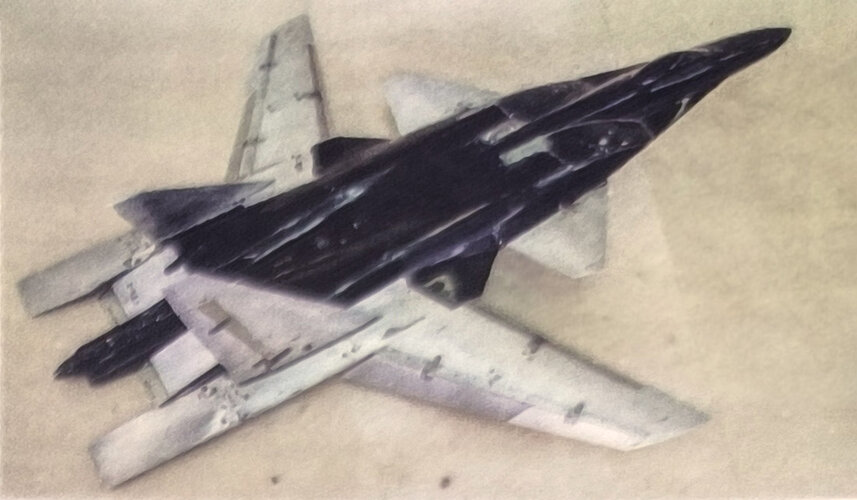
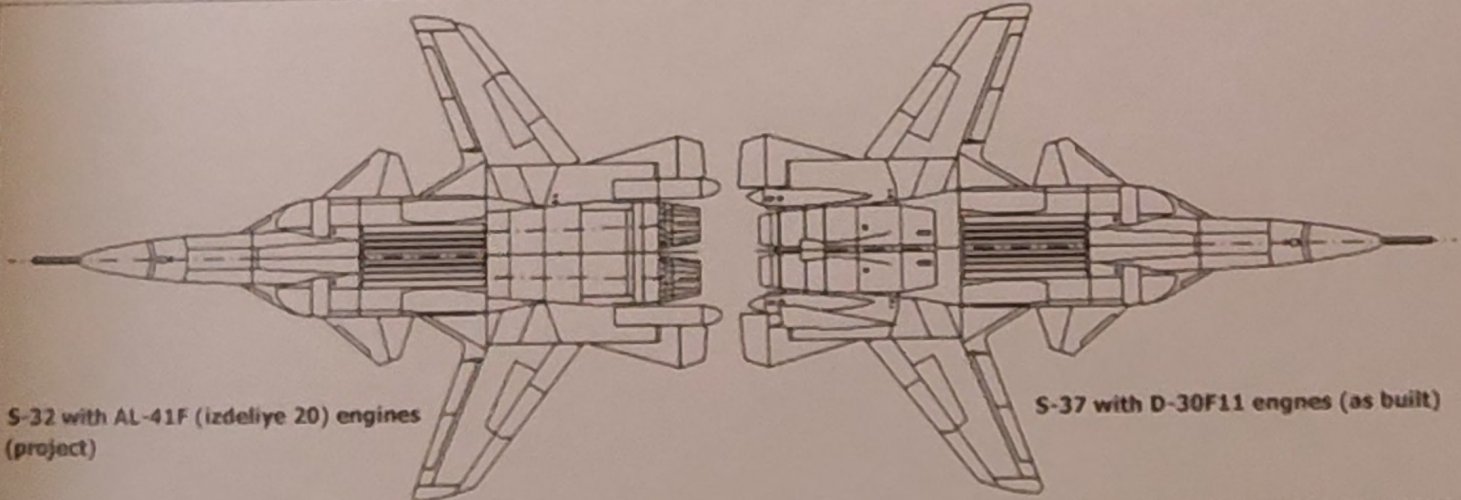
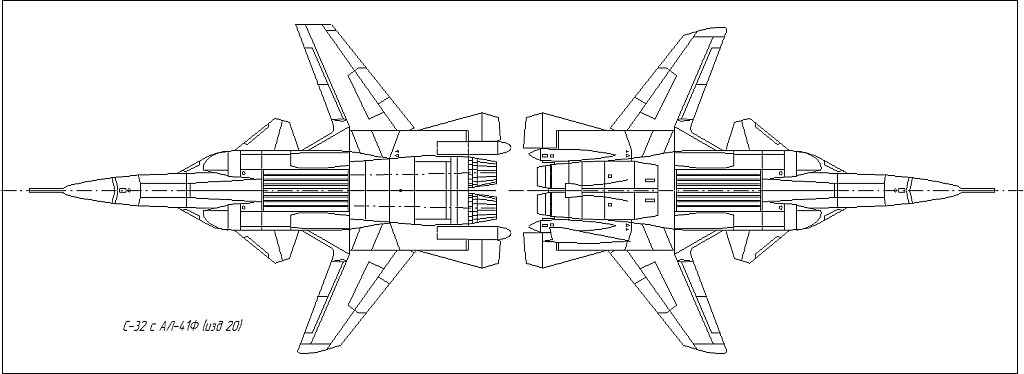
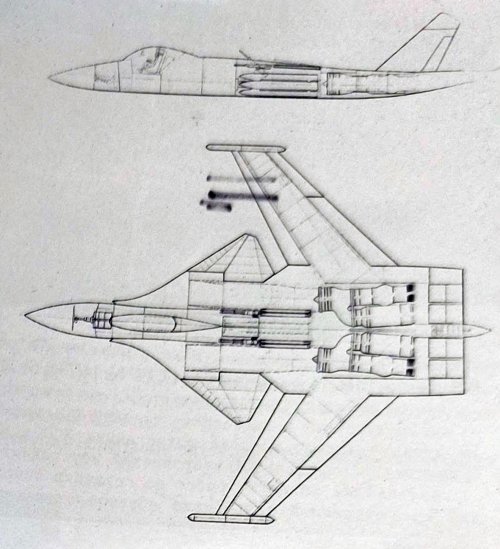
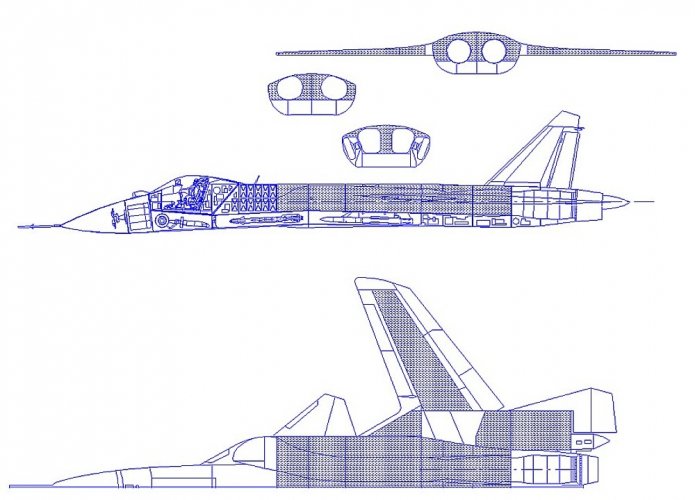
I tried to make a better copy of this picture, so I could see more details of the intakes.
Unfortunately, not so successful so far. :confused:
Main source:
"85th Anniversary of Sukhoi design buro"

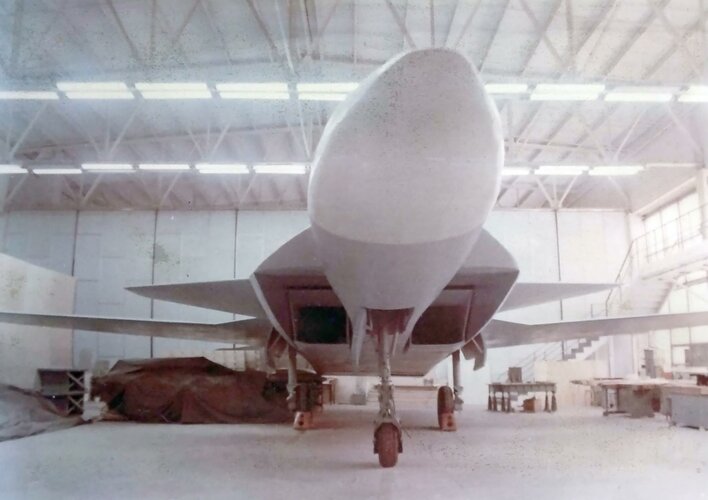
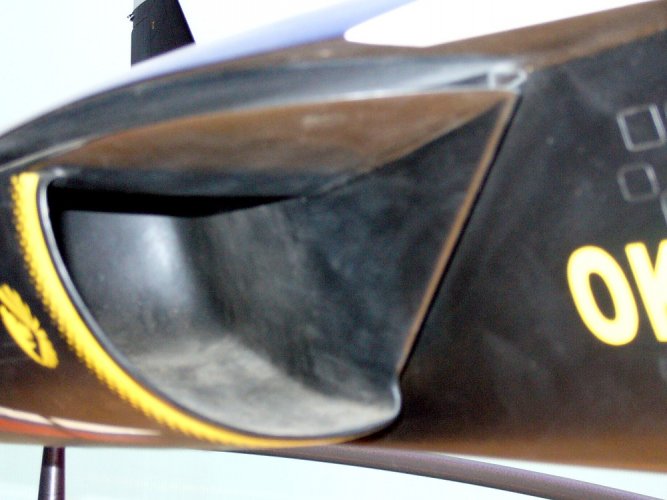
The middle picture here shows you everything you need to know about the intakes. They are similar to Su-27 but sunken into the fuselage with a trough in front, like a NACA flush intake merged with an Su-27 intake.

1732212156061.png
 
Enhanced by artificial intelligence

GcxpsqgXoAAOpWk


GcxpxarWQAAMUBs


GcxpzxAXgAAXY-G


Gcxp2CGWoAA9m4W


View: https://x.com/WDequid/status/1858977164819132633
 
I'm not sure Wikipedia is always the best source for factual information ;D

There's a good quote about FSW I can't quite remember to the effect that every few decades the concept is dusted off and tried out to remind everyone why it was such a bad idea.

This is a particularly interesting comment when you consider that both The Su-47 & The F-35 have very similar speed limits, albeit for different reasons, despite the fact that The Berkut is a much older design & advancements in the strength of composite materials, etc., have only increased during the last 20 years. I mean, if more modern materials were to be used in its construction, would the new speed limit for a "new" Su-47 be, idk, Mach 1.8? Would that not be operationally acceptable?

Of course, if you wanted to go really crazy, you could always axe the canards in favor of levcons & add a V-Tail, among other features. Talk about a funny looking plane.
 
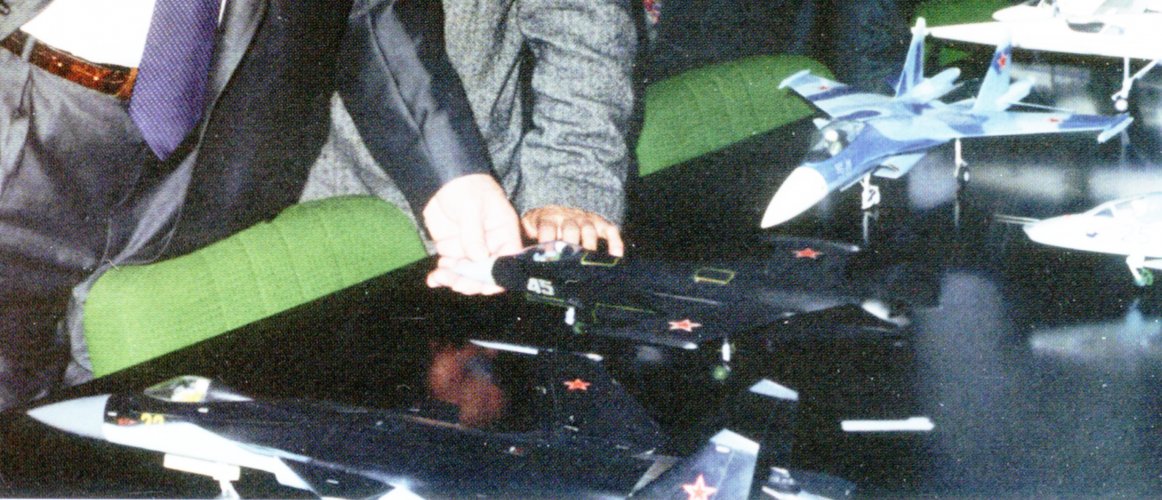
What is 45?
Looks like reduced wing sweep, wingtip pods, different tail, and lift jets? (Yellow dorsal panel outline)
Hard to tell, as I am viewing it on my phone.

EDIT: After digging around on the Internet, I ended up back here again on SP.
Earlier in the thread it is called S-45.
 
Last edited:

Attachments

  • htmlconvd-a1xAJq_html_813b8853ae390b06.jpg
    htmlconvd-a1xAJq_html_813b8853ae390b06.jpg
    120 KB · Views: 212
"yeah, we need to drag that thing (the FSW) out about every forty years or so to remind us why it's a bad idea."

I wonder if advancements in material science would make it viable these days, at least on larger drones if not necessarily on large manned aircraft.

But maybe the juice isn't worth the squeeze and I need to remind myself that it's a bad idea as well.
 
I wonder if advancements in material science would make it viable these days, at least on larger drones if not necessarily on large manned aircraft.

But maybe the juice isn't worth the squeeze and I need to remind myself that it's a bad idea as well.
From what I remember, it wasn't materials issues that sank the project - one of the advantages of FSW is that it captures the wingtip vortices and directs them towards the fuselage where they produce lift. I remember reading that Soviet engineers found out that when the two vortices met in the middle, they interacted violently and unpredictably, trying to shake the aircraft apart. They never managed to fix this issue, and I think it might be inherent to this layout.
 
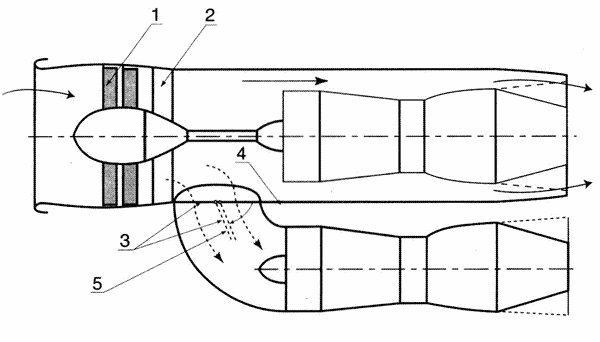
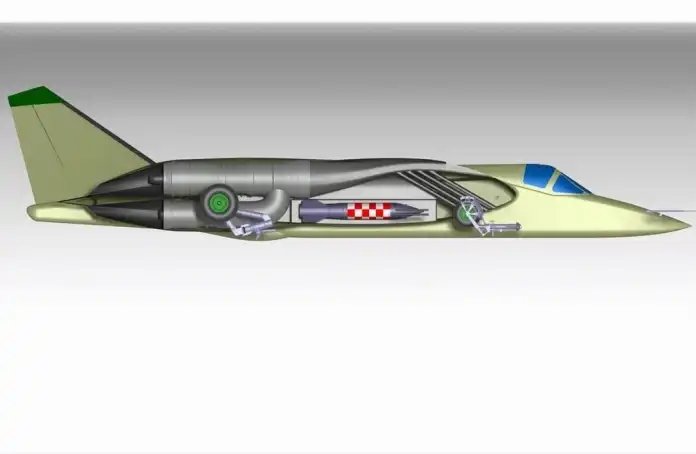
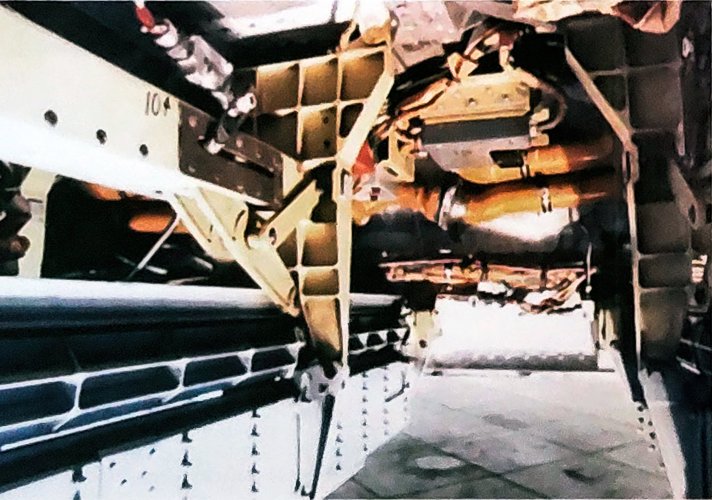
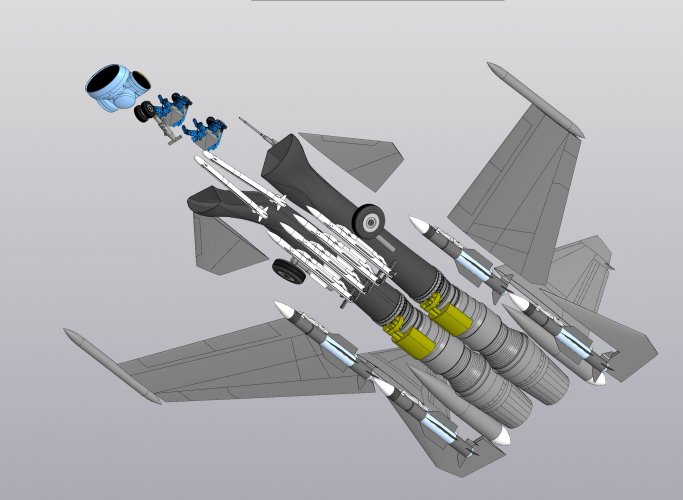
I really like this kind of implementation of variable bypass - instead of having a bypass ring around the engine, you put a bypass fan driven by the turbine (like the F-35 but in parallel instead of perpendicular). I've expressed this opinion before, however I was told that this layout is no good. If anyone has some info as to what are the advantages/disadvantages of this layout (other than the airframe needing to be designed around it), would you please care to share it?
 
From what I remember, it wasn't materials issues that sank the project - one of the advantages of FSW is that it captures the wingtip vortices and directs them towards the fuselage where they produce lift. I remember reading that Soviet engineers found out that when the two vortices met in the middle, they interacted violently and unpredictably, trying to shake the aircraft apart. They never managed to fix this issue, and I think it might be inherent to this layout.
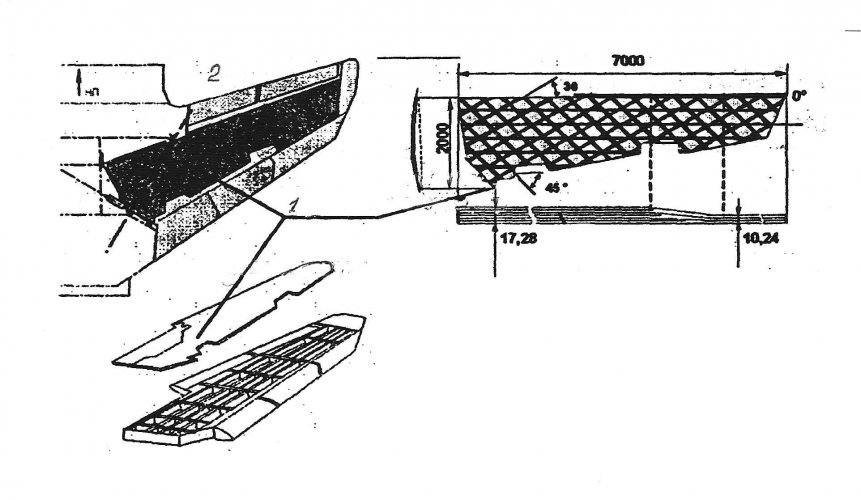
Another serious issue is that the heavy use of composite materials in the FSW wings makes them notoriously difficult to maintain... I once came across an explanation for this.
 
I really like this kind of implementation of variable bypass - instead of having a bypass ring around the engine, you put a bypass fan driven by the turbine (like the F-35 but in parallel instead of perpendicular). I've expressed this opinion before, however I was told that this layout is no good. If anyone has some info as to what are the advantages/disadvantages of this layout (other than the airframe needing to be designed around it), would you please care to share it?
The center of gravity position... Such an engine configuration has a significant impact on the aircraft's center of gravity shift:(
 
Another serious issue is that the heavy use of composite materials in the FSW wings makes them notoriously difficult to maintain... I once came across an explanation for this.
Could you please share some info on this? There are a ton of airliners flying today which have composite wings. Afaik with composites maintenance does not exist - the material doesn't change its properties very much up until the point it fails catastrophically, and is impossible to repair. The trick is to figure out how close to failing is it.
 
In my files,

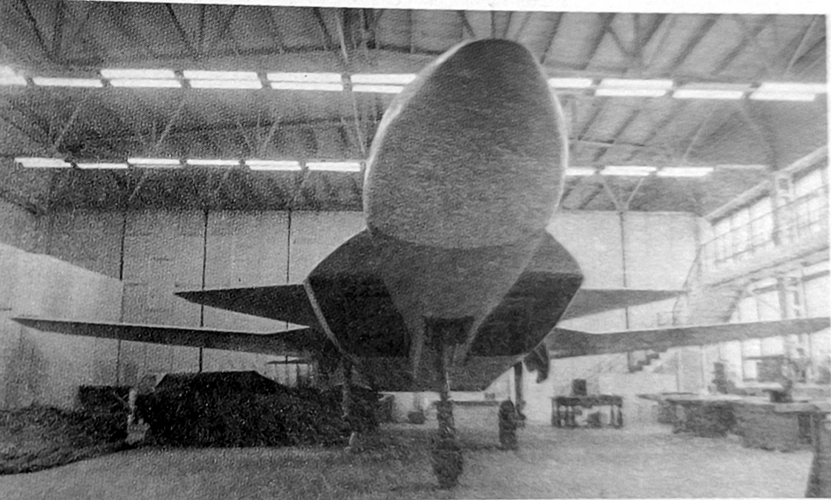
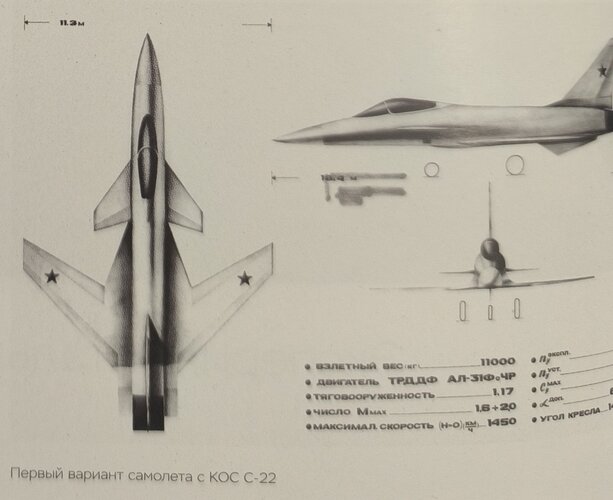
the Sukhoi S-22 was began to develop in 1980.
 
As usually happens with Gordon, stolen from the web without credentials (Paralay's non-official drawings).

That's right, in that Su-57 book I noticed many diagrams and drawings of the MiG 1.44 and 1.42 created by Paralay on his website, and they appear without credit.

The same thing happens in the book "Unflown Wings"; I recall there's a cutaway of the Sukhoi T-12 and several other drawings by Paralay.
 
I really like this kind of implementation of variable bypass - instead of having a bypass ring around the engine, you put a bypass fan driven by the turbine (like the F-35 but in parallel instead of perpendicular). I've expressed this opinion before, however I was told that this layout is no good. If anyone has some info as to what are the advantages/disadvantages of this layout (other than the airframe needing to be designed around it), would you please care to share it?

My understanding is that it's a variable-cycle motor designed by Kolosov in the 1980s, which appears to have been a flawed concept.

It was a dual-core motor, with only one core operating in economy mode, while at full power, the other would also activate to remove excess cold air from the front fan. Ultimately, this would mean that the second core would only create unnecessary extra weight in economy mode, complicate the bypass airflow, or complicate the overall design.


JFT6ObTKtG.gif


T-12-1_04.jpg
 
Could you please share some info on this? There are a ton of airliners flying today which have composite wings. Afaik with composites maintenance does not exist - the material doesn't change its properties very much up until the point it fails catastrophically, and is impossible to repair. The trick is to figure out how close to failing is it.

That's true, but commercial aircraft don't sustain combat damage or have to return damaged by enemy fire to their air base or aircraft carrier.

From this article about the Su-27KM:


"The problem was that any damage to one of the carbon fiber panels would lead to a break in the continuity of the panel's reinforcing fibers, altering the wing's mechanical properties and risking catastrophic collapse. In other words, a damaged component of a carbon fiber panel cannot be repaired or patched; it must be replaced entirely.

Theoretically, the Su-27KM's damaged carbon fiber wing could be completely replaced aboard the ship. However, it would be unlikely for a Su-27KM with certain wing damage to reach an airfield or the aircraft carrier deck; under enormous loads, the composite wing would lose its structural strength upon the first projectile impact and collapse instantly in mid-air.

Therefore, even if the Su-27KM fighter could return to its aircraft carrier, it would be impossible to carry out combat damage repairs on board, as no patch (like plugging holes in a metal structure) would fix the broken carbon fiber reinforcement panels. All that was needed was a complete replacement of the entire composite panel.

These panels were manufactured by NPO Graphite, and at prices in the early 1990s, each panel cost 1.5 million rubles. This meant that a set of side panels for a fighter like the Su-27KM cost approximately 6 million rubles, with a production cycle of several months."

 

Similar threads

Back
Top Bottom