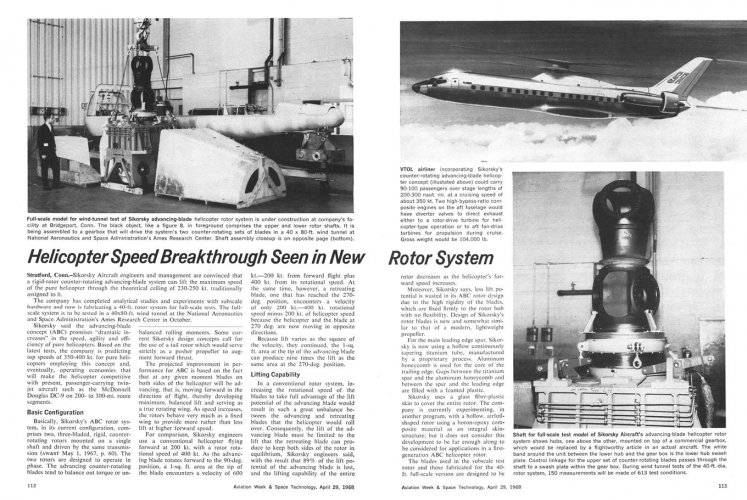
Sikorsky VSTOL/STOL Projects

Also I would add to the drag discussion that anything hanging out the side of the aircraft decreases the hover efficiency of the rotorcraft over time. USN has "traditionally" wanted hover endurance for rotorcraft working ASW efforts. In fairness that philosophy may have since been superseded.
 
That's why it is remarkable that the wb has moved from the belly to the flanks. We can notice an attention to bring an improvement in both airframe performances and serviceability.
If someone would have to make the history of this family of design, that would be an interesting point to notice...
 
@hesham : do you have anything more on this particular design, that you posted back in the days? I find it a really interesting one.

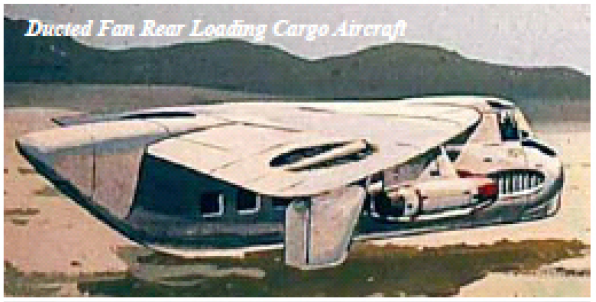
Tailless, WiG(?), cushion landing system, compact cargo... Looks like a 21st century Marines wet dream!

View attachment 690215
interesting idea - but, high disk loading, likely challenging lateral control, likely high weight fraction for the duct fans with shafting (from what source ?) or even if jet driven.
 
@yasotay : I don't think the disk is there for lift. I think it's there for high AoA/High lift regime such as allowing for STOL. That would be why also the vertical is placed there, under the wing, directly in the forced airstream.

One problem of delta is the separation of airflown in their tip section at a moderate AoA (it's a variable of airstream speed and chord length). With the fan, that section could see an attached airflow, allowing the entire wing to be tilted up to en entire new region of angle of attack.

But that can be also only for roll ctrl.

Notice that it is not a VTOL.

Edit:
I forgot to mention that the wing probably tilt up like that of a Vought F-8.

@hesham : thank you for the pdf. Although I haven't been able to open it on my mobile so far.
 
Last edited:
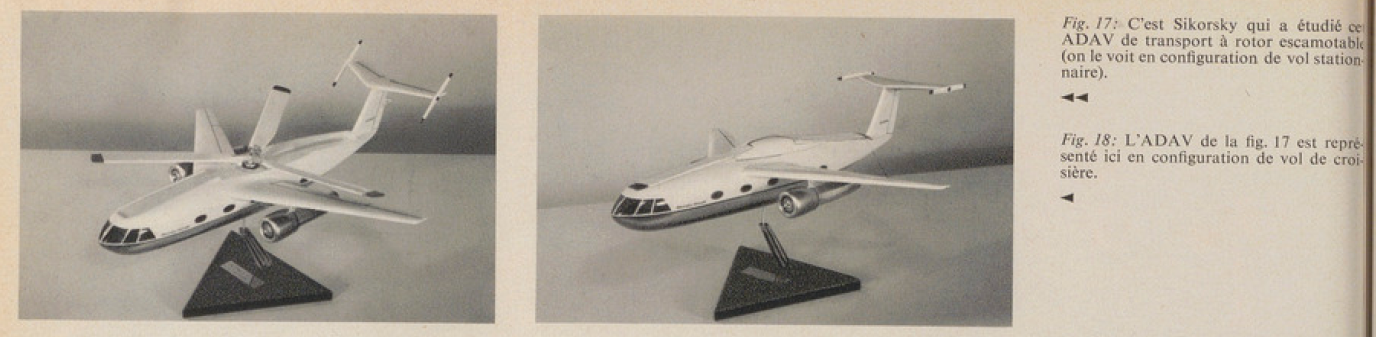
Here is a picture showed CARA of US.
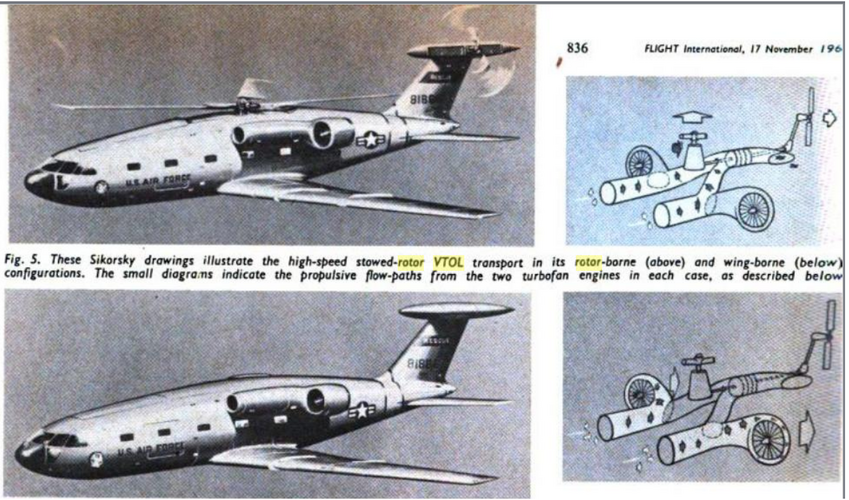
The VTOL aircraft fitted with retractable Roto on dalso and tail for VTOL, while needing level fly, the roto will autometically retracte and stored in airframe for reducing drag. The power mianly rely on one Jet and fan engine each side.

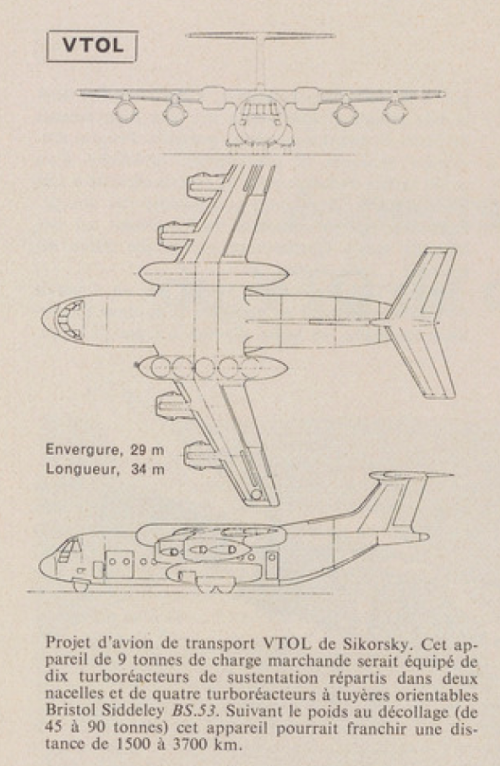
From Flightglobal 1966,with drawings to show how the engines worked
in lift and cruise stages.
 

Attachments

  • 20.png
    20.png
    2.1 MB · Views: 156

Attachments

  • Agility performance of several vstol and stol aircraft.pdf
    1 MB · Views: 29

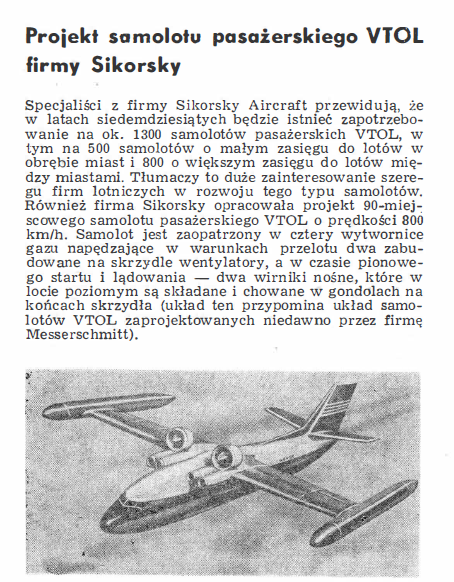
From Techinka Lotnicza 1969,

Sikorsky Aircraft experts predict that in the 2070s there will be demand for approximately 1,300 VTOL passenger aircraft, including 500 short-range aircraft for intra-city flights and 800 longer-range aircraft for inter-city flights. This explains the significant interest from a number of aviation companies in developing this type of aircraft.
Sikorsky has also developed a design for a 90-seat VTOL passenger aircraft with a speed of 800 km/h.
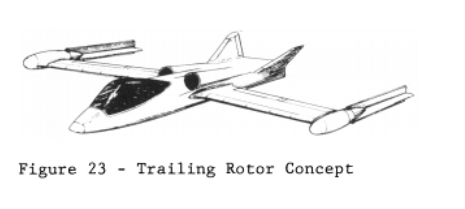
The aircraft is equipped with four gas generators that power two wing-mounted fans during cruise, and two main rotors during vertical takeoff and landing, which are folded and stowed in wingtip nacelles during horizontal flight (this arrangement is similar to the VTOL aircraft recently designed by Messerschmitt).
 

Attachments

  • 7.png
    7.png
    232.8 KB · Views: 90

Similar threads

Back
Top Bottom