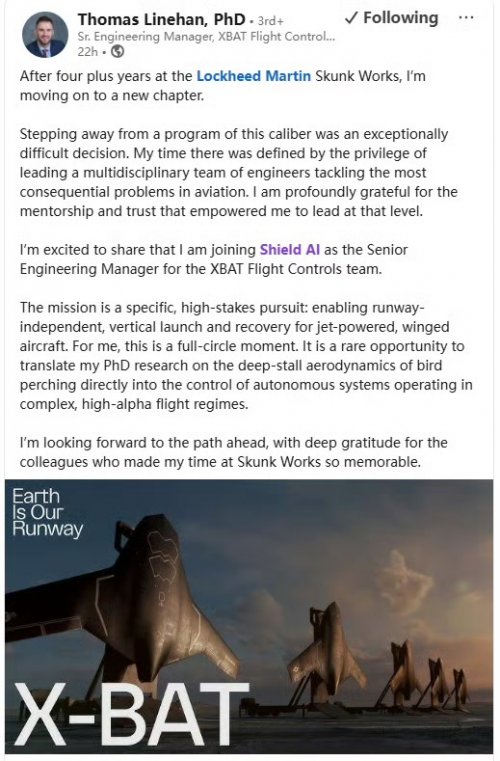
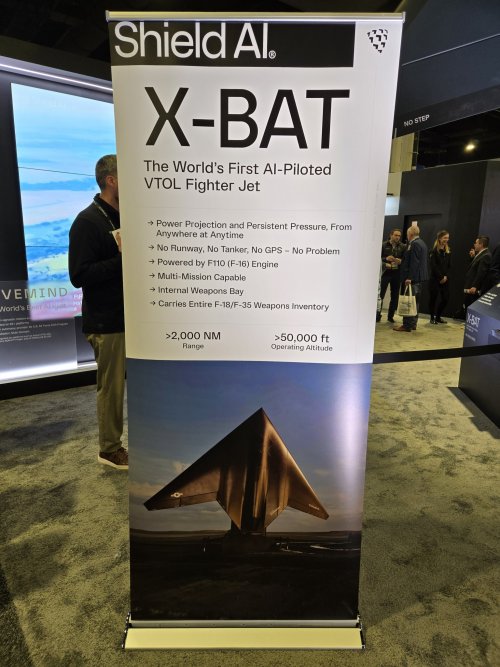
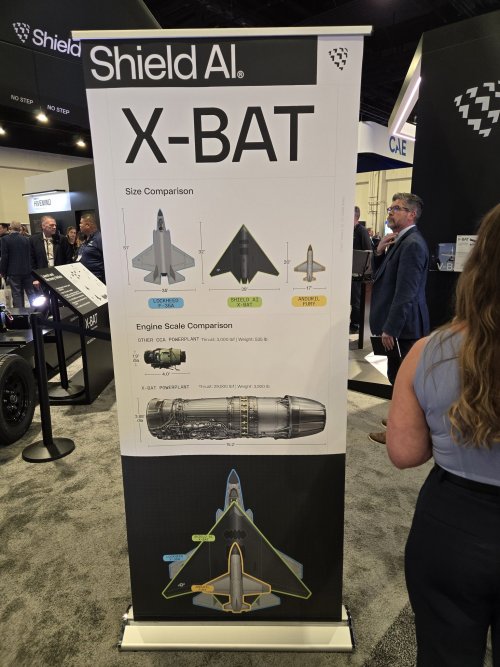
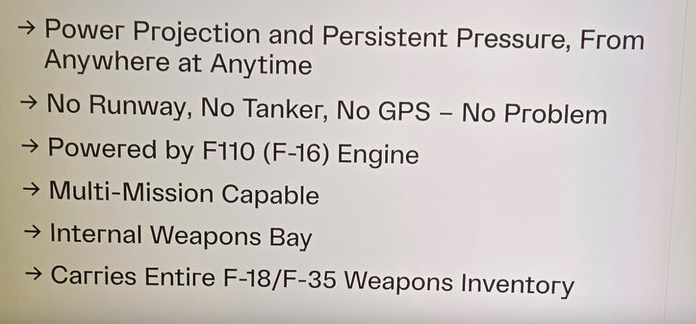
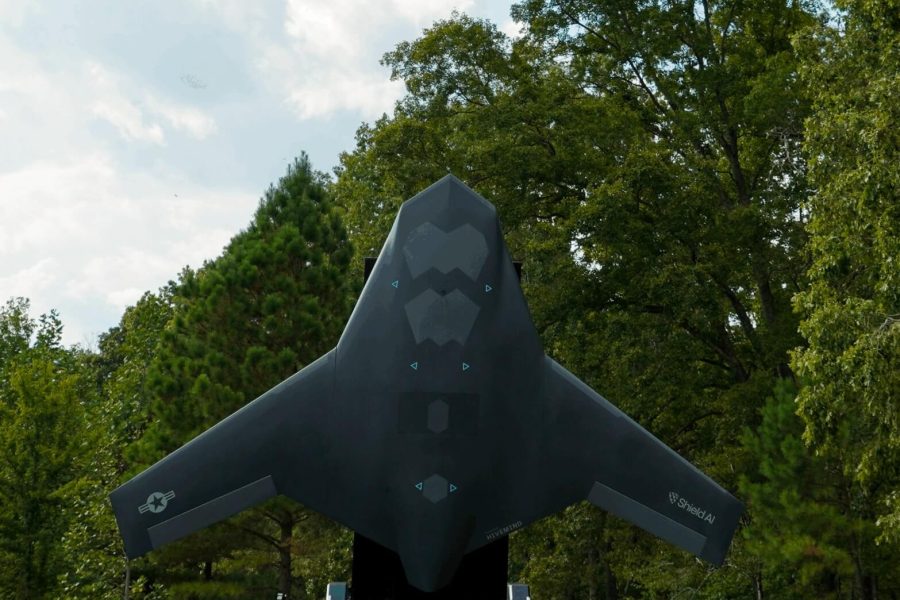
Shield AI X-BAT multirole UCAV

No radar in the nose due to air intake location... how will it detect air targets for its primary mission?
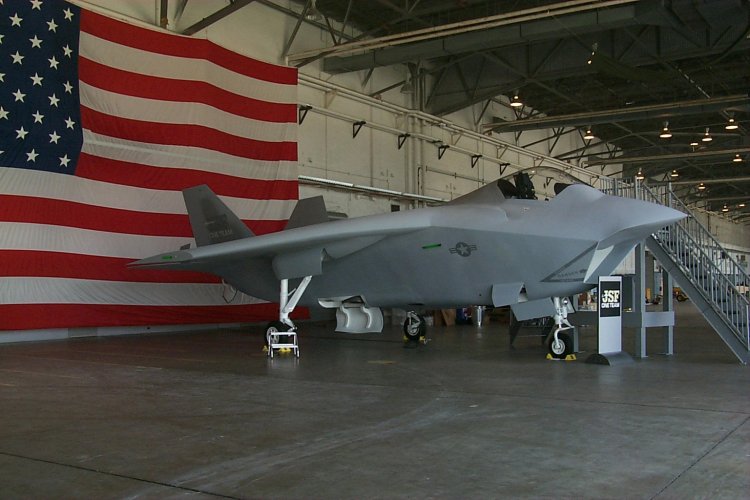
While I agree with the criticism of what's being presented by yet another overhyped start-up, this kind of inlet has been studied by Boeing with their JSF proposal, which was meant to accomodate a radar. It depends a lot on the aircraft size, the volume of where you want to put the radar and the arrangement and dimensions of the intended radar as well.
 

Attachments

  • rare-pics-of-the-boeing-f-32-mock-up-album-v0-r48dgf04cqyc1.jpg
    rare-pics-of-the-boeing-f-32-mock-up-album-v0-r48dgf04cqyc1.jpg
    229.5 KB · Views: 154
Last edited by a moderator:
You absolutely can put fuel in the wings outboard of the folds.
It’s rarely done. The A-6 Intruder is one of the few designs I know that has fuel outboard of the folds (143 gallons per side, 950lbs each).

On a supersonic wing it makes less sense as the wing will be thin and the volume available in the outer section will be limited, especially considering the added complexity and weight, which is not desirable on a VTOL aircraft.
 
The engines aren't vapourware but the rest of the X-Bat design still is.


I don’t think those are even the biggest problem with the X-Bat. The biggest technical problem is the engine inlet distortion and engine performance on landing. I get where these guys are coming from and drawing inspiration from Falcon 9 landings. But landing with rockets is simple compared to trying to do it with a turbojet engine. With rockets you have virtually instant thrust and throttle responses that is only dependent on conditions within the rocket itself. With a turbojet engine, your throttle response will be much slower and your power output will be directly related to the flow quality in the inlet. Worst still poor flow quality induced engine performance lost is unstable and positively reinforce lost of power. Meaning if the flow quality starts to degrade, that degradation is likely to grow extremely large and extremely fast. Couple that problem with a slow throttle response and you’d have an intractable problem.

Traditional jet engine V-TOL doesn’t suffer from these problems as much because the engine inlets are horizontal so you can point the inlets into the wind. The X-Bat is trying to do the same thing with the engine essentially running backwards and (looks to me anyways) lack of ability to land in an arbitrary direction to match the wind. This configuration of VTOL is likely to have large risk of engine exhaust ingestion and poor inlet performance.

You might be able to demonstrate X-Bat’s VTOL capability on a good day out in the desert. But the problem becomes extremely difficult to solve if you have to do a landing in any kind of even light cross or tail (dorsal?) wind. I also wouldn’t read too much into a successful test campaign of their subscale model either. The lag in engine response to throttle commands becomes more difficult as an engine is scaled up due to increasing inertias and square-cube laws. Just because it works at 45% scale, it doesn’t mean it will work at full scale.

This is a very subtle but extremely difficult technical problem to solve. I’m not confident that the folks working on the X-Bat even recognize the gravity of this problem because this problem have no analog from any one with experiences working on the V-Bat nor someone they can poach from SpaceX that had worked on the Falcon 9.

I do hope they succeed because it is a compelling idea. But I wouldn’t bet on this working and I’d hate to be the guy that has to figure out how to get this to work.
 
Last edited by a moderator:
even if the vertical landing part doesnt work i hope they have a backup plan for short EMALS assisted/ support carriers with STOBAR. cause if its a 10 tonne class UAV with a F110 then it has more than enough dry thrust available.
 
Last edited by a moderator:
 

Attachments

  • IMG_2101.jpeg
    IMG_2101.jpeg
    139.8 KB · Views: 48
Its an interesting marketing tactic. The signals coming from the USAF have generally been for lower cost lower capability CCA but Shield are deliberately leaning in to the bigger is better. Obviously being runway independent changes things and makes the X-Bat potentially more survivable than the current tier 1 CCAs through reduced runway reliance but would likely require a great sustainment tail.
 
Shield AI can bid for the next CCA increments with its X-BAT if it has flown and/or demonstrated capability by then. If they are priced out of the requirements they can continue to develop for future requirements hoping that the USAF will raise the CCA cost ceiling by a factor of 3 or 4 to make the X-bat work :)
 
Its an interesting marketing tactic. The signals coming from the USAF have generally been for lower cost lower capability CCA but Shield are deliberately leaning in to the bigger is better. Obviously being runway independent changes things and makes the X-Bat potentially more survivable than the current tier 1 CCAs through reduced runway reliance but would likely require a great sustainment tail.
This is being marketed to ROK, Taiwan, and Japan. IIRC
 
This is being marketed to ROK, Taiwan, and Japan. IIRC
if its VTOL then it could work off even STOBAR carriers or LHDs. Technically even destroyers/frigates but that's unlikely due to a multitude of reasons unless someone gets desperate.
It would be marketed to anyone with a half decent navy
 
IMO it's more like a solution looking for a problem

STOVL aircraft in the likes of F-35B is perfectly sufficient for everyone's pratical need, requiring only very short airfield/the most basic form of flat top LHD to work with

zero-length VTOL is essentially uncalled for, not with the added associated risk and technical trade offs that its unique form warrants

also worth mentioning that unless your airforce is 100% X-BAT only, you still got your regular CTOL manned fighter jet, which largely neutralizes the marketed benefit of runway-indepedence of X-BAT, as you aren't getting rid of your airbase infrastructure in the first place
 
I wonder if CCA requirements do not include a RATO short take off capability. It seems practical to split the difference between XQ-58 and the various YFQs with a couple rocket bottles and a drag chute for relatively short runway operations. In non combat situations they could take off normally without rocket launch, saving that mode for high tempo aster operations.

I have a hard time believing X-BAT ever manages to sell. For A2A, it is getting squeezed be cheaper, lighter platforms, and for A2G it gets squeezed by the huge market of cheap stand off missiles coming online that potentially can be thrown out of cargo lifters. Neither of these have runway independence, but they reduce the dependence sufficiently that I have a hard time believing a bespoke VTOL solution is going to gain traction.
 
Hard believe Bat will sell, stealth features aside. Armed Global hawk and similar drones offer similar advantage. Why Bomber drone when quick launch suicide drone made on the cheap is effective
 
Additional pressure on this market: existing UAVs that use RATO for true vertical take off like XQ-58. Obviously far lower payloads and sortie rates, but in a high intensity conflict, using a bunch more of those with micro PGMs (I think NG Hatchet is like 2kg) and just assuming a lot of them do not come home seems like a better idea. X-BAT still has advantages obviously, but it seems like a pricey way to achieve that capability and flexibility.
 

Similar threads

Back
Top Bottom