Yes, I was at the WMOF event by Metz/Sandberg. I don't recall Yu Ping Liu being there.
Thanks, I can't recall where I read it and I may have be wrong, but I recall reading somewhere that there was actually a discussion about LO and that didn't make it into the online version of the presentation (perhaps by design which would be odd). Anyway I thought I read Dr. Liu was there. He passed a couple years after that presentation as I recall
 
I'd imagine that must have changed by the 1980s, since Yu Ping Liu joined the program in 1985, per Paul Metz.
I think he was head of LO for the B-2 and plus I believe he developed the LO configuration of TSSAM. Anyway they must have changed those rules well before ATF but I could be wrong
 
In terms of security requirements, I am sure there were a few exceptions for high level people, especially if they worked LO before it went black. As an ex-Brit I was eventually cleared for Tacit Rainbow which was special access at the time.
 
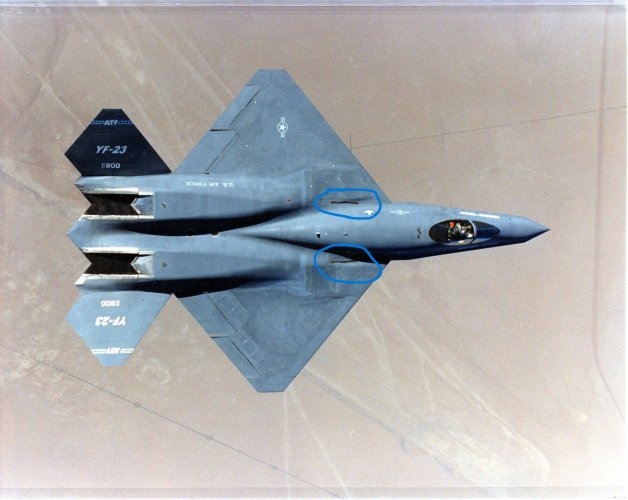
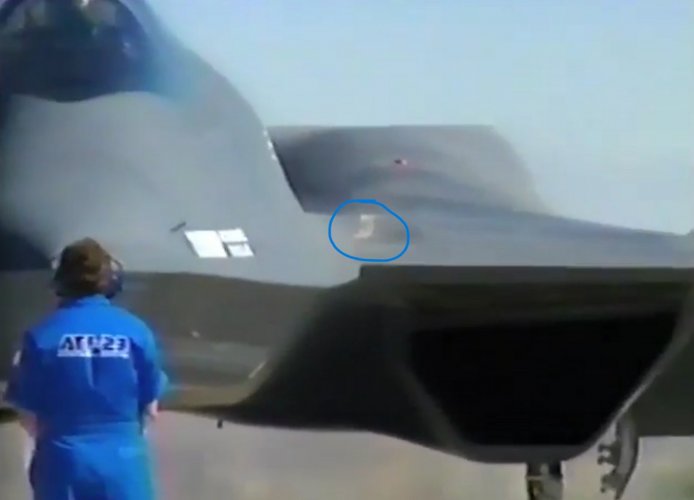
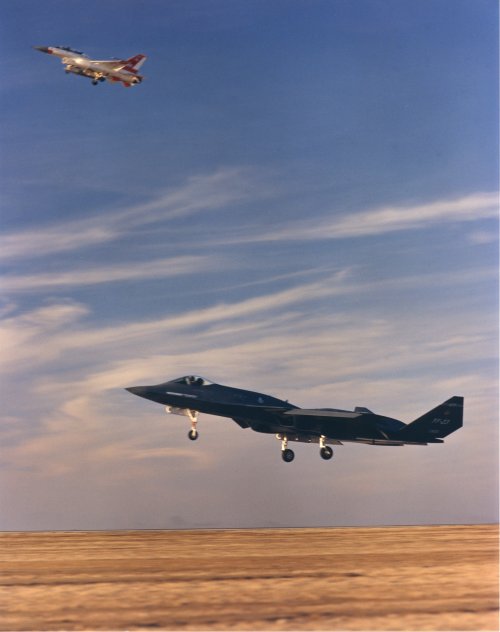
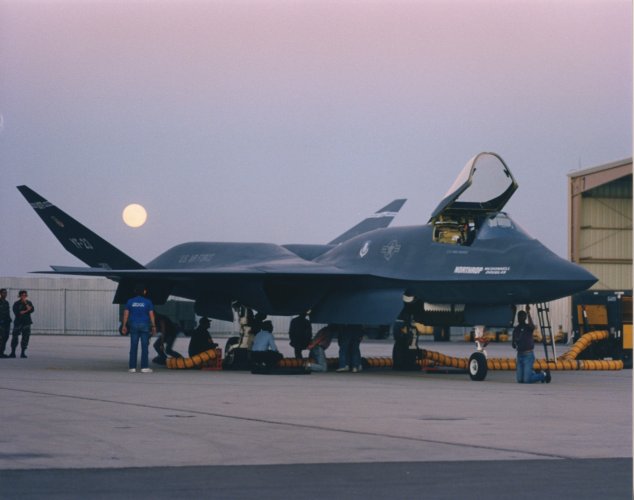
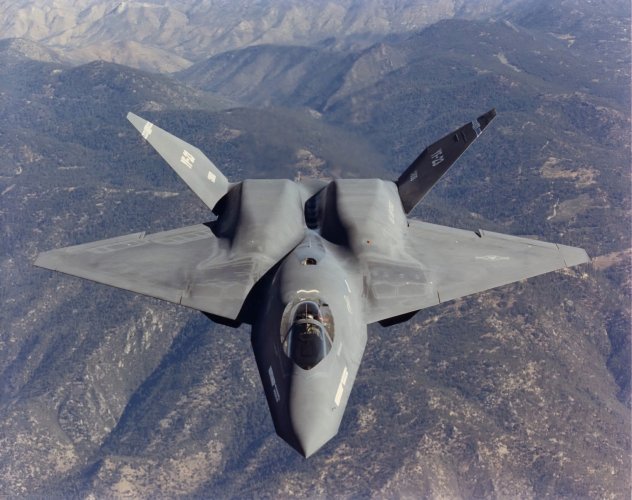
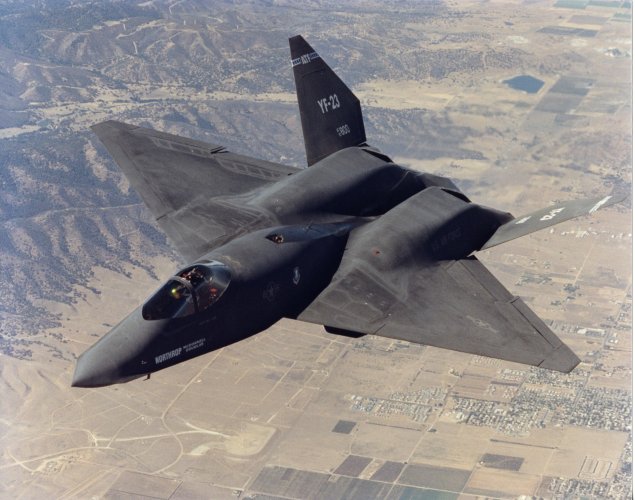
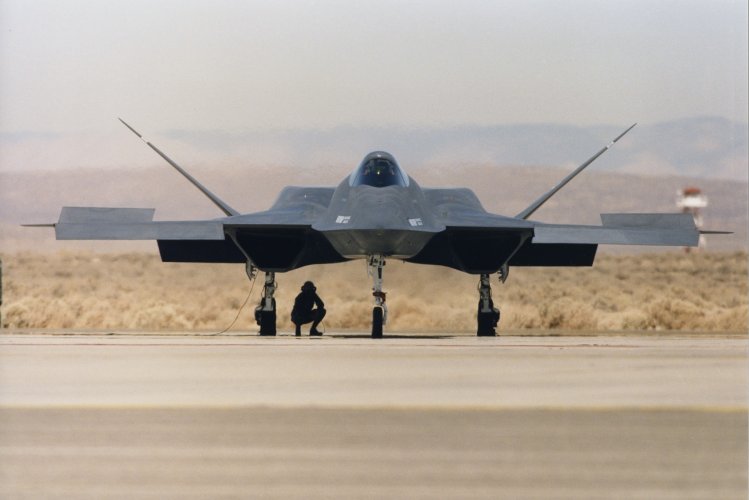
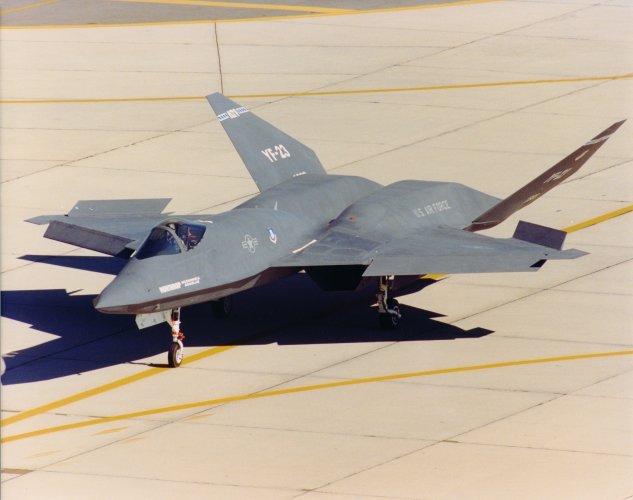
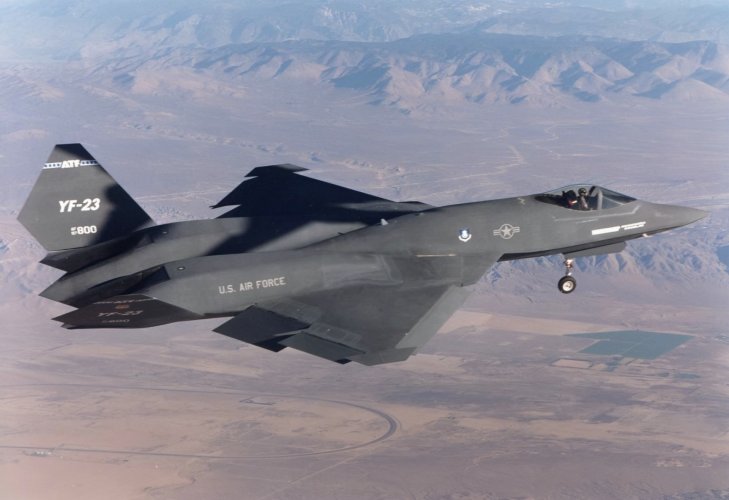
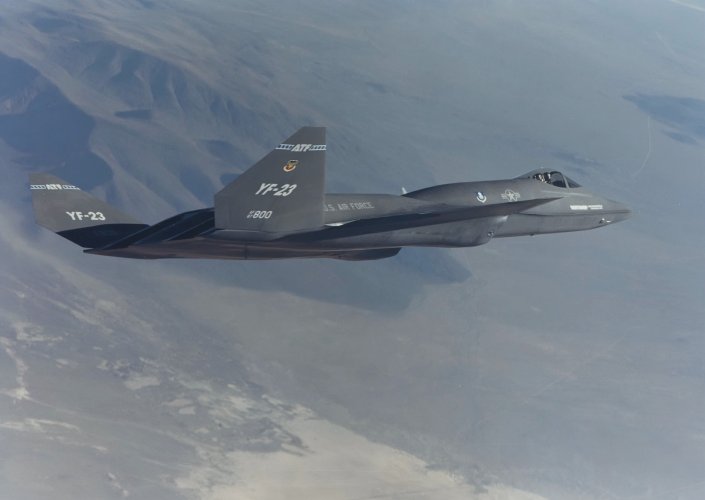
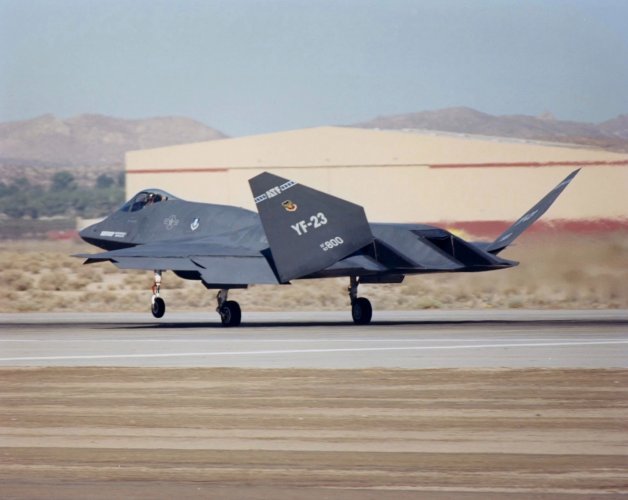
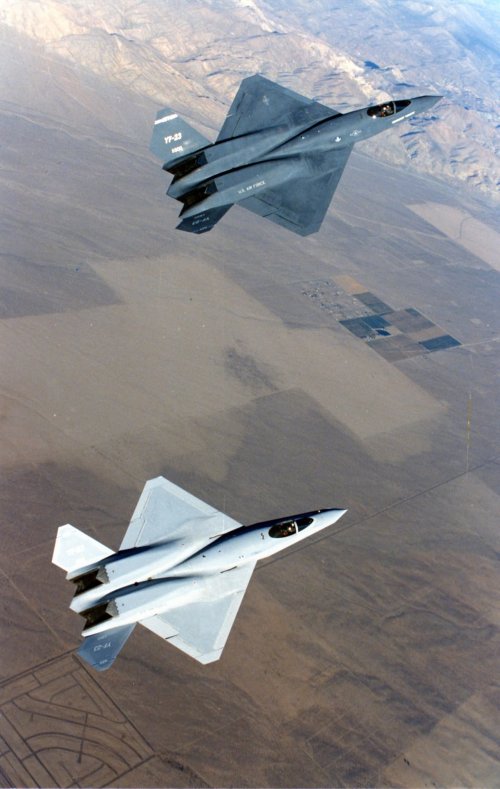
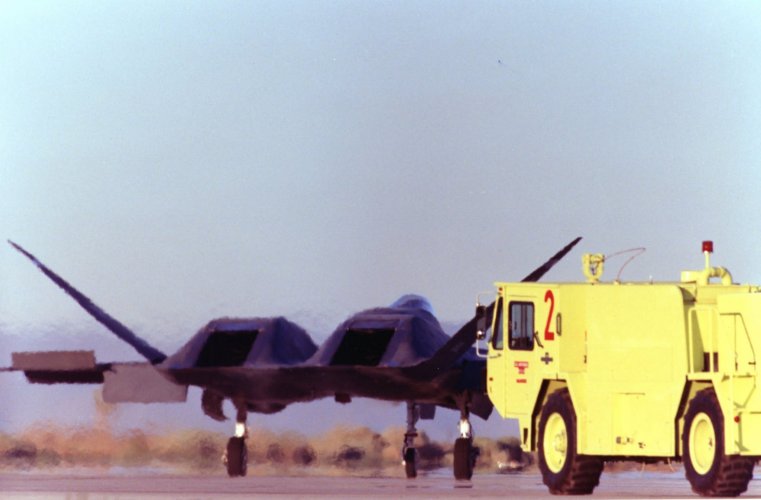
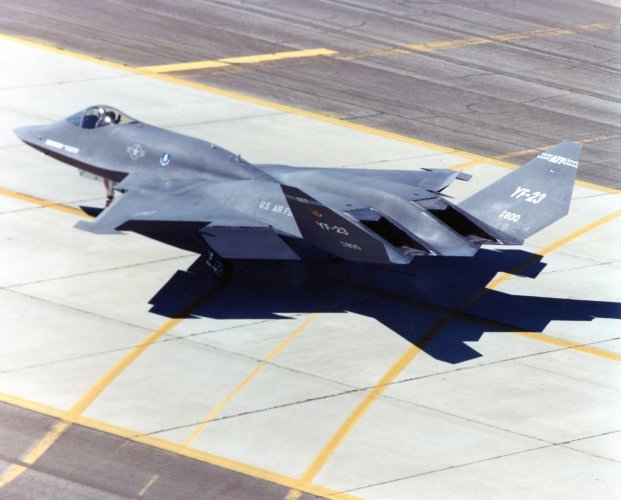
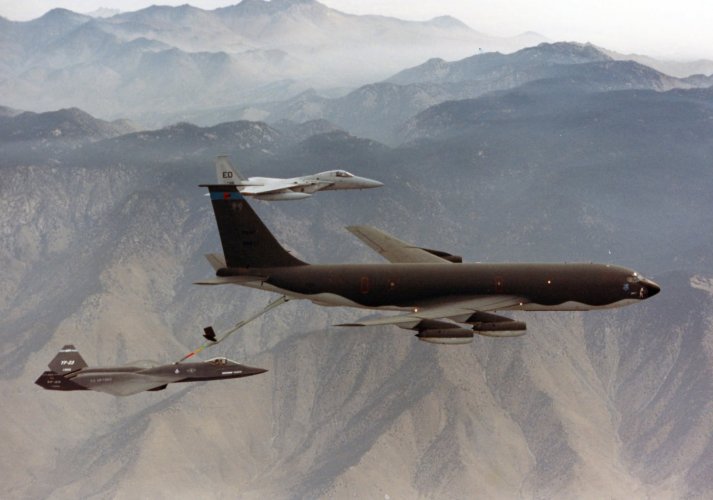
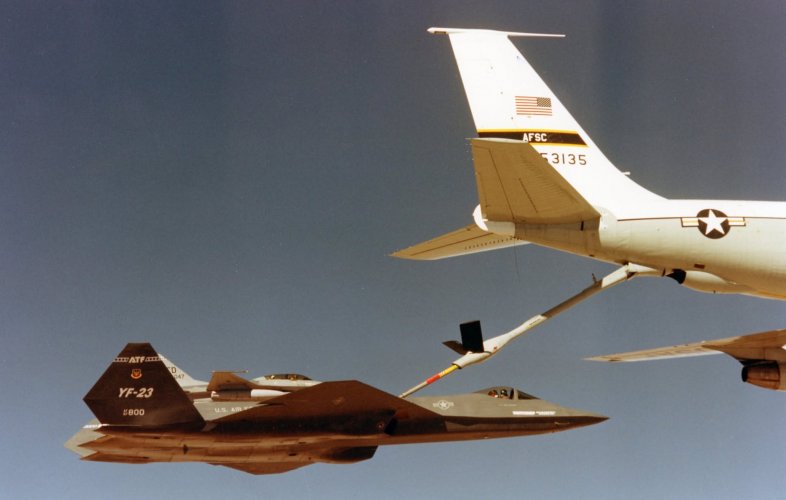
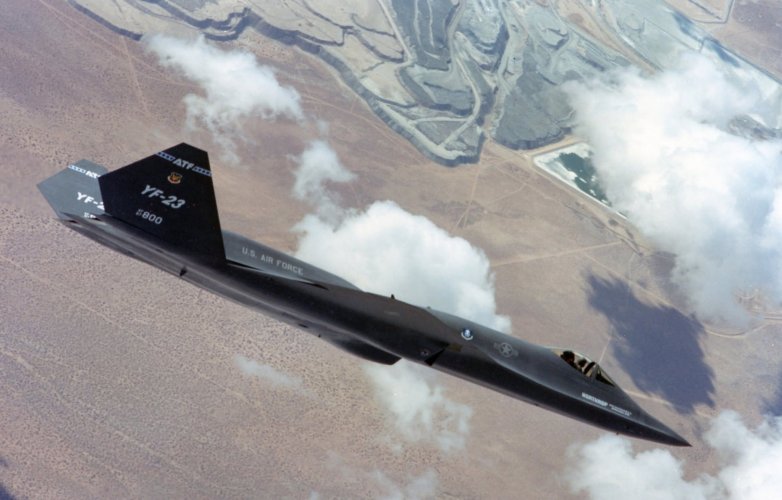
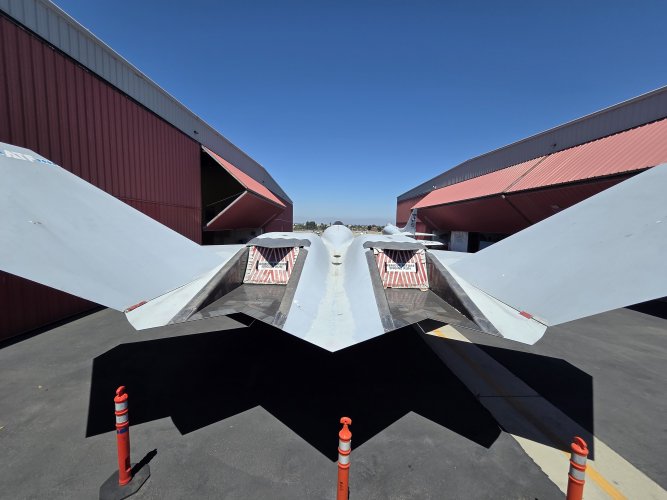
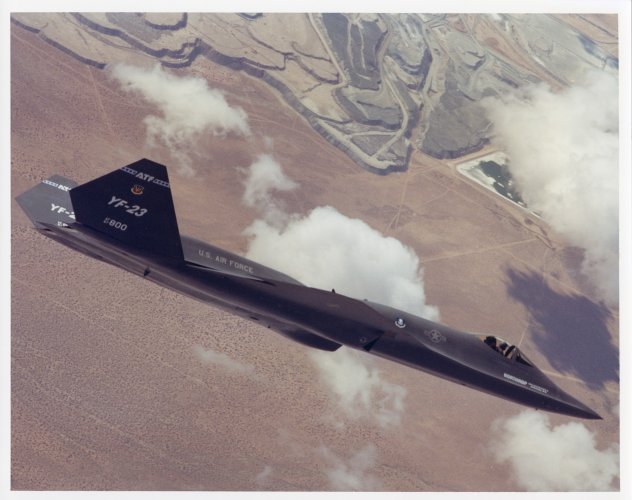
Hello, I have a question regarding the BLC exhaust vents on each side of the fuselage of PAV-1. Looking at the archival videos and photos during the 1990 demo flights in some pictures they appear darker in color (black like) and in other pictures they appear lighter in color (whitish gray). The PAV-1 restoration appears to be black (see page 37 post #1453). Anyone now why this is or how these exhaust vents work that may make them appear to change color?
 

Attachments

  • 511294112_24049015528051157_3315154371768658937_n.jpg
    511294112_24049015528051157_3315154371768658937_n.jpg
    484 KB · Views: 1,258
  • 2025-11-23 00.29.14 www.youtube.com cb59881ea06c.jpg
    2025-11-23 00.29.14 www.youtube.com cb59881ea06c.jpg
    75.7 KB · Views: 1,206
  • 10633620-956333091084287-2115112889831259991-o.jpg
    10633620-956333091084287-2115112889831259991-o.jpg
    158 KB · Views: 1,207
Last edited by a moderator:
Hello, I have a question regarding the BLC exhaust vents on each side of the fuselage of PAV-1. Looking at the archival videos and photos during the 1990 demo flights in some pictures they appear darker in color (black like) and in other pictures they appear lighter in color (whitish gray). The PAV-1 restoration appears to be black (see page 37 post #1453). Anyone now why this is or how these exhaust vents work that may make them appear to change color?

View attachment 792804View attachment 792805View attachment 792806
I'm pretty sure that is the contrast between the black and the light gray.

I'd suggest Dark Ghost Gray for the color of that spot.
 
Thank you both for your input. Saw a photo way up stream from Metz book of the ECS exhaust port aft of the canopy where it looks like a mesh/grilled surface. Differences in appearance probably due to the viewing angle as suggested.
 
Thank you both for your input. Saw a photo way up stream from Metz book of the ECS exhaust port aft of the canopy where it looks like a mesh/grilled surface. Differences in appearance probably due to the viewing angle as suggested.
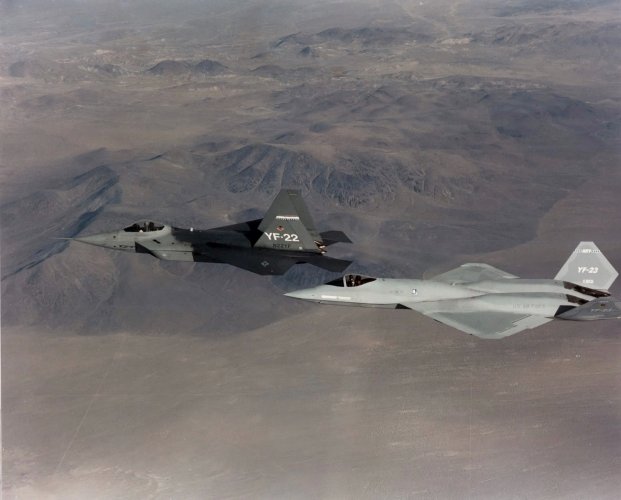
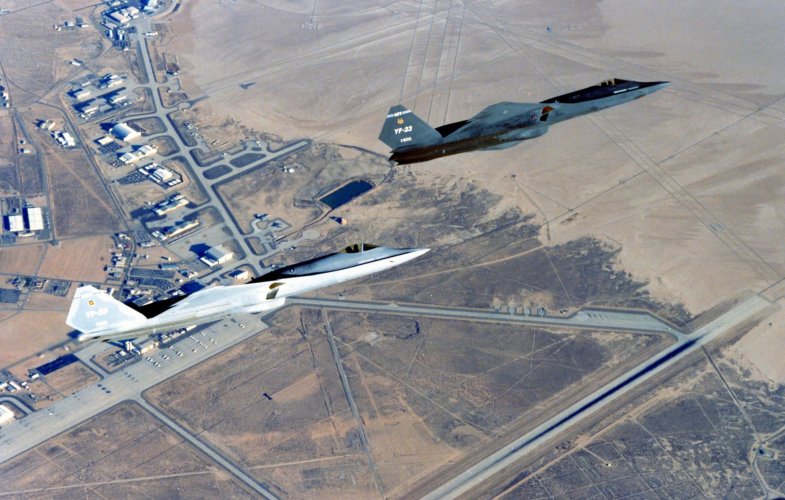
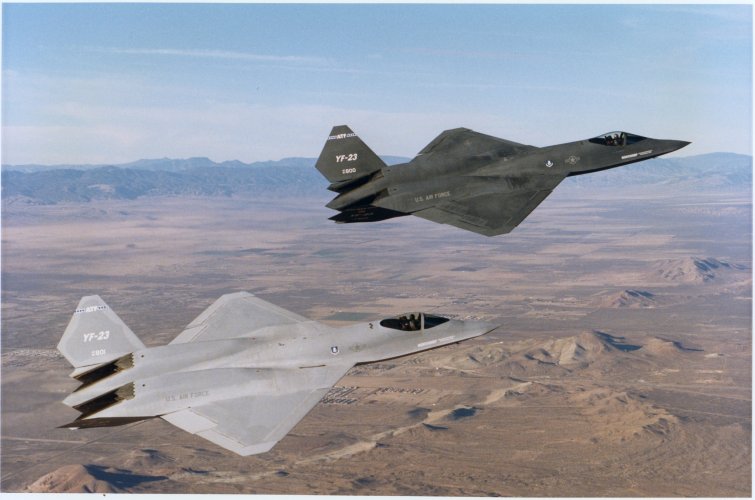
I don't think it's the viewing angle, I think it's the difference between the black on AV2 (looks light) and Light Ghost Gray on AV1 (looks dark/black).
 

Attachments

  • 20251217_YF-23_NMUSAF_004.jpg
    20251217_YF-23_NMUSAF_004.jpg
    943.9 KB · Views: 258
  • 20251217_YF-23_NMUSAF_006.jpg
    20251217_YF-23_NMUSAF_006.jpg
    559.2 KB · Views: 223
  • 20251217_YF-23_NMUSAF_002.jpg
    20251217_YF-23_NMUSAF_002.jpg
    520 KB · Views: 231
  • 20251217_YF-23_NMUSAF_003.jpg
    20251217_YF-23_NMUSAF_003.jpg
    538.8 KB · Views: 220
  • 20251217_YF-23_NMUSAF_005.jpg
    20251217_YF-23_NMUSAF_005.jpg
    445.7 KB · Views: 215
  • 20251217_YF-23_NMUSAF_001.jpg
    20251217_YF-23_NMUSAF_001.jpg
    325.4 KB · Views: 251
  • 20251217_YF-23_NMUSAF_000.jpg
    20251217_YF-23_NMUSAF_000.jpg
    1.5 MB · Views: 278
Last edited:
Part 2 of the new National Museum of the USAF YF-23 collection
 

Attachments

  • IMG_0274.jpeg
    IMG_0274.jpeg
    181.3 KB · Views: 202
  • 1766104005342_target.jpeg
    1766104005342_target.jpeg
    489.5 KB · Views: 191
  • 1766103711983_target.jpeg
    1766103711983_target.jpeg
    614.2 KB · Views: 191
  • IMG_0290.jpeg
    IMG_0290.jpeg
    860.7 KB · Views: 171
  • IMG_0288.jpeg
    IMG_0288.jpeg
    644 KB · Views: 179
  • IMG_0285.jpeg
    IMG_0285.jpeg
    577.2 KB · Views: 179
  • 1766100951759_target.jpeg
    1766100951759_target.jpeg
    361.5 KB · Views: 187
  • 1766101774029_target.jpeg
    1766101774029_target.jpeg
    177.9 KB · Views: 188
  • 1766103273023_target.jpeg
    1766103273023_target.jpeg
    325.1 KB · Views: 188
  • 1766101895039_target.jpeg
    1766101895039_target.jpeg
    342.5 KB · Views: 169
  • 1766103226307_target.jpeg
    1766103226307_target.jpeg
    582.6 KB · Views: 173
  • 1766103562126_target.jpeg
    1766103562126_target.jpeg
    280.7 KB · Views: 176
  • 1766103423679_target.jpeg
    1766103423679_target.jpeg
    369.8 KB · Views: 185
  • 1766103854123_target.jpeg
    1766103854123_target.jpeg
    315.1 KB · Views: 198
  • 1766103758724_target.jpeg
    1766103758724_target.jpeg
    559.9 KB · Views: 204
Last edited by a moderator:
Another batch (4 from 5) was uploaded a few hours ago. :cool:
National Museum of the U.S. Air Force said:
Any fans of the Northrop-McDonnell Douglas YF-23A? View these historic photos then visit the aircraft on display in the museum's fourth building. #avgeek #aviation #legend (Photo Series 4 of 5)
In 1991, after extensive flight testing, the USAF announced that the Lockheed YF-22A won the airframe competition. Northrop ended its ATF program, and the YF-23A on display came to the Museum in 2000.
Locations: Northrop YF-23A “Black Widow II” Advanced Tactical Fighter (PAV-2)(Western Museum of Flight)
(PAV-1 NMUSAF Dayton Ohio)
Source / Link:
https://www.facebook.com/AFmuseum/photosAt work, but here some appetizers. :cool:
 

Attachments

  • 20251219_YF-23_NMUSAF_018.jpg
    20251219_YF-23_NMUSAF_018.jpg
    698.4 KB · Views: 198
  • 20251219_YF-23_NMUSAF_019.jpg
    20251219_YF-23_NMUSAF_019.jpg
    499 KB · Views: 181
  • 20251219_YF-23_NMUSAF_020.jpg
    20251219_YF-23_NMUSAF_020.jpg
    613.4 KB · Views: 183
  • 20251219_YF-23_NMUSAF_021.jpg
    20251219_YF-23_NMUSAF_021.jpg
    720.4 KB · Views: 185
  • 20251219_YF-23_NMUSAF_022.jpg
    20251219_YF-23_NMUSAF_022.jpg
    676.9 KB · Views: 192
  • 20251219_YF-23_NMUSAF_023.jpg
    20251219_YF-23_NMUSAF_023.jpg
    794.9 KB · Views: 204
  • 20251219_YF-23_NMUSAF_025.jpg
    20251219_YF-23_NMUSAF_025.jpg
    431.8 KB · Views: 282
  • 20251219_YF-23_NMUSAF_024.jpg
    20251219_YF-23_NMUSAF_024.jpg
    749 KB · Views: 209
Last edited:
Just a heads up, the fifth and last batch of pictures was uploaded to the Facebook page a few hours back.
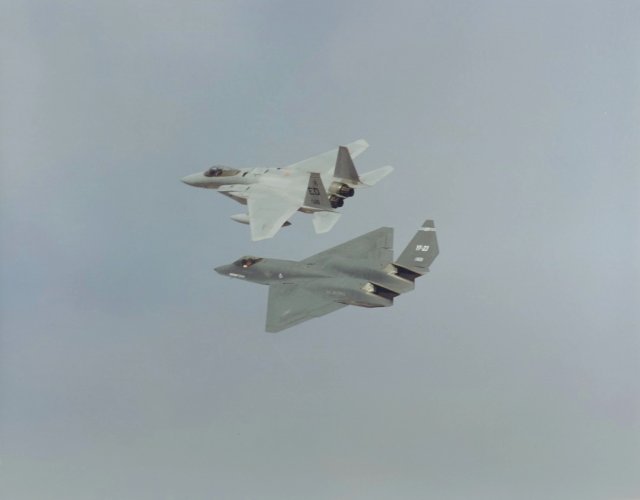
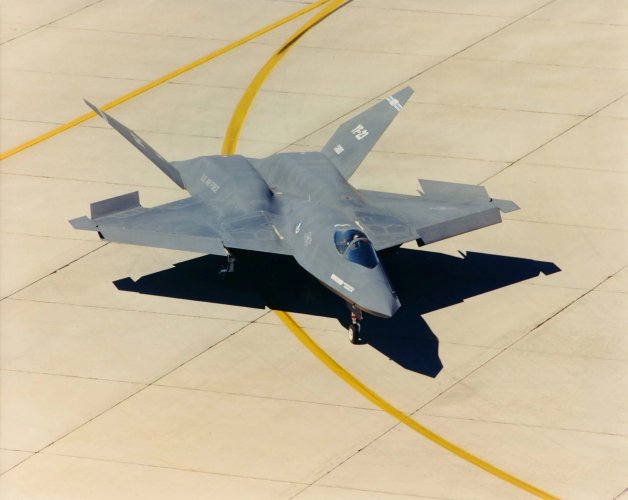
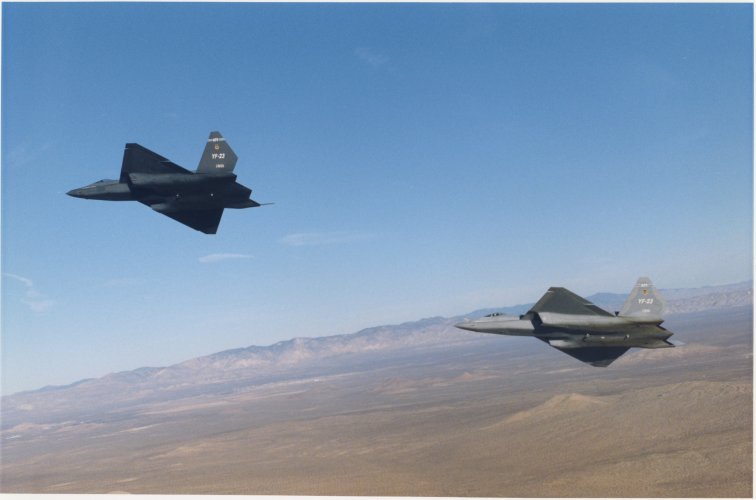
This collection includes the YF-23 PAV-1 and PAV-2, which had been stored post-test program and were pending restoration before being showcased in museums.
Source / Link:
View: https://www.facebook.com/100064496841993/posts/pfbid076m9WotH9HZXwSuiw1U1SFU9QyT9X2xn79LbM7txarkJFFrQ8eXww7umPo1C2atLl/
 
Reading through the thread - would the production F-23 still have wider engine spacing than the F-22 despite being moved closer together?

Any estimates on how wide is the gap between engines of the F-22?
 
Last edited:
It particularly frustrates me when I see entire threads filled with comments that are irrelevant to the topic.

But in this case, I think the reference should be considered acceptable. It's a comparative piece of information, being requested in relation to the main topic. Thus I see no digression.
 
Reading through the thread - would the production F-23 still have wider engine spacing than the F-22 despite being moved closer together?
1980.7 mm at inlet lip seal for DP232 (GE)
1970.6 mm for DP231 (PW)
2400 mm for DP117K (YF-23A)
 
Last edited:
Hello everyone, I've been working on a high-fidelity YF-23 module for DCS World for a while now.

I have a question: are there any publicly available aerodynamic data sheets, or has anyone simulated the model using CFD?

I'd like to know if they exist before running it myself, and if you'd be interested in seeing the fuselage aerodynamics here.
 

Attachments

  • 732151850_10163494847812529_4385373787607664587_n.jpg
    732151850_10163494847812529_4385373787607664587_n.jpg
    314.8 KB · Views: 96
  • 734656037_10163494847647529_1794867359835853632_n.jpg
    734656037_10163494847647529_1794867359835853632_n.jpg
    164.3 KB · Views: 98
  • 734461652_10163494847722529_9215468521681043623_n.jpg
    734461652_10163494847722529_9215468521681043623_n.jpg
    214 KB · Views: 100
  • 733746942_10163494847727529_7115611092463069719_n.jpg
    733746942_10163494847727529_7115611092463069719_n.jpg
    147.5 KB · Views: 94
  • 734797727_10163494847537529_3854552006021860923_n.jpg
    734797727_10163494847537529_3854552006021860923_n.jpg
    155.5 KB · Views: 97
  • 733328597_10163494848132529_3811325355430138310_n.jpg
    733328597_10163494848132529_3811325355430138310_n.jpg
    188.2 KB · Views: 106
  • 733890453_10163494887707529_2137303815531798648_n.jpg
    733890453_10163494887707529_2137303815531798648_n.jpg
    172.8 KB · Views: 104
  • 731754414_10163494887152529_6931999116172233203_n.jpg
    731754414_10163494887152529_6931999116172233203_n.jpg
    181 KB · Views: 96
  • 733195582_10163494886877529_3787766549803249995_n.jpg
    733195582_10163494886877529_3787766549803249995_n.jpg
    126.9 KB · Views: 94
  • 733975141_10163494847712529_5542204924732095906_n.jpg
    733975141_10163494847712529_5542204924732095906_n.jpg
    188.8 KB · Views: 128
More intriguingly, the latest sixth generation fighter concepts from the designers
of the YF-23 darold Cummings also adopt thrust vectoring, instead of the nozzle design used on the YF-23. One reason, as noted in the article, is that thrust vectoring is more critical for flight control of tailless aircraft. Another possible reason is that in terms of development potential, the YF-23’s nozzle does not possess the stealth advantage over vectoring nozzles that is widely assumed.
Actually, the YF-23's nozzles were ideal for lowering the signature around the lower tail and side aspects at the tail. The reason the YF-23 didn't have TV is it didn't need it to meet the requirements. Those large butterfly tails gave it all the control power it required, even at low speeds.
 
Last edited by a moderator:
Actually, the YF-23's nozzles were ideal for lowering the signature around the lower tail and side aspects at the tail. The reason the YF-23 didn't have TV is it didn't need it to meet the requirements. Those large butterfly tails gave it all the control power it required, even at low speeds.
Look where I was today..... Western Museum of Flight.
 

Attachments

  • 20260731_140140.jpg
    20260731_140140.jpg
    2 MB · Views: 105
Back
Top Bottom