Could. Depends on how high you need to get for the bombs to reach terminal velocity.
You could definitely reach higher terminal speed if it included an SRM to accelerate it during its terminal dive.

Could. Depends on how high you need to get for the bombs to reach terminal velocity.

You could definitely reach higher terminal speed if it included an SRM to accelerate it during its terminal dive.
the optimum solution is to fire the rocket at the end of the weapon's flight, just a few thousand feet above the target, to ensure that it is all burnt just before impact.
I don't recalled if it was in this thread or another but @Scott Kenny suggested something based on a BLU-109 with a Mk-72 booster attached in tandem with it.
That's a rather crude solution.
And you still have the issue of hanging the weapon on a pylon when the booster is several inches wider than the penetrator.
It was strictly a military-off-the-shelf solution, for events like the original GBU-28 5000lb design.That's a rather crude solution. And you still have the issue of hanging the weapon on a pylon when the booster is several inches wider than the penetrator.
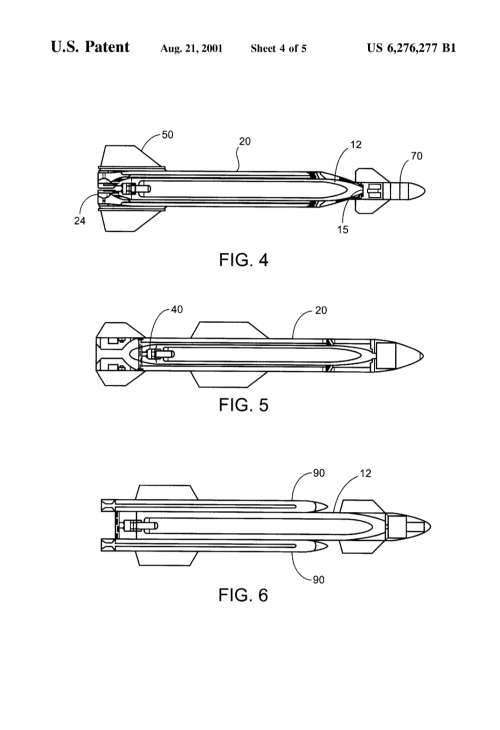
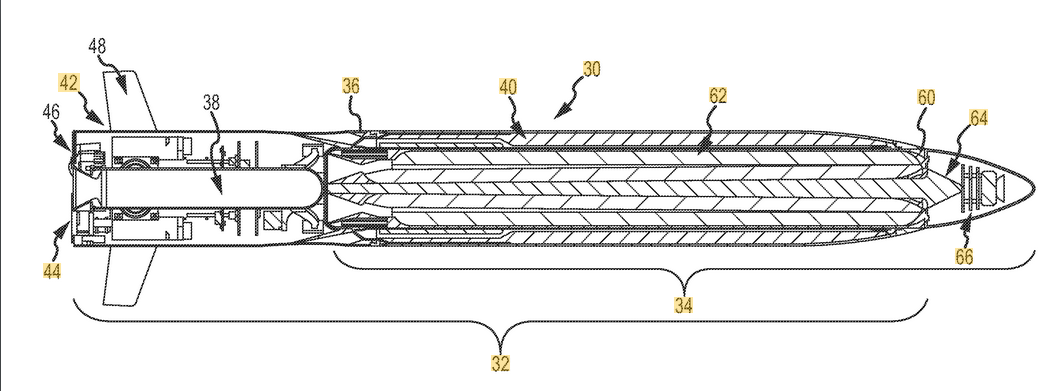
That is going to be really bulky, unless you assume the weapon to be the diameter of a Mk84 and have a much narrower penetrator.There are more elegant ones. This Lockheed Martin patent describes a couple of options. A rocket motor literally wrapped around the penetrator is a really clever idea.
https://patents.google.com/patent/US6276277B1/en
Sorry, I meant "terminal velocity" in the aerodynamic sense, not in the sense of "velocity in terminal phase right before impact." The drag-limited speed of the bomb.You could definitely reach higher terminal speed if it included an SRM to accelerate it during its terminal dive.
Oops, missed this.
Sorry, I meant "terminal velocity" in the aerodynamic sense, not in the sense of "velocity in terminal phase right before impact." The drag-limited speed of the bomb.
Yes, that's what you'd want. Firing the rocket in the last ~5-10 seconds of flight. Firing the booster before then would mean the bomb would slow down before impact.Well if you fire the rocket-motor near the end so that it's still thrusting when the missile impacts the ground.
Yes, that's what you'd want. Firing the rocket in the last ~5-10 seconds of flight. Firing the booster before then would mean the bomb would slow down before impact.
That is going to be really bulky, unless you assume the weapon to be the diameter of a Mk84 and have a much narrower penetrator.
As an example, a
bomb having rocket motor with an outer diameter of 17 inches and with a penetrator having a length of 94.5 inches can be made to emulate the shape, weight, and inertial
characteristics of the GBU-27.
Durrandel had such an arrangement. It was a small anti runway munition.
Is it still in service?
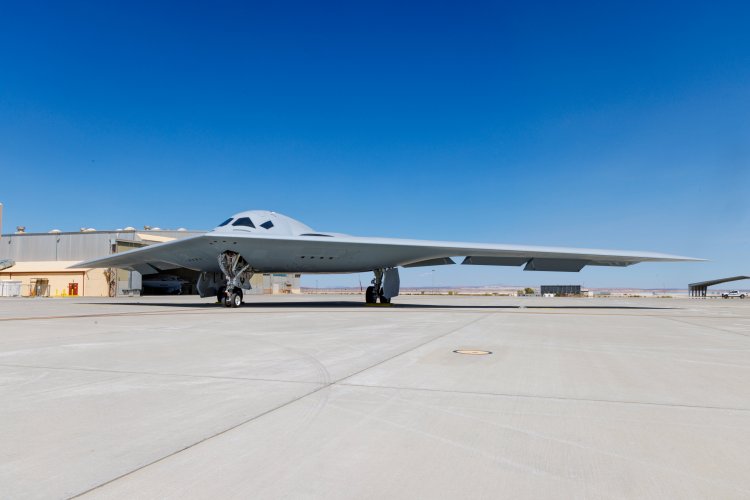
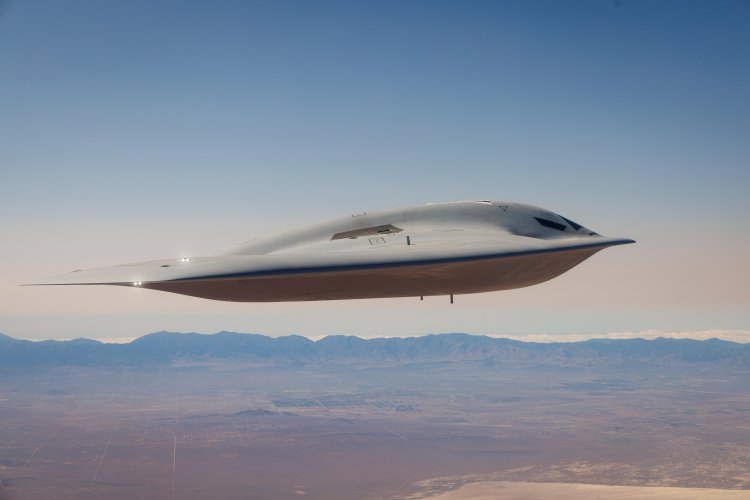
Warden said at Citi’s Global Industrial Tech and Mobility Conference today. The program is now transitioning to production, she added, with the company discussing a growth framework with the Air Force. “I am still optimistic... [paywall]

I think the full transcript is here: https://m.investing.com/news/transc...egic-growth-in-defense-93CH-4511635?ampMode=1https://insidedefense.com/daily-news/air-force-northrop-nearing-agreement-speed-b-21-productionAnyone have full access to this?
Be interested to see if Warden put out any new information here.
Oops, missed this.
Sorry, I meant "terminal velocity" in the aerodynamic sense, not in the sense of "velocity in terminal phase right before impact." The drag-limited speed of the bomb.

Would a bomb with that shape have an issue with transonic drag? Do they normally impact at supersonic velocities?


There have been several antitank missile concepts like that as well.That's a rather crude solution. And you still have the issue of hanging the weapon on a pylon when the booster is several inches wider than the penetrator. There are more elegant ones. This Lockheed Martin patent describes a couple of options. A rocket motor literally wrapped around the penetrator is a really clever idea.
https://patents.google.com/patent/US6276277B1/en
I wonder if the Republicans will be able to pass the proposed additional $450 billion reconciliation bill for the DoD? Bringing defense spending to 5% of GDP would likely significantly alter force sizes across the entire Air Force. B-21 production could potentially be accelerated beyond what is proposed above.

I thought with reconciliation they can pass the bill without Democrat support? I guess you are saying that they have no chance of doing so before the November deadline?They will not, at least not before November, and it seems unlikely they control the House post November. Increasing the defense budget would run up against the affordability issue in an election year. The 1 trillion figure was just a made up number with no basis in reality.
That said, the last budget already increased money for B-21 with the intention of increasing production rate.

I thought with reconciliation they can pass the bill without Democrat support? I guess you are saying that they have no chance of doing so before the November deadline?
The Freedom Caucus would vote against it,


Originally, the LRS-B / B-21 was planned as an optionally manned platform, ostensibly as a means for extended range operations.I strongly do not believe that the US would be willing to have unmanned nuclear bombers.
A 25% increase is actually rather disappointing. This will have a marginal impact.