From old site on the Net,
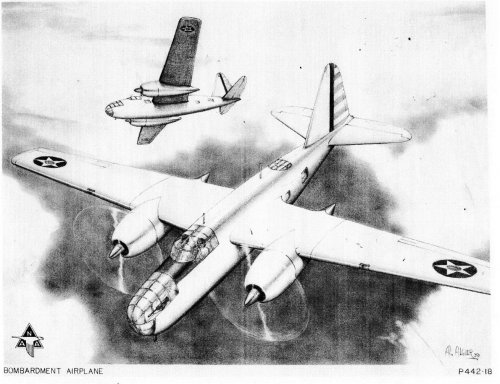
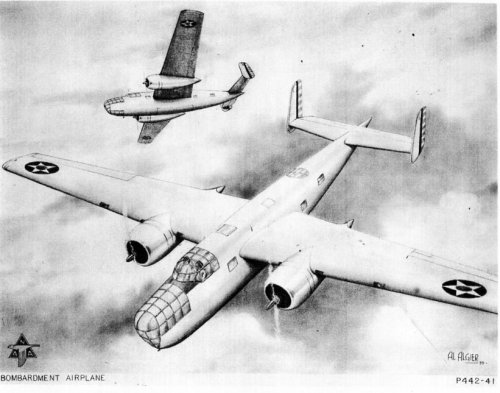
as early as 1937, the US Army Air Corps Materiel Division began preliminary conceptual work on a light, twin-engine Category A bomber—the Attack Bomber—that could eventually replace the single-engine Northrop A-17, then entering service. The new aircraft was expected to deliver higher performance and more powerful armament. In March 1938, the USAAC specified its requirements for the new bomber, issuing Circular Proposal No. 38-385. These specifications called for the aircraft to have a payload of 544 kg (1,110 lb) of bombs, a range of 1,931 km (1,900 mi), and a speed of no less than 322 km/h (200 mph).
Initially, four aircraft manufacturers—Bell, Douglas, Martin, and Stearman—were involved in developing such aircraft designs, submitting their proposals by July 1938. Bell designed the Model 9 with two Allison V-1710 inline engines, two 37 mm cannons in the forward fuselage, and a calculated speed of 410 km/h. Douglas submitted the Model 7B with two Pratt & Whitney R-1830 radial engines. The same engines were also used in Martin's Model 167. Stearman designed the X-100, powered by two Pratt & Whitney XR-2180 radial engines. All bombers were to be twin-engined, of all-metal construction, armed with at least four machine guns in the wings, and equipped with a bomb bay in the fuselage.
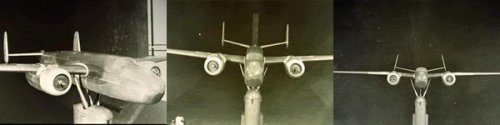
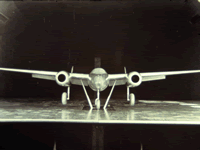
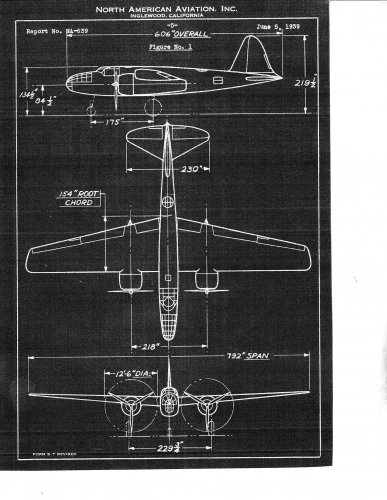
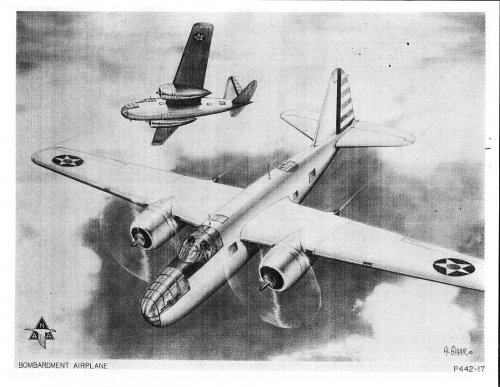
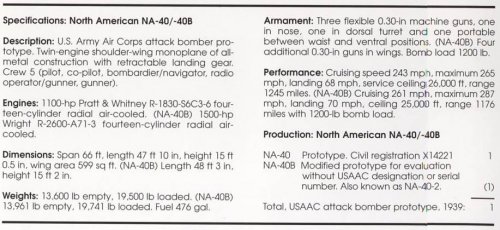
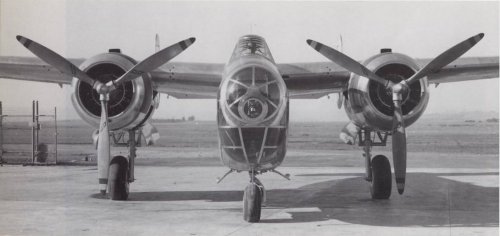
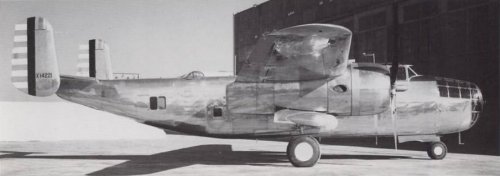
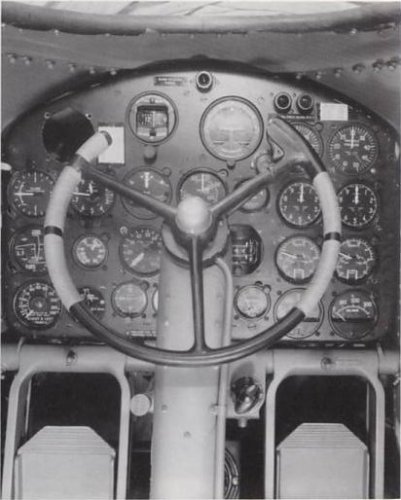
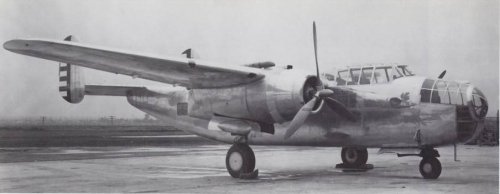
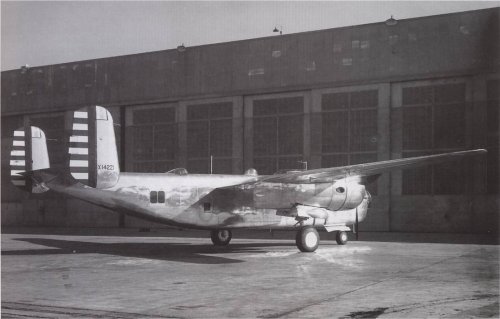
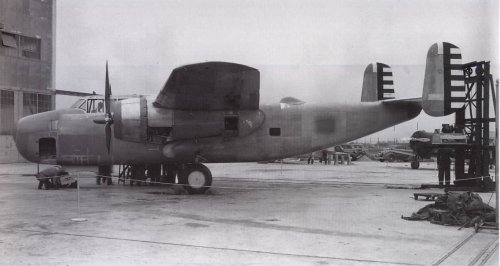
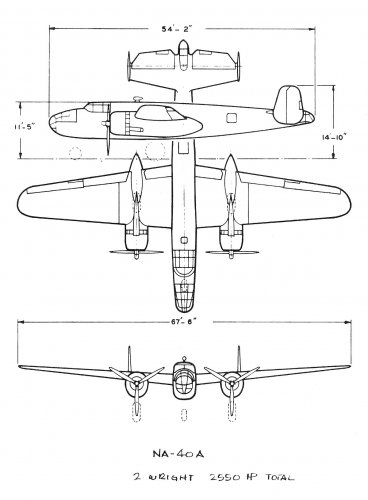
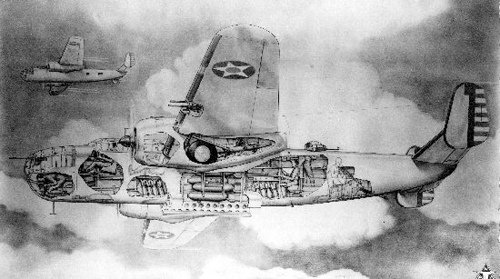
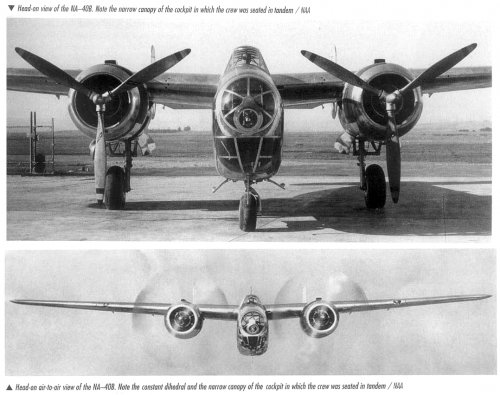
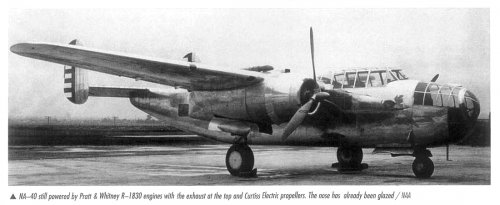
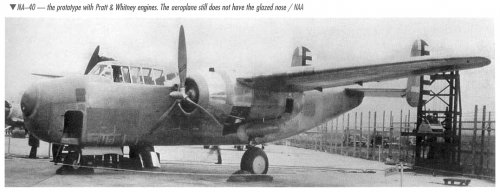
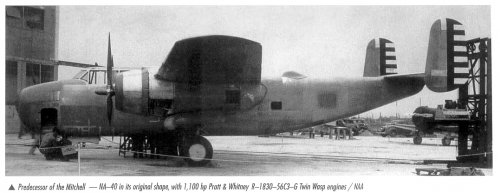
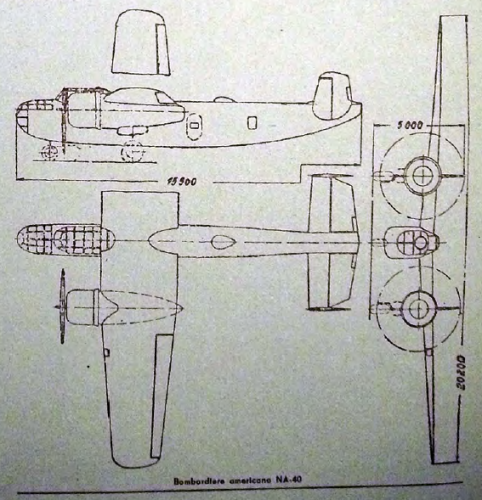
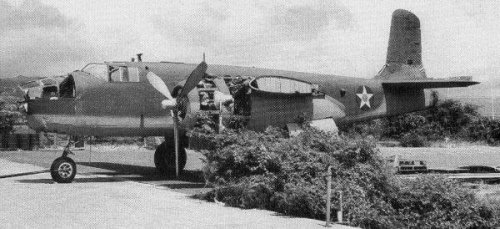
The USAAC required the competing companies to build prototypes for testing at their own expense by March 17, 1939. Bell soon withdrew from the competition, and North American Aviation entered in its place. Designed by a team of engineers led by John L. "Lee" Atwood and R.H. Rice, the aircraft, designated NA-40 , was an all-metal, high-wing, cantilever monoplane with twin vertical tails and enclosed cockpits for a crew of up to five (at the time, Category A light bombers typically had a crew of two to four). The aircraft had a trapezoidal, three-piece wing with ailerons and two-piece trailing-edge flaps. It was equipped with retractable tricycle nosewheel landing gear, the nosewheel retracting into a recess under the cockpit, and the mainwheels retracting into recesses in the rear of the engine nacelles. The aircraft featured a heavily glazed front fuselage (the so-called "greenhouse" – initially designed as a sheet metal enclosure), housing a single navigator and bombardier. Both pilots sat in tandem (one behind the other) in a cockpit enclosed by a long glass canopy. This arrangement of seats – instead of side by side – allowed the bomber's fuselage to be significantly narrower and more aerodynamic. The radio operator and gunner were stationed in the rear fuselage. The bomb bay was located in the center of the fuselage.
The aircraft was powered by two 14-cylinder Pratt & Whitney R-1830-S6C3-G "Twin Wasp" radial engines, each developing 1,115 hp, housed in nacelles under the wings. The bomber was to be armed with three movable 7.62 mm machine guns – one in the forward gunner's cabin, one in a rotating gun turret on the rear fuselage dorsal (operated by the gunner), and one inside the rear fuselage, capable of being deployed through sliding windows and firing at the sides or under the fuselage (operated by the radio operator). Additionally, each wing was designed to accommodate two fixed machine guns of the same caliber, but the prototype flew unarmed.
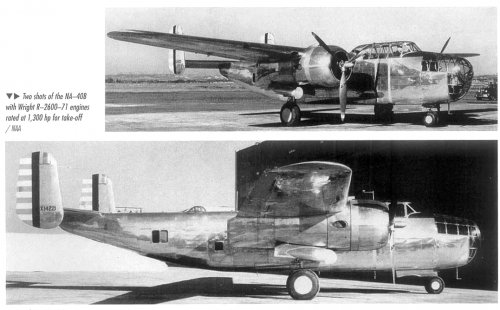
The NA-40 prototype, designated civilian registration NX14221, first flew on January 29, 1939, from Mines Field, a factory airfield, by NAA test pilots Paul Balfour and Frank Lyons. Initial test flights, however, revealed numerous shortcomings with the new aircraft. Specifically, severe vibrations in the tail and engine cylinder overheating were observed. During test flights, a speed of 431 km/h (276 mph) was achieved at an altitude of 1,524 m (5,000 ft) at a takeoff weight of 8,845 kg (18,800 lbs). However, the aircraft was not fully equipped at the time and clearly required more powerful engines. In total, the prototype, in this configuration, flew for 5 hours and 20 minutes over 14 flights. At the end of February 1939, the R-1830 engines were replaced with more powerful 14-cylinder Wright R-2600-A71-3 "Double Cyclone" engines, each developing 1,521 hp (according to [1] and [5] 1,318 hp, according to [6] 1,600 hp), while their cowlings, engine nacelle fairing, carburetor air intakes, and exhaust system were also modified. The modified aircraft was designated NA-40-2 or NA-40B and first flew on 1 March 1939. Paul Balfour was again at the controls. Despite an increased takeoff weight of 9,526 kg, the NA-40B reached a speed of 462 km/h at an altitude of 1,524 m during tests.
On March 12, 1939, the NA-40B prototype flew to the USAAC test facility at Wright Field, Ohio, for military trials. The trials were relatively successful, with only the Curtiss Electric propellers exhibiting some problems (their characteristics didn't quite match those of the engines), and they were scheduled to be replaced with new Hamilton Standard Hydromatics. Unfortunately, on April 11, the aircraft suffered a complete crash when, during takeoff for a test flight, one of the engines suddenly failed, causing the pilot, Major Younger Pitts, to lose control of the aircraft. The crew managed to escape the crashed and burning wreckage before it was completely consumed.
As a result of this incident, the NA-40B lost its chance in the competition, and the first stage of the competition was ultimately passed to Stearman's X-100 and Martin's Model 167. These aircraft later received the military designations XA-21 and XA-22 , respectively. This first competition, however, was inconclusive, and in April 1939, the USAAC issued slightly modified requirements, Circular Proposal No. 39-640. However, on June 30, 1939, the Air Force selected a modified Douglas Model 7B (or DB-7), known by the military designation A-20, as its standard light attack bomber.
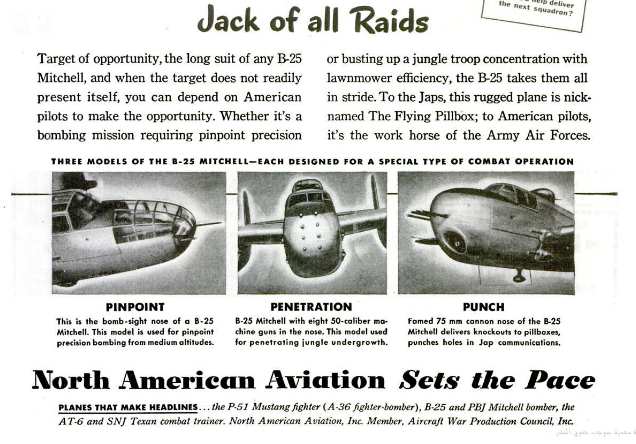
Because the NA-40 was not officially ordered by the Army Air Corps, it received neither a military type designation nor a serial number. The project was not further developed in its original form, but North American designers later used the experience gained from its implementation to design the NA-62 bomber. This aircraft was introduced into production and service with the Air Force under the designation B-25 "Mitchell ," becoming the most widely built American twin-engine bomber.