AIR FORCE Magazine – May 1958
THE American people and Congress are being oversold on the potentialities of the antimissile missile. This overselling is being conducted in an atmosphere of complete confusion, where it is not clear who is in charge of the mission, who is coordinating the development effort, and who has the responsibility for the results.
As a result, there is a grave threat that this country will launch a multi-billion dollar program in an area filled with both technological and administrative unknowns. If it does, it will waste immense quantities of public money, jeopardize our safety, and seriously imperil both civil and military morale.
A wave of cocky talk, sanctioned and encouraged by segments of both the military and political administrations, is misrepresenting the truth. It is raising false hopes that the Russian ICBM threat can and will be met by electronic, push-button defensive measures. There is nothing in the record of today's state of the art to justify such hopes.
Basic to the whole situation is the fact that mission lines have been blurred until it is not clear whether the Army or the Air Force is in charge of defending the continental United States against the ICBM. In fact, on the basis of the last orders they were given they have been working to develop opposing concepts while supposedly working together in a joint effort.
The blunt truth is that, pending technological breakthroughs, all antimissile missile programs should stay on paper. The Air Force has told Congress the job "is the most difficult this country has ever encountered." USAF studies are where they belong -- on paper -- and "no one can determine from a paper study how effective we shall be or if we shall be effective at all." The Air Force spokesman was talking, of course, about a ballistic missile defense system that will protect America, not just the points where a missile-age ack-ack is in operation.
In contrast, the Army is carrying out a consistent and strenuous campaign to convince America a "perfect defense" can be provided, at least for limited areas, if we are willing to make the effort. High-ranking Army officers, backed by their service secretary, are fighting hard to convince Congress it is possible to develop an effective antimissile missile within the parameters of reasonable time and cost.
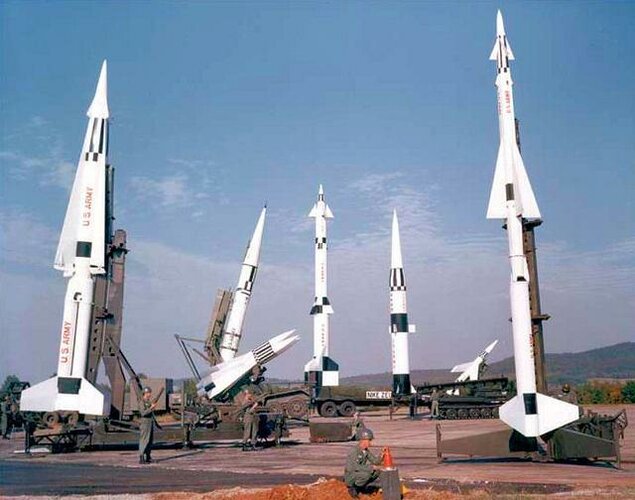
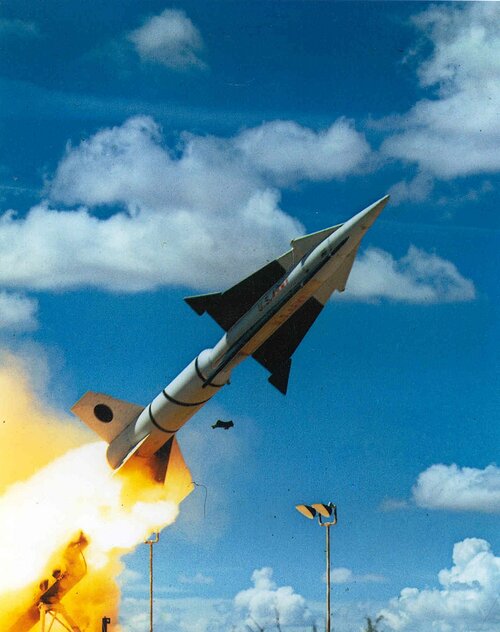
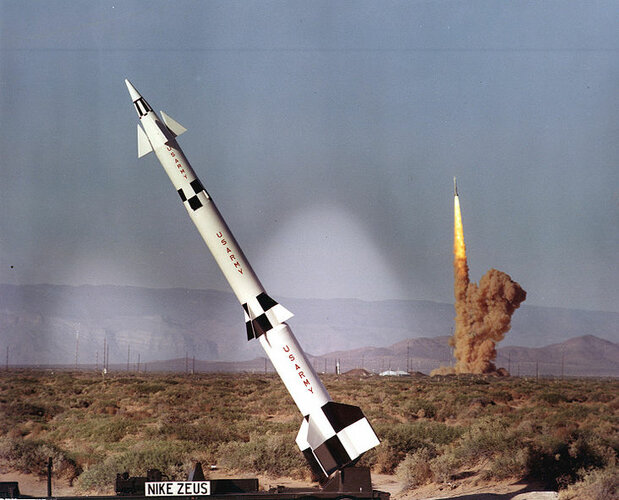
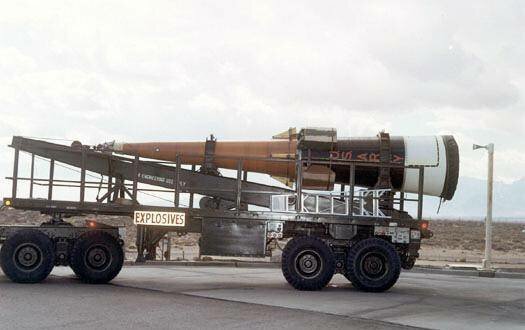
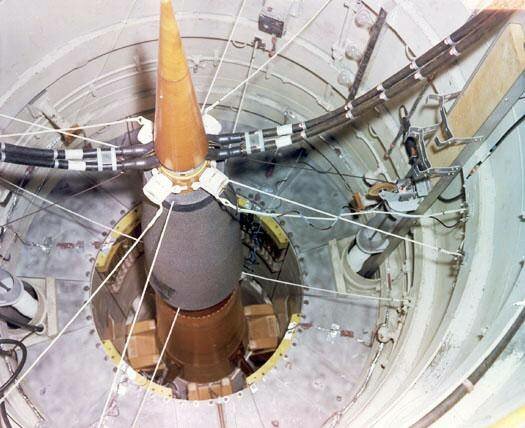
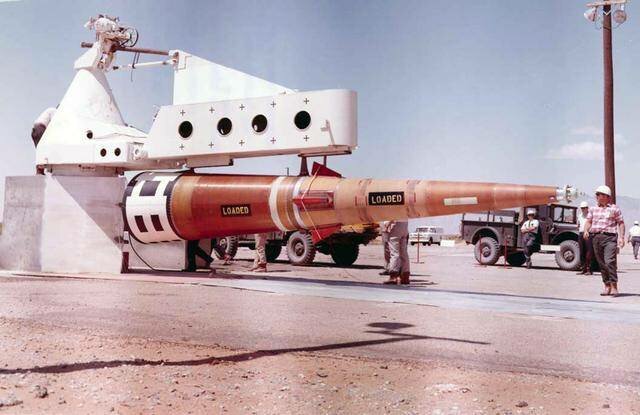
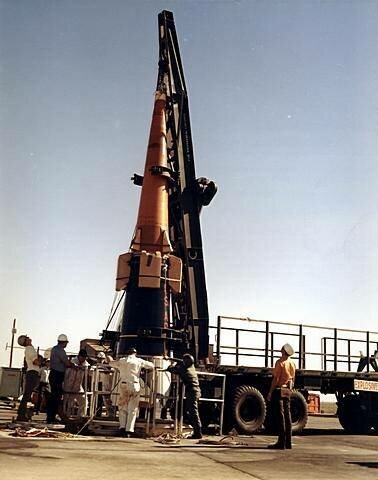
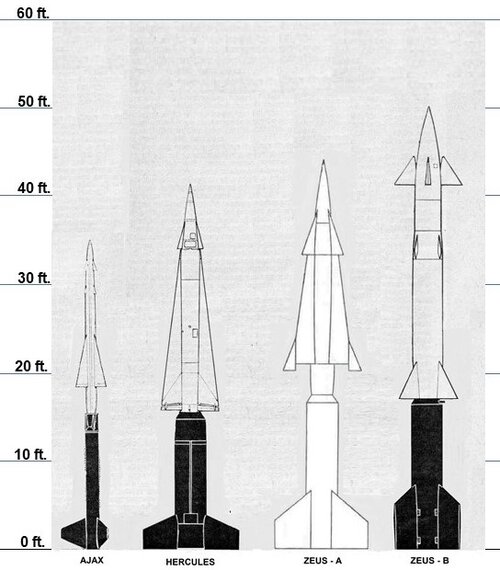
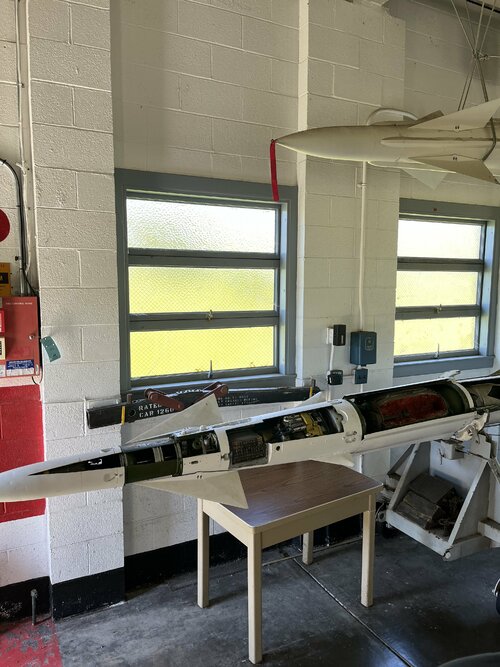
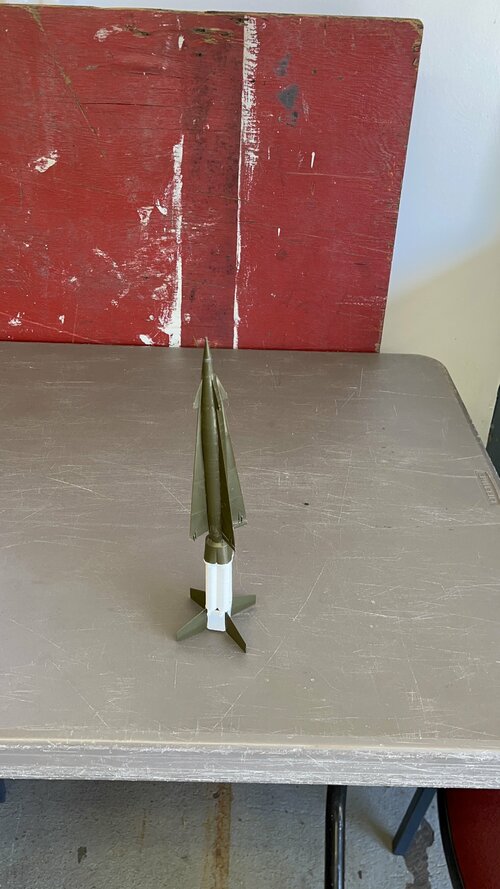
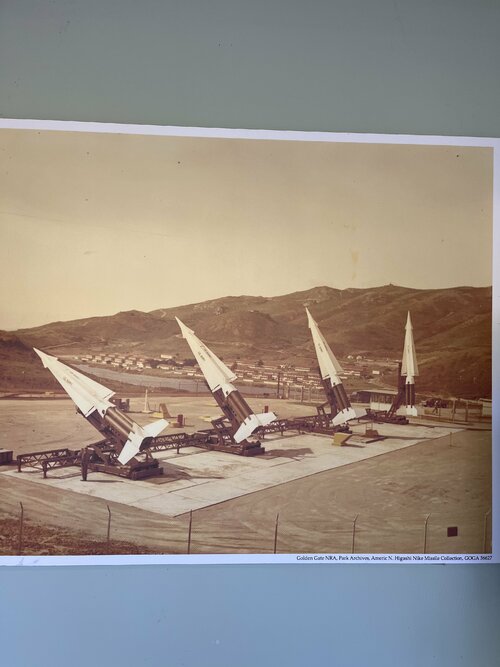
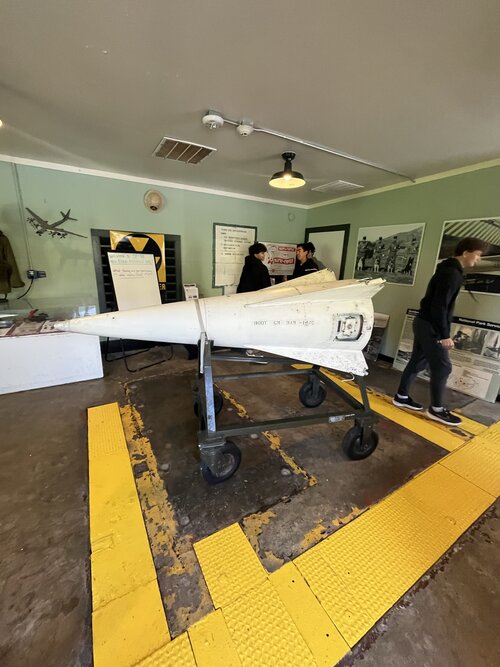
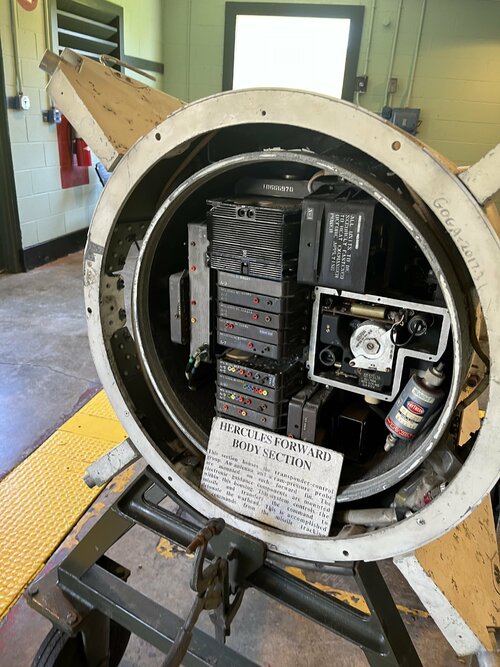
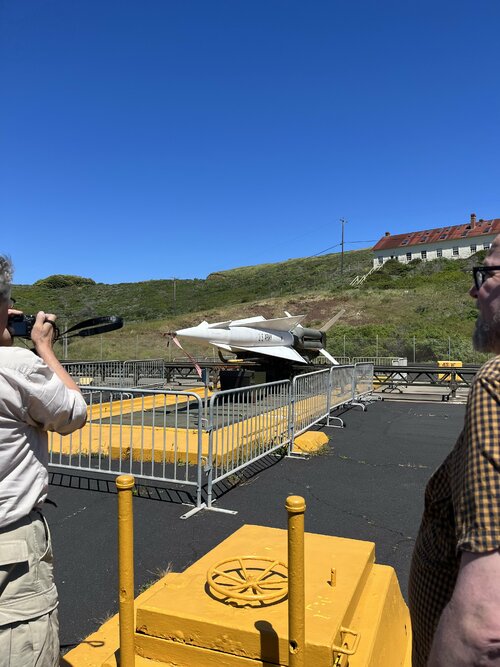
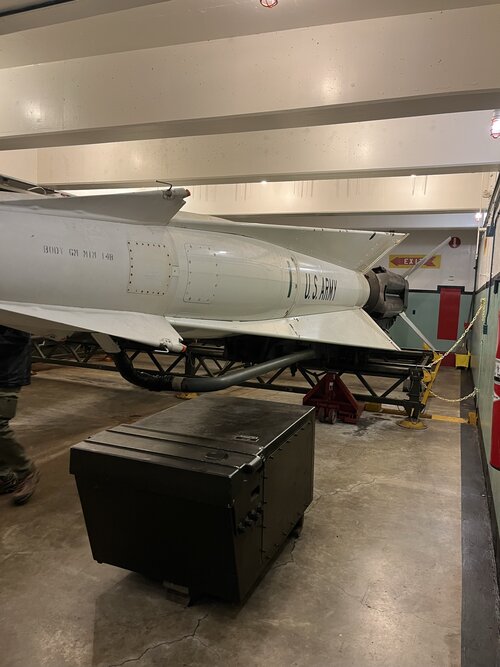
The system Army is trying to sell is the Nike-Zeus, described in its press releases as a logical step in development of what the service calls the "Nike family" of point defense weapons. It is true that Army first developed the shorter range Nike-Ajax and Nike-Hercules, but neither of them has any real technological relation to Zeus.
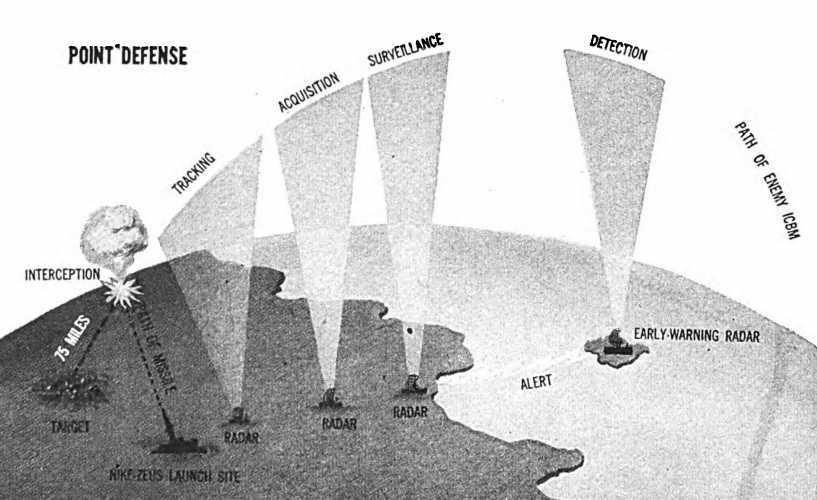
Zeus is a short-range, point defense missile system. If it works, it will intercept an incoming missile something less than 100 miles from the target. The system needs four types of radar, one of which presumably would be the Air Force's 3,000-mile surveillance set based at some distant point such as Thule or Turkey. Once an alarm is received, a second radar with a range of about 1,000 miles would have the task of detecting the target and assigning it to the acquisition radar of some 600-mile range, which must distinguish the ICBM from decoys and friendly aircraft, and provide accurate trajectory data. A fourth short-range (about 200-mile range) radar would track the enemy warhead after it gets in range. A similar beam is necessary to guide the Zeus for the intercept.
It is highly doubtful that any system could stop an ICBM warhead in the range contemplated for Zeus and at the speed with which it would be approaching. More important is the fact that the Zeus specifications give the potential enemy no credit for ability to improve his ICBM after the first generation.
Knowledgeable technicians feel confident more sophisticated ballistic missiles will spoof both tracking and guidance segments of defense systems, that they will find a way to divert from the ballistic trajectory, and that they will be improved in speed and range. When these improvements come, the point defense concept will be completely frustrated by the unforeseen intelligence of the incoming warhead.
The Air Force holds that it is too late to talk about how we are going to stop the first generation of ICBMs. It is not in favor of investing valuable time, considerable money, and precious brain power to build a system that will be antiquated before we can start to pour concrete and make black boxes.
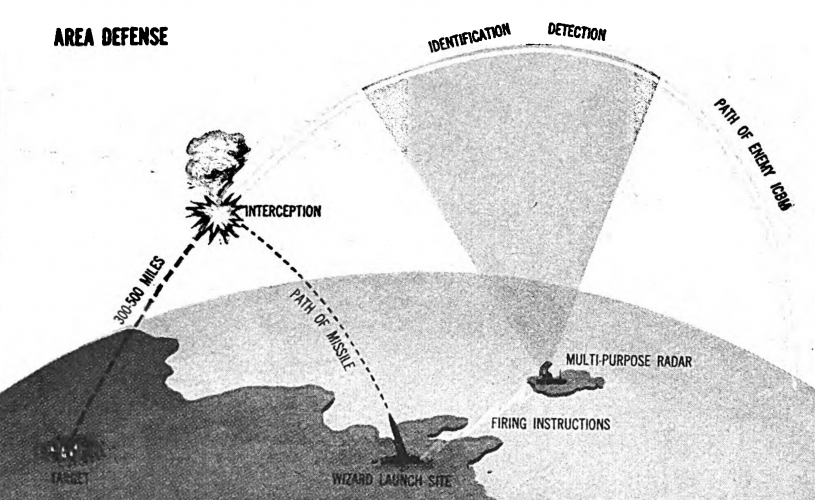
This approach is fundamental to USAF's missile defense studies called Wizard. They are studies and nothing more, recognizing both the gaps in our knowledge and the advances soon to be made by our own technicians and those who design ICBMs for the potential enemy. Wizard is a broad program, searching for a vastly more complicated and sophisticated system than Zeus. Specifications call for the weapon to have a range of at least 1,000 miles, capable of intercepting a warhead somewhere between 300 and 500 miles from the intended target.
Wizard seeks emphasis on distant interception, accurate discrimination, and an improved ground environment system. The latter must be a super-SAGE to provide instant electronic communication and calculation, universal in its application to any kind of threat through the air. If the job can be done, it may eat up a major part of the development effort.
Once perfected, Wizard promises real economy. The goal is to protect the nation, and it should be able to do this for a smaller outlay in cash and effort than required for a point defense system (of which Zeus is the prototype) to protect the country's industrial and military heartland. Wizard proponents, however, do not favor spending any money on hardware until they know where and how to spend it.
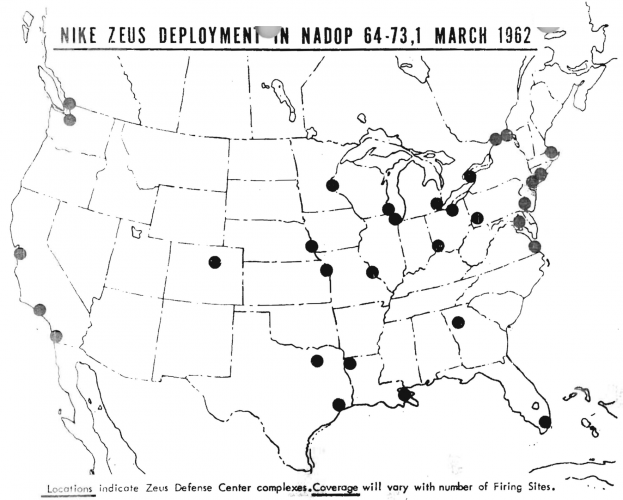
At the outset, the battle between Army and Air Force concepts appears to be one for funds and funds alone, with the winner more or less assured of a permanent spot as defender of the republic. But it is more than that. It is a battle for the safety of our cities. Under Army's point defense concept, who is to say we will defend Washington and let San Francisco be blown to smithereens? Or that we will let all the cities go for the present and defend the SAC bases?
The Army today is trying hard to parlay some obtainable hardware, useless for the long-run mission, into justification for a role the Army has not been given by Congress or administrative edict.
Major part of the Army's argument is a voluminous report, put on stage as a scientific evaluation but more realistically described by those who have seen it as an Army-financed rationalization to promote the Nike-Zeus and the point defense concept. The document has been the basis for presentations on Capitol Hill, in the Defense Department, and at the White House. It also was the source of a press report last November that the Army seeks between $6 billion and $7 billion to finance its effort to produce an antimissile missile by 1961.
The arithmetic made public at that time and since has been too modest. It has been estimated that pursuit of the Army's program, if the study included answers to a myriad of unsolved technical problems, would need an outlay of $120 billion in the next eight years.
Details of the Army's documentation are classified, and there are no publishable official evaluations of what it says. Its most severe critics say it is a witch doctor's justification for giving the entire air defense mission to the Army. Offered as the last definitive word on the subject and the best technical estimate ever made, it is reported by competent observers to be wrong in its premises, its procedure of calculation, its results, and its conclusions.
Among other things, the report is said to assume capabilities and reliability for electronic systems that are purely fantastic considering the present state of the art. It has ignored electronic countermeasures (ECM) or assumed that the Nike-Zeus system can overcome them with little or no trouble. The possibility of low-level attack was not considered, and there is no evaluation of the state of the art for manned interceptor defense systems.
Even sources outside the Air Force say the Army-sponsored study fails to give sufficient weight to the decoy problem and would provide no proper discrimination between friend and foe in the air. It is said to underestimate Russian offensive capabilities and assume that early-warning techniques are more advanced than is justified.
Basic fallacy of the entire approach is that it does not recognize, as USAF does, that the ballistic missile defense problem today is a research problem. It has been pointed out by reliable experts that this is no time to take an extreme step because it will take six to ten years to install a ballistic missile defense system of any kind, and we are on the verge of vast new discoveries that will have to be ground into the program. A second major point has to do with complexity. The ballistic missile defense system, when it is possible, will have to be a combination of a number of weapon systems. Not all of the threat will be from launching pads on the other side of the North Pole, coming at us from a relatively narrow segment of the compass. Like us, the enemy will have a variety of high-speed nuclear warheads, launched from distant hard sites, submarines, surface ships, airplanes, or manned spacecraft.
In the face of these facts the Defense Department at this writing still has no over-all system engineering supervision in action on the antimissile project. It has set up no procedures to ensure that the numerous and highly complex components of the weapon system will be compatible and properly phased into the development and production program, when one is possible.
For a sound evaluation of the antimissile defense picture, it is essential that we turn a deaf ear to all the arguments over the relative merits of any particular weapon -- or service -- for this purpose. Discussion of Nike-Zeus vs. Wizard is about as sensible as an argument over which of two unborn baby boys will be the better tennis player. Only the concept is worthy of words at this point.
If there is anything worse than dependence on a pure point defense system in the coming era of highly efficient ballistic missiles, it is split mission responsibility. And, so far as the development stages are concerned, a split mission is exactly what we have got.
On January 18 Defense Secretary Neil H. McElroy, in a decision that can be pardoned only as an excuse to avoid a decision, gave part of the immediate job to USAF and part to the Army. With the two services working on opposing concepts, the development was divided: USAF will continue work only on the radar and data-handling aspects of Wizard while the Army concentrates on the Nike-Zeus missile system, although permission since has been granted to continue the entire Wizard program until the end of this fiscal year, next June 30.
Immediately, the shotgun wedding of Wizard and Zeus has left us with no clear delineation of responsibility for the necessary compatibility of the radar and data-handling with the weapon itself. In USAF parlance, there is no Weapon System Project Office to make sure there will be a weapon system.
The struggle, of course, will be for funds, and it will be umpired by Roy W. Johnson, Director of the Advanced Research Projects Agency. Before him and Congress, Army will fight all efforts to put aside their program -- and their aspirations in the air defense mission -- until the state of the art justifies action.
Aghast at the staggering cost estimates of any missile defense system and timid about a firm decision to keep the Army out of the picture, the Defense Department appears to have created a muddle that can wind up only with some resolution as weak as the union of the Thor and Jupiter intermediate-range ballistic missiles. In that case, the Air Force got one weapon it didn't want and is paying an extravagant price to have it in inventory. In the area of defense against ballistic missiles it is being forced to accept part of the cure offered by a witch doctor, while standing convinced that magic is not the answer to our security problem.
And in a time when defense reorganization is being debated vociferously, the air defense muddle points up the fact that unification per se does not provide all the answers. In fact, the air defense dilemma has actually been exacerbated by a "unified" decision at the top. So centralization of authority must be accompanied by competence in decision-making or we still wind up confused -- even though unified. -- END