athpilot
Fly me to the moon...
- Joined
- 18 November 2012
- Messages
- 436
- Reaction score
- 554
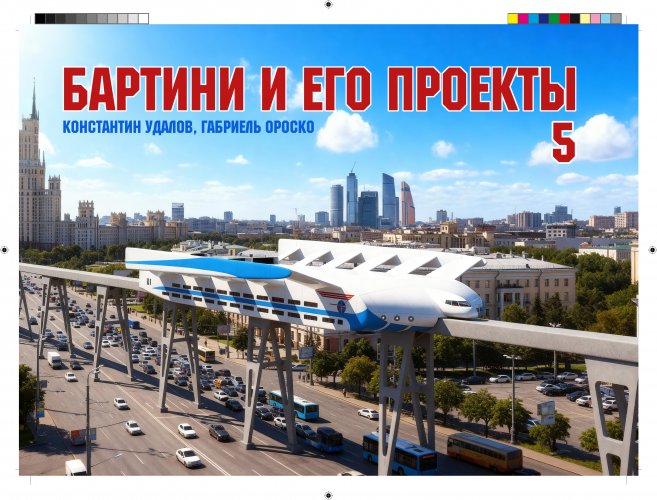
New Book: Udalov, Konstantin and Orosco, Gabriel, Bartini and his projects, Vol. 5 – Transportation and Architecture, Moscow AvikoPress 2025
Удалов К. Г., Ороско Габриель: Бартини и его проекты. Том 5. Транспорт, архитектура.
Москва. 2026 г., 104 с.
УДК. 82-94: 629. 7. Бартини и его проекты. Том 5. Транспорт. Архитектура. 01/08
ББК 39.5г
ISBN 978-5-4465-3169-1
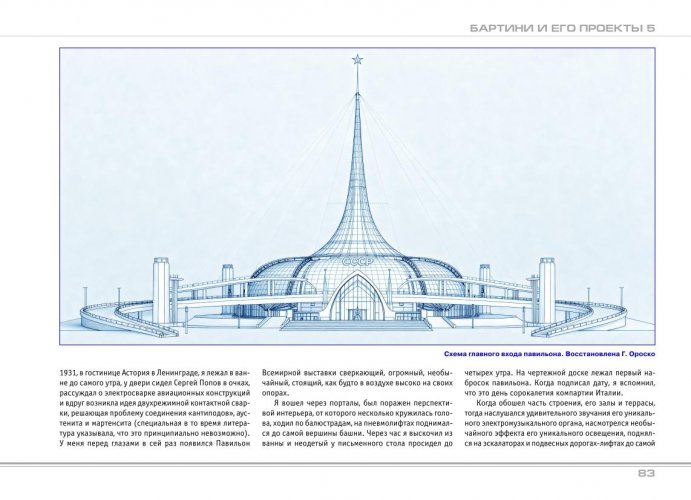
Today I´m „holding“ (it´s only available as ebook) the fifth volume of the series ‘Bartini and His Projects,’ which began in 2020. At that time, the authors state, it was difficult to imagine that the description of Robert Lodovigovich's projects would not fit into even five volumes and, it seems, there will be even more. Almost 30 years have passed since Leonid Grigorievich Fortinov first told the authors, Konstantin Udalov and Gabriel Orosco, about Bartini. Bit by bit, materials about the life of the genius and his projects were collected. A thorough study of the archives made it possible to bring together Bartini's main projects – there turned out to be well over 60 of them. A lot of time was spent on restoring the appearance of Robert Ludovigovich's aircraft and consulting with specialists. The carefully preserved archives of the Scientific and Memorial Museum of Professor N. E. Zhukovsky contain amazing documents not only in the field of aviation, but also projects for ground transport – high-speed trains on a magnetic cushion, road machines for laying a high-speed highway, and the architectural appearance of the transport institute's building complex. The architectural documents date back to 1944, but how modern all the buildings look! Even more striking is the design of the Soviet pavilion for the EXPO international exhibition in 1967. This and other topics are discussed in this volume. It is all about Bartinis adavanvced concepts on transportion and architecture: magnetic levitation trains, air cushion trains and transportation as well as the architectual infrastrucure to fit this, but also how modern technology will change the cities and communal spaces.
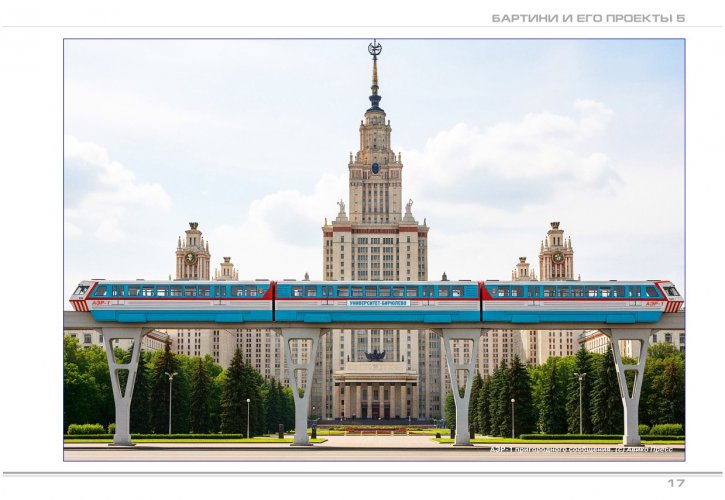
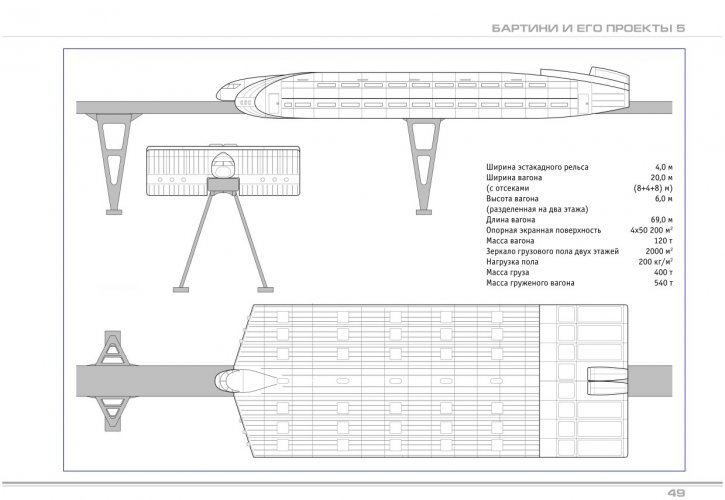
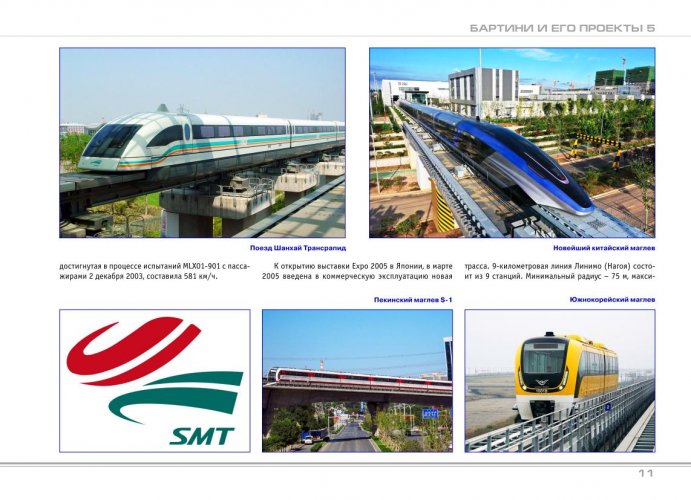
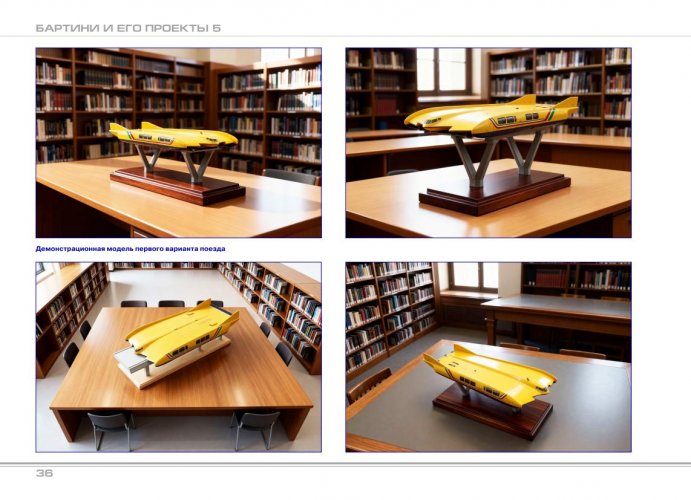
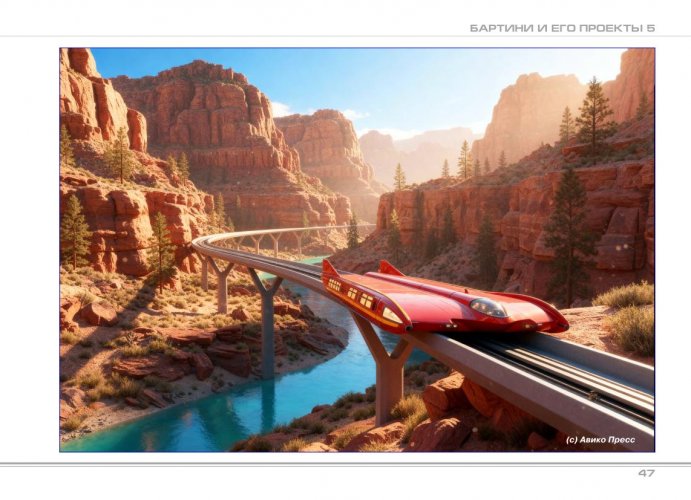
After a short introduction the book opens on the history of this ideas since the 19th century and traces these ideas all over the world: in in Germany (pp. 8-9), in the UK, in the Soviet Union and then in Russia (p. 9), in China (pp. 9-10), in France and Japan (pp.9-13) and finally in South Korea (p. 13). The book countinues with the chapter about the "THE AER-1 MAGNETIC CUSHION TRAIN" (pp. 14-19), followed by a chapter about the aircushion "ECRANOHOD" (pp. 20-31). All is covered in great detail and sourrende by beautiful artist renderings bringing them to live. At the end of the chapters are tipps for further readings. Next two chapters are dedicated to urban and suburban magnetic levitation trains (the "Maglevs") and the "ECRANOHOD-2" (pp. 34-55). These concepts are really futuristic and must have been a sight to behold. The following cahpter is entitled "WHAT THE FUTURE HOLDS FOR US" (pp. 56-65) is about a project for an for high-speed aerial transport on a dynamic air cushion, which was constructed in 2013 as a cooperation betwenn the SiBNIA instititute and the KINT. Due to the high economic costs and doubts about the safety of such transport, the project was shelved. With the permission of the authors of the article published in the magazine ‘Polet’ No. 4 for 2016, this book present its brief summary. This is very interesting stuff, surrounded again by unique materials and great artwork. The following chapter ("FLOATING IN THE AIR"; pp. 66-73) is about the japanese high-speed transportation. In Japan, there is a special type of train called the Shinkansen. They appeared as a result of aviation research being banned in Japan after the war, causing many aviation engineers to switch to the railway industry. As a result, railway technology made a rapid leap forward in its development. Most of this design-history and other japanese projects were completely new to me. The book conludes on three chapters dedicated to Bartinis thinking and mostly unknown sides of his work: Architecture (pp. 74-87), the presentation at the EXPO-67 worldfair and "Paiting as philosophy" (pp. 88-100) whre are some remarkble painted of him can be seen. I´m not sure if they published before at all.
All in all a really great book which sheds more light on Bartini, his designs and projects, but also also on his life, personality and work! Hopefully this work will find its readers and help them understand and appreciate the work of Robert Ludovikovich Bartini. (If you are interested in it, please DM Kontantin Udalov [ucon] here in the forum).
Удалов К. Г., Ороско Габриель: Бартини и его проекты. Том 5. Транспорт, архитектура.
Москва. 2026 г., 104 с.
УДК. 82-94: 629. 7. Бартини и его проекты. Том 5. Транспорт. Архитектура. 01/08
ББК 39.5г
ISBN 978-5-4465-3169-1
Today I´m „holding“ (it´s only available as ebook) the fifth volume of the series ‘Bartini and His Projects,’ which began in 2020. At that time, the authors state, it was difficult to imagine that the description of Robert Lodovigovich's projects would not fit into even five volumes and, it seems, there will be even more. Almost 30 years have passed since Leonid Grigorievich Fortinov first told the authors, Konstantin Udalov and Gabriel Orosco, about Bartini. Bit by bit, materials about the life of the genius and his projects were collected. A thorough study of the archives made it possible to bring together Bartini's main projects – there turned out to be well over 60 of them. A lot of time was spent on restoring the appearance of Robert Ludovigovich's aircraft and consulting with specialists. The carefully preserved archives of the Scientific and Memorial Museum of Professor N. E. Zhukovsky contain amazing documents not only in the field of aviation, but also projects for ground transport – high-speed trains on a magnetic cushion, road machines for laying a high-speed highway, and the architectural appearance of the transport institute's building complex. The architectural documents date back to 1944, but how modern all the buildings look! Even more striking is the design of the Soviet pavilion for the EXPO international exhibition in 1967. This and other topics are discussed in this volume. It is all about Bartinis adavanvced concepts on transportion and architecture: magnetic levitation trains, air cushion trains and transportation as well as the architectual infrastrucure to fit this, but also how modern technology will change the cities and communal spaces.
After a short introduction the book opens on the history of this ideas since the 19th century and traces these ideas all over the world: in in Germany (pp. 8-9), in the UK, in the Soviet Union and then in Russia (p. 9), in China (pp. 9-10), in France and Japan (pp.9-13) and finally in South Korea (p. 13). The book countinues with the chapter about the "THE AER-1 MAGNETIC CUSHION TRAIN" (pp. 14-19), followed by a chapter about the aircushion "ECRANOHOD" (pp. 20-31). All is covered in great detail and sourrende by beautiful artist renderings bringing them to live. At the end of the chapters are tipps for further readings. Next two chapters are dedicated to urban and suburban magnetic levitation trains (the "Maglevs") and the "ECRANOHOD-2" (pp. 34-55). These concepts are really futuristic and must have been a sight to behold. The following cahpter is entitled "WHAT THE FUTURE HOLDS FOR US" (pp. 56-65) is about a project for an for high-speed aerial transport on a dynamic air cushion, which was constructed in 2013 as a cooperation betwenn the SiBNIA instititute and the KINT. Due to the high economic costs and doubts about the safety of such transport, the project was shelved. With the permission of the authors of the article published in the magazine ‘Polet’ No. 4 for 2016, this book present its brief summary. This is very interesting stuff, surrounded again by unique materials and great artwork. The following chapter ("FLOATING IN THE AIR"; pp. 66-73) is about the japanese high-speed transportation. In Japan, there is a special type of train called the Shinkansen. They appeared as a result of aviation research being banned in Japan after the war, causing many aviation engineers to switch to the railway industry. As a result, railway technology made a rapid leap forward in its development. Most of this design-history and other japanese projects were completely new to me. The book conludes on three chapters dedicated to Bartinis thinking and mostly unknown sides of his work: Architecture (pp. 74-87), the presentation at the EXPO-67 worldfair and "Paiting as philosophy" (pp. 88-100) whre are some remarkble painted of him can be seen. I´m not sure if they published before at all.
All in all a really great book which sheds more light on Bartini, his designs and projects, but also also on his life, personality and work! Hopefully this work will find its readers and help them understand and appreciate the work of Robert Ludovikovich Bartini. (If you are interested in it, please DM Kontantin Udalov [ucon] here in the forum).