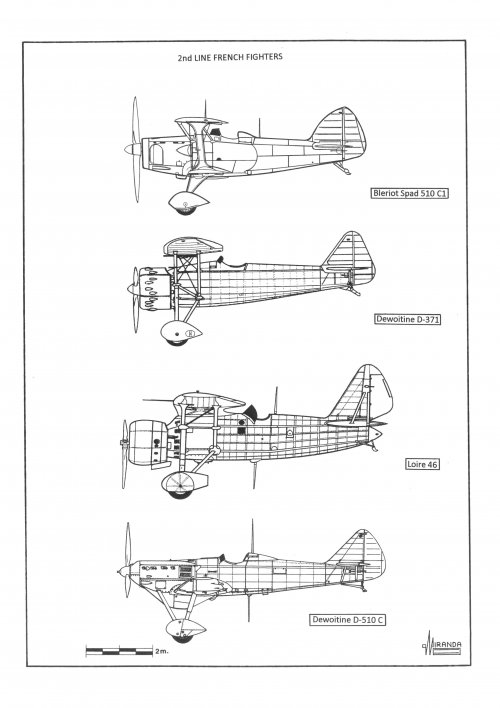
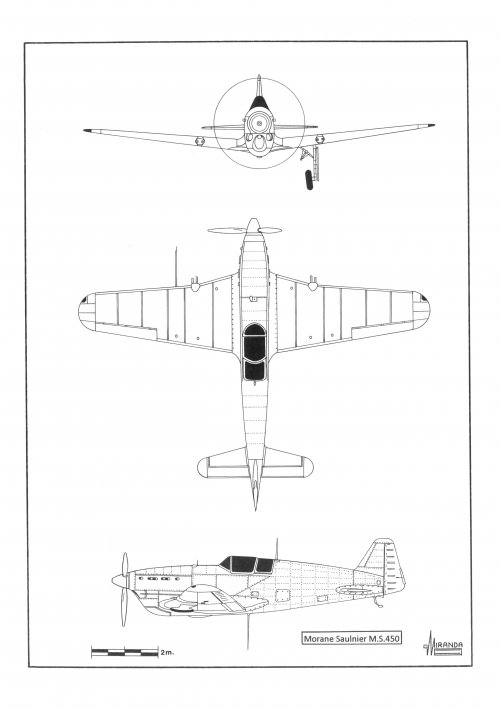
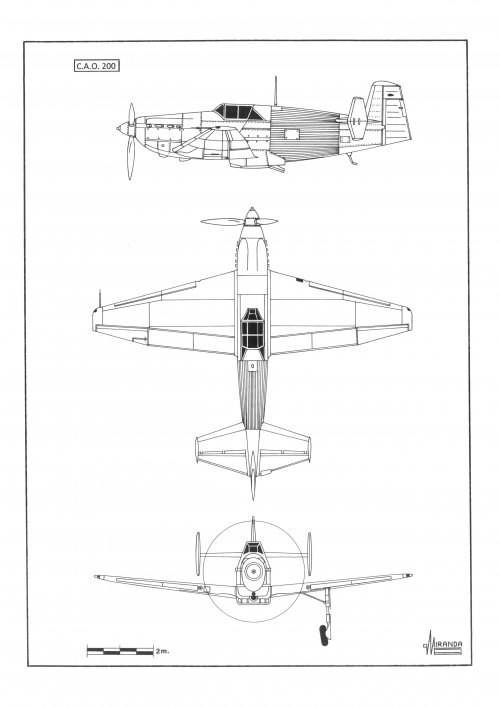
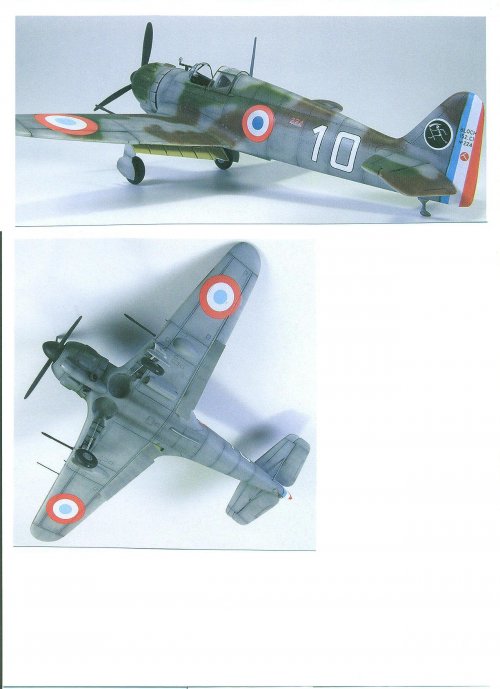
During the period between both World Wars, the size and weight of the fighters was progressively augmented in parallel with the increasing power of the available engines. Against that general trend, there was a minority of aeronautical designers defending the small sized fighters, known as 'Jockey Fighters' at that time. This type of airplanes, if well designed, could generally compete in performance with the conventional fighters, using a less powerful engine, with an important save in fuel, manpower and strategic materials. They were also easier to maintain and store and their reduced size and weight helped to increase agility in combat, making more difficult to be seen by the rear gunners in the bombers, or by the pilots in the escort fighters, and their destruction required a higher consumption of ammunition.
At the beginning of World War II, the conventional fighters used to have 10 to 12 m of wingspan, operational weight of 2,500 to 3,500 kg and a maximum speed of 450 to 500 km/h. The light fighters of the time could be divided in two categories:
‘Jockey Fighters’, with less than 10 m. wingspan, maximum weight of 1,800 to 2,500 kg and the same speed than the conventional fighters.
‘Midget Fighters’, with less than 10 m wingspan, maximum weight of 600 to 1,800 kg and maximum speed of 350 to 400 km/h.
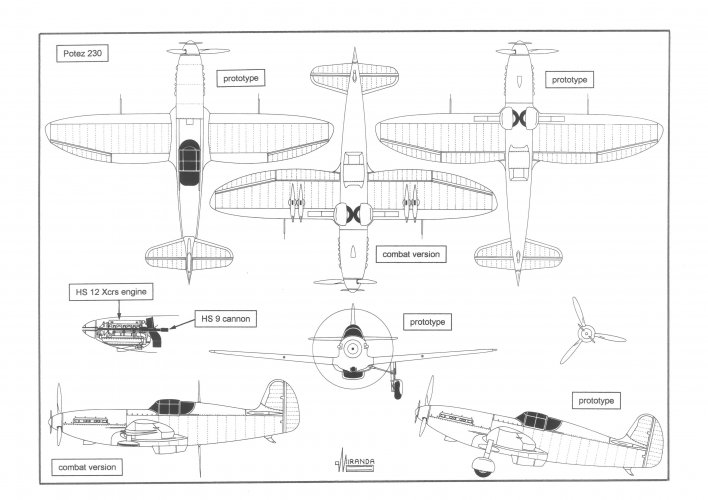
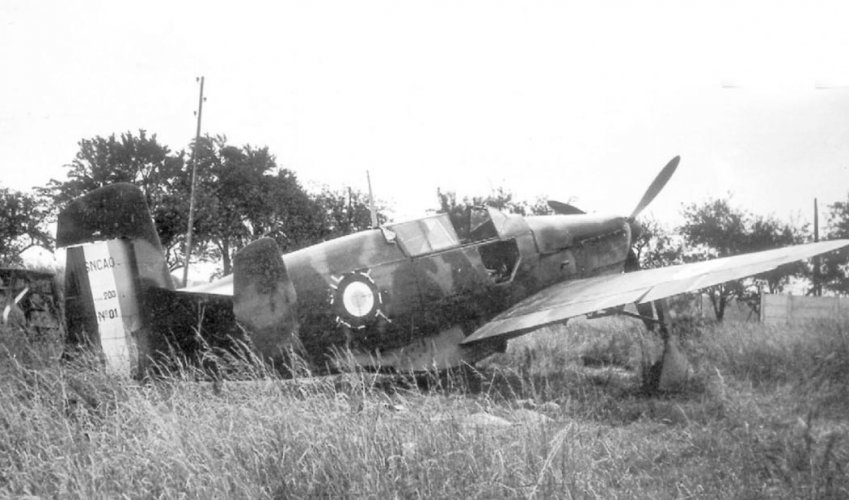
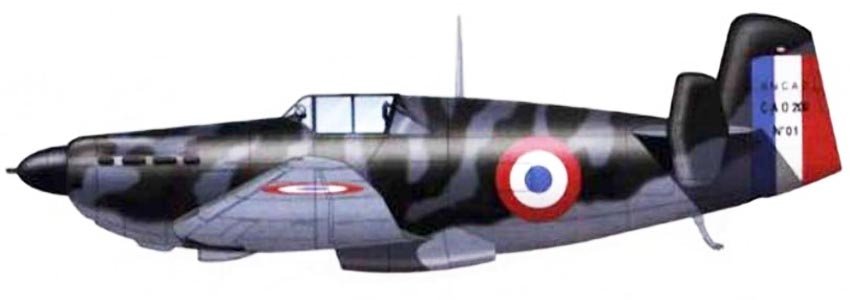
Potez 230
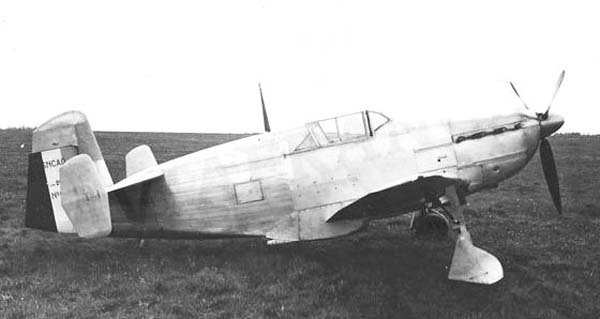
The Potez 230 inherited the most advanced elliptical wing of the time, built with an integral torque box, from its ancestor, Les Mureaux 190 light fighter, developed during the 30s. The philosophy of design of the Potez 230 was based on the specification
Chasseur Monoplace C1 (June 3, 1937), calling for one high-performance small airplane that could use some technical elements left aside by first line fighters.
Thus, the surplus of Hispano-Suiza H.S.12 Xcrs engines, H.S.9 cannons and MAC 34A machine guns coming from the obsolete Dewoitine D.510 fighters could go back to combat without overloading the French war production of H.S.12 Y-45, H.S.404 and MAC 34 M39, intended for the Dewoitine D.520. Would the new equipment be available in enough quantity, it would also had been used by the Potez 230 as it was compatible to both of them.
A prototype was built in the Potez C.A.M.S. factory of Sartrouville in 1939. During a series of tests performed in the Villacoublay test centre in March 1940, it reached the speed of 560 km/h being equipped with an H.S.12 Xcrs of just 680 hp (the Dewoitine D.520 reached 525 km/h and the Bf 109 E-1, 575 km/h with much more powerful engines). It was expected that the Potez 230 could fly at 622 km/h after the installation of one of the new H.S.12 Y-45 of 910 hp but it was captured by German forces in June and translated to a technical research centre of the Luftwaffe to study the wing construction system.
Technical data
Engine: one 680 hp Hispano-Suiza H.S.12 Xcrs twelve-cylinder ‘Vee’ liquid-cooled, driving a three-bladed Ratier airscrew with pneumatic variable-pitch. Armament: one 20 mm engine-mounted H.S.9 cannon and four 7.5 mm. MAC 34A machine guns mounted under the wings. Wingspan: 8.74 m, length: 7.57 m, height: 2.18 m, wing area: 10.97 sq.m, maximum weight: 1,800 kg, maximum speed: 560 kph.
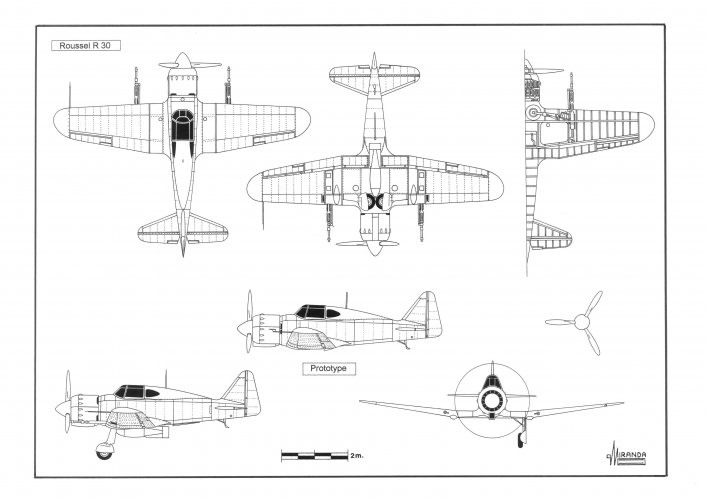
Roussel R.30
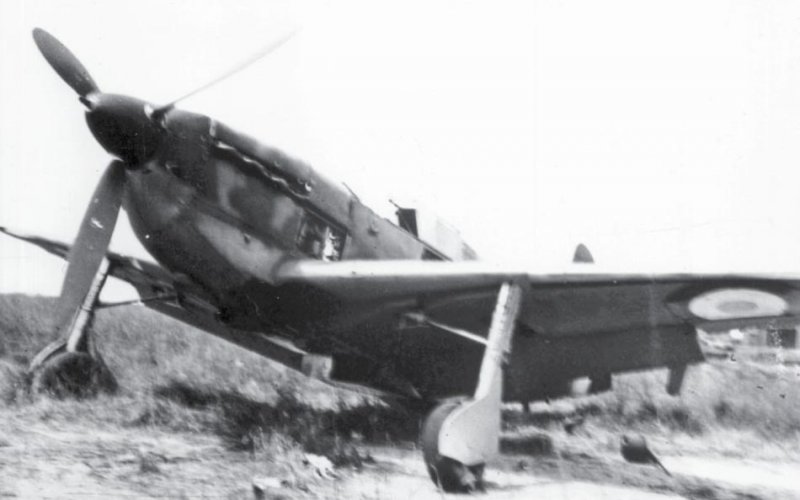
The Roussel R.30 was conceived as a private venture ‘Jockey Fighter’ in answer to the
Programme technique A.23 (12 January 1937) that required a light fighter able to fly at 520 km/h. Construction of the prototype began at Courbevoie, flying for the first time equipped with a 690 hp Gnôme-Rhône 14 M7 engine in April 1939.
In August 1939 it was transferred to the
Centre d’Essais du Matériel Aérien (C.E.M.A.) for official trials, as a result of which it was recommended to install a more powerful engine to better use its excellent flying performances. During the Battle of France, the airplane was armed with two 20 mm Oerlikon FFS cannons mounted in the wings and some tests were performed for the installation of a bomb rack under the fuselage.
In combat, the R.30 could have destroyed any Luftwaffe bomber thanks to its high fire power of 2 Kg/sec, 2.8 times that of the Bf 109 E-1. In ground attack mode it would have had more possibilities to survive the Flak than the unfortunate Breguet 693 of the GBA 54 due to its high speed and small size. The only prototype was destroyed in Bordeaux-Mérignac airbase during a He111 bomb raid.
Technical data
Engine: one 690 hp Gnôme-Rhône 14 M7 of fourteen-cylinder, air-cooled radial driving a Ratier 1527 airscrew with electrically adjusted pitch. Armament: two 20 mm Oerlikon FFS cannons and one 250 kg G.P. bomb. Wingspan: 7.75 m, length: 6.15 m, height: 2.10 m, wing surface: 10 sq.m, maximum weight: 1,766 kg, maximum speed: 520 kph at 6,000 m.
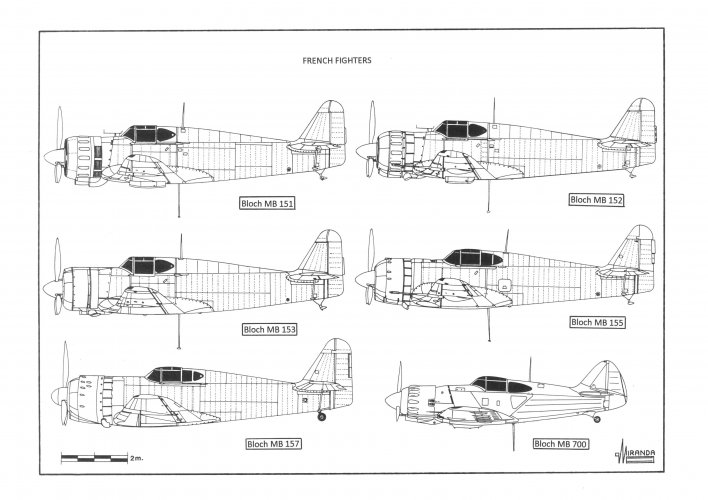
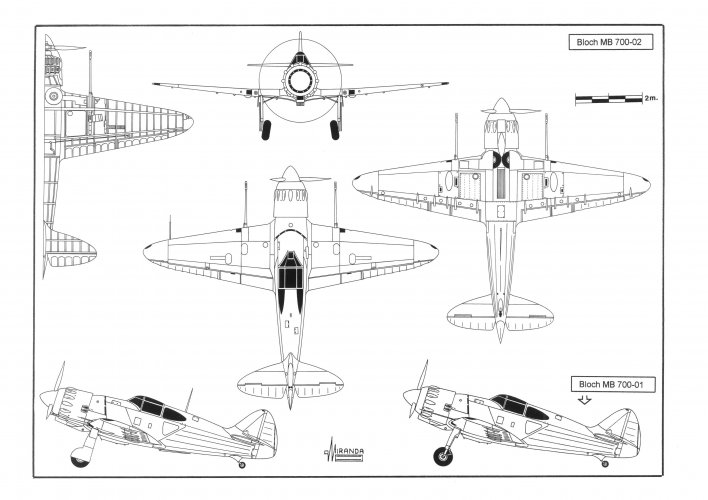
Bloch M.B.700
The Bloch M.B.700 was also designed as an answer to the
Programme technique A.23. This small interceptor differentiated from the Roussel in that it was built from wood. This fact made its mass production easier as it did not require strategic materials that could be used for the Dewoitine D.520 conventional fighter. Outwardly, it looked like an 83% scaled down version of the conventional fighter Bloch M.B.152. The main advantage of the M.B.700 reduced size was that while equipped with an engine with 75% the power of an M.B.152, it flew 80 kph faster, still carrying the same armament, and was a more difficult target in dog-fight.
In 1939 a prototype was built in the
Blériot-Aéronautique of Suresnes, flying for the first time by mid-April 1940. During the flight tests made on 13 May, it reached a maximum speed of just 380 kph, instead of the expected 580 km/h. As a consequence, the Mercier engine cowling and clear canopy were modified, and external plates were installed in the main undercarriage.
The airplane was destroyed shortly afterwards by the German troops in Buc airfield. There was a plan for a shipboard variant named M.B. 720 with tail hook and the armament reduced to four MAC 1934 M 39 machine guns.
Technical data
Engine: one 700 hp Gnôme-Rhône 14 M6 fourteen-cylinder, air-cooled radial engine driving a Gnôme Rhône variable-pitch airscrew. Armament: two 20 mm Hispano-Suiza H.S. 404 cannons and two 7.5 mm MAC 1934 M39 belt-feed machine guns mounted in the wings. Wingspan: 8.9 m, length: 7.34 m, height: 3.4 m, wing surface: 12.4 sq.m, maximum weight: 2,000 kg, maximum speed: 550 kph.
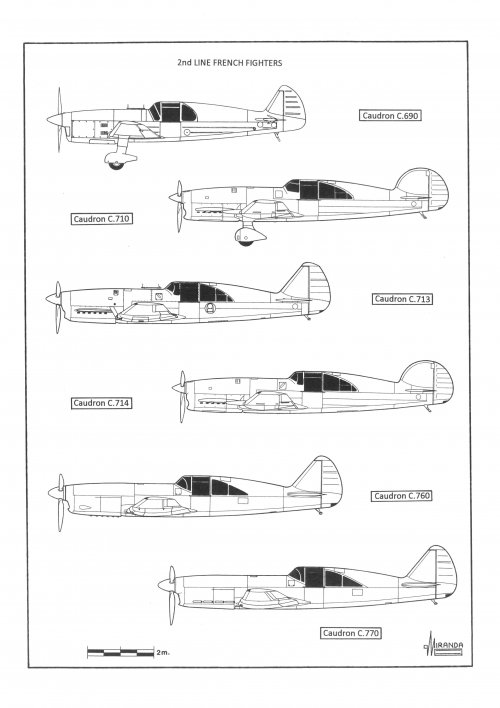
Caudron C.R. 714
On 12 July 1934 the
Service Technique de l’Aéronautique laid down the
Programme Technique de Chasseur Léger C.1, a specification for a light weight interceptor with a maximum speed of 400 kph and armed with four machine guns. The original specification was amended in August 22 dividing it in two categories: one for aircraft powered by 800-1,000 hp engines, armed with a cannon and two machine guns, and another for 450-500 hp engines and two cannons. On 17 December 1934 the maximum speed rose to 450 kph and on 16 November 1935 to 500 kph. The winner of the first category was the Morane-Saulnier M.S.405, winning the production of the 860 hp Hispano-Suiza H.S.12 Y engines.
In the second category were competing small manufacturers and designers of racer airplanes experienced in obtaining the maximum speed with minimum power, often using self-made engines. The success achieved by the Caudron racers, encourage designer Marcel Riffard to build the C.710 and C.713 prototypes, two wooden, cannon-armed, light fighters capable of flying to 455-470 kph powered by a 450 hp Renault 12 R.01 engine. On December 1937
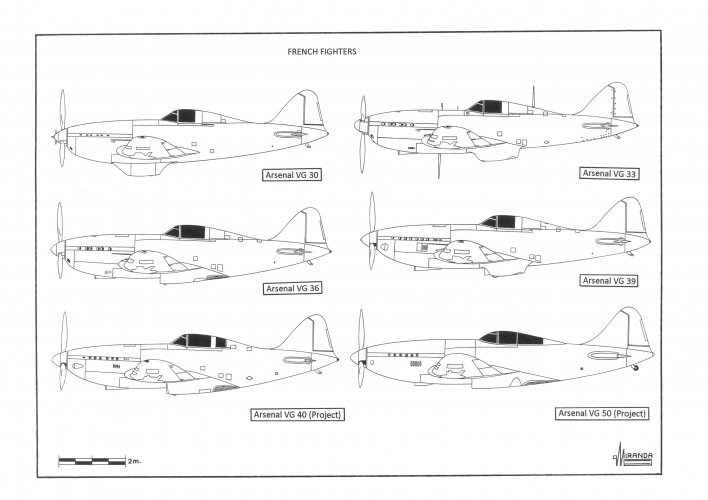
l’Armée de l’Air dismissed its serial construction in favor of the Arsenal VG 30, much faster and with better climb rate.
On November 1938, to meet the requirements of
Plan V, l’Armée de l’Air ordered the production of 200 units of the C.R. 714 model, an aerodynamically improved version, with a 450 hp Renault 12 R.03, twelve-cylinder, air-cooled, inverted-Vee engine and four MAC 1934 M39 machine guns. The order was later reduced to only 20 aircraft when all the spruce stocks were assigned to the massive construction program of the Arsenal VG 33.
On January 1940 the C.R. 714 were handed over to
l’Armée de l’Air who used them as advanced trainers at
l’École de Chasse et d’Instruction Polonaise. The G.C. I/145 was formed during the Battle of France with M.S. 406 and C.R. 714 fighters piloted by Poles who claimed the destruction of four Bf 109 and four Do 17. The formula was perfectioned with the C.R. 760 and C.R. 770 prototypes, powered by 730-800 hp engines and armed with six MAC, but both were destroyed to prevent their capture by the Germans.
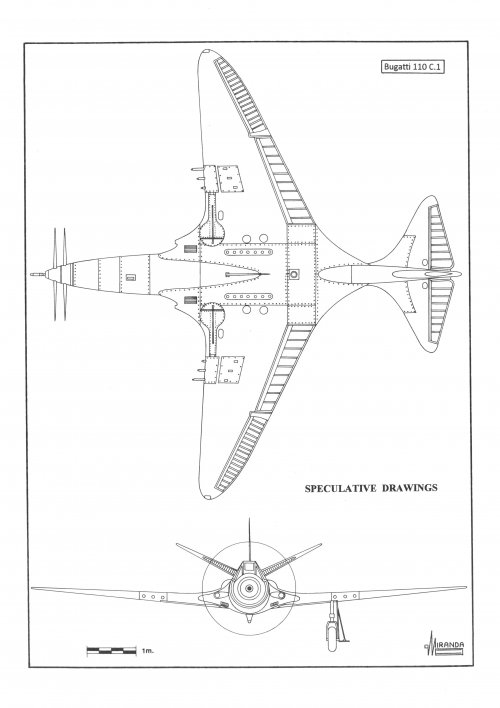
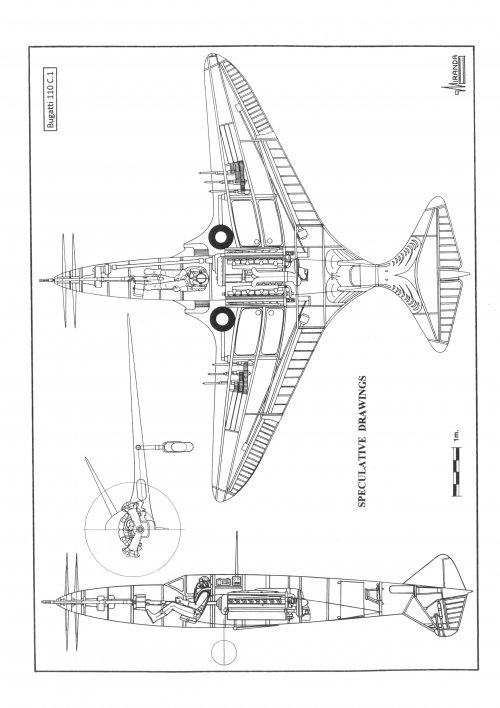
Bugatti 110 C.1
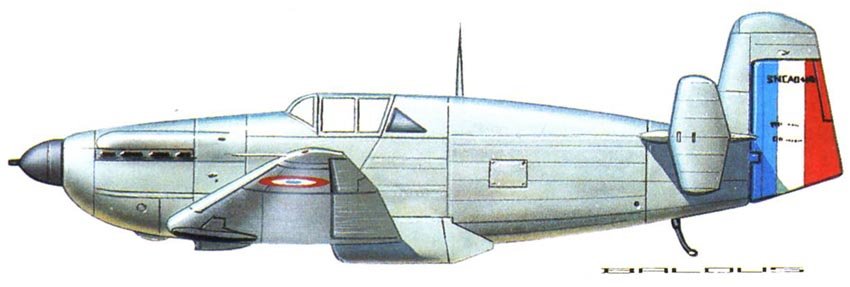
On September 1937, Louis de Monge designed the Bugatti Model 100, a
Monoplace de Course (Single-seat racer) to beat the Germans on their own soil in the Deutsch Cup Race of 1938. Underpowered with one 450 hp Bugatti T50 B engine, it was necessary to use one ultra-sleek highly streamlined airframe with forward swept wings, variable geometry automatic flaps, 120 degree V-tail and retractable landing gear.
To save weight the engine crankcases were made of magnesium and the airframe mostly of wood with sandwiched layers of balsa and tulipwood. Looking to restore national pride after the exhibition made by the Messerschmitt Bf 109 V13 on November 1937, the
Ministère de l’Air offered to finance the construction of two special planes to break the world speed records of 634 kph over 100 km and 709 kph over 3 km.
The first, called Bugatti Model 100P (
Poussée-boosted) with two 525 hp Bugatti 50P eight-cylinder straight liquid-cooled engines, two drive shafts, one gearbox reduction, two counter-rotating Ratier S.O.B. airscrews, 8.23 m wingspan and 650 kph estimated maximum speed. The second, Model 110P, with two 50P engines boosted to 550 hp, clipped wings with 6.7m wingspan and 750 kph estimated maximum speed. The contract, signed in August 1938 by 6.900.000 F, included two Type 50P spare engines and a bonus of 1.800.000 F if the two records should be broken.
In 1939, the German accepted the 'Propaganda War' making fly the Heinkel He 100 V8 at 746.606 kph on 30 March and the Messerschmitt Me 209 V1 at 755.138 kph on 29 April. The French prototype Dewoitine D.551 tried to overcome that mark on 22 November but could only reach 701.5 kph powered by one H.S.12 Y boosted to 1,300 hp.
At the end of 1939 the French preferred to concentrate its efforts on the production of 'panic fighters'. Anticipating the possibility of a long attrition war, the
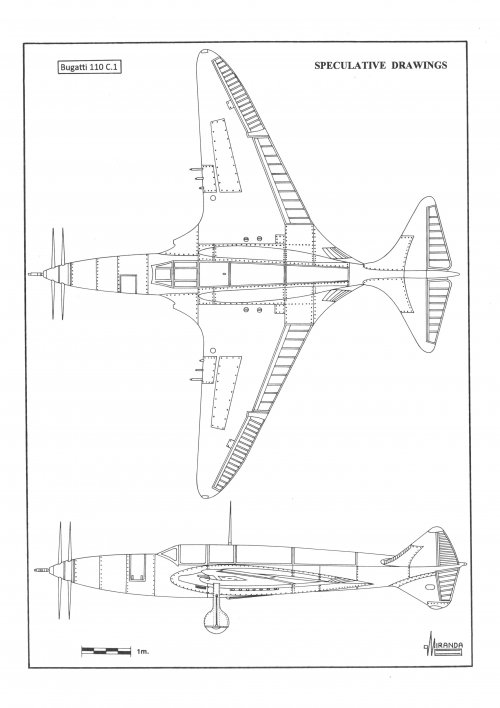
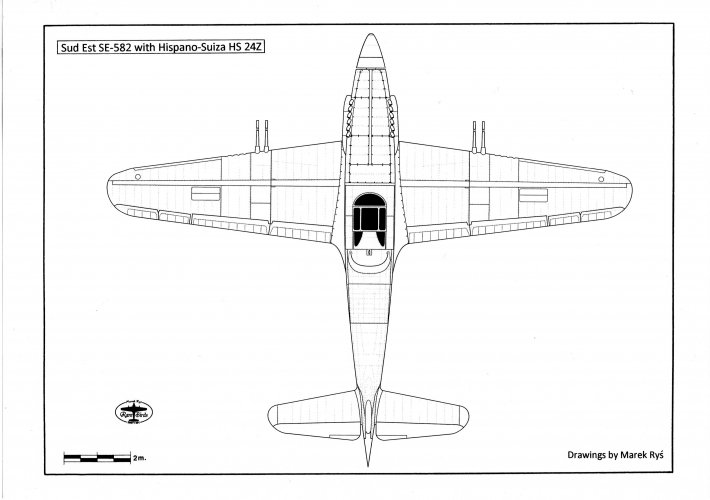
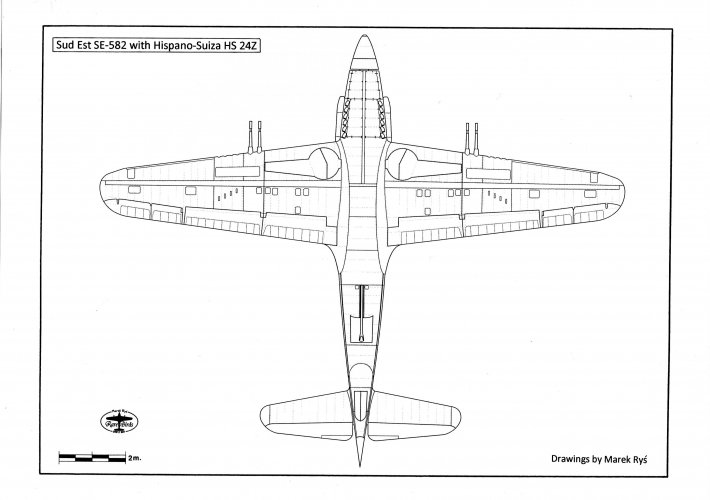
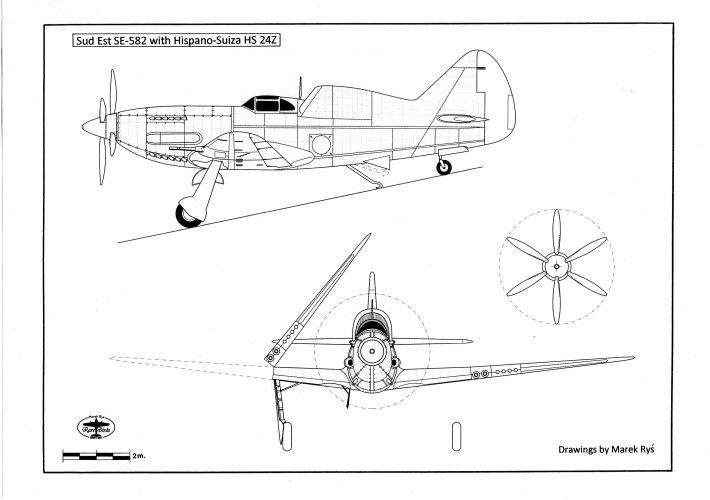
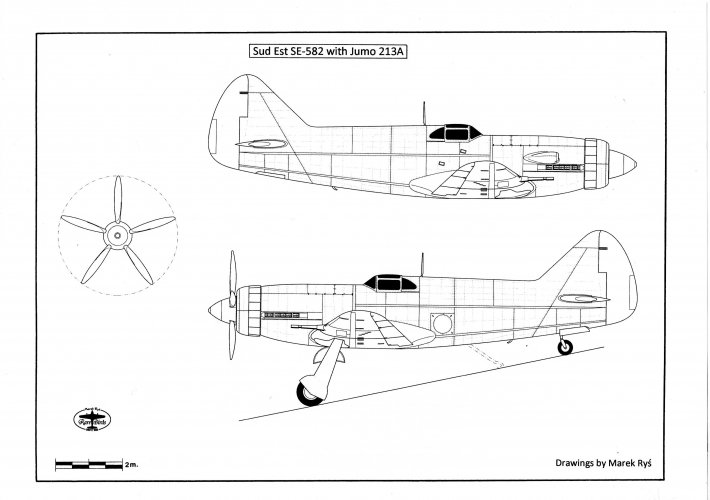
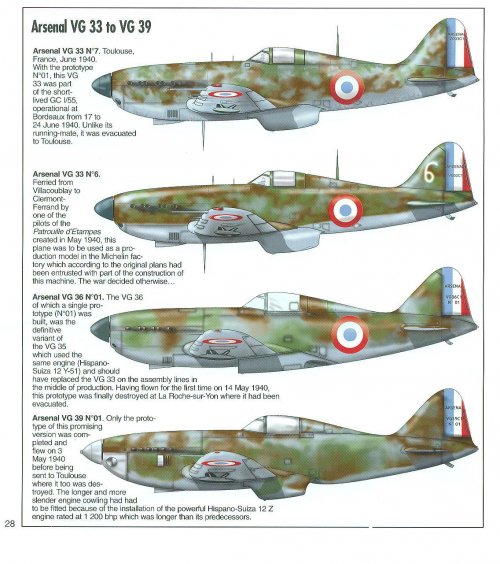
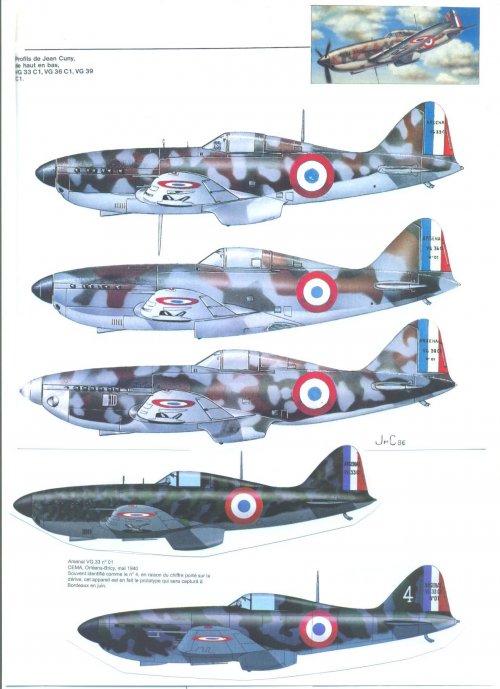
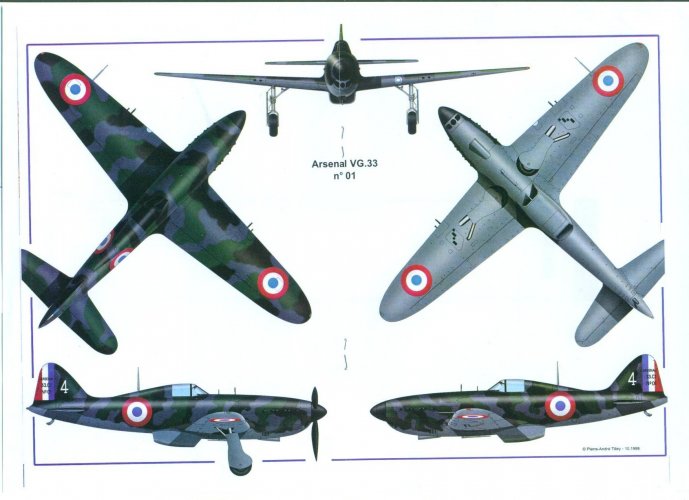
Ministére de l’Air promoted the construction from wood/plywood of the Arsenal VG 33 and commissioned the design of the Bugatti 110 C.1 (a third-generation fighter of the M.S.460 and D.520T class) with increased wingspan and propelled by one 1,600 hp H.S.12 Z or one 1,500 hp Bugatti T67 sixteen-cylinder ‘Vee’ liquid cooled engine. Production should be made at the new Bugatti factory in Bordeaux.
The construction of the Model 100P suffered delays caused by the complexity of the transmission, cooling and automatic flaps control systems. On 10 May 1940 the prototype was just nearing completion and was hidden to prevent access to their secrets by the Germans.
Author note
A service aircraft would have needed larger air intakes for the radiators and less complex cooling and flaps systems. The magnesium engine crankcases would have been very vulnerable to the incendiary ammunition and the tulipwood, with a breaking strength of 70 MPa, too fragile to stand the tensile strength during a dogfight.
In my opinion, the Bugatti 110 C.1 should have been armed with six 7.5 mm, MAC 34 M39 machine guns in the wings (similar to the D.520T installation) and one H.S.404 cannon.
I believe that the fighter version would have a unique power shaft in starboard position and a flat windscreen to avoid the optical distortion when using the GH 38 gunsight.
Given the decentralization policy of aeronautical production, started by the French government in the last years of the decade of the thirties, it seems reasonable to assume that the Bugatti military version would have been propelled by an engine of the same firm and I have been working on the scale drawings of the T67 V16 engine as published at
http: //www.bugattiaircraft.com.
As per my estimations, the installation of the T67 in the Model 100P airframe requires the following modifications: The undercarriage wide track should have been increased to 3.3 m, wingspan to 8.68 m, tailplane to 1.46 m, overall length to 8.33 m, height to 2.16 m and propeller disc diameter to 1.89 m. Based on all these assumptions I will try to draw the look that the mythical airplane might have had.
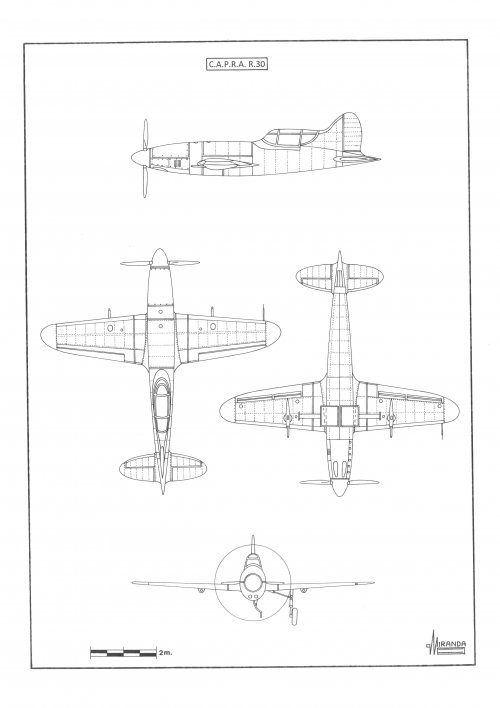
C.A.P.R.A. R.300
The midget fighters usually are a good defensive solution when a country feels threatened and needs to quickly increase its production of combat airplanes. The C.A.P.R.A. R.R.20 was a small racer airplane designed by Roger Robert in 1938 to compete in the Coupe Deutsch 1939 race. After the declaration of war the project was modified to be used as a fighter-trainer under the name R.30 or as the R.300 Midget Fighter.
Entirely built in metal, the R.30 would be powered by a 360 hp
Bèarn 6C-1, six-cylinder in-line air-cooled engine, with which it was expected to reach 539 kph maximum speed and 9,500 m service ceiling. The wings, spanning 7.5 m with sq.m surface, would serve as housing for the hyper- sustentation system, the Messier landing gear and the armament, possibly two MAC 34A machine guns for the R.300 version. Not a single unit was built.
Payen Fighters
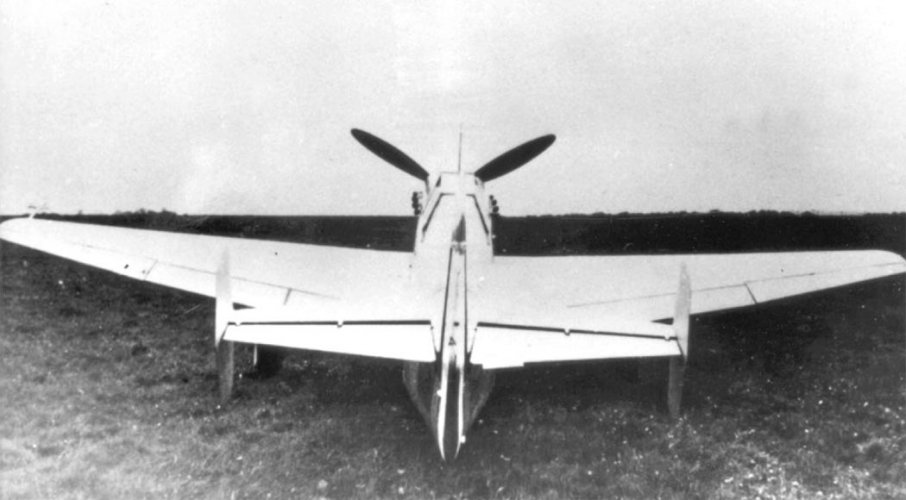
Between 1932 and 1942, Nicolas Payen designed a series of wooden canard-delta airplanes with a radical tandem-wing configuration.
In 1933 he built the Pa 100
Flèche Volante with small wings called
machutes and a 67 degree swept delta tailplane, to compete in the 3rd Coupe Deutsch. The
machutes had mobile wingtips which acted as ailerons and electrically-operated metallic flaps. The landing gear consisted of one centreline main leg, retracting backwards, and two outrigger auxiliary wheels retracting into the tailplane.
The engine should have been one 180 hp
Regnier R6, six-cylinder straight air-cooled, driving a fixed pitch wooden airscrew. But it was not possible to get one in time to participate in the competition and Payen had to adapt his project to the only engine available: one 380 hp Gnôme-Rhône 7Kd
Titan Major seven-cylinder radial air-cooled, weighting 270 Kg, totally unsuited for a racing aircraft. It was necessary to install a fixed undercarriage in more advanced position, to compensate the extra weight, and a tail skid. The wingtips ailerons were also changed by others, safer and of conventional type.
The refurbished plane was named Pa 101
Avion-Flèche, had 4.26 m wingspan, 5.75 m length, 2.2 m height, 6.86 sq.m wing surface, 750 kg maximum weight and one estimated maximum speed of 400 kph. It flew for the first time on 17 April 1935, being damaged in an accident just eight days later.
The Pa 101 airframe served as the basis for a new racer project, called Pa 110 CD (Coupe Deutsch). Designed in 1935, it differed from the previous model by its conventional landing gear, retracting backwards into the fuselage sides. It was hoped that it might be able to fly at 490 kph powered by one 200-240 hp Hirth 508D, eight-cylinder inverted-Vee, air-cooled engine, but the project was cancelled due to lack of funding.
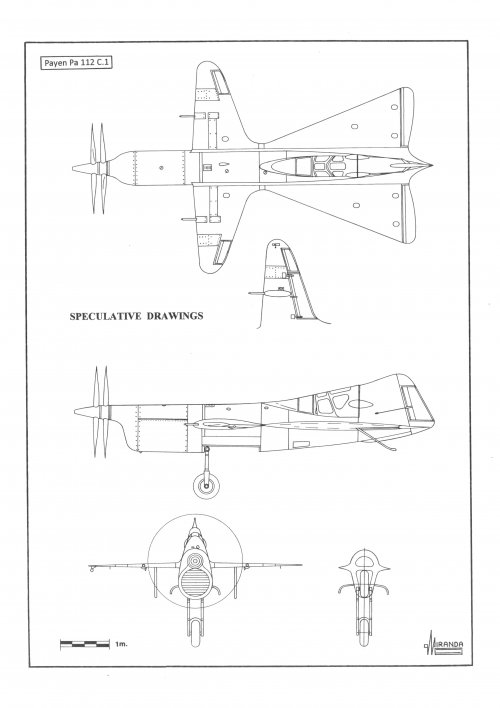
When the Spanish Civil War began, the Republican Government had great difficulties in acquiring combat airplanes abroad, due to the international blockade. In the summer of 1936 Nicolas Payen offered the Spanish communists to build the Pa 110 C.1, the military version of the racer, through the Luxembourgian banker Rosenthal.
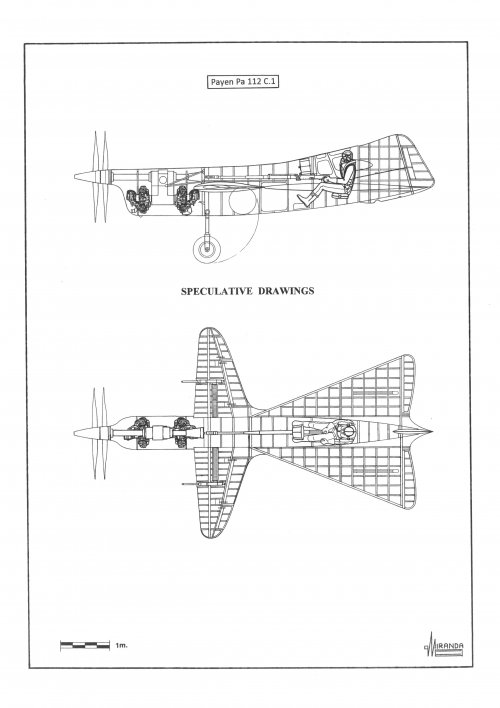
The power system designed for the fighter was made up of two 220 hp Renault 6Q-01, six-cylinder straight air-cooled engines installed in tandem face-to-face. Both engines were connected to the contra-rotating propellers power shaft by means of a Cotal-Baudot gearbox that allowed to electrically disconnect any of the engines by means of a clutch.
It was going to have an armament of two 7.5 mm Darne machine guns installed under the
machutes and one 20 mm H.S. 9 cannon, firing through the propellers hub, but the French Government had banned its export to Spain and had to be replaced by one 23 mm Danish Madsen cannon. The Pa 110 C.1 would have an estimated maximum speed of 460 kph, flying with one engine, and 550 kph with both engines. The estimated range was of 850 km.
The arrival of the Soviet fighters Polikarpov to Spain in October meant the cancellation of the project, which was redesigned as Pa 112 C.1 to adapt it to the
Chasseur Monoplace C.1 specification published by the
Ministère de l'Air on 3 June 1937.
The Renault 6Q were replaced by two 200-205 hp Salmson 9ND nine-cylinder radial air-cooled (surplus) engines commonly used by the Bloch M.B.81 of the
l’Armée de l’Air and by the Besson B. 411 of the
l’Aéronavale. Proposed armament was either a 20 mm H.S. 9 or an Oerlikon FFS cannon and two 7.5 mm MAC 34 M39 belt-feed machine guns installed in the interior of the
machutes, or two MAC 34A drum-feed installed under the
machutes.
A mock-up using the airframe of the Pa 101 was built in 1938. After being examined by technicians of the
l’Armée de l’Air, the project was rejected at the beginning of 1939, because of the great complexity of the power system. Payen offered to build the Pa 300 instead, a fighter capable to surpass the 520 kph of the
Programme Technique A23 if they provided him with an H.S.12 Y-45 engine. But the military, who had done most of his career flying in biplanes, found the
flèche aerodynamic solution to be too radical and preferred to build the Arsenal VG 33.
To fight these prejudices, Payen built the technological demonstrator Pa 22/2
Fléchair, which was captured by the Germans in 1940 while performing aerodynamic tests in the O.N.E.R.A. wind-tunnel of Chalais-Meudon. Under the new administration, the prototype was modified with the installation of a 180 hp
Regnier R6B-01 engine and a new open cockpit with the windscreen of one Arsenal VG 33. It made his first flight on 18 October 1941 and was destroyed during an Allied bombing in April 1944.
The
Phoney War ended with the invasion of Belgium and the Netherlands and the German attack against France, using 860 fighters Bf 109E, three-hundred-and-fifty Bf 110, 1,120 medium bombers, 342 dive bombers and 591 reconnaissance airplanes.
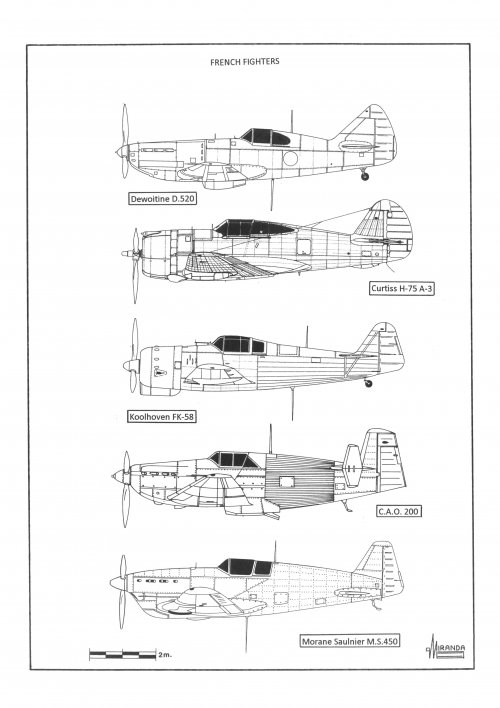
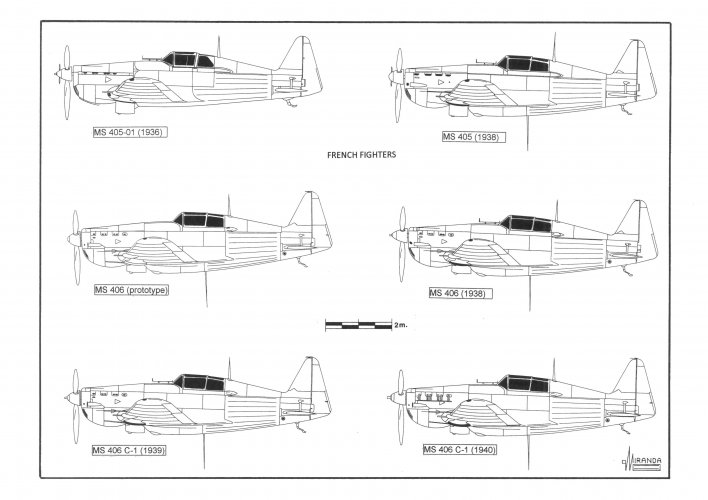
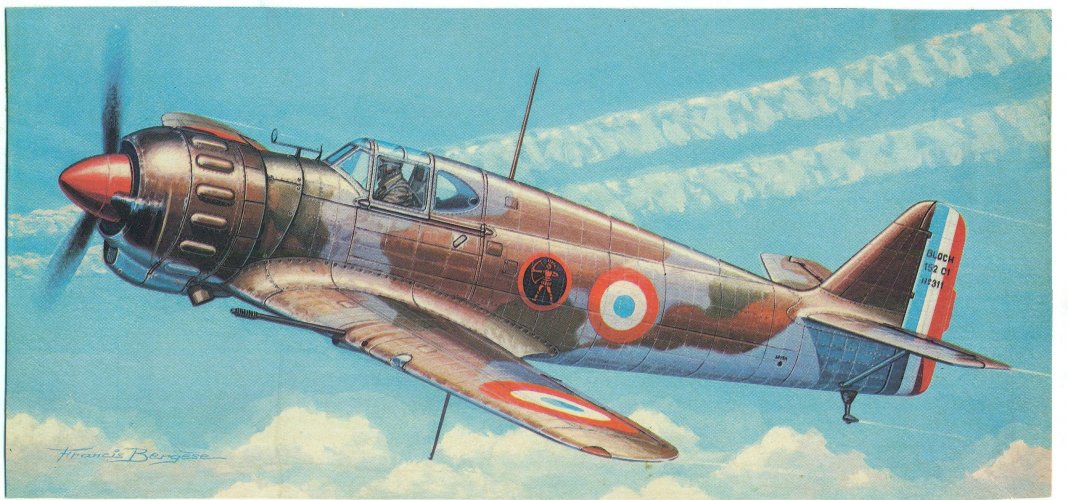
L'Armée de l'Air had only thirty-seven Bloch M.B.151, ninety-three Bloch M.B.152, ninety-eight Curtiss H.75A, two-hundred-and-seventy-eight Morane-Saulnier M.S.406 and sixty-seven Potez 631 fighters
bons de guerre, supported by thirty Gloster Gladiators and forty-eight Hurricanes British fighters. During the Battle of France 1,279 German, 872 French and 944 British airplanes were destroyed by different causes.
One of the main reasons for the success of the
Blitzkrieg against the French and British Armies, in May 1940, was the aerial superiority obtained when the Messerschmitt Bf 109 E-3 entered service with the Luftwaffe. It happened at the right time, when the main French fighter Morane-Saulnier M.S.406 was replaced by the second generation fighters Dewoitine D.520 and Arsenal VG 33. During the
Phoney War,
l’Armée de l’Air tried to fill the gap with the Bloch M.B.152 and Curtiss H.75A fighters, helped by the British Hawker Hurricane Mk.I. But the Messerschmitt would prove superior.
This seems to be the origin of the commonly accepted paradigm about the assumed inferiority of the French technology. It is not common knowledge that France already had operational naval radar in 1934. And that, at the beginning of June 1940, the antiaircraft artillery defending Paris was controlled by the most advanced radar in the world, able to operate in wavelengths from 80 to 16 cm against the 3.5 to 1.5 m of the British or the 2.4 m to 53 cm of the German radar.
The French scientists were also ahead of their German equivalents in the field of nuclear fission. By early 1940, the CNRS controlled the highest reserve in the world of uranium (8 tons coming from the Belgian Congo) and 200 kg of heavy water from the Norwegian enterprise
Norsk Hydro.
The French tanks of 1940 had better armour and armament than the Germans. The
Marine Française (the French combat fleet) was superior to the
Kriegsmarine in firepower with the
Béarn carrier and six squadrons of Loire Nieuport L.N.401/411 dive bombers that technically surpassed the German Ju 87.
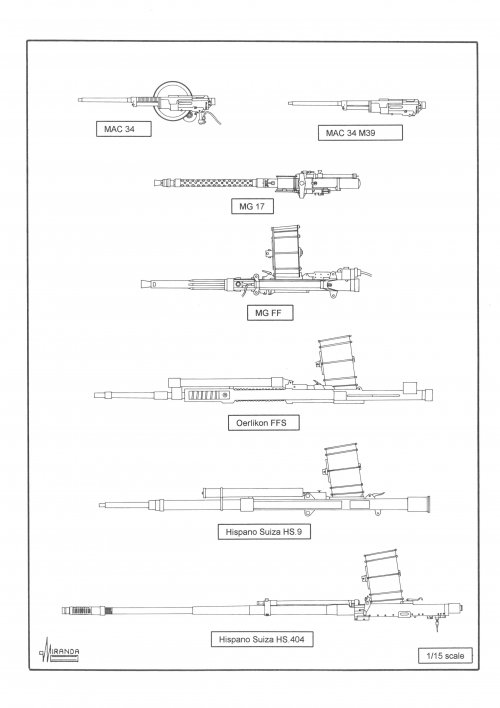
The destructiveness of the air-to-air weapons installed in the French fighters was slightly higher that their German equivalents, although the quality of the aiming devices OPL 31, RX 39 and GH 38 used by
l’Armée de l’Air was somehow inferior to the Zeiss
Revi C/12 reflector gunsight of the Luftwaffe. The following text compares the armament used by the French and German fighters during the Battle of France