
You are using an out of date browser. It may not display this or other websites correctly.
You should upgrade or use an alternative browser.
You should upgrade or use an alternative browser.
NASA/Lockheed Martin X-59A Quiet Supersonic Technology (QueSST)
- Thread starter Flyaway
- Start date
aonestudio
I really should change my personal text
- Joined
- 11 March 2018
- Messages
- 3,376
- Reaction score
- 9,218
Scott Kenny
ACCESS: USAP
- Joined
- 15 May 2023
- Messages
- 19,511
- Reaction score
- 27,956
You did miss some sarcasm in there.Yup. The trick is *what* particulate. Something that will reflect sunlight during the day and filter down out of the sky by night and not cause environmental ruin. I wonder if studies can determine whether getting spewed by an SST would be better than a subsonic jet.
martinbayer
ACCESS: Above Top Secret
- Joined
- 6 January 2009
- Messages
- 5,062
- Reaction score
- 6,967
I guess that's why they're called testbeds...

Kiltonge
Greetings Earthling
- Joined
- 24 January 2013
- Messages
- 885
- Reaction score
- 2,052
I guess that's why they're called testbeds...
The difference being that the SSBD tried a novel and possibly practical configuration, whereas the X-59 is a configurational dead-end that could have come off a 1950s sketchpad.
Why not put the money towards something potentially practical, like an airliner-proportioned fuselage using adjustable aerospikes and ventral ramps? Then we'd get sound-pressure data plus a starting point for a usable design.
Last edited:
Scott Kenny
ACCESS: USAP
- Joined
- 15 May 2023
- Messages
- 19,511
- Reaction score
- 27,956
Because the X59 will fly to determine what the maximum legally allowed sonic booms would be.The difference being that the SSBD tried a novel and possibly practical configuration, whereas the X-59 is a configurational dead-end that could have come off a 1950s sketchpad.
Why not put the money towards something potentially practical, like an airliner-proportioned fuselage using adjustable aerospikes and ventral ramps? Then we'd get sound-pressure data plus a starting point for a usable design.
Then you build a commercially shaped plane to make booms at that level.
Remember, supersonic flight over land is generally banned! You need to determine what levels the public is willing to tolerate in order to change the flight restrictions, and determining those levels is exactly what the X-59 is designed to do.

- Joined
- 1 April 2006
- Messages
- 12,276
- Reaction score
- 15,084
Can you elaborate more on this deep insight?The difference being that the SSBD tried a novel and possibly practical configuration, whereas the X-59 is a configurational dead-end
Last edited:
Scott Kenny
ACCESS: USAP
- Joined
- 15 May 2023
- Messages
- 19,511
- Reaction score
- 27,956
You are grossly misunderstanding the roles of the two aircraft.The difference being that the SSBD tried a novel and possibly practical configuration, whereas the X-59 is a configurational dead-end that could have come off a 1950s sketchpad.
The SSBD was the experimental proof that you could manipulate sonic boom loudness via airframe shape, as was the "Quiet Spike" tested on an F-15. The Quiet Spike didn't do enough on its own to reduce boom levels, so the SSBD got into how to shape an airframe to reduce sonic booms.
The X-59 is to establish the tolerance levels of the public towards sonic booms, to inform the regulation changes for just how much boom is allowed over land. It's not supposed to be an operationally representative shape for a commercial passenger hauler or even a business jet.
Only once the boom levels are established can we start designing a commercial airframe to meet them, likely using some combinations of the Quiet Spike and a whole lot of airframe shaping.
aonestudio
I really should change my personal text
- Joined
- 11 March 2018
- Messages
- 3,376
- Reaction score
- 9,218


- Joined
- 12 November 2021
- Messages
- 44
- Reaction score
- 96
So my contribution to this vehicle is that I worked at NASA Armstrong Flight Research Center in Code-421, the Avionics and Instrumentation Branch. I worked in the Research Aircraft Integration Facility's "Dryden Avionics Lab" where we had mockups of the bays that the data acquisition units were to go in. I'd build the wire harnesses and flight hardware for the DAUs and install them in the mockup to check fit and function. I performed pressure tests on the pitot static manifold as well. I also read the FADEC controller manual for the engine and determined a lot of the signal pathways between the engine and the aircraft sensors, and wrote a summary of this for the benefit of my coworkers.

Forest Green
ACCESS: USAP
- Joined
- 11 June 2019
- Messages
- 14,499
- Reaction score
- 31,529
It has been so far interesting to see how such an experienced team as NASA and LM managed to be so much slower during the same time than Boom, a newbie, with a very similar airplane (only the supersonic tests in effect differentiate them).
But let´s rejoice that the Ice Age of US shiny aviation has ended with the election.

But let´s rejoice that the Ice Age of US shiny aviation has ended with the election.

Last edited:
Forest Green
ACCESS: USAP
- Joined
- 11 June 2019
- Messages
- 14,499
- Reaction score
- 31,529

Forest Green
ACCESS: USAP
- Joined
- 11 June 2019
- Messages
- 14,499
- Reaction score
- 31,529
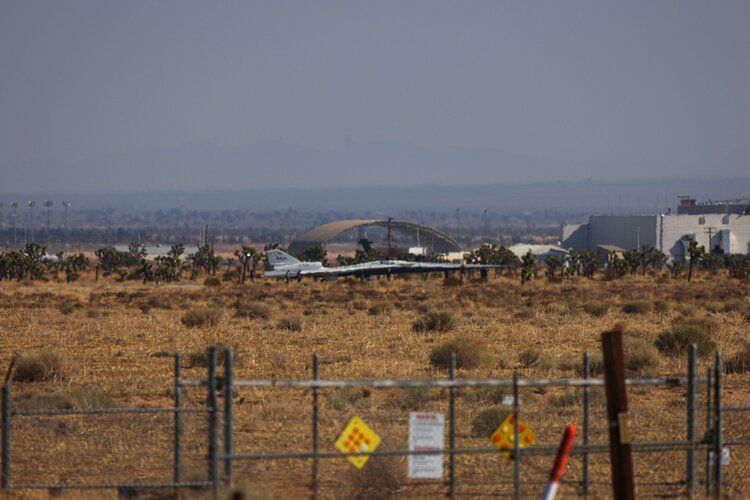
Engine runs are a critical step to ensuring the X-59 operates flawlessly.
Last edited:
Attachments
Scott Kenny
ACCESS: USAP
- Joined
- 15 May 2023
- Messages
- 19,511
- Reaction score
- 27,956
Good, I want the data for acceptable sonic boom footprint soon! (Yeah, it's gonna be like 4-5 years out, minimum. Doesn't stop me from wanting it sooner!)

Grey Havoc
ACCESS: USAP
- Joined
- 9 October 2009
- Messages
- 24,500
- Reaction score
- 18,168
Last edited by a moderator:
Kiltonge
Greetings Earthling
- Joined
- 24 January 2013
- Messages
- 885
- Reaction score
- 2,052
Good, I want the data for acceptable sonic boom footprint soon! (Yeah, it's gonna be like 4-5 years out, minimum. Doesn't stop me from wanting it sooner!)
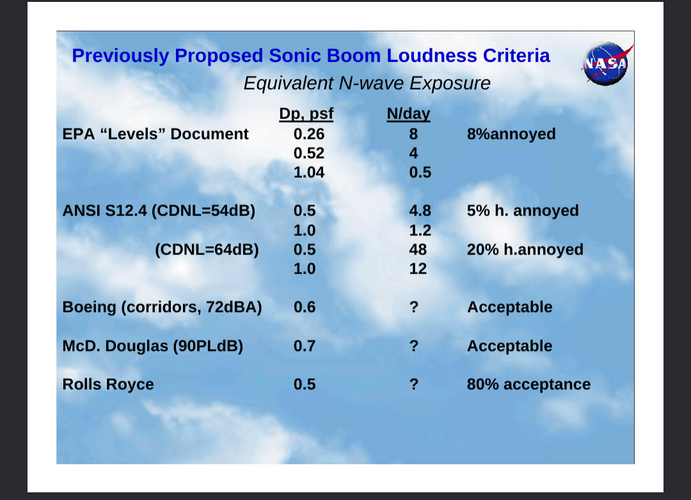
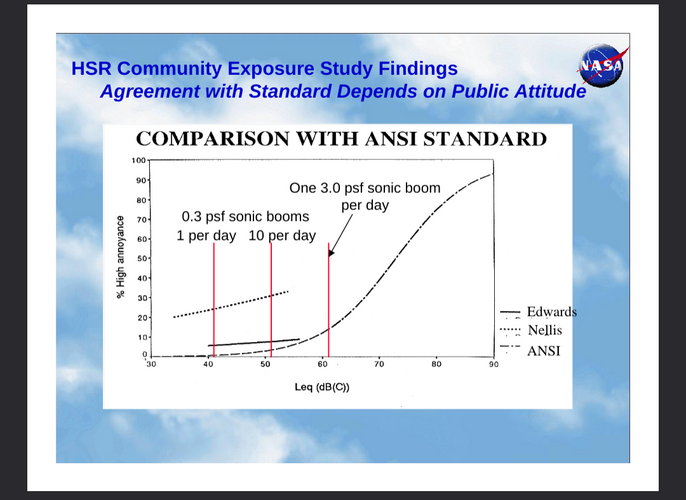
Plenty of studies have already been carried out. We know what people will tolerate; the USAF flew hundreds of sorties in the 1960s and 70s to determine that.
What we don't know is how to build a practical airframe to achieve that.
Last edited:
Scott Kenny
ACCESS: USAP
- Joined
- 15 May 2023
- Messages
- 19,511
- Reaction score
- 27,956
Right. All that data shows that basically NO sonic boom would be acceptable at 0.3lb/ft^2 overpressure levels, looking at the Nellis data showing ~25-30% high annoyance.Plenty of studies have already been carried out. We know what people will tolerate; the USAF flew hundreds of sorties in the 1960s and 70s to determine that.
What we don't know is how to build a practical airframe to achieve that.
View attachment 760420View attachment 760421
Getting the Loudness Equivalent down to "distant thunder" instead of BOOMBOOM! is probably the only way to get that tolerable to the general population instead of just tolerated by the aircraft nerds.
Forest Green
ACCESS: USAP
- Joined
- 11 June 2019
- Messages
- 14,499
- Reaction score
- 31,529

- Joined
- 19 February 2007
- Messages
- 1,643
- Reaction score
- 3,475
Reminds me of an old film in the NAA film library about the introduction of the Sabre into USAFE inventory:This is probably the slowest pacing supersonic program ever run by the NASA.
"Those F-86s can't be so fast - it took them six months to get here!"

- Joined
- 21 January 2015
- Messages
- 14,989
- Reaction score
- 24,201
Relevant to this thread.
https://techcrunch.com/2025/06/06/t...mid-spate-of-flight-related-executive-orders/President Donald Trump signed an executive order Friday that directs the Federal Aviation Administration to lift the 52-year ban on supersonic flight over U.S. soil, marking a major policy shift that occurred just weeks after lawmakers introduced bipartisan legislation with the same aim. The order instructs the FAA to end the overland supersonic ban and create noise-based certification standards, allowing faster-than-sound travel as long as no audible sonic boom reaches the ground.
“The reality is that Americans should be able to fly from New York to LA in under four hours,” Michael Kratsios, the director of the White House Office of Science and Technology Policy, told reporters Friday.


- Joined
- 21 January 2015
- Messages
- 14,989
- Reaction score
- 24,201
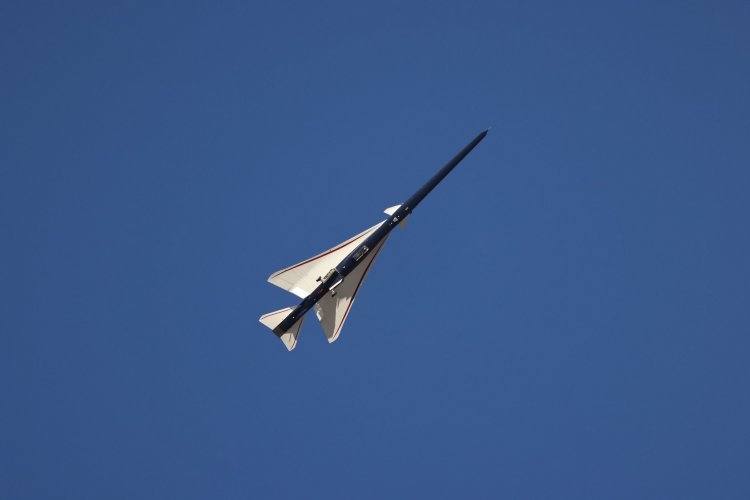
NASA’s Commercial Supersonic Technology project recently completed a full-scale dress rehearsal for Phase 2 of the Quesst mission, which will measure the quiet sonic thumps generated by the X-59. The flight series allowed the team to practice every step of the operation, including flight planning, aircraft operations, ground microphone setup, and in-flight data collection. The rehearsal helps ensure the team is ready ahead of the X-59's first flight.

dannydale
ACCESS: Top Secret
- Joined
- 13 May 2007
- Messages
- 1,014
- Reaction score
- 1,632
Attachments
Last edited:
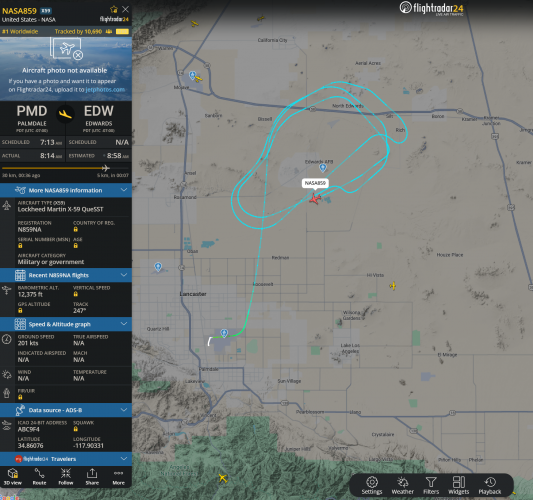
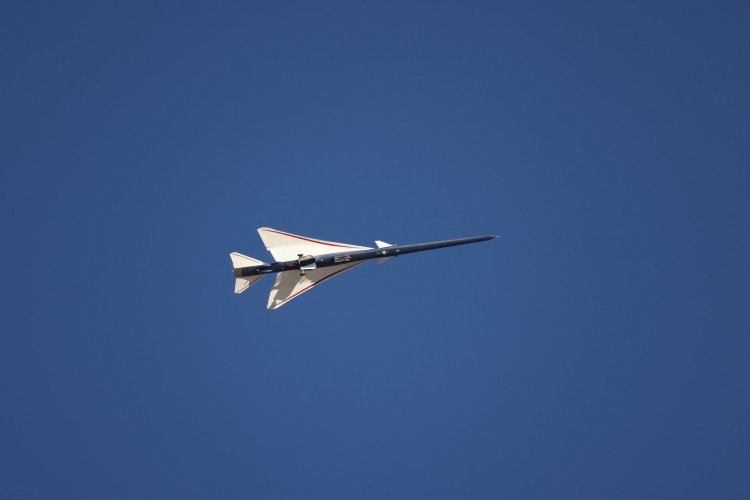
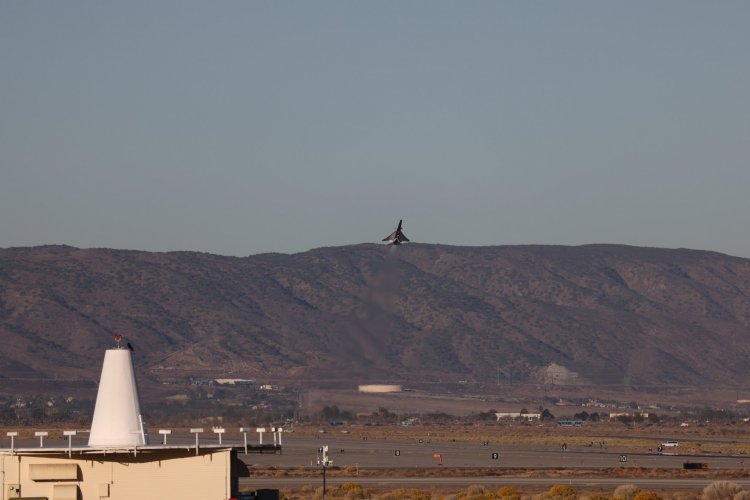
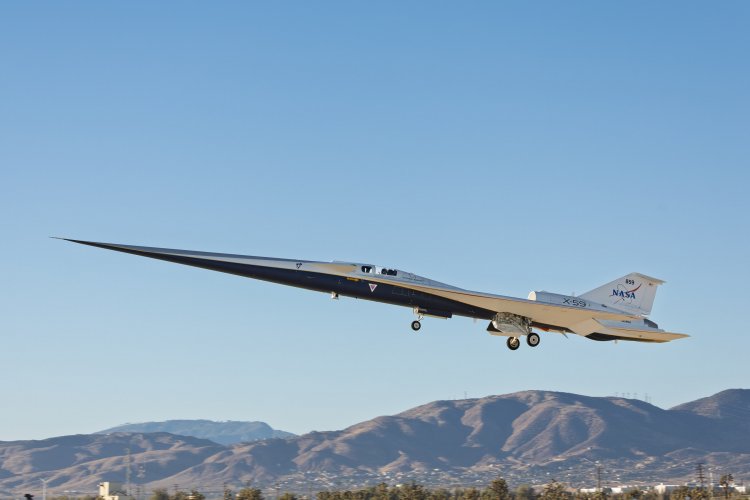
PALMDALE, Calif., Oct. 28, 2025 /PRNewswire/ -- Lockheed Martin Skunk Works® (NYSE: LMT), in partnership with NASA, successfully completed the first flight of the X-59, a revolutionary, quiet supersonic aircraft designed to pave the way for faster commercial air travel.
The X-59 took off from Skunk Works' facility at U.S. Air Force Plant 42 in Palmdale, California, before landing near NASA's Armstrong Flight Research Center in Edwards, California. The X-59 performed exactly as planned, verifying initial flying qualities and air data performance on the way to a safe landing at its new home.
"We are thrilled to achieve the first flight of the X-59," said OJ Sanchez, vice president and general manager of Lockheed Martin Skunk Works. "This aircraft is a testament to the innovation and expertise of our joint team, and we are proud to be at the forefront of quiet supersonic technology development."
https://news.lockheedmartin.com/2025-10-28-X-59-Soars-A-New-Era-in-Supersonic-Flight-Begins
i am a bit surprised they forgot to state the time of liftoff. But, thankfully, Space.com did not.
After taxiing out of the U.S. Air Force's (USAF) Plant 42 facility, the X-59 took off from the Palmdale Regional Airport in California today (Oct. 28) at 10:13 a.m. EDT (1413 GMT), according to aircraft tracker Flightradar24.
https://www.space.com/technology/ae...personic-jet-makes-historic-1st-flight-photos

bercr
ACCESS: Secret
- Joined
- 12 January 2011
- Messages
- 418
- Reaction score
- 869
Attachments

- Joined
- 3 June 2006
- Messages
- 3,538
- Reaction score
- 6,212
Another short video titled "X-59 Takes to the Skies" from Lockheed Martin.
View: https://www.youtube.com/watch?v=zIwcModSxdE
Link:
Video:On Oct. 28, 2025, X-59 flew for the very first time.
From takeoff at our Skunk Works’® Palmdale facility to landing at NASA's Armstrong Flight Research Center, everything performed exactly as planned.
The X-59 moved with the kind of confidence that comes from years of innovation, teamwork and cutting-edge solutions.
This flight isn’t just a milestone — it’s momentum. We’re proving that the future of flight can be faster and quieter than ever before. And we’re proud to be leading the charge. [...]
Link:
Code:
https://www.youtube.com/watch?v=zIwcModSxdE
archipeppe
ACCESS: Top Secret
- Joined
- 18 October 2007
- Messages
- 2,556
- Reaction score
- 3,891
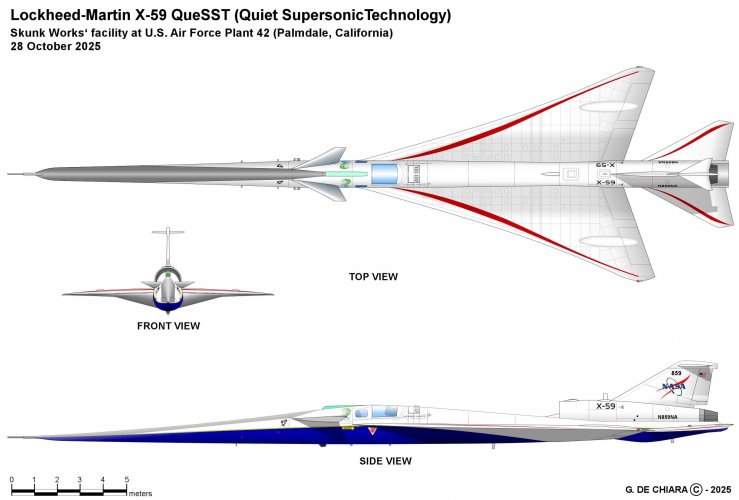
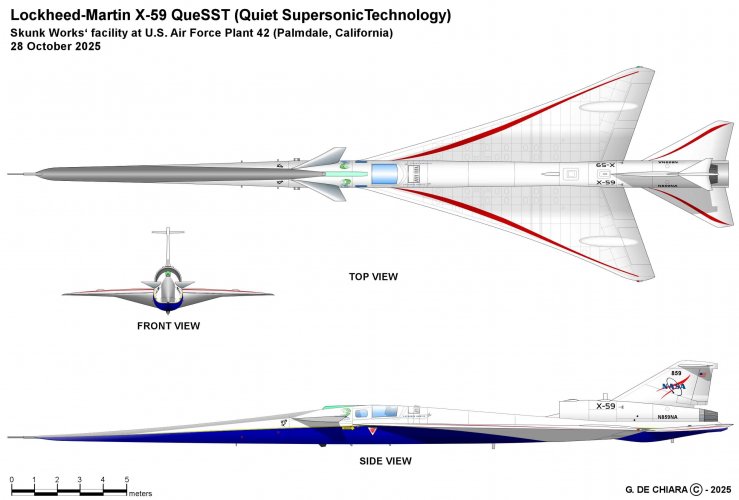
Similar threads
-
 Proposed NASA budget could lead to a number of new X-Planes
- Started by Flyaway
- Replies: 21
-
-

-
 Sikorsky Long-Range Hybrid-Electric VTOL Demonstrator (HEX)
- Started by VTOLicious
- Replies: 5
-
