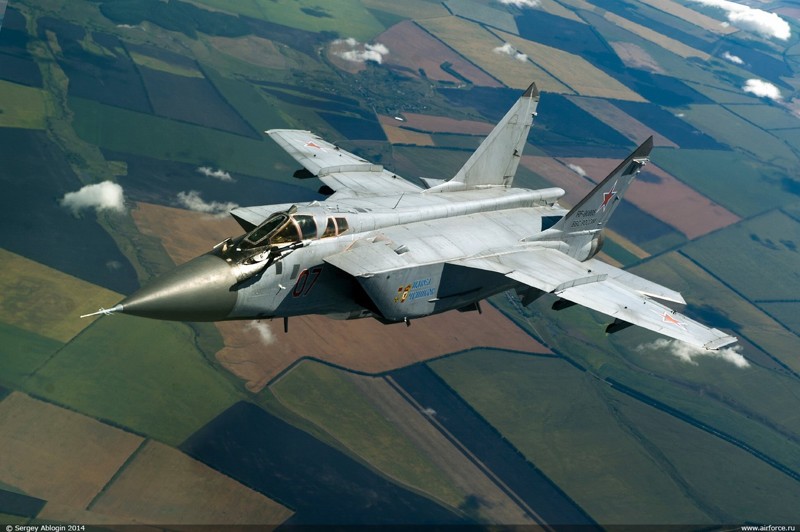
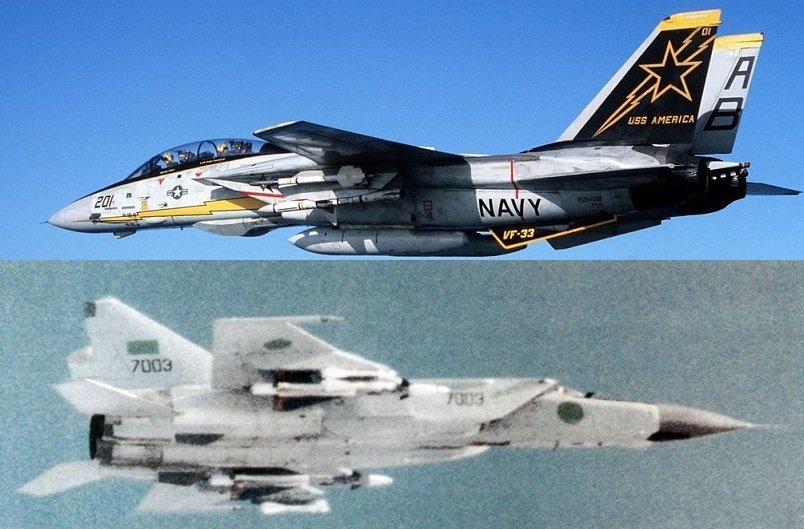
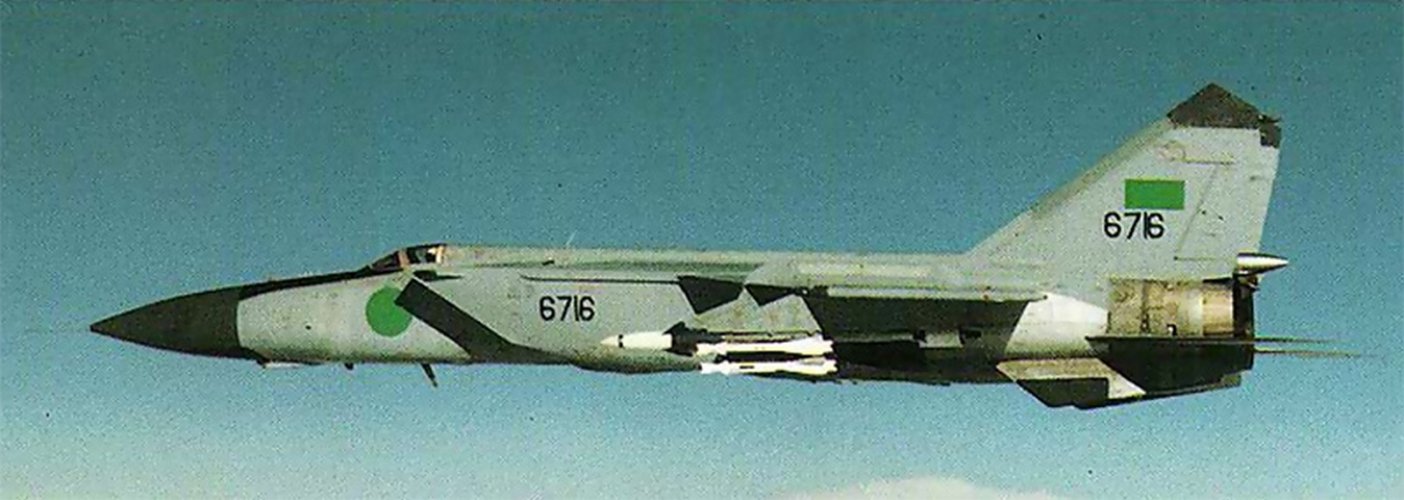
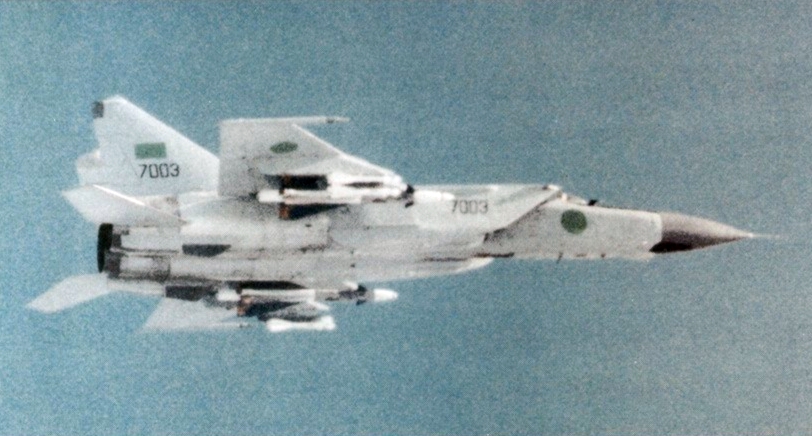
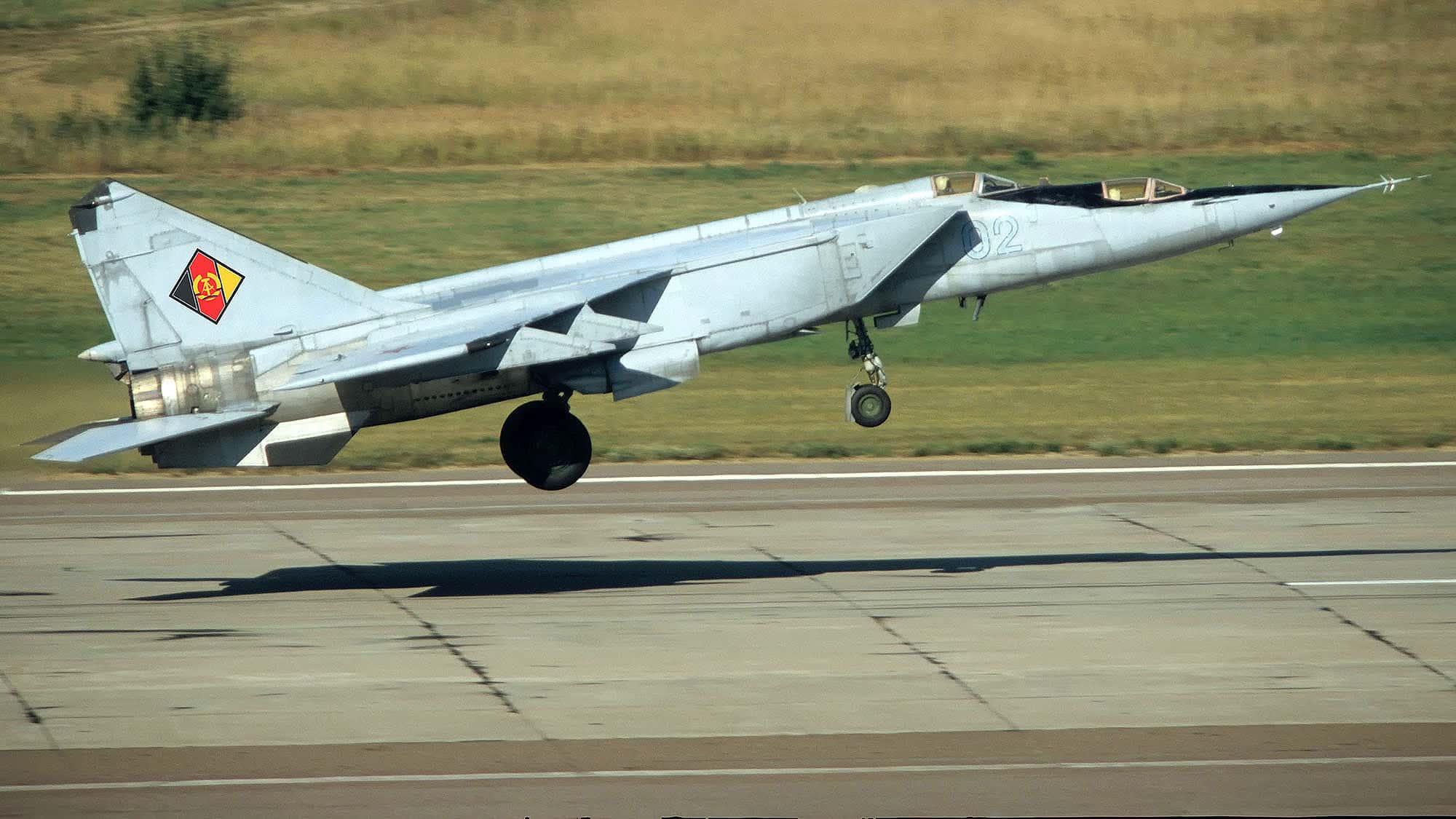
Mikoyan MiG-25 "FOXBAT"

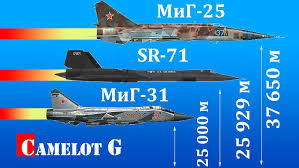
You forget a detail, the MiG-25 uses titanium, but 1/11th of what SR-71 uses, Mikoyan was far more practical in terms of Mass production, they used titanium where they needed, but steel to build it cheap and in large amounts.

The SR-71 was the best performer, but not the best fighter, nor the most practical design.

Both are great aircraft, but in terms of practicality the MiG-25 was like a VW beetle, and the SR-71 a Ferrari


In this poin, we agreed before, but I would say, more like a Formula 1 car and your everyday Porsche
 
One interesting detail:

''В отличие от SR-71, на МиГ-25 при скорости М=2,5 и весе 30 т. допускались перегрузки до 5g.''

''Unlike the SR-71, the MiG-25, at a speed of Mach 2.5 and a weight of 30 tons, allowed overloads of up to 5g.''

Another one :

''По словам генерального конструктора Р.А.Белякова, превышение МиГом скорости М=3 снижало ресурс планера, но не приводило к повреждению самолета или двигателя.''

''According to the General Designer R.A. Belyakov, the MiG exceeding the speed of M=3 reduced the service life of the airframe, but did not lead to damage to the aircraft or the engine.''


Source:

Рекорды МиГ-25​


Of course SR-71 was strategic recce aircraft with planned 'straight' flights .On the other side,MiG-25 was developed as high-alt and high speed interceptor. Its fate was to serve first as a recce aircraft than as a real interceptor.

In the meantime ,I've found that military historian Anatoliy Dokuchayev wrote about MiG-25R/RB recce missions over Sinai and Israel and mentioned some details about achieved speed during some flights.Must find those articles.
 
But than, why were they leaking fuel and how did it seal up when hot?

Of course, rivited aluminium will likely ony becone fuel tight, when some additiinal coating is used.
The Blackbirds leaked fuel because no sealant could handle both the temperatures and the movement due to thermal expansion. If the sealant could handle the movement, it couldn't handle the heat, and if it could handle the heat it couldn't handle the movement.

Instead, the heat from thermal expansion tightened the gaps enough to seal. I would have hated to do that math to prove it to Kelly, though...
 
In the meantime ,I've found that military historian Anatoliy Dokuchayev wrote about MiG-25R/RB recce missions over Sinai and Israel and mentioned some details about achieved speed during some flights.Must find those articles.
Probably that war was the prime of the MiG-25, it flew with impunity, it collected intelligence that helped a lot, in fact it was the war that Israel almost lost, there is a lot of evidence plenty of F-4s, A-4s and Mirage III were lost by Israel in 1973.
1756693808193.png
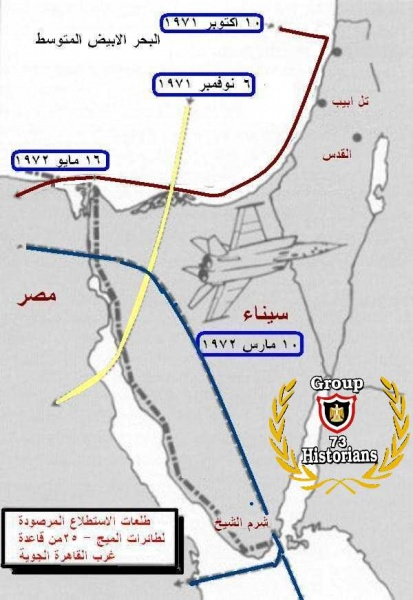
if you check the newspaper, it says the MiG-25 can fly at Mach 3.2, it is an egyptian newspaper from March 1971


1756694114393.png

1756694214151.png
The US dragged its feet with its response, and the Soviet leadership switched to a backup plan. MiG-25 over Tel Aviv On October 13, at 6 a.m., fighter pilot Major Alexander Vertievets was handed a package labeled “Secret. Open immediately!” Ten minutes later, the Soviet pilot, already in the cockpit of his MiG-25, received a second package labeled “Special importance. Destroy upon reading!” The document stated the purpose and objective of the combat operation. The fighter took off from a military airfield in the Astrakhan region and at 8 a.m., Israeli air defense radars detected it in the skies over Tel Aviv. Sirens were turned on in the city, and a flight of modern French Mirage fighters headed toward the plane. The intruder ignored the demand to land. The unknown aircraft was moving twice as fast as the Mirages and was at an altitude of 6,000 feet, which was inaccessible to the French aircraft. The Israeli pilots fired missiles at the plane, but they did not reach their target. The unknown enemy increased speed and rose to an altitude of 6.9 thousand feet. Teasing the Israeli air defense, the Soviet pilot made six circles around Tel Aviv. Even the American Phantoms sent to intercept him were unable to catch up. Pilot Alexander Vertievets was awarded the title Hero of the Soviet Union. He made his flight on a MiG-25 with a flight ceiling of 23 kilometers and 3,600 km/h. The technical characteristics made the aircraft invulnerable to all air defenses in the world. The Israeli command got the hint. The Arabs could not have such cutting-edge technology, which meant that this was a demonstration of the USSR's power. The myth about the capabilities of the Israeli air defense was dispelled, and the Prime Minister refused to launch a nuclear strike. Financial injections from American corporations, US military aid, and the mediation of the Jordanian and Moroccan kings helped save Israel from defeat.
1756699893583.png
1756700308098.png
1756700169783.png
 
Last edited:
Nein, ist was BMW!
Nein, es war ein BMW ;)

The rivets must have had a different heat expansion than the plates.

Both, the Americans and the Russians had the same problem, but used different solutions, in this case, I preferer the Russian approach, especially for an interceptor!

BMW are indeed very prone to leaking oil. Funfact, some models had a carbon fibre valve cover, which was a popular item to have for pimped cars. The owners of the cars which had originally been equipped with carbon fibre valve covers on the other hand, usually converted them to Aluminium valve covers to stop them from leaking (of course, even the Aluminium valve covers can leak....).
 
The rivets must have had a different heat expansion than the plates.
Yes, you need a work-hardening version of the metal, IIRC.

Like I said, never beat any titanium rivets and it's been frack 29 years since A&P school! Beat many, many aluminum rivets, but never titanium.


Both, the Americans and the Russians had the same problem, but used different solutions, in this case, I preferer the Russian approach, especially for an interceptor!
I'll respectfully listen to any Russian engineer, I just need one who is happy dealing with an idiot asking "why did you do it that way?" :D


BMW are indeed very prone to leaking oil.
If a BMW does not have a puddle of oil under it after a 1hr stop somewhere, do NOT restart the engine it's out of oil!
 
s-200A first entered service in 1967 if you say Dubna i may agree with you BUT that's total BS

Primitive ? in what sense tbh SR-71 isnt that complex also we can say it's primitive like the MiG-25 or even more primitive if we compare it to the MiG-25RBT from equipment standpoint fun fact MiG-25 can also drop free fall bombs with accuracy of guided weapons something SR-71 was never capable of... about the interceptor part of the MiG-25 it doesn't need to be complex the ground radar and control station work was to intercept the SR-71 on grater distance and to direct the MiG-25 that's why there is a thing called LAZUR i think you can use google to educate your self about it before posting nonsensical wall of text with far-fetched opinion

about the whole Speed record sealant melted crowbar rtc there is another similar case a Bulgarian RBT melted its avionics it was pretty much a hot goo dripping on the ground after the plane landed cause problems with the cooling and they also had problem with opening the canopy i think the whole speed record story was miss translated by someone, and its pure internet lore same gos for the SR-71 story that gos over Mach 3.3 more like 2.83 and not more than 3.2
Bro, I wrote about the OPERATIONAL ENVIRONMENT of the SR-71. It never flew above the USSR and WPACT, so the S-200 never could launch.

Of course I know that Angara reached IOC in 1966. I made a two part video about the S-200.
View: https://youtu.be/gpUBq4dCFxg


I cannot stop laughing on your ignorance.
 
Probably that war was the prime of the MiG-25, it flew with impunity, it collected intelligence that helped a lot, in fact it was the war that Israel almost lost, there is a lot of evidence plenty of F-4s, A-4s and Mirage III were lost by Israel in 1973.
View attachment 783275
if you check the newspaper, it says the MiG-25 can fly at Mach 3.2, it is an egyptian newspaper from March 1971


View attachment 783276

View attachment 783277
The US dragged its feet with its response, and the Soviet leadership switched to a backup plan. MiG-25 over Tel Aviv On October 13, at 6 a.m., fighter pilot Major Alexander Vertievets was handed a package labeled “Secret. Open immediately!” Ten minutes later, the Soviet pilot, already in the cockpit of his MiG-25, received a second package labeled “Special importance. Destroy upon reading!” The document stated the purpose and objective of the combat operation. The fighter took off from a military airfield in the Astrakhan region and at 8 a.m., Israeli air defense radars detected it in the skies over Tel Aviv. Sirens were turned on in the city, and a flight of modern French Mirage fighters headed toward the plane. The intruder ignored the demand to land. The unknown aircraft was moving twice as fast as the Mirages and was at an altitude of 6,000 feet, which was inaccessible to the French aircraft. The Israeli pilots fired missiles at the plane, but they did not reach their target. The unknown enemy increased speed and rose to an altitude of 6.9 thousand feet. Teasing the Israeli air defense, the Soviet pilot made six circles around Tel Aviv. Even the American Phantoms sent to intercept him were unable to catch up. Pilot Alexander Vertievets was awarded the title Hero of the Soviet Union. He made his flight on a MiG-25 with a flight ceiling of 23 kilometers and 3,600 km/h. The technical characteristics made the aircraft invulnerable to all air defenses in the world. The Israeli command got the hint. The Arabs could not have such cutting-edge technology, which meant that this was a demonstration of the USSR's power. The myth about the capabilities of the Israeli air defense was dispelled, and the Prime Minister refused to launch a nuclear strike. Financial injections from American corporations, US military aid, and the mediation of the Jordanian and Moroccan kings helped save Israel from defeat.
View attachment 783280
View attachment 783282
View attachment 783281

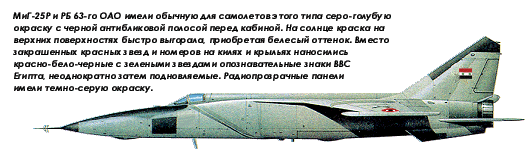
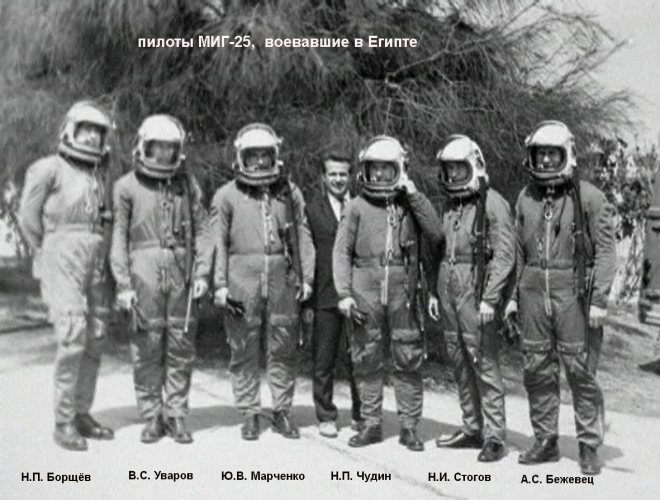
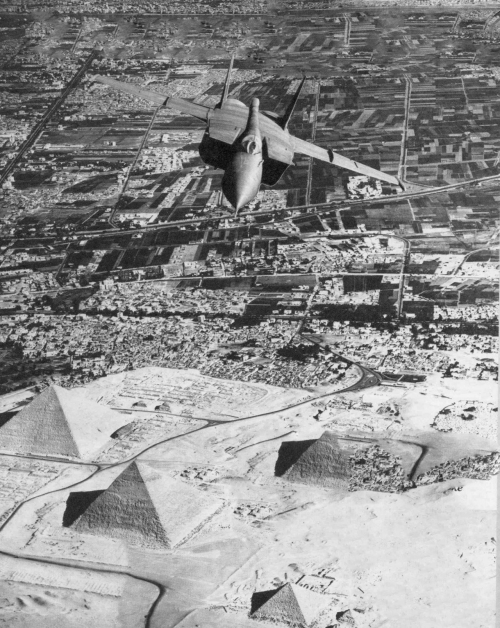
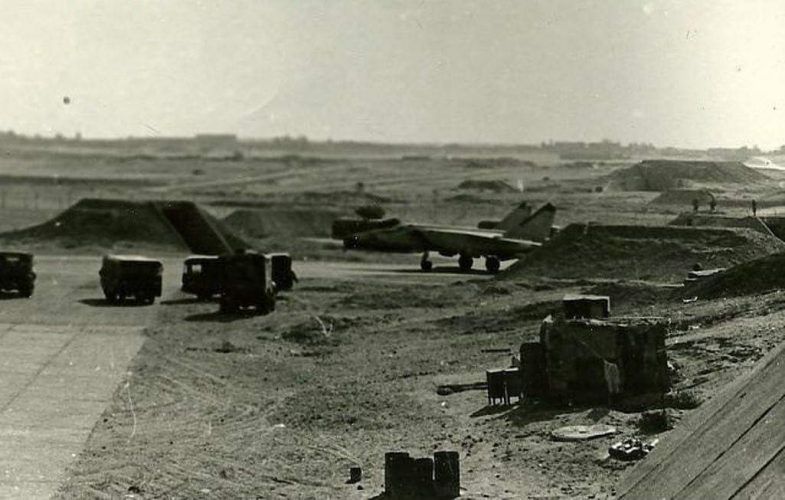
In fact, MiG-25RBV with fighter-pilot Major Alexander Vertievets took off from Iraq,not from the Akhtubinsk air base. 63rd OARO was based in Egypt ( Cairo-West) from March 1971 until July 1972. It is interesting that all MiG-25R/RB used SPS-141 'Geran' as on-board active jamming stations.

When we talk about 'radar speed measuring' than ,during those recce flights ,keep on mind that they were tracked not only by Israeli ground radars but also by USN 6th fleet ships radars.

Sources:

63-й отдельный авиаотряд советских ВВС в Египте, 1970-72 гг.​


63-й отдельный авиаотряд Боевое применение МиГ-25 в Египте


В 20 000 метрах над землёй обетованной⁠⁠​


In fact, MiG-25RBV with fighter-pilot Major Alexander Vertievets took off from Iraq,not from the Akhtubinsk air base. 63rd OARO was based in Egypt ( Cairo-West) from March 1971 until July 1972. It is interesting that all MiG-25R/RB used SPS-141 'Geran' as on-board active jamming stations.

When we talk about 'radar speed measuring' than ,during those recce flights ,keep on mind that they were tracked not only by Israeli ground radars but also by USN 6th fleet ships radars.

Sources:

63-й отдельный авиаотряд советских ВВС в Египте, 1970-72 гг.​


63-й отдельный авиаотряд Боевое применение МиГ-25 в Египте


В 20 000 метрах над землёй обетованной⁠⁠​


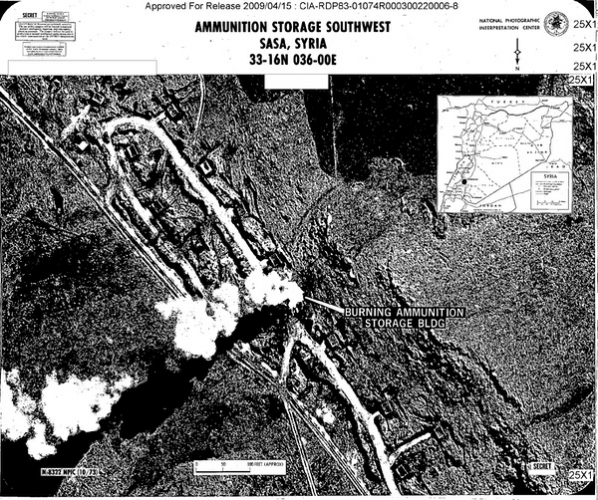
1756792852936.png
A burning ammunition storage site photographed by an SR-71 Blackbird during the 1973 Yom Kippur War. This was some of the very limited reconnaissance the United States had during the conflict. This is a poor photocopy of the original photograph, which has not been released. (credit: CIA)


1756793332325.png

The MiG-25s arrived in Egypt at the end of 1970, when President Abdel Nasser visited the Soviet Union and requested the presence of Soviet forces to defend Egypt's interior. Israel had begun bombing Egyptian territory in retaliatory raids in response to Egypt's significant gains in the War of Attrition. An air brigade of MiG-21 fighters arrived, manned by Soviet pilots, navigators, technicians, and air defense forces. Among the forces sent to Egypt, operating under the name "friendly forces," were four MiG-25 reconnaissance aircraft.
1756793888286.png
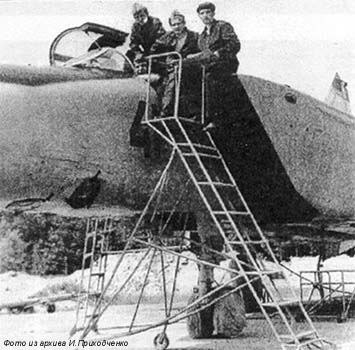
At the time, the MiG-25 was highly advanced, extremely fast, and flew at an extremely high altitude, making it difficult for any American aircraft to intercept or track it. It was considered one of the best-kept secrets of the Cold War between America and the Soviet Union. Israeli Phantom jets attempted to intercept it on one or two occasions during reconnaissance missions inside Israel, but those attempts failed.

When the planes arrived in Egypt, they were subjected to strict controls by the Soviet Union inside the base west of Cairo. No Egyptian, whoever he was, was allowed to approach the location of the planes inside the bunkers. Although the planes bore Egyptian markings, those who flew them were highly skilled Soviet pilots, and they were forbidden to mix with any Egyptian or non-Soviet person inside Egypt. The Soviets were afraid that any of the plane’s secrets would be exposed to the Egyptian side, to the point that the reconnaissance missions carried out by that plane during the ceasefire period, the photos were first sent to the Soviet Union for analysis and verification, then certain photos were selected and sent to Egypt for display to the Egyptian leadership only, without Egypt having the right to keep the photos or make a copy of them.


On April 13, 1972, the MiG-25P was officially accepted into service, and its military tests were completed in 1973. Following the results of factory and state tests, a number of changes were made to the design of the aircraft and engine. In particular, the wing was given a negative dihedral angle of -5°, and a differentially deflectable stabilizer was introduced.
Since the early 1970s, the MiG-25P began to enter service with the combat units of the Air Defense Forces fighter aviation. The appearance of new fighters sharply reduced the activity of American Lockheed SR-71A reconnaissance aircraft, which had previously quite "boldly" approached the borders of the Soviet Union in the North and Far East.
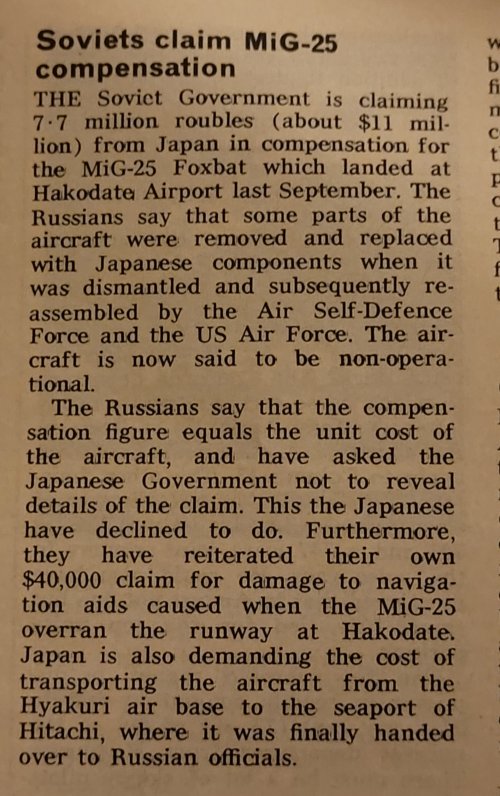
In 1976, an event occurred that significantly influenced the fate of the MiG-25 interceptor fighter. On September 6, 1976, Senior Lieutenant Belenko flew a MiG-25P to Japan, thereby providing the secret aircraft for study by American and other Western specialists. The hijacked aircraft was returned to the USSR fairly quickly. But this was enough time for the Americans to study the design and avionics of the new aircraft. Therefore, the USSR government decided to refine and radically modernize the aircraft.
 
Last edited:
I wonder how Boeing intended to solve the problem on the 2707...
No idea on technical grounds, but I do know Boeing was in contact, not only with Lockheed (because SR-71) but also with the Soviets.

There was a confidential meeting in Paris circa 1969 where Boeing engineers met their soviet counterparts and they discussed titanium manufacturing versus Il-62 / Il-86 engine emplacement: podded underwing vs VC-10 style.


And of course there is that astonishing Cold war story, when Lockheed found that the titanium from the US strategic reserve was not good enough, and the CIA managed to buy titanium from the USSR itself, through a maze of shell companies.
Which means that, when the Soviets fired those 4000 missiles against SR-71s they were blissfully unaware they were actually shooting at their own titanium, flying over their heads.


Our supplier, Titanium Metals Corporation, had only limited reserves of the precious alloy, so the CIA conducted a worldwide search and, using third parties and dummy companies, managed to unobtrusively purchase the base metal from one of the world’s leading exporters—the Soviet Union. The Russians never had an inkling of how they were actually contributing to the creation of the airplane being rushed into construction to spy on their homeland.
 
Last edited:
It seems that the discussion about speed is over

Some comments about the 'weird situations' after more than 10 days ...

So the max possible true air speed for the 'RB' could be even 3.5 Mach at 20.000m ( of course for a very short period of time).

Case from 1971 ( R or RB piloted by OKB MiG test pilot Nikolay Stogov) reached even 3.6 Mach ( about 3800km/h) at about 20000m where speed of sound is 1062km/h or almost 300m/s.


Case from 1975 ,MiG-25P flew at 13000 m with IAS 1650 km/h and was overstressed with even 11G ( was written off).
Case from 1978 ,MiG-25P flew at 20500m and reached true air speed of 3.01 M ( continued operational use)
Case from 1979,MiG-25RB flew at 2000m with IAS 1600km/h and was overstressed with 10G (was written off).

Most weird case was when AAM's rocket engine started to work w/o launching itself with thrust of 50kN's lasted for more than 6 sec.Pilot didn't eject and landed safely.
 
Last edited by a moderator:
If the plates can moove to each other (as it was likely the case) it gets even worse

The titanium skin panels of the SR-71 were riveted to the structure like a normal aluminium aircraft. They weren't "loose" and didn't "slide around". The only difference was that the rivet holes were oblong so that the fastener didn't shear during thermal expansion of the plates.
 
If oblong holes were used, these paneles were loose, at least to an degree that they couldn't function as stressed skin.
 
Hi, i was wondering if anyone has a primary source for the R-40TD seeker head (35T1), and for the RP-25M radar?

Anything would be great!
 
In the early 1980s, the East German Air Force (LSK/LV) operated the MiG‑23 Flogger as its most advanced fighter. However, there were internal discussions about acquiring the far more powerful MiG‑25 Foxbat, a nearly Mach‑3 interceptor developed by the Soviet Union.
The article explains that the idea of introducing the MiG‑25 into East German service was seriously considered but ultimately never realized. It appears in the context of a broader look at classic military aircraft and includes references to related aviation topics and photo galleries. [...]
Source (German):
 
It seems that the discussion about speed is over

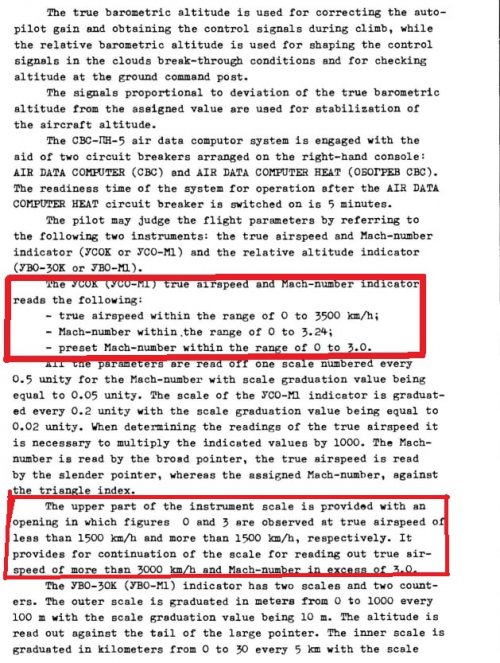
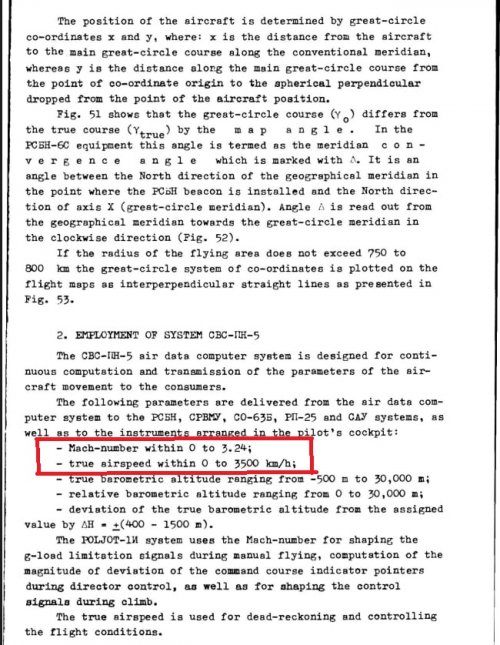
Almost, there is some interesting details from the MiG-25P F.M. ( for the IqAF pilots ). They had MiG-25PDE in fact and later PDS, not P as we know. So FM for them was maybe translated from the real MiG-25P FM ? Nevermind...

Details from the Chapter III ( Air navigation ) and it is very important to note .


MiG-25P FM mod.jpg

MiG-25 FM1 mod.jpg

What is that СВС ? It is ''Система воздушных сигналов'' or' air signal system' ( pitot static,AoA sensors,temp sensors etc..)
 
Last edited:
It's from the main Su-57 thread ,because this is appropriate topic for the next details.

@ Scott Kenny

Keep in mind that 40 years ago, Soviet MiG-25BM's were in Iraq to conduct some SEAD/DEAD missions against Iranian AD/SAM sites with ARM type Kh-58U.

''That's a 250km range missile. And also right about the time they were introduced.''


Take a look on this data ...

''The MiG-25BM could carry up to four anti-radar missiles under its wings (only two missiles were planned during the design phase) or a combination of missiles and bombs (up to eight FAB-500M-62AT bombs). The "Foxbat-F" carried the Kh-58U variant of the "Kilter." It was built primarily of titanium and was designed to resist kinetic heating of 400 to 500°C. The maximum Mach number with missiles was restricted to 2.38.''

So ,with the four 650 kg heavy ( 150 kg warhead only ),MiG-25BM could reach about 2600km/h and it's amazing ,when we know that those ARM's were not attached under the fuselage but under the wings ( in terms of the huge aerodynamic drag).

Now about max launch range of the Kh-58U or Izdeliye 112U ...

''During their operational conversion, the pilots followed the Reconnaissance Aviation Combat Training Course (Kurs Boyevoy Podgotovki Razvedyvatel'noy Aviatsii) to which the specificities of the MiG-25BM employment were added. Kh-58 "without suffix" training missiles were proposed for the initial training, because of a shortage of Kh-58U. However, the Kh-58 also employed by other aircraft types such as the Su-24 were limited to a speed not exceeding Mach 1.5 and therefore they could not be used for training. The MiG-25BM would have penetrated enemy air defences essentially without entering their lethal zone. Besides, if it had been necessary to attack NATO, targets would have been close to the front line. Thus, the approach to enemy territory would have been flown over friendly lines. Also, takeoffs and landings were protected by fighter aircraft. Following a reconnaissance mission over the potential targets, relevant data were entered into the different systems of the MiG-25BM such as the Peleng navigation complex. The transit flight to the target area was achieved at high altitude to a range of 200 to 60 km from the target (200 km was considered the maximum acceptable operational range, although successful firing were achieved at a range of 300 km from the target during tests with the Kh-58U variant. However, there was the risk that the missiles' nickel-cadmium batteries would run down before reaching the target when firing from such a long range). The target could be locked on from ranges up to 400 km.''

''The missile seeker existed in four different versions, adapted to different radar frequency bands; moreover, they were not vulnerable to electronic countermeasures. Each missile could be programmed separately so it was possible to carry missiles with different seekers simultaneously. The Sych-M system detected active radars and selected their signals for input into the missile control system. The missiles were attached to AKU-58 (Aviatsionnaya Katapul'tnaya Ustanovka or literally aerial ejection unit) launch rails under the wing pylons. When fired, the Kh-58U missiles initially were separated from the aircraft by two extendable arms integrated into the AKU-58 and powered by compressed air. Thus, damage to the carrier aircraft was avoided when the missile engine was ignited and, above all, the risk of a reactor stall through gaz ingestion was eliminated. The missile was launched at about Mach 2.35 maximum from an altitude between 17,000 and 21,000 meters. The rocket engine provided 6 tons of thrust lasting 3.6 seconds, while the missile accelerated either upwards or in a downwards dive depending on the range to the target. The thrust was then autonomously reduced simply by burning solid propellant of a different caliber in a smaller combustion chamber, providing a sustained thrust of 1 ton for 15 seconds.''

''The Yaguar had several operating modes. Thus, when the target coordinates were known, the PRGS-58M seeker aimed at the programmed coordinates; on the other hand, it locked onto the selected radar when the latter was active. Should the radar emissions be interrupted after locking onto the target, the Kh-58U, a "Fire and Forget" weapon, nevertheless hit its target because it could store in memory the last recorded target coordinates for 15 seconds. The "Kilter" was autonomous after firing, making it possible for the pilot to maneuver or turn around. The final dive to the target occured at an angle of 45°. The 149 kg missile warhead, including 58.5 kg of explosives (3), exploded up to five meters above the target or at impact.''


Source: https://www.16va.be/3.4_la_reco_part6_eng.html

Photo collection: https://www.16va.be/galeries_vvs/mig-25/imgcol/imgcol_2/_00001.html

More photos: https://www.airbase.ru/sb/russia/mikoyan/mig/25/bm/indexe-t.htm

 
''During their operational conversion, the pilots followed the Reconnaissance Aviation Combat Training Course (Kurs Boyevoy Podgotovki Razvedyvatel'noy Aviatsii) to which the specificities of the MiG-25BM employment were added. Kh-58 "without suffix" training missiles were proposed for the initial training, because of a shortage of Kh-58U. However, the Kh-58 also employed by other aircraft types such as the Su-24 were limited to a speed not exceeding Mach 1.5 and therefore they could not be used for training. The MiG-25BM would have penetrated enemy air defences essentially without entering their lethal zone. Besides, if it had been necessary to attack NATO, targets would have been close to the front line. Thus, the approach to enemy territory would have been flown over friendly lines. Also, takeoffs and landings were protected by fighter aircraft. Following a reconnaissance mission over the potential targets, relevant data were entered into the different systems of the MiG-25BM such as the Peleng navigation complex. The transit flight to the target area was achieved at high altitude to a range of 200 to 60 km from the target (200 km was considered the maximum acceptable operational range, although successful firing were achieved at a range of 300 km from the target during tests with the Kh-58U variant. However, there was the risk that the missiles' nickel-cadmium batteries would run down before reaching the target when firing from such a long range). The target could be locked on from ranges up to 400 km.''
Huh. That is not as much range advantage as I expected, based on the Blackbird/SRAM data (more technically, the B-58/SRAM data line in that chart).
 
Huh. That is not as much range advantage as I expected, based on the Blackbird/SRAM data (more technically, the B-58/SRAM data line in that chart).

Launch range could be even 400kms ( lock-on range by the passive radar seeker) but there was problem with those batteries.
 
right, but IIRC M2 at 65kft launch should double the range of the weapon, based on that chart.

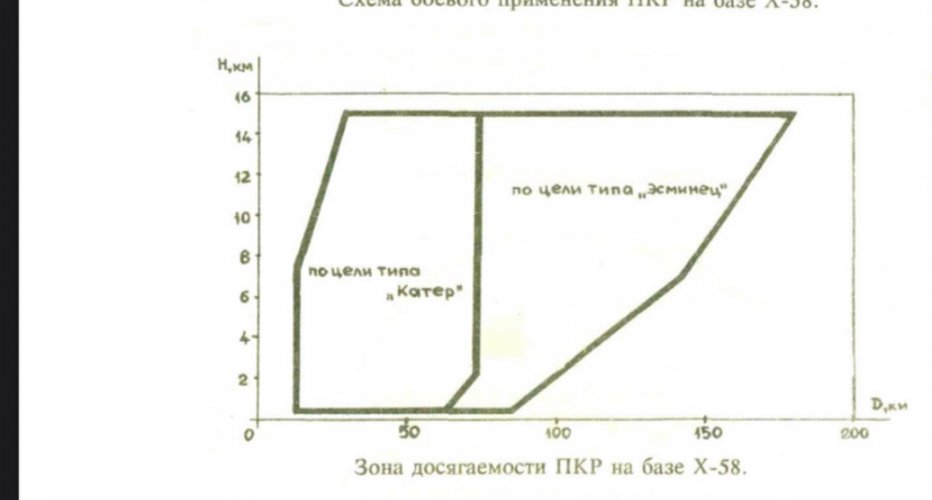
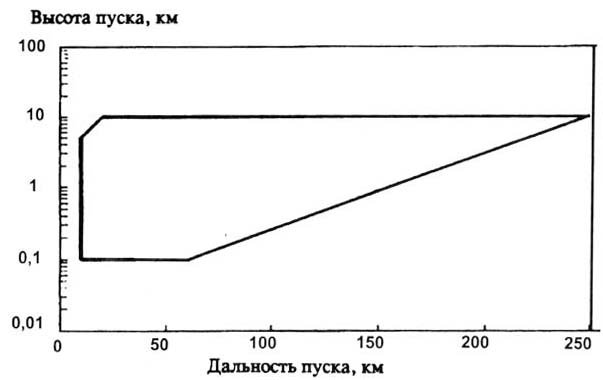
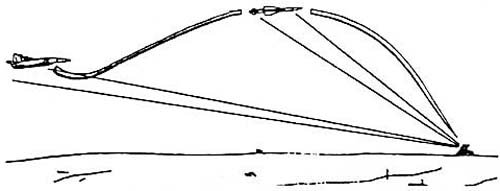
Yes,if we look at this graphic in case for Kh-58U/ Izd 112U ,we can see that max launch range when it is launched at 10km is 250km. During stratospheric/supersonic launch ( e.g. 21km and M 2.35 ) launch range could be even twice as much. Kh-58U has loft possibility but as it was mentioned ,there was issue with batteries which could not provide controllability during such a long flight.

This is interesting :

''Бортовая никель-кадмиевая аккумуляторная батарея повышенной емкости со статическим преобразователем тока обеспечивает работу систем и рулевого управления в течение не менее 200 сек.''

''An on-board high-capacity nickel-cadmium battery with a static current converter ensures the operation of the systems and steering for a min 200 seconds.''

This data is for the basic Kh-58 :

''При скрытном подходе к объектам ПВО и пуске с высоты 200 м дальность стрельбы составляет 40 км, при пуске с высоты 5000 м - до 70 км, достигая 100 км при атаке с 10-км высоты.''

''With a stealthy approach to air defense targets and launch from a height of 200 m, the firing range is 40 km, when launched from a height of 5000 m - up to 70 km, reaching 100 km when attacking from a height of 10 km.''

So Kh-58U has 2.5x more launch range then basic Kh-58 ??? Mentioned max speed of the Kh-58U is 3.6M ,but I think it can be even faster .Citation from the first source .

''It was built primarily of titanium and was designed to resist kinetic heating of 400 to 500°C.''

Kh-58U launch ranges.jpg

Kh-58U lofting.jpg

Sources :


Similar threads

Back
Top Bottom