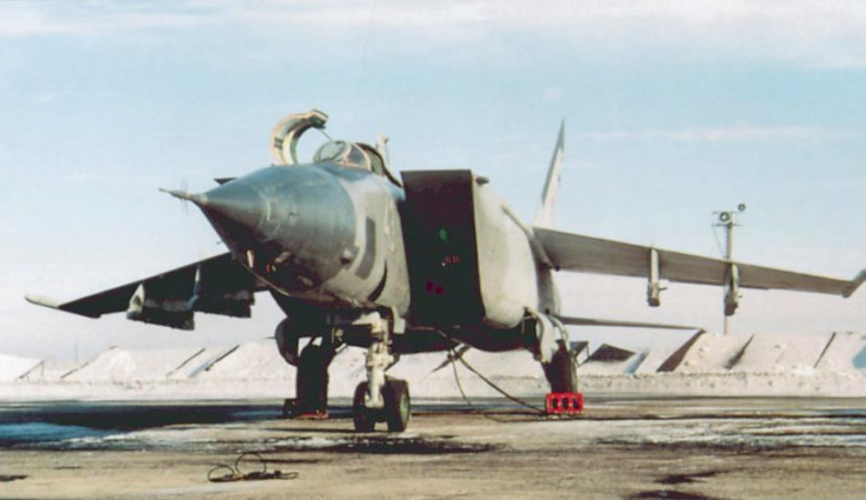
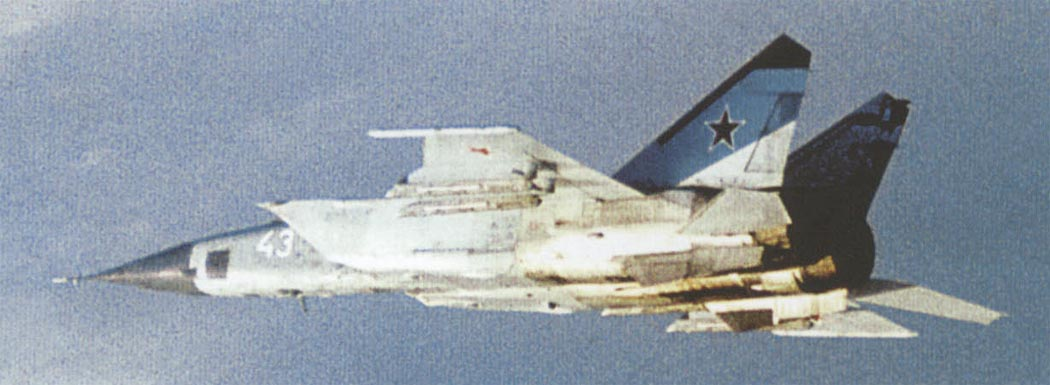
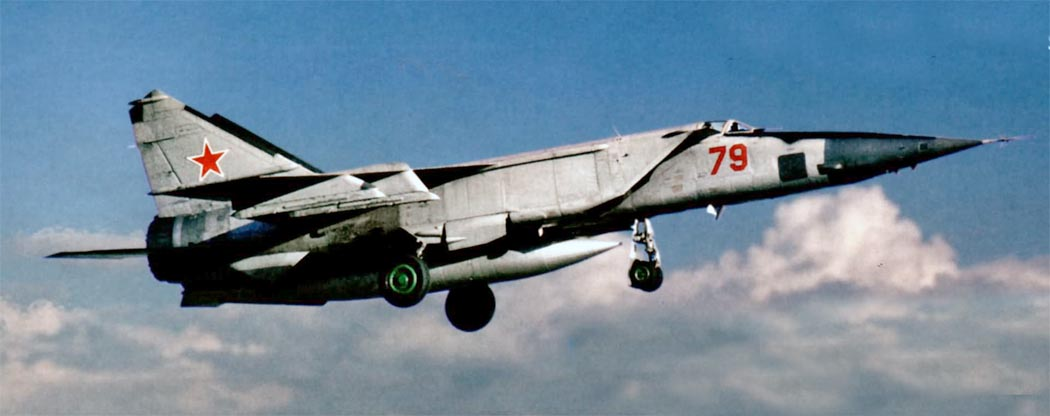
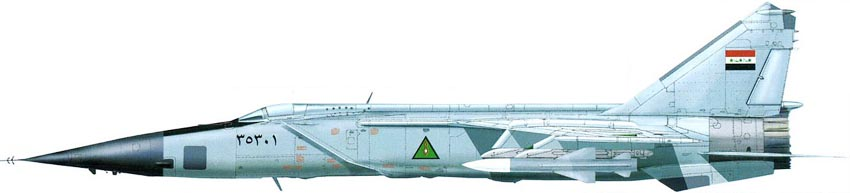
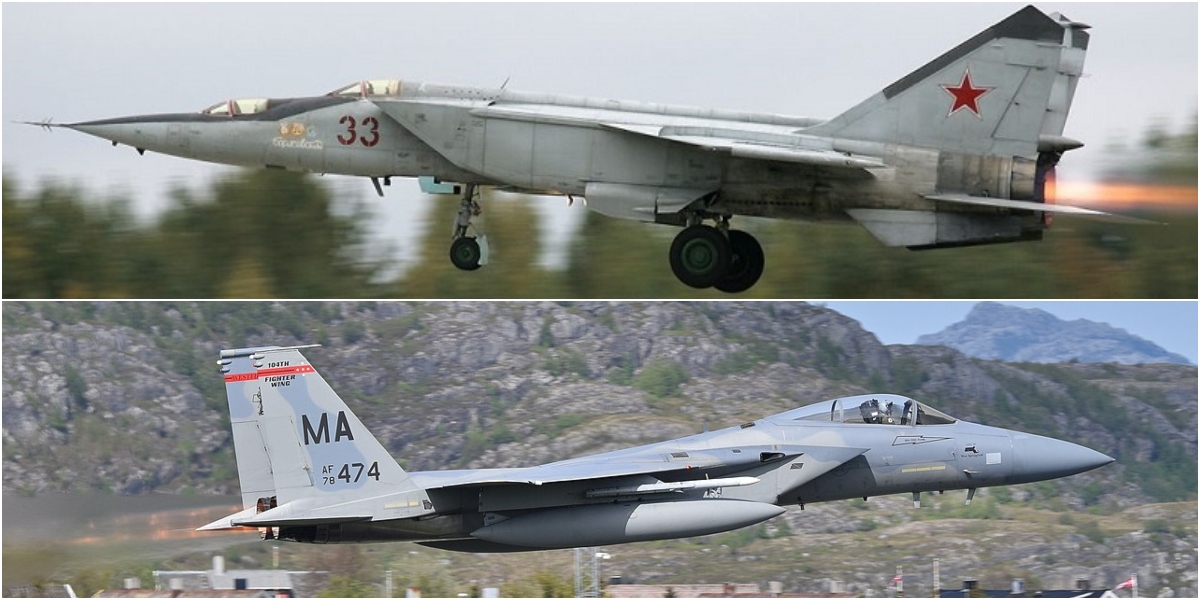
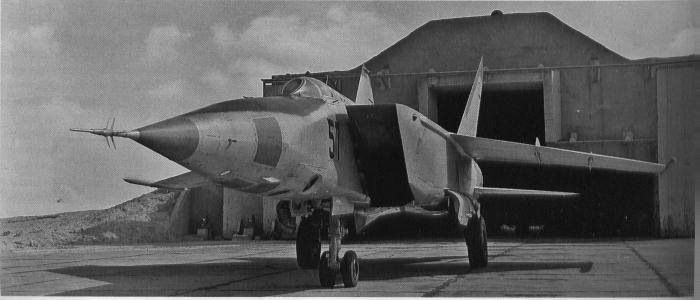
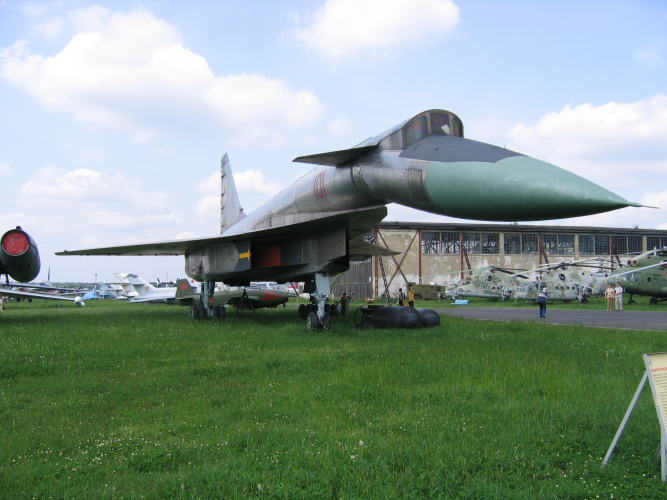
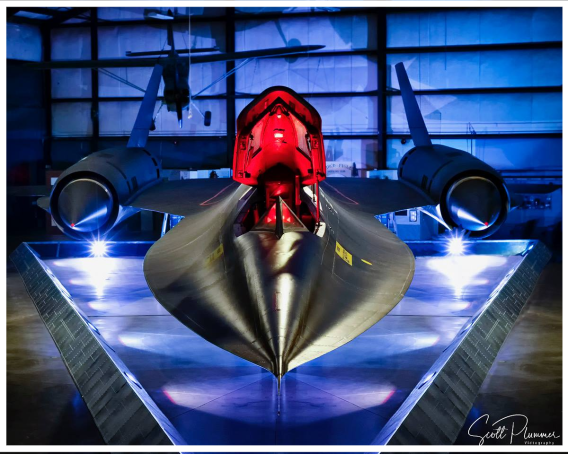
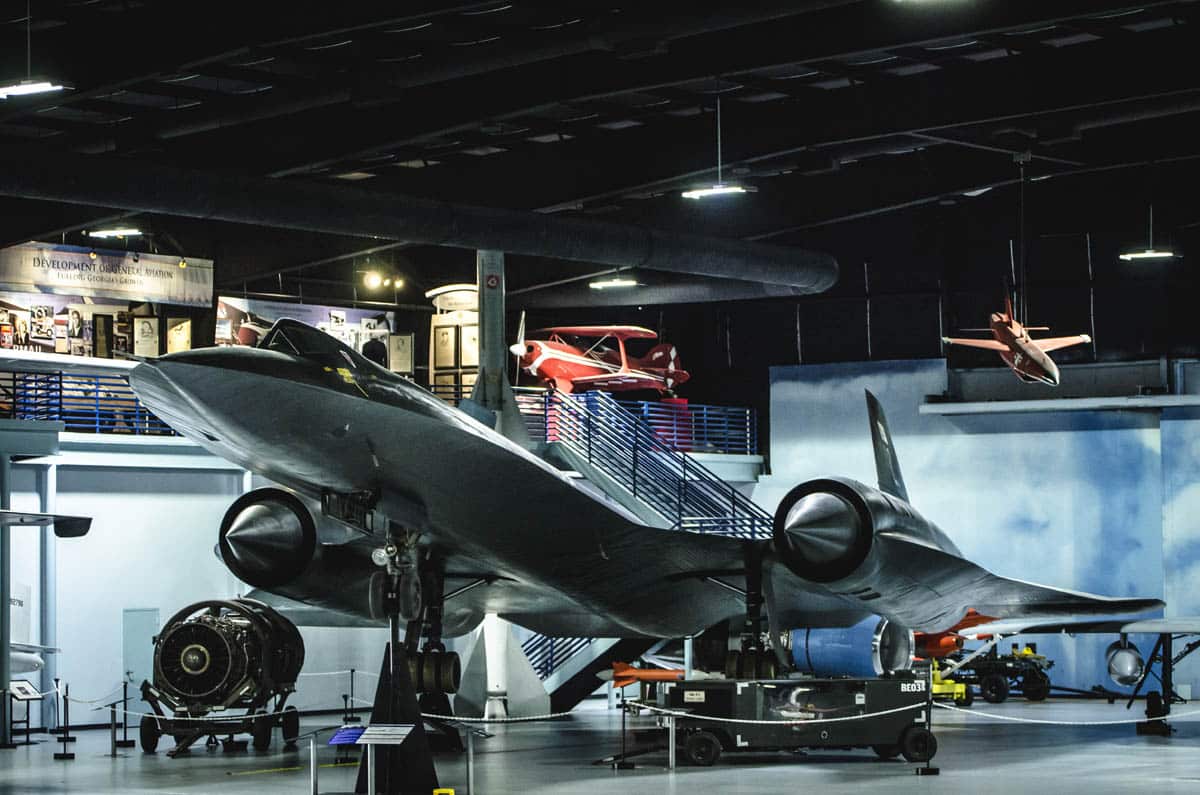
Mikoyan MiG-25 "FOXBAT"

M3.6 is 100% BS.
I rather recommend this video series.
View: https://youtu.be/hdCVygC6Vis


Sooner or later I will do one more video about the MiG-25R family and even more detailed about the speed limits of the MiG-25s.
I will be utterly honest, I watched a Video interview to a MiG-23 Cuban pilot, he said, Soviet instructors told him"- you need to know what your aircraft can do, within the limits of the manual, but also beyond that-" because he explained, in combat many times you need go beyond those limits.

Here is the interview to Lieutenant . Coronel . Eduardo González Sarría MiG-23 Pilot

Overview:
00:00 - Introducing the pilot and how he started his career.
12:10 - MiG-21 in Angola.
13:20 - How many people were needed to maintain an aircraft.
17:01 - MiG-23s arrive in Angola
21:01 - How to achieve man-aircraft cohesion
27:19 - Formations and in-flight communications
35:47 - Anecdote: A MiG-21 shot down
45:30 - Attack capabilities of the MiG-23
51:21 - Flight characteristics of the MiG-23


Source
View: https://www.youtube.com/watch?v=3u4XlryEj8k

1756244895652.png

This is the aerodynamic MiG-25RB manual, as airwar.ru has it, as Squirrel@ showed; I am not Russian nor I read Russian well, but the little Russian I can read the fighter can go around Mach 3.5 or its limits.

Operationally, yes the limit is Mach 2.85, in fact operationally supersonic cruise speed is much lower Mach 2.35.

However looking at the manual I am inclined to think it can go very fast and I trust Squirrel@`s translation.

View: https://www.youtube.com/watch?v=Kkjlt5ZDDVg
 
Last edited:
Apparently it could do a tail slide too
All aircraft can go beyond the manual limits, but for maintenance and the aircraft operational life service period, the best is follow the Manual.

But about the tail slide I do not know if it is true or not, but I doubt it.
 
Last edited:
The whole pilots' account in my link is an extract from the book F-15C Eagle Units in Combat by Osprey Publishing which is a very credible source. The 'Russian' part is a bit clickbaity, i concede that, but is based on what one the F-15 pilots said who speculated that the pilots might not have been Iraqis because of the skills they displayed.

Sorry but i find the US version of the incident to be more believable. We have a very detailed account of the engagement from the US side including a visual confirmation from one of the F-15 pilots that the MiG-25 had missile pylons therefore it could only be a MiG-25PD/PDS. We also know that the MiGs didnt even try to flee once they were locked but instead flew straight towards the Eagles clearly with the intention to engage them:


If they werent interceptor MiG-25s like you claim, answer this: why would unarmed recce MiG-25s want to fly straight into the lion's den?
1756246540934.png
1756246664600.png

1756246814707.png


The pylons are not only for the fighter version.
1756246985398.png


Iraq did operate it

 
Last edited:
De facto lower fences?

The so-called doughnuts on a rope....a more common contrail than thought?

Or might a captured Foxbat have been flown out of Groom Lake with a punk of a pilot going too fast junking the engines?

I seem to see that with my mind's eye.

A Foxbat at max speed is exactly what I envision when I hear reports of the sky ripping.

Besides, we all know flying saucers are silent ;)
 
All aircraft can go beyond the manual limits, but for maintenance and the aircraft operational life service period, the best is follow the Manual.

But about the tail slide I do not know if it is true or not, but I doubt it.
There are many, many limits by the loadout for the MiG-25P/PD/PDS (R-60 has the smallest speed limit, it was never designed for high speed flying...) and also for the MiG-25R/RB (even the FAB 500 of it was special, the "T" variant.

But as a general limit was the max. temperature of the jet fuel itself. You simply cannot avoid the heating because of the friction. You cannot avoid that. This is not something that go around. Of course every limit has its safety zone but M3.6 for a plane which original cannot use more than 15 min the full AB is simply funny.

The only reason why the M iG-25R/RB over the Middle East could fly faster than normal the cooler higher atmosphere at lower latitudes compared to Europe. Yes, cooler. It will be explained in the video what causes this.

In fact Concorde pilots and operators also noticed that on tropical route the C. accelerated better and had better fuel. cons. than on the typical L-NY or P-NY routes.
 
3. What was the purpose of the MiG-25 after all? When seemingly SU-15, MiG-23 and even MiG-21 could do thye same job. They built more than a thausand of that extreme machine.
False. I recommend this. You can see here max. range, max. target distance and speed data. Even the Su-15TM was far from the MiG-25P, not mentioning the PD and PDS.
View: https://youtu.be/Ewq5i1c45T4


2. The MiG was more than capable to intercept and down and SR with very high probability even alone. Even if it didn't in 1967, it did in the 70's. 1.100+ made is not because it was just a tad faster 23 of SU-15.
Yes, I could intercept the SR-71 but it never had the chance to prove it, because the SR-71 never performed overflight above the WPACT and the USSR. In fact the S-200 also could down easily, but the rule is the same. SR-71 fly along the border of the WPACT and USSR. In the Soviet friendly countries the S-200 did not appear until the mid '80s, so the SR-71 was simply an impossible target to any non Soviet country.
My conclusion is that almost every claim of the two planes performance is most likely true, with that twist that the SR was the more poorly made plane, also less developed with more primitive engines and metallurgy. Imagine comparing a prototype car and a series one. The SR had bigger problem with inlet heat than the MiG.
I cannot stop laughing on your totally funny "assessment". It rather would say the word ignorant / moron. Can you guess how could the USSR made 1100+ MiG-25? Because it was totally primitive compared to the SR-71.

Compared to the A-12 and SR-71 types, which were built almost entirely from titanium structural materials, the MiG-25—constructed mostly from heat-resistant steel—was actually an extremely simple aircraft. Even for laypeople, the difference in range between the aircraft is striking. Assuming the same fuel quantity—15 tons—the SR-71 could fly only 10% less distance, while the Blackbird flew 35% (!) faster. Considering that air resistance is generally proportional to the square of speed, this is a staggering difference.

The SR-71, with slightly more fuel, a slightly heavier airframe, significantly higher speed, and slightly higher altitude, could achieve a slightly shorter flight range thanks to its sophisticated and complex engines and polished aerodynamics—compared to the MiG-25RB, with its protruding screws, misaligned panels, and massive but extremely rudimentary engines.

On top of that, the Soviet reconnaissance aircraft initially had an unreliable navigation system, which operated with much greater error than that of the American aircraft.

Due to the massive production volume, it was inherently impossible to achieve the essentially custom-built / handcrafted quality that was possible with American technology, such as in the SR-71. Unlike the SR-71, which was made almost entirely from titanium instead of heat-resistant steel, the price of aircraft in the “Blackbird” family was many times higher than that of the MiG-25. Moreover, instead of being produced in the thousands, only 15 A-12s and 32 SR-71s were built.

The price of an aircraft is also a strong indicator of its complexity. While the export price of a MiG-25PD or RB was 15.4 million rubles, a MiG-23MF cost 7 million rubles. That’s barely a twofold difference, which is entirely understandable for a twin-engine aircraft nearly twice as heavy. In comparison, the twin-engine SR-71 had a price of 34 million dollars, which can be compared to the F-4 Phantom II family. The F-4C, in production in 1965, cost 1.9 million dollars, and the future F-4E variant, not yet in production at the time, was estimated at 2.4 million dollars. So, the price of an SR-71 was roughly fifteen times higher than that of the only American twin-engine fighter aircraft in production during that era.

Using a simply analogy. The MiG-25 was general car while the SR-71 was a custom made luxury sport car with very limited qty.

 
Mustard: The Iraqi Ambush America Never Talks About:

View: https://youtu.be/5RtwFbSeV5Y
Pls. just forget this channel. Any popular channel hides its ignorance in the topic with nice CGI. I could not stop laughing on its F-15 video, it just contains the popular BS about the F-15.

It was also quite funny that the CGI F-15 had nonexistant tail code because the CGI artist had 0 idea about what he/she modeled... XD
 
About those 'limitations' ,there is two kind of it: operational and structural,that's it.

When we talk about the speed limitations : operational was true air speed Mach 2.8 ( 3000km/h instrumental speed) and over Mach 3 as structural limitations ( in the first place ,windshield and canopy plexi).

Stories about some 'damaged engines' are completely false and untrue. There was no major issues with MiG-25 engines ,R-15B/BD-300.
In fact ,the truth is that MiG-31 as the successor of the MiG-25 had several major issues with its turbofan engine D-30F6 (cooling turbine with 40.000rpm was often cause of the engine failures).

If the Guinness book have that data about max official / measured by the ground radar/ , instrumental speed of one combat aircraft as 3400 km/h ( in that moment, true airspeed was Mach 3.2), than there is no place for doubting that the MiG-25 can fly faster than Mach 3.
 
Relying on fancy, complex and expansive solutions is not a sign of superior engineering. However, in a military context there can be good reasons to invest a huge effort for minor improvements, because being slightly better than the enemy can be of highest importance.

A surface temperature of about 250 deg. C is surly neither critical for titanium or stainless steel. The Mig25 is a remarkable simple design for a high-speed aircraft, the use of stainless steel enables tight welding of the whole airframe which not only made it resistant to heat but also turned it effectively into a flying fuel tank.

I don’t know in detail how the airframe of the SR72 worked, but I guess it must have had a kind of skeleton with titanium plates attached to it. To prevent distortion, the titanium plates could slide on each other which made it difficult to use them for a wet wing tank. As we all know, fuel was dripping out in various areas when the airplane was parked. This has worked on a spyplane but it wouldn’t be a suitable solution for an interceptor.

The SR72 relied on a very special fuel for surface cooling which worked by a somehow endothermic reaction. The solution for the MIG25 was more down to earth with it’s whiskey Soda system, but storing a large quantity of drinkable alcohol in a plane is problematic….

Comparing the planes in a way which one was better doesn’t really make sense, because they were built for a very different purpose. Still, I believe the simple Sowjet approach of a complete welded skin out of stainless steel was probably a better solution thant the titanium skin. I don’t think the SR71 made use of a stressed skin, because this doesn’t work well with plates that can slide on each other and so completely enclosed body of the MIG256 might have even be a more lightweight solution (which doesn’t mean a lighter plane).
 
Relying on fancy, complex and expansive solutions is not a sign of superior engineering. However, in a military context there can be good reasons to invest a huge effort for minor improvements, because being slightly better than the enemy can be of highest importance.

A surface temperature of about 250 deg. C is surly neither critical for titanium or stainless steel. The Mig25 is a remarkable simple design for a high-speed aircraft, the use of stainless steel enables tight welding of the whole airframe which not only made it resistant to heat but also turned it effectively into a flying fuel tank.

I don’t know in detail how the airframe of the SR72 worked, but I guess it must have had a kind of skeleton with titanium plates attached to it. To prevent distortion, the titanium plates could slide on each other which made it difficult to use them for a wet wing tank. As we all know, fuel was dripping out in various areas when the airplane was parked. This has worked on a spyplane but it wouldn’t be a suitable solution for an interceptor.

The SR72 relied on a very special fuel for surface cooling which worked by a somehow endothermic reaction. The solution for the MIG25 was more down to earth with it’s whiskey Soda system, but storing a large quantity of drinkable alcohol in a plane is problematic….

Comparing the planes in a way which one was better doesn’t really make sense, because they were built for a very different purpose. Still, I believe the simple Sowjet approach of a complete welded skin out of stainless steel was probably a better solution thant the titanium skin. I don’t think the SR71 made use of a stressed skin, because this doesn’t work well with plates that can slide on each other and so completely enclosed body of the MIG256 might have even be a more lightweight solution (which doesn’t mean a lighter plane).
interesting

The MiG-25 was primarily constructed from an arc-welded nickel-steel alloy, The MiG-25 was constructed from 80% nickel-steel alloy, 11% aluminum, and 9% titanium. The steel components were formed by a combination of spot welding, automatic machine welding, and hand arc welding methods.


Alloy TypeMelting Range °C
Nickel steel1400 – 1450
Nickel steel1325 – 1400


The large takeoff weight (over 35 tons) and unique altitude-speed data (speed 3000 km/h, ceiling 22-23 km) determined the choice of the power plant, which included two R15B-300 turbofan engines with afterburning thrust of 11,200 kgf each, installed side by side in the tail section of the fuselage. The creation of an aircraft with such altitude-speed characteristics and interception limits at supersonic speed was associated with the need to overcome the so-called thermal barrier: traditional structural materials used in aviation could not work under conditions of prolonged heating to temperatures of about 300 ° C, which occurs during flight with Mach numbers> 2.5. In this regard, stainless steels VNS-2, VNS-4 and VNS-5 (up to 80% of the total weight of the structure), titanium alloys (about 8%) and heat-resistant aluminum alloys ATCh-1 and D-19T (about 11%) were chosen as the main structural materials for the E-155 aircraft, and automatic welding became the main technological process for manufacturing the airframe.
 
Last edited:
SR71 was no limits or costs spared cutting edge plane 32 built 12 lost in crashes ,was probably extremely expensive to operate

Mig25 was built in nearly 1200 copies operated by both the Soviets and their 3rd world allies, so was obviously well designed for operational service. preformed well in combat and was kept serviceable even in 3rd world countries and even past the dissolution of USSR
 
Last edited:
It was stainless steel, which usually (or allways?) contains Nickel. I doubt that it even was something with extraordinary strength, because they needed good weldability. Propably not much different from an avarage kitchen sink...

Nickel based alloys are tricky to handel and you wouldnt like to weld a plane out of it...
 
S-200 did not appear until the mid '80s
s-200A first entered service in 1967 if you say Dubna i may agree with you BUT that's total BS
I cannot stop laughing on your totally funny "assessment". It rather would say the word ignorant / moron. Can you guess how could the USSR made 1100+ MiG-25? Because it was totally primitive compared to the SR-71.
Primitive ? in what sense tbh SR-71 isnt that complex also we can say it's primitive like the MiG-25 or even more primitive if we compare it to the MiG-25RBT from equipment standpoint fun fact MiG-25 can also drop free fall bombs with accuracy of guided weapons something SR-71 was never capable of... about the interceptor part of the MiG-25 it doesn't need to be complex the ground radar and control station work was to intercept the SR-71 on grater distance and to direct the MiG-25 that's why there is a thing called LAZUR i think you can use google to educate your self about it before posting nonsensical wall of text with far-fetched opinion

about the whole Speed record sealant melted crowbar rtc there is another similar case a Bulgarian RBT melted its avionics it was pretty much a hot goo dripping on the ground after the plane landed cause problems with the cooling and they also had problem with opening the canopy i think the whole speed record story was miss translated by someone, and its pure internet lore same gos for the SR-71 story that gos over Mach 3.3 more like 2.83 and not more than 3.2
 
Last edited:
s-200A first entered service in 1967 if you say Dubna i may agree with you BUT that's total BS

Primitive ? in what sense tbh SR-71 isnt that complex also we can say it's primitive like the MiG-25 or even more primitive if we compare it to the MiG-25RBT from equipment standpoint fun fact MiG-25 can also drop free fall bombs with accuracy of guided weapons something SR-71 was never capable of... about the interceptor part of the MiG-25 it doesn't need to be complex the ground radar and control station work was to intercept the SR-71 on grater distance and to direct the MiG-25 that's why there is a thing called LAZUR i think you can use google to educate your self about it before posting nonsensical wall of text with far-fetched opinion

about the whole Speed record sealant melted crowbar rtc there is another similar case a Bulgarian RBT melted its avionics it was pretty much a hot goo dripping on the ground after the plane landed cause problems with the cooling and they also had problem with opening the canopy i think the whole speed record story was miss translated by someone, and its pure internet lore same gos for the SR-71 story that gos over Mach 3.3 more like 2.83 and not more than 3.2
In my humble opinion, both are excellent aircraft, but they are designed with different purposes.

The SR-71 was designed for longer range, thus it was bigger and could carry lots of liters of fuel, the MiG-25 was a sprinter designed for shorter range interception, but like a pack of wolves or wild dogs, what assured the defeat of SR-71 was that there were many MiG-25s.

So the design philosophies are different.

Tensile Yield

When it comes to tensile yield comparison, steel is surprisingly stronger than titanium. We know titanium is stronger; however, it’s able to do that at half the weight of steel. Therefore, the per unit mass strength may be greater for titanium, but steel and its alloys are stronger. So, if the design requires a high-strength metal, steel is the ideal choice.


Price

The cost of producing titanium is higher, which is also why this metal is more expensive than steel. In fact, the complexities in its manufacture have made it 20-40x costlier than steel. Steel requires less processing, but there is a price variation seen in different grades.


Density

As we know, titanium is a light metal; its density is also not very high and stands at approximately 4540 kg/m3.

Steel is denser due to the alloying constituents. Generally, it is between 7,750 and 8,050 kg/m3, or 7.75 and 8.05 g/cm3


So basically for a lighter airframe Titanium is better, remember SR-71 is heavier so using titanium makes more sense, it will be lighter to build the SR-71 with titanium with equivalent strength than with steel alloys.

But the MiG-25 is lighter and technically if you build it with steel, it will be cheaper, more durable thus lower maintenance, but since is heavier ratio less fuel efficient than if it was built with titanium.

So there you have you build more MiG-25s at a lower price but it will be less fuel efficient due to a relatively lower Thrust to weight ratio because it is made with a denser metal alloy.


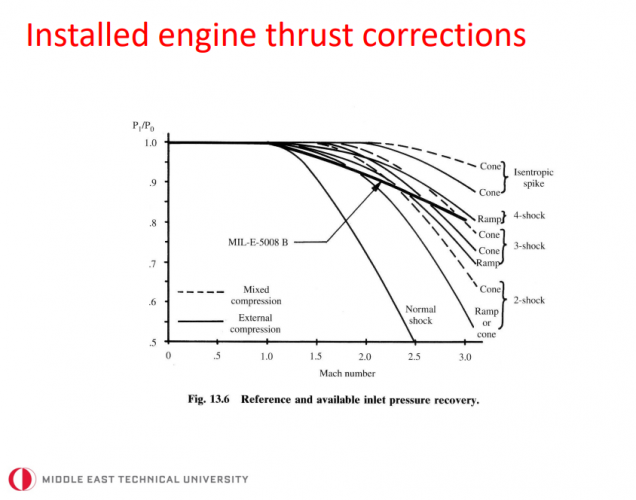
Add the intake Mach design number will limit ability of the jet engine to have a ideal pressure recovery in each design, the SR-71 was an intake able to operate well beyond Mach 3 and SR-71 has lots of fuel, the MiG-25 very likely has an intake limited to work at a max design mach number of Mach 3, thus less fuel means less range and lower time beyond Mach 2.6.

Lower pressure recovery means lower thrust and higher fuel consumption.


A pressure recovery intake increases air pressure before it enters the engine, directly leading to higher thrust and better fuel efficiency (lower specific fuel consumption) because less fuel is needed for the same amount of thrust. High-speed intakes require significant pressure recovery to slow down and compress the airflow,

 
Last edited:
It's not that simple, the stainless steel hull of the MIG25 was all welded, which formed an ideal stressed skin and made it possible that almost the entire plane served as fuel tank.

The titanium plates on the SR71 weren't really interconnected, because welding Titanium is much more problematic. It seams, like the plates could freely expand to avoid buckling by heat expansion so the Titanium was more or less just an aerodynamic covering but didn't contribute much to the strength of the aircraft. On side effect was to fuel dripping out of the tanks, which couldn't be sealed. This design was not feasible for an interceptor, because you can only park the aircraft with empty tanks.

Remember, welding saved a lot of weight in ship hulls, despite suitable steel for welding was very limited in strength. It's not just about the material strength but also about the design possibilities.
 
It's not that simple, the stainless steel hull of the MIG25 was all welded, which formed an ideal stressed skin and made it possible that almost the entire plane served as fuel tank.

The titanium plates on the SR71 weren't really interconnected, because welding Titanium is much more problematic. It seams, like the plates could freely expand to avoid buckling by heat expansion so the Titanium was more or less just an aerodynamic covering but didn't contribute much to the strength of the aircraft. On side effect was to fuel dripping out of the tanks, which couldn't be sealed. This design was not feasible for an interceptor, because you can only park the aircraft with empty tanks.

Remember, welding saved a lot of weight in ship hulls, despite suitable steel for welding was very limited in strength. It's not just about the material strength but also about the design possibilities.
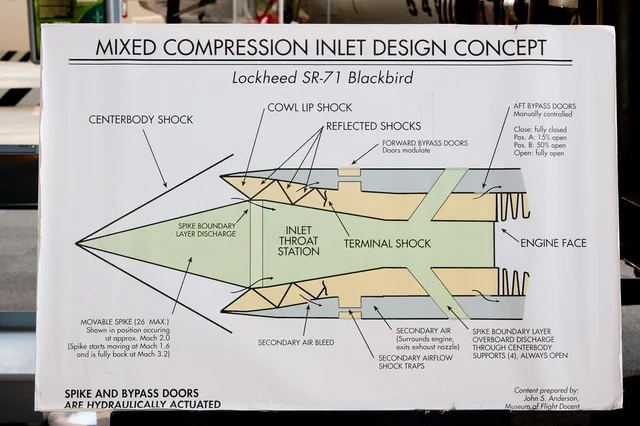
there are several factors, if you see this figure

1756430412256.png

Source

You can see
1756430616190.png

The SR-71 has the ideal intake mixed compression isentropic spike (cones) with excellent pressure recovery.
1756430982806.png

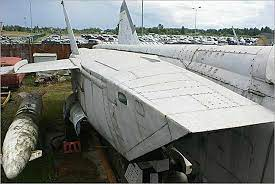
While the MiG-25 has Ramps with 3 or 4 shock ramps, so the higher Speed ability on the SR-71 is its result, add building it with large amounts of Titanium, add larger fuselage explains its higher speed and higher range of the black bird.
 
Generally, a larger fuselage helps with the range and speed, but as said, both plane fulfilled totally different purposes. Could you imagine using the SR71 as interceptor for an attacking MIG25?

I would be interested if using an almost ideal stressed skin out of welded stainless steel will really result in a significantly higher weight than a plane out of loosely attached titanium plates around a framework.

Anyway, thank you for the interesting link! Lockheed really tried to use everything to make it as fast as possible, which only works for a small production spy plane but not for interceptors.
 
Generally, a larger fuselage helps with the range and speed, but as said, both plane fulfilled totally different purposes. Could you imagine using the SR71 as interceptor for an attacking MIG25?

I would be interested if using an almost ideal stressed skin out of welded stainless steel will really result in a significantly higher weight than a plane out of loosely attached titanium plates around a framework.

Anyway, thank you for the interesting link! Lockheed really tried to use everything to make it as fast as possible, which only works for a small production spy plane but not for interceptors.
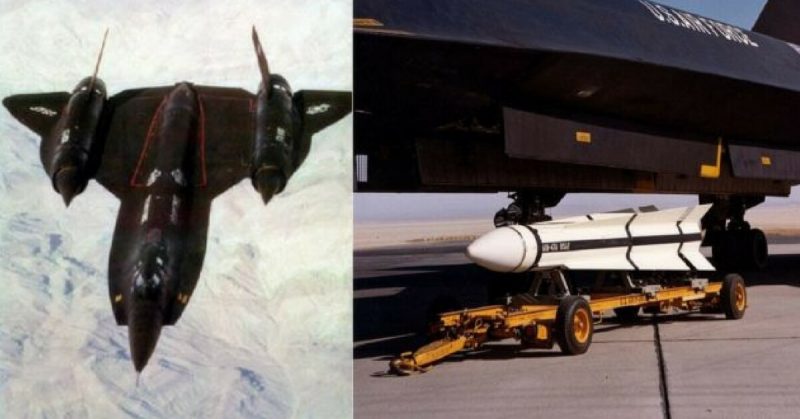
YF-12 was the proposed interceptor variant

untitled-design-61-1.jpg
 
I guess it had another tank system, or was it continuously refuelled :) ? Would have been quite a mess...

The high price tag was seemingly even for the rich USA a serious problem. Building hundreds of YF-12 like the Russians build MIG25 would have become very expensive....
 
I guess it had another tank system, or was it continuously refuelled :) ? Would have been quite a mess...

The high price tag was seemingly even for the rich USA a serious problem. Building hundreds of YF-12 like the Russians build MIG25 would have become very expensive....
93 were actually paid for, with a total planned run of 216.
 
A least known issue with the YF-12 was that, being the son of A-12 and SR-71 spyplanes, Quick Reaction Alert was definitely not an option - not at all. The spyplanes were extremely specialized machines which took a long time to be prepared for flights - a few hours, from memory. Not good at all for an interceptor.
Starting the engines running on JP-7 was a complicated matter. The same JP-7 massively leaked on the runway because the fuel tanks would only "close" at high temperatures, that is in flight: thanks titanium for that, which also made construction eye-watering expensive. The leakage in turn necessitated specialized KC-135Q refueling the planes just after takeoff.

Let's pay tribute to the MiG-25 here: it was born an interceptor hence with QRA in mind; including on Soviet airfields with very harsh climates. And it was built out of steel, which is far cheaper than titanium.

93 were actually paid for, with a total planned run of 216.

McNamara was right to can that order (one of the very few sane decisions he made). Would have been an eye-watering expensive interceptor force : for bombers only, when ballistic missiles had become a far bigger threat.
 
Last edited:
93 were actually paid for, with a total planned run of 216.
I guess, everybody was happy that missiles and subs made the supersonic nuclear bombers and the corrosponding interceptors superflous. Surly a lot of money was saved (and CO2 emissions...):)
 
A least known issue with the YF-12 was that, being the son of A-12 and SR-71 spyplanes, Quick Reaction Alert was definitely not an option - not at all. The spyplanes were extremely specialized machines which took a long time to be prepared for flights - a few hours, from memory. Not good at all for an interceptor.
The major issue I am aware of is the pilots having to prebreathe oxygen due to the suit pressure being low enough that The Bends is a major threat.

So you'd have to build some dedicated Pure Oxygen Atmosphere alert sheds/mobile homes for the pilots to stay in.


Starting the engines running on JP-7 was a complicated matter. The same JP-7 massively leaked on the runway because the fuel tanks would only "close" at high temperatures, that is in flight: thanks titanium for that, which also made construction eye-watering expensive. The leakage in turn necessitated specialized KC-135Q refueling the planes just after takeoff.
Not all missions required hitting the tanker after takeoff.

The primary reason to hit the tanker was to more easily inert all the tanks. Start with completely full tanks and then the onboard nitrogen system can add inert gas as fuel is consumed from the tanks.


McNamara was right to can that order (one of the very few sane decisions he made). Would have been an eye-watering expensive interceptor force : for bombers only, when ballistic missiles had become a far bigger threat.
Yet by 1975, the year that all 216 F-12Bs were expected to be in service, the USSR had supersonic cruise missiles in service...
 
Generally, a larger fuselage helps with the range and speed, but as said, both plane fulfilled totally different purposes. Could you imagine using the SR71 as interceptor for an attacking MIG25?

I would be interested if using an almost ideal stressed skin out of welded stainless steel will really result in a significantly higher weight than a plane out of loosely attached titanium plates around a framework.

Anyway, thank you for the interesting link! Lockheed really tried to use everything to make it as fast as possible, which only works for a small production spy plane but not for interceptors.
I can but YF-12 was too large and build with the wrong Metal for mass production, the Soviets had the best design for mass production, smaller, cheaper, and build with heat resistant metals.

Later it was improved in the MiG-31.

The YF-12 as a fighter failed, it was too big and too fast so it means it will turn with turn radius of km of diameter basically easy to shot down in a dogfight.

So only the recce version was superior to the MiG-25R, as a fighter the Russians made the right design, as a Recce aircraft the Americans made the better design.

Choosing metals was the deciding factor.


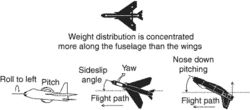
SR-71 was basically a large fuel tank, with wings, fuel is the factor allowing it very long range compared to the smaller MiG-25, but being large means the loads turning made it a B-727 but because it was too fast and to heavy turning made impractical as a Fighter, add its engines were too far inertia rolling would be disastrous in that long heavy aircraft.


inertia coupling​

inertia coupling click for a larger image
When aircraft is rolled in a pull-up maneuver, it acts as a gyroscope and yaws to the right while rolling to the right. Higher the rate of roll, higher is the rate of yaw. As it passes through 90 degree bank angle, the yawing action dominates the directional stability. As the aircraft becomes inverted, the longitudinal stability of the tailplane becomes dominant in pitching moment. Once aircraft is rolled through 270 degrees, the pitching moment is translated into yawing moment. At this moment, yaw divergence may take place if the aircraft does not have sufficient directional stability.
A form of instability that manifests itself during maneuvers, especially in the pitching and yawing motions. It is particularly common during rolling at very rapid rates and high g rolling pullouts either at very low indicated air speeds or at high altitudes. This tendency is common in aircraft that have a long fuselage and heavy wings with the weight concentration at the extremities. This leads to the large inertia in the pitch and yaw. During these maneuvers, the inertia forces are able to overcome the stabilizing aerodynamic forces, resulting in rapid oscillations in the pitch about the principal inertial axis, increasingly marked with attitude because of the divergence of this axis from the relative wind. This aerodynamic divergence may result in a catastrophic situation.


For a reason most modern fighters have engines not in the wings like the Yak-28; the Yak-25 or SR-71 have not the ideal fighter configuration but the MiG-25 has it. Add the angular moment will reduce the angular velocity due to increased rotational moment of inertia.


watch link it explains it with the guy sitting and rotating on a chair and extending his arms holding weights and folding his hands and bringing the weights closer to his body, his angular velocity will change, in few words the chair will spin faster or slower depending where the weights are with respect his body, same happens with where the engines are located in an aircraft
View: https://www.youtube.com/watch?v=bvLgw-HWn8w&t=73s
 
Last edited:
Characteristics of the SR-71 and the MiG-25P/R

maximum weight 63,500 kg / 41,200 kg = 1.54
cost 34 million dollars / 6 million dollars = 5.7
maintenance cost 200,000 dollars per flight hour / 21,000 dollars per flight hour = 9.5
radius without refueling 2,484 km / 1,140 km (with an external tank) = 2.18
32 aircraft were built / 1112 - 1190 = 0.03
 
Last edited:
Characteristics of the SR-71 and the MiG-25P/R

maximum weight 63,500 kg / 41,200 kg = 1.54
cost 34 million dollars / 6 million dollars = 5.7
maintenance cost 200,000 dollars per flight hour / 21,000 dollars per flight hour = 9.5
radius without refueling 2,484 km / 1,140 km (with an external tank) = 2.18
32 aircraft were built / 1112 - 1190 = 0.03
The MiG-25R was an excellent aircraft, no doubt about it, but consider the SR-71 was faster, thus having a longer range is already a great feat by the Blackbird,

Also consider MiG-25Rs have been downed in Combat, while the SR-71 never was downed.

If the SR-71 would had been built with steel obviously the range would had been smaller due to increased weight, the SR-71 was expensive to build so they paid in maintenance and unit price.

Would have been the MiG-25R built with Titanium its airframe would have been lighter but it would had been less affordable to build and lesser units built

The MiG-25 was the best for mass production thus any operator could afford more losses, but its performance did not allow a sustained Mach 3, while the America Machine had a better inlet system for Mach 3 operations.

One was a practical design, in fact excellent design, but going faster means less agility, so the tendency after 1970 was less speed more agility, so F/A-18 or Su-27 they never tried much faster speeds than the MiG-25.


1756537865861.png

MiG-25RB in Cairo West AIRPORT
1756538336249.png

If I am not wrong Sukhoi`s T-4 used titanium, none was ever mass produced so it shows the wisdom of Mikoyan even domestically versus Sukhoi
 
Last edited:
I served on a ship in Severomorsk at a time when the SR-71 was still flying along the Soviet borders. The Northern Fleet's air defense system accompanied him throughout the flight. And if desired, it could easily arrange a good hunt.

The T-4 competed with the Tu-22M
The T-4 was exactly twice as expensive as the Tu-22M, while the Backfire was 10% better in total combat effectiveness
 
The MiG-25R was an excellent aircraft, no doubt about it, but consider the SR-71 was faster, thus having a longer range is already a great feat by the Blackbird,

Also consider MiG-25Rs have been downed in Combat, while the SR-71 never was downed.

If the SR-71 would had been built with steel obviously the range would had been smaller due to increased weight, the SR-71 was expensive to build so they paid in maintenance and unit price.

Would have been the MiG-25R built with Titanium its airframe would have been lighter but it would had been less affordable to build and lesser units built

The MiG-25 was the best for mass production thus any operator could afford more losses, but its performance did not allow a sustained Mach 3, while the America Machine had a better inlet system for Mach 3 operations.

One was a practical design, in fact excellent design, but going faster means less agility, so the tendency after 1970 was less speed more agility, so F/A-18 or Su-27 they never tried much faster speeds than the MiG-25.


View attachment 783082

MiG-25RB in Cairo West AIRPORT
View attachment 783083

If I am not wrong Sukhoi`s T-4 used titanium, none was ever mass produced so it shows the wisdom of Mikoyan even domestically versus Sukhoi

MiG-25R/RB was tactical or operative-tactical recce aircraft. On the other side,SR-71 was strategic recce aircraft.
 
I served on a ship in Severomorsk at a time when the SR-71 was still flying along the Soviet borders. The Northern Fleet's air defense system accompanied him throughout the flight. And if desired, it could easily arrange a good hunt.

The T-4 competed with the Tu-22M
The T-4 was exactly twice as expensive as the Tu-22M, while the Backfire was 10% better in total combat effectiveness
I agree the SR-71 was another aircraft, and as technology evolved, the Soviet Union was going eventually to shot it down.

But here we have to understand the dynamics of the arms race, any weapon, well basically any technology, is designed upon effectiveness and cost.

It is common for people to think only effectiveness matter,s but no it does not.

I am Latin American, however in Latin America you do not see Arms programs as you can see them in Europe or Asia, nor you see wars like in the middle east, Brazil specializes in Civil aerospace, Mexico in aircraft manufacturing for Big OEMs such as GE, Safran, or Beechcraft, basically Mexico builds aerospace parts.

SR-71 was too expensive and the problem with weapons is they are just a burden upon tax payers.

The Americans realized the SR-71 was too expensive, too difficult to make it an interceptor since it was far from Agile.
Any aircraft program needs a balance between costs, and performance, if you have the best Machine but it destroys your society I mean, it cuts social programs, that weapon is useless, unless you are in a war of survival like WWII.

The solution was to develop the F-15, and the Soviet answer was the MiG-29 and Su-27 .

I told you the Latin American example, because aircraft are too expensive, and if you do not have profits, eventually the economy will suffer, so Brazil has prioritized E-195s instead of Gripens, In Mexico they give priority to jobs, they do not care SAFRAN or GE are not mexican brands as long as SAFRAN builds leap engines in Mexico, they are happy.

The economy is one of the reasons countries export weapons, the MiG-25 had a niche in the middle east but SR-71 did not have future as an exportable aircraft, but the F-15 changed that.

View: https://www.youtube.com/watch?v=obcya0ze6Zo&t=915s


This video explains that a kg of titanium is very expensive so much that a a metric tonne of Titanium costs USD $4500 dollars while Steel USD $85 dollars. Mikoyan was right, and I think Tupolev was right too, cheaper weapons are better when their performance is descent. Was T-4 more impressive? sure, but Tu-22M was more affordable and less of an economic burden for the soviet economy.
 
Last edited:
MiG-25R/RB was tactical or operative-tactical recce aircraft. On the other side,SR-71 was strategic recce aircraft.
I agree, in terms of economics SR-71 was a failure, because its high price per unit, and maintenance and low exportability, made it impractical for the USA economy but the Americans designed the F-15, so it is the dynamics of the arms race.

The Soviet ended with the MiG-23MLD, MiG-25, MiG-31 and Su-27 and MiG-29 to face the F-15 and other aircraft.

Sure the Foxbat was impressive, the F-15 ended in a niche between the Su-27 and MiG-25.

The SR-71 was so expensive that the tooling for making it became also very expensive, this added to the titanium raw material costs, so yes the MiG-25R was far more practical, cheaper with just slight inferiority in performance.
 
Last edited:
I agree the SR-71 was another aircraft, and as technology evolved, the Soviet Union was going eventually to shot it down.

But here we have to understand the dynamics of the arms race, any weapon, well basically any technology, is designed upon effectiveness and cost.

It is common for people to think only effectiveness matter,s but no it does not.

I am Latin American, however in Latin America you do not see Arms programs as you can see them in Europe or Asia, nor you see wars like in the middle east, Brazil specializes in Civil aerospace, Mexico in aircraft manufacturing of Big OEMs such as GE, Safran, or Beechcraft, basically Mexico builds aerospace parts.

SR-71 was too expensive and the problem with weapons is they are just a burden upon tax payers.

The Americans realized the SR-71 was too expensive, too difficult to make it an interceptor since it was far from Agile.
Any aircraft program needs a balance between costs, and performance, if you have the best Machine but it destroys your society I mean, it cuts social programs, that weapon is useless, unless you are in a war of survival like WWII.

The solution was to develop the F-15, and the Soviet answer was the MiG-29 and Su-27 .

I told you the Latin American example, because aircraft are too expensive, and if you do not have profits, eventually the economy will suffer, so Brazil has prioritized E-195s instead of Gripens, In Mexico they give priority to jobs, they do not care SAFRAN or GE are not mexican brands as long as SAFRAN builds leap engines in Mexico, they are happy.

The economy is one of the reasons countries export weapons, the MiG-25 had a niche in the middle east but SR-71 did not have future as an exportable aircraft, but the F-15 changed that.

View: https://www.youtube.com/watch?v=obcya0ze6Zo&t=915s


This video explains that a kg of titanium is very expensive so much that a a metric tonne of Titanium costs USD $4500 dollars while Steel USD $85 dollars. Mikoyan was right, and I think Tupolev was right too, cheaper weapons are better when their performance is descent. Was T-4 more impressive? sure, but Tu-22M was more affordable and less of an economic burden for the soviet economy.
4500 $ for a ton (I doubt that is enough) doesn't really matter in that contex. The Sowjets builded subs out of titanium, so spending 50.000 $ for Titanium to built a MIG25 wouldn't have stopped them. The problem is the difficult welding, thats why the titanium plating on the SR71 was just a covering, like tiles on a roof, but not a structural member. Stainless steel is exactly the opposite, heavy, but well to handle and very well suited for welding. As said, I doubt that there was a significant weight saving by using Titanium instead an all welded stressed skin out if stainless steel.
 
Last edited:
4500 $ for a ton (I doubt that is enough) doesn't really matter in that contex. The Sowjets builded subs out of titanium, so spending 50.000 $ for Titanium to built a MIG25 wouldn't have stopped them. The problem is the difficult welding, thats why the titanium plating on the SR71 was just a covering, like tiles on a roof, but not a structural member. Stainless steel is exactly the opposite, heavy, but well to hansle and very well suited for welding. As said, I doubt that there was a significant weight saving by using Titanium instead an all welded stressed skin out if stainless steel.
IIRC the Blackbirds were built much like aluminum aircraft, riveted construction. There were even specs for titanium rivets when I was in A&P school, though I've never beaten any.
 
IIRC the Blackbirds were built much like aluminum aircraft, riveted construction. There were even specs for titanium rivets when I was in A&P school, though I've never beaten any.
But than, why were they leaking fuel and how did it seal up when hot?

Of course, rivited aluminium will likely ony becone fuel tight, when some additiinal coating is used.
 
4500 $ for a ton (I doubt that is enough) doesn't really matter in that contex. The Sowjets builded subs out of titanium, so spending 50.000 $ for Titanium to built a MIG25 wouldn't have stopped them. The problem is the difficult welding, thats why the titanium plating on the SR71 was just a covering, like tiles on a roof, but not a structural member. Stainless steel is exactly the opposite, heavy, but well to handle and very well suited for welding. As said, I doubt that there was a significant weight saving by using Titanium instead an all welded stressed skin out if stainless steel.
Titanium is significantly lighter than steel; a component made of titanium will weigh approximately half as much as the same component made from steel due to titanium's lower density (about 4.5 g/cm³) compared to steel's density (about 7.8–8.0 g/cm³). Despite being lighter, titanium offers a superior strength-to-weight ratio, being as strong as steel but with a 45% weight reduction,


Both SR-71 and MiG-25 use alloys of titanium and steel, Mikoyan decided steel was better, is not a hypothetical, it is a historical fact, the tooling for the SR-71 was special that added costs, the processes of obtaining Titanium added costs.


SR-71 is much heavier than MiG-25, if made with Steel it would had been very heavy.


Empty Weight:60,000.0 lbs
Gross Weight:14,5000 lbs


Specifications:

  • Span: 55 ft. 7 in.
  • Length: 107 ft. 5 in.
  • Height: 18 ft. 6 in.
  • Weight: 170,000 lbs. loaded
  • Armament: None
  • Engines: Two Pratt & Whitney J58s of 32,500 lbs. thrust ea. with afterburner
Масса, кг
пустого самолета 20600
нормальная взлетная 37000
максимальная взлетная 41200


The MiG-25 was 7 tonnes lighter at empty weight and 27 tonnes fully loaded.

They needed titanium. otherwise the weight would had been much much higher, the titanium steel weight relation is 1.7:1. If made with steel the empty weight of SR-71 would had been close to 48 tonnes, around 27 tonnes more than a MiG-25 at empty weight.

So it would had not achieved a superior performance over the MiG-25
 
Titanium is significantly lighter than steel; a component made of titanium will weigh approximately half as much as the same component made from steel due to titanium's lower density (about 4.5 g/cm³) compared to steel's density (about 7.8–8.0 g/cm³). Despite being lighter, titanium offers a superior strength-to-weight ratio, being as strong as steel but with a 45% weight reduction,
Both SR-71 and MiG-25 use alloys of titanium and steel, Mikoyan decided steel was better, is not a hypothetical, it is a historical fact, the tooling for the SR-71 was special that added costs, the processes of obtaining Titanium added costs.
SR-71 is much heavier than MiG-25, if made with Steel it would had been very heavy.
Empty Weight:60,000.0 lbs
Gross Weight:14,5000 lbs

Specifications:

  • Span: 55 ft. 7 in.
  • Length: 107 ft. 5 in.
  • Height: 18 ft. 6 in.
  • Weight: 170,000 lbs. loaded
  • Armament: None
  • Engines: Two Pratt & Whitney J58s of 32,500 lbs. thrust ea. with afterburner
Масса, кг
пустого самолета 20600
нормальная взлетная 37000
максимальная взлетная 41200
The MiG-25 was 7 tonnes lighter at empty weight and 27 tonnes fully loaded.
They needed titanium. otherwise the weight would had been much much higher, the titanium steel weight relation is 1.7:1. If made with steel the empty weight of SR-71 would had been close to 48 tonnes, around 27 tonnes more than a MiG-25 at empty weight.
So it would had not achieved a superior performance over the MiG-25
 
It's not as simplevas that. A welded structure is much more efficient than a rivited structure. Riveting allows the use of high strength material, but big part of that advantage is lost due to double layers and weakening by the drill holes plus the added weight of the rivets.

If the plates can moove to each other (as it was likely the case) it gets even worse
 
It's not as simplevas that. A welded structure is much more efficient than a rivited structure. Riveting allows the use of high strength material, but big part of that advantage is lost due to double layers and weakening by the drill holes plus the added weight of the rivets.

If the plates can moove to each other (as it was likely the case) it gets even worse
You forget a detail, the MiG-25 uses titanium, but 1/11th of what SR-71 uses, Mikoyan was far more practical in terms of Mass production, they used titanium where they needed, but steel to build it cheap and in large amounts.

The SR-71 was the best performer, but not the best fighter, nor the most practical design.

Both are great aircraft, but in terms of practicality the MiG-25 was like a VW beetle, and the SR-71 a Ferrari
 

Similar threads

Back
Top Bottom