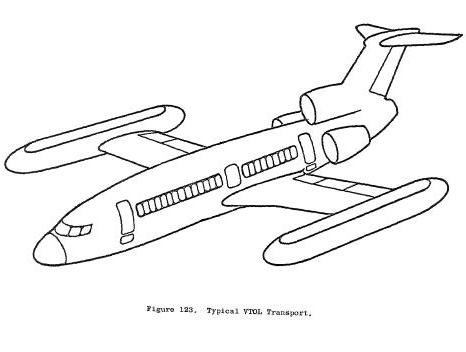
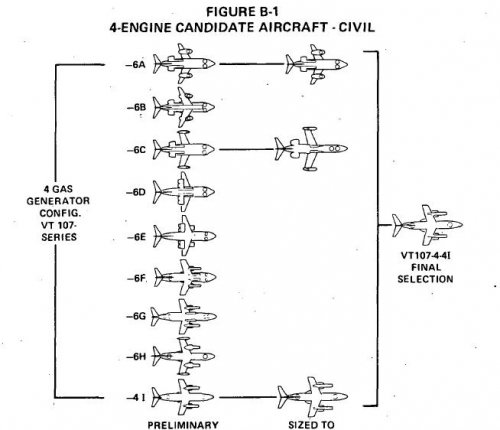
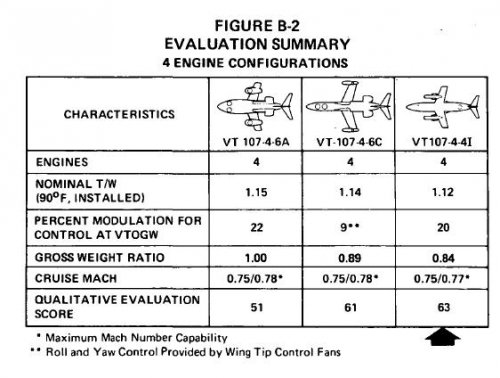
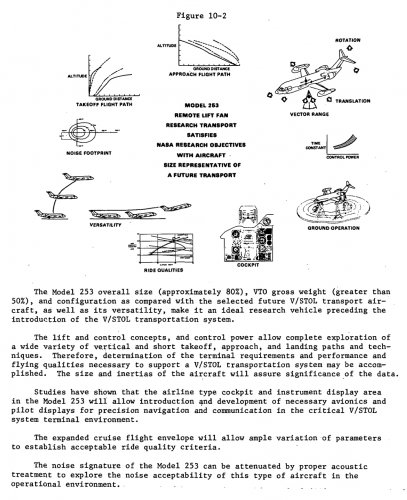
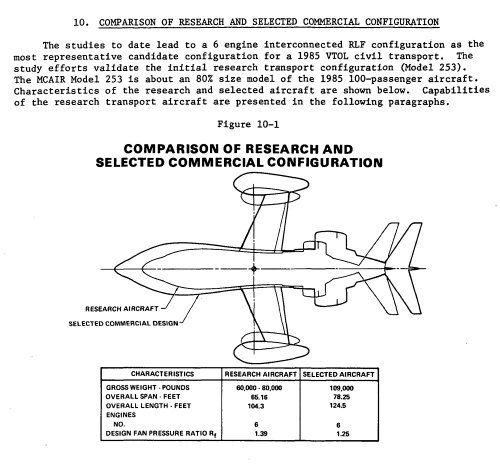
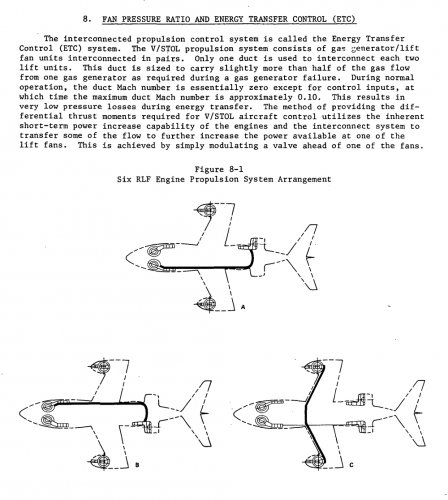
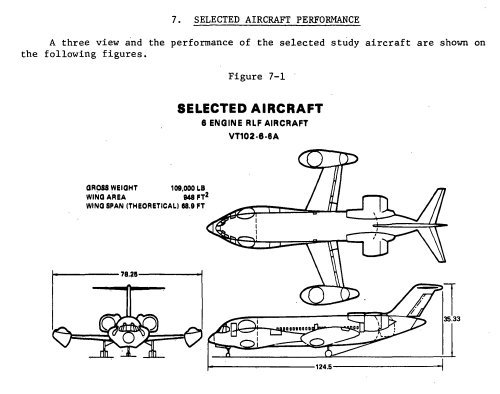
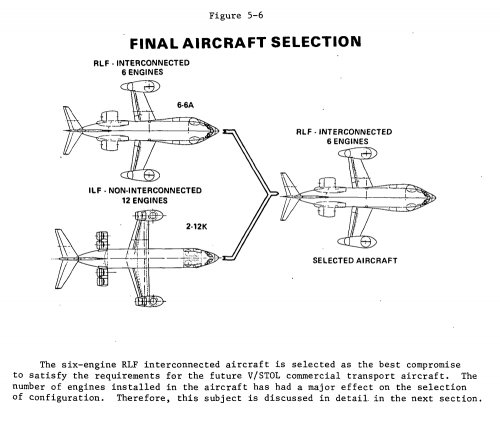
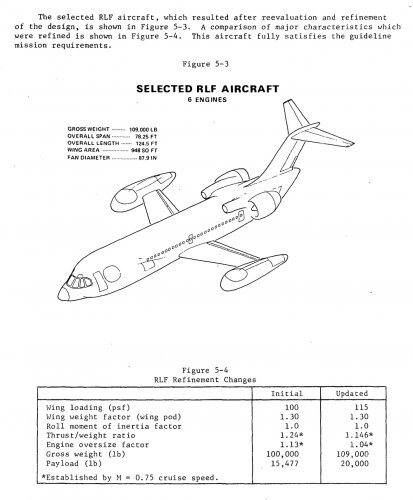
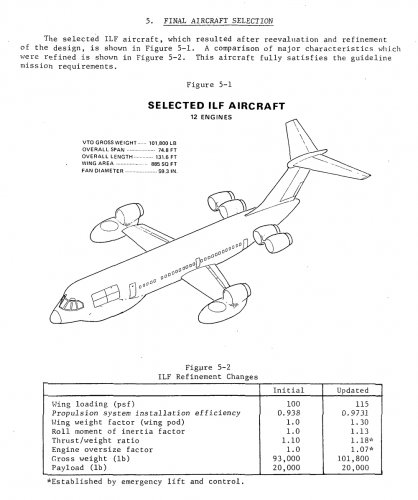
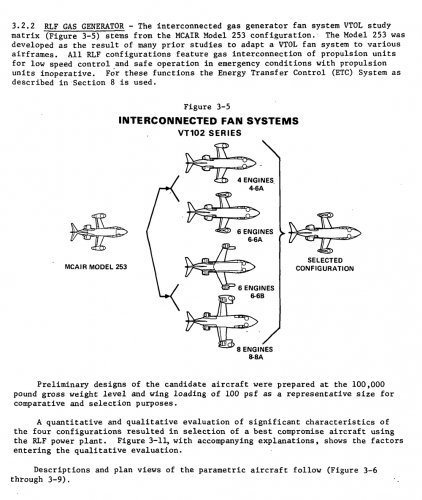
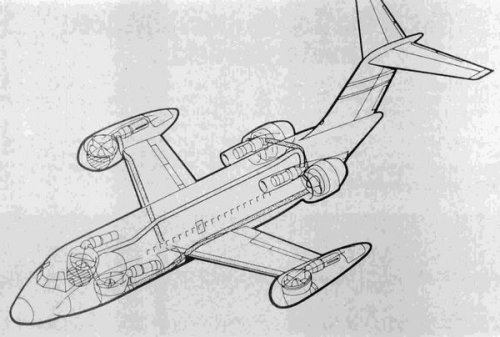
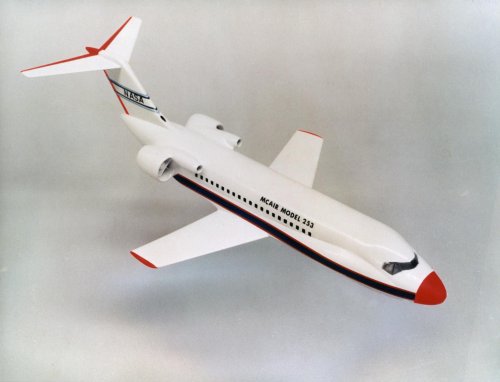
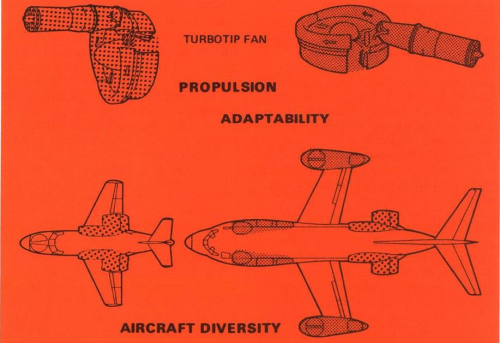
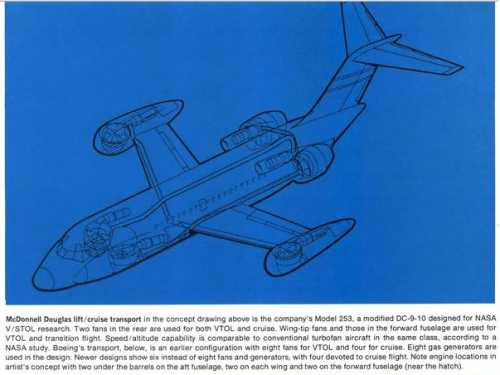
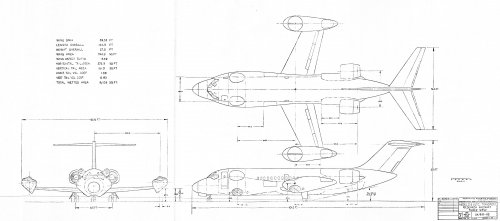
The McDonnell Douglas Model 253 was developed as a result of many prior studies to adapt a VTOL fan system to various airframes. The studies led to a 6 engine interconnected RLF configuration as the most representative candidate configuration for a 1985 VTOL civil transport. The study efforts validated the initial research transport configuration as the Model 253, which was about 80% the size of the 1985 100-passenger aircraft. The Model 253 overall size, VTO gross weight and configuration, as compared with the selected future V/STOL transport aircraft, as well as its versatility, made it an ideal research vehicle preceding the introduction of the V/STOL transport system.
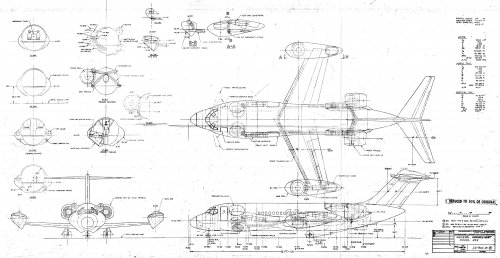
I have a new engineering plotter/scanner at work so can now scan some larger format drawings to my satisfaction. Here's the Model 253 for your viewing pleasure....
Enjoy the Day! Mark
Attachments
zMcDonnell Douglas Model 253 General Arrangement.jpg
I was already in awe with the quality of all that you shared with us... Can only begin to imagine the wonders you will come up with in the near future!!! ;D
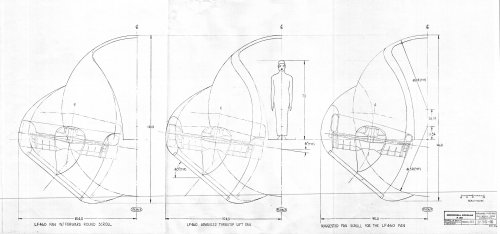
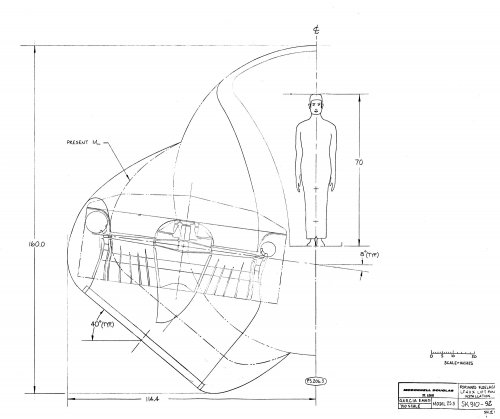
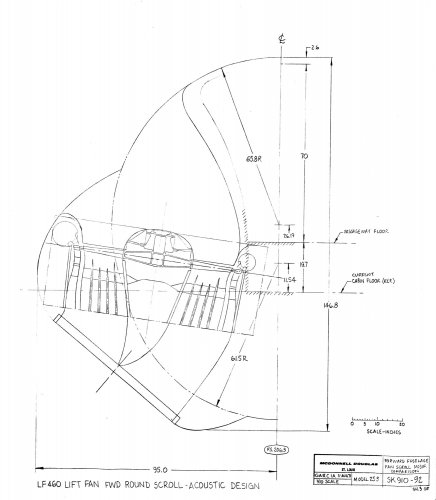
A few more items on the Model 253 from one of the engineers that worked on the design proposal. Now in the collection of the Greater St. Louis Air and Space Museum.
Also have a few photos to post once they are scanned.
Enjoy the Day! Mark
Attachments
zModel 253 VSTOL Transport Research Aircraft 3V SK910-115 Mar-1972.jpg
342.1 KB
· Views: 145
zModel 253 Fwd Fuselage Fan Scroll MODIR Comparison SK910-92 Sht 1 of 3 Jul-28-71.jpg
472.3 KB
· Views: 130
zModel 253 Fwd Fuselage LF4XX Lift Fan Installation SK910-92 Sht 2 of 3 Aug-3-71.jpg
194.6 KB
· Views: 107
zModel 253 Fwd Fuselage Fan Scroll MODIR Comparison SK910-92 Sht 3 of 3 Aug-17-71.jpg
More on the McDonnell Model 253 (with a photo of a subscale test model I hadn't seen before)
Built in 1971 and known as the “Model 253”, this concept utilized six GE YJ97/LF460 engines interconnected in pairs.
The rear engines were equipped with vectored thrust nozzles similar to the F-35, while the front and wingtip engines utilized movable vanes to vector thrust in those locations.
Because the engines were interconnected, one engine was theoretically able to power two fans in the event it’s mate experienced a power reduction or failure.
In the event one of the FANS were to fail, “emergency backup nozzles” located adjacent to each fan would take over.
After transitioning from VTOL to traditional cruise flight, the nose and wingtip engines would be shut down, and the aircraft would (theoretically) continue flying like the heavy, bloated, tumor-covered DC-9 that it was.
The concept called for a capacity of 100 passengers, so we can assume it was based upon the DC-9-10 or -15.
Accordingly, the concept was slated to weigh approximately 18,000 lbs (8165 kg) more than the standard DC-9 when empty, while the max takeoff weight would have increased the same amount.
All of this would (theoretically) have resulted in the ability for this aircraft, when loaded for an 800 nm (1482 km) stage length, to take off from a 1000’ (305m) runway and land on one slightly longer.
Of course, the jet remained a concept, leaving both this and the proposed US Navy carrier-based DC-9 left to artist’s renderings and our imaginations.
This site uses cookies to help personalise content, tailor your experience and to keep you logged in if you register.
By continuing to use this site, you are consenting to our use of cookies.




Built in 1971 and known as the “Model 253”, this concept utilized six GE YJ97/LF460 engines interconnected in pairs.