Dynoman said:
Stealthy Mobility and Support Aircraft
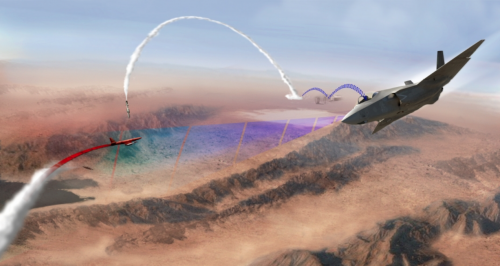
Let's face it. The idea isn't that you're flying a tanker into the middle of a high-threat environment. It's that the high-threat environment is extending to where tankers have typically flown. The expectation is that high-threat will be - or is - 600-1000nmi out from targets. The adversary will by-pass your fighters to eliminate the tankers leaving the fighters w/o fuel to return. This leaves several billion dollars of strike package that will take forever to replace likely floating in the ocean somewhere.
But let's look at some options.
Flying a KC-46 into a high threat environment. Designed for a low to medium threat environment.
KC-46 - US$250Million a pop - ~200k lbs of fuel - 200 planned inventory - Critical asset
Upside
1) Existing tanker
Downside
1) You can't bolt on enough stuff to ensure it's survivable in a high-threat environment. At most you'll 'augment' it's capabilities. It's a big, fat RCS target even when it's not fueling.
2) You'll assign an air patrol to protect these assets. That increases the value/costs of KC-46 by the value of the other airframes. (4-F-35's valued at ~US$400Million)
3) Integrate into naval defensive systems. Add weapons systems. Add a weapons officer. - Serious development costs. Still a big fat target.
Make the MQ-25 stealthy - Use it as a connector for the KC-46. KC-46 stays back, MQ-25's deploy forward coming back to KC-46 for fill ups.
1) Won't have a boom - AF is left stranded.
2) Navy seems to have little interest in this. Not likely to be successful.
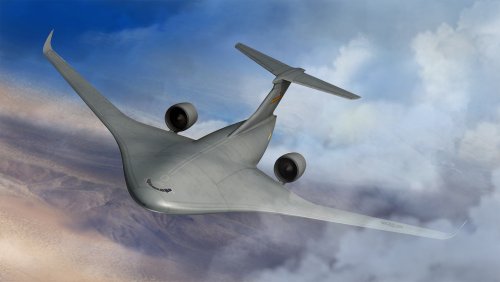
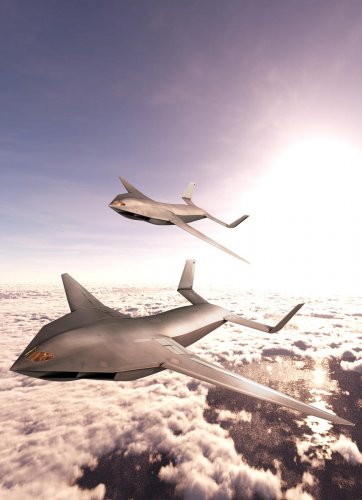
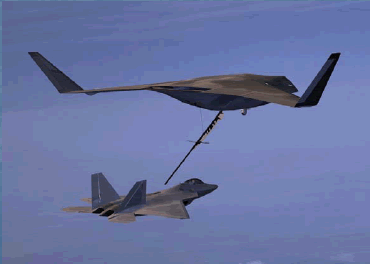
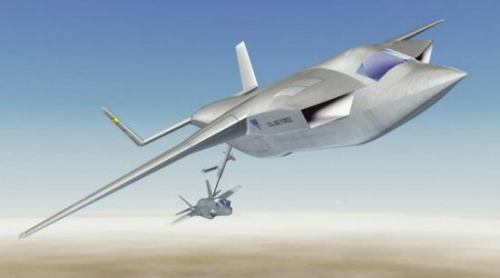
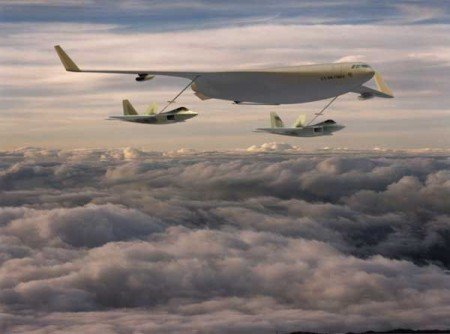
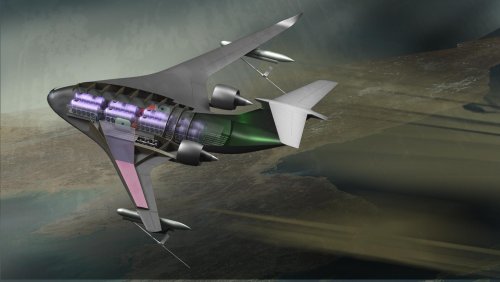
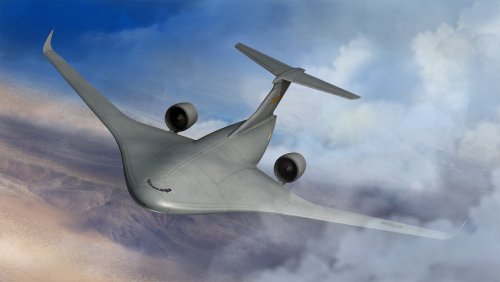
Build tanker variant of B-21
KA-21 (Tanker/Attack B-21 variant) - ~US$500Million - ~150k+lbs of fuel - limited inventory - Critical asset
Upside
1) Designed for high threat environment. When it's not fueling it's not there. Will disappear quickly.
2) Designed for unmanned operations
3) Airframe in development w/2025-28 IoC
4) Additional airframes or variant of B-21 will lower acquisition, operations and upgrade costs of strategic bomber fleet.
5) Forward deployed sensor fusion - assists in it's own defense - no need for HVACAP
6) If it uses F-35 code - AEGIS & F-35 weapons integration.
7) Limit 1st version to boom only (dev costs) - Navy has MQ-25
8) Leverage NG's autonomous aerial refueling knowledge
9) Possibly replace co-pilot w/boom operator leveraging unmanned operations tech in lieu of co-pilot.
Downside
1) Seems expensive - tough sell
2) Have to work w/Boeing to develop new boom - telescoping to fit in area of bomb bay perhaps.
3) Add boom operator for initial version - dev program to work toward autonomous system
EDIT - Expect NG would work w/Airbus on the refueling boom. I'm guessing that Boeing would have absolutely zero motivation to work with 'NG' on this.