The stealth jet shot down by Margaret Thatcher
by Tom Whipple, Science Writer for The Times, page 15, Saturday 22nd August 2026
It was supersonic. It was stealthy. It could land vertically. British Aerospace’s successor to the Harrier jump jet was designed to survive a Soviet onslaught and fight on in the aftermath, evading Russian MiGs from bombed-out airfields.
But, as a new book released this week explains, there was one adversary it could not outmanoeuvre: Margaret Thatcher.
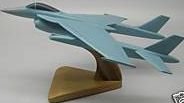
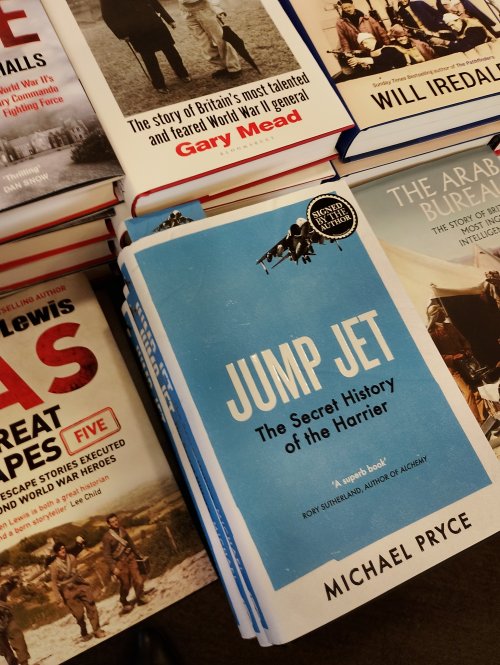
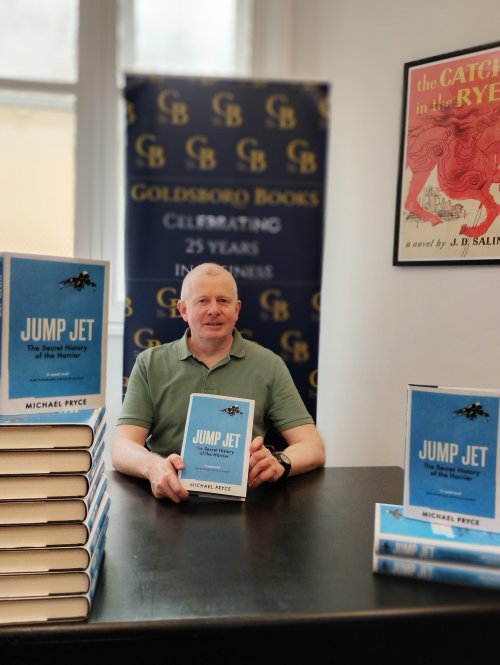
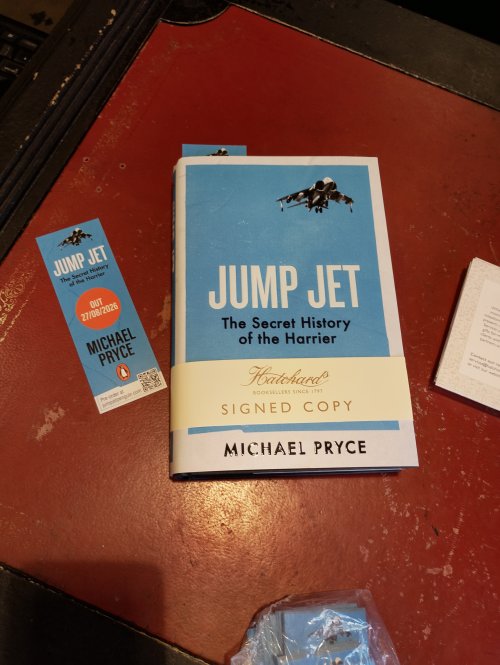
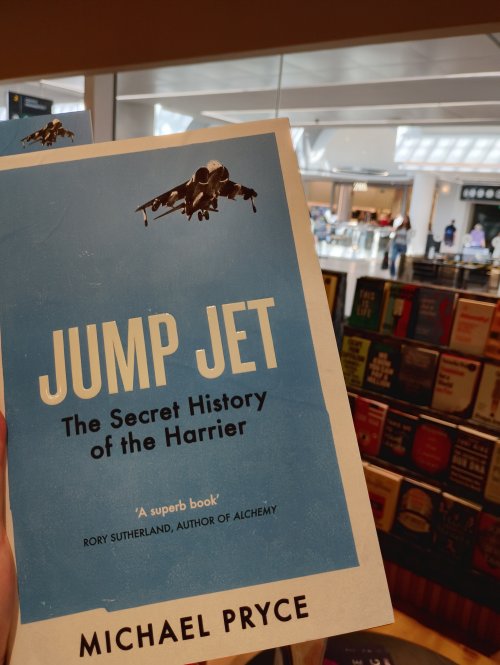
Late in 1982 the prime minister was shown a model of the jet, a mooted replacement for the Harrier that had just helped her win the Falklands conflict. Was she impressed by the ambition behind a plane that could manoeuvre like a helicopter, fly almost as fast as Concorde and dodge radar? She was not. “I don’t like it,” she is quoted as saying in Jump Jet: The Secret History of the Harrier by Michael Pryce. “It doesn’t look right, and if it doesn’t look right, it won’t fly right.” And so, having given that definitive aerodynamical judgment, she ensured it never flew.
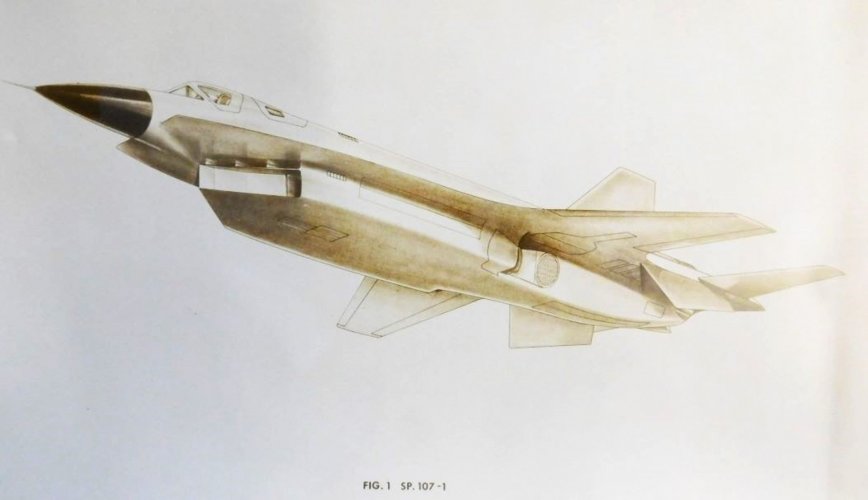
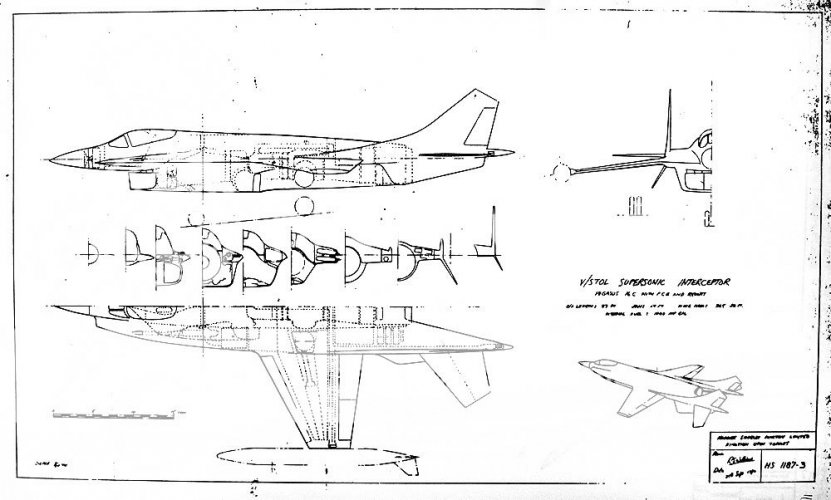
But as newly revealed documents — declassified by BAE Systems especially for the book — show, if it had done it would have been a plane like no other. In Jump Jet, Pryce, a technology historian who has worked as a consultant for BAE and the government, reveals for the first time the final illustrations for the plane, known as P.1216. They highlight the features Thatcher found so unappealing but which its designer, the renowned aeroengineer Ralph Hooper, believed would be crucial to its success. Among the most distinctive was a fuselage that split into two parallel booms, meaning the thrust coming off the engine, which could be directed to make it hover, would miss the airframe behind.
This reflected lessons learnt with the Harrier, which Hooper, who died in 2022, helped design. “You’ve got this massive force of air pressure coming off it, which you don’t want to be hitting the rear, which it did on the Harrier,” Pryce said. This caused a lot of problems. “The energy that comes out of these aircraft is just huge,” he added.
He recalled watching a Harrier on a runway while wearing noise-cancelling headphones. “I wanted to hear how loud a Harrier was, so I lifted up one headphone briefly,” he said. “Now I can’t hear properly on one side. That was really stupid.”
While the Harrier was subsonic, the P.1216 was intended to be supersonic, producing several times the thrust. The engineers worried that the airframe would struggle. The solution was not to strengthen the tailplane but to split it so it was no longer battered by the engine.
“This twin boom that Thatcher hated was specifically to cut down on maintenance,” Pryce said. In the war for which it was intended, there would be no time for maintenance. Today, jump jets are most associated with the Falklands but their ultimate purpose was in a bigger conflict.
If war broke out with Russia, one plan was to fight with conventional weapons for as long as possible, to reach a negotiated settlement before a mutually devastating nuclear conflict. To do that required air power, specifically airpower that could continue flying from shattered airfields — a jump jet. Ultimately, Pryce said, it was a missed opportunity. “It’s not a beauty but it’s purposeful,” he said. “It kind of looks crazy and cool. And it’s a supersonic stealth jump jet. Come on — who wouldn’t want to see that?”