India Missile Thread - All

Defense Updates has just uploaded this YT video concerning the Agni 5 and its successful first test-flight (This will no doubt be of concern for the PRC):


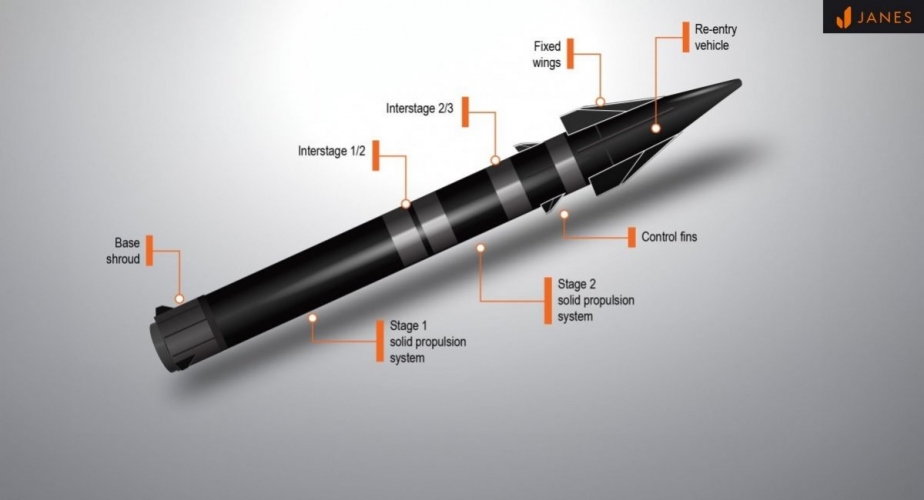
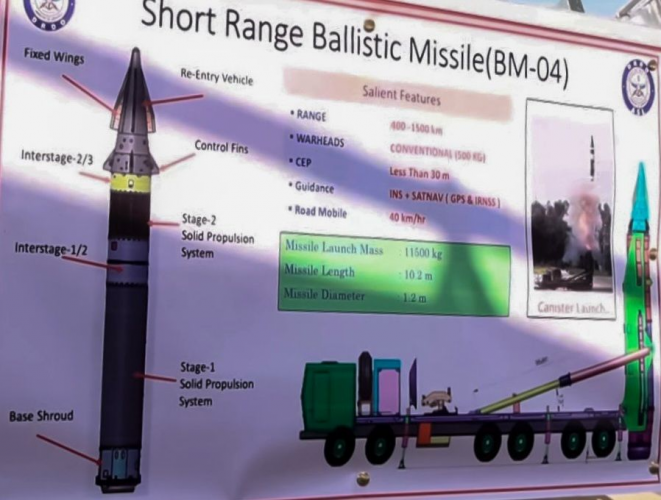
Indian Prime Minister Narendra Modi on Monday announced that India successfully carried out the maiden flight of Agni-5 missile with multiple independently targetable re-entry vehicle (MIRV) technology.
This will enable the missile to deliver multiple nuclear warheads against different targets spread across hundreds of miles.
The PM also revealed the code name for the historic test, Mission Divyastra (meaning: divine weapon)This has propelled India into an exclusive league of countries that have the capability to deploy MIRV missile systems, including the US, the UK, France, Russia, and China.
The PM posted on X,“Proud of our DRDO (Defence Research and Development Organization) scientists for Mission Divyastra, the first flight test of indigenously developed Agni-5 missile with Multiple Independently Targetable Re-entry Vehicle (MIRV) technology,”
In this video, Defense Updates analyzes why India’s MIRVed Agni-5 is a terrifying prospect for China?
 
Was the lid cover of the canister launcher tube still attached to the missile tip at the end of the video??
 
Here's a Defense Update video from a few months ago concerning India's ABM programme:


India's Defence Research & Development Organization (DRDO) has progressed the development of its Phase II Ballistic Missile Defence (BMD) interceptor through a flight test conducted on 24 July.
The Ministry of Defence (MoD) in New Delhi said the endo-atmospheric interceptor – also known as the AD-1 missile – was launched from the DRDO's integrated test range (ITR) in Chandipur, Odisha, on India's east coast.
According to the MoD, the new test featured the launching of a target missile from the DRDO's ITR or Integrated Test Range on Abdul Kalam Island, about 70 km or 44 miles south of Chandipur, at 1620 h local time. The Phase II interceptor was launched four minutes later.
In this video, Defense Updates analyzes how India is developing a powerful Anti Ballistic Missile system that only a few nations possess?#defenseupdates #indiavschina #indiavspakistan
Chapters:
00:11 INTRODUCTION
01:56 THE TEST
02:58 BACKGROUND
04:23 INDIA’s BMD
07:17 ANALYSIS
 
Last edited:
https://aviationweek.com/defense/mi...claims-successful-test-new-hypersonic-missile

pic5hpj.jpeg
 
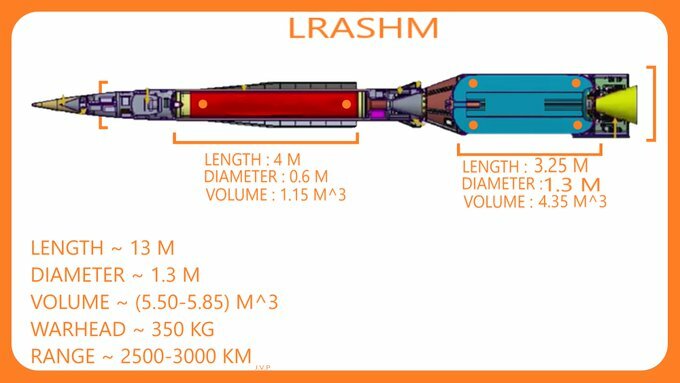
Defense Updates has a new video about India's new long-range hypersonic AShM:


India has successfully tested a domestically developed long-range hypersonic missile, attaining a key milestone in military development that puts it in a small group of nations possessing this advanced technology.Currently, only China, Russia, and the United States have this technology.
The Indian missile, developed by the state-run Defence Research and Development Organisation (DRDO) and industry partners, is designed to carry payloads for ranges exceeding 930 miles for the armed forces, the government said in a statement.
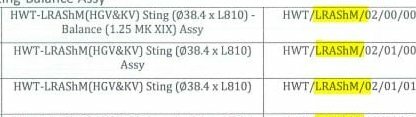
It is being termed a Long Range Anti Ship Hypersonic Missile (LRAShM) given the absence of any other known nomenclature for the missile family.The government added, "The flight data ... confirmed the successful terminal maneuvers and impact with high degree of accuracy”.
The test-firing took place from Dr. APJ Abdul Kalam island off the eastern coast of Odisha state Defence Minister Rajnath Singh called the test a "historic achievement" in a post on X and congratulated “DRDO, armed forces, and industry for stupendous achievement”.
In this video, Defense Updates analyzes what we know about India’s new LRAShM missile ?
Chapters:
00:11 INTRODUCTION
02:18 HYPERSONIC WEAPON
04:25 LRAShM CHARACTERISTICS
06:29 ANALYSIS
 
Defense Updates has a new video out about the performance of India's Akash SAM in the recent Indo-Pakistani skirmish:


In an interview with India Today, Austrian military aviation analyst and historian Tom Cooper who has authored and co-authored more than 50 books & has written 1000s of articles, said that India was a clear winner in the air battle against Pakistan. According to Cooper, India’s air campaign was "partly successful" in destroying terror camps but "highly successful" in weakening Pakistan's conventional defense capability.
Cooper explained, “Six out of nine targeted sites or terror camps have been hit, without doubt, and all have been targeted very precisely. But more important is that Pakistan became unable to defend itself from conventional strikes of the Indian armed forces and had no ability to strike back on India. It had no other option but to ceasefire," His reference to “no ability to strike back on India” comes from the fact that during Operation Sindoor, the Indian military managed to thwart a huge barrage of aerial threats coming from Pakistan.
Apart from around 500 drones including Turkish Songar, at least one SRBM (Short Range Ballistic Missile) was also intercepted. This is the Hatf-1.On May 19, 2025, posts on X reported that the Indian Army showed fragments of multiple Pakistani munitions to journalists, including the Hatf-1, alongside Chinese-made A-100 MLRS rockets and PL-15 air-to-air missiles, shot down by India’s air defense systems.
In this video, Defense Updates analyzes why India knocking down Pakistani Hatf-1 with Akash SAM is a major win?
#defenseupdates #operationsindoor #indiapakistanwar
Chapters:
0:00 TITLE
00:11 INTRODUCTION
01:21 SPONSORSHIP - NordVPN
01:50 HATF -1 MISSILE
04:25 AKASH SAM
06:26 ANALYSIS

One thing I notice about the Akash is that it clearly uses the SA-6 Gainful airframe/propulsion design (Of with 21st century updates).
 
Defense Updates has uploaded a video concerning India's development of an Agni 5 variant with a conventional warhead:


A weapon with high penetration capacity like the American GBU-57 Massive Ordnance Penetrator (MOP) recently used against Iran, is being conceptualised in India. Reports suggest India has initiated early development of a conventional variant of its Agni-V intercontinental ballistic missile (ICBM), likely equipped with a powerful 7.5-tonne warhead. This move represents a key step in India’s missile strategy—repurposing the nuclear-capable Agni-V platform for non-nuclear, high-impact missions.The project signals India’s intent to enhance its strategic and tactical versatility, providing the capability to deliver massive conventional strikes over long distances.​
It also reflects a broader shift toward precision-guided conventional deterrence, aimed at addressing emerging regional threats and maintaining strategic dominance without crossing the nuclear threshold.
In this video, Defense Updates analyzes why India’s conventional Agni-V variant is a deeply troubling development for Pakistan & China?
#defenseupdates #operationsindoor #agni5missile
Chapters:
0:00 TITLE
00:11 INTRODUCTION
01:01 SPONSORSHIP - NordVPN
01:54 NEED
04:12 CONVENTIONAL AGNI-V VARIANT
06:42 ANALYSIS

I don't know about the PRC but I can see why Pakistan might be concerned.
 
View: https://www.reddit.com/r/WarshipPorn/comments/1m2c3kh/ballistic_missile_fired_from_patrol_vessel_of/


You can ignore the error in the title, this is a photo of an old test of what is believed to be a Prithvi III (SS-350) missile (though it does remind me more of the derived Dhanush) from a Indian Navy vessel, likely as someone in the comments thread points out, the Sukanya-class OPV INS Subhadra.
 
Heres footage of the launch
Considering indias road mobile tels I was half expecting some sort of multi bogie abomination on rails,but surprisingly it all looks pretty normal,they even included their own version of the clever little system on the russian ss24 rail cars with the extending arm that pushes the overhead catenary lines for the pantograph out of the way.
AGNI-P-RAIL-LAUNCHER-TEST.jpg
 
Given that the Indian railway network is HUGE no doubt this will give both the PLA and Pakistani military high-commands some heartburn.
 
I hope that has caused the PLA:N command to have some serious heartburn.
300km range capped & PLAN has means to take out the battery elements preemptively, unless Phillipines has the means and all the necessary equipment and ecosystem, ISR etc around the batteries to improve the chances of protecting them.


But it does require more caution & effort now on PLAN'S side if they ever decide do take a militaristic stance, so it does increase preemptive deterrence, given the PLAN is required to focus more on US, Japan, SK
 
Last edited:
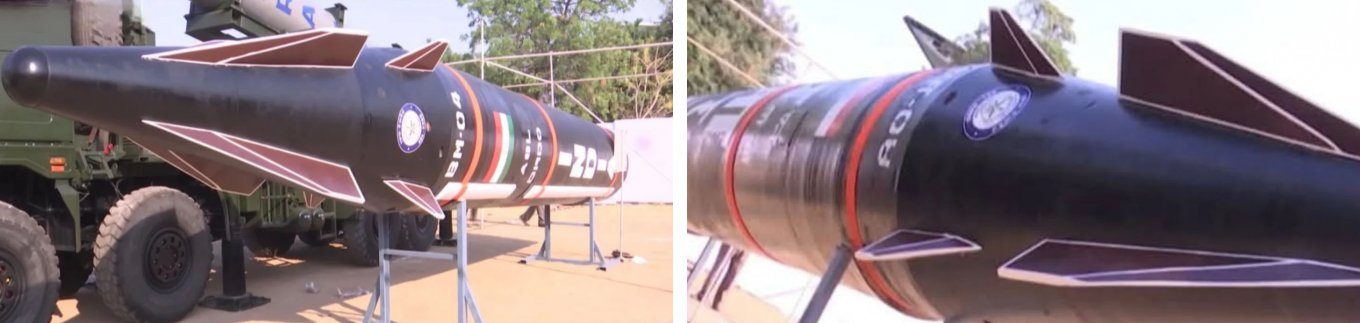
Now confirmed to be a MIRV test.... The same missile can also carry(its probably the most likely version) the HGV so we still don't really know the actual payload of the missile.
View: https://www.reddit.com/r/MissilePorn/comments/1t82k7u
 
Last edited:

India Conducts Spate of Tests for Anti-Ship, Land Attack, BMD And Hypersonic Ground Attack Missiles​

https://www.navalnews.com/naval-new...ck-bmd-and-hypersonic-ground-attack-missiles/
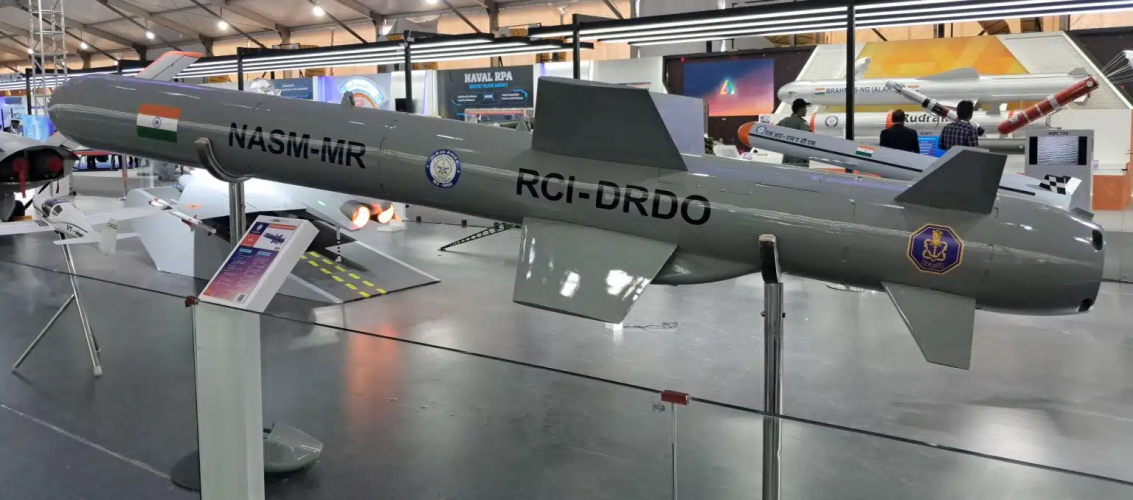
India ’s DRDO successfully demonstrated multi-layered BMD against long range ballistic missiles by testing AD-1 and AD-2 missiles, anti-ship capability at medium range by testing the NASM-MR and strike capability with the Rudram-2 and LRLACM missiles.
The three consecutive flight-tests were conducted for AD-1, AD-2 and NASM-MR on June 10 and 11, 2026. The BMD interceptors successfully engaged their respective targets and validated capability to intercept even ICBMs. AD-1 and AD-2 are part of India’s Phase-2 BMD program. AD-1 is an endo-atmospheric, short ranged missile while AD-2 is exo-atmospheric and has a longer range. Phase-3 of the BMD program has been initiated with the development of AD-AH and AD-AM missiles underway. These are expected counter hypersonic maneuvering and MIRV threats respectively. The Indian Navy can also be expected to be an eventual user of these BMD systems given the emergence of threats like the DF-26B. India had tested a Phase-1 endo-atmospheric BMD missile, named AAD, from INS Anvesh in 2023.
The maiden flight-test of the Naval Anti-Ship Missile-Medium Range (NASM-MR) was carried out successfully. NASM-MR has a range of about 300 km with midcourse INS +GPS guidance and a radar altimeter for sea-skimming. Terminal guidance utilizes an X band AESA RF seeker unlike the NASM-SR which uses an IIR seeker. NASM-MR is equipped with a two way datalink and a penetration-cum-blast warhead. The NASM-MR is expected to be powered by a DRDO ATGG turbofan engine during full scale production. However, initial testing was slated to utilize a Safran engine.
1781616402455.png
 
150 Astra Mk1 BVR missiles are to be exported to Indonesia, presumably for the Su-30MK2s
? why? cant Indonesia buy the new Russian AAMs or even American AAMs?

Do we know which version? is it going to be the old 110km range version or the newer 160km extended range version?
 
? why? cant Indonesia buy the new Russian AAMs or even American AAMs?

They can but I'm pretty sure they wouldn't choose R-77s over Astra for the same reason IAF wouldn't.

Good luck integrating American AAMs on Flankers.

Do we know which version? is it going to be the old 110km range version or the newer 160km extended range version?

It's not finalized yet, we'll see what happens.

Additionally, it serves to know that as part of the Indian Navy's Rafale-M deal, we've negotiated to integrate Astra with our Rafales, so the software package developed under that contract should also allow for it to be offered for Indonesia's Rafales, fulfilling an important middle-road option between the much shorter-ranged MICAs and the much more expensive Meteors.

Of course it will be subject to French approvals and whether the Indonesians actually want it in that role.
 

Similar threads

Back
Top Bottom