You can definitely make the aircraft as small and as light as possible the problem is capabilities and cost. Do you miss out on a system like EOTS and DAS for less weight and less cost.
I don't believe that is an option. No EOTS means you cannot do precision-guided ground attacks without external support. Stealthy aircraft are sufficiently expensive that you cannot afford to make them air-superiority only today.
And the DAS is the better way to track stealthy aircraft, to the extent that most CCAs are packing a DAS/IRST
instead of a radar.
How about using new propulsion technology such as adaptive cycle engines to help make up some of the reduced fuel load.
Yes, adaptive-cycle engines would be an advantage, though expensive and probably bulkier than something like an F414/EJ200/M88.
And that extra expense is problematic, since most places trying to make a small stealthy aircraft are doing so under the impression that size of aircraft is directly correlated to cost. And systems make up
at least 40% of the cost of the airframe.
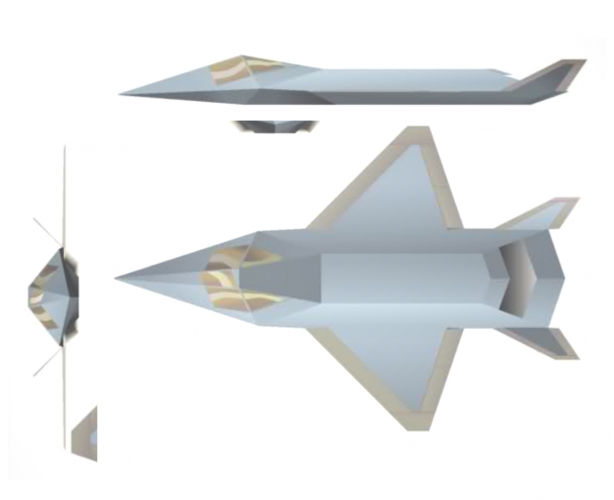
Do we compromise and also reduce drag by removing the vertical tail at the expense of less maneuverability and complexity which may be difficult for ground crews and countries that want short repair times? It’s possible but would be very requirement dependent which I believe larger aircraft don’t have to deal with since they have both the space, power and basically unlimited budget todo so
I don't believe that removing the vertical tail would affect repair times all that much. How many more control surfaces does that make versus a conventional aircraft? Quick count: ailerons, flaps, elevators, rudder(s). Most images of the tailless birds have shown 4 or maybe 5 surfaces per wing. 4 surfaces per wing is an equal number of surfaces and actuators as a twin-tailed airframe with conventional controls. Additionally, IMO every modern fighter will have thrust vectoring of some type for maneuverability, so that would be a wash as well.