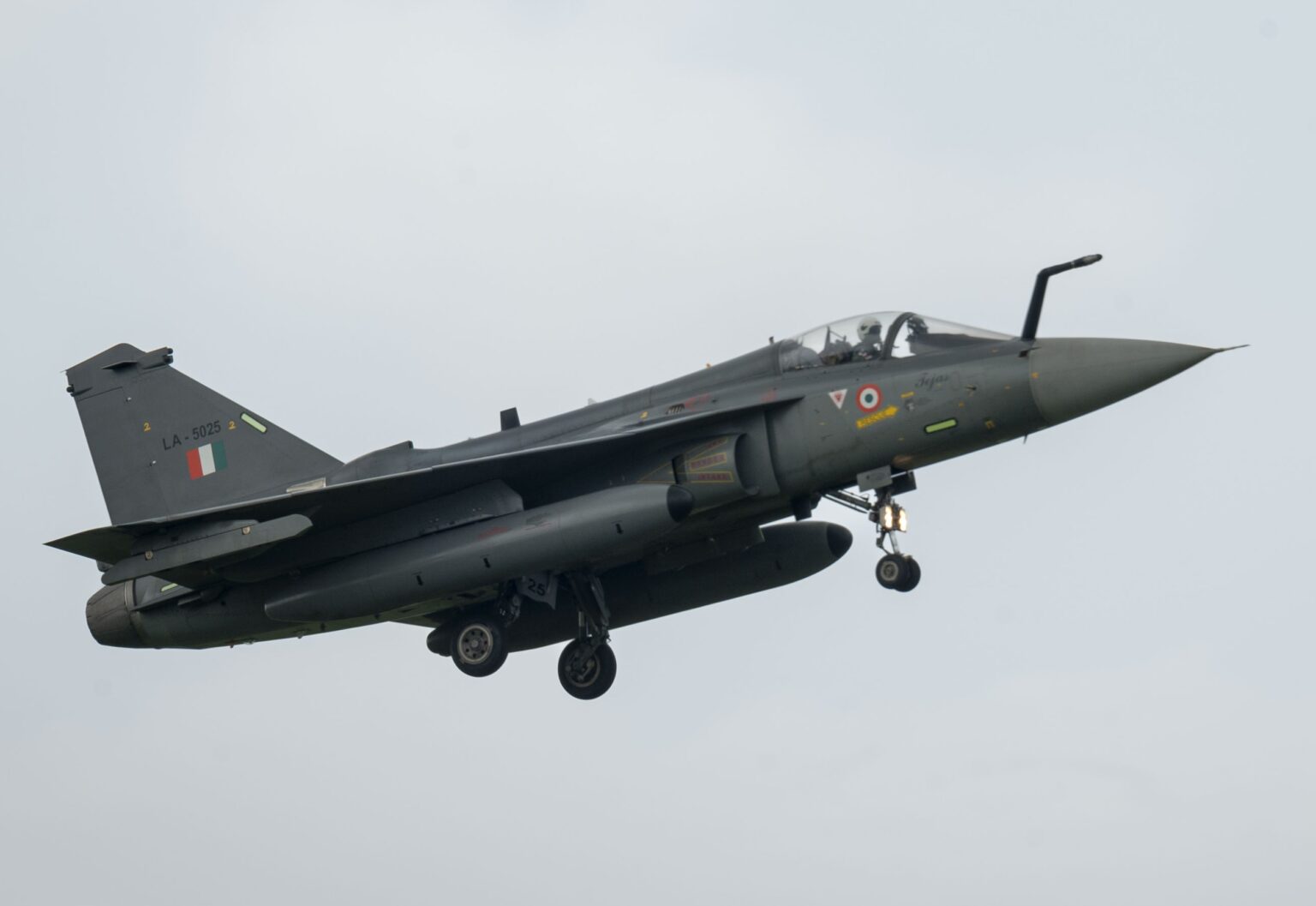
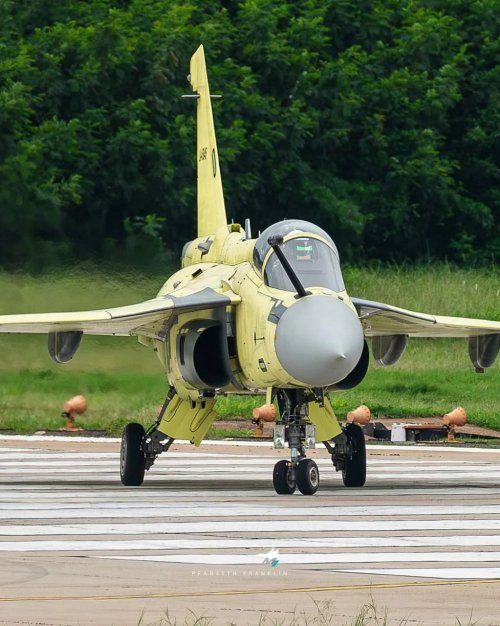
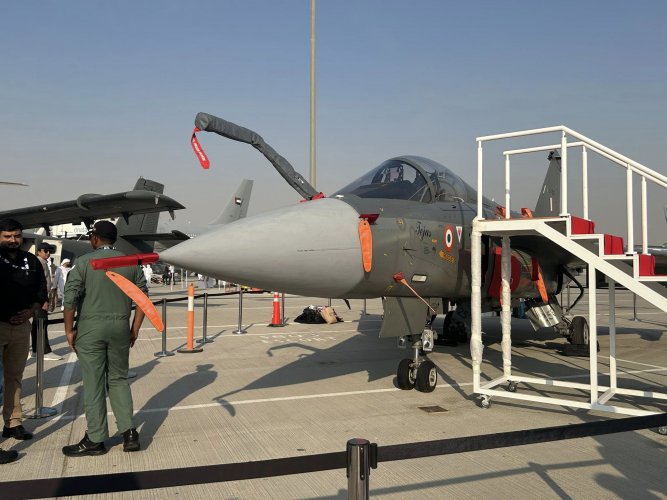
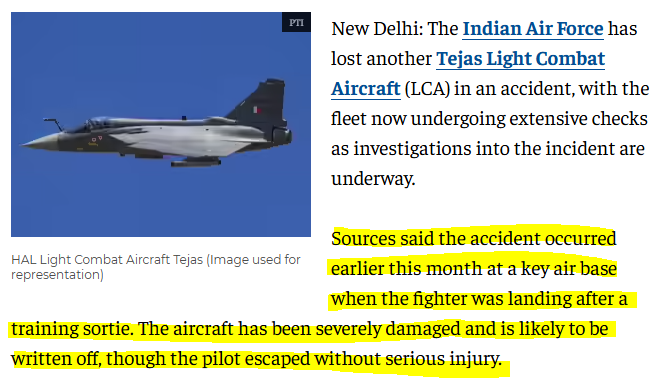
HAL LCA Tejas

This source says 38 Teja have been delivered today. But are they flying?
Some are I believe:

8634217-1536x1057.jpg


From: https://defence-blog.com/india-clears-7-4b-deal-for-97-tejas-fighter-jets/
 
As of four weeks ago, the Indian Air Force officially retired its remaining MiG-21 fighters, an airplane (of several variants) in service for 62 years; see < https://www.strategypage.com/htmw/htatrit/articles/2025101763213 >. India's Tejas was intended to replace the aging MiG-21, but while the MiG is now gone, few of the troubled Indian fighter have yet been built.
 
An Indian Tejas fighter jet crashed at the Dubai Air Show on November 20, 2025, around 2:10 pm local time during an aerial display before a large crowd. It is unclear if the pilot ejected safely.


Not looking good Deino, fingers and toes firmly crossed that the pilot managed to eject before the Tejas crashed. Also wondering about any casualties on the ground.
 
The pitch up action while inverted is painful to watch. What could have gone so wrong? Same with the sink rate when the pilot tries to recover. Even with a delta wing it´s hard to make sense of the end trajectory without inquiring the FBW code.

Screenshot 2025-11-21 131157.png

Screenshot 2025-11-21 131216.png

See how the flaperons aren´t inducing any pitch up moment.
 
Last edited:
The pitch up action while inverted is hard to see. What could have gone so wrong? Same with the sink rate when the pilot tried to recover. Even with a delta wing it´s hard to make sense of the end trajectory without inquiring the FBW code.


Via the friend of mine who is at the moment at the show:

Looking back at videos, he rolled the opposite way to usual. On Mon/Tues he rolled over the top to exit the turn (with some crazy rudder inputs that looked uncomfortable). Today, a dramatic roll under, and then a lot of sink.
 
Personally, I can´t see any rudder action on the video. They might be there but not identifiable.
 
Last edited:
Was it doing a negative G turn away from the audience before it lost altitude? Why put a manoeuvre like that in a demo I wonder. Seems unnecessarily dangerous while not looking particularly dynamic or aesthetically pleasing.
 
A quick look shows that:

1. Flight control systems were working at least to enough degree to maintain basic flight stability and control as enough control authority seems to be still there in both longitudinal, lateral planes . Though as I watched more closely, it seems there is loss of longitudinal control authority in inverted position. But that may be pilot being disoriented or encounter with ground heated pocket of extremely low air density. Its speed may not have been enough to provide the required longitudinal control authority in that inverted orientation and encountered heated low air density.

Even though Flight Control authority is there, again a bit more careful viewing shows, there is some loss of control authority as pilot fails to pull up in inverted position which I think he was suppose to do. It may be due to pilot error or due to loss of lift due to lower than expected air density gradient in turn caused by temperature gradient due to the desert heat. That is close to the ground, decrease in air density due to ground heating may have made expected recovery hard. There is significant loss of pull up authority while in inverted position. Engine failure leading to Loss of thrust even partial can do that too and so does obviously loss of power to the control surfaces.

In any case, descent was too rapid way above the effectiveness range of coupled flight control system as a whole. There was NO way pilot could have controlled the descent rate with a delta wing optimized for speed at such low speeds with given control surfaces even if everything worked. It may have been that the pilot simply misjudged the altitude or even orientation due to of g-forces impacting his brain regardless of training.

2. At some stage just before there is pilot effort to level the aircraft where questionable movements are seen. That shows either problems with instruments, pilot confusion, disorientation or just extreme stress that led to that effort to orient the aircraft into hopefully safe "crash landing" position. A much better decision would have been to role/orient the aircraft immediately for safe ejection and eject. But I think there was sincere attempt to safe the aircraft.

Still pilot error does seems to play some role here. RIP.

Being under pressure to show case what may have been too risky also may have played some role.

Caution: My knowledge of aircraft flight dynamics is mathematical and certainty NOT as a fighter pilot and what G forces do to them. NOR how much risk they take for "airshow maneuvers". So it may all turn out to be too mature at this stage. Its hard to judge from the video. But I still think pilot error was partially to blame here.

 
Last edited:
Not pilot error yasotay? Help!!! I had originally thought that there was something wrong with the plane. But having just looked at the video footage again I fear that you might be right.
 
Interesting comparison with a previous display, showing when things went uncontrolled. I'm not able to include the video directly unfortunately.

 
I think their AoA limiter jumped into action to advert a yaw induced departure. You can see how the pitch down was brutal and curiously axial where a pilot would have induced in all probability a correction on at least two angles. And then, as stated earlier, the AoA restriction limited pitch authority when the pilot would have attempted to raise the nose abruptly*.

See in the comparative video below with a M2K, how the pitch command is acknowledged with a firm and visible brief flaperon up movement to pitch the nose up. Something HAL aircraft didn´t do that day.

(better turn down you volume)
View: https://youtube.com/shorts/ocfR6OTSqoA

*not implying in anyway he would have succeeded.
 
Last edited:
How many seconds do you think the pilot had to react before his entire situation went downhill?
Some sites say 30 to 20 seconds roughly.
 
Last edited:
How many seconds do you think the pilot had to react before his entire situation went downhill?
Some sites say 30 to 20 seconds roughly.
You have the crash video available directly in this thread. From the pitch up (inverted) to contact with the ground, 4 seconds.
 
Last edited:
That is a deliberate move on the Gripen. It's fuel that's being dumped.
Typhoon is known for highly visible ventilations:

That's not a ventilation, its a wing tip vortex on the the top of the tail around the cylindrical fuel vent, and then on the wing tip.
 
Last edited:
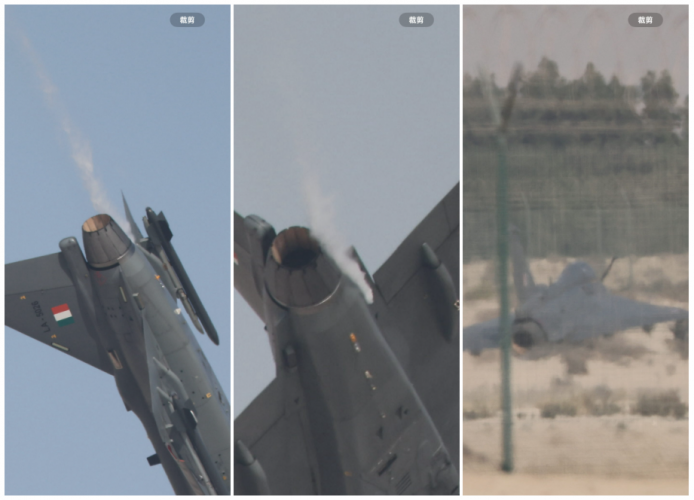
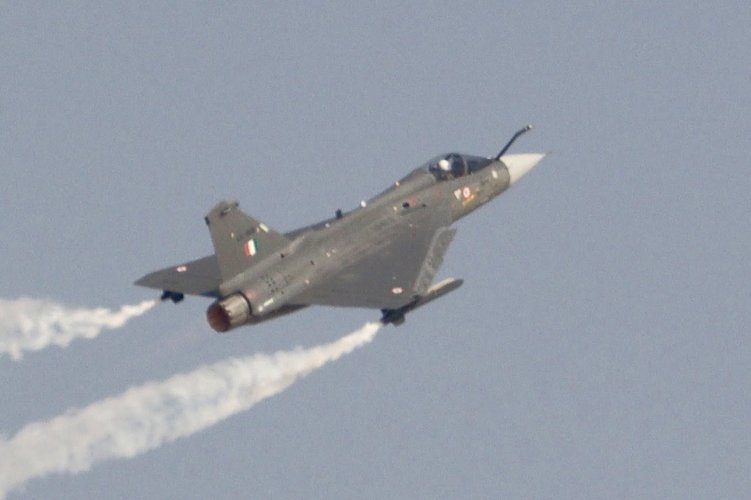
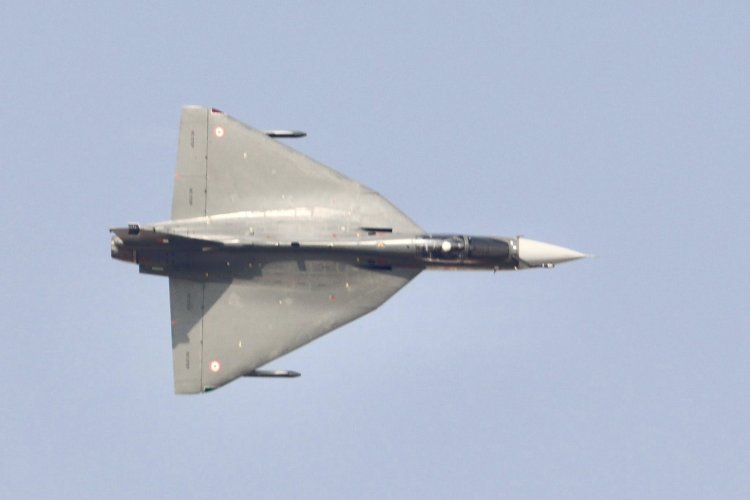
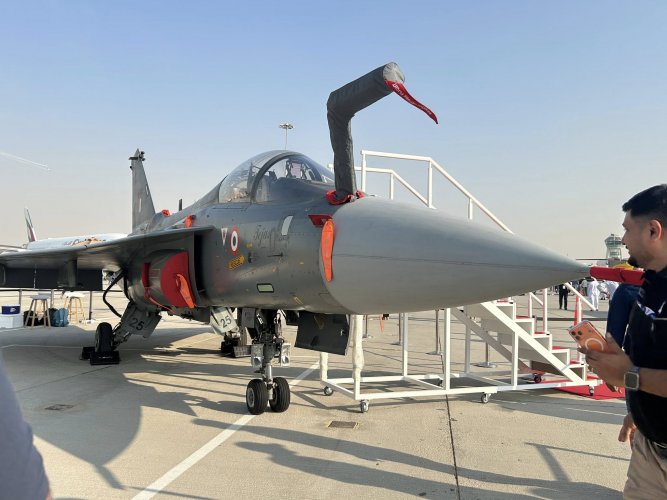
Was shocked as I landed in London on friday lunchtime, only for best mate to whatsapp me about the accident. Bearing in mind I was at the show till Thursday it was good to see the Tejas again for the second time at the Dubai Air Show. So here are my photos from happier beginning of the week.


Tejas_1.jpg Tejas_2.jpg Tejas_3.jpg Tejas_4.jpg

So RIP and blue skies.
 
That is a deliberate move on the Gripen. It's fuel that's being dumped.
Well, there's conspicuously little evidence of it happening outside the context of a negative-g maneuver. I mean, the maneuvers could easily be deliberate, but I don't think the pilot is actively pumping fuel overboard.
 
Well, there's conspicuously little evidence of it happening outside the context of a negative-g maneuver. I mean, the maneuvers could easily be deliberate, but I don't think the pilot is actively pumping fuel overboard.
My bad, you're right. It's also fuel venting after negative Gs followed by positive Gs.
(FWIW, the Gripen E retains the feature, but with the vent relocated to the base of the vertical tail, close enough to allow the ignition)
 

Similar threads

Back
Top Bottom